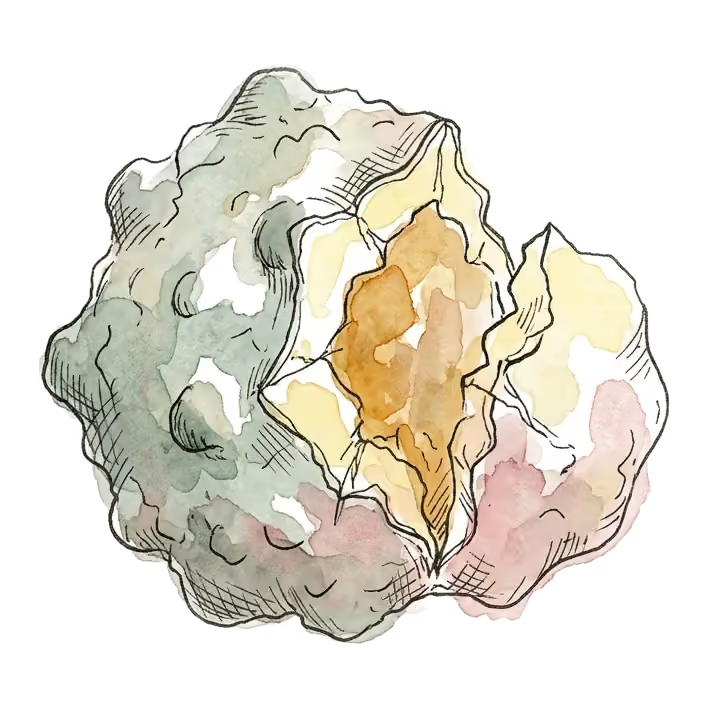
Chaga Mushroom (Inonotus obliquus)
Inonotus obliquus · also known as chaga, birch conk, clinker polypore, black mass, cinder conk
By Superfoods Advisor Editors·July 3, 2026
Chaga benefits examined: what lab and animal studies show for antioxidant and immune effects, why human data are missing, and its oxalate kidney risk.
Chaga (Inonotus obliquus), also called birch conk or cinder conk, is a parasitic fungus that forms a black, charcoal-like mass on birch trees and is brewed as a tea in Siberian folk medicine. Its purported benefits come from lab and animal studies; no controlled human trials have been published, and its high oxalate content has been linked to kidney damage.
The fungus grows predominantly on yellow and white birch trees (Betula spp.) across boreal forests of Siberia, northern Europe, Canada, and the northeastern United States. Unlike the cap-and-stem mushrooms familiar to most consumers, chaga forms an irregular, charcoal-black, clinker-like mass on the exterior of infected trees — the visible “sclerotium” that is harvested — while its mycelium penetrates the host wood. The fungus can grow for decades on a single tree, slowly decaying the heartwood before eventually killing the host.
Traditional use of chaga stretches back at least several centuries in Siberia and Russia, where it was brewed as a tea and consumed as a folk remedy for gastrointestinal ailments, heart and liver complaints, and as a general tonic; the Khanty people of western Siberia used it for digestive disorders, worms, and tuberculosis (Géry et al., 2018). It has also been a folk remedy in Poland and the Baltic countries (Cui et al., 2005). The 1968 novel Cancer Ward by Aleksandr Solzhenitsyn brought chaga to wider Western attention by describing Siberian peasants who drank it in place of tea and seemed to develop cancer less often. Contemporary interest has focused on the antioxidant activity its extracts show in laboratory assays and on bioactive compounds linked partly to the birch host.
Evidence at a glance
Active Compounds
Chaga’s phytochemical profile is unusually complex and is shaped by both the fungal organism and the birch tree it parasitizes — a characteristic that distinguishes it from most other medicinal mushrooms cultivated on grain substrates.
Beta-glucans: Like other medicinal fungi, chaga contains polysaccharides including beta-(1,3)/(1,6)-glucans, which are broadly associated with immune modulation. Chaga is not standardized for beta-glucans, and published measurements for it are sparse.
Betulinic acid and betulin: These pentacyclic triterpenes are abundant in birch bark, and their presence in chaga is linked to the birch host. Betulinic acid has been studied in the laboratory for cytotoxicity against cancer cell lines and for antiviral activity (Nemli et al., 2024). Betulin can be oxidized to betulinic acid. Chaga mycelium grown in submerged culture accumulates relatively little betulin and related sterols, and adding birch-bark extract to the culture increased their production (Wang et al., 2014).
Inotodiol and lanosterol: Fungal-origin lanostane-type triterpenoids found in chaga. In a cell study, inotodiol suppressed inflammatory cytokine genes in human skin cells; several authors work for a company holding inotodiol patents (Park et al., 2023).
Melanin pigment complex: The black exterior of wild chaga contains a melanin pigment complex. Melanins isolated from chaga water extracts showed antioxidant activity in laboratory assays (Burmasova et al., 2019), and the pigment is thought to contribute to the in vitro antioxidant activity of chaga extracts.
Polyphenols and phenolic acids: Chaga contains a range of phenolic compounds, including a protocatechuic acid glucoside and syringic acid, and the phenolic content of its extracts tracked their antioxidant activity (Abu-Reidah et al., 2021).
Ergosterol: A fungal sterol and precursor to vitamin D2; present in chaga as in most fungi, though bioavailability from unprepared chaga powder is uncertain.
Evidence for Purported Benefits
Every purported chaga benefit is currently supported only by laboratory and animal research. No placebo-controlled human trial of chaga had been published as of mid-2026, so none of the effects below has been confirmed in people.
Antioxidant Activity
Evidence:Lab & animal only Radical-scavenging in lab assays and antioxidant enzyme changes in diabetic mice; no controlled human trials.
Chaga extracts show strong radical-scavenging activity in laboratory assays. A 2005 in vitro study by Cui et al. (Journal of Ethnopharmacology) found that a polyphenolic chaga extract scavenged DPPH, superoxide, and peroxyl radicals and protected human skin cells against hydrogen peroxide-induced oxidative stress, while the polysaccharide extract was inactive. In diabetic mice, chaga polysaccharides restored serum malondialdehyde, a lipid peroxidation marker, and antioxidant enzyme levels (Wang et al., 2017). These findings have not been replicated in rigorous human clinical trials; the relevance of in vitro antioxidant assays such as ORAC to effects in the body remains uncertain, and the USDA withdrew its ORAC database in 2012 for that reason.
Immune Modulation
Evidence:Lab & animal only Macrophage and spleen-cell studies in mice; no adequately powered human trials on immune endpoints.
In laboratory studies, polysaccharides from the chaga fruiting body increased nitric oxide and TNF-α production and phagocytosis in mouse macrophages, and IFN-γ and IL-4 secretion in mouse spleen cells (Won et al., 2011), resembling effects reported for beta-glucans from other fungi. No adequately powered, placebo-controlled human RCTs on immune endpoints have been published as of mid-2026.
Anti-Inflammatory Effects
Evidence:Lab & animal only Rodent colitis and arthritis models only; no human data.
Rodent studies have reported reductions in pro-inflammatory markers after chaga extract or polysaccharide administration, including lower iNOS and cytokine expression in mice with chemically induced colitis (Mishra et al., 2012) and reduced joint swelling with NF-κB inhibition in rats with collagen-induced arthritis (Fu et al., 2025). Human evidence is absent; extrapolation from animal inflammation models to human disease requires caution.
Antitumor Properties
Evidence:Lab & animal only Cancer cell lines and mice with transplanted tumors; no human clinical studies.
Betulinic acid has induced apoptosis in a range of cancer cell lines, including melanoma, in cell culture experiments (Nemli et al., 2024). Chaga extracts and small phenolic compounds isolated from them were cytotoxic to cancer cell lines, though some extracts were more toxic to normal cells than to cancer cells (Nakajima et al., 2009). In mice with transplanted tumors, oral chaga extract or polysaccharides slowed tumor growth (Arata et al., 2016; Won et al., 2011). This preliminary evidence should not be interpreted as evidence of antitumor efficacy in humans; chaga’s safety and efficacy have not been evaluated in clinical studies (Memorial Sloan Kettering). Any person with cancer should consult their oncologist before using chaga supplements.
Blood Glucose Regulation
Evidence:Lab & animal only Diabetic rodent studies only; human data are lacking.
Rodent studies using streptozotocin-induced diabetic models have reported reductions in fasting blood glucose following chaga polysaccharide supplementation (Wang et al., 2017). Human clinical data are lacking.
Typical Use and Dosing
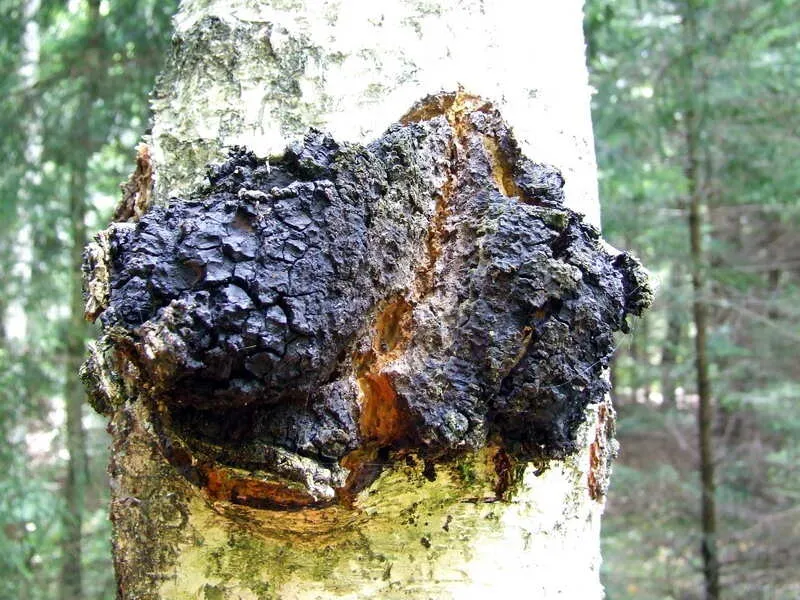 Photo: Tocekas, CC BY-SA 3.0, via Wikimedia Commons
Chaga is usually consumed as a hot-water extract, as many of its bioactive compounds (polysaccharides, melanin) require hot water for extraction. Traditional Siberian preparation involves steeping or simmering broken pieces of dried sclerotium in hot water for several hours, producing a dark tea.
Powdered extract: Many commercial products are spray-dried hot-water extracts labeled for total polysaccharides or occasionally beta-glucan content. Suggested doses on product labels vary, and no evidence-based consensus dose exists.
Whole dried chaga powder: Fungal cell walls contain chitin, which humans digest poorly, so some compounds in unextracted powder may be less available than in an extract; this has not been measured for chaga.
Tinctures: Dual-extraction tinctures (hot-water plus alcohol) theoretically capture both water-soluble polysaccharides and alcohol-soluble triterpenes (betulinic acid, inotodiol), though the alcohol fraction of chaga tinctures is rarely standardized.
No established effective dose exists from clinical trials. Manufacturers’ suggested doses should be treated as preliminary guidance only.
Chaga is one of the species covered in the medicinal mushrooms research review. It is also a common ingredient in mushroom coffee; our mushroom coffee rankings compare how much chaga each product discloses and whether it comes from the sclerotium or from mycelium on grain.
Safety, Interactions, and Contraindications
Chaga’s safety has not been evaluated in clinical studies, and the human safety record consists mainly of case reports (Memorial Sloan Kettering). Several safety considerations merit attention:
Oxalate content: Chaga contains very high oxalate concentrations. A 2014 case report in Clinical Nephrology (Kikuchi et al., 2014) described a 72-year-old Japanese woman who developed oxalate nephropathy requiring hemodialysis after six months of taking 4–5 teaspoons of chaga powder per day; her kidney function did not recover. A second report described a 49-year-old Korean man with end-stage renal disease whose kidney biopsy showed chronic tubulointerstitial nephritis with oxalate crystal deposits; he had taken chaga powder for years for atopic dermatitis, and the authors estimated his oxalate intake at roughly two to five times that of a usual diet (Lee et al., 2020). A third report described a 69-year-old Korean man who developed acute oxalate nephropathy after three months of chaga powder taken with vitamin C; his kidney function recovered after dialysis and steroids (Kwon et al., 2022). Individuals with a history of kidney stones (particularly calcium oxalate) or existing kidney disease should avoid chaga or use only under medical supervision.
Anticoagulant and antiplatelet interactions: A peptide isolated from chaga mycelium inhibited platelet aggregation in vitro and in mice (Hyun et al., 2006). Combining chaga with anticoagulants (warfarin, heparin, newer oral anticoagulants) or antiplatelet drugs (aspirin, clopidogrel) may theoretically increase bleeding risk. This interaction has not been evaluated in human pharmacokinetic studies, but caution is warranted.
Autoimmune conditions: Immune-stimulating polysaccharides could theoretically exacerbate autoimmune diseases (rheumatoid arthritis, lupus, multiple sclerosis, inflammatory bowel disease). No human studies have evaluated this risk directly.
Immunosuppressant interactions: Theoretical antagonism with cyclosporine, tacrolimus, and other immunosuppressant medications used in transplant recipients. Transplant patients should not use chaga without explicit guidance from their transplant team.
Hypoglycemia risk: Based on animal data suggesting glucose-lowering effects, concurrent use with insulin or oral hypoglycemic agents may require blood glucose monitoring.
Pregnancy and lactation: Insufficient human safety data; avoid use.
Contaminants: Wild-harvested chaga is not grown under controlled conditions, and contaminant levels vary by source. Third-party testing for heavy metals and microbial contamination is advisable.
Product Selection Criteria
Wild-harvested vs. cultivated: Mycelium cultured without the birch host accumulates relatively little betulin and related sterols (Wang et al., 2014), and in an analysis of 18 chaga supplements, the products made from ground mycelium lacked detectable levels of the triterpenoid and phenolic markers found in wild chaga sclerotia (Avula et al., 2026). Products labeled “cultivated chaga mycelium” on grain should be regarded skeptically for the authentic chaga compound profile.
Extraction method: Prefer hot-water extracts over raw powder. Dual extractions may better capture the full spectrum of compounds, though the evidence base for specific compound fractions is weak.
Standardization: Unusually high beta-glucan claims for chaga warrant scrutiny and may reflect added polysaccharides. A total polysaccharide figure is not the same as a measured beta-glucan figure.
Third-party testing: Look for Certificates of Analysis (CoA) from ISO-accredited laboratories confirming identity (fungal species), absence of heavy metals, pesticide residues, and microbial contamination.
Packaging and origin: Products should identify the geographic source (Siberia, Canada, northern Europe), and ideally the tree host species.
Frequently Asked Questions
Is chaga mushroom good for you?
There is no human evidence yet that it is. Chaga extracts scavenge free radicals in laboratory assays and affect immune, inflammatory and glucose markers in mice and rats (Cui et al., 2005), but no placebo-controlled human trial has tested these effects. Its high oxalate content is a documented risk, so the benefits remain unproven while one harm is established.
Can chaga cause kidney stones or kidney damage?
Case reports link heavy chaga use to oxalate kidney damage. A 72-year-old woman who took 4–5 teaspoons of chaga powder daily for six months developed oxalate nephropathy and needed permanent dialysis (Kikuchi et al., 2014), and two Korean men had similar findings. People with kidney stones or kidney disease should avoid chaga unless a clinician supervises its use.
How much chaga per day is safe?
No safe or effective daily amount has been established, because chaga has not been tested in clinical trials. Label doses vary and are not evidence-based. The kidney injury cases involved months of daily powder, in one case 4–5 teaspoons a day, so large or long-term intake carries the most concern. Talk to a clinician before taking chaga regularly.
Does chaga have caffeine?
Chaga is generally described as caffeine-free, since it is a fungus rather than a coffee or tea plant, and none of the studies on this page measured caffeine in it. Plain chaga tea is usually sold as a caffeine-free drink. Chaga coffee blends are a different case: the coffee in them carries caffeine, so check the product label for how much a serving contains.
What is the difference between chaga and reishi?
Both are woody fungi taken as extracts, but they differ in evidence and risk. Reishi has been tested in small human trials, mostly alongside cancer treatment and for fatigue, while chaga has no controlled human trials. Chaga’s main safety concern is oxalate and kidney damage; reishi’s is rare liver injury.
References
Show all 19 referencesShow fewer
- Géry, A., Dubreule, C., André, V., et al. (2018). Chaga (Inonotus obliquus), a future potential medicinal fungus in oncology? A chemical study and a comparison of the cytotoxicity against human lung adenocarcinoma cells (A549) and human bronchial epithelial cells (BEAS-2B). Integrative Cancer Therapies, 17(3), 832–843.
- Cui, Y., Kim, D. S., & Park, K. C. (2005). Antioxidant effect of Inonotus obliquus. Journal of Ethnopharmacology, 96(1–2), 79–85.
- Kikuchi, Y., Seta, K., Ogawa, Y., et al. (2014). Chaga mushroom-induced oxalate nephropathy. Clinical Nephrology, 81(6), 440–444.
- Nakajima, Y., Nishida, H., Matsugo, S., & Konishi, T. (2009). Cancer cell cytotoxicity of extracts and small phenolic compounds from Chaga [Inonotus obliquus (persoon) Pilat]. Journal of Medicinal Food, 12(3), 501–507.
- Lee, S., Lee, H. Y., Park, Y., et al. (2020). Development of end stage renal disease after long-term ingestion of Chaga mushroom: case report and review of literature. Journal of Korean Medical Science, 35(19), e122.
- Kwon, O., Kim, Y., Paek, J. H., et al. (2022). Chaga mushroom-induced oxalate nephropathy that clinically manifested as nephrotic syndrome: a case report. Medicine (Baltimore), 101(10), e28997.
- Nemli, E., et al. (2024). Chemopreventive and chemotherapeutic potential of betulin and betulinic acid: mechanistic insights from in vitro, in vivo and clinical studies. Food Science & Nutrition.
- Wang, L. X., Lu, Z. M., Geng, Y., et al. (2014). Stimulated production of steroids in Inonotus obliquus by host factors from birch. Journal of Bioscience and Bioengineering.
- Burmasova, M. A., et al. (2019). Melanins of Inonotus obliquus: bifidogenic and antioxidant properties. Biomolecules.
- Hyun, K. W., et al. (2006). Isolation and characterization of a novel platelet aggregation inhibitory peptide from the medicinal mushroom, Inonotus obliquus. Peptides.
- Park, J., Nguyen, T. M. N., Park, H. A., et al. (2023). Protective effects of lanostane triterpenoids from Chaga mushroom in human keratinocytes, HaCaT cells, against inflammatory and oxidative stresses. International Journal of Molecular Sciences, 24(16), 12803.
- Abu-Reidah, I. M., Critch, A. L., Manful, C. F., et al. (2021). Effects of pH and temperature on water under pressurized conditions in the extraction of nutraceuticals from Chaga (Inonotus obliquus) mushroom. Antioxidants, 10(8), 1322.
- Wang, J., Hu, W., Li, L., et al. (2017). Antidiabetic activities of polysaccharides separated from Inonotus obliquus via the modulation of oxidative stress in mice with streptozotocin-induced diabetes. PLoS One, 12(6), e0180476.
- Won, D. P., Lee, J. S., Kwon, D. S., et al. (2011). Immunostimulating activity by polysaccharides isolated from fruiting body of Inonotus obliquus. Molecules and Cells, 31(2), 165–173.
- Mishra, S. K., Kang, J. H., Kim, D. K., et al. (2012). Orally administered aqueous extract of Inonotus obliquus ameliorates acute inflammation in dextran sulfate sodium (DSS)-induced colitis in mice. Journal of Ethnopharmacology, 143(2), 524–532.
- Fu, Y., Jiang, T., Fang, X., et al. (2025). Integrating network pharmacology and experimental validation to explore the effect and mechanism of Inonotus obliquus polysaccharide in the treatment of rheumatoid arthritis. Pharmaceuticals, 18(7), 1017.
- Arata, S., Watanabe, J., Maeda, M., et al. (2016). Continuous intake of the Chaga mushroom (Inonotus obliquus) aqueous extract suppresses cancer progression and maintains body temperature in mice. Heliyon, 2(5), e00111.
- Avula, B., Katragunta, K., Tatapudi, K. K., & Khan, I. A. (2026). Quantitative analysis and simultaneous characterization of triterpenoids and phenolics in Inonotus obliquus (Chaga) using LC-PDA-ELSD and LC-DAD-QToF. Planta Medica, 92(4), 494–516.
- Memorial Sloan Kettering Cancer Center. Chaga mushroom. About Herbs, Botanicals & Other Products.
Related content
More in Medicinal Mushrooms
- Cordyceps (Cordyceps militaris / Ophiocordyceps sinensis)
Cordyceps benefits for exercise, energy, immunity and kidney health, checked against small human trials; plus doses studied, safety and product types.
- Edible Mushrooms
Mushrooms benefits and nutrition: what button, cremini, oyster and shiitake supply, from ergothioneine to vitamin D2, what studies show, and side effects.
- Lion's Mane Mushroom (Hericium erinaceus)
Lion's mane benefits explained: what small human trials show for memory and mood, how hericenones and erinacines work, typical doses and side effects.
- Maitake Mushroom (Grifola frondosa)
Maitake mushroom benefits for immunity and blood sugar, weighed against mostly animal research; plus nutrition, D-fraction extracts and drug interactions.
- Reishi Mushroom (Ganoderma lingzhi)
Reishi benefits for immunity, fatigue and sleep, weighed against the trials; plus doses studied, side effects such as liver injury, and drug interactions.
- Shiitake Mushroom (Lentinula edodes)
Shiitake mushrooms benefits for immunity, cholesterol and vitamin D, checked against human trials; plus nutrition, daily amounts and shiitake dermatitis.

Browse all medicinal mushrooms →
Curated by Superfoods Advisor Editors·Last updated