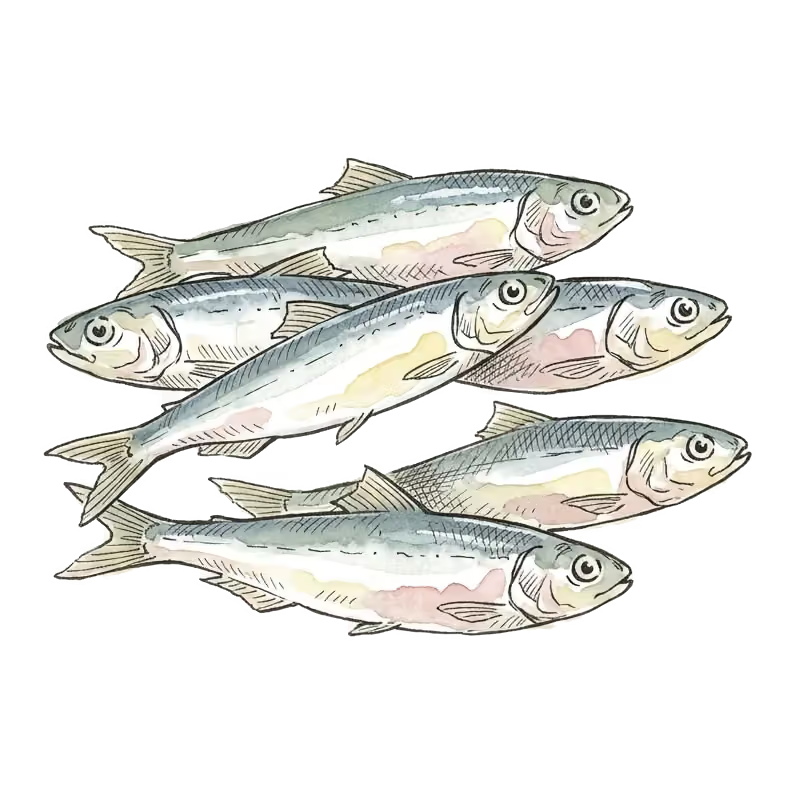
Anchovies (Engraulis encrasicolus)
Engraulis encrasicolus · also known as European anchovy, anchovy, boquerones, alici, ansjovis
By Superfoods Advisor Editors·July 3, 2026
Anchovies vs sardines: how the two small oily fish compare on omega-3s, calcium, B12, sodium and mercury, plus anchovy nutrition, benefits and safety.
Anchovies are small, oily, plankton-eating fish of the family Engraulidae; the European anchovy (Engraulis encrasicolus) is the main species sold as salted and oil-packed fillets. Per 100 g, raw anchovy supplies about 1.4 g of EPA and DHA omega-3s, and FDA testing places anchovies in its lowest-mercury “Best Choices” tier.
Related species include the Japanese anchovy (Engraulis japonicus), the Peruvian anchovy or anchoveta (Engraulis ringens), and the Bay anchovy (Anchoa mitchilli). Anchovies rarely exceed about 20 cm, live only a few years, and feed low in the food chain, which limits how much mercury and other contaminants they accumulate compared with larger predatory fish.
Most anchovies are sold preserved in salt or oil, a staple of Mediterranean cooking since Roman garum. Fresh anchovies are eaten as boquerones (marinated in vinegar) in Spain and alici in Italy. They are often confused with sardines, a related but larger oily fish; the two are compared below.
Evidence at a glance
Active Compounds and Nutritional Profile
Omega-3 fatty acids (EPA and DHA): Fresh anchovies are a rich source of the long-chain n-3 polyunsaturated fatty acids eicosapentaenoic acid (EPA, 20:5n-3) and docosahexaenoic acid (DHA, 22:6n-3): USDA lists about 1.4 g of combined EPA and DHA per 100 g of raw European anchovy (USDA FoodData Central), with some variability depending on season and feeding conditions. Processing matters for the product most people buy. In an analysis of Argentine anchovy (Engraulis anchoita), salt-ripening cut EPA and DHA content by roughly 70%, whereas canned and marinated products kept a fatty acid profile similar to fresh fish (Czerner et al., 2015). USDA’s 1987 entry for anchovies canned in oil (drained) lists about 2.1 g per 100 g (USDA FoodData Central), but retail oil-packed fillets are usually salt-ripened, so if a reduction of that size applies they would supply closer to 0.4–0.6 g per 100 g. Used as a seasoning, a few 4 g fillets add only a small amount. DHA and EPA are not synthesized in adequate quantities by the human body from plant-derived alpha-linolenic acid (ALA) and must therefore be obtained from marine sources or algae; in humans, conversion of ALA to EPA is limited and to DHA very low (Burdge & Calder, 2005).
Calcium from edible bones: Oil-packed anchovies are usually salt-ripened fillets sold as semi-preserves rather than heat-sterilized like canned sardines (Guardone et al., 2018); small bones softened during curing often remain in the fillets and add calcium. A 100 g serving of canned anchovies in oil (drained) provides approximately 232 mg of calcium, about 18% of the 1,300 mg Daily Value (USDA FoodData Central). This is particularly relevant for individuals who consume limited dairy products. Fresh anchovies when consumed whole (as is common with very small specimens) similarly provide dietary calcium from bones.
Protein: Anchovies provide approximately 29 g of high-quality complete protein per 100 g (canned, drained; USDA FoodData Central). This is among the higher protein densities of common canned fish. The amino acid profile includes all essential amino acids.
Selenium: A 100 g serving of anchovies provides approximately 36 µg of selenium raw (USDA FoodData Central) and 68 µg canned in oil and drained (USDA FoodData Central), covering roughly 65–124% of the 55 µg Daily Value. Selenium is essential for the activity of glutathione peroxidases, thioredoxin reductases, and iodothyronine deiodinases (enzymes involved in thyroid hormone metabolism). Organ meats and seafood are the richest dietary sources of selenium (Linus Pauling Institute).
Vitamin D: Canned anchovies in oil (drained) contain approximately 1.7 µg of vitamin D per 100 g (USDA FoodData Central); USDA lists no vitamin D value for raw anchovy. While not as high as salmon or herring, anchovies are a dietary source of vitamin D in a context where deficiency is widespread in many populations.
Vitamin B12: USDA lists about 0.6 µg of vitamin B12 per 100 g of raw anchovy (USDA FoodData Central) and 0.9 µg canned in oil (USDA FoodData Central), roughly 25–37% of the 2.4 µg Daily Value — a modest amount compared with many other fish. Vitamin B12 supports red blood cell formation, neurological function, and one-carbon metabolism.
Sodium in canned preparations: Canned and salt-packed anchovies are high in sodium — USDA lists approximately 3,670 mg of sodium per 100 g of oil-packed anchovies (drained), versus about 104 mg in raw fish (USDA FoodData Central; USDA FoodData Central). A single fillet weighs only about 4 g, so a few fillets used as seasoning contribute far less than a 100 g portion. This is a primary nutritional consideration for individuals on sodium-restricted diets (e.g., those managing hypertension). Rinsing anchovy fillets under cold water before use removes some surface salt, though much of the sodium from curing remains in the flesh. Fresh anchovies are low in sodium; vinegar-marinated white anchovies (boquerones) are usually less salty than salt-cured fillets but are still brined, so the label is the best guide.
Mercury and contaminant burden: Anchovies are classified by the U.S. Food and Drug Administration (FDA) and the Environmental Protection Agency (EPA) in the “Best Choices” category for mercury content — the lowest mercury tier — with an average mercury concentration of 0.016 parts per million (ppm) across 15 FDA samples (FDA, mercury levels in commercial fish 1990–2012). This reflects their position near the base of the marine food chain, their small size, and their short lifespan, all of which minimize bioaccumulation. FDA/EPA advice lists anchovies among the fish that people who are pregnant or breastfeeding can eat 2 to 3 servings a week (FDA/EPA, Advice about eating fish).
Anchovies vs. Sardines
Anchovies and sardines are different fish: both are small, low-mercury oily fish, but sardines (family Clupeidae) are larger and are usually canned whole with soft bones, while anchovies are mostly sold as salt-cured fillets used as a seasoning. Per 100 g, canned sardines carry more calcium and vitamin B12; anchovy fillets carry far more sodium.
| Per 100 g | Anchovies | Canned sardines (in oil, with bones) |
|---|---|---|
| EPA + DHA | ~1.4 g raw; much less once salt-ripened | ~1 g |
| Calcium | ~232 mg (canned in oil) | ~382 mg |
| Vitamin B12 | ~0.6–0.9 µg | ~8.9 µg |
| Sodium | ~3,670 mg (oil-packed fillets) | ~307 mg (varies by brand) |
| Mean mercury (FDA) | 0.016 ppm | 0.013 ppm |
Anchovy figures are the USDA and FDA values cited on this page; sardine figures come from the sardines entry, which uses the same USDA and FDA sources. In practice the bigger difference is portion: sardines are eaten as a main protein, while anchovies are usually eaten a few 4 g fillets at a time, so they contribute flavor and modest nutrients rather than a full serving’s worth.
Evidence for Purported Benefits
Cardiovascular Risk Reduction via Omega-3 Fatty Acids
Evidence:Preliminary EPA/DHA reliably lower triglycerides and trials on cardiac events conflict; anchovy data come only from oily-fish cohort studies.
The cardiovascular evidence for EPA and DHA is among the best-established in nutritional science, though recent meta-analyses have produced more nuanced conclusions than the literature of the 1990s and 2000s. Early work on Greenlandic Inuit (Dyerberg et al., 1978) proposed a link between high marine fatty acid intake and low coronary disease, although a later review found that Inuit populations have coronary disease about as often as non-Inuit populations (Fodor et al., 2014). Prospective cohort studies have associated modest fish consumption, especially oily fish, with lower risk of coronary death (Mozaffarian & Rimm, 2006), while a Cochrane review of 86 randomized trials found little or no effect of increasing EPA and DHA on all-cause mortality or cardiovascular events, with a possible small reduction in coronary heart disease events (Abdelhamid et al., 2020).
Clinical trial evidence from pharmaceutical omega-3 preparations provides mechanistic confirmation: at 4 g/day, prescription EPA+DHA products reduce triglycerides by 30% or more in people with very high triglycerides, and the FDA has approved such products for that indication (Skulas-Ray et al., 2019). The REDUCE-IT trial (Bhatt et al., 2019, New England Journal of Medicine, n=8,179 high-risk cardiovascular patients) found that icosapentaenoic acid (EPA) ethyl ester (Vascepa, 4 g/day) reduced major adverse cardiovascular events by 25% compared to placebo (mineral oil), though mineral oil itself may have worsened cardiovascular outcomes in the control group, complicating interpretation. The STRENGTH trial (Nicholls et al., 2020, JAMA, n=13,078) using a different high-dose omega-3 formulation found no benefit, suggesting that the type and dose of omega-3 preparation may matter.
Two to three 100 g servings of fresh anchovies per week would provide roughly 3–4 g of combined EPA and DHA (USDA FoodData Central), and the same weight of salt-ripened fillets far less (Czerner et al., 2015). Direct randomized evidence for anchovies as a whole food in clinical populations is not available.
Anti-Inflammatory Effects
Evidence:Preliminary Omega-3 supplement trials lower some inflammatory markers; no anchovy-specific human data beyond observational fish studies.
EPA gives rise to series-3 prostaglandins and thromboxanes, which are generally less potent than those made from arachidonic acid, and EPA and DHA give rise to resolvins, protectins, and maresins — lipid mediators involved in resolving inflammation (Calder, 2017). EPA and DHA competitively displace arachidonic acid from cell membrane phospholipids, reducing the substrate available for pro-inflammatory eicosanoid synthesis. These mechanisms are well-characterized biochemically. A meta-analysis of randomized trials found that marine omega-3 supplementation lowered circulating CRP, IL-6, and TNF-α, with weaker effects in people with obesity (Li et al., 2014), though effect sizes are modest and the evidence for long-term disease modification is less consistent than for triglyceride reduction.
Cognitive and Neurological Function
Evidence:Preliminary Fish intake links to slower cognitive decline in cohorts; a meta-analysis of 38 omega-3 trials found little or no effect.
DHA is the predominant structural omega-3 fatty acid in the brain. It is particularly concentrated in the retina and neuronal membrane phospholipids. DHA appears to benefit early neurodevelopment (Mozaffarian & Rimm, 2006). In adults, observational studies associate higher oily fish consumption with lower rates of cognitive decline and dementia, but a meta-analysis of 38 randomized trials found that long-chain omega-3 supplementation probably has little or no effect on new cognitive impairment or global cognition (Brainard et al., 2020).
Typical Use and Preparation
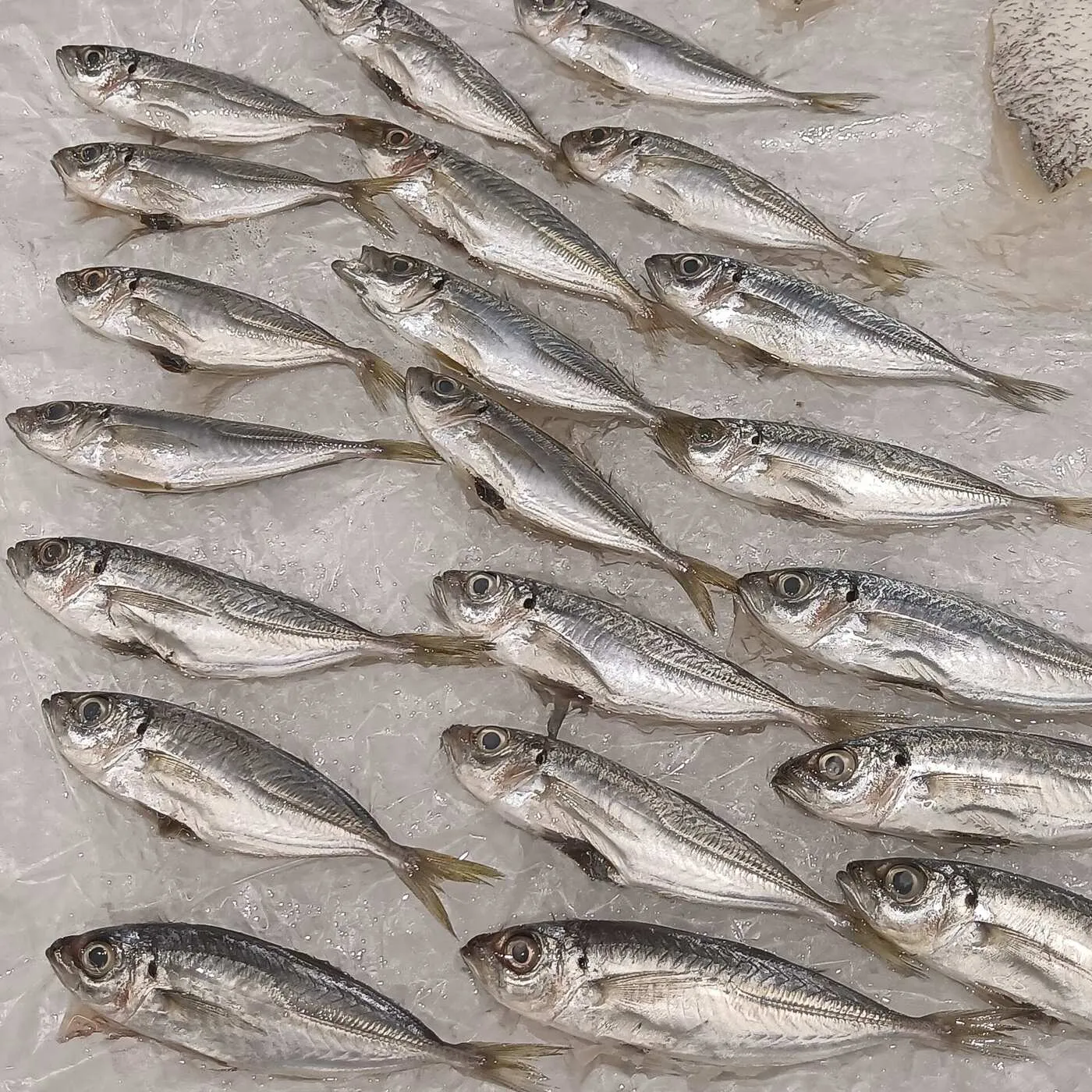 Photo: Fumikas Sagisavas, CC0, via Wikimedia Commons
Canned in oil: The most common commercial form. Drain and rinse before use to reduce surface salt. Use as an umami-rich flavoring in pasta sauces (puttanesca, aglio e olio additions), Caesar salad dressings, tapenades, or pizza toppings. Heat causes anchovies to melt into a sauce, distributing flavor without discrete fish pieces — a technique that allows umami enhancement while remaining imperceptible to diners who might otherwise object to visible anchovy.
Salt-packed whole anchovies: A traditional Mediterranean preparation requiring rinsing and filleting before use. Flavor is typically deeper and more complex than oil-packed fillets. Rinse under cold water, split along the spine, and remove backbone; use within a few days of opening or keep submerged in salt.
White anchovies (boquerones): Fresh anchovies marinated in white vinegar or lemon juice, then dressed in olive oil and garlic. These are not heat-processed and have a milder, less intense flavor than salt-cured varieties. Traditional vinegar marinating does not kill Anisakis larvae, and marinated anchovies are the main route of anisakiasis in Spain (Sánchez-Monsalvez et al., 2005), so boquerones should be made from fish that was frozen first. They are consumed as an appetizer (tapa) in Spanish cuisine.
Fresh anchovies: Available in coastal Mediterranean and Asian markets. Cook quickly — fry, grill, or bake whole — as they deteriorate rapidly after capture. Freshness is critical; stale anchovies develop pronounced off-flavors due to rapid lipid oxidation of their high omega-3 content.
Anchovy paste: A convenient form for cooking. One-half teaspoon of anchovy paste is approximately equivalent to two anchovy fillets for flavoring purposes.
Frequency recommendations: A 2018 American Heart Association science advisory suggests 1 to 2 seafood meals per week, especially when seafood replaces less healthy foods (Rimm et al., 2018). The FDA/EPA fish advice lists anchovies among its “Best Choices” (lowest-mercury) species and advises people who are pregnant or breastfeeding to eat 2 to 3 servings a week from that list, with smaller, age-based servings for children (FDA/EPA).
Safety, Interactions, and Contraindications
Sodium and blood pressure: The high sodium content of preserved anchovies is the primary dietary concern for those managing hypertension, heart failure, chronic kidney disease, or other sodium-sensitive conditions. Rinsing before use reduces surface sodium. Fresh and vinegar-marinated (boquerones) forms are appropriate lower-sodium alternatives. Sodium content should be factored into total daily sodium tracking for individuals on restricted diets.
Histamine fish poisoning and scombroid-like reactions: Anchovies, like other fish with high levels of free histidine, are susceptible to histamine formation when not adequately chilled after capture (Hungerford, 2010). As fish tissue decomposes, histidine is converted to histamine by bacterial decarboxylase enzymes (particularly when fish are held above refrigeration temperatures). Histamine is heat-stable and cannot be destroyed by cooking. Symptoms of histamine fish poisoning resemble an allergic reaction — flushing, urticaria, headache, diarrhea — and can occur within minutes to hours of consumption. The risk is greatest with fresh anchovies that have been improperly handled along the cold chain. Histamine-forming bacteria have been isolated from salted anchovies during ripening, although one study found histamine stayed within EU limits across the ripening batches it tested (Hernández-Herrero et al., 1999); how the fish were chilled before processing remains the main factor. This is not a true allergy but a toxicological reaction related to histamine levels. Individuals with histamine intolerance may experience symptoms at lower threshold histamine concentrations than the general population.
Fish and shellfish allergy: Anchovy allergy is documented. The primary anchovy allergen identified is parvalbumin, a calcium-binding protein highly conserved across bony fish species, meaning individuals allergic to one species of finfish may react to anchovies. Fish allergy is distinct from shellfish allergy; individuals with shellfish allergy are not necessarily at elevated risk for fish allergy.
Anticoagulant interactions: High-dose omega-3 supplementation can reduce platelet aggregation, which has raised concern about additive bleeding risk with anticoagulants. In a small randomized trial, 3–6 g/day of fish oil did not significantly change INR in patients on stable warfarin therapy (Bender et al., 1998). Typical anchovy intake supplies less EPA and DHA than that, but anyone on warfarin who substantially changes their oily fish intake should tell their prescriber.
Purine content and gout: Anchovies are relatively high in purines, which can elevate serum uric acid and may trigger gout flares in susceptible individuals. In a 12-year cohort of 47,150 men, the highest quintile of seafood intake was associated with a higher risk of gout (Choi et al., 2004). People with gout or hyperuricemia are often advised to limit anchovy and other high-purine seafood consumption.
Our review of the omega-3 research compares EPA and DHA sources, including how contaminant exposure differs between small fish like anchovies and large predatory species. The wild-caught fish entry sets out the full mercury hierarchy across common species.
Frequently Asked Questions
What are anchovies?
Anchovies are small, slender oily fish of the family Engraulidae that feed on plankton and rarely grow beyond about 20 cm. The European anchovy (Engraulis encrasicolus) is the main species sold as salted and oil-packed fillets. They are eaten fresh, vinegar-marinated as boquerones, or cured, and are widely used to add savory depth to sauces, dressings and pizza.
Are anchovies a fish or a shellfish?
Anchovies are a bony finfish, not a shellfish. This matters for allergies: the main anchovy allergen is parvalbumin, a protein shared across many finfish species, so people allergic to one finfish may react to anchovies. Shellfish allergy is a separate condition, and having it does not by itself mean a person will react to anchovies.
Are anchovies good for you?
Anchovies are nutrient-dense: about 29 g of protein per 100 g (canned), plus selenium, some vitamin D and, in fresh fish, about 1.4 g of EPA and DHA. Observational studies link oily-fish intake to lower heart disease risk, though omega-3 supplement trials are mixed. The main drawback of cured fillets is their very high sodium content.
Are anchovies and sardines the same thing?
No. They are related small oily fish but belong to different families: anchovies to Engraulidae, sardines to Clupeidae. Sardines are larger, usually canned whole with soft edible bones, and provide more calcium and vitamin B12 per 100 g. Anchovies are mostly sold as salty cured fillets. Both sit in the FDA’s lowest-mercury tier.
Do anchovies have mercury?
Anchovies contain very little mercury. FDA monitoring found an average of 0.016 ppm across 15 samples, and FDA/EPA advice lists anchovies among its “Best Choices,” suggesting 2 to 3 servings a week from that list for people who are pregnant or breastfeeding. Their small size, short lifespan and plankton diet limit bioaccumulation.
Are anchovies high in sodium?
Cured anchovies are. USDA lists about 3,670 mg of sodium per 100 g of drained oil-packed fillets, versus about 104 mg in raw fish. Because a fillet weighs about 4 g, a few fillets add far less than that. Rinsing removes some surface salt; people on sodium-restricted diets should count anchovies in their daily total and ask their clinician if unsure.
References
Show all 23 referencesShow fewer
- Abdelhamid, A. S., et al. (2020). Omega-3 fatty acids for the primary and secondary prevention of cardiovascular disease. Cochrane Database of Systematic Reviews, CD003177.
- Bender, N. K., et al. (1998). Effects of marine fish oils on the anticoagulation status of patients receiving chronic warfarin therapy. Journal of Thrombosis and Thrombolysis, 5(3), 257–261.
- Bhatt, D. L., Steg, P. G., Miller, M., et al. (2019). Cardiovascular risk reduction with icosapentaenoic acid for hypertriglyceridemia (REDUCE-IT). New England Journal of Medicine, 380(1), 11–22.
- Brainard, J. S., et al. (2020). Omega-3, omega-6, and polyunsaturated fat for cognition: Systematic review and meta-analysis of randomized trials. Journal of the American Medical Directors Association.
- Burdge, G. C., & Calder, P. C. (2005). Conversion of alpha-linolenic acid to longer-chain polyunsaturated fatty acids in human adults. Reproduction Nutrition Development, 45(5), 581–597.
- Calder, P. C. (2017). Omega-3 fatty acids and inflammatory processes: From molecules to man. Biochemical Society Transactions.
- Choi, H. K., Atkinson, K., Karlson, E. W., Willett, W., & Curhan, G. (2004). Purine-rich foods, dairy and protein intake, and the risk of gout in men. New England Journal of Medicine, 350(11), 1093–1103.
- Czerner, M., Agustinelli, S. P., Guccione, S., & Yeannes, M. I. (2015). Effect of different preservation processes on chemical composition and fatty acid profile of anchovy (Engraulis anchoita). International Journal of Food Sciences and Nutrition, 66(8), 887–894.
- Dyerberg, J., Bang, H. O., Stoffersen, E., et al. (1978). Eicosapentaenoic acid and prevention of thrombosis and atherosclerosis? Lancet, 312(8081), 117–119.
- Fodor, J. G., Helis, E., Yazdekhasti, N., & Vohnout, B. (2014). “Fishing” for the origins of the “Eskimos and heart disease” story: Facts or wishful thinking? Canadian Journal of Cardiology.
- Guardone, L., et al. (2018). Anisakis spp. larvae in different kinds of ready to eat products made of anchovies (Engraulis encrasicolus) sold in Italian supermarkets. International Journal of Food Microbiology.
- Hernández-Herrero, M. M., et al. (1999). Halotolerant and halophilic histamine-forming bacteria isolated during the ripening of salted anchovies (Engraulis encrasicholus). Journal of Food Protection, 62(5), 509.
- Hungerford, J. M. (2010). Scombroid poisoning: A review. Toxicon, 56(2), 231–243.
- Li, K., et al. (2014). Effect of marine-derived n-3 polyunsaturated fatty acids on C-reactive protein, interleukin 6 and tumor necrosis factor α: A meta-analysis. PLoS One, e88103.
- Linus Pauling Institute, Micronutrient Information Center. Selenium. Oregon State University.
- Mozaffarian, D., & Rimm, E. B. (2006). Fish intake, contaminants, and human health: Evaluating the risks and the benefits. JAMA, 296(15).
- Nicholls, S. J., Lincoff, A. M., Garcia, M., et al. (2020). Effect of high-dose omega-3 fatty acids vs corn oil on major adverse cardiovascular events in patients at high cardiovascular risk: The STRENGTH randomized clinical trial. JAMA, 324(22), 2268–2280.
- Rimm, E. B., et al. (2018). Seafood long-chain n-3 polyunsaturated fatty acids and cardiovascular disease: A science advisory from the American Heart Association. Circulation, 138(1), e35–e47.
- Sánchez-Monsalvez, I., et al. (2005). A new procedure for marinating fresh anchovies and ensuring the rapid destruction of Anisakis larvae. Journal of Food Protection, 68(5), 1066.
- Skulas-Ray, A. C., Wilson, P. W. F., Harris, W. S., et al. (2019). Omega-3 fatty acids for the management of hypertriglyceridemia: A science advisory from the American Heart Association. Circulation, 140(12), e673–e691.
- U.S. Department of Agriculture. FoodData Central: Fish, anchovy, european, canned in oil, drained solids (FDC 174183) and raw (FDC 174182).
- U.S. Food and Drug Administration & U.S. Environmental Protection Agency. (2024). Advice about eating fish. FDA.
- U.S. Food and Drug Administration. Mercury levels in commercial fish and shellfish (1990–2012).
Related content
More in Animal Foods
- Beef Liver
Is beef liver good for you? Its B12, vitamin A, copper and iron per 100 g, how often to eat it, liver supplements, and the vitamin A toxicity limit.
- Bone Broth
Is bone broth good for you? What a cup contains, how it compares with collagen supplements and chicken broth, and the evidence on joints, gut and sleep.
- Eggs
Are eggs good for you? Egg nutrition per large egg, whole eggs vs egg whites, what cohort studies show on cholesterol and heart risk, and egg safety.
- Grass-Fed Beef
Grass-fed vs grain-fed beef: how omega-3s, CLA, vitamin E, fat, protein, iron and zinc compare, what the USDA grass-fed label means, and red meat cautions.
- Oysters
Oyster benefits: zinc, B12, copper, selenium and omega-3s per serving, what the evidence shows, how many to eat, and the Vibrio risk of raw oysters.
- Pastured Chicken
Pasture-raised vs free-range chicken: what each USDA label and certifier requires, how the meat differs nutritionally, and chicken safety facts.



Curated by Superfoods Advisor Editors·Last updated