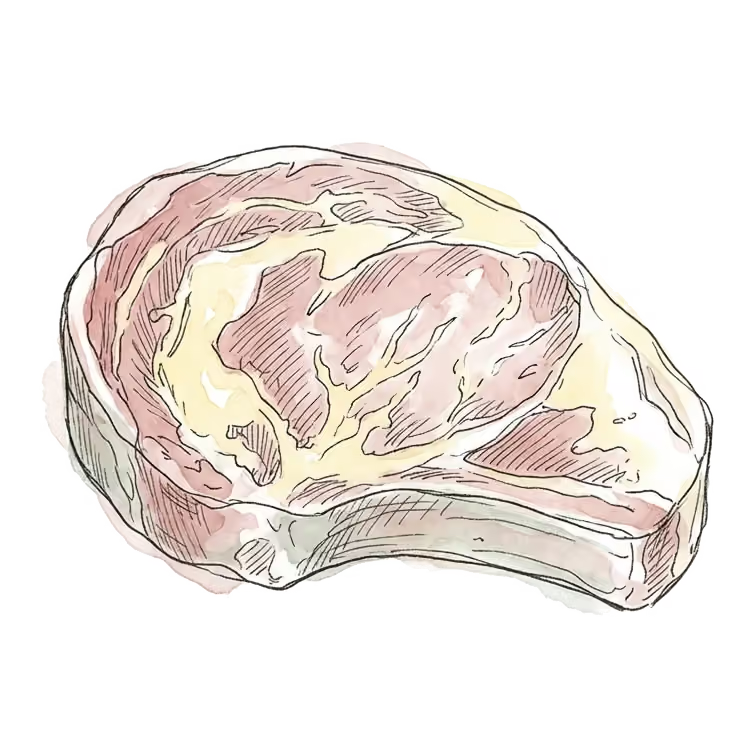
Grass-Fed Beef
Bos taurus · also known as grass-finished beef, pasture-raised beef, pastured beef, 100% grass-fed beef
By Superfoods Advisor Editors·July 3, 2026
Grass-fed vs grain-fed beef: how omega-3s, CLA, vitamin E, fat, protein, iron and zinc compare, what the USDA grass-fed label means, and red meat cautions.
Grass-fed beef comes from cattle (Bos taurus) that eat only grass and forage after weaning, while grain-fed (grain-finished) cattle spend their final months on feedlot rations. Compared with grain-fed beef, grass-fed beef is usually leaner and has more omega-3s, CLA and vitamin E per gram of fat, but protein, iron, zinc and B12 are about the same.
Grain-finished cattle are typically transitioned to feedlot diets that are generally 70–90% grain and protein concentrates, for anywhere from 90 to 300 days before slaughter, to accelerate weight gain and increase marbling (USDA Economic Research Service). In the United States, “grass-fed” label claims must be approved by the USDA Food Safety and Inspection Service, which requires that the animals were not fed grain and had continuous access to pasture during the growing season; the separate USDA Agricultural Marketing Service standard was withdrawn in 2016 (Federal Register). FSIS treats “grass-fed” and “100% grass-fed” as synonymous: both require that the animals ate only grass or forage after weaning, and cattle with partial grain feeding must carry a qualified claim such as “fed 85% grass and 15% corn.” FSIS verifies the claim by reviewing the producer’s diet records (Federal Register, 2019), so consumers who want on-farm auditing may look for third-party certification (e.g., American Grassfed Association).
The nutritional distinction between grass-fed and grain-finished beef is real but modest in magnitude relative to total dietary context. The most consistently documented differences are in fatty acid profile — specifically higher concentrations of conjugated linoleic acid (CLA) and a more favorable omega-6:omega-3 ratio in grass-fed beef — along with somewhat higher concentrations of antioxidant vitamins E and carotenoids. Protein quality, heme iron, zinc, and B12 content are comparable between production systems.
Evidence at a glance
Grass-Fed vs. Grain-Fed Beef at a Glance
Grass-fed beef differs from grain-fed beef mainly in its fat: less of it, with a higher share of omega-3s and CLA. The table summarizes the differences documented in compositional studies, chiefly the Daley et al. (2010) review cited below.
| Attribute | Grass-fed | Grain-fed (grain-finished) |
|---|---|---|
| Diet after weaning | Grass and forage only | Feedlot rations of 70–90% grain and concentrates for 90–300 days |
| Omega-6:omega-3 ratio | ~1.5:1 | ~7.7:1 |
| EPA + DHA (one study, per 100 g muscle) | ~29 mg | ~17 mg |
| CLA per gram of fat | Higher | Lower |
| Vitamin E | About 3× higher | Lower |
| Total fat | Tends to be leaner | More marbling |
| Protein, iron, zinc, B12 | Comparable | Comparable |
Whether grass-fed beef is “better” depends on the goal. For omega-3 intake, neither is a meaningful source next to oily fish such as sardines. For protein and minerals, the two are interchangeable, and grass-fed beef usually costs more.
Active Compounds and Nutritional Profile
Beef of either kind is a dense source of complete protein, zinc, iron and B12; production system changes mainly the fat. USDA FoodData Central has no cooked grass-fed ground beef entry, so the core values below are for 100 g of broiled 85% lean ground beef (USDA FoodData Central); USDA’s raw grass-fed ground beef entry (USDA FoodData Central) is similar per gram of protein. The fatty acid and vitamin E comparisons come from published compositional analyses:
- Calories: ~250 kcal; leaner blends and trimmed cuts will be lower, marbled cuts higher
- Protein: ~26 g (complete; in a pig-model study, raw ground beef and ribeye scored a DIAAS above 100 for adults while cooked ground beef scored slightly below (Bailey et al., 2020))
- Total fat: ~15 g; in ground beef this is set mainly by the lean-to-fat blend rather than the production system
- Saturated fat: ~6 g
- Monounsaturated fat: ~6.7 g (predominantly oleic acid)
- Omega-3 fatty acids (ALA + EPA + DHA): higher in grass-fed than grain-finished beef on a per-gram-of-fat basis, though absolute amounts per serving are small (Daley et al., 2010)
- CLA (conjugated linoleic acid): higher in grass-fed than grain-finished beef on a per-gram-of-fat basis, along with its precursor trans-vaccenic acid (Daley et al., 2010); CLA isomer c9,t11 predominates
- Omega-6:omega-3 ratio: averaged about 1.5:1 in grass-fed vs. 7.7:1 in grain-fed beef across the studies reviewed by Daley et al. (2010); a lower ratio is often presented as favorable, although some lipid researchers regard the ratio as a poor metric and favor tracking absolute EPA+DHA intake instead (Harris, 2018)
- Iron: ~2.6 mg per 100 g, much of it heme iron; comparable between production systems
- Zinc: ~6.3 mg (~57% DV); comparable between production systems
- Vitamin B12: ~2.6 mcg (~110% DV)
- Creatine: beef muscle is one of the main dietary sources, though cooking converts part of it to creatinine and levels vary by muscle (Purchas et al., 2004)
- Vitamin E (alpha-tocopherol): about three-fold higher in grass-fed than grain-fed beef; absolute amounts are small (roughly 0.2–0.8 mg per 100 g of muscle in grass-fed beef) (Daley et al., 2010)
- Beta-carotene: trace amounts; grass-fed beef has higher carotenoid content, which can give its fat a yellowish color (Daley et al., 2010)
Labeling note: USDA organic certification governs animal welfare, antibiotic, and hormone practices but does not require grass-finishing; organic slaughter cattle may be finished on grain in a feedlot for up to 120 days or one-fifth of their life, whichever is shorter (7 CFR 205.239). A beef product can be organic but grain-finished, or grass-fed but not certified organic. These attributes are independent.
Evidence for Purported Benefits
Favorable Fatty Acid Profile and Cardiovascular Markers
Evidence:Preliminary Higher omega-3 and CLA are measured directly; CLA supplement trials gave mixed lipid effects; no outcome data at food doses.
The higher omega-3 content and more favorable omega-6:omega-3 ratio of grass-fed beef is well-documented in compositional studies. A review by Daley et al. (Nutrition Journal, 2010) concluded that grass-based diets raise omega-3 fatty acids, including small amounts of EPA and DHA, and CLA per gram of fat compared to grain finishing, while noting that because grain-fed beef is fattier, consumers of higher-fat grain-fed portions may reach similar total intakes of omega-3s and CLA. However, the absolute amounts of EPA and DHA in beef — even grass-fed beef — remain low relative to fatty fish; one study in Daley’s review measured about 29 mg EPA+DHA per 100 g of grass-fed muscle (versus about 17 mg in grain-fed), compared with roughly 1,000 mg in 100 g of canned sardines and over 2,000 mg in farmed Atlantic salmon (USDA FoodData Central; USDA FoodData Central). The practical contribution of beef omega-3s to total dietary EPA+DHA is therefore modest unless red meat is consumed in very large quantities.
The cardiovascular impact of CLA has been studied primarily in supplement form and in animal models. Some human trials have found modest reductions in body fat mass with CLA supplementation: in a one-year randomized placebo-controlled trial in 180 overweight adults, body fat mass was 7–9% lower than placebo, but lipid markers moved unfavorably, with LDL rising in one CLA group, HDL falling in the other, and lipoprotein(a) rising in both (Gaullier et al., American Journal of Clinical Nutrition, 2004). Evidence at food-source concentrations is limited. CLA from ruminant animal fats may differ metabolically from synthetically produced CLA supplements, which often contain different isomer ratios.
Protein Quality and Muscle Mass
Evidence:Strong Beef is a complete, leucine-rich protein by PDCAAS and DIAAS; grass-fed and grain-finished beef do not differ meaningfully.
Beef is a high-quality complete protein source by both PDCAAS and DIAAS measures, providing all essential amino acids with particularly high concentrations of branched-chain amino acids (BCAAs), particularly leucine (~2 g per 100 g of cooked lean ground beef; USDA FoodData Central), which is a key signaling molecule for muscle protein synthesis via mTORC1 (Phillips & Van Loon, 2011). The protein quality between grass-fed and grain-finished beef is comparable; dietary protein studies demonstrating muscle protein synthesis benefits from beef are not differentiated by production method. Grass-fed beef tends to be leaner (Van Elswyk & McNeill, 2014), so it may have lower total fat and calories per serving, which is a compositional distinction but not a protein-quality distinction.
Micronutrient Density: Zinc, Iron, and B12
Evidence:Strong Beef’s zinc, heme iron and B12 content is measured directly; differences between production systems are modest.
Beef is a recognized dietary source of heme iron (high bioavailability), zinc (a cofactor for numerous enzymes), and vitamin B12 (essential for neurological function and red blood cell production). These benefits apply to beef generally and are not substantially differentiated between grass-fed and grain-finished. Zinc from animal sources is more bioavailable than from plant sources due to lower phytate competition. For populations at risk of zinc or iron deficiency, lean beef of either type is a clinically relevant dietary contributor.
Antioxidant Vitamin Content
Evidence:Lab & animal only Higher vitamin E and carotenoids are documented compositionally; no human trials show a consumer benefit.
Compositional studies have generally found higher concentrations of vitamin E (alpha-tocopherol) and carotenoids in the fat and muscle tissue of grass-fed cattle (Daley et al., 2010). This is mechanistically logical: pasture-fed animals ingest more plant-derived antioxidant compounds through fresh forage. Vitamin E in meat may also provide some oxidative stability, reducing lipid peroxidation during storage and cooking. Whether the higher vitamin E content in grass-fed beef translates to meaningful antioxidant benefits for the consumer, above and beyond other dietary vitamin E sources, has not been directly demonstrated in clinical trials.
Typical Use and Preparation
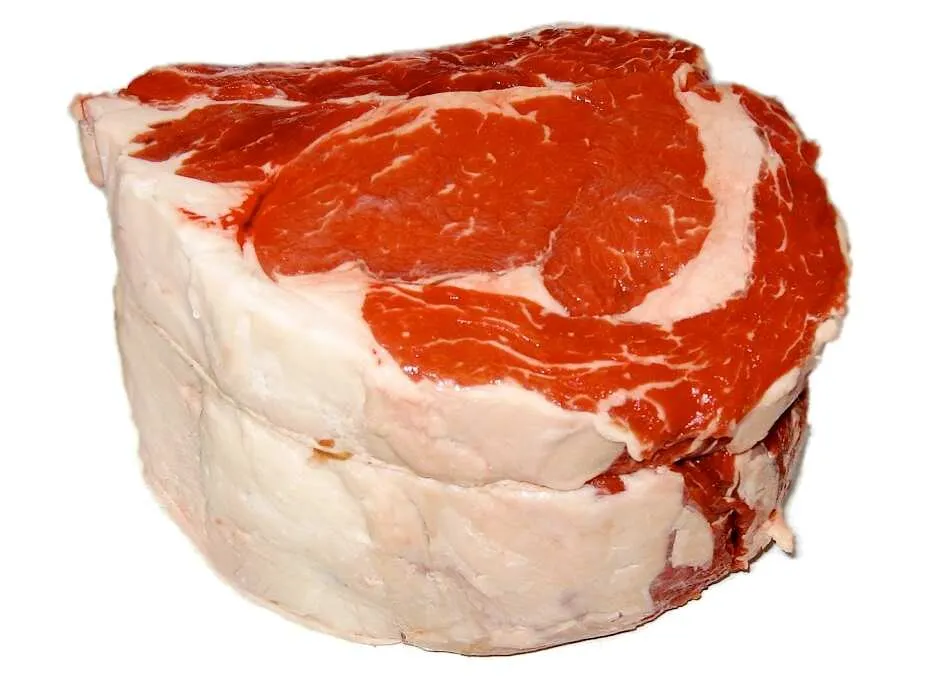 Photo: Michael C. Berch, aka MCB at en.wikipedia, CC BY-SA 2.5, via Wikimedia Commons
Grass-fed beef is available in ground, steak, roast, and other cuts. Due to lower fat content and marbling in many grass-fed cuts, it can dry out more quickly during high-heat cooking than well-marbled grain-finished beef. For whole cuts, cooking to USDA’s minimum safe internal temperature of 63°C / 145°F with a 3-minute rest, rather than well past it, helps retain juiciness; ground beef must reach 71°C / 160°F (USDA FSIS).
Marinades containing acidic components (citrus juice, vinegar) can improve moisture retention and tenderness in leaner grass-fed cuts. Slower cooking methods (braising, slow cooker) are well-suited to tougher grass-fed cuts.
Grass-fed beef is typically more expensive than conventional beef. Economical cuts such as chuck, round, or ground beef provide comparable micronutrient profiles to premium cuts at lower cost.
Beef appears alongside oysters and pumpkin seeds as a zinc source in our guide to immune-supporting foods. For the organ meat from the same animal, see beef liver.
Safety, Interactions, and Contraindications
Red meat and colorectal cancer: The International Agency for Research on Cancer (IARC) has classified processed red meat as Group 1 carcinogen and unprocessed red meat as Group 2A (probably carcinogenic to humans), mainly on the basis of colorectal cancer associations (Bouvard et al., 2015). Most of this research does not differentiate by production method (grass-fed vs. grain-finished). The absolute risk increase associated with red meat consumption is modest in the context of other dietary and lifestyle factors, but the American Cancer Society guideline recommends limiting red and processed meat (Rock et al., 2020). This applies to grass-fed beef as well.
Cardiovascular disease context: An earlier meta-analysis found coronary heart disease associated with processed but not unprocessed red meat (Micha et al., 2010); a later meta-analysis of prospective cohorts associated each additional 50 g/day of unprocessed red meat with a 9% higher risk of ischemic heart disease (Papier et al., 2023). High intake of saturated fat from any source remains a consideration for individuals with LDL-C management goals. The lower marbling of lean grass-fed beef translates to somewhat lower saturated fat per serving compared to well-marbled grain-finished cuts.
Trimethylamine N-oxide (TMAO): In a randomized crossover feeding trial, four weeks of a red-meat diet more than doubled plasma TMAO, while white-meat and non-meat protein diets did not raise it (Wang et al., 2019). TMAO is a gut microbiome-derived metabolite associated with cardiovascular risk in some epidemiological studies. Whether this association is causal and whether production system affects TMAO response is an active research question.
Gout and hyperuricemia: Beef is a moderate-purine food, and higher meat intake was associated with a higher risk of incident gout in a 12-year cohort of 47,150 men (Choi et al., 2004). Individuals with gout may need to moderate red meat intake per physician guidance.
Drug interactions: Few drug interactions are specific to beef. People taking levodopa for Parkinson’s disease should know that high-protein meals can blunt its effect, because dietary large neutral amino acids compete with the drug for transport into the brain (Nutt et al., 1984); a prescriber can advise on protein timing. Beef is not a meaningful source of vitamin K (about 1 µg per 100 g; USDA FoodData Central), so it is not a concern for warfarin dosing.
Frequently Asked Questions
What is grass-fed beef?
Grass-fed beef comes from cattle that ate only grass or forage after weaning and, under USDA FSIS rules, had continuous access to pasture during the growing season. FSIS treats “grass-fed” and “100% grass-fed” as the same claim and verifies it from producer diet records, so buyers wanting on-farm audits may look for third-party certification such as the American Grassfed Association.
Is grass-fed beef better than grain-fed beef?
Grass-fed beef has a more favorable fatty acid profile per gram of fat, more vitamin E and usually less total fat. Its protein, iron, zinc and B12 match grain-fed beef. The omega-3 gain is small in absolute terms, so the health difference for most diets is modest; price, taste preference and farming practices often weigh as much in the choice.
Is grass-fed beef healthier?
Compositional studies show measurable differences, but no human outcome trials show that eating grass-fed rather than grain-fed beef improves health. CLA supplement trials gave mixed results on blood lipids, and vitamin E differences have not been tested for consumer benefit. Cautions about red meat and colorectal cancer apply to both, since that research does not separate production systems.
Is grass-fed beef the same as organic beef?
No. USDA organic certification covers antibiotics, hormones and animal welfare but does not require grass-finishing: organic cattle may be finished on grain in a feedlot for up to 120 days or one-fifth of their life. Beef can be organic but grain-finished, or grass-fed but not organic. Labels that state both are the only way to get both.
How should you cook grass-fed beef?
Lean grass-fed cuts can dry out faster under high heat than marbled grain-finished beef. Cooking whole cuts to USDA’s 63°C (145°F) with a 3-minute rest, rather than well past it, helps retain moisture, while ground beef must reach 71°C (160°F). Acidic marinades and slow methods such as braising suit tougher cuts.
References
Show all 14 referencesShow fewer
- Daley, C. A., Abbott, A., Doyle, P. S., Nader, G. A., & Larson, S. (2010). A review of fatty acid profiles and antioxidant content in grass-fed and grain-fed beef. Nutrition Journal, 9, 10.
- Gaullier, J. M., Halse, J., Høye, K., et al. (2004). Conjugated linoleic acid supplementation for 1 y reduces body fat mass in healthy overweight humans. American Journal of Clinical Nutrition, 79(6), 1118–1125.
- Micha, R., Wallace, S. K., & Mozaffarian, D. (2010). Red and processed meat consumption and risk of incident coronary heart disease, stroke, and diabetes mellitus: a systematic review and meta-analysis. Circulation, 121(21), 2271–2283.
- Bouvard, V., Loomis, D., Guyton, K. Z., et al. (2015). Carcinogenicity of consumption of red and processed meat. The Lancet Oncology, 16(16), 1599–1600.
- Van Elswyk, M. E., & McNeill, S. H. (2014). Impact of grass/forage feeding versus grain finishing on beef nutrients and sensory quality: The U.S. experience. Meat Science, 96(1), 535–540.
- Phillips, S. M., & Van Loon, L. J. C. (2011). Dietary protein for athletes: from requirements to optimum adaptation. Journal of Sports Sciences, 29(Suppl 1), S29–S38.
- Bailey, H. M., Mathai, J. K., Berg, E. P., & Stein, H. H. (2020). Most meat products have digestible indispensable amino acid scores that are greater than 100, but processing may increase or reduce protein quality. British Journal of Nutrition, 124(1), 14–22.
- Purchas, R. W., Rutherfurd, S. M., Pearce, P. D., Vather, R., & Wilkinson, B. H. (2004). Cooking temperature effects on the forms of iron and levels of several other compounds in beef semitendinosus muscle. Meat Science, 68(2), 201–207.
- Harris, W. S. (2018). The Omega-6:Omega-3 ratio: A critical appraisal and possible successor. Prostaglandins, Leukotrienes and Essential Fatty Acids, 132, 34–40.
- Papier, K., Knuppel, A., Syam, N., Jebb, S. A., & Key, T. J. (2023). Meat consumption and risk of ischemic heart disease: A systematic review and meta-analysis. Critical Reviews in Food Science and Nutrition, 63(3), 426–437.
- Wang, Z., Bergeron, N., Levison, B. S., et al. (2019). Impact of chronic dietary red meat, white meat, or non-meat protein on trimethylamine N-oxide metabolism and renal excretion in healthy men and women. European Heart Journal, 40(7), 583–594.
- Choi, H. K., Atkinson, K., Karlson, E. W., Willett, W., & Curhan, G. (2004). Purine-rich foods, dairy and protein intake, and the risk of gout in men. New England Journal of Medicine, 350(11), 1093–1103.
- Rock, C. L., Thomson, C., Gansler, T., et al. (2020). American Cancer Society guideline for diet and physical activity for cancer prevention. CA: A Cancer Journal for Clinicians, 70(4), 245–271.
- Nutt, J. G., Woodward, W. R., Hammerstad, J. P., Carter, J. H., & Anderson, J. L. (1984). The “on-off” phenomenon in Parkinson’s disease: relation to levodopa absorption and transport. New England Journal of Medicine, 310(8), 483–488.
More in Animal Foods
- Anchovies (Engraulis encrasicolus)
Anchovies vs sardines: how the two small oily fish compare on omega-3s, calcium, B12, sodium and mercury, plus anchovy nutrition, benefits and safety.
- Beef Liver
Is beef liver good for you? Its B12, vitamin A, copper and iron per 100 g, how often to eat it, liver supplements, and the vitamin A toxicity limit.
- Bone Broth
Is bone broth good for you? What a cup contains, how it compares with collagen supplements and chicken broth, and the evidence on joints, gut and sleep.
- Eggs
Are eggs good for you? Egg nutrition per large egg, whole eggs vs egg whites, what cohort studies show on cholesterol and heart risk, and egg safety.
- Oysters
Oyster benefits: zinc, B12, copper, selenium and omega-3s per serving, what the evidence shows, how many to eat, and the Vibrio risk of raw oysters.
- Pastured Chicken
Pasture-raised vs free-range chicken: what each USDA label and certifier requires, how the meat differs nutritionally, and chicken safety facts.



Curated by Superfoods Advisor Editors·Last updated