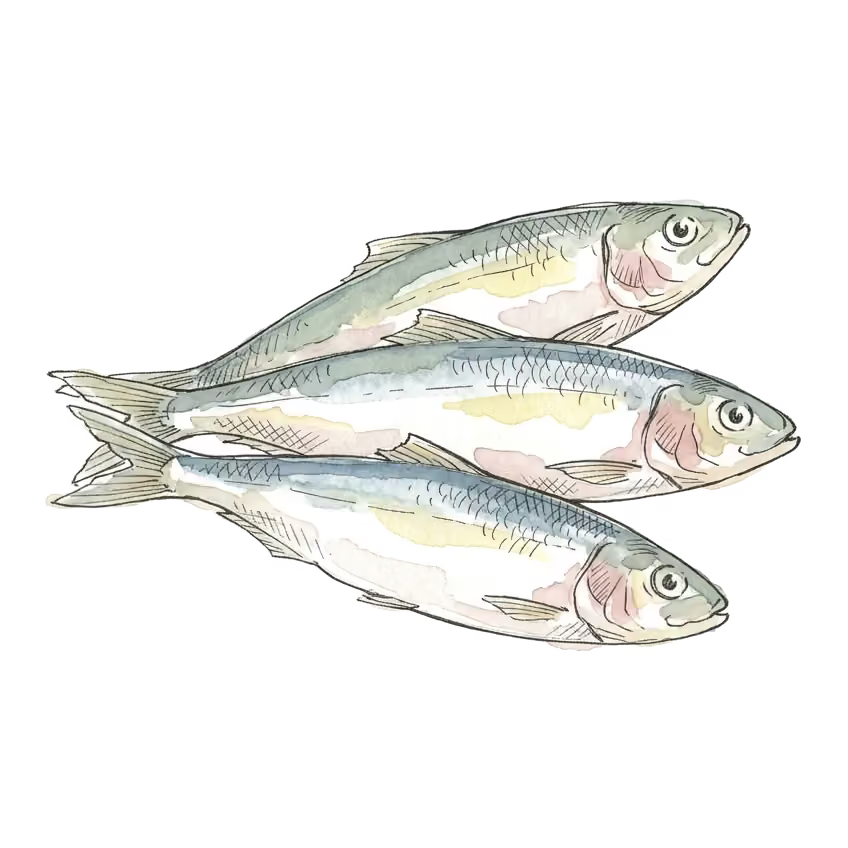
Sardines
Sardina pilchardus · also known as pilchards, European sardine, Pacific sardine, canned sardines, brisling sardines
By Superfoods Advisor Editors·July 3, 2026
Are sardines good for you? Canned sardines give about 1 g omega-3, 382 mg calcium and 8.9 mcg B12 per 100 g, with very low mercury. Benefits and risks.
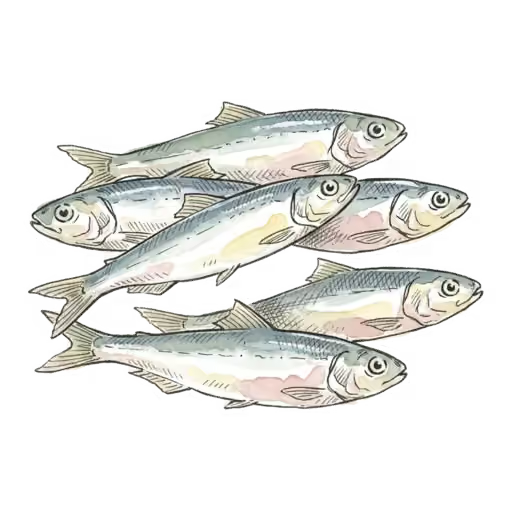
Sardines are small, oily, schooling fish (Sardina pilchardus in Europe, Sardinops sagax in the Pacific), sold mostly canned with their soft, edible bones. They are a nutritious choice for most people: 100 g canned in oil supplies about 25 g of protein, 1 g of EPA and DHA, 382 mg of calcium and 8.9 mcg of B12, with very low mercury.
Canned sardines sold in North America often contain Pacific sardines or similar small pelagic species, also called pilchards; nutritionally they are comparable. Sardines are short-lived, usually caught young, and feed on plankton rather than other fish, which limits how much mercury they accumulate. They are often compared with anchovies, a smaller relative usually eaten as salty cured fillets.
Evidence at a glance
Active Compounds and Nutritional Profile
Canned sardines are a protein-dense, low-mercury fish whose edible bones add calcium that boneless fish lacks. The following values are per 100 g of canned sardines in oil, drained, with bones, based on USDA FoodData Central (FDC ID 175139, “Fish, sardine, Atlantic, canned in oil, drained solids with bone”):
- Calories: ~208 kcal
- Protein: ~24.6 g (complete; high biological value)
- Total fat: ~11.4 g
- Saturated fat: ~1.5 g
- EPA (eicosapentaenoic acid): ~0.47 g per 100 g
- DHA (docosahexaenoic acid): ~0.51 g per 100 g
- Total EPA + DHA: approximately 1 g per 100 g (varies by species, season, and canning medium)
- Calcium: ~382 mg (~29% DV) — contributed primarily by the edible bones; far higher than in boneless fish fillets
- Vitamin D: ~193 IU (4.8 mcg) per 100 g (~24% DV); lower than wild salmon but significant
- Vitamin B12: ~8.9 mcg (~371% DV) — an exceptionally rich source
- Selenium: ~52 mcg (~95% DV)
- Phosphorus: ~490 mg (~39% DV)
- Iron (heme): ~2.9 mg (~16% DV)
- Zinc: ~1.3 mg (~12% DV)
- Niacin (B3): ~5.2 mg (~33% DV)
- Sodium: ~307 mg in this oil-packed product; sodium varies widely by brand and packing medium, lower-sodium variants are available, and fresh sardines have no added salt
Mercury content: FDA monitoring data show sardines to have among the lowest mercury concentrations of any marine fish: a mean of 0.013 ppm across 90 samples (FDA, 2002–2010 data), far below the FDA action level of 1 ppm methylmercury. This is attributable to their small body size, short lifespan, and low trophic position in the marine food web.
Canning medium: Sardines canned in water or tomato sauce have lower total fat and caloric density than those canned in oil. When packed in oil, the type of oil (olive, soy, sunflower) influences total fatty acid content; in one canning study, sardines packed in grape seed oil took up substantial linoleic acid from the oil (Bouriga et al., 2022). The omega-3 fatty acids intrinsic to the fish are retained regardless of packing medium; however, some omega-3s may leach into the surrounding oil, which is discarded if the oil is drained.
Evidence for Purported Benefits
EPA/DHA and Cardiovascular Risk Reduction
Evidence:Preliminary Cohort studies link seafood intake to lower heart disease; no sardine-specific outcome trials exist.
The cardiovascular benefits of EPA and DHA documented in the research literature apply to all dietary sources of these fatty acids, including sardines. EPA and DHA reduce hepatic triglyceride synthesis and VLDL secretion, through mechanisms thought to include PPAR-α activation; they are also precursors to specialized pro-resolving mediators (EPA to E-series resolvins; DHA to D-series resolvins, protectins and maresins) (Serhan, 2014), which are lipid-derived molecules that actively facilitate the resolution of inflammatory processes in vascular tissue rather than simply inhibiting prostaglandin synthesis. This resolvin/protectin pathway represents a biochemically distinct anti-inflammatory mechanism from cyclooxygenase inhibition by NSAIDs, and has been proposed to account for some of the lower cardiovascular risk associated with omega-3-rich diets that triglyceride reduction alone does not explain (Serhan et al., 2004).
Prospective cohort studies have associated seafood consumption (sardines included) with lower rates of coronary heart disease and sudden cardiac death, and a 2018 AHA science advisory judged the evidence sufficient to suggest 1–2 seafood meals per week (Rimm et al., 2018). A 2019 AHA Science Advisory (Skulas-Ray et al., 2019) concluded that prescription omega-3 products at 4 g/day lower triglycerides by 30% or more in people with very high triglycerides, a pharmacological dose rather than a dietary target. A 100 g serving of canned sardines provides about 1 g EPA+DHA (USDA FoodData Central), well below that dose, so sardines are a dietary source of these fatty acids rather than a substitute for prescribed triglyceride-lowering therapy.
Bone Health and Calcium
Evidence:Preliminary Sardines with bones supply measurable calcium; absorption was tested on salmon and cod bone only, with no sardine bone-density data.
The edible bones in sardines are a significant source of calcium that is distinct from the boneless portions. The calcium in fish bones is primarily in the form of hydroxyapatite, which is also the mineral form in human bone. In a small crossover trial in 10 young men, calcium absorption from salmon and cod bone averaged about 22%, against 27% from calcium carbonate (Malde et al., 2010); sardine bone itself has not been tested this way. A 100 g serving of canned sardines with bones (~382 mg calcium) contributes approximately 29% of the adult Daily Value for calcium. For individuals who do not consume dairy or are seeking dietary sources of bone-supportive minerals, sardines represent a practical high-calcium option. The combination of calcium, vitamin D, and phosphorus in sardines addresses three key nutrients relevant to bone mineralization simultaneously, though clinical trials specifically examining sardine consumption and bone mineral density are sparse.
Vitamin B12 Adequacy
Evidence:Moderate Sardines are a rich B12 source and B12 repletion is well established; sardines themselves are not trialled.
Sardines provide 8.9 mcg B12 per 100 g, representing approximately 370% of the adult RDA of 2.4 mcg/day. This places sardines among the richer common food sources of B12, behind clams and organ meats such as liver. A single 100 g serving would meet the B12 requirement for multiple days, making sardines a highly efficient dietary strategy for populations at risk of B12 deficiency, including older adults (whose B12 deficiency usually stems from poor release of food-bound B12 when atrophic gastritis lowers stomach acid), individuals following plant-reduced diets that include fish (pescatarians), and those with marginal absorption capacity.
Selenium and Antioxidant Defense
Evidence:Lab & animal only Selenium’s antioxidant roles and mercury binding come from mechanistic and animal work; sardine-specific human data are sparse.
Selenium is an essential trace mineral and a component of the 25 human selenoproteins (Kryukov et al., 2003), including glutathione peroxidases (antioxidant defense), thioredoxin reductases (redox regulation), and iodothyronine deiodinases (thyroid hormone activation). A 100 g serving of sardines provides ~52 mcg, close to the adult RDA of 55 mcg/day. Selenium binds mercury tightly and can form inert selenium-mercury complexes, and selenium’s protective effect against mercury toxicity has been shown in animal models; whether this meaningfully lowers mercury risk from fish in humans is not established (Kaneko & Ralston, 2007). In a Spanish and Portuguese market survey, sardine had the most favorable selenium:mercury molar ratio of the fish tested, ahead of tuna and swordfish (Cabañero et al., 2005); in Pacific pelagic fish the ratio was lowest in swordfish and mako shark, the only species with more mercury than selenium (Kaneko & Ralston, 2007).
Typical Use and Preparation
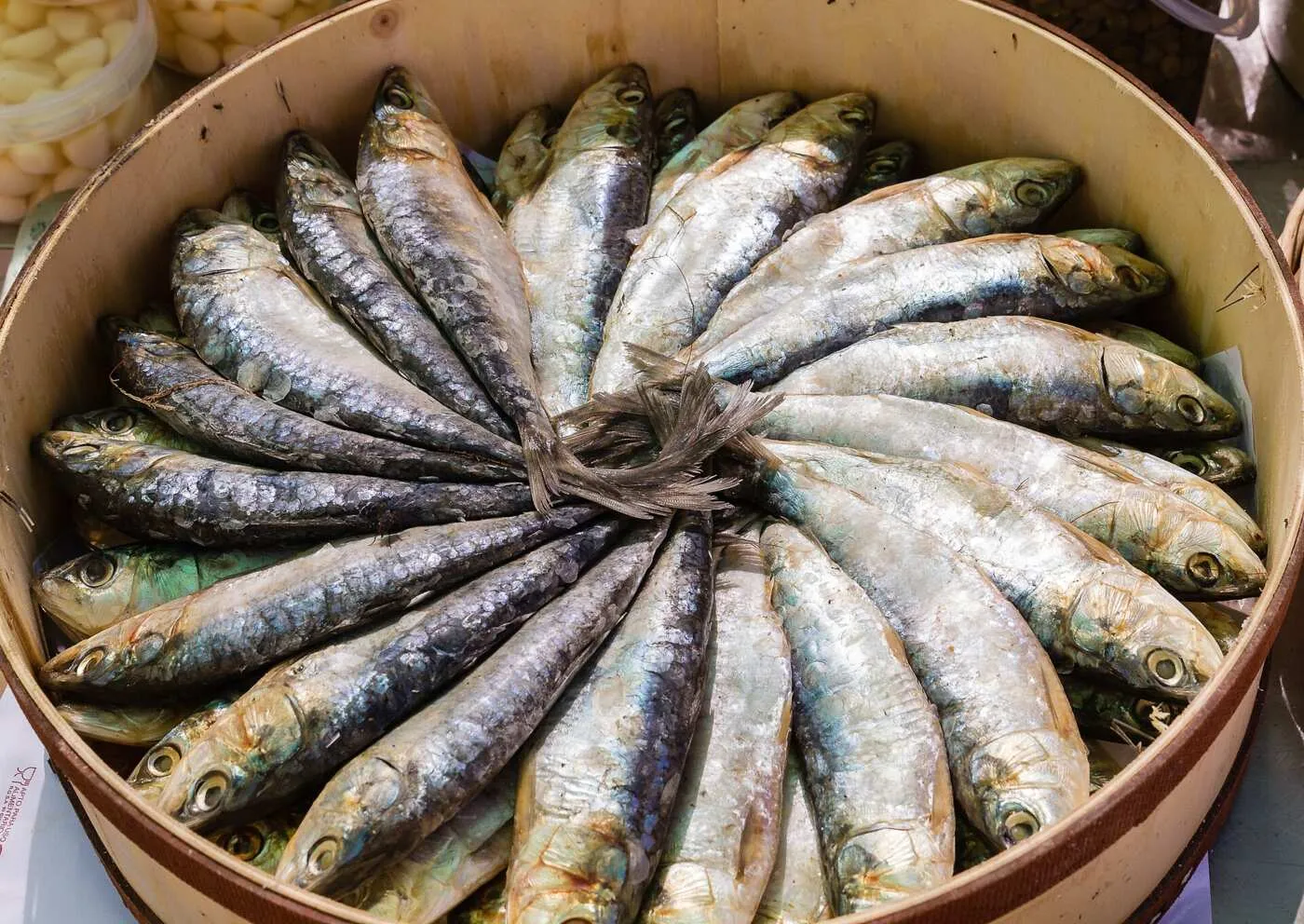 Photo: Friedrich Haag, CC BY-SA 4.0, via Wikimedia Commons
Canned sardines are the most common form globally. They are similar to fresh sardines in protein and long-chain omega-3s, but the softened bones add calcium and the packing medium changes the fat and sodium content. Bones are soft and fully edible; consuming them is recommended to obtain the calcium benefit. Canned sardines can be eaten directly, used in salads, mashed on whole-grain toast, incorporated into pasta, or served with crackers.
Fresh sardines are popular in Portugal, Spain, Greece, and coastal Mediterranean areas, typically grilled whole. Fresh fish should be refrigerated and eaten within 1–2 days of purchase (FoodSafety.gov).
Smoked and marinated sardines are widely available; sodium content is typically higher in smoked products, and marinade ingredients will affect overall nutrition.
Pairing notes: Acidic accompaniments (lemon juice, vinegar-based dressings, tomatoes) complement sardines culinarily. Lemon juice and tomatoes also supply vitamin C, which enhances absorption of non-heme iron from the rest of the meal (Hallberg et al., 1986).
Recommended intake: The 2020–2025 Dietary Guidelines for Americans recommended at least 8 oz (about 227 g) of seafood per week on a 2,000-calorie diet (the 2025–2030 edition names omega-3–rich seafood among healthy protein and fat sources without a weekly amount) (FDA), and an AHA science advisory suggests 1–2 seafood meals per week (Rimm et al., 2018). Sardines meet this recommendation efficiently and at lower cost than most other fatty fish options.
The omega-3 research review compares sardines with other fatty-fish sources of EPA and DHA, including their mercury profile, and the heart-health superfoods guide places oily fish alongside other foods studied for cardiovascular markers. Salmon is the larger oily fish most often compared with sardines on omega-3s and vitamin D.
Safety, Interactions, and Contraindications
Mercury: As noted, sardines have exceptionally low mercury content. The FDA and EPA place sardines on their “Best Choices” list, advising 2–3 servings (4 oz each) per week for people who are pregnant or breastfeeding, and 2 smaller, age-appropriate servings per week for children (FDA). Sardines are among the fatty fish, alongside salmon, Atlantic mackerel, herring, anchovies and trout, that the FDA lists as Best Choices for low mercury.
Sodium: USDA data list about 307 mg sodium per 100 g for oil-packed canned sardines (USDA FoodData Central), and brine-packed, smoked or salted products can be higher; check the label. Individuals managing hypertension or sodium-restricted diets should choose water-packed or low-sodium sardines or rinse salt-packed fish before eating.
Purine content and gout: Sardines are a high-purine food: one HPLC analysis measured about 210 mg total purines per 100 g in raw sardine and about 306 mg in half-dried sardine (Kaneko et al., 2014). Individuals with gout or hyperuricemia may need to limit sardine intake per physician guidance, as dietary purines are metabolized to uric acid. This is a consideration for a subset of individuals, not a general health concern.
Histamine: Sardines are susceptible to histamine accumulation if not chilled promptly after catch or if improperly stored. Although not a scombroid species, spoiled sardines are among the fish commonly implicated in histamine (scombroid) fish poisoning, and affected fish may not look or smell spoiled (Taylor et al., 1989). Purchasing from reputable sources with cold chain compliance and consuming promptly after opening are standard precautions.
Fish allergy: Allergy to fish, including sardines, is mediated primarily by parvalbumin proteins and can cause anaphylaxis. Fish is a major allergen subject to mandatory labeling in the U.S. (FDA). Parvalbumin is a pan-allergen, so individuals allergic to one fish species may react to others (Ruethers et al., 2018); avoidance is usually extended to all fish, though some people react to only certain species (Kourani et al., 2019).
Drug interactions: High-dose omega-3 supplements (not equivalent to dietary fish) have been flagged for possible additive effects with anticoagulants, although a small randomized trial found no significant change in INR with 3–6 g/day of fish oil in patients on stable warfarin (Bender et al., 1998). People taking anticoagulants should discuss omega-3 supplements, and any large change in fish intake, with their clinician.
Frequently Asked Questions
Are sardines a superfood?
“Superfood” is a marketing term with no legal definition, but sardines are nutrient-dense by most measures. A 100 g serving canned in oil supplies about 25 g of protein, 1 g of EPA and DHA, 382 mg of calcium from the bones and roughly 370% of the adult RDA for vitamin B12, with very low mercury. Their best-supported role is as a rich B12 source. Heart claims rest on cohort studies of seafood in general; no trial has tested sardines themselves.
Are sardines healthy to eat?
For most people, yes. Canned sardines provide complete protein, about 1 g of EPA and DHA per 100 g, calcium from their bones, vitamin D, selenium and a large amount of vitamin B12. Cohort studies link regular seafood intake with lower heart disease rates, though no trial has tested sardines specifically. Sodium, purines and fish allergy are the main caveats.
Do sardines have mercury?
Sardines contain very little mercury. FDA monitoring found a mean of 0.013 ppm across 90 samples, far below the FDA action level of 1 ppm. Their small size, short lifespan and plankton diet limit accumulation. The FDA and EPA list sardines among their “Best Choices,” the lowest-mercury group of fish.
How many sardines can you eat in a week?
There is no sardine-specific limit for the general population. FDA/EPA advice suggests 2 to 3 servings (4 oz each) a week from its “Best Choices” list, which includes sardines, for people who are pregnant or breastfeeding, and an AHA advisory suggests 1 to 2 seafood meals a week. People with gout or on sodium restriction may need less; a clinician can advise.
Can sardines cause gout?
Sardines do not cause gout on their own, but they are high in purines, which the body breaks down into uric acid. One analysis measured about 210 mg of purines per 100 g of raw sardine. People who already have gout or hyperuricemia are often advised to limit sardines and other high-purine seafood, ideally with guidance from their physician.
Are sardines a good source of protein?
Yes. A 100 g serving of canned sardines in oil provides about 24.6 g of complete protein containing all essential amino acids, for about 208 kcal. That serving also delivers calcium, vitamin B12 and selenium, which makes sardines one of the more nutrient-dense protein sources per calorie among canned foods.
Should you eat the bones in canned sardines?
The bones in canned sardines are softened by processing and are safe to eat for most people. They are where most of the calcium comes from: about 382 mg per 100 g with bones. In a small trial, calcium from salmon and cod bone was absorbed at about 22%, close to calcium carbonate; sardine bone itself has not been tested.
References
Show all 20 referencesShow fewer
- U.S. Department of Agriculture, Agricultural Research Service. FoodData Central — Sardines, Atlantic, canned in oil, drained solids with bone. FDC ID 175139. https://fdc.nal.usda.gov/food-details/175139/nutrients
- Serhan, C. N., Arita, M., Hong, S., & Gotlinger, K. (2004). Resolvins, docosatrienes, and neuroprotectins, novel omega-3-derived mediators, and their endogenous aspirin-triggered epimers. Lipids, 39(11), 1125–1132.
- Serhan, C. N. (2014). Pro-resolving lipid mediators are leads for resolution physiology. Nature, 510(7503), 92–101.
- Skulas-Ray, A. C., Wilson, P. W. F., Harris, W. S., et al. (2019). Omega-3 fatty acids for the management of hypertriglyceridemia: a science advisory from the American Heart Association. Circulation, 140(12), e673–e691.
- U.S. Food and Drug Administration. Mercury levels in commercial fish and shellfish (1990–2012). https://www.fda.gov/food/environmental-contaminants-food/mercury-levels-commercial-fish-and-shellfish-1990-2012
- Bouriga, N., et al. (2022). Variations in nutritional quality and fatty acids composition of sardine (Sardina pilchardus) during canning process in grape seed and olive oils. Journal of Food Science and Technology, 59(12), 4844–4852.
- Malde, M. K., Bügel, S., Kristensen, M., et al. (2010). Calcium from salmon and cod bone is well absorbed in young healthy men: a double-blinded randomised crossover design. Nutrition & Metabolism, 7, 61.
- Kaneko, K., Aoyagi, Y., Fukuuchi, T., Inazawa, K., & Yamaoka, N. (2014). Total purine and purine base content of common foodstuffs for facilitating nutritional therapy for gout and hyperuricemia. Biological and Pharmaceutical Bulletin, 37(5), 709–721.
- Kryukov, G. V., Castellano, S., Novoselov, S. V., et al. (2003). Characterization of mammalian selenoproteomes. Science, 300(5624), 1439–1443.
- Kaneko, J. J., & Ralston, N. V. C. (2007). Selenium and mercury in pelagic fish in the central North Pacific near Hawaii. Biological Trace Element Research, 119(3), 242–254.
- Cabañero, A. I., Carvalho, C., Madrid, Y., Batoréu, C., & Cámara, C. (2005). Quantification and speciation of mercury and selenium in fish samples of high consumption in Spain and Portugal. Biological Trace Element Research, 103(1), 17–35.
- Rimm, E. B., Appel, L. J., Chiuve, S. E., et al. (2018). Seafood long-chain n-3 polyunsaturated fatty acids and cardiovascular disease: a science advisory from the American Heart Association. Circulation, 138(1), e35–e47.
- Hallberg, L., Brune, M., & Rossander, L. (1986). Effect of ascorbic acid on iron absorption from different types of meals. Human Nutrition: Applied Nutrition, 40(2), 97–113.
- Taylor, S. L., Stratton, J. E., & Nordlee, J. A. (1989). Histamine poisoning (scombroid fish poisoning): an allergy-like intoxication. Journal of Toxicology: Clinical Toxicology, 27(4–5), 225–240.
- Ruethers, T., Taki, A. C., Johnston, E. B., et al. (2018). Seafood allergy: a comprehensive review of fish and shellfish allergens. Molecular Immunology, 100, 28–57.
- Kourani, E., Corazza, F., Michel, O., & Doyen, V. (2019). What do we know about fish allergy at the end of the decade? Journal of Investigational Allergology and Clinical Immunology, 29(6), 414–421.
- Bender, N. K., Kraynak, M. A., Chiquette, E., Linn, W. D., Clark, G. M., & Bussey, H. I. (1998). Effects of marine fish oils on the anticoagulation status of patients receiving chronic warfarin therapy. Journal of Thrombosis and Thrombolysis, 5(3), 257–261.
- U.S. Food and Drug Administration & U.S. Environmental Protection Agency. Advice about eating fish (revised October 2021). https://www.fda.gov/food/consumers/advice-about-eating-fish
- U.S. Food and Drug Administration. Action levels for poisonous or deleterious substances in human food and animal feed. https://www.fda.gov/regulatory-information/search-fda-guidance-documents/guidance-industry-action-levels-poisonous-or-deleterious-substances-human-food-and-animal-feed
- U.S. Food and Drug Administration. Food allergies. https://www.fda.gov/food/nutrition-food-labeling-and-critical-foods/food-allergies
Related content

More in Animal Foods
- Anchovies (Engraulis encrasicolus)
Anchovies vs sardines: how the two small oily fish compare on omega-3s, calcium, B12, sodium and mercury, plus anchovy nutrition, benefits and safety.
- Beef Liver
Is beef liver good for you? Its B12, vitamin A, copper and iron per 100 g, how often to eat it, liver supplements, and the vitamin A toxicity limit.
- Bone Broth
Is bone broth good for you? What a cup contains, how it compares with collagen supplements and chicken broth, and the evidence on joints, gut and sleep.
- Eggs
Are eggs good for you? Egg nutrition per large egg, whole eggs vs egg whites, what cohort studies show on cholesterol and heart risk, and egg safety.
- Grass-Fed Beef
Grass-fed vs grain-fed beef: how omega-3s, CLA, vitamin E, fat, protein, iron and zinc compare, what the USDA grass-fed label means, and red meat cautions.
- Oysters
Oyster benefits: zinc, B12, copper, selenium and omega-3s per serving, what the evidence shows, how many to eat, and the Vibrio risk of raw oysters.



Curated by Superfoods Advisor Editors·Last updated