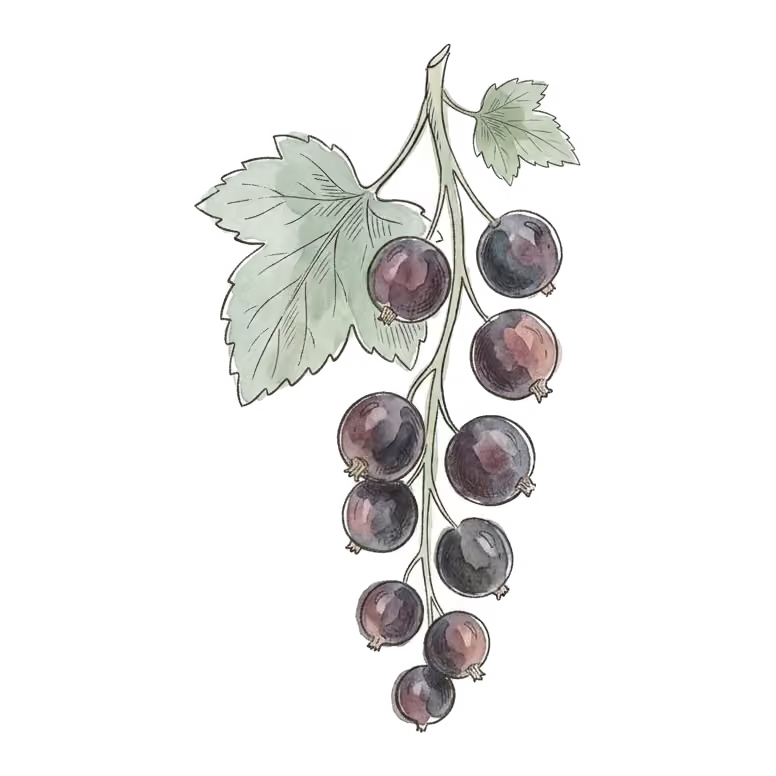
Blackcurrant (Ribes nigrum)
Ribes nigrum · also known as black currant, cassis, blackcurrant berry
By Superfoods Advisor Editors·July 3, 2026
Blackcurrant benefits: a tart berry with 181 mg vitamin C per 100 g and dense anthocyanins. Small trials on eye fatigue, exercise recovery and cognition.
Blackcurrant (Ribes nigrum, also black currant or cassis) is a tart, deep-purple berry from northern Europe and temperate Asia, notable for about 181 mg of vitamin C per 100 g and a high anthocyanin content. Its proposed benefits for eye fatigue, exercise recovery and cognition rest on small, short trials, many funded by industry.
It has been cultivated for centuries across Scandinavia, the British Isles, and Eastern Europe, where it appears in preserves, cordials, and the liqueur cassis. Traditional herbalists valued the leaves and berries for their purported anti-inflammatory and astringent properties, and the plant appears in European folk medicine as a remedy for sore throats and urinary complaints.
Unlike its common berry relatives, blackcurrant carries a distinctly tart, complex flavor that made it popular in processed form — jams, juices, and syrups — long before it was eaten raw. In the United Kingdom, blackcurrant cordial became a wartime staple after the government commandeered much of the national harvest to compensate for citrus shortages. A notable regulatory footnote: cultivation of Ribes species was banned federally in the United States from the early 20th century due to concerns about white pine blister rust, a fungal disease affecting timber. The federal ban was repealed in 1966 and authority passed to the states, several of which kept restrictions (USDA Agricultural Research Service); New York loosened its ban only in 2003 (Cornell Chronicle), which explains why the berry remains largely unfamiliar to American consumers despite its extensive scientific literature.
Evidence at a glance
Active Compounds
Blackcurrant’s most studied constituents are its anthocyanins, the pigments responsible for its deep color. Concentrations vary widely with cultivar; a USDA-ARS analysis of Ribes genotypes measured up to about 411 mg per 100 g of fresh fruit (Moyer et al., 2002), and in a large New Zealand dataset blackcurrant samples averaged higher than blueberries or blackberries (Scalzo et al., 2008). The predominant anthocyanins are cyanidin-3-glucoside, cyanidin-3-rutinoside, delphinidin-3-glucoside, and delphinidin-3-rutinoside, which together made up more than 97% of the total in one analysis (Slimestad & Solheim, 2002). The delphinidin glycosides are of particular research interest because delphinidin has demonstrated stronger radical-scavenging capacity than cyanidin in vitro, although translating in vitro antioxidant values to in vivo relevance requires caution.
Beyond anthocyanins, blackcurrant contains:
- Vitamin C: about 181 mg/100 g fresh weight (USDA FoodData Central), roughly three times the 53 mg/100 g listed for raw oranges (USDA FoodData Central).
- Gamma-linolenic acid (GLA): concentrated in the seed oil, a relatively rare omega-6 fatty acid with prostaglandin-modulating properties.
- Polyphenolic acids: caffeic acid, ferulic acid, and chlorogenic acid in moderate amounts.
- Quercetin and myricetin: flavonols present in the skin and leaves.
- Proanthocyanidins: condensed tannins contributing to the astringent note.
- Potassium, manganese, and iron in nutritionally relevant quantities.
The seed oil (not typically consumed in food form but available as a supplement) contains GLA at roughly 11–19% of total fatty acids in most genotypes, alongside alpha-linolenic acid (10–19%) and stearidonic acid (2–4%), a precursor of EPA (Ruiz del Castillo et al., 2002).
Nutritional Profile
Per 100 g raw European blackcurrants (USDA FoodData Central):
| Nutrient | Amount | % DV |
|---|---|---|
| Energy | 63 kcal | — |
| Water | 82.0 g | — |
| Carbohydrate | 15.4 g | — |
| Protein | 1.4 g | — |
| Fat | 0.4 g | — |
| Vitamin C | 181 mg | 201% |
| Potassium | 322 mg | 7% |
| Manganese | 0.26 mg | 11% |
| Iron | 1.5 mg | 9% |
USDA does not list fiber, sugars, or vitamin K for this food; the fiber and vitamin K figures often quoted for blackcurrants come from the red and white currant entry. Total anthocyanin content is not captured in standard USDA nutrient tables and varies considerably with cultivar (see above).
Evidence for Purported Benefits
Eye Fatigue and Visual Function
Evidence:Limited A few small, largely industry-funded RCTs from Japan; not independently replicated.
A few small randomized controlled trials, primarily from Japan, have examined blackcurrant anthocyanins and visual function. Nakaishi et al. (2000, Alternative Medicine Review) reported, in a small placebo-controlled crossover study, that a 50 mg dose of blackcurrant anthocyanosides lowered the dark adaptation threshold (n=12) and improved self-reported visual fatigue symptoms. Ohguro et al. (2012, Ophthalmologica) found that 50 mg/day of blackcurrant anthocyanins over two years was associated with less visual field deterioration than placebo in 38 patients with open-angle glaucoma who were also using their glaucoma eye drops. A proposed mechanism comes from laboratory work, in which cyanidin-3-glucoside accelerated the regeneration of rhodopsin, the rod photoreceptor pigment, in isolated rod membranes and purified protein (Tirupula et al., 2009); this has not been shown in human eyes. Trials are small and largely industry-funded; independent replication is needed before clinical conclusions can be drawn.
Cognitive Function
Evidence:Limited Small, short-term trials of blackcurrant extract; results conflict.
Cognitive effects of blackcurrant extract have been explored in several short-term trials. Watson et al. (2015, Journal of Functional Foods) reported that acute supplementation with blackcurrant extracts modulated cognitive performance in healthy young adults and inhibited monoamine oxidase-B, which was proposed as a mechanism. Sample sizes are modest and the evidence base remains early-stage.
Exercise Recovery and Muscle Damage
Evidence:Limited Several small crossover RCTs, mostly from one research group; results broadly agree.
A series of trials by Cook, Willems and colleagues at the University of Chichester investigated New Zealand blackcurrant supplementation in active adults. In a double-blind crossover trial, Cook et al. (2015, European Journal of Applied Physiology) gave 14 trained male cyclists blackcurrant extract (105 mg anthocyanins/day) or placebo for seven days and reported 27% higher fat oxidation at moderate intensity and a 2.4% faster 16.1 km time trial with the extract. In a similar seven-day crossover design, Perkins et al. (2015, International Journal of Sport Nutrition and Exercise Metabolism) reported that 13 active men covered more total distance in a repeated-sprint treadmill test with the extract than with placebo. Hunt et al. (2021, Nutrients) reported attenuated muscle soreness, faster strength recovery, and lower serum creatine kinase at 96 hours with New Zealand blackcurrant extract after strenuous eccentric arm exercise (n=27). Mechanistically, the anti-inflammatory and antioxidant properties of the anthocyanins are the proposed pathway. These are promising findings but replicate across very small samples.
Cardiovascular and Metabolic Markers
Evidence:Limited Small acute trials conflict, and a meta-analysis of four RCTs found no blood pressure effect.
Animal studies and in vitro work suggest that blackcurrant anthocyanins may improve endothelial function and reduce LDL oxidation. Small acute human trials are mixed: a 20% blackcurrant juice drink had no significant effect on vascular reactivity in 20 healthy adults (Jin et al., 2011), while an anthocyanin-rich blackcurrant beverage taken with a high-fat meal improved flow-mediated dilation over six hours in a crossover trial of 23 adults (Amini et al., 2025). Robust human RCT data on cardiovascular endpoints are lacking. A 2023 meta-analysis by Nikparast et al. (Clinical Nutrition Research) pooled four randomized trials of blackcurrant and found no significant reduction in systolic or diastolic blood pressure compared with placebo.
Typical Use and Preparation
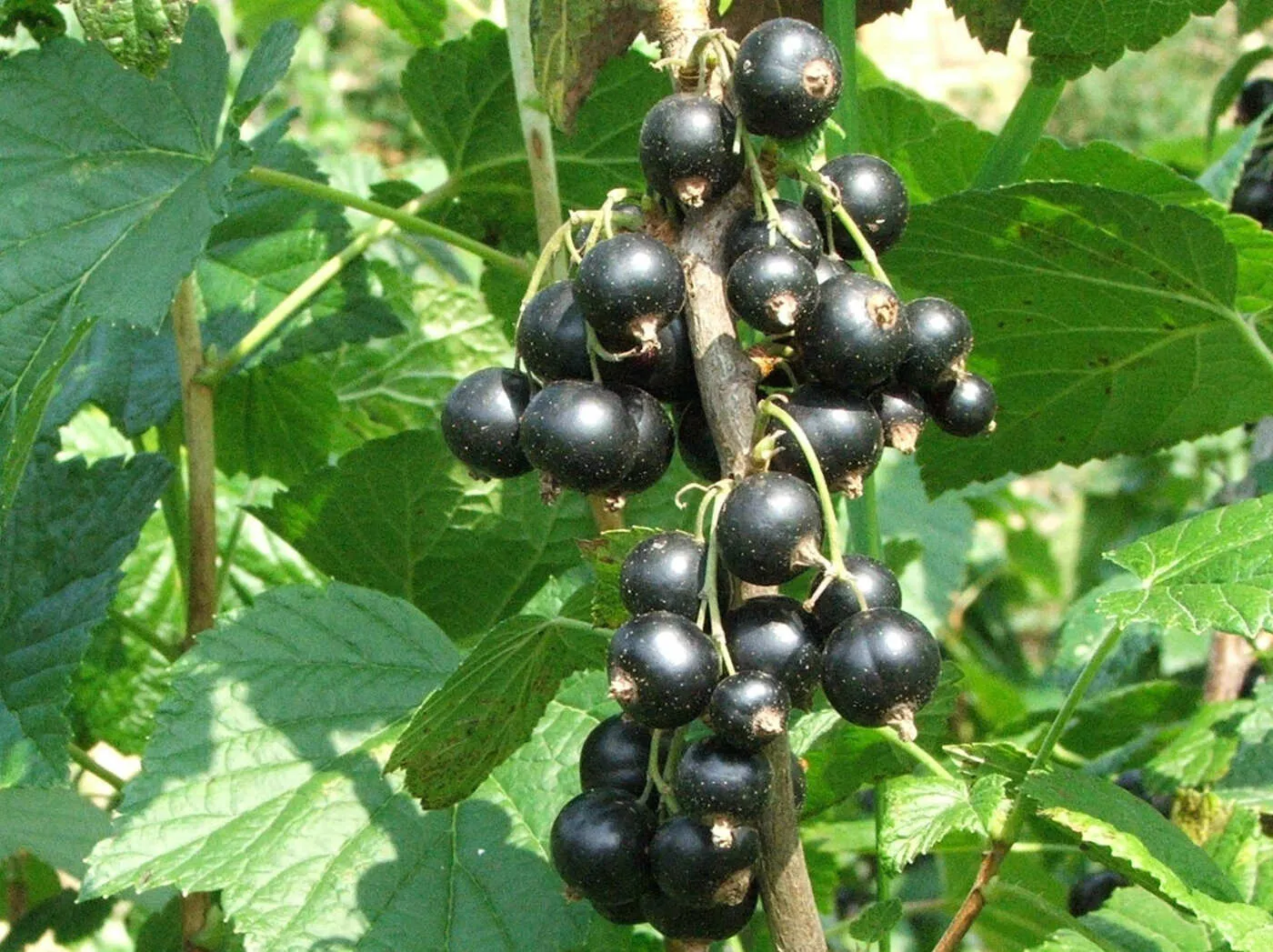 Photo: Jerzy Opioła, CC BY-SA 3.0, via Wikimedia Commons
Fresh blackcurrants are highly perishable and are most commonly found frozen, as juice, jam, or cordial (e.g., Ribena in the United Kingdom). When available fresh, they can be eaten raw but are typically sweetened due to their tartness. Common preparations include:
- Cordial and juice: The most widely consumed form globally; diluted to taste.
- Jam and preserves: High-pectin content makes blackcurrants excellent for setting.
- Cassis: The French liqueur crème de cassis, base for the kir royale cocktail.
- Frozen berries: Retained anthocyanin content after freezing is generally good; freeze-drying preserves more than heat-drying.
- Supplements: Standardized blackcurrant extract capsules are available and were used in most clinical trials.
The trials described above used about 50 mg/day of anthocyanins (eye studies) to 105 mg/day (cycling study); extract weight and anthocyanin standardization differ between products. The optimal therapeutic dose has not been established.
Among the berries here, maqui berry is the other one with a delphinidin-dominated anthocyanin profile and dry-eye research. Blackcurrant anthocyanins belong to the polyphenol family discussed in our overview of polyphenols and aging research.
Safety, Interactions, and Contraindications
Blackcurrant in food amounts is considered safe for most people. Supplement use at higher doses carries the following considerations:
Drug interactions: A single serving of a polyphenol-standardized blackcurrant juice produced fast, reversible inhibition of platelet monoamine oxidase-B (MAO-B) in a small human trial (Watson et al., 2020), so people taking MAO inhibitors (phenelzine, tranylcypromine, selegiline) should use concentrated supplements cautiously and consult a healthcare provider. A blackcurrant beverage showed a non-significant trend toward reduced platelet aggregation in one small trial (Amini et al., 2025); interactions with anticoagulants have not been studied, so people taking them should check with a clinician before using extracts.
GLA-containing seed oil: Gamma-linolenic acid may theoretically increase bleeding risk when combined with anticoagulants or antiplatelet drugs (aspirin, clopidogrel). This concern applies to seed oil supplements, not berry consumption.
Pregnancy and breastfeeding: Blackcurrant as a food is likely safe during pregnancy. Concentrated extracts and seed oil have not been adequately studied in pregnant or breastfeeding populations; avoidance of high-dose supplementation is prudent.
Allergies: Cross-reactivity with other Ribes species (red currant, gooseberry) is plausible but poorly documented, and few cases of IgE-mediated blackcurrant allergy appear in the medical literature.
Long-term safety data for concentrated blackcurrant extracts are limited.
Frequently Asked Questions
Is blackcurrant good for you?
Blackcurrants are a nutrient-dense fruit: 100 g of raw berries provides about 181 mg of vitamin C, more than twice the adult daily requirement, plus potassium and anthocyanins. Small trials suggest possible benefits for visual fatigue and exercise recovery, but they are short and mostly industry-funded. Cordials and juices are often heavily sweetened, so the whole or frozen berry is the better source.
Is blackcurrant a berry?
Yes. Botanically, a blackcurrant is a true berry: a fleshy fruit with several seeds that develops from a single flower. It grows on a shrub in the gooseberry family (Grossulariaceae), alongside red and white currants and gooseberries. Many fruits called berries, such as raspberries and blackberries, are not true berries.
Is blackcurrant the same as blackberry?
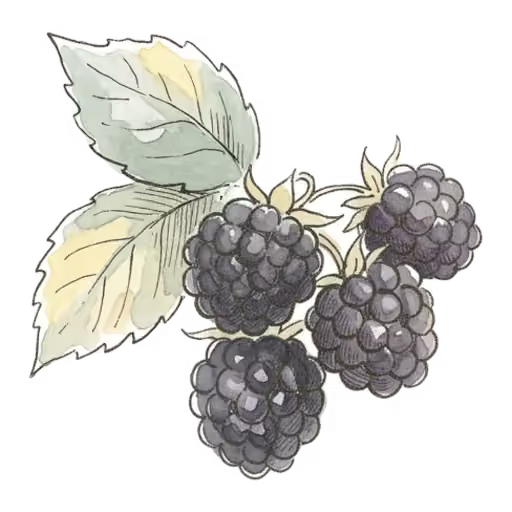
No. Blackcurrants (Ribes nigrum) grow in small clusters on a thornless shrub and are smooth, round and very tart. Blackberries (Rubus fruticosus) are aggregate fruits of many drupelets on a thorny bramble in the rose family. Blackcurrants carry much more vitamin C, about 181 mg per 100 g against 21 mg for blackberries.
Are blackcurrants the same as dried currants?
Often not. The dried “currants” sold in many shops, particularly in the United States, are usually Zante currants, a small dried grape. True blackcurrants are a different plant, Ribes nigrum, more often sold frozen, as juice, cordial or jam, or as extract capsules. The ingredient list settles it: grapes or raisins means Zante currants, while blackcurrant products name blackcurrant or Ribes nigrum.
Why are blackcurrants rare in the United States?
Federal law banned growing Ribes species in the United States in the early 20th century, because the plants host white pine blister rust, a fungal disease of timber. The federal ban ended in 1966, but several states kept restrictions, and New York loosened its ban only in 2003. That history is why the berry remains unfamiliar to many American shoppers.
References
Show all 15 referencesShow fewer
- Nakaishi, H., Matsumoto, H., Tominaga, S., & Hirayama, M. (2000). Effects of black current anthocyanoside intake on dark adaptation and VDT work-induced transient refractive alteration in healthy humans. Alternative Medicine Review, 5(6), 553–562.
- Ohguro, H., Ohguro, I., Katai, M., & Tanaka, S. (2012). Two-year randomized, placebo-controlled study of black currant anthocyanins on visual field in glaucoma. Ophthalmologica, 228(1), 26–35.
- Watson, A. W., Haskell-Ramsay, C. F., Kennedy, D. O., Cooney, J. M., Trower, T., & Scheepens, A. (2015). Acute supplementation with blackcurrant extracts modulates cognitive functioning and inhibits monoamine oxidase-B in healthy young adults. Journal of Functional Foods, 17, 524–539.
- Perkins, I. C., Vine, S. A., Blacker, S. D., & Willems, M. E. T. (2015). New Zealand blackcurrant extract improves high-intensity intermittent running. International Journal of Sport Nutrition and Exercise Metabolism, 25(5), 487–493.
- Hunt, J. E. A., Coelho, M. O. C., Buxton, S., et al. (2021). Consumption of New Zealand blackcurrant extract improves recovery from exercise-induced muscle damage in non-resistance trained men and women: a double-blind randomised trial. Nutrients, 13(8), 2875.
- Nikparast, A., Sheikhhossein, F., Amini, M. R., Tavakoli, S., & Hekmatdoost, A. (2023). The effects of blackcurrant and raspberry consumption on blood pressure: a systematic review and meta-analysis of randomized controlled trials. Clinical Nutrition Research, 12(1), 54–64.
- Slimestad, R., & Solheim, H. (2002). Anthocyanins from black currants (Ribes nigrum L.). Journal of Agricultural and Food Chemistry, 50(11), 3228–3231.
- Moyer, R. A., Hummer, K. E., Finn, C. E., Frei, B., & Wrolstad, R. E. (2002). Anthocyanins, phenolics, and antioxidant capacity in diverse small fruits: Vaccinium, Rubus, and Ribes. Journal of Agricultural and Food Chemistry, 50(3), 519–525.
- Scalzo, J., Currie, A., Stephens, J., McGhie, T., & Alspach, P. (2008). The anthocyanin composition of different Vaccinium, Ribes and Rubus genotypes. BioFactors, 34(1), 13–21.
- Ruiz del Castillo, M. L., Dobson, G., Brennan, R., & Gordon, S. (2002). Genotypic variation in fatty acid content of blackcurrant seeds. Journal of Agricultural and Food Chemistry, 50(2), 332–335.
- Cook, M. D., Myers, S. D., Blacker, S. D., & Willems, M. E. T. (2015). New Zealand blackcurrant extract improves cycling performance and fat oxidation in cyclists. European Journal of Applied Physiology, 115(11), 2357–2365.
- Tirupula, K. C., Balem, F., Yanamala, N., & Klein-Seetharaman, J. (2009). pH-dependent interaction of rhodopsin with cyanidin-3-glucoside. 2. Functional aspects. Photochemistry and Photobiology, 85(2), 463–470.
- Jin, Y., Alimbetov, D., George, T., Gordon, M. H., & Lovegrove, J. A. (2011). A randomised trial to investigate the effects of acute consumption of a blackcurrant juice drink on markers of vascular reactivity and bioavailability of anthocyanins in human subjects. European Journal of Clinical Nutrition, 65(7), 849–856.
- Amini, A. M., et al. (2025). Acute effects of an anthocyanin-rich blackcurrant beverage on markers of cardiovascular disease risk in healthy adults: a randomized, double-blind, placebo-controlled, crossover trial. Journal of Nutrition, 155(7), 2275–2289.
- Watson, A. W., Scheepens, A., Kennedy, D. O., Cooney, J. M., Trower, T. M., & Haskell-Ramsay, C. F. (2020). The pharmacodynamic profile of “Blackadder” blackcurrant juice effects upon the monoamine axis in humans: a randomised controlled trial. Nutritional Neuroscience, 23(7), 516–525.
More in Berries
- Acai Berry (Euterpe oleracea)
Is acai good for you? What small human trials show on acai benefits for antioxidants, lipids and blood sugar, plus nutrition, acai bowls and safety.
- Acerola Cherry (Malpighia emarginata)
Acerola cherry benefits come mostly from its vitamin C, about 1,680 mg per 100 g. What the evidence shows for immunity, skin and antioxidants, and safety.
- Blackberry (Rubus fruticosus)
What are blackberries good for? Fiber (5.3 g per 100 g), vitamin C, vitamin K and anthocyanins. Blackberry benefits, nutrition and what research shows.
- Blueberry (Vaccinium corymbosum)
Are blueberries good for you? Trials suggest a daily cup (150 g) may help blood-vessel function; memory and blood-sugar data are early. Nutrition, safety.
- Camu Camu (Myrciaria dubia)
What is camu camu, and what are its benefits? An Amazonian berry with 1,800–3,000 mg vitamin C per 100 g, small trials on inflammation, and safety notes.
- Cranberry (Vaccinium macrocarpon)
Is cranberry juice good for you? Cranberry products modestly cut repeat UTIs in trials, but juice cocktail is sweetened and low in PACs. Benefits, safety.

Curated by Superfoods Advisor Editors·Last updated