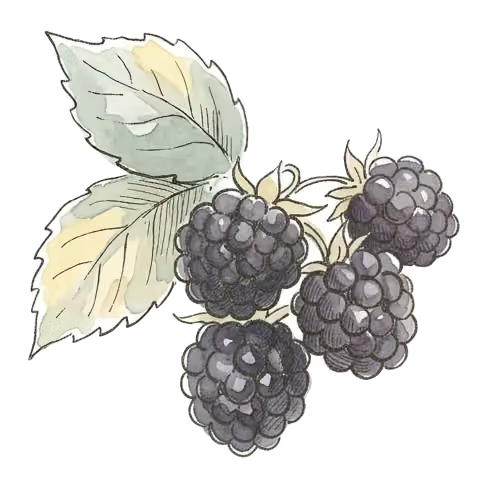
Blackberry (Rubus fruticosus)
Rubus fruticosus · also known as bramble, wild blackberry
By Superfoods Advisor Editors·July 3, 2026
What are blackberries good for? Fiber (5.3 g per 100 g), vitamin C, vitamin K and anthocyanins. Blackberry benefits, nutrition and what research shows.
Blackberries (Rubus fruticosus agg.) are good mainly as a low-sugar, high-fiber fruit: 100 g of raw berries has 43 kcal, 5.3 g of fiber, 21 mg of vitamin C and about 20 µg of vitamin K, plus anthocyanins and ellagitannins. Claims about heart, blood-sugar or brain benefits come from lab, animal and general berry research, not blackberry trials.
The name covers a large aggregate of thorny Rubus shrubs in the rose family (Rosaceae), native to Europe, northwestern Africa and western Asia and naturalized across temperate regions. The fruit is an aggregate of small drupelets around a core, so it is not a true berry botanically. Seeds turn up at Mesolithic and Neolithic sites in Europe, and Greek and Roman writers used the bramble as an astringent, chiefly for mouth and gum complaints.
Modern research focuses on the fruit’s anthocyanins, ellagic acid and ellagitannins, which give it a high antioxidant capacity in laboratory assays. Cultivated blackberries differ from wild ones in size, seed count and flavor but share the broad phytochemical profile.
Evidence at a glance
Active Compounds
Blackberries contain a complex mixture of polyphenols concentrated primarily in the skin and seeds:
- Anthocyanins — cyanidin-3-glucoside, cyanidin-3-rutinoside, and cyanidin-3-xyloside are the dominant pigments. In one Oregon study, ripe fruit of 11 cultivars contained about 131–256 mg per 100 g fresh weight, and levels rose steeply with ripeness, from roughly 70 mg in underripe to over 300 mg in overripe Marion berries (Siriwoharn et al., 2004).
- Ellagic acid and ellagitannins — including sanguiin H-6 and lambertianin C, which release ellagic acid that gut microbiota convert to urolithins, secondary metabolites with reported anti-inflammatory and antiproliferative activity in laboratory studies.
- Quercetin and kaempferol glycosides — flavonols with potential anti-inflammatory activity.
- Vitamin C (ascorbic acid) — approximately 21 mg per 100 g (USDA FoodData Central).
- Vitamin K1 (phylloquinone) — approximately 20 µg per 100 g, relevant to coagulation and bone metabolism.
- Dietary fiber — particularly insoluble fiber and pectin; approximately 5.3 g per 100 g, which may slow glucose absorption and feeds gut microbiota.
- Tannins — condensed and hydrolyzable tannins contributing astringency and potential antimicrobial properties.
Nutritional Profile
Values below are for raw blackberries per 100 g (USDA FoodData Central, “Blackberries, raw”, NDB #09042):
| Nutrient | Amount per 100 g | % DV |
|---|---|---|
| Energy | 43 kcal | — |
| Total fat | 0.5 g | — |
| Total carbohydrates | 9.6 g | — |
| Dietary fiber | 5.3 g | — |
| Total sugars | 4.9 g | — |
| Protein | 1.4 g | — |
| Vitamin C | 21 mg | — |
| Vitamin K | 20 µg | — |
| Vitamin E | 1.2 mg | — |
| Folate | 25 µg | — |
| Manganese | 0.6 mg | — |
| Magnesium | 20 mg | — |
| Potassium | 162 mg | — |
Evidence for Purported Benefits
The human clinical literature on blackberry is limited; much of the mechanistic foundation is derived from in vitro and animal studies, with a smaller number of human trials. Evidence should be interpreted conservatively.
Antioxidant Status
Evidence:Lab & animal only Test-tube antioxidant assays only; no controlled human trial of blackberry.
Blackberries score highly in in-vitro antioxidant assays such as ORAC, but these test-tube measures do not reflect effects in the body, and the USDA withdrew its ORAC database in 2012 for that reason. Whether this translates into measurable antioxidant effects in people has not been established in controlled human trials of blackberry.
Cardiovascular Risk Markers
Evidence:Preliminary Observational and short-term data on berries in general; no trial has tested blackberry.
In epidemiological and short-term clinical studies, berry polyphenols, micronutrients and fiber have been associated with improved cardiovascular risk markers, but berry RCTs with clinical endpoints are rare (Basu et al., 2010). The closest controlled evidence comes from a related berry: a 6-week randomized, placebo-controlled trial by Stull and colleagues (2010) (n=32 obese, insulin-resistant adults) found that blueberry bioactives improved insulin sensitivity. No comparable trial has tested blackberry, and no large RCT has evaluated blackberry alone against cardiovascular endpoints.
Blood Glucose Regulation
Evidence:Lab & animal only Enzyme assays and a mouse study; the one related human trial did not include blackberry.
In laboratory work, a blackberry (Rubus ulmifolius) fruit extract inhibited the starch-digesting enzyme alpha-glucosidase (Floris et al., 2025), and a blackberry leaf extract inhibited alpha-glucosidase and alpha-amylase and blunted starch-induced blood glucose rises in mice (Takács et al., 2020); this could in principle slow postprandial glucose absorption. A small crossover trial by Törrönen and colleagues (2010) (n=12) found that a purée of bilberries, blackcurrants, cranberries and strawberries attenuated the early postprandial glucose response to sucrose in healthy adults, but blackberry was not among the berries tested. The glucose-lowering effect in clinical populations requires adequately powered RCTs to confirm.
Anti-inflammatory Effects
Evidence:Lab & animal only Cell and rat studies with mixed results; no human biomarker data for blackberry.
In cultured human macrophages, purified cyanidin-3-glucoside, the main blackberry anthocyanin, lowered TNF-α and only marginally inhibited NF-κB, while the whole blackberry extract had no effect and some other blackberry anthocyanin fractions raised IL-6 and TNF-α (Cenk et al., 2021). Urolithin A, a gut-bacterial metabolite of ellagitannins, reduced colon inflammation markers in a rat colitis model (Larrosa et al., 2010). Human evidence demonstrating anti-inflammatory effects of blackberry consumption using validated biomarkers (CRP, IL-6) is lacking.
Cognitive Function
Evidence:Lab & animal only One study in aged rats; no human trial.
In aged rats, an 8-week diet with 2% blackberry improved balance, coordination and short-term memory tasks compared with control feeding (Shukitt-Hale et al., 2009). No adequately powered human RCT has investigated blackberry supplementation and cognitive outcomes.
Typical Use and Preparation
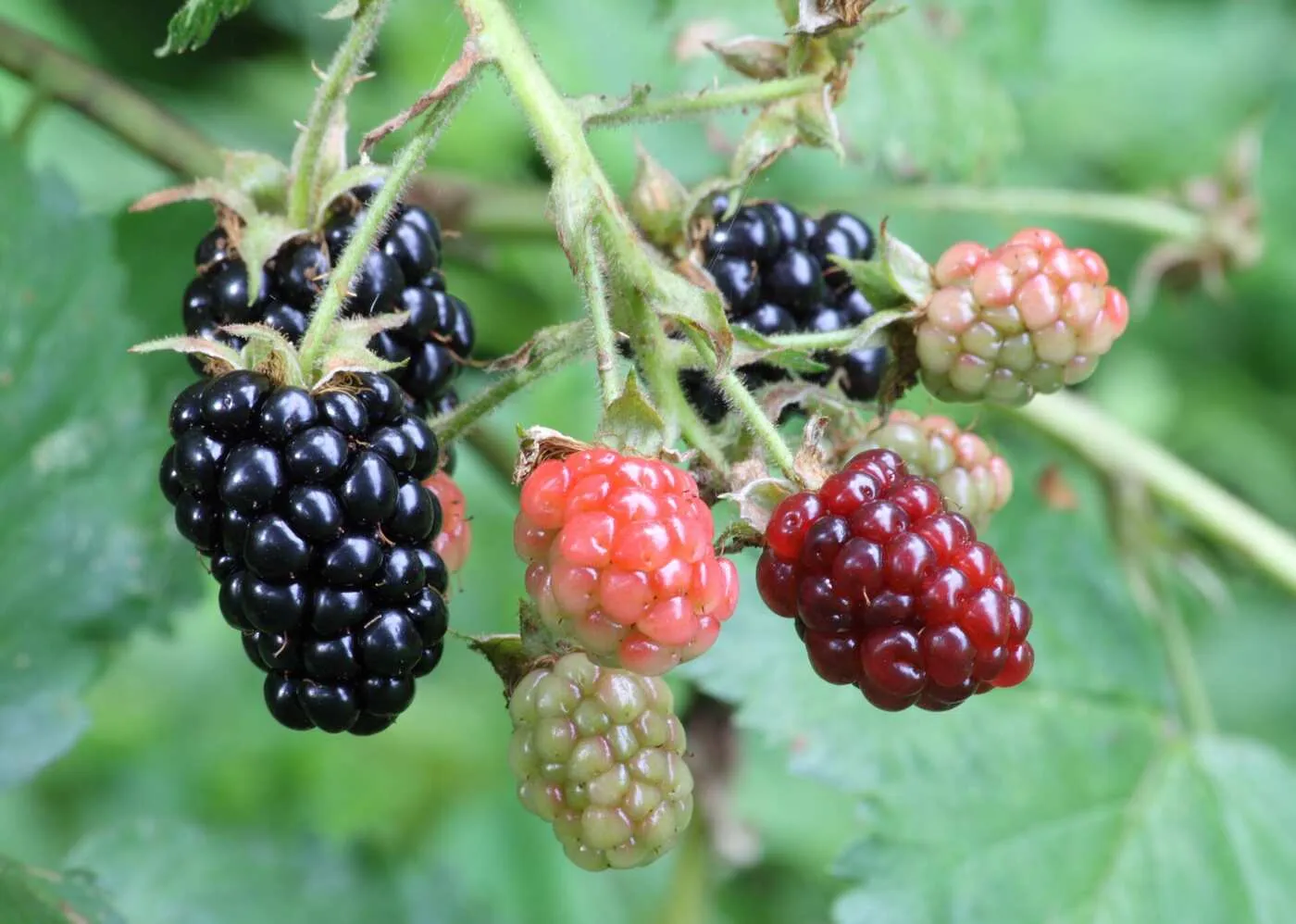 Photo: Ragesoss, CC BY-SA 3.0, via Wikimedia Commons
Blackberries are consumed fresh, frozen, dried, and as juice, jam, wine, and tea. Frozen berries hold their anthocyanins well: one study of processed blackberry products found no significant loss in frozen fruit over six months at −20 °C, whereas canning, puréeing and juicing cut monomeric anthocyanins by up to 65%, with further losses of up to 75% during room-temperature storage. Common supplemental forms include:
- Freeze-dried powder — serving sizes vary by product; freeze-drying generally preserves polyphenols better than heat drying.
- Juice concentrates — polyphenol content varies by processing method and degree of concentration.
- Whole dried berries — used in herbal teas; heat during drying reduces vitamin C and some anthocyanins.
- Leaf preparations — dried blackberry leaves have a traditional use in astringent teas for diarrhea and mouth infections; they are not equivalent to fruit-based preparations.
No established clinical supplemental dose for blackberry exists, and human berry studies have used widely varying amounts of whole fruit or freeze-dried powder.
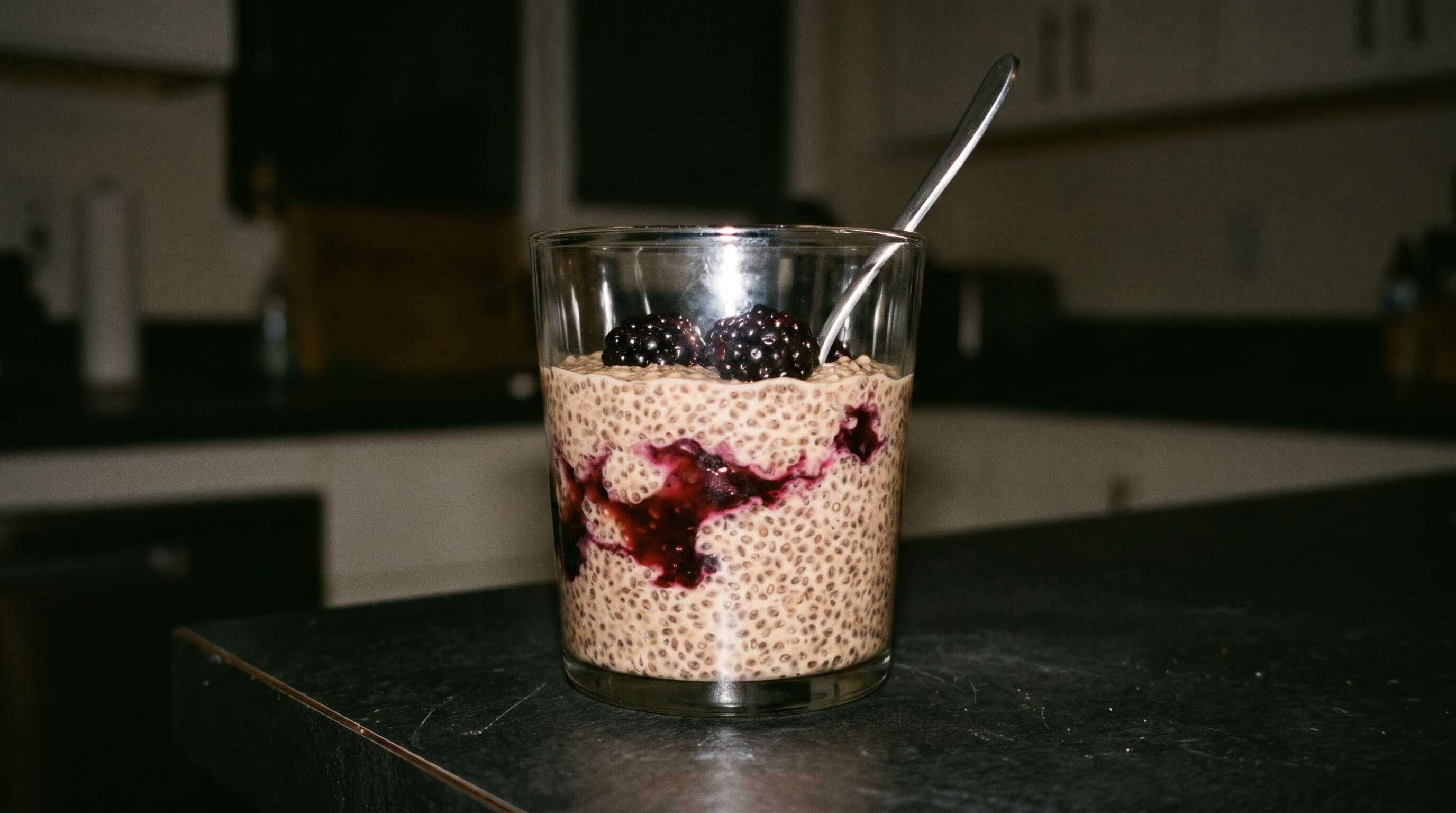
Fresh blackberries go into the blueberry-blackberry version among the chia pudding recipes. For how their fiber feeds gut bacteria, see the review of dietary fiber and microbiome research.
Safety, Interactions, and Contraindications
Blackberries eaten as food are generally well tolerated.
- Vitamin K interactions: blackberries supply a moderate amount of vitamin K1 (far less than leafy greens). People taking vitamin K antagonist anticoagulants such as warfarin are advised to keep vitamin K intake consistent; a sudden large increase in blackberry consumption could in principle affect INR, so discuss major diet changes with a clinician.
- Gastrointestinal effects: high fiber content (5.3 g/100 g) may cause gas, bloating, or loose stools when consumed in large quantities by individuals not accustomed to high-fiber diets.
- Allergic reactions: uncommon. Blackberries contain proteins homologous to two major allergen families of other Rosaceae fruits (PR-10, related to the birch pollen allergen, and lipid transfer proteins), so cross-reactivity in people allergic to those fruits or to birch pollen is possible, though blackberry allergens remain little studied (Marzban et al., 2008).
- Pesticide residue: conventionally grown blackberries were added to the Environmental Working Group’s “Dirty Dozen” list in 2025 after the first USDA residue testing of the fruit (EWG); organic sourcing may reduce exposure.
- Pregnancy and lactation: blackberries are an ordinary food, and no specific pregnancy concern has been identified for food amounts. Safety data for blackberry leaf preparations in pregnancy are lacking, so they are best avoided. Effects on uterine muscle have been reported for the related raspberry leaf, but only in laboratory and animal studies; human evidence for raspberry leaf is weak (Bowman et al., 2021).
This article is for informational purposes only. It does not constitute medical advice, and blackberry should not be used to diagnose, treat, prevent, or cure any condition.
Frequently Asked Questions
Are blackberries high in fiber?
Yes. Raw blackberries contain about 5.3 g of dietary fiber per 100 g, which is high for a fruit and more than many common fruits supply per serving. Much of it is insoluble fiber and pectin, concentrated in the seeds and skin. A 144 g cup therefore provides roughly 7–8 g of fiber, about a quarter of a typical adult target.
How many blackberries should you eat a day?
There is no specific recommendation for blackberries. Dietary guidelines count about one cup (roughly 144 g) of berries as a fruit serving. Eating more is unlikely to cause harm, but people not used to high-fiber foods may notice gas or bloating if they jump to several cups a day.
Are blackberries good for diabetics?
Blackberries are a low-sugar fruit, with about 4.9 g of sugar and 5.3 g of fiber per 100 g, so they fit easily into most diabetic eating plans. Lab and mouse studies suggest blackberry extracts slow starch digestion, but no human trial has tested whether blackberries improve blood-sugar control. Portion and medication questions are best discussed with a clinician or dietitian.
Can blackberries cause diarrhea?
They can in large amounts. The fiber in blackberries, about 5.3 g per 100 g, may cause gas, bloating or loose stools in people who are not used to a high-fiber diet. Starting with smaller portions and drinking enough water usually helps. Blackberries eaten in ordinary amounts are generally well tolerated.
What is the difference between blackberries and raspberries?
Both are aggregate fruits in the genus Rubus, but a blackberry keeps its white core when picked, while a raspberry separates from it and is hollow. Per 100 g, blackberries have fewer calories (43 vs 52 kcal), while raspberries have more fiber (6.5 vs 5.3 g). The raspberry entry compares the two side by side.
References
Show all 13 referencesShow fewer
- Stull, A. J., Cash, K. C., Johnson, W. D., Champagne, C. M., & Cefalu, W. T. (2010). Bioactives in blueberries improve insulin sensitivity in obese, insulin-resistant men and women. Journal of Nutrition, 140(10), 1764–1768.
- Törrönen, R., Sarkkinen, E., Tapola, N., Hautaniemi, E., Kilpi, K., & Niskanen, L. (2010). Berries modify the postprandial plasma glucose response to sucrose in healthy subjects. British Journal of Nutrition, 103(8), 1094–1097.
- Hager, T. J., Howard, L. R., & Prior, R. L. (2008). Processing and storage effects on monomeric anthocyanins, percent polymeric color, and antioxidant capacity of processed blackberry products. Journal of Agricultural and Food Chemistry, 56(3), 689–695.
- Basu, A., Rhone, M., & Lyons, T. J. (2010). Berries: Emerging impact on cardiovascular health. Nutrition Reviews, 68(3), 168–177.
- Siriwoharn, T., Wrolstad, R. E., Finn, C. E., & Pereira, C. B. (2004). Influence of cultivar, maturity, and sampling on blackberry (Rubus L. hybrids) anthocyanins, polyphenolics, and antioxidant properties. Journal of Agricultural and Food Chemistry, 52(26), 8021–8030.
- Bowman, R., Taylor, J., Muggleton, S., & Davis, D. (2021). Biophysical effects, safety and efficacy of raspberry leaf use in pregnancy: a systematic integrative review. BMC Complementary Medicine and Therapies, 21, 56.
- Floris, S., et al. (2025). Inhibition of α-glucosidase activity and islet amyloid polypeptide fibril formation by Rubus ulmifolius fruit extract: a potential therapeutic approach for type 2 diabetes mellitus. Plants (Basel), 14(21), 3247.
- Takács, I., et al. (2020). Wild strawberry, blackberry, and blueberry leaf extracts alleviate starch-induced hyperglycemia in prediabetic and diabetic mice. Planta Medica, 86(11), 790–799.
- Cenk, E., et al. (2021). Immunomodulatory properties of blackberry anthocyanins in THP-1 derived macrophages. International Journal of Molecular Sciences, 22(19), 10483.
- Larrosa, M., et al. (2010). Anti-inflammatory properties of a pomegranate extract and its metabolite urolithin-A in a colitis rat model and the effect of colon inflammation on phenolic metabolism. Journal of Nutritional Biochemistry, 21(8), 717–725.
- Shukitt-Hale, B., Cheng, V., & Joseph, J. A. (2009). Effects of blackberries on motor and cognitive function in aged rats. Nutritional Neuroscience, 12(3), 135–140.
- Marzban, G., et al. (2008). Screening and identification of putative allergens in berry fruits of the Rosaceae family: technical challenges. BioFactors, 34(1), 37–46.
- Environmental Working Group. Blackberries: Shopper’s Guide to Pesticides in Produce.
Related content
More in Berries
- Acai Berry (Euterpe oleracea)
Is acai good for you? What small human trials show on acai benefits for antioxidants, lipids and blood sugar, plus nutrition, acai bowls and safety.
- Acerola Cherry (Malpighia emarginata)
Acerola cherry benefits come mostly from its vitamin C, about 1,680 mg per 100 g. What the evidence shows for immunity, skin and antioxidants, and safety.
- Blackcurrant (Ribes nigrum)
Blackcurrant benefits: a tart berry with 181 mg vitamin C per 100 g and dense anthocyanins. Small trials on eye fatigue, exercise recovery and cognition.
- Blueberry (Vaccinium corymbosum)
Are blueberries good for you? Trials suggest a daily cup (150 g) may help blood-vessel function; memory and blood-sugar data are early. Nutrition, safety.
- Camu Camu (Myrciaria dubia)
What is camu camu, and what are its benefits? An Amazonian berry with 1,800–3,000 mg vitamin C per 100 g, small trials on inflammation, and safety notes.
- Cranberry (Vaccinium macrocarpon)
Is cranberry juice good for you? Cranberry products modestly cut repeat UTIs in trials, but juice cocktail is sweetened and low in PACs. Benefits, safety.

Curated by Superfoods Advisor Editors·Last updated