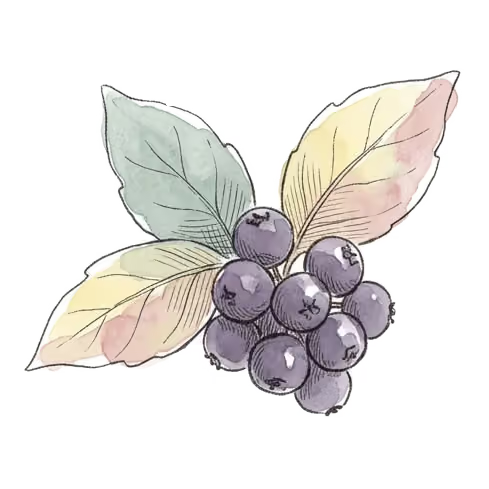
Maqui Berry (Aristotelia chilensis)
Aristotelia chilensis · also known as Chilean wineberry, maqui, koelon
By Superfoods Advisor Editors·July 3, 2026
Maqui berry benefits, weighed: small industry-linked trials on blood sugar, dry eyes and oxidative stress. What maqui is, powder dose, and safety.
Maqui berry (Aristotelia chilensis, also called Chilean wineberry) is a dark-purple Chilean fruit rich in delphinidin anthocyanins, sold mainly as freeze-dried powder and standardized extracts. Its proposed benefits, for post-meal blood sugar, dry eyes and oxidative stress, come from a few small trials, most of them linked to the extracts’ manufacturers.
The plant is a fast-growing evergreen shrub in the family Elaeocarpaceae, native to the temperate rainforests of southern Chile and adjacent Patagonian Argentina. It produces small, intensely dark-purple fruits that ripen in the southern-hemisphere summer. The indigenous Mapuche people of Chile have long eaten maqui berries fresh, and the fruit is among the plant materials used for traditional fermented beverages in prehispanic Chile, known as chicha de maqui (Mitsi & Echeverría, 2024).
Interest from the global nutraceutical industry began in the mid-2000s, driven partly by strong results in ORAC (oxygen radical absorbance capacity) and similar test-tube antioxidant assays; these are in vitro measurements only, and the USDA withdrew its ORAC database in 2012 because such values do not reflect effects in the body. Compositional research has confirmed a high anthocyanin content — particularly delphinidins — and a modest but growing body of human trials has investigated outcomes including postprandial glycemia, eye fatigue, and markers of oxidative stress. As with most berry research, effect sizes in human studies are generally smaller than those suggested by in vitro experiments, and most trials are small and short-term.
Evidence at a glance
Active Compounds
- Delphinidins (delphinidin-3-sambubioside, delphinidin-3-glucoside, delphinidin-3,5-diglucoside): The dominant anthocyanins, accounting for roughly 70–80% of total anthocyanin content (Tiscornia et al., 2026); delphinidin-3-sambubioside-5-glucoside alone made up about 34% in one HPLC analysis (Escribano-Bailón et al., 2006). Delphinidins carry an additional hydroxyl group relative to cyanidin-based pigments, conferring higher radical-scavenging activity in vitro.
- Cyanidin glycosides: Including cyanidin-3-sambubioside and cyanidin-3,5-diglucoside; constitute the remainder of total anthocyanins.
- Ellagic acid and its derivatives: Identified alongside the flavonols in HPLC profiles of the fruit (Brauch et al., 2016; Genskowsky et al., 2016).
- Flavonol glycosides: Quercetin derivatives predominate; rutin and myricetin have also been reported (Genskowsky et al., 2016; Céspedes et al., 2010).
- Phenolic acids: Including gallic, ferulic, p-coumaric, sinapic, and vanillic acids, plus catechins and proanthocyanidin B (Céspedes et al., 2010).
Nutritional Profile
USDA does not maintain a FoodData Central entry for maqui, and published macronutrient figures disagree widely between sources, so only the better-documented anthocyanin and polyphenol values are shown here, per 100 g:
| Component | Amount per 100 g | Source |
|---|---|---|
| Total anthocyanins, fresh fruit | ~138 mg | Escribano-Bailón et al., 2006 |
| Total anthocyanins, dried fruit | 660–1,500 mg (as cyanidin-3-glucoside) | Rodríguez et al., 2022 |
| Total polyphenols, dried fruit | 1,070–2,050 mg GAE | Rodríguez et al., 2022 |
Content varies considerably with growing region, harvest time, plant genotype, and extraction method (Rodríguez et al., 2022). Commercial extracts are standardized: Delphinol® to 25% delphinidins (Watson & Schönlau, 2015) and MaquiBright® to at least 35% total anthocyanins and 25% delphinidins (Yamashita et al., 2019). Dried powders are more concentrated per gram than fresh fruit because the water has been removed.
Evidence for Purported Benefits
Antioxidant Capacity and Oxidative Stress Biomarkers
Evidence:Preliminary One industry-linked four-week RCT (n=42) on surrogate oxidative markers.
In a double-blind, placebo-controlled trial by Davinelli et al. (Journal of the American College of Nutrition, 2015; n = 42 healthy, overweight, and smoking adults aged 45–65), four weeks of a standardized maqui extract (Delphinol®, 162 mg anthocyanins per dose) lowered plasma oxidized LDL and urinary F2-isoprostanes (8-iso-prostaglandin F2α) relative to baseline; the changes had disappeared 40 days after supplementation stopped, and blood pressure and lipid profile did not change. One co-author was employed by the supplement company Enervit, and Delphinol® is a trademark of the extract maker MNL Chile. These findings support biologically plausible antioxidant activity in humans but are insufficient to establish clinical significance, as surrogate oxidative biomarkers do not reliably predict disease outcomes.
Postprandial Blood Glucose Attenuation
Evidence:Limited A few small, mostly uncontrolled studies of one manufacturer’s extract; results point the same way.
In rodent small-intestine tissue, delphinidin inhibited sodium-dependent glucose transport, suggesting a mechanism for reducing postprandial glucose absorption; the same report included a 10-person placebo-controlled crossover test in which Delphinol® taken before a rice meal lowered postprandial glucose and insulin (Hidalgo et al., 2014). Clinically, an open, exploratory study by Alvarado et al. (BioMed Research International, 2016) in prediabetic volunteers gave different doses of a standardized maqui extract (Delphinol®) one hour before a series of oral glucose tolerance tests; the extract dose-dependently lowered basal glycemia, basal insulinemia, and glucose peaks, although total glucose availability in the blood was unchanged. A separate uncontrolled three-month trial by Alvarado et al. (Panminerva Medica, 2016; n = 31 prediabetic adults) reported that 180 mg/day of a standardized maqui extract lowered HbA1c, while fasting glucose and insulin fell only non-significantly. Effect sizes were modest (HbA1c reduction ~0.3%), and both studies tested the same manufacturer’s proprietary extract. The BioMed Research International study was funded by an unconditional grant from MNL-Chile, the Delphinol® maker, and one co-author was an MNL-Chile employee. Independent replication is warranted before drawing conclusions about clinical benefit.
Eye Fatigue and Dry Eye
Evidence:Limited One uncontrolled pilot and one placebo-controlled RCT (n=74), both industry-linked.
Two small Japanese trials investigated standardized maqui extract (MaquiBright®) for eye dryness and aqueous tear production. In an uncontrolled pilot, Hitoe et al. (Panminerva Medica, 2014; n = 13) reported increased Schirmer’s test tear volume at 30 or 60 mg/day over 60 days. A subsequent double-blind, placebo-controlled RCT by Yamashita et al. (Journal of Traditional and Complementary Medicine, 2019; n = 74 adults doing daily screen work) found that 60 mg/day for 4 weeks increased Schirmer’s test tear production versus placebo and appeared to ease subjective eye fatigue. How the extract might increase tear secretion has not been established in humans. Both trials were industry-linked: the Hitoe authors worked for Oryza Oil & Fat Chemical, the extract’s supplier, and the Yamashita trial was sponsored by Oryza Oil & Fat Chemical, Anklam Extrakt, and Maqui New Life and run by a contract research firm. That limits independent inference.
Anti-Inflammatory Effects
Evidence:Lab & animal only Cell and mouse studies; no human trial with inflammatory markers as the main outcome.
In mouse macrophage cell lines, maqui extracts reduced nitric oxide, prostaglandin E2, and iNOS and COX-2 expression (Schreckinger et al., 2010) and lowered TNF-α gene expression (Reyes-Farias et al., 2015). In mice fed a high-fat diet, lyophilized maqui berry was associated with a better insulin response and less weight gain (Sandoval et al., 2019). No adequately powered human RCT has yet evaluated inflammatory biomarkers as a primary endpoint for maqui supplementation in clinical populations.
Cardiovascular Risk Markers
Evidence:Limited Two small trials; results conflict, and the favorable one had no control group.
Evidence on blood lipids is thin and inconsistent. The uncontrolled three-month Alvarado et al. trial (Panminerva Medica, 2016; n = 31) reported a reduction in LDL cholesterol and a rise in HDL from baseline, with no significant change in total cholesterol or triglycerides, while the four-week placebo-controlled Davinelli et al. trial found no change in lipid profile. No peer-reviewed human trials have reported reduction of hard cardiovascular endpoints.
Typical Use and Preparation
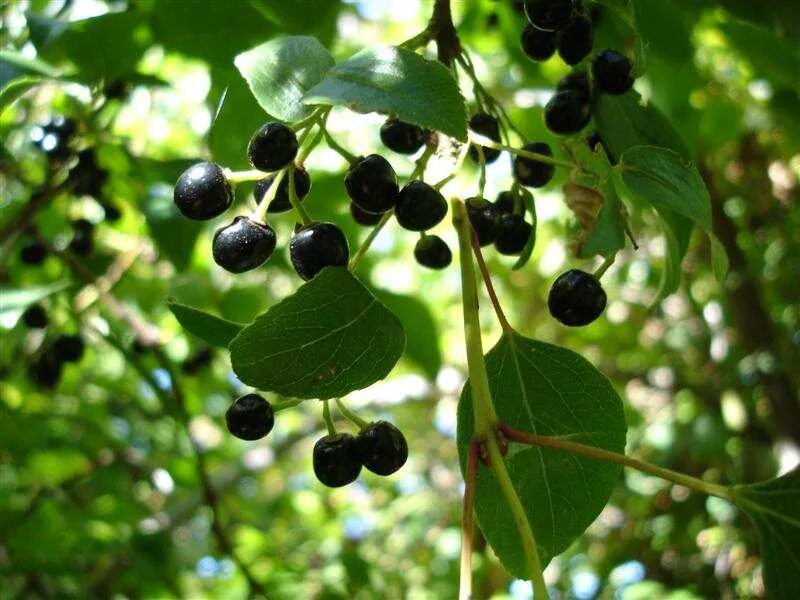 Photo: Morrana, CC BY-SA 4.0, via Wikimedia Commons
- Fresh berries: Consumed directly or in juices in their native range (southern Chile); rarely available fresh in other markets due to perishability.
- Freeze-dried powder: The most common form globally; typically 1–2 teaspoons (2–4 g) stirred into water, smoothies, or yogurt. Among drying methods tested on whole berries, freeze-drying retained the most phenolics (Quispe-Fuentes et al., 2018), though one study of maqui juice found spray-dried and freeze-dried powders had similar anthocyanin stability (Fredes et al., 2018).
- Standardized extracts (capsules): The glucose and eye trials used 30–180 mg/day of standardized maqui extract (Delphinol® or MaquiBright®), while the oxidative-stress trial gave an extract supplying 162 mg anthocyanins three times daily. Higher doses have not been systematically evaluated for safety.
- Juice concentrates: Variable polyphenol content; absent a standardized anthocyanin claim, potency is difficult to verify.
- Culinary: The powder blends into acai bowls, chia puddings, and frozen desserts, imparting a vivid purple color and mildly tart flavor.
Maqui powder is often compared with acai, and its delphinidin-rich profile resembles that of blackcurrant. Maqui’s delphinidins are anthocyanins, a polyphenol class covered in our overview of polyphenols and aging research.
Safety, Interactions, and Contraindications
Maqui extracts appeared well tolerated in the small human trials conducted to date. Specific considerations:
- Adverse events: The three-month glucose trial reported no adverse effects (Alvarado et al., 2016), and the four-week eye trial reported no adverse events (Yamashita et al., 2019). These trials were too small and short to detect uncommon effects.
- Glucose-lowering medications: The demonstrated attenuation of postprandial glucose could theoretically potentiate insulin or sulfonylureas, warranting caution and glucose monitoring in patients on antidiabetic therapy.
- Anticoagulants: Extracts of maqui leaves and unripe fruit inhibited platelet aggregation in vitro (Rodríguez et al., 2021); clinical anticoagulant interactions have not been documented for maqui, but caution is reasonable.
- Pregnancy and lactation: Insufficient human safety data; avoid supplemental doses during pregnancy and breastfeeding.
- Drug interactions: No systematic CYP or P-glycoprotein interaction studies have been conducted with maqui extracts.
- Iron absorption: High polyphenol content may reduce non-heme iron absorption if consumed simultaneously with iron-rich foods or supplements; taking maqui apart from iron-rich meals or supplements is a reasonable precaution if iron status is a concern.
- Standardization and adulteration: The commercial maqui supply chain is relatively young; third-party testing for anthocyanin content and heavy metals is advisable.
Frequently Asked Questions
What is maqui berry?
Maqui berry is the fruit of Aristotelia chilensis, an evergreen shrub from the rainforests of southern Chile and Patagonian Argentina. The small, near-black berries have long been eaten by the Mapuche people and used in a fermented drink, chicha de maqui. Outside Chile, maqui is sold mostly as freeze-dried powder or as standardized extracts such as Delphinol and MaquiBright.
Does maqui berry help with weight loss?
There is no human evidence that it does. In mice fed a high-fat diet, freeze-dried maqui berry was associated with less weight gain and a better insulin response, but no human trial has tested maqui for weight loss. The human studies that exist looked at blood sugar, tear production and oxidative-stress markers.
How much maqui berry powder should you take per day?
No dose has been established for the powder. Typical product servings are 1–2 teaspoons (2–4 g) stirred into water, smoothies or yogurt. The clinical trials used standardized extracts at 30–180 mg/day, which is not interchangeable with powder because anthocyanin content varies widely by product. Higher doses have not been systematically evaluated for safety.
Is maqui berry good for dry eyes?
Preliminary, industry-linked research suggests it may help. In a placebo-controlled trial of 74 adults doing daily screen work, 60 mg/day of MaquiBright extract for four weeks increased tear production on Schirmer’s test and appeared to ease eye fatigue. An earlier pilot had no control group. Persistent dry eye is worth having examined by an eye care professional.
Is maqui berry safe?
Maqui appeared well tolerated in the small human trials, with no adverse events reported over periods of up to three months, but those trials were too small and short to detect uncommon effects. People on glucose-lowering drugs or anticoagulants should be cautious, and supplemental doses are best avoided during pregnancy and breastfeeding because safety data are insufficient.
References
Show all 20 referencesShow fewer
- Alvarado, J., Schoenlau, F., Leschot, A., Salgado, A. M., & Vigil, P. (2016). Delphinol® standardized maqui berry extract significantly lowers blood glucose and improves blood lipid profile in prediabetic individuals in three-month clinical trial. Panminerva Medica, 58(3 Suppl 1), 1–6.
- Davinelli, S., Bertoglio, J. C., Zarrelli, A., Pina, R., & Scapagnini, G. (2015). A randomized clinical trial evaluating the efficacy of an anthocyanin-maqui berry extract (Delphinol®) on oxidative stress biomarkers. Journal of the American College of Nutrition, 34(Suppl 1), 28–33.
- Yamashita, S. I., Suzuki, N., Yamamoto, K., Iio, S. I., & Yamada, T. (2019). Effects of MaquiBright® on improving eye dryness and fatigue in humans: A randomized, double-blind, placebo-controlled trial. Journal of Traditional and Complementary Medicine, 9(3), 172–178.
- Céspedes, C. L., Valdez-Morales, M., Avila, J. G., et al. (2010). Phytochemical profile and the antioxidant activity of Chilean wild black-berry fruits, Aristotelia chilensis (Mol) Stuntz (Elaeocarpaceae). Food Chemistry, 119(3), 886–895.
- Hitoe, S., Tanaka, J., & Shimoda, H. (2014). MaquiBright™ standardized maqui berry extract significantly increases tear fluid production and ameliorates dry eye-related symptoms in a clinical pilot trial. Panminerva Medica, 56(3 Suppl 1), 1–6.
- Escribano-Bailón, M. T., Alcalde-Eon, C., Muñoz, O., Rivas-Gonzalo, J. C., & Santos-Buelga, C. (2006). Anthocyanins in berries of Maqui [Aristotelia chilensis (Mol.) Stuntz]. Phytochemical Analysis, 17(1), 8–14.
- Alvarado, J. L., Leschot, A., Olivera-Nappa, Á., Salgado, A. M., Rioseco, H., Lyon, C., & Vigil, P. (2016). Delphinidin-rich maqui berry extract (Delphinol®) lowers fasting and postprandial glycemia and insulinemia in prediabetic individuals during oral glucose tolerance tests. BioMed Research International, 2016, 9070537.
- Tiscornia, C., et al. (2026). Maqui as a Chilean functional food: Antioxidant bioactivity, nutritional value, and health applications. Antioxidants, 15(2), 204.
- Rodríguez, L., et al. (2022). A comprehensive literature review on cardioprotective effects of bioactive compounds present in fruits of Aristotelia chilensis Stuntz (Maqui). Molecules, 27(19), 6147.
- Watson, R. R., & Schönlau, F. (2015). Nutraceutical and antioxidant effects of a delphinidin-rich maqui berry extract Delphinol®: a review. Minerva Cardioangiologica, 63(2 Suppl 1), 1–12.
- Mitsi, C., & Echeverría, J. (2024). Fermented beverages in prehispanic Chile: a comprehensive review of their phytochemistry, traditional medicinal uses, bioactivity, and social aspects. Frontiers in Pharmacology.
- Brauch, J. E., Buchweitz, M., Schweiggert, R. M., & Carle, R. (2016). Detailed analyses of fresh and dried maqui (Aristotelia chilensis (Mol.) Stuntz) berries and juice. Food Chemistry, 190, 308–316.
- Genskowsky, E., et al. (2016). Determination of polyphenolic profile, antioxidant activity and antibacterial properties of maqui [Aristotelia chilensis (Molina) Stuntz] a Chilean blackberry. Journal of the Science of Food and Agriculture, 96(12), 4235–4242.
- Hidalgo, J., et al. (2014). Delphinol® standardized maqui berry extract reduces postprandial blood glucose increase in individuals with impaired glucose regulation by novel mechanism of sodium glucose cotransporter inhibition. Panminerva Medica, 56(2 Suppl 3), 1–7.
- Schreckinger, M. E., Wang, J., Yousef, G., Lila, M. A., & Gonzalez de Mejia, E. (2010). Antioxidant capacity and in vitro inhibition of adipogenesis and inflammation by phenolic extracts of Vaccinium floribundum and Aristotelia chilensis. Journal of Agricultural and Food Chemistry, 58(16), 8966–8976.
- Reyes-Farias, M., et al. (2015). Chilean native fruit extracts inhibit inflammation linked to the pathogenic interaction between adipocytes and macrophages. Journal of Medicinal Food, 18(5), 601–608.
- Sandoval, V., et al. (2019). Lyophilized maqui (Aristotelia chilensis) berry induces browning in the subcutaneous white adipose tissue and ameliorates the insulin resistance in high fat diet-induced obese mice. Antioxidants, 8(9), 360.
- Quispe-Fuentes, I., Vega-Gálvez, A., & Aranda, M. (2018). Evaluation of phenolic profiles and antioxidant capacity of maqui (Aristotelia chilensis) berries and their relationships to drying methods. Journal of the Science of Food and Agriculture, 98(11), 4168–4176.
- Fredes, C., Becerra, C., Parada, J., & Robert, P. (2018). The microencapsulation of maqui (Aristotelia chilensis (Mol.) Stuntz) juice by spray-drying and freeze-drying produces powders with similar anthocyanin stability and bioaccessibility. Molecules, 23(5), 1227.
- Rodríguez, L., et al. (2021). Antiplatelet activity and chemical analysis of leaf and fruit extracts from Aristotelia chilensis. PLoS One, 16(4), e0250852.
More in Berries
- Acai Berry (Euterpe oleracea)
Is acai good for you? What small human trials show on acai benefits for antioxidants, lipids and blood sugar, plus nutrition, acai bowls and safety.
- Acerola Cherry (Malpighia emarginata)
Acerola cherry benefits come mostly from its vitamin C, about 1,680 mg per 100 g. What the evidence shows for immunity, skin and antioxidants, and safety.
- Blackberry (Rubus fruticosus)
What are blackberries good for? Fiber (5.3 g per 100 g), vitamin C, vitamin K and anthocyanins. Blackberry benefits, nutrition and what research shows.
- Blackcurrant (Ribes nigrum)
Blackcurrant benefits: a tart berry with 181 mg vitamin C per 100 g and dense anthocyanins. Small trials on eye fatigue, exercise recovery and cognition.
- Blueberry (Vaccinium corymbosum)
Are blueberries good for you? Trials suggest a daily cup (150 g) may help blood-vessel function; memory and blood-sugar data are early. Nutrition, safety.
- Camu Camu (Myrciaria dubia)
What is camu camu, and what are its benefits? An Amazonian berry with 1,800–3,000 mg vitamin C per 100 g, small trials on inflammation, and safety notes.

Curated by Superfoods Advisor Editors·Last updated