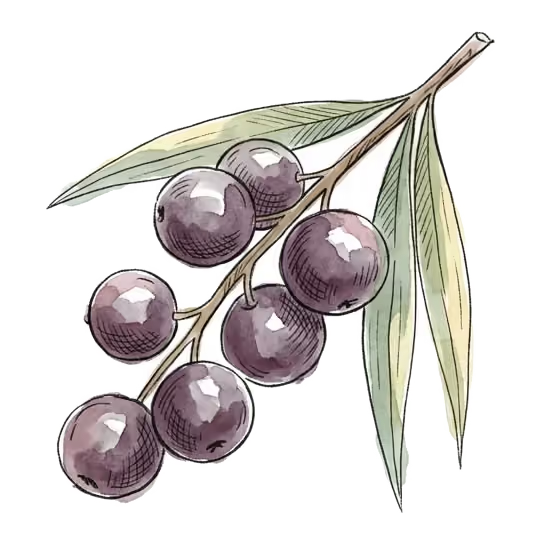
Acai Berry (Euterpe oleracea)
Euterpe oleracea · also known as açaí, acai palm, cabbage palm berry, açaí berry
By Superfoods Advisor Editors·July 3, 2026
Is acai good for you? What small human trials show on acai benefits for antioxidants, lipids and blood sugar, plus nutrition, acai bowls and safety.
Acai (Euterpe oleracea Mart., also spelled açaí) is the small dark-purple fruit of an Amazonian palm. Acai can be part of a healthy diet: it is rich in anthocyanins, fiber and fat, but human evidence for specific health benefits is limited to a handful of small, short trials, and it has no proven weight-loss effect.
Indigenous Amazonian peoples have eaten the pulp for centuries, blended with water into a thick porridge. The fresh fruit spoils quickly and is rarely exported intact; most acai sold abroad is frozen pulp, freeze-dried powder or juice. Marketing claims in the mid-2000s outpaced the evidence, and current research looks at modest effects on lipids, oxidative stress markers and glucose.
Evidence at a glance
Active Compounds
Acai’s bioactive profile is dominated by phenolic compounds, with smaller contributions from healthy fats and fiber:
- Anthocyanins — primarily cyanidin-3-glucoside and cyanidin-3-rutinoside, the pigments responsible for the deep purple color. Studies disagree on how much of the fruit’s antioxidant activity they account for: one found cyanidin-3-glucoside tracked antioxidant content (Del Pozo-Insfran et al., 2004), while another estimated the anthocyanins’ share at only about 10% (Lichtenthäler et al., 2005). One analysis of freeze-dried pulp measured total anthocyanins at about 3.2 mg/g dry weight, or roughly 320 mg per 100 g (Schauss et al., 2006).
- Proanthocyanidins — mostly polymeric in one analysis of freeze-dried powder, at about 12.9 mg/g dry weight, roughly four times the anthocyanin content (Schauss et al., 2006).
- Phenolic acids — extracts of acai pulp were dominated by hydroxybenzoic acids, alongside monomeric flavan-3-ols and procyanidin dimers and trimers (Pacheco-Palencia et al., 2008).
- Oleic acid and palmitic acid — acai is unusually fat-rich for a berry (about a third of the dry weight of freeze-dried powder in one analysis). Oleic acid, the main fat in olive oil, made up about 54% of the fatty acids and palmitic acid about 27% (Schauss et al., 2006).
- Beta-sitosterol and other plant sterols — potentially relevant to cholesterol metabolism.
- Dietary fiber — approximately 44 g per 100 g of freeze-dried powder (Schauss et al., 2006), though most commercial products deliver far less.
Nutritional Profile
Values below are for freeze-dried acai powder (per 100 g), which is the most common commercial form. Fresh or frozen pulp values differ substantially due to water content and processing.
| Nutrient | Amount per 100 g (freeze-dried powder) | % DV |
|---|---|---|
| Energy | ~530 kcal | — |
| Total fat | ~32 g | — |
| Saturated fat | ~29% of fatty acids | — |
| Monounsaturated fat | ~60% of fatty acids | — |
| Total carbohydrates | ~52 g | — |
| Dietary fiber | ~44 g | — |
| Total sugars | ~1.3 g | — |
| Protein | ~8 g | — |
| Calcium | ~260 mg | — |
| Iron | ~4.4 mg | — |
| Vitamin C | <0.1 mg (below detection) | — |
| Anthocyanins | ~320 mg | — |
Note: USDA FoodData Central does not maintain a comprehensive entry for freeze-dried acai powder. The figures above are from a single compositional analysis of one standardized freeze-dried pulp and skin powder (Schauss et al., 2006); other products will differ.
Evidence for Purported Benefits
The human clinical literature on acai is modest in volume and constrained by small sample sizes, short durations, and the use of proprietary formulations that complicate generalization. What follows summarizes findings as of this article’s publication date.
Antioxidant Capacity and Oxidative Stress
Evidence:Limited Small acute crossover trials show raised plasma antioxidant capacity; effects on oxidative stress or disease are unshown.
Acute trials suggest acai pulp can raise plasma antioxidant capacity. In a crossover trial by Mertens-Talcott and colleagues (2008) in 12 healthy adults, a single dose of acai pulp significantly increased plasma antioxidant capacity, as did the applesauce control, while clarified acai juice did not; anthocyanins peaked in plasma about two hours after consumption; reactive oxygen species generation and urinary antioxidant capacity were not significantly altered. However, increases in plasma antioxidant capacity do not automatically translate into clinical benefit; many antioxidant-rich foods elevate these markers without reducing disease endpoints. Evidence that acai reduces meaningful oxidative stress in clinical populations remains preliminary.
Cardiovascular and Lipid Effects
Evidence:Limited One uncontrolled pilot (n=10) and one acute crossover RCT (n=23); no trial has tested lipids over time.
A small pilot study by Udani and colleagues (2011) (Nutrition Journal, n=10) reported reductions in fasting glucose, insulin, and total cholesterol, with a borderline reduction in LDL cholesterol, in overweight adults consuming acai pulp twice daily for thirty days. Effect sizes were modest and the absence of a placebo control limits interpretation. A randomized, double-blind crossover trial by Alqurashi and colleagues (2016) (American Journal of Clinical Nutrition, n=23 overweight men) found that a single acai smoothie taken with a high-fat breakfast improved flow-mediated dilation over the following six hours compared with a matched control smoothie, with no significant change in blood pressure or postprandial glucose. That was an acute, single-meal study and did not assess lipids over time. The evidence for clinically meaningful lipid lowering is currently insufficient.
Blood Glucose and Insulin Sensitivity
Evidence:Limited Two small trials; results conflict, and the only favorable one had no placebo arm.
Findings on postprandial glucose are preliminary and mixed. In the same uncontrolled Udani pilot study (2011, n=10), the rise in blood glucose after a standardized meal was smaller after thirty days of acai pulp than at baseline, but the trial had no placebo arm and the sample was small. In the Alqurashi acute trial, postprandial glucose did not differ from control and the early insulin response was higher after acai. Larger, adequately powered RCTs are needed before any glucose-related claims can be supported.
Anti-inflammatory Effects
Evidence:Preliminary Cell and mouse-cell work, plus one small pilot that found no change in hs-CRP.
In cell and mouse-macrophage experiments, velutin, a flavone isolated from acai pulp, blocked NF-κB activation and reduced TNF-α and IL-6 production (Xie et al., 2012). Human data are thin: the Udani pilot found no change in hs-CRP after thirty days of acai pulp. The clinical relevance of in vitro anti-inflammatory findings for acai remains unestablished.
Weight Management
Evidence:Insufficient No adequately designed human trial shows that acai causes weight loss.
Despite widespread commercial claims, and FTC action against companies that marketed acai weight-loss products deceptively (NCCIH), no adequately designed RCT has demonstrated that acai supplementation produces meaningful weight loss in humans. The high caloric density of acai-based products (smoothies, powders blended with guaraná) may offset any metabolic benefit.
Typical Use and Preparation
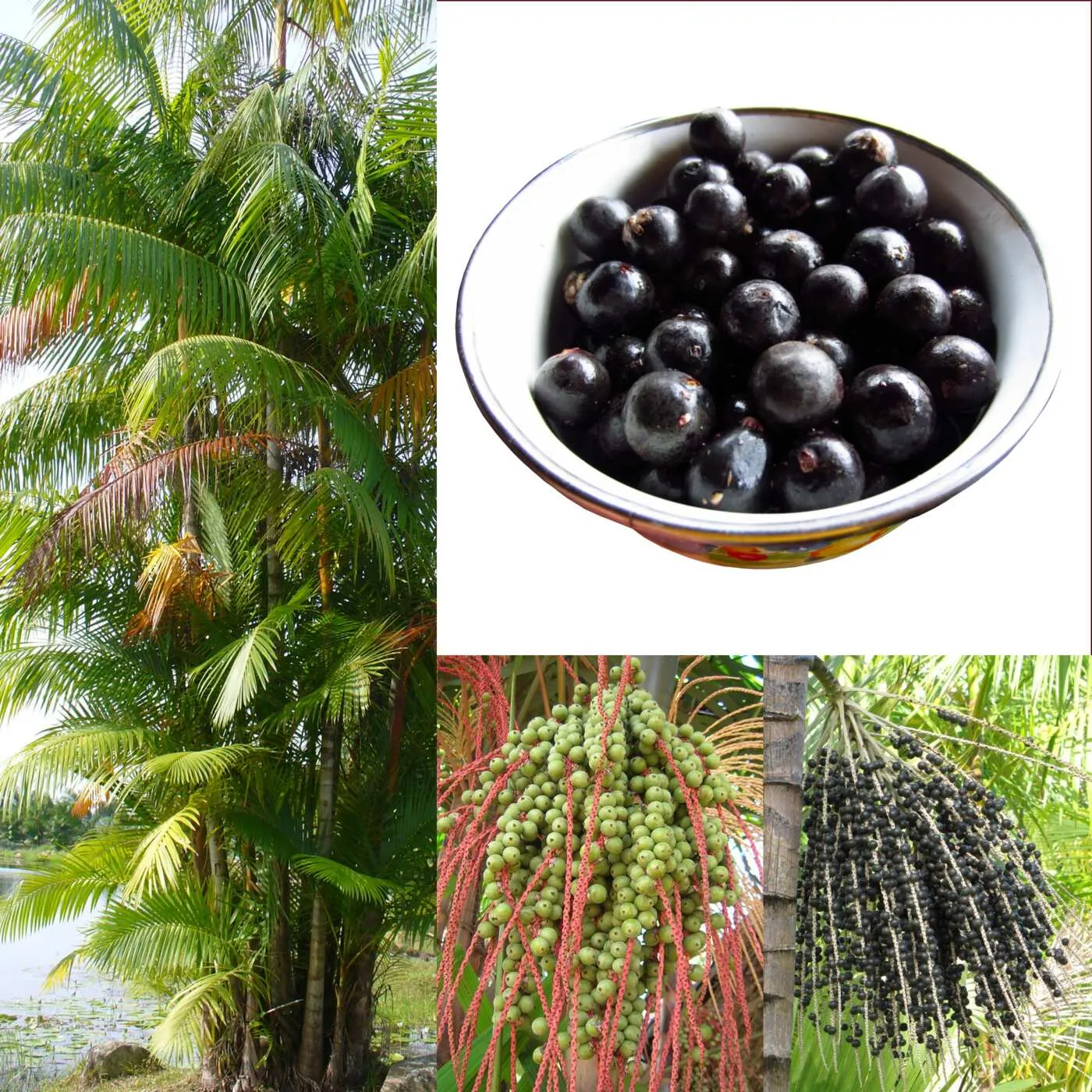 Photo: Agnieszka Kwiecień ( Nova ), CC BY-SA 3.0, via Wikimedia Commons
In Brazil, acai is traditionally consumed as a thick purée (açaí na tigela) blended with tapioca and served with granola or banana — a high-calorie meal rather than a supplement. Outside Brazil, the most common forms are:
- Frozen pulp packets — blended into smoothies; calorie density varies widely by added ingredients.
- Freeze-dried powder — added to smoothies or mixed with liquid; typically 4–8 g per serving.
- Juice and concentrated drinks — polyphenol content varies markedly by brand and processing method.
- Capsules and soft-gels — standardized extracts typically providing 500–1,500 mg of freeze-dried powder per dose.
No established clinical dosing exists for acai. Trials have used frozen pulp at 100 g twice daily for a month (the Udani pilot) or single acute doses, such as 7 mL of pulp or juice per kg of body weight in the Mertens-Talcott trial.
Acai is the base of one of the superfood smoothie recipes, blended with turmeric and black pepper. For how acai compares with other anthocyanin sources such as blueberries, see the review of polyphenol research on aging.
Safety, Interactions, and Contraindications
Little research has been done on acai’s safety. According to NCCIH, acai pulp has been used safely for up to three months in clinical research.
- Chagas disease risk: unprocessed acai pulp contaminated with Trypanosoma cruzi is a recognized cause of orally transmitted acute Chagas disease in northern Brazil, where oral infection is now the main route of transmission (Sampaio et al., 2020). In a laboratory study, heating contaminated pulp above 43 °C for 20 minutes neutralized the parasite’s virulence in mice (Barbosa et al., 2016), so pasteurized products are considered low risk; avoid raw, unpasteurized pulp.
- Contaminants: published data on heavy metals in commercial acai supplements are sparse. Products certified by NSF or USP, whose programs include contaminant limits, offer more assurance than uncertified ones.
- Drug interactions: no interaction studies in humans were found. In rats, ten days of acai extract raised blood levels of the diabetes drugs alogliptin and empagliflozin and lowered atorvastatin levels (Nanjappan et al., 2022), and some acai extracts inhibited the drug-metabolizing enzyme CYP2C9 in the lab (Raichura et al., 2026). NCCIH notes acai may affect blood glucose and could interfere with diabetes medication; people on prescription drugs should talk to their doctor first.
- MRI scans: acai pulp darkens the gut on T2-weighted MRI and has been tested as an oral contrast agent (Sanchez et al., 2009), so NCCIH advises telling your provider about acai use before an abdominal MRI.
- Pregnancy and lactation: little is known about whether acai supplements are safe during pregnancy or breastfeeding (NCCIH).
- Renal patients: acai’s oxalate content has not been well characterized; patients with calcium oxalate nephrolithiasis should exercise caution until more data are available.
This article is for informational purposes only. It does not constitute medical advice, and acai should not be used to diagnose, treat, prevent, or cure any condition.
Frequently Asked Questions
What is acai?
Acai is the fruit of the Euterpe oleracea palm, which grows in the floodplain forests of the Amazon basin in Brazil, Peru and Colombia. The fruit is a small, dark-purple drupe with a large seed and a thin layer of pulp. Because it spoils quickly, most acai outside Brazil is sold as frozen pulp, freeze-dried powder, juice or capsules.
Is acai a fruit or a berry?
Acai is a fruit. Botanically it is a drupe, a fleshy fruit with a single hard seed, like an olive or a cherry, rather than a true berry. It is grouped with berries in markets and in this encyclopedia because it is small, dark and eaten in similar ways, and because its anthocyanin pigments resemble those of blueberries and blackberries.
Does acai have protein?
Acai has some protein but is not a meaningful source. One compositional analysis of freeze-dried acai powder measured about 8 g of protein per 100 g. A typical 4 to 8 g serving of powder therefore supplies well under 1 g. Most of the energy in acai comes from fat, which made up roughly a third of the powder’s dry weight.
Are acai bowls good for you?
An acai bowl can be a reasonable meal, but its nutrition depends far more on what is added than on the acai. Sweetened pulp packets, granola, honey, banana and fruit juice can push a bowl to several hundred calories, much of it sugar. Unsweetened pulp with whole fruit and nuts keeps the fiber and anthocyanins without the added sugar. No trial has studied acai bowls as such.
How much acai is too much?
No upper limit has been set for acai. According to NCCIH, acai pulp has been used safely for up to three months in clinical research, and the longest trial dose was 100 g of frozen pulp twice daily for a month. The bigger practical concerns are added sugar and calories in commercial products, raw pulp, and possible interactions with diabetes medication, which are worth discussing with a clinician.
References
Show all 14 referencesShow fewer
- Schauss, A. G., Wu, X., Prior, R. L., Ou, B., Patel, D., Huang, D., & Kababick, J. P. (2006). Phytochemical and nutrient composition of the freeze-dried Amazonian palm berry Euterpe oleracea Mart. Journal of Agricultural and Food Chemistry, 54(22), 8598–8603.
- Mertens-Talcott, S. U., Rios, J., Jilma-Stohlawetz, P., Pacheco-Palencia, L. A., Meibohm, B., Talcott, S. T., & Derendorf, H. (2008). Pharmacokinetics of anthocyanins and antioxidant effects after the consumption of anthocyanin-rich acai juice and pulp in human healthy volunteers. Journal of Agricultural and Food Chemistry, 56(17), 7796–7802.
- Udani, J. K., Singh, B. B., Singh, V. J., & Barrett, M. L. (2011). Effects of acai (Euterpe oleracea Mart.) berry preparation on metabolic parameters in a healthy overweight population: A pilot study. Nutrition Journal, 10(1), 45.
- Alqurashi, R. M., Galante, L. A., Rowland, I. R., Spencer, J. P., & Commane, D. M. (2016). Consumption of a flavonoid-rich açai meal is associated with acute improvements in vascular function and a reduction in total oxidative status in healthy overweight men. American Journal of Clinical Nutrition, 104(5), 1227–1235.
- Sampaio, G. H. F., et al. (2020). Epidemiological profile of acute Chagas disease in individuals infected by oral transmission in northern Brazil. Revista da Sociedade Brasileira de Medicina Tropical, 53, e20200088.
- Barbosa, R. L., et al. (2016). Virulence of Trypanosoma cruzi in açai (Euterpe oleraceae Martius) pulp following mild heat treatment. Journal of Food Protection, 79(10), 1807–1812.
- Del Pozo-Insfran, D., Brenes, C. H., & Talcott, S. T. (2004). Phytochemical composition and pigment stability of açai (Euterpe oleracea Mart.). Journal of Agricultural and Food Chemistry, 52(6), 1539–1545.
- Lichtenthäler, R., Rodrigues, R. B., Maia, J. G., Papagiannopoulos, M., Fabricius, H., & Marx, F. (2005). Total oxidant scavenging capacities of Euterpe oleracea Mart. (açaí) fruits. International Journal of Food Sciences and Nutrition, 56(1), 53–64.
- Pacheco-Palencia, L. A., Mertens-Talcott, S., & Talcott, S. T. (2008). Absorption and biological activity of phytochemical-rich extracts from açai (Euterpe oleracea Mart.) pulp and oil in vitro. Journal of Agricultural and Food Chemistry, 56(10), 3593–3600.
- Xie, C., Kang, J., Li, Z., Schauss, A. G., Badger, T. M., Nagarajan, S., Wu, T., & Wu, X. (2012). The açaí flavonoid velutin is a potent anti-inflammatory agent: blockade of LPS-mediated TNF-α and IL-6 production through inhibiting NF-κB activation and MAPK pathway. Journal of Nutritional Biochemistry, 23(9), 1184–1191.
- Nanjappan, S. K., Somabattini, R. A., & Ravichandiran, V. (2022). Investigation of the effect of acai berry on the pharmacokinetics of atorvastatin, alogliptin and empagliflozin: a herb-drug interaction study. Journal of Pharmacy and Pharmacology, 74(8), 1125–1132.
- Raichura, Z., et al. (2026). Integrated assessment of cytochrome P450 inhibition by açaí and mass spectrometry-based identification of P450 inhibitory constituents using biochemometric approaches. Drug Metabolism and Disposition, 54(10), 100388.
- Sanchez, T. A., et al. (2009). Clinical feasibility of açai (Euterpe oleracea) pulp as an oral contrast agent for magnetic resonance cholangiopancreatography. Journal of Computer Assisted Tomography, 33(5), 666–671.
- National Center for Complementary and Integrative Health. Acai.
Related content

More in Berries
- Acerola Cherry (Malpighia emarginata)
Acerola cherry benefits come mostly from its vitamin C, about 1,680 mg per 100 g. What the evidence shows for immunity, skin and antioxidants, and safety.
- Blackberry (Rubus fruticosus)
What are blackberries good for? Fiber (5.3 g per 100 g), vitamin C, vitamin K and anthocyanins. Blackberry benefits, nutrition and what research shows.
- Blackcurrant (Ribes nigrum)
Blackcurrant benefits: a tart berry with 181 mg vitamin C per 100 g and dense anthocyanins. Small trials on eye fatigue, exercise recovery and cognition.
- Blueberry (Vaccinium corymbosum)
Are blueberries good for you? Trials suggest a daily cup (150 g) may help blood-vessel function; memory and blood-sugar data are early. Nutrition, safety.
- Camu Camu (Myrciaria dubia)
What is camu camu, and what are its benefits? An Amazonian berry with 1,800–3,000 mg vitamin C per 100 g, small trials on inflammation, and safety notes.
- Cranberry (Vaccinium macrocarpon)
Is cranberry juice good for you? Cranberry products modestly cut repeat UTIs in trials, but juice cocktail is sweetened and low in PACs. Benefits, safety.

Curated by Superfoods Advisor Editors·Last updated