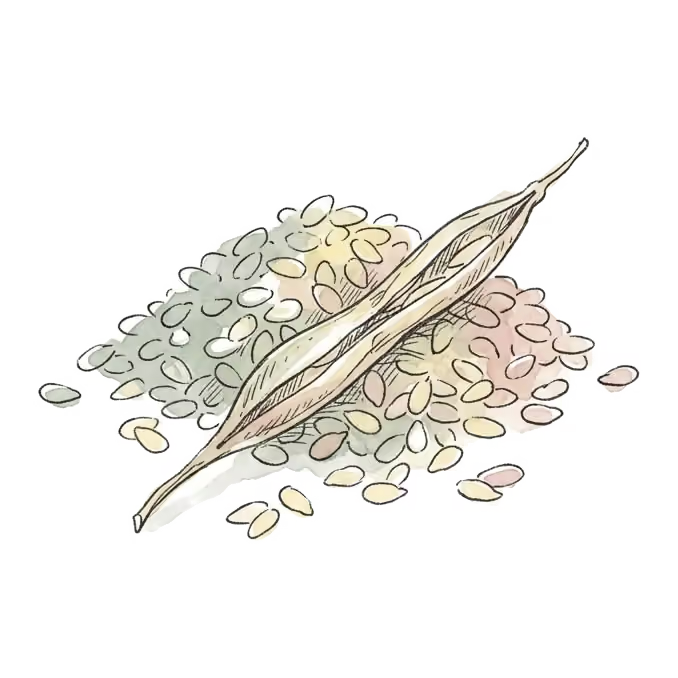
Sesame Seeds (Sesamum indicum)
Sesamum indicum · also known as benne seeds, gingelly, til, tahini (paste), sesame oil
By Superfoods Advisor Editors·July 3, 2026
Sesame seeds benefits and nutrition: calcium, copper and lignans, why hulled seeds and tahini differ, what trials show for cholesterol, and sesame allergy.
Sesame seeds (Sesamum indicum, also called benne or til) are small oilseeds eaten whole, toasted, or ground into tahini. Whole seeds are rich in calcium (975 mg per 100 g), iron and copper, and are the main food source of the lignans sesamin and sesamolin. Cholesterol trials are small and inconsistent. Sesame is a major US food allergen.
It is one of the oldest cultivated oilseed crops, with archaeobotanical evidence of sesame from Harappan (Indus Valley) sites in the Indian subcontinent and references to the crop in Mesopotamian cuneiform texts (Bedigian, 2004). The crop spread westward through the Middle East and into Africa, and eastward through Southeast Asia and China, becoming embedded in culinary, religious, and medical traditions across a broad geographic range. In ancient Egypt, sesame flour was used medicinally; in ancient Greece and Rome, sesame seeds were used as a food and lamp oil; in Chinese traditional medicine, black sesame seeds have been used since antiquity to “tonify” the liver and kidneys according to classical theory (Wei et al., 2022).
Today S. indicum is cultivated across tropical and subtropical regions worldwide, with Sudan, Myanmar, India, China, Ethiopia, and Tanzania among the leading producers. The crop is notably drought-tolerant and well-adapted to thin, poorly-irrigated soils. Sesame is consumed as whole seeds, roasted seeds, seed paste (tahini in Middle Eastern and Mediterranean cuisines; neri-goma in Japan), cold-pressed or toasted oil, and as an ingredient in confectionery (halvah), bread (sesame-topped buns), and sauces. From a nutritional and phytochemical perspective, sesame is unique among commonly consumed seeds for its content of sesamin and sesamolin — furanoid lignans found in essentially no other major food source at meaningful concentrations.
Evidence at a glance
Active Compounds
Sesamin: The most studied sesame lignan, sesamin is a furofuran lignan that occurs in other plants too but is characteristic of the Sesamum genus (Ono et al., 2006); it was measured at roughly 0.2–0.6% of seed weight (2.1–6.0 mg/g) across Indian sesame germplasm (Dar et al., 2019). Like the secoisolariciresinol lignans of flaxseed, sesamin starts from pinoresinol, but in sesame a single enzyme, CYP81Q1 (piperitol/sesamin synthase), converts pinoresinol to sesamin by forming two methylenedioxy bridges (Ono et al., 2006). In the gut, sesamin is converted mainly to enterolactone, as shown in a small human feeding study and in fecal fermentation experiments (Peñalvo et al., 2005). Enterolactone and enterodiol, the same mammalian lignans produced from flaxseed, are weak phytoestrogens that bind estrogen receptors at very low affinity. In fungal and rat liver enzyme preparations, sesamin specifically inhibited delta-5-desaturase, the enzyme converting dihomo-gamma-linolenic acid (DGLA) to arachidonic acid (Shimizu et al., 1991), which could in theory reduce pro-inflammatory eicosanoid synthesis. Human evidence for this mechanism at dietary intake levels is limited.
Sesamolin: A related furanoid lignan present at roughly 0.15–0.4% of seed weight (1.5–3.8 mg/g; Dar et al., 2019), sesamolin is absorbed: it was detectable in the plasma of every participant who ate sesame-seed muffins in a small feeding study (Cooney et al., 2001). Its metabolic fate in humans is less well characterized than sesamin’s. Sesamol has demonstrated antioxidant activity in vitro and in animal models, but bioavailability and physiological relevance in humans at typical dietary doses requires further investigation.
Sesamol: A phenol formed from sesamolin during roasting and processing, sesamol is a potent antioxidant in in vitro assays and, together with tocopherols, contributes to the oxidative stability of sesame oil (Kumar et al., 2009). Because roasting converts sesamolin to sesamol, toasted sesame oil is notably resistant to rancidity despite its high PUFA content.
Fatty acids: Sesame seeds have a roughly balanced MUFA/PUFA fatty acid profile. In USDA data, oleic acid (C18:1) makes up about 39% and linoleic acid (C18:2n-6) about 45% of fatty acids, with saturated fats (palmitic, stearic) accounting for most of the remainder (~15%) (USDA FoodData Central); across cultivars, oleic acid ranges from about 35–46% and linoleic acid from about 38–50% (Dar et al., 2019). ALA (omega-3, C18:3n-3) content is very low (<1%).
Calcium: Whole dried sesame seeds contain approximately 975 mg calcium per 100 g (USDA FoodData Central) — among the highest calcium contents of any commonly consumed plant food, exceeding most dairy products on a weight basis. However, calcium bioavailability from sesame is likely reduced by its oxalic acid and phytic acid content. Most of the oxalate sits in the hull, where it is thought to bind more than half of the seed’s calcium as poorly digestible calcium oxalate (Wei et al., 2022). In a human isotope study of high-calcium vegetables, calcium absorption generally tracked oxalate content, with high-oxalate Chinese spinach and rhubarb absorbed at roughly a quarter of the efficiency of milk (Weaver et al., 1997). Sesame-specific human absorption data are limited. Hulled (decorticated) sesame seeds lose much of their calcium with the hull: USDA lists toasted hulled kernels at about 131 mg per 100 g (USDA FoodData Central), and tahini made from hulled, unroasted kernels at about 141 mg per 100 g (USDA FoodData Central). Soaking, germination, and fermentation lower phytate (see Safety below); whether roasting improves calcium absorption from sesame has not been measured in humans.
Iron: Whole dried sesame seeds provide approximately 14.6 mg iron per 100 g (~81% DV; USDA FoodData Central), though it is non-heme iron and its absorption is inhibited by phytate. Consuming sesame with vitamin C-containing foods may improve non-heme iron absorption.
Copper: At approximately 4.1 mg/100 g (~453% DV; USDA FoodData Central), sesame seeds are one of the highest plant-based sources of copper, a cofactor for cytochrome c oxidase, ceruloplasmin, and Cu/Zn-SOD.
Zinc: Approximately 7.8 mg/100 g (~70% DV; USDA FoodData Central), reduced in bioavailability by phytate.
Thiamine (B1) and folate: Sesame seeds provide significant thiamine (~0.79 mg/100 g, ~66% DV) and modest folate (~97 µg/100 g, ~24% DV) (USDA FoodData Central).
Phytosterols: Sesame seed and wheat germ had the highest total phytosterol content among US nuts and seeds analyzed, at 400–413 mg/100 g, with beta-sitosterol, delta-5-avenasterol, and campesterol predominant (Phillips et al., 2005). USDA’s legacy entry for whole dried seeds, dated 1984, lists a higher 714 mg/100 g (USDA FoodData Central); this page uses the newer analytical figure, which also counted steryl glycosides.
Nutritional Profile
Per 100 g of whole, dried sesame seeds (USDA FoodData Central FDC ID 170150):
| Nutrient | Amount | % DV |
|---|---|---|
| Energy | 573 kcal | — |
| Protein | 17.7 g | — |
| Total fat | 49.7 g | — |
| — Saturated fat | 6.9 g | — |
| — Monounsaturated fat | 18.8 g (~40% of fatty acids) | — |
| — Polyunsaturated fat | 21.8 g (~46% of fatty acids) | — |
| — Omega-6 (linoleic) | ~21.4 g | — |
| — Omega-3 (ALA) | ~0.4 g | — |
| Carbohydrates | 23.4 g | — |
| Dietary fiber | 11.8 g | — |
| Calcium | 975 mg | 75% |
| Iron | 14.6 mg | 81% |
| Copper | 4.1 mg | 453% |
| Zinc | 7.8 mg | 70% |
| Manganese | 2.5 mg | 107% |
| Magnesium | 351 mg | 84% |
| Phosphorus | 629 mg | 50% |
| Thiamine (B1) | 0.79 mg | 66% |
| Folate | 97 µg | 24% |
| Vitamin E (alpha-tocopherol) | 0.25 mg | 2% |
| Sesamin + sesamolin | ~0.4–1.0% of weight (Dar et al., 2019) | — |
Note: In whole unhulled sesame, oxalate is likely to reduce calcium absorption, and phytate reduces absorption of iron, zinc, and calcium. These figures represent total content, not absorbed amounts.
Evidence for Purported Benefits
Sesamin Conversion to Mammalian Lignans and Phytoestrogenic Activity
Evidence:Preliminary Conversion shown in a small human study; health links come from confounded cohort data on enterolactone.
Sesamin, and likely other sesame lignans, is metabolized by gut bacteria to enterolactone and enterodiol — the same mammalian lignans produced from flaxseed SDG and other plant lignans. Both enterolactone and enterodiol bind estrogen receptors (ERα and ERβ) far more weakly than estradiol. Some prospective cohort analyses have associated higher circulating enterolactone with lower cardiovascular risk (e.g., Vanharanta et al., 2003, which linked higher serum enterolactone with lower coronary and cardiovascular mortality in middle-aged Finnish men), but these associations are confounded by the overall dietary patterns of individuals with high lignan intake. The conversion of sesamin to enterolignans depends on gut microbiome composition, and plasma lignan levels after a sesame meal varied widely between individuals in a small human study (Peñalvo et al., 2005).
Cardiovascular Effects
Evidence:Limited Small trials on surrogate lipid markers; results conflict, and a ten-trial meta-analysis found no cholesterol change.
In a randomized trial in 38 hyperlipidemic patients (Alipoor et al., 2012), eating 40 g/day of white sesame seeds for 60 days, in place of an equal number of calories, lowered total and LDL cholesterol and a lipid peroxidation marker (TBARS) compared with the control group. An open-label pilot study by Sankar et al. (2006) in 40 patients with hypertension and diabetes found that using sesame oil as the sole cooking oil for 45 days was followed by lower blood pressure, plasma glucose, HbA1c, and LDL cholesterol, with blood pressure rising again when the oil was withdrawn; it had no blinding and no separate control group. A review by Namiki (2007) summarized evidence, mostly from animal studies, that sesame lignans enhance vitamin E activity by slowing the metabolic breakdown of tocopherols; in a small human feeding study (n=9), sesame seeds raised serum gamma-tocopherol where walnuts and soy oil did not (Cooney et al., 2001). Pooled results are less encouraging than the individual trials: a meta-analysis of ten controlled trials found that sesame lowered triglycerides but did not significantly change total, LDL, or HDL cholesterol (Khalesi et al., 2016). The methodological quality of sesame cardiovascular trials is generally modest (small samples, short duration, limited blinding), so findings should be interpreted with caution.
Blood Pressure and Antioxidant Biomarkers
Evidence:Lab & animal only Rat studies of purified sesamin at doses far above normal dietary intake.
Sesamin has lowered blood pressure in spontaneously hypertensive rat models (Matsumura et al., 1998), an effect linked to increased vascular nitric oxide activity and reduced oxidative stress (Kong et al., 2015). Translating these rodent findings to human dietary intakes requires careful consideration of dose — achieving therapeutic doses of pure sesamin seen in animal studies would require consumption of sesame far beyond normal dietary ranges.
Bone Health
Evidence:Insufficient No sesame bone studies; the claim rests on calcium content, which is poorly absorbed.
The high calcium content of sesame seeds is frequently cited in discussions of plant-based bone health. While adequate calcium intake is necessary for bone mineral accretion, the likely reduced bioavailability of calcium from sesame (due to oxalate and phytate binding) means that sesame cannot be reliably substituted for dairy or supplemental calcium on a milligram-for-milligram basis. Sesame is best considered a supplementary calcium source within a varied plant-rich diet rather than a primary calcium strategy.
Our chia seeds vs. flaxseed comparison explains how gut bacteria convert seed lignans into enterolignans, background that also applies to sesame’s lignans; the flaxseed entry covers the richest food source of those lignan precursors.
Typical Use and Preparation
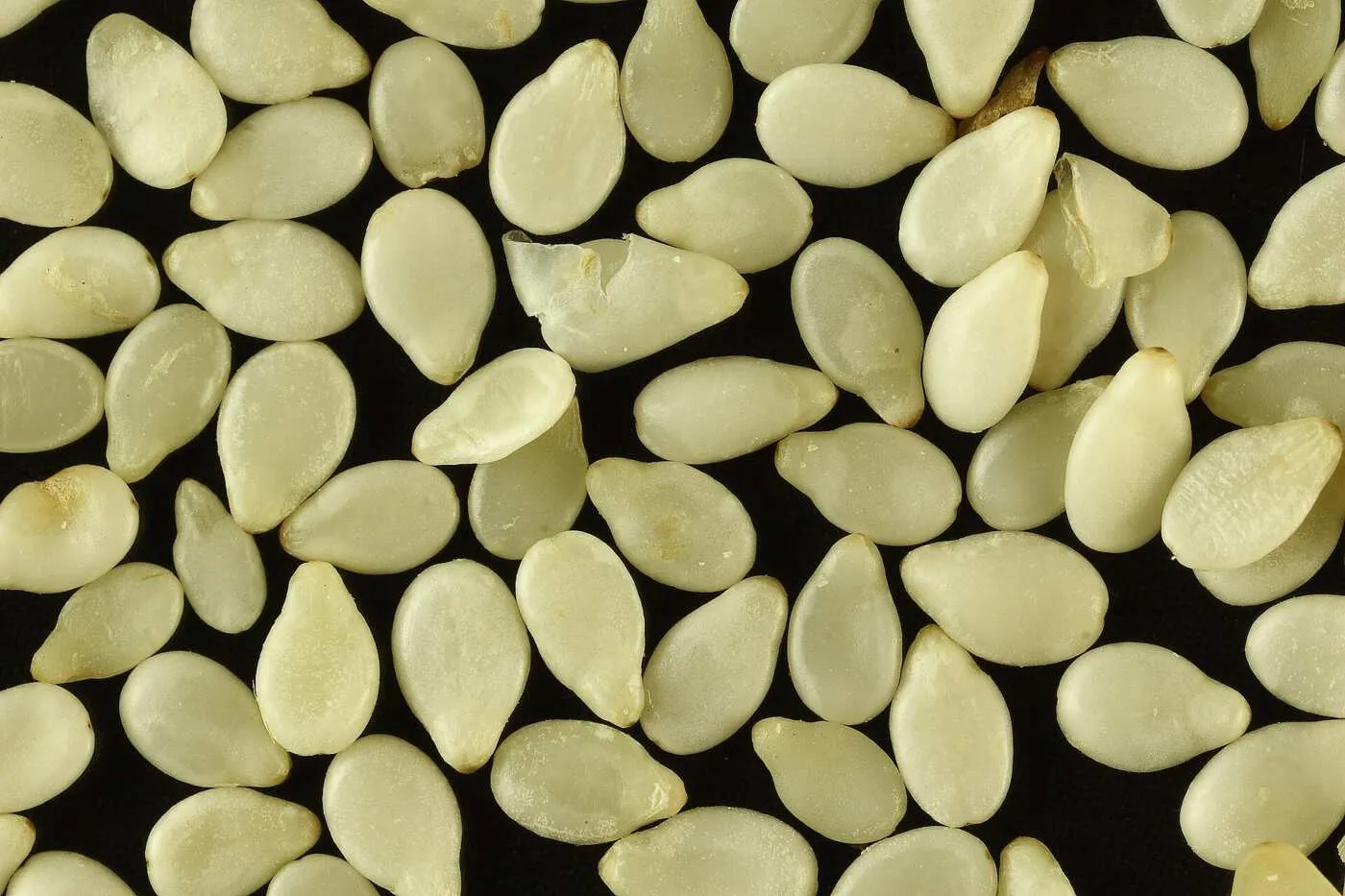 Photo: Sanjay ach, CC BY-SA 3.0, via Wikimedia Commons
Whole seeds: Used as a garnish and ingredient in baked goods (hamburger buns, bagels, bread), Asian noodle dishes, Korean banchan, Japanese gomae (spinach with sesame dressing), Middle Eastern za’atar, and Indian sweets (til ladoo). Toasting whole seeds in a dry pan until golden enhances aroma and flavor significantly through Maillard reactions and sesamol formation.
Tahini: Stone-ground paste of roasted (or occasionally raw) hulled sesame seeds, widely used in hummus, baba ganoush, halva, and as a sauce base in Middle Eastern, North African, and Eastern Mediterranean cuisines. Tahini made from hulled kernels has roughly 141 mg calcium per 100 g, compared with 975 mg in whole seeds, because much of the calcium sits in the hull (USDA FoodData Central). The grinding process improves bioavailability of most nutrients by disrupting the seed coat and increasing surface area for enzymatic digestion, compared to consuming whole, unchewed seeds. Bioavailability note: Whole sesame seeds swallowed without thorough chewing may pass through the gut intact; tahini, ground seeds, and thoroughly chewed seeds are likely to make nutrients more available.
Sesame oil: Cold-pressed light sesame oil (from raw seeds) is used in cooking in East and South Asian cuisines. Toasted sesame oil (from roasted seeds, darker in color) has a more intense flavor and is used as a finishing oil; sesamol formed during roasting, together with tocopherols, gives it good oxidative stability despite the high PUFA content (Kumar et al., 2009). At 884 kcal/100 g (USDA FoodData Central), sesame oil is calorie-dense and provides no fiber or protein.
Black sesame: Black sesame seeds (a natural color variant of S. indicum) owe their color to a melanin-type pigment in the seed coat (Dossou et al., 2022). They are used in East Asian medicine and cuisine, often in desserts and porridges.
A 28 g serving of whole sesame seeds provides approximately 160 kcal, 5 g protein, 13.9 g fat, and 3.3 g fiber.
Safety, Interactions, and Contraindications
Sesame allergy — US Big 9 allergen (as of 2023): The FASTER Act, signed into US law in April 2021 and effective January 1, 2023, added sesame as the ninth major food allergen requiring mandatory labeling in the United States (FDA, 2023) (joining milk, egg, fish, shellfish, tree nuts, peanuts, wheat, and soybeans). A nationally representative US survey estimated that 0.49% of the population reported a current sesame allergy and 0.23% had symptoms consistent with convincing IgE-mediated allergy (Warren et al., 2019); published estimates elsewhere vary by region and age, roughly 0.1% to 0.9% (Oriel et al., 2024). Clinical presentations range from mild oral symptoms to anaphylaxis, and reactions can be severe and potentially fatal (Oriel et al., 2024). The primary allergens include Ses i 1 (a 2S albumin), Ses i 2 (also a 2S albumin), Ses i 3 (a vicilin-type 7S globulin), Ses i 6 and Ses i 7 (11S legumin subunits). These storage proteins are heat-stable, meaning roasting does not reliably eliminate allergenicity. Sesame proteins share homology with proteins in tree nuts, peanuts, poppy seeds, and other seeds, but clinically relevant cross-reactivity appears uncommon (Oriel et al., 2024).
Labeling and hidden sesame: Prior to 2023, sesame used within an ingredient such as “natural flavor” or “spice mix” did not have to be named on US labels — a historical source of accidental exposures. FDA now expects sesame to be named in those cases and included in any “Contains” statement, though products already on shelves before January 1, 2023 did not have to be relabeled (FDA, 2023). Consumers with sesame allergy should be alert to hidden sesame in tahini-containing products, some breads, crackers, Middle Eastern and East Asian foods, and cosmetic/topical products (sesame oil in skin care).
Oxalate content: Sesame seeds, particularly unhulled seeds, contain oxalate, which reduces calcium absorption (Heaney et al., 1988) and may increase urinary oxalate in susceptible individuals. Unlike phytate, oxalic acid did not reduce non-heme iron absorption in a human isotope study (Genannt Bonsmann et al., 2008). Individuals with a history of calcium oxalate kidney stones may be advised by their healthcare provider to limit high-oxalate foods including sesame.
Phytate: Phytic acid in sesame seeds reduces absorption of zinc, iron, calcium, and magnesium. Soaking seeds before use, or consuming fermented sesame preparations, can partially reduce phytate content.
Drug interactions: In human liver microsomes, sesamin strongly inhibited CYP2C9-mediated warfarin 7-hydroxylation (Pilipenko et al., 2018), though a follow-up study judged the inhibition unlikely to be severe at the plasma concentrations sesamin usually reaches (Fujii et al., 2020), and sesamin did not change diclofenac pharmacokinetics in rats (Yasuda et al., 2015). In cell studies, sesamin blunted CYP3A4 induction by blocking the pregnane X receptor (Lim et al., 2012). No human pharmacokinetic trials have tested dietary sesame or sesamin supplements; people taking warfarin who plan to use concentrated sesamin supplements should talk to their doctor.
This entry is for informational purposes only and does not constitute medical advice, diagnosis, or treatment.
Frequently Asked Questions
Are sesame seeds good for you?
In normal amounts, yes for people without sesame allergy. Whole seeds supply fiber, calcium, iron, copper, zinc and magnesium, along with lignans found in few other foods. The evidence for specific health benefits is limited: individual trials reported lower cholesterol, but a meta-analysis of ten trials found only a drop in triglycerides. Much of the mineral content is less absorbable than the label suggests.
Are sesame seeds a good source of calcium?
On paper, whole seeds are: 975 mg per 100 g. In practice, most of that calcium sits in the hull bound to oxalate, which is poorly absorbed, and hulled seeds and tahini made from them contain only about 131 to 141 mg per 100 g. Sesame is a useful supplementary calcium source, not a replacement for dairy, fortified foods or prescribed supplements.
How many sesame seeds should you eat a day?
A 28 g serving, about 3 tablespoons, provides roughly 160 kcal, 5 g protein and 3.3 g fiber. The cholesterol trial that reported benefits used 40 g a day of white sesame seeds in place of other calories. No official limit exists. People with calcium oxalate kidney stones may be advised to limit sesame, especially unhulled seeds.
Are sesame seeds a tree nut?
No. Sesame is a seed and is regulated as its own allergen: since January 1, 2023, it has been the ninth major food allergen requiring labeling in the US. Sesame proteins resemble some tree nut and peanut proteins, but clinically relevant cross-reactivity appears uncommon. Lab studies have found chia proteins resembling sesame allergens.
Are sesame seeds gluten free?
Sesame seed itself is generally considered gluten-free, since it is an oilseed rather than a wheat, barley or rye grain. Sesame products are a separate question: seeds may be processed or packed alongside wheat, and sesame-topped breads and crackers usually contain wheat flour. People with celiac disease should check the product label for a gluten-free claim or a cross-contact warning rather than rely on the seed alone.
What is the difference between black and white sesame seeds?
Both come from the same species. Black sesame keeps its seed coat, which owes its color to a melanin-type pigment, and is used widely in East Asian desserts and porridges. White sesame is often hulled, which removes much of the calcium and oxalate along with the hull. No trials have compared the health effects of the two.
References
Show all 28 referencesShow fewer
- Namiki, M. (2007). Nutraceutical functions of sesame: a review. Critical Reviews in Food Science and Nutrition, 47(7), 651–673.
- Sankar, D., Rao, M. R., Sambandam, G., & Pugalendi, K. V. (2006). A pilot study of open label sesame oil in hypertensive diabetics. Journal of Medicinal Food, 9(3), 408–412.
- Vanharanta, M., Voutilainen, S., Rissanen, T. H., Adlercreutz, H., & Salonen, J. T. (2003). Risk of cardiovascular disease-related and all-cause death according to serum concentrations of enterolactone: Kuopio Ischaemic Heart Disease Risk Factor Study. Archives of Internal Medicine, 163(9), 1099–1104.
- Weaver, C. M., Heaney, R. P., Nickel, K. P., & Packard, P. I. (1997). Calcium bioavailability from high oxalate vegetables: Chinese vegetables, sweet potatoes, and rhubarb. Journal of Food Science, 62(3), 524–525.
- US Food and Drug Administration. (2023). Allergic to sesame? Food labels now must list sesame as an allergen. FDA Consumer Update.
- Bedigian, D. (2004). History and lore of sesame in southwest Asia. Economic Botany, 58(3), 330–353.
- USDA FoodData Central. (2019). Seeds, sesame seeds, whole, dried. FDC ID 170150. U.S. Department of Agriculture.
- Alipoor, B., Haghighian, M. K., Sadat, B. E., & Asghari, M. (2012). Effect of sesame seed on lipid profile and redox status in hyperlipidemic patients. International Journal of Food Sciences and Nutrition, 63(6), 674–678.
- Dar, A. A., Kancharla, P. K., Chandra, K., Sodhi, Y. S., & Arumugam, N. (2019). Assessment of variability in lignan and fatty acid content in the germplasm of Sesamum indicum L. Journal of Food Science and Technology, 56(2), 976–986.
- Warren, C. M., Chadha, A. S., Sicherer, S. H., Jiang, J., & Gupta, R. S. (2019). Prevalence and severity of sesame allergy in the United States. JAMA Network Open, 2(8), e199144.
- Wei, P., Zhao, F., Wang, Z., et al. (2022). Sesame (Sesamum indicum L.): a comprehensive review of nutritional value, phytochemical composition, health benefits, development of food, and industrial applications. Nutrients, 14(19), 4079.
- Ono, E., Nakai, M., Fukui, Y., et al. (2006). Formation of two methylenedioxy bridges by a Sesamum CYP81Q protein yielding a furofuran lignan, (+)-sesamin. Proceedings of the National Academy of Sciences USA, 103(26), 10116–10121.
- Peñalvo, J. L., Heinonen, S. M., Aura, A. M., & Adlercreutz, H. (2005). Dietary sesamin is converted to enterolactone in humans. Journal of Nutrition, 135(5), 1056–1062.
- Shimizu, S., Akimoto, K., Shinmen, Y., Kawashima, H., Sugano, M., & Yamada, H. (1991). Sesamin is a potent and specific inhibitor of delta 5 desaturase in polyunsaturated fatty acid biosynthesis. Lipids, 26(7), 512–516.
- Cooney, R. V., Custer, L. J., Okinaka, L., & Franke, A. A. (2001). Effects of dietary sesame seeds on plasma tocopherol levels. Nutrition and Cancer, 39(1), 66–71.
- Kumar, C. M., Appu Rao, A. G., & Singh, S. A. (2009). Effect of infrared heating on the formation of sesamol and quality of defatted flours from Sesamum indicum L. Journal of Food Science, 74(4), H105–H111.
- Phillips, K. M., Ruggio, D. M., & Ashraf-Khorassani, M. (2005). Phytosterol composition of nuts and seeds commonly consumed in the United States. Journal of Agricultural and Food Chemistry, 53(24), 9436–9445.
- Khalesi, S., Paukste, E., Nikbakht, E., & Khosravi-Boroujeni, H. (2016). Sesame fractions and lipid profiles: a systematic review and meta-analysis of controlled trials. British Journal of Nutrition, 115(5), 764–773.
- Matsumura, Y., Kita, S., Tanida, Y., et al. (1998). Antihypertensive effect of sesamin. III. Protection against development and maintenance of hypertension in stroke-prone spontaneously hypertensive rats. Biological and Pharmaceutical Bulletin, 21(5), 469–473.
- Kong, X., Li, W., Guo, L. Q., et al. (2015). Sesamin enhances nitric oxide bioactivity in aortas of spontaneously hypertensive rats. Therapeutic Advances in Cardiovascular Disease, 9(5), 314–324.
- Dossou, S. S. K., Luo, Z., Wang, Z., et al. (2022). The dark pigment in the sesame (Sesamum indicum L.) seed coat: isolation, characterization, and its potential precursors. Frontiers in Nutrition, 9, 858673.
- Oriel, R. C., Elizur, A., & Sicherer, S. H. (2024). Comprehensive diagnosis, management, and treatment of sesame allergy. Journal of Allergy and Clinical Immunology: In Practice, 12(3), 590–597.
- Heaney, R. P., Weaver, C. M., & Recker, R. R. (1988). Calcium absorbability from spinach. American Journal of Clinical Nutrition, 47(4), 707–709.
- Genannt Bonsmann, S. S., Walczyk, T., Renggli, S., & Hurrell, R. F. (2008). Oxalic acid does not influence nonhaem iron absorption in humans: a comparison of kale and spinach meals. European Journal of Clinical Nutrition, 62(3), 336–341.
- Pilipenko, N., Rasmussen, M. K., Doran, O., & Zamaratskaia, G. (2018). 7-Hydroxylation of warfarin is strongly inhibited by sesamin, but not by episesamin, caffeic and ferulic acids in human hepatic microsomes. Food and Chemical Toxicology, 113, 14–18.
- Fujii, M., Yasuda, K., & Sakaki, T. (2020). Inhibitory effects of sesamin on CYP2C9-dependent 7-hydroxylation of S-warfarin. Drug Metabolism and Pharmacokinetics, 35(4), 368–373.
- Yasuda, K., Ueno, S., Ueda, E., et al. (2015). Influence of sesamin on CYP2C-mediated diclofenac metabolism: in vitro and in vivo analysis. Pharmacology Research & Perspectives, 3(5), e00174.
- Lim, Y. P., Ma, C. Y., Liu, C. L., et al. (2012). Sesamin: a naturally occurring lignan inhibits CYP3A4 by antagonizing the pregnane X receptor activation. Evidence-Based Complementary and Alternative Medicine, 2012, 242810.
More in Nuts & Seeds
- Almonds (Prunus dulcis)
Almonds benefits and nutrition: what trials show for LDL cholesterol, blood sugar and weight, plus serving size, vitamin E, oxalate and allergy risks.
- Brazil Nuts (Bertholletia excelsa)
Brazil nuts benefits come down to selenium: one nut can hold 8 to 200 mcg. How many to eat per day, what the research shows, and the toxicity limit.
- Cashews (Anacardium occidentale)
Cashews benefits and nutrition: copper, magnesium and iron per serving, what trials show for blood pressure and blood sugar, and allergy and oxalate risks.
- Chia Seeds (Salvia hispanica)
How to eat chia seeds: soaked, ground or in pudding, with serving size, nutrition and what trials show for blood sugar, blood pressure and weight loss.
- Flaxseed (Linum usitatissimum)
Flaxseed benefits explained: what trials show for blood pressure, cholesterol and constipation, why ground beats whole, daily amounts and side effects.
- Hazelnuts (Corylus avellana)
Hazelnuts benefits and nutrition: oleic acid, vitamin E and folate per serving, what trials show for cholesterol, and how birch-pollen allergy works.

Curated by Superfoods Advisor Editors·Last updated