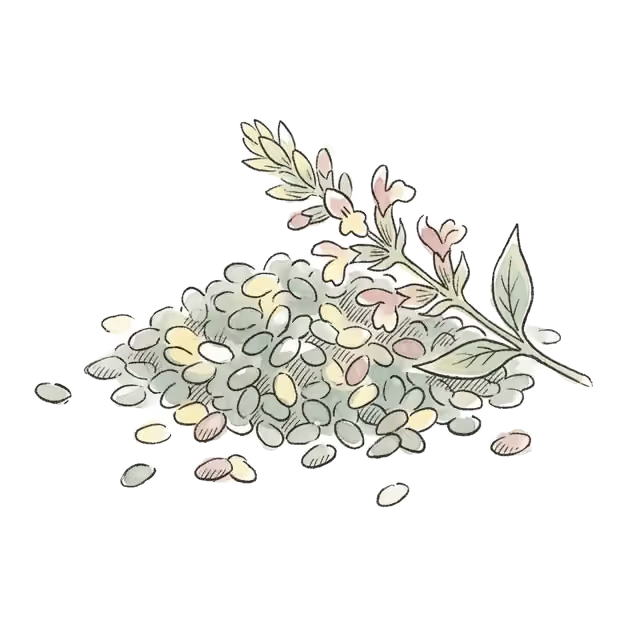
Chia Seeds (Salvia hispanica)
Salvia hispanica · also known as chia, Mexican chia, salba chia
By Superfoods Advisor Editors·July 3, 2026
How to eat chia seeds: soaked, ground or in pudding, with serving size, nutrition and what trials show for blood sugar, blood pressure and weight loss.
Chia seeds (Salvia hispanica) are tiny seeds of a Mexican mint-family herb, eaten soaked into a gel, ground, or sprinkled whole. A 28 g serving, about 2 tablespoons, provides roughly 136 kcal, 10 g fiber and 5 g of the plant omega-3 ALA. Soaking is the safest way to eat them, because dry seeds swell as they absorb liquid.
The plant is native to central Mexico and northern Guatemala. Mesoamerican peoples ate the seeds for thousands of years (Kulczyński et al., 2019), and chia ranked alongside maize, beans, and amaranth as a staple crop of the Aztec Empire. Ground chia was combined with water to form a beverage (chia fresca), and the seeds were pressed into oil and ground into flour for ceremonial and everyday use. Spanish colonizers suppressed cultivation following the conquest of Mexico in the 16th century, associating the crop with indigenous religious practices, leading to a dramatic decline in cultivation that persisted for several centuries.
Commercial chia production was revived in the late 20th century, initially in Argentina and Bolivia, and grew rapidly following nutritional interest in omega-3 fatty acids and fiber. Today chia seeds are produced mainly in South and Central America and Australia, and in Europe only under glass because the plant is not frost-resistant (Kulczyński et al., 2019). The seeds come in black-spotted and white types; a comparison of the two genotypes found no difference in protein, oil, fiber, amino acids, or antioxidants by seed color (Ayerza, 2013), so the white seed marketed under the “Salba” brand name is not nutritionally distinct from black chia.
Evidence at a glance
Active Compounds
- Alpha-linolenic acid (ALA): Chia seeds contain approximately 17.8 g of ALA per 100 g (USDA FoodData Central), making them, alongside flaxseed, one of the richest plant sources of omega-3 fatty acids by weight. ALA is an essential fatty acid (the body cannot synthesize it) and serves as the precursor to EPA and DHA, though conversion in humans is limited for EPA and very low for DHA, and somewhat greater in women than in men (Burdge & Calder, 2005). Chia ALA is housed within the seed’s oil cells and protected by the seed coat.
- Fiber and mucilage: Total fiber content is approximately 34.4 g/100 g (USDA FoodData Central), one of the highest among commonly consumed seeds. Most of it is insoluble, at roughly 4 parts insoluble to 1 part soluble (Menga et al., 2017). The soluble fraction sits largely in the outer mucilage: when hydrated, chia seeds absorb many times their own weight in water and form a viscous gel. This gel is thought to slow digestion and blunt post-meal glucose rises; proposed prebiotic effects in the colon have little direct human evidence.
- Protein: Chia provides approximately 16.5 g protein per 100 g (USDA FoodData Central) and contains all the essential amino acids, but not in reference proportions: lysine is the limiting amino acid, and the protein fell short of the FAO/WHO/UNU pattern for young children (Olivos-Lugo et al., 2010).
- Calcium: At approximately 631 mg/100 g (49% DV; USDA FoodData Central), chia seeds contain more calcium by weight than whole milk, though phytate reduces how much of it is absorbed.
- Phosphorus: Approximately 860 mg/100 g (69% DV; USDA FoodData Central).
- Polyphenols: Chlorogenic acid, caffeic acid, quercetin, kaempferol, and myricetin have been identified in the seed and contribute to its antioxidant activity in laboratory assays (Kulczyński et al., 2019; Mohd Ali et al., 2012). Total polyphenol content is modest but measurable.
- Phytate (phytic acid): Measured at 1.55–2.65 g/100 g across eight Latin American chia samples, varying with growing region (Vera-Cespedes et al., 2023); it binds calcium, iron, and zinc and reduces their absorption. The same authors note that fermentation, as in bread dough, lets the seed’s own phytase break phytate down.
Nutritional Profile
Per 100 g whole dried chia seeds (USDA FoodData Central, SR Legacy, FDC 170554):
| Nutrient | Amount | % DV |
|---|---|---|
| Energy | 486 kcal | — |
| Protein | 16.5 g | — |
| Total fat | 30.7 g | — |
| — Saturated fat | 3.3 g | — |
| — Monounsaturated fat | 2.3 g | — |
| — Polyunsaturated fat | 23.7 g | — |
| — ALA (omega-3) | 17.8 g | — |
| Carbohydrate | 42.1 g | — |
| Dietary fiber | 34.4 g | — |
| Calcium | 631 mg | 49% |
| Phosphorus | 860 mg | 69% |
| Magnesium | 335 mg | 80% |
| Iron | 7.7 mg | 43% |
| Zinc | 4.6 mg | 42% |
| Potassium | 407 mg | 9% |
| Thiamine | 0.62 mg | 52% |
| Niacin | 8.8 mg | 55% |
Evidence for Purported Benefits
Cardiovascular Risk Markers
Evidence:Limited Small RCTs on surrogate markers; a 12-trial meta-analysis found no overall effect and rated the evidence low quality.
The ALA and fiber content of chia seeds provide a plausible mechanistic basis for cardiovascular benefit. In a 12-week single-blind crossover RCT in 20 adults with well-controlled type 2 diabetes (Vuksan et al., 2007, Diabetes Care), 37 g/day of Salba chia added to conventional therapy reduced systolic blood pressure by 6.3 mmHg, high-sensitivity C-reactive protein (CRP) by 40%, and von Willebrand factor by 21% compared with wheat bran. A later six-month double-blind RCT in 77 overweight or obese adults with type 2 diabetes on a calorie-restricted diet (Vuksan et al., 2017, Nutrition, Metabolism and Cardiovascular Diseases) found that CRP fell by 39% with chia versus 7% with an oat bran control. However, most chia-specific RCTs are small and short, limiting generalizability.
A 2018 meta-analysis by Teoh et al. (Nutrition Reviews) pooling 12 RCTs found no significant overall differences between chia and control groups; only in subgroup analyses at higher doses was chia associated with lower postprandial glucose, lower diastolic blood pressure, and lower HDL cholesterol. The authors rated all of the evidence as low or very low quality, and every trial relied on surrogate markers rather than clinical events.
Glycemic Control
Evidence:Limited Small acute post-meal studies; pooled RCT benefit appeared only at higher doses.
Chia’s viscous mucilage is thought to slow carbohydrate digestion and the rate of glucose absorption. In an acute randomized trial in 11 healthy adults (Vuksan et al., 2010, European Journal of Clinical Nutrition), baking 7, 15, or 24 g of chia into white bread lowered postprandial blood glucose in a dose-dependent manner and reduced appetite ratings over the following two hours. In the 12-week Vuksan et al. (2007) trial in type 2 diabetes, HbA1c fell relative to baseline during chia supplementation, but the change was not significant against the wheat bran control. Whether chia’s glycemic effects persist long-term or reduce hard endpoints such as diabetes progression has not been established.
Satiety and Body Weight
Evidence:Limited Results conflict: some short-term benefit, but placebo-controlled trials found no effect on body weight.
The hydrogel formed by chia seeds expands in the stomach and may delay gastric emptying, promoting satiety. However, RCT evidence for body weight reduction is weak. A 12-week placebo-controlled trial by Nieman et al. (2009, Nutrition Research) found no significant effect of 50 g/day whole chia seeds on body weight, body composition, or inflammatory markers in overweight adults compared to placebo. In the six-month Vuksan et al. (2017) trial, adults with type 2 diabetes on a calorie-restricted diet lost slightly more weight with chia than with an oat bran control (1.9 vs. 0.3 kg). Milling does not appear to rescue the weight result: in a 10-week trial in overweight women, milled chia raised plasma ALA and EPA where whole chia did not, yet neither form changed body composition, inflammation, blood pressure, or lipids compared with placebo (Nieman et al., 2012).
Bone Density (Calcium and Phosphorus)
Evidence:Insufficient No chia-specific bone trials; the claim rests on mineral content.
The calcium and phosphorus in chia are notable but subject to phytate-mediated absorption reduction. No clinical trials have specifically assessed chia consumption and bone mineral density outcomes.
Typical Use: How to Eat Chia Seeds
Chia seeds can be eaten whole, ground, or soaked in liquid; soaking or mixing them into a moist food is the most common way and avoids the swelling risk of dry seed. In one trial, ground chia raised blood ALA more than whole seeds did.
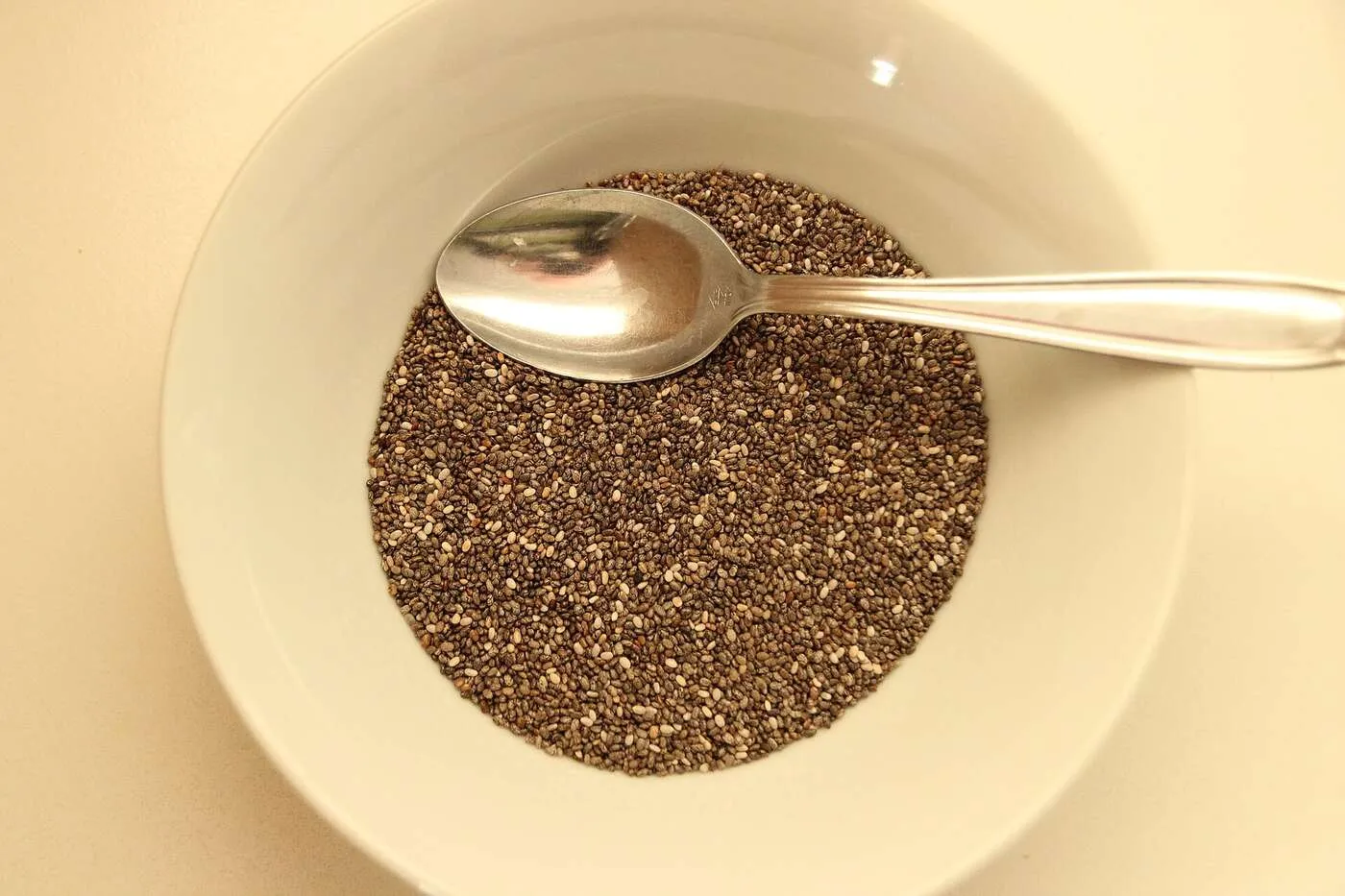 Photo: Frank C. Müller, CC BY-SA 4.0, via Wikimedia Commons
Whole seeds: Some whole seeds pass through the digestive tract with their seed coats intact, which limits how much of their fat and protein is absorbed. Whole chia still raised plasma ALA in a 12-week trial (Nieman et al., 2009), though not significantly in a later 10-week one (Nieman et al., 2012).
Milled/ground chia: Grinding disrupts the seed coat. In a 10-week trial, milled chia raised plasma ALA and EPA more than whole chia, but neither form changed blood pressure, lipids, or inflammation markers versus placebo (Nieman et al., 2012), and no trial has compared the two forms on cardiovascular outcomes. Ground chia can be substituted for a portion of flour in baked goods or stirred into smoothies.
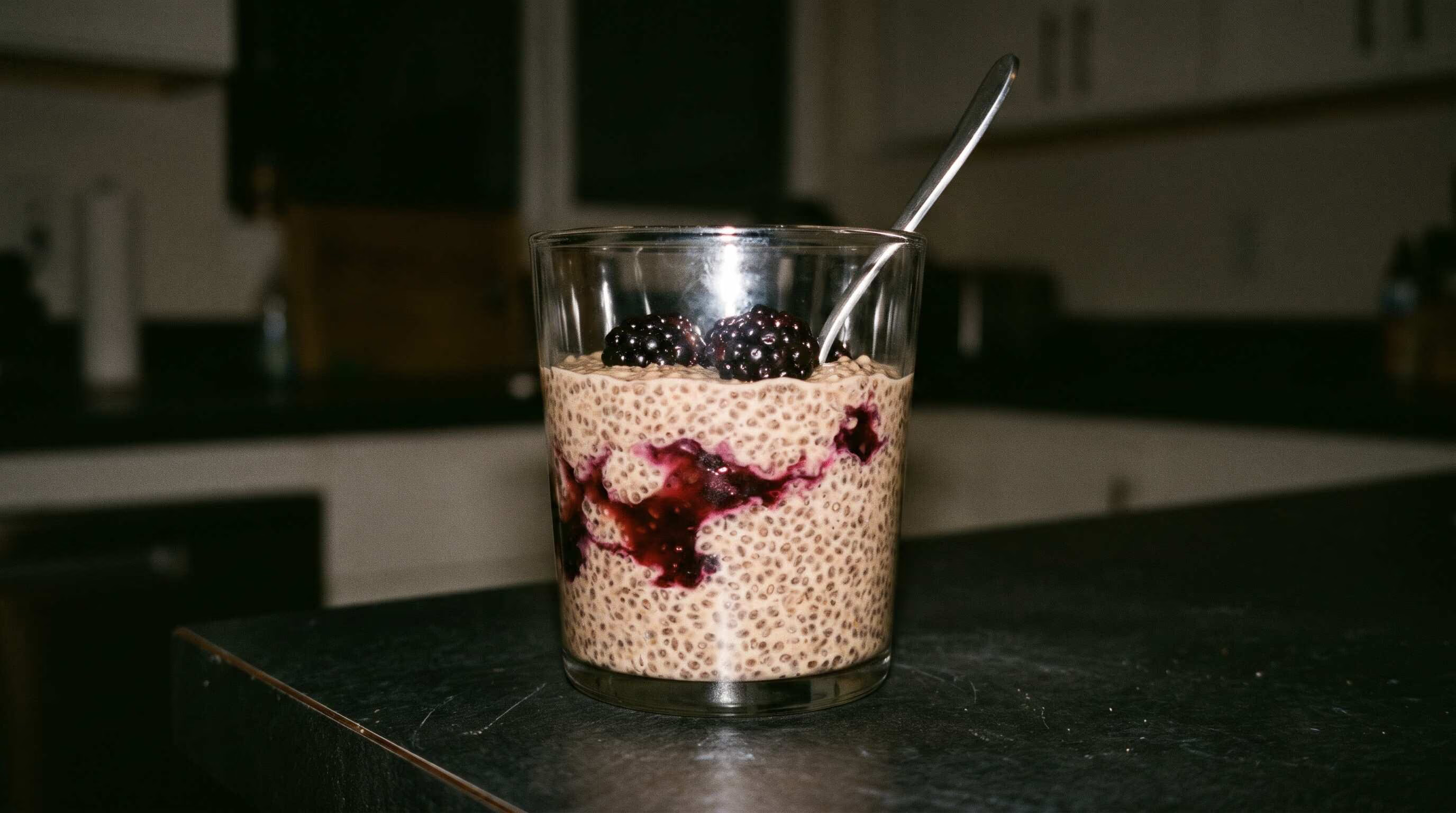
Chia pudding: Soaking about 1 part seed to 4 parts liquid by volume and refrigerating for several hours or overnight produces a set pudding; shorter soaks give a looser gel. Pre-soaking also avoids swallowing large amounts of dry seed (see below).
Hydration consideration: Due to their water-absorption capacity, chia seeds should be consumed with adequate fluid. A published case report describes esophageal impaction from dry chia seeds that swelled into a gel, in a patient with likely eosinophilic esophagitis (Simmelink et al., 2017).
A standard serving is 28 g (a little over 2 tablespoons, since a level tablespoon of whole seed weighs about 12 g), providing about 136 kcal, 10 g fiber, and 5 g ALA (USDA FoodData Central).
For a side-by-side comparison with flax on omega-3, fiber, and storage, see chia seeds vs flaxseed; the flaxseed entry covers why flax, unlike chia, needs grinding.
Safety, Interactions, and Contraindications
Blood thinning potential: Omega-3 fatty acids can affect platelet function, mainly at supplemental doses of EPA and DHA. Evidence for an effect from dietary ALA at chia-level intakes (a few grams per serving) is thin; in the 12-week Vuksan trial, 37 g/day of chia produced no change in hemostatic safety measures (Vuksan et al., 2007). As a precaution, individuals on anticoagulant or antiplatelet medications (warfarin, aspirin, clopidogrel) or those scheduled for surgery should tell their healthcare provider about high omega-3 intake.
Gastrointestinal effects: The high fiber content (34 g/100 g) can cause bloating, flatulence, and loose stools when introduced abruptly into a low-fiber diet. A gradual introduction is advisable. Individuals with inflammatory bowel disease or irritable bowel syndrome may experience exacerbation with high fiber loads; clinical guidance is warranted.
Esophageal obstruction: As noted above, dry chia seeds swell as they absorb water and saliva. Dry seeds should not be taken without adequate liquid, and individuals with known dysphagia (swallowing difficulty) or esophageal stricture should avoid whole dry seeds entirely.
Allergy: Chia allergy appears uncommon; published clinical evidence is limited to a small number of case reports and one case series, including anaphylaxis (Porr et al., 2026). Laboratory studies found chia storage proteins structurally similar to sesame and hazelnut allergens, suggesting people with sesame allergy could be cross-sensitized (Albunni et al., 2019), though antibody cross-recognition does not establish clinical cross-allergy.
Oxalate and kidneys: One case report describes oxalate nephropathy in a woman eating six tablespoons of chia seeds and five handfuls of almonds daily; her kidney markers improved on a low-oxalate diet (Garland et al., 2020). People with kidney disease or a history of oxalate stones may want to discuss very large daily amounts with a clinician.
Prostate cancer concern: Some earlier epidemiological studies linked higher ALA intake to prostate cancer risk, but a 2013 meta-analysis of 12 case-control and prospective studies found no significant association (Carleton et al., 2013). The evidence does not constitute a clinical contraindication, but men with prostate cancer concerns may wish to discuss high ALA intake with a urologist.
Interactions with medications: Viscous fiber may slow or reduce the absorption of some oral medications. Taking chia an hour or two apart from oral medications is a reasonable precaution; a pharmacist can advise for specific drugs. Because small trials reported lower post-meal glucose and blood pressure with chia, people on glucose-lowering or blood pressure medication may want to monitor when adding large amounts.
Frequently Asked Questions
Can you eat raw chia seeds directly?
Yes, chia seeds need no cooking, and small amounts sprinkled on moist food such as yogurt or oatmeal are common. Large spoonfuls of dry seed are the problem: chia absorbs many times its weight in liquid, and one case report describes dry seeds swelling into a gel that blocked the esophagus. Soak them or eat them with plenty of fluid, and avoid dry seed if you have swallowing difficulties.
How much chia seed should you eat a day?
A typical serving is 28 g, a little over 2 tablespoons (a level tablespoon weighs about 12 g). That supplies about 10 g of fiber. Trials have used 37 to 50 g a day, but the fiber can cause bloating if you start high, so build up gradually and drink enough water. People with kidney stones should ask a clinician about very large daily amounts.
Is it safe to drink chia seed water daily?
For most people, a glass of chia water a day is a reasonable way to eat the seeds, since soaking avoids the swelling risk of dry seed. Let the seeds hydrate for several minutes before drinking. The fiber can loosen stools if you are not used to it, and viscous fiber may slow absorption of some medications, so take it an hour or two apart from them.
Do chia seeds help you lose weight?
The evidence says probably not on their own. A 12-week placebo-controlled trial of 50 g of chia a day found no change in body weight or body composition in overweight adults, and a 10-week trial of milled chia also found none. In a six-month trial in adults with type 2 diabetes on a calorie-restricted diet, chia added slightly more weight loss than oat bran (1.9 vs 0.3 kg).
What should you not mix chia seeds with?
There is no food chia must never be mixed with. The practical cautions are to avoid eating them dry in large amounts, to take them apart from oral medications because their gel may slow absorption, and to watch the combined fiber load if you also add flax, bran or psyllium. People with sesame allergy should be aware that lab studies found chia proteins resembling sesame allergens.
Are chia seeds good for you?
They are nutrient-dense: rich in fiber, ALA omega-3, magnesium and calcium, with about 16.5 g protein per 100 g. Specific health benefits are less certain than marketing suggests. Small trials reported lower post-meal blood sugar, blood pressure and C-reactive protein, but a meta-analysis of 12 trials found no overall effect and rated the evidence low quality.
References
Show all 19 referencesShow fewer
- Vuksan, V., Jenkins, A. L., Dias, A. G., Lee, A. S., Jovanovski, E., Rogovik, A. L., & Hanna, A. (2010). Reduction in postprandial glucose excursion and prolongation of satiety: possible explanation of the long-term effects of whole grain Salba (Salvia hispanica L.). European Journal of Clinical Nutrition, 64(4), 436–438.
- Nieman, D. C., Cayea, E. J., Austin, M. D., Henson, D. A., McAnulty, S. R., & Jin, F. (2009). Chia seed does not promote weight loss or alter disease risk factors in overweight adults. Nutrition Research, 29(6), 414–418.
- Vuksan, V., Whitham, D., Sievenpiper, J. L., Jenkins, A. L., Rogovik, A. L., Bazinet, R. P., Vidgen, E., & Hanna, A. (2007). Supplementation of conventional therapy with the novel grain Salba (Salvia hispanica L.) improves major and emerging cardiovascular risk factors in type 2 diabetes: Results of a randomized controlled trial. Diabetes Care, 30(11), 2804–2810.
- Kulczyński, B., Kobus-Cisowska, J., Taczanowski, M., Kmiecik, D., & Gramza-Michałowska, A. (2019). The chemical composition and nutritional value of chia seeds — current state of knowledge. Nutrients, 11(6), 1242.
- Mohd Ali, N., Yeap, S. K., Ho, W. Y., Beh, B. K., Tan, S. W., & Tan, S. G. (2012). The promising future of chia, Salvia hispanica L. Journal of Biomedicine and Biotechnology, 2012, 171956.
- USDA FoodData Central. (2019). Seeds, chia seeds, dried. FDC ID: 170554. U.S. Department of Agriculture.
- Vuksan, V., Jenkins, A. L., Brissette, C., et al. (2017). Salba-chia (Salvia hispanica L.) in the treatment of overweight and obese patients with type 2 diabetes: A double-blind randomized controlled trial. Nutrition, Metabolism and Cardiovascular Diseases, 27(2), 138–146.
- Teoh, S. L., Lai, N. M., Vanichkulpitak, P., Vuksan, V., Ho, H., & Chaiyakunapruk, N. (2018). Clinical evidence on dietary supplementation with chia seed (Salvia hispanica L.): A systematic review and meta-analysis. Nutrition Reviews, 76(4), 219–242.
- Burdge, G. C., & Calder, P. C. (2005). Conversion of alpha-linolenic acid to longer-chain polyunsaturated fatty acids in human adults. Reproduction Nutrition Development, 45(5), 581–597.
- Vera-Cespedes, N., Muñoz, L. A., Rincón, M. Á., & Haros, C. M. (2023). Physico-chemical and nutritional properties of chia seeds from Latin American countries. Foods, 12(16), 3013.
- Nieman, D. C., Gillitt, N., Jin, F., et al. (2012). Chia seed supplementation and disease risk factors in overweight women: a metabolomics investigation. Journal of Alternative and Complementary Medicine, 18(7), 700–708.
- Menga, V., Amato, M., Phillips, T. D., Angelino, D., Morreale, F., & Fares, C. (2017). Gluten-free pasta incorporating chia (Salvia hispanica L.) as thickening agent: an approach to naturally improve the nutritional profile and the in vitro carbohydrate digestibility. Food Chemistry, 221, 1954–1961.
- Olivos-Lugo, B. L., Valdivia-López, M. Á., & Tecante, A. (2010). Thermal and physicochemical properties and nutritional value of the protein fraction of Mexican chia seed (Salvia hispanica L.). Food Science and Technology International, 16(1), 89–96.
- Ayerza, R. (2013). Seed composition of two chia (Salvia hispanica L.) genotypes which differ in seed color. Emirates Journal of Food and Agriculture, 25(7), 495.
- Simmelink, A., Rawl, J., Browne, A., et al. (2017). Watch it grow: esophageal impaction with chia seeds. Case Reports in Internal Medicine, 4(2), 49.
- Porr, C., Vidrighin, A., Catana, A. C., et al. (2026). Chia seed allergy: emerging clinical evidence, molecular allergens, and the unresolved question of cross-reactivity. Nutrients, 18(18), 3027.
- Albunni, B. A., Wessels, H., Paschke-Kratzin, A., & Fischer, M. (2019). Antibody cross-reactivity between proteins of chia seed (Salvia hispanica L.) and other food allergens. Journal of Agricultural and Food Chemistry, 67(26), 7475–7484.
- Garland, V., Herlitz, L., & Regunathan-Shenk, R. (2020). Diet-induced oxalate nephropathy from excessive nut and seed consumption. BMJ Case Reports, 13(11), e237212.
- Carleton, A. J., Sievenpiper, J. L., de Souza, R., McKeown-Eyssen, G., & Jenkins, D. J. (2013). Case-control and prospective studies of dietary α-linolenic acid intake and prostate cancer risk: a meta-analysis. BMJ Open, 3(5), e002280.
Related content

More in Nuts & Seeds
- Almonds (Prunus dulcis)
Almonds benefits and nutrition: what trials show for LDL cholesterol, blood sugar and weight, plus serving size, vitamin E, oxalate and allergy risks.
- Brazil Nuts (Bertholletia excelsa)
Brazil nuts benefits come down to selenium: one nut can hold 8 to 200 mcg. How many to eat per day, what the research shows, and the toxicity limit.
- Cashews (Anacardium occidentale)
Cashews benefits and nutrition: copper, magnesium and iron per serving, what trials show for blood pressure and blood sugar, and allergy and oxalate risks.
- Flaxseed (Linum usitatissimum)
Flaxseed benefits explained: what trials show for blood pressure, cholesterol and constipation, why ground beats whole, daily amounts and side effects.
- Hazelnuts (Corylus avellana)
Hazelnuts benefits and nutrition: oleic acid, vitamin E and folate per serving, what trials show for cholesterol, and how birch-pollen allergy works.
- Hemp Seeds (Cannabis sativa var. sativa)
Hemp seeds benefits and nutrition: 31.6 g protein per 100 g, omega-3 and GLA, hemp seeds vs hemp hearts, daily amounts, and whether they contain THC.

Curated by Superfoods Advisor Editors·Last updated