The Best Organic Spirulina Powder for Daily Smoothies (2026)
By Superfoods Advisor Editors·July 7, 2026
Updated July 8, 2026Top-ranked
 Check price on Amazon on Amazon for Nutrex Hawaii Pure Hawaiian Spirulina Powder, 16 oz (opens in a new tab)
 Check price on Amazon on Amazon for Micro Ingredients Organic Spirulina Powder, 1 lb (opens in a new tab)
 Check price on Amazon on Amazon for Nutricost Organic Spirulina Powder, 908 g (2 lb) (opens in a new tab)
Compare all 6 picks →Affiliate links. Disclosure.
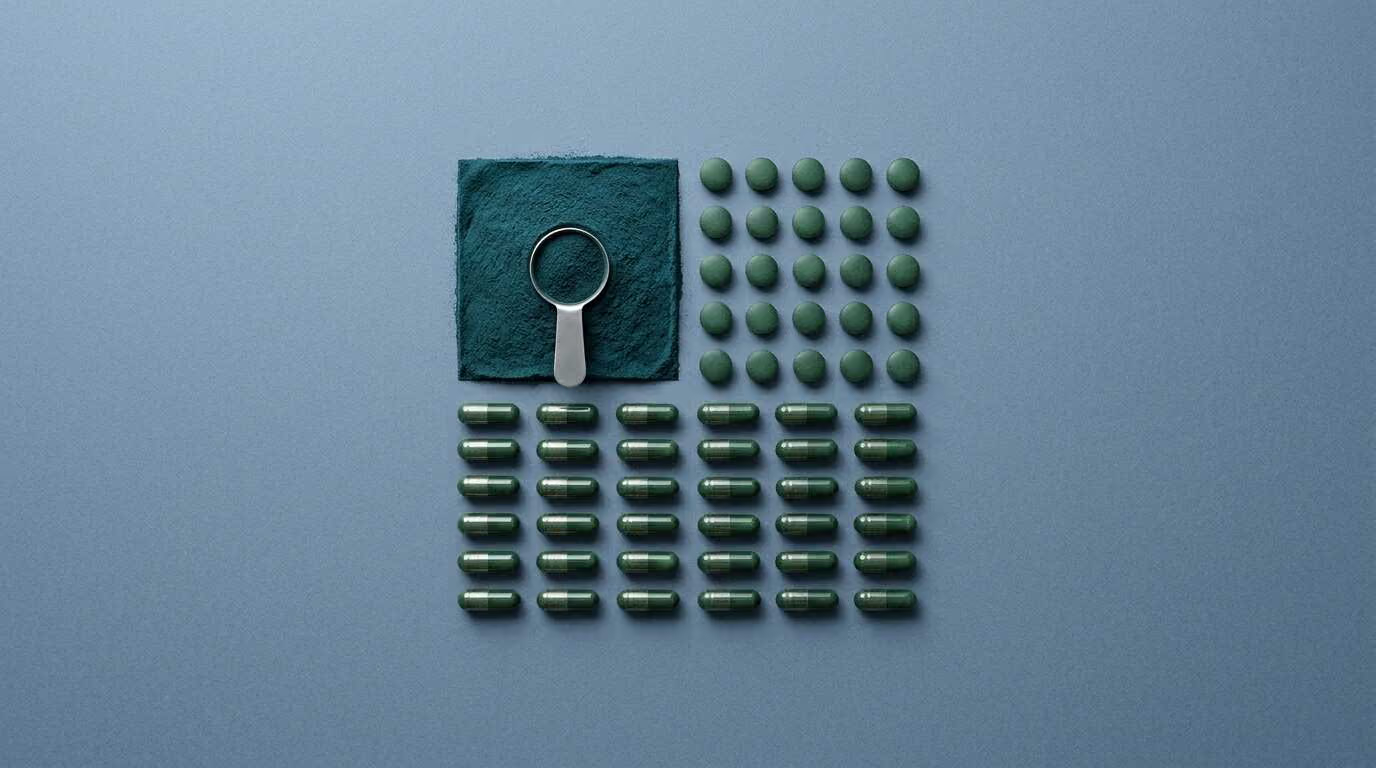
The best organic spirulina powder for smoothies: six compared on microcystin and heavy-metal testing, origin and cost. Top-ranked: Nutrex Hawaii.
Top-ranked · 6 products compared
We earn a commission on purchases made through these links. It does not affect our rankings. See our affiliate disclosure.
| # | Product | Score | Details |
|---|---|---|---|
| 1 | | ||
| 2 | | ||
| 3 | | ||
| 4 |  | ||
| 5 |  | ||
| 6 |  |
1Nutrex Hawaii
Nutrex Hawaii Pure Hawaiian Spirulina Powder, 16 oz
The pedigree pick. Single-origin Kona, Hawaii, cultivated since 1985 with deep-ocean mineral water. Best documented microcystin, BMAA, and heavy-metal testing story in the category.
Strengths
- More than 15 tests per lot, per the manufacturer
- Single-origin Kona, cultivated since 1985
- BMAA results below the analytical detection limit
Trade-offs
- Highest cost per gram in this roundup
- Open-pond system, not a closed photobioreactor
Nutrex Hawaii is the incumbent premium spirulina brand and the one that surfaces first whenever the topic is purity documentation. The Kona facility has been in continuous production since 1985, cultivating in mineral-rich deep-ocean seawater piped up through the state-run Natural Energy Laboratory of Hawaii Authority (NELHA). Per the manufacturer's testing disclosure, each lot goes through more than 15 tests including heavy metals, microbials, and periodic microcystin and BMAA panels. BMAA results are consistently below the 0.5 µg/kg analytical detection limit.
Independent verification: Pure Hawaiian Spirulina was among the products in ConsumerLab's February 2022 greens testing. The public summary reports problems in three of the four spirulina products tested (one contaminated with lead, two tablets that failed to disintegrate) without naming them. Which result belonged to Pure Hawaiian, and in what form it was tested, is members-only, so we cannot say whether it passed. A 2020 analysis of 18 algal dietary supplements found some products above the 1 µg/g microcystin limit, by more than 40-fold on mass spectrometry (Miller et al. 2020, J Agric Food Chem).
Caveats: still an open-pond system (not a closed photobioreactor), and Cyanotech (Nutrex's parent) ran the widely-cited "overseas spirulina is dirtier" lead-testing study (NutraIngredients, 2026), so the clean record is real, but the narrative is also brand-strategic. This spirulina does not carry the USP Verified mark. Nutrex announced USP verification in 2018 for its BioAstin astaxanthin only (Cyanotech, 2018), and USP's verified-products directory listed no Nutrex Hawaii product when we checked in October 2026.
Amazon sentiment: 4.5-star average across thousands of reviews; positive themes are energy and reduced afternoon slump; complaint themes are the strong grassy smell/taste and price per gram (highest in this roundup).
Reddit consensus: r/Supplements spirulina brand threads treat Nutrex as the default "clean" recommendation, especially for anyone with concerns about microcystin or heavy-metal contamination from overseas open-pond sources.
2Micro Ingredients
Micro Ingredients Organic Spirulina Powder, 1 lb
The volume leader on Amazon: USDA Organic, non-irradiated, non-GMO, at a fraction of Nutrex's cost per gram. Testing transparency is meaningfully weaker than premium brands, but the category-standard budget pick.
Strengths
- A fraction of Nutrex's cost per gram
- USDA Organic, non-GMO, non-irradiated
- Roughly 60% protein content declared
Trade-offs
- No batch-linked COA on the product page
- Reported batch-to-batch smell variation
Micro Ingredients is one of the highest-volume USDA Organic spirulina powders on Amazon. The label declares non-GMO, non-irradiated cultivation, third-party testing for heavy metals and microcystins, and roughly 60 percent protein content. What is not published per-lot on the product page is a batch-linked COA; testing claims are aggregate, not batch-specific.
Cost per gram is the strongest selling point: routinely a fraction of Nutrex Hawaii's per-gram price. That trade-off is defensible for daily smoothie use if you have no specific reason to worry about a single lot.
Amazon sentiment: 4.5-star average with tens of thousands of reviews. Positive themes: mixability in smoothies, price, packaging with a proper scoop. Complaints: batch-to-batch smell variation, occasional clumping, and (from a small but persistent minority) GI upset the first week.
Reddit consensus: r/Supplements and r/Biohackers discussions typically position Micro Ingredients as an acceptable budget default, with the caveat that anyone with elevated concern about heavy metals or microcystins should trade up to a brand publishing lot-specific COAs.
3Nutricost
Nutricost Organic Spirulina Powder, 908 g (2 lb)
Bulk USDA Organic value pick from an NSF-registered facility. Same category caveat as any budget spirulina: third-party COA published on request, not proactively per lot.
Strengths
- 2 lb bag from an NSF-registered facility
- USDA Organic, non-GMO, gluten-free
- Large repeat-buyer base at low cost per gram
Trade-offs
- COA available on request, not published per lot
- No strong differentiator over other budget brands
Nutricost's 2 lb organic spirulina is the bulk-value pick from a brand with a well-established Amazon presence and NSF-registered manufacturing. Testing follows the standard budget-brand pattern: aggregate third-party testing claims and a COA available on request, but not linked from the product listing per batch.
What's in the bag: USDA Organic, non-GMO, vegetarian, gluten-free, made in an NSF-registered facility. Serving size is 1 tsp (~3 g), delivering roughly 1.8 g protein and modest B-vitamin content, consistent with spirulina's typical protein content of roughly 58% by weight (USDA FoodData Central).
Amazon sentiment: 4.5-star average with a large repeat-buyer base. Positive themes: cost per gram, decent taste for the category, well-sealed packaging. Complaints: the same batch-variation and "fishy smell" reports common across all budget spirulina, and no per-batch COA visibility.
Reddit consensus: r/Supplements Nutricost brand threads frame Nutricost as a competent low-cost brand across the supplement category; there is no strong differentiator for their spirulina line specifically.
4Sunlit Best
Sunlit Best Organic Spirulina Powder, 8 oz (Taiwan-sourced)
Taiwan-sourced spirulina with published lab-testing claims for heavy metals and microcystins. Middle price bracket, with a disclosed country of origin that most budget listings lack.
Strengths
- Disclosed origin: Taiwan
- Published testing claims for metals and microcystins
- Milder smell and better mixability than average
Trade-offs
- 8 oz bag is small for daily use
- No batch-linked COA on the product page
Sunlit Best positions itself around Taiwan sourcing, and naming a country of origin at all sets it apart from the budget listings above, which do not disclose one. The product ships with USDA Organic certification and the brand publishes third-party testing claims for heavy metals and microcystins.
Amazon sentiment: 4.4-star average. Positive themes: better mixability than average, milder smell, and buyers explicitly citing Taiwan sourcing as their reason for choosing this brand. Complaints: bag size (8 oz is small for daily use), and, as with all budget spirulina, no batch-linked COA on the product page.
Reddit consensus: Not a heavily-discussed brand on r/Supplements. Broader Reddit threads tend to place Taiwan-source spirulina between "cheapest overseas source" and "Hawaiian premium," though that ranking reflects perception rather than published test data.
5Parry Nutraceuticals
Parry Organic Spirulina Powder (India-sourced)
USDA Organic, non-irradiated, single-strain, cultivated by a major India-based ingredient supplier that sells wholesale to many white-label brands. Best price-to-provenance ratio on this list.
Strengths
- Buying direct removes the white-label markup
- USDA Organic, non-irradiated, single-strain
- Extensive company-level testing documentation
Trade-offs
- Per-batch COA not linked from the product page
- Occasional shipping damage to the pouch
Parry Nutraceuticals is one of the wholesale ingredient suppliers whose spirulina ends up in many white-label finished products in the U.S. market. Buying direct removes the white-label markup. Cultivation is in dedicated raceway ponds in southern India, with USDA Organic certification, non-irradiated processing, and published aggregate testing for heavy metals and microcystins.
Testing gap: like most budget brands, the per-batch COA is not linked from the Amazon product page. Parry does publish more extensive company-level testing documentation on its supplier site than most in this price bracket.
Amazon sentiment: 4.4-star average. Positive themes: mixability, deeper green color, and repeat-buyer loyalty citing "same quality my expensive brand uses upstream." Complaints: the standard fishy-smell reports and occasional shipping damage to the pouch.
Reddit consensus: r/Supplements Parry spirulina threads treat this as a knowledgeable-buyer pick. The community that reads ingredient supply chains rates it above generic USDA Organic budget brands.
6Ellie's Best
Ellie's Best Blue Spirulina (Phycocyanin) Powder
Not a whole spirulina powder; this is the isolated blue phycocyanin pigment. Neutral taste, vivid blue color, useful for smoothies where the spirulina flavor is a dealbreaker. Not a nutritional substitute for whole spirulina.
Strengths
- Almost no flavour; blends a vivid blue
- Highest-rated Amazon product in this format
- Works in kid-friendly smoothies
Trade-offs
- Phycocyanin isolate, not whole spirulina
- Negligible protein, iron, B-vitamins or GLA
Category caveat first: "blue spirulina" is not spirulina. It's phycocyanin, the blue pigment-protein extracted from spirulina. It carries the pigment, which has shown antioxidant activity in laboratory assays, but at the small doses used it supplies negligible protein and none of the iron, B-vitamins, or GLA that make whole spirulina nutritionally meaningful.
Why include it: taste. Whole spirulina is a genuine dealbreaker for many people in daily smoothies. Phycocyanin isolate has almost no flavor, blends into a vivid blue, and lets you keep some spirulina-derived ingredient in a daily routine you'll actually keep. Ellie's Best is the highest-rated Amazon product in this format.
Amazon sentiment: 4.3-star average. Positive themes: taste ("finally, a spirulina I can drink"), color, and successful use in kid-friendly smoothies. Complaints: cost per gram (isolated phycocyanin is expensive), and buyers arriving without understanding that this is a pigment isolate, not a whole-food spirulina.
Reddit consensus: r/Supplements blue spirulina discussion is consistent: treat it as an adjunct to whole spirulina (or as a whole-spirulina replacement only if taste is the reason you can't take whole spirulina at all).
The best spirulina powder for daily smoothies in this comparison is Nutrex Hawaii Pure Hawaiian Spirulina, ranked first for the most detailed published testing record: over 15 tests per lot, including microcystin and BMAA panels, from a Kona farm running since 1985. For certified-organic powder at a lower cost per gram, Micro Ingredients and Nutricost are the budget picks.
How we chose
We ranked six Amazon powders on what a label, the brand’s published testing and independent sources let a buyer check. We ran no analytical assays of our own. In order of weight:
- Microcystin testing. A batch-linked certificate of analysis with a microcystin line item ranked highest, for the reasons in the next section.
- Heavy-metal transparency. Per-lot results ranked above aggregate claims, and aggregate claims above results available only on request.
- Disclosed origin and cultivation. A named country or farm and cultivation method.
- Certifications. USDA Organic, Non-GMO, non-irradiated processing, NSF-registered manufacturing.
- Cost per gram and customer sentiment. Compared from listings, not printed, plus recurring themes in Amazon reviews and r/Supplements and r/Biohackers threads.
What separates a smoothie-safe spirulina from a risky one
Spirulina (Arthrospira platensis) is a cyanobacterium, and unlike most supplement categories, the primary quality question isn’t potency, it’s contamination. Two specific risks drove our ranking:
- Microcystins: hepatotoxic cyclic peptides produced by Microcystis and other cyanobacteria; algae grown or harvested outdoors can be contaminated with them (Miller et al. 2020). In one German market survey, only the Aphanizomenon flos-aquae (AFA) products tested positive, not the spirulina-only ones (Heussner et al. 2012), so the risk is highest in AFA and mixed-algae products. The commonly used maximum acceptable concentration for algal supplements is 1 µg/g (Miller et al. 2020).
- Heavy metals: lead, arsenic, cadmium, mercury from open-pond cultivation on contaminated water. A U.S. Pharmacopeia expert review gave Spirulina maxima and S. platensis a Class A safety rating (Marles et al. 2011, Crit Rev Food Sci Nutr), but that rating covers the ingredient, not any given lot, so per-lot metal results still matter.
A 2020 study of 18 algal dietary supplements found some products more than 40 times over the 1 µg/g microcystin limit, with recommended doses of those products delivering 2.6 to 75 times the tolerable daily intake (Miller et al. 2020, J Agric Food Chem), and a separate analysis found cyanotoxins above tolerable daily intake values in 8 of 18 spirulina and Aphanizomenon products (Roy-Lachapelle et al. 2017, Toxins). This is why testing transparency (specifically, a batch-linked COA with a microcystin line item) is weighted above every other criterion.
What a daily smoothie dose looks like
Human trials have used about 1–8 g per day of spirulina (Hariri et al. 2026, Int J Vitam Nutr Res). A Serban et al. 2016 meta-analysis of 7 small RCTs found reductions in total cholesterol, LDL cholesterol and triglycerides and a rise in HDL cholesterol, with effects that did not vary with dose but grew with trial duration; the trial base is small, so the size of these effects is uncertain. At 1 tablespoon (≈7 g), spirulina delivers roughly 4 g protein, about 2 mg iron (USDA FoodData Central), and B-vitamins. But it is not a reliable vitamin B12 source for vegans, as most of the B12 in spirulina is a biologically inactive analog (Watanabe 2007, Exp Biol Med). Nothing here diagnoses, treats, prevents, or cures anything; see our medical disclaimer.
What we verified vs. what we didn’t
- Verified: that every product listing was still live, via Amazon’s product API; USDA Organic and Non-GMO Project claims per label, published manufacturer testing claims, USP’s verified-products directory (no Nutrex Hawaii listing as of October 2026), industry benchmark for microcystin/heavy-metal limits per published lab-testing literature.
- Not verified: our own analytical assays; Nutrex Hawaii’s result in ConsumerLab’s 2022 testing (members-only). Amazon prices, star ratings, and review counts drift; ratings above reflect the review body at the time of writing.
Buying checklist
- If purity is your top criterion: Nutrex Hawaii. Highest documentation depth.
- If cost per gram is your top criterion: Micro Ingredients or Nutricost. Accept the trade-off that batch-linked COAs are not published. Buy from a brand you’d contact if a bag smelled off.
- If taste is why you don’t use spirulina daily: Ellie’s Best Blue phycocyanin, but understand you are losing most of the nutritional value.
- Store cool, dry, sealed and out of light: phycocyanin is heat- and light-sensitive. In one study, phycocyanin quality held through 6 months of powder storage and fell sharply after 9 months (Zhou et al. 2024).
- Avoid daily use if you have phenylketonuria (spirulina protein is rich in phenylalanine; USDA FoodData Central) or an autoimmune condition without a clinician’s guidance; case reports have linked spirulina-containing supplements to flares of pemphigus and the onset of dermatomyositis (Lee & Werth 2004).
Frequently Asked Questions
What’s the best spirulina powder?
Nutrex Hawaii Pure Hawaiian Spirulina ranks first here because its maker publishes the most detailed testing story: more than 15 tests per lot, with periodic microcystin and BMAA panels. It is the most expensive per gram. Micro Ingredients and Nutricost are USDA Organic budget alternatives, with testing claims that are aggregate rather than batch-specific.
Is organic spirulina safer?
Not automatically. USDA Organic certification covers how spirulina is grown and processed. It is not a contaminant test, and contamination with microcystins and heavy metals is the main safety question for this ingredient. A batch certificate of analysis listing microcystins and metals tells you more about a given bag than the organic seal does.
How much spirulina should I add to a smoothie?
Human trials have used about 1 to 8 g a day. A level teaspoon is about 3 g and a tablespoon about 7 g, which supplies roughly 4 g of protein and 2 mg of iron. Starting at a teaspoon lets you judge taste and tolerance; a minority of budget-powder buyers report GI upset in the first week.
Who should not use spirulina powder?
People with phenylketonuria should avoid daily use, because spirulina protein is rich in phenylalanine. Case reports have linked spirulina-containing supplements to flares of pemphigus and the onset of dermatomyositis, so anyone with an autoimmune condition should talk to a clinician first. Vegans should not rely on it for vitamin B12, since most of its B12 is an inactive analog.
Is blue spirulina the same as spirulina?
No. Blue spirulina is phycocyanin, the blue pigment-protein extracted from spirulina. It has almost no flavor and colors a smoothie vividly, but at the doses used it supplies negligible protein and none of the iron, B vitamins or GLA in whole spirulina. It suits people for whom the taste of whole spirulina is the barrier.
Related
- Encyclopedia: Spirulina
- Recipe: Superfood smoothie recipes: where a daily spoonful of spirulina fits.
- Roundup: The best sea moss: a related category where contaminant disclosure drives the ranking.
- Encyclopedia: Chlorella
- Blog: Does chlorella actually detox heavy metals?
- Roundup: The best lion’s mane mushroom supplements for focus
- Policy: Affiliate disclosure
References
Show all 12 referencesShow fewer
- Miller TR, et al. (2020). Microcystin toxins at potentially hazardous levels in algal dietary supplements revealed by a combination of bioassay, immunoassay, and mass spectrometric methods. Journal of Agricultural and Food Chemistry.
- Heussner AH, Mazija L, Fastner J, Dietrich DR. (2012). Toxin content and cytotoxicity of algal dietary supplements. Toxicology and Applied Pharmacology.
- Roy-Lachapelle A, Solliec M, Bouchard MF, Sauvé S. (2017). Detection of cyanotoxins in algae dietary supplements. Toxins.
- Marles RJ, et al. (2011). United States Pharmacopeia safety evaluation of spirulina. Critical Reviews in Food Science and Nutrition.
- Hariri M, et al. (2026). Spirulina supplementation can reduce serum levels of C-reactive protein: a systematic review and meta-analysis on randomized clinical trials. International Journal for Vitamin and Nutrition Research.
- Serban MC, et al. (2016). A systematic review and meta-analysis of the impact of Spirulina supplementation on plasma lipid concentrations. Clinical Nutrition.
- Watanabe F. (2007). Vitamin B12 sources and bioavailability. Experimental Biology and Medicine.
- Zhou Y, et al. (2024). Stability and bioactivities evaluation of analytical grade C-phycocyanin during the storage of Spirulina platensis powder. Journal of Food Science.
- Lee AN, Werth VP. (2004). Activation of autoimmunity following use of immunostimulatory herbal supplements. Archives of Dermatology.
- U.S. Department of Agriculture, Agricultural Research Service. (2019). Seaweed, spirulina, dried (FDC ID 170495). FoodData Central, SR Legacy.
- ConsumerLab.com. (2022). Lead contamination in spirulina supplements. ConsumerLab.com.
- U.S. Pharmacopeia. USP Verified products directory. USP Dietary Supplement Verification Program.
Read the underlying research in the encyclopedia entry.
By Superfoods Advisor Editors·Published July 7, 2026·Updated July 8, 2026