Chia Pudding Recipe: 1:4 Base + 5 Variations with Macros
By Superfoods Advisor Editors·July 4, 2026
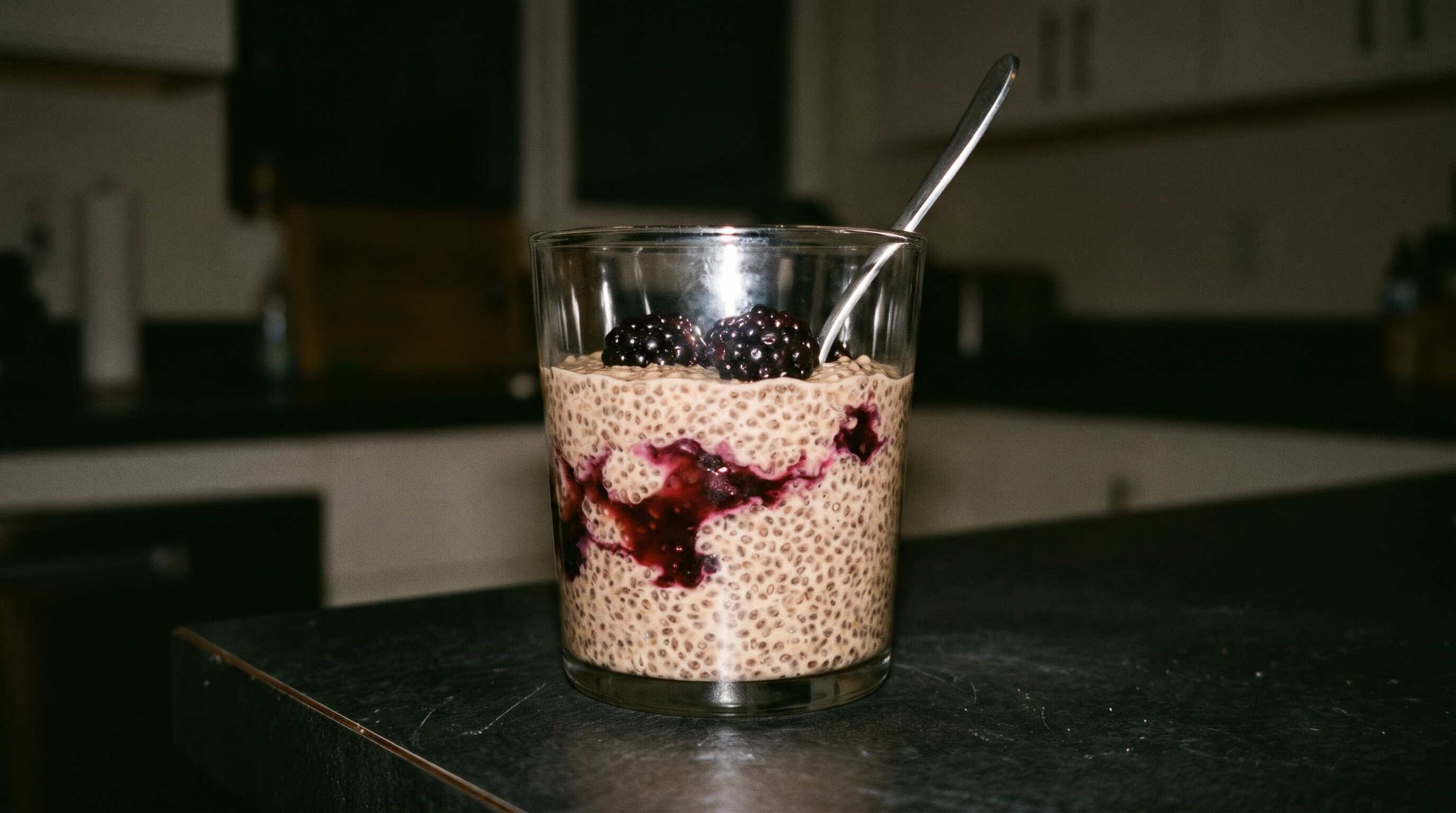
An easy chia pudding recipe on a 1:4 chia-to-milk ratio, plus chocolate, matcha, berry, mango-turmeric and peanut butter versions, with full macros.
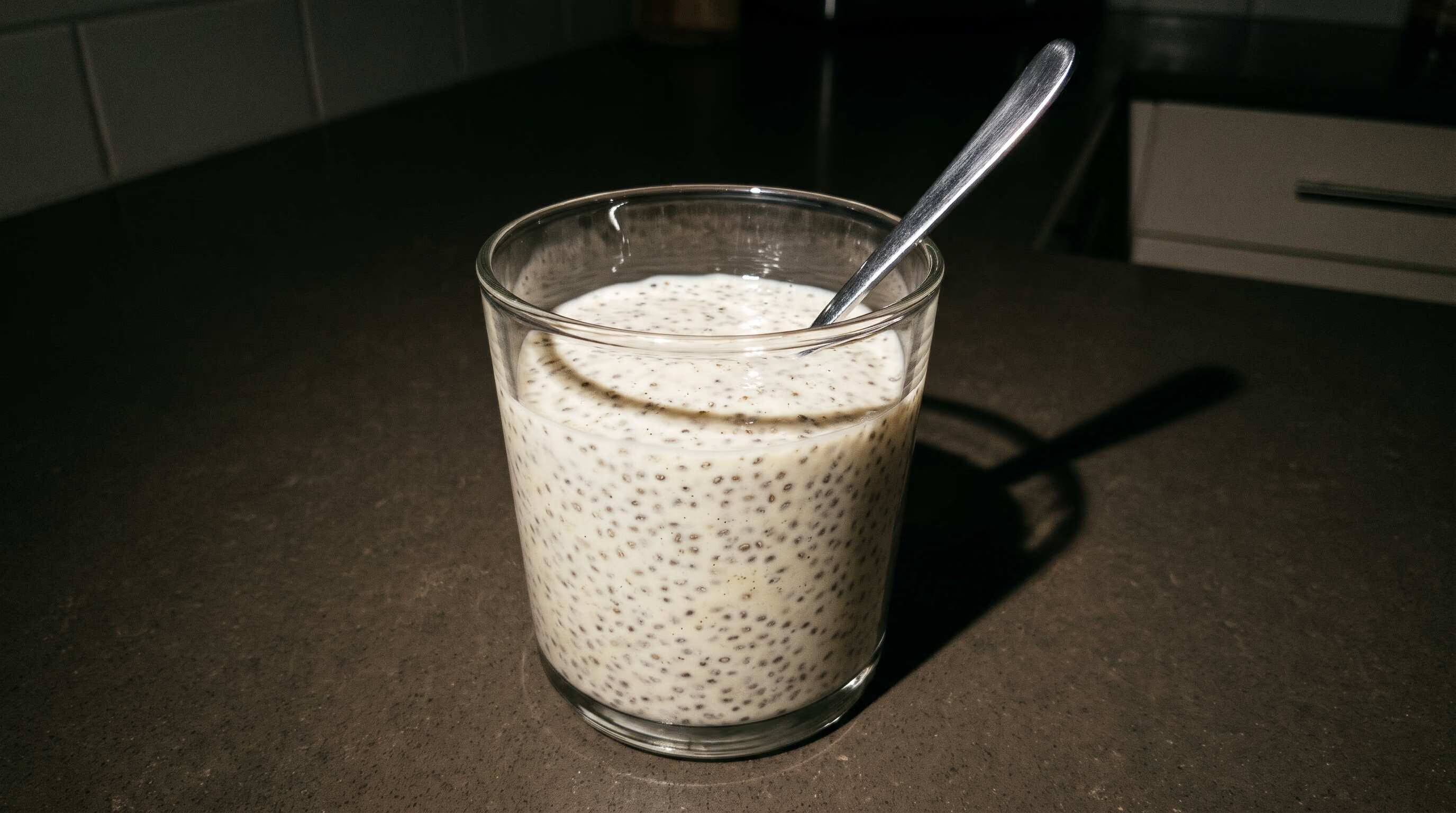
To make chia pudding, whisk 3 tablespoons (36 g) of chia seeds into 3/4 cup (180 ml) of milk, a 1:4 ratio by volume, stir again after 10 minutes, and refrigerate for at least 4 hours or overnight. That base sets firm but spoonable; 1:5 gives a drinkable pudding and 1:3 a gel dense enough to slice.
Chia pudding survives as a recipe because the seed itself does the work. One ounce (a little over 2 tablespoons) of dried chia holds close to 10 grams of soluble and insoluble fiber, roughly 5 grams of alpha-linolenic acid (ALA), around 4-5 grams of plant protein, and meaningful contributions of calcium, magnesium, and phosphorus, per USDA FoodData Central. The seed’s soluble fiber, primarily a mucilage of xylose, glucose, and glucuronic acid, absorbs many times its weight in water. That’s the entire recipe: hydrate the seed, and you get a spoonable gel that carries the seed’s fiber, fat and protein.
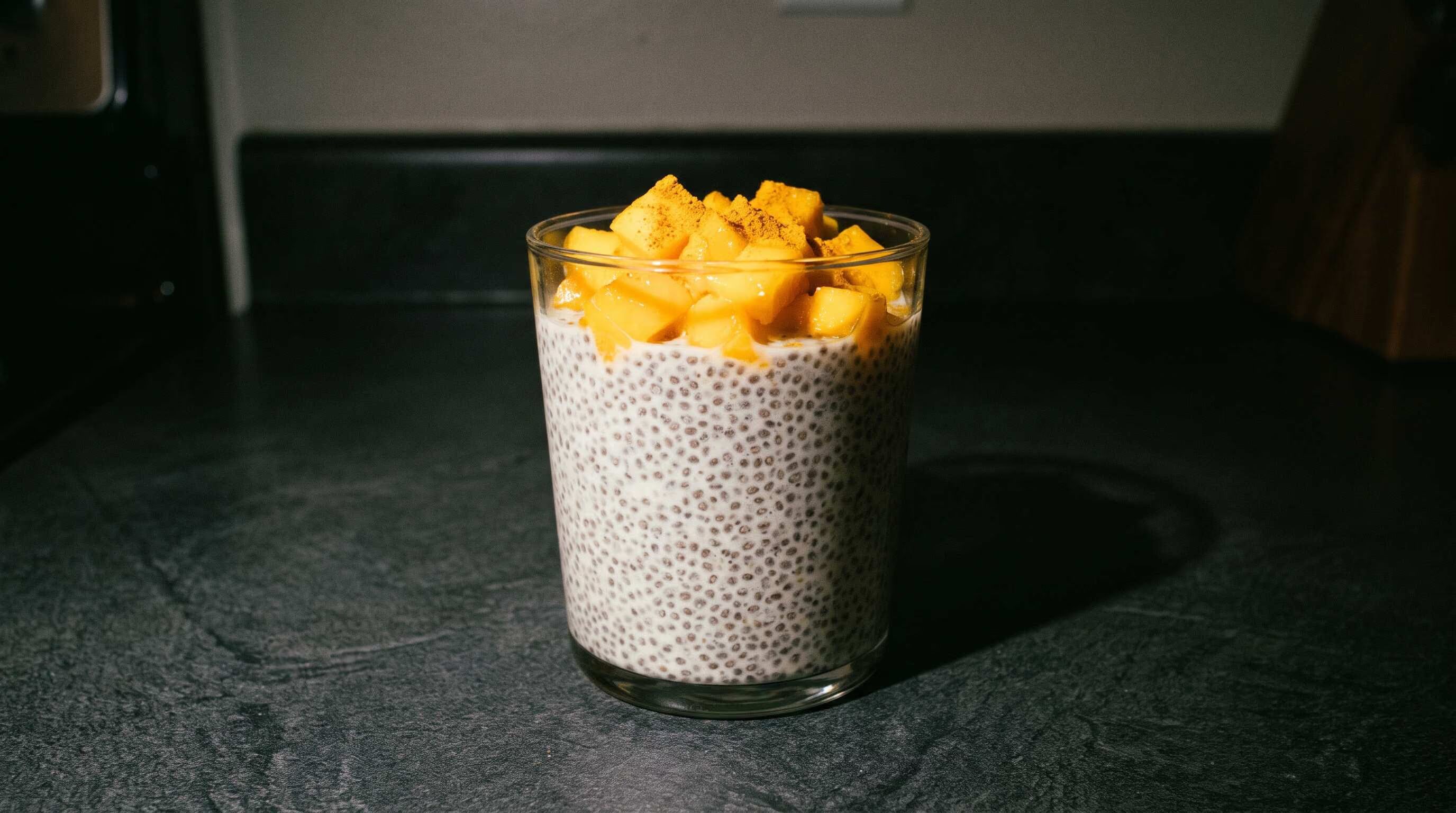
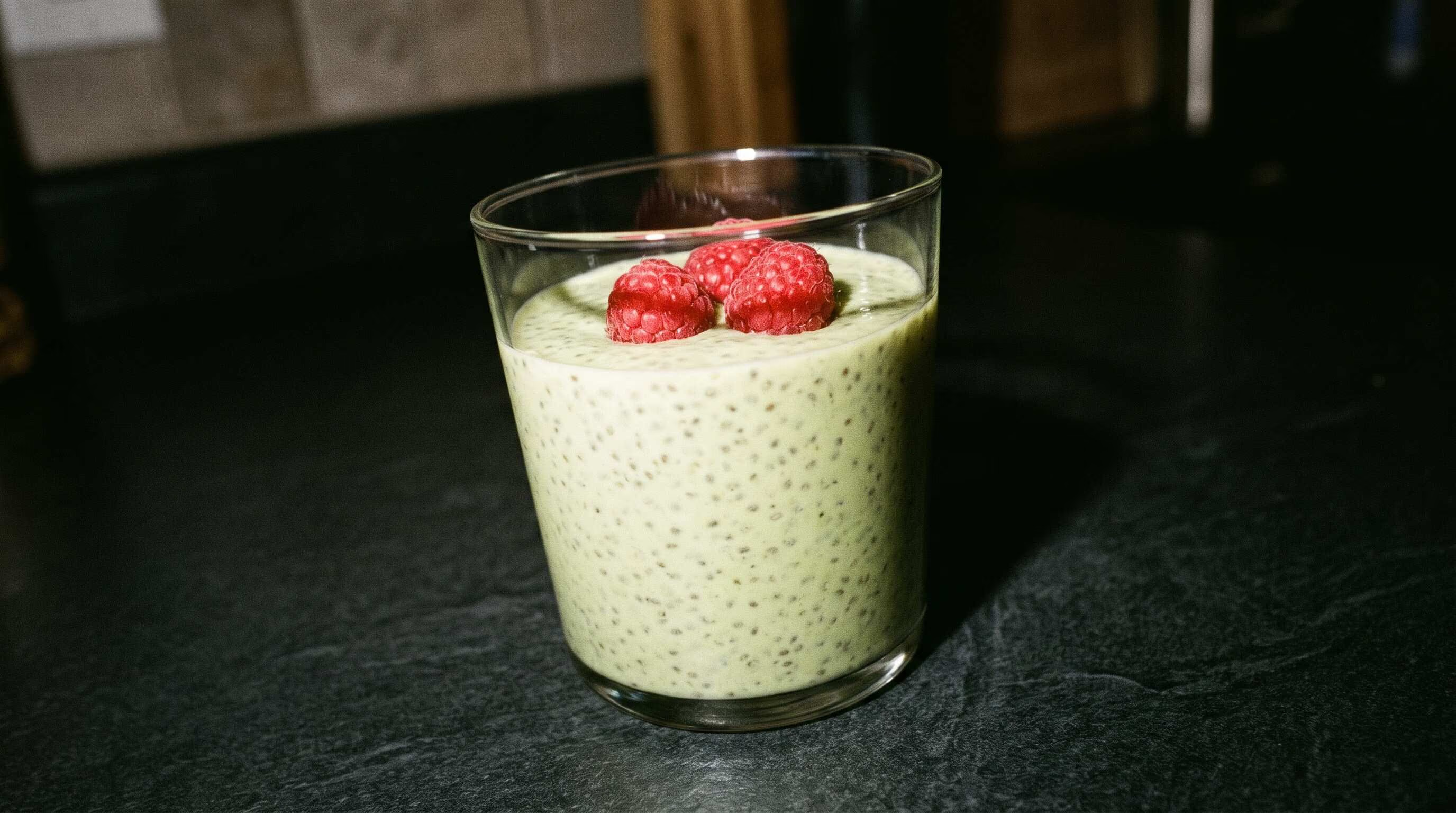
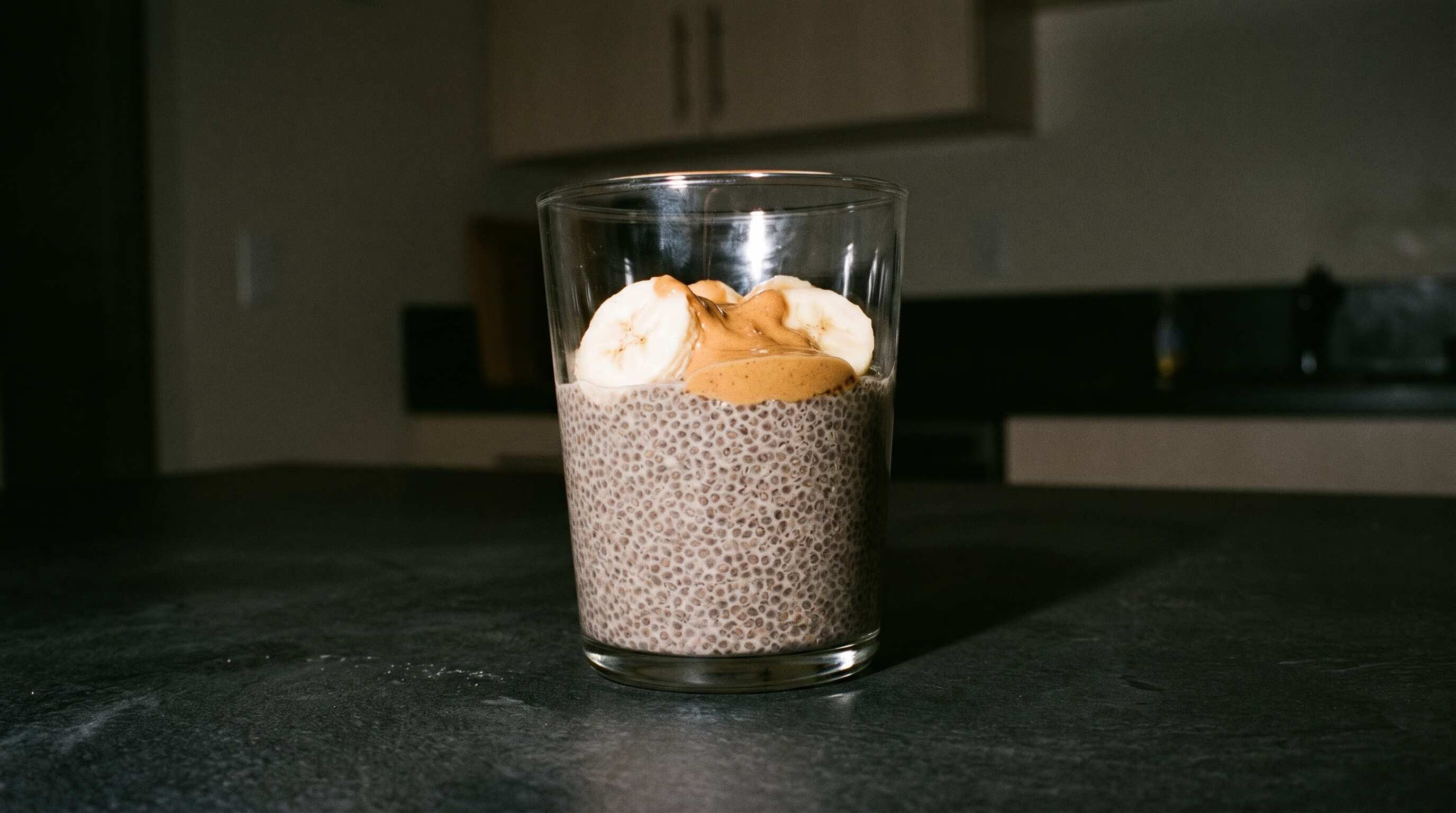
All six recipes on this page share that one base and change only the flavoring. Every one includes approximate macros per serving and a citation for why the featured ingredient earns its place. If you are choosing between seeds, the chia seeds vs flaxseed comparison covers fiber, omega-3 and how each behaves in a recipe.
The Base Formula: Why 1:4 Works
In practice, chia gels in two stages. The mucilage on the seed coat swells quickly within the first 10-15 minutes, producing a loose slurry, and the texture keeps softening over the next several hours, which is why a pudding made 20 minutes ago tastes gritty and one made overnight tastes creamy. A 1:4 ratio (for example, 3 tablespoons chia to 3/4 cup liquid) produces a firm-but-spoonable texture. Going to 1:5 gives a looser, drinkable consistency; 1:3 produces a set gel dense enough to slice.
The step that most changes the result isn’t the liquid or the sweetener. It’s stirring the mix a second time about 10 minutes after the initial mix. That second stir breaks up the clumps that form as the outer fiber layer swells first. Skip it and you get pockets of dry seed at the bottom of the jar.
Standard base for all six recipes (1 serving):
- 3 tbsp (36 g) chia seeds
- 3/4 cup (180 ml) liquid (dairy or plant milk of choice)
- 1 tsp (5 ml) sweetener (maple syrup, honey, or omit)
- Pinch of salt
Whisk. Wait 10 minutes. Whisk again. Refrigerate at least 4 hours, preferably overnight. Everything from here is flavor and function on top of that foundation.
Chia Pudding Counts as Fluid
A single serving holds the full 3/4 cup (180 ml) of milk it was made with, bound up in the gel, so a jar of pudding contributes about as much fluid as a small glass of milk. Eating it on top of your normal breakfast adds more total fluid than it looks like it should. That is rarely a concern, but people on fluid-restricted diets (advanced kidney disease, congestive heart failure) should count it.
Storage and Meal Prep
Chia pudding keeps 3-4 days in a sealed glass jar at refrigerator temperature, the window USDA gives for refrigerated leftovers. Batch-prep three servings of the base recipe at a time, then customize each morning with different fruit, spice, or nut butter. The base does not freeze well, because the gel structure breaks down on thawing and produces a watery, grainy texture that no amount of stirring rescues. Freeze the fresh fruit toppings instead and add them the night before you want to eat.
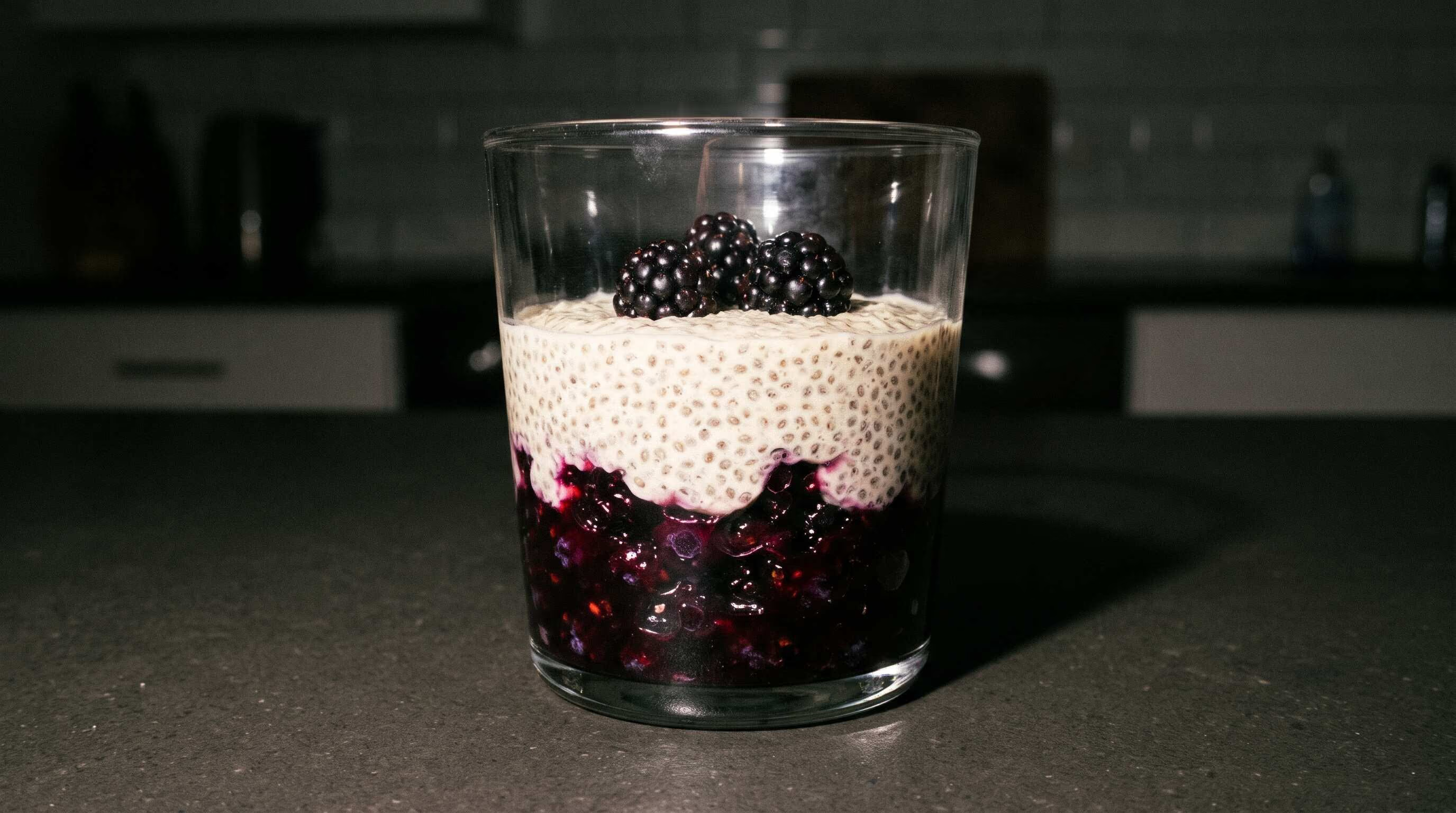
Layered puddings hold their layers for about 24 hours before diffusion softens the boundary. If you’re prepping visual meal-prep jars for the week, the layers are a first-day feature, not a day-three one.
The recipes
Frequently Asked Questions
Is chia pudding healthy?
For most people it is a nutrient-dense breakfast. A 28 g serving of dry chia carries close to 10 g of fiber, about 5 g of ALA omega-3 and 4-5 g of protein, and the base has only a teaspoon of added sweetener. How healthy a given jar is depends mostly on the milk, sweetener and toppings you add, which is why every recipe here lists its macros.
Is chia pudding good for weight loss?
There is no trial of chia pudding and weight loss. The closest evidence is a small acute study in 11 healthy adults, in which bread baked with chia lowered the post-meal glucose rise and appetite ratings over the next two hours. Fiber-rich, filling breakfasts can make a calorie target easier to keep, but portion size and toppings matter more than the seed.
Do I need to soak chia seeds before making pudding?
The soak is the pudding; there is no separate pre-soak step. Whisk dry seeds straight into the liquid, stir again after 10 minutes, and refrigerate. Four hours is the minimum for a set texture; overnight is what makes it creamy rather than gritty, because the texture keeps softening for several hours after the outer layer has gelled.
Can I make chia pudding with yogurt?
Yes, but not with yogurt alone. Yogurt holds far less free water than milk, so straight yogurt leaves the seeds under-hydrated and crunchy. Replace up to half the milk with yogurt (for example, 6 tablespoons each), keep the 3 tablespoons of chia, and expect a thicker, tangier pudding. Greek yogurt also raises the protein per serving.
Can I eat chia pudding warm?
Yes, though the texture changes. Warming the pudding to around 40°C (105°F) in a small saucepan on low heat produces a porridge-like consistency similar to warm oatmeal. Don’t boil it; the gel thins and catches on the bottom of the pan. Warm chia pudding topped with stewed apple and cinnamon is a reasonable winter breakfast.
How long can I store chia pudding in the fridge?
Three to four days in a sealed glass jar, the window USDA gives for refrigerated leftovers. Treat it like any other milk-based dish and keep it cold; flavors also flatten and the texture keeps thickening. If it becomes too firm by day 3, whisk in an extra tablespoon of milk to loosen it.
Is there a keto version?
Yes. Use unsweetened coconut milk or heavy cream instead of oat or almond milk, drop the maple syrup entirely, and sweeten with a few drops of liquid stevia or monk fruit. Toppings should be low-carb: raspberries, blackberries, cacao nibs, or crushed macadamia nuts rather than banana or mango. A keto version of the base recipe runs about 8 g net carbs per serving (total carbohydrate minus fiber), roughly 3 g from the chia and 5 g from the coconut milk or cream, per USDA FoodData Central. U.S. Nutrition Facts labels list total carbohydrate with fiber included; “net carbs” is not an FDA-defined term.
Are chia seeds safe for people with nut, seed, or gluten allergies?
Chia is botanically a seed from Salvia hispanica, a mint-family plant, and is not a tree nut. Genuine chia allergy is rare but documented in a small number of case reports (García Jiménez et al., 2015, PubMed:25898695). It is naturally gluten-free. People with sesame allergy should ask their allergist before trying chia: in laboratory tests, IgE from sesame-allergic patients bound chia proteins, and the authors suggested possible cross-sensitization (Albunni et al., 2019). People with gastroparesis are usually advised to limit high-fiber foods, so they should check with their clinician before eating a fiber-dense gel like this one.
A Note on Health Claims
None of these recipes diagnoses, treats, prevents, or cures any medical condition. The cited mechanisms are for educational context. Fiber and omega-3 content varies with seed source and freshness. This article reflects the medical disclaimer at superfoodsadvisor.com/medical-disclaimer.
References
Show all 18 referencesShow fewer
-
Vuksan V, et al. Reduction in postprandial glucose excursion and prolongation of satiety: possible explanation of the long-term effects of whole grain Salba (Salvia Hispanica L.). European Journal of Clinical Nutrition. 2010;64(4):436-438. PubMed:20087375
-
Shoba G, et al. Influence of piperine on the pharmacokinetics of curcumin in animals and human volunteers. Planta Medica. 1998;64(4):353-356. PubMed:9619120
-
Curtis PJ, et al. Blueberries improve biomarkers of cardiometabolic function in participants with metabolic syndrome. American Journal of Clinical Nutrition. 2019;109(6):1535-1545. PubMed:31136659
-
Hooper L, et al. Effects of chocolate, cocoa, and flavan-3-ols on cardiovascular health: a systematic review and meta-analysis of randomized trials. American Journal of Clinical Nutrition. 2012;95(3):740-751. PubMed:22301923
-
de Goede J, et al. Alpha-linolenic acid intake and 10-year incidence of coronary heart disease and stroke in 20,000 middle-aged men and women in the Netherlands. PLoS One. 2011;6(3):e17967. PubMed:21464993
-
Dhillon J, et al. The effects of increased protein intake on fullness: a meta-analysis and its limitations. Journal of the Academy of Nutrition and Dietetics. 2016;116(6):968-983. PubMed:26947338
-
Nobre AC, Rao A, Owen GN. L-theanine, a natural constituent in tea, and its effect on mental state. Asia Pacific Journal of Clinical Nutrition. 2008;17(Suppl 1):167-168. PubMed:18296328
-
Ullah R, et al. Nutritional and therapeutic perspectives of Chia (Salvia hispanica L.): a review. Journal of Food Science and Technology. 2016;53(4):1750-1758. PubMed:27413203
-
García Jiménez S, et al. Allergen characterization of chia seeds (Salvia hispanica), a new allergenic food. Journal of Investigational Allergology and Clinical Immunology. 2015;25(1):55-56. PubMed:25898695
-
Burdge GC, Calder PC. Conversion of alpha-linolenic acid to longer-chain polyunsaturated fatty acids in human adults. Reproduction Nutrition Development. 2005;45(5):581-597. PubMed:16188209
-
Rodriguez-Mateos A, et al. Procyanidin, anthocyanin, and chlorogenic acid contents of highbush and lowbush blueberries. Journal of Agricultural and Food Chemistry. 2012;60(23):5772-5778. PubMed:22175691
-
Kochman J, et al. Health benefits and chemical composition of matcha green tea: a review. Molecules. 2020;26(1):85. PubMed:33375458
-
Unno K, et al. Stress-reducing function of matcha green tea in animal experiments and clinical trials. Nutrients. 2018;10(10):1468. PubMed:30308973
-
Albunni BA, et al. Antibody cross-reactivity between proteins of chia seed (Salvia hispanica L.) and other food allergens. Journal of Agricultural and Food Chemistry. 2019;67(26):7475-7484. PubMed:31117490
-
Pérez-Jiménez J, et al. Identification of the 100 richest dietary sources of polyphenols: an application of the Phenol-Explorer database. European Journal of Clinical Nutrition. 2010. PubMed:21045839
-
Miller KB, et al. Impact of alkalization on the antioxidant and flavanol content of commercial cocoa powders. Journal of Agricultural and Food Chemistry. 2008. PubMed:18710243
-
Dashwood R, et al. L-theanine: from tea leaf to trending supplement - does the science match the hype for brain health and relaxation? Nutrition Research. 2025. PubMed:39854799
-
USDA Food Safety and Inspection Service. Leftovers and Food Safety. fsis.usda.gov
Read next
Written by Superfoods Advisor Editors·Published July 4, 2026