Matcha Smoothie Recipe for Sustained Morning Energy (No 10 a.m. Crash)
By Superfoods Advisor Editors·July 7, 2026
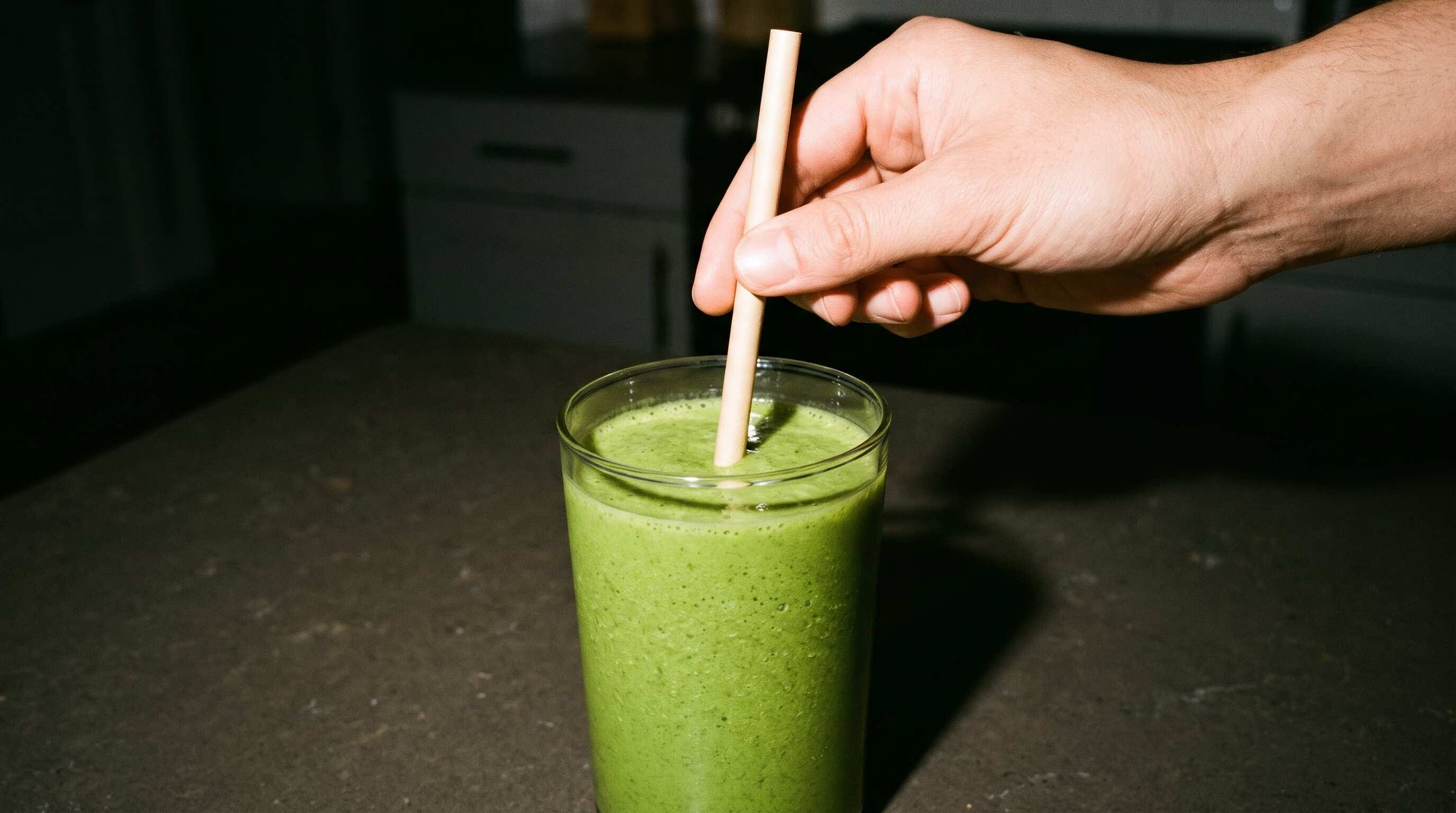
A matcha smoothie with 13 g protein and no added sugar: ceremonial matcha whisked to a paste, then blended with soy milk, almond butter, chia and banana.
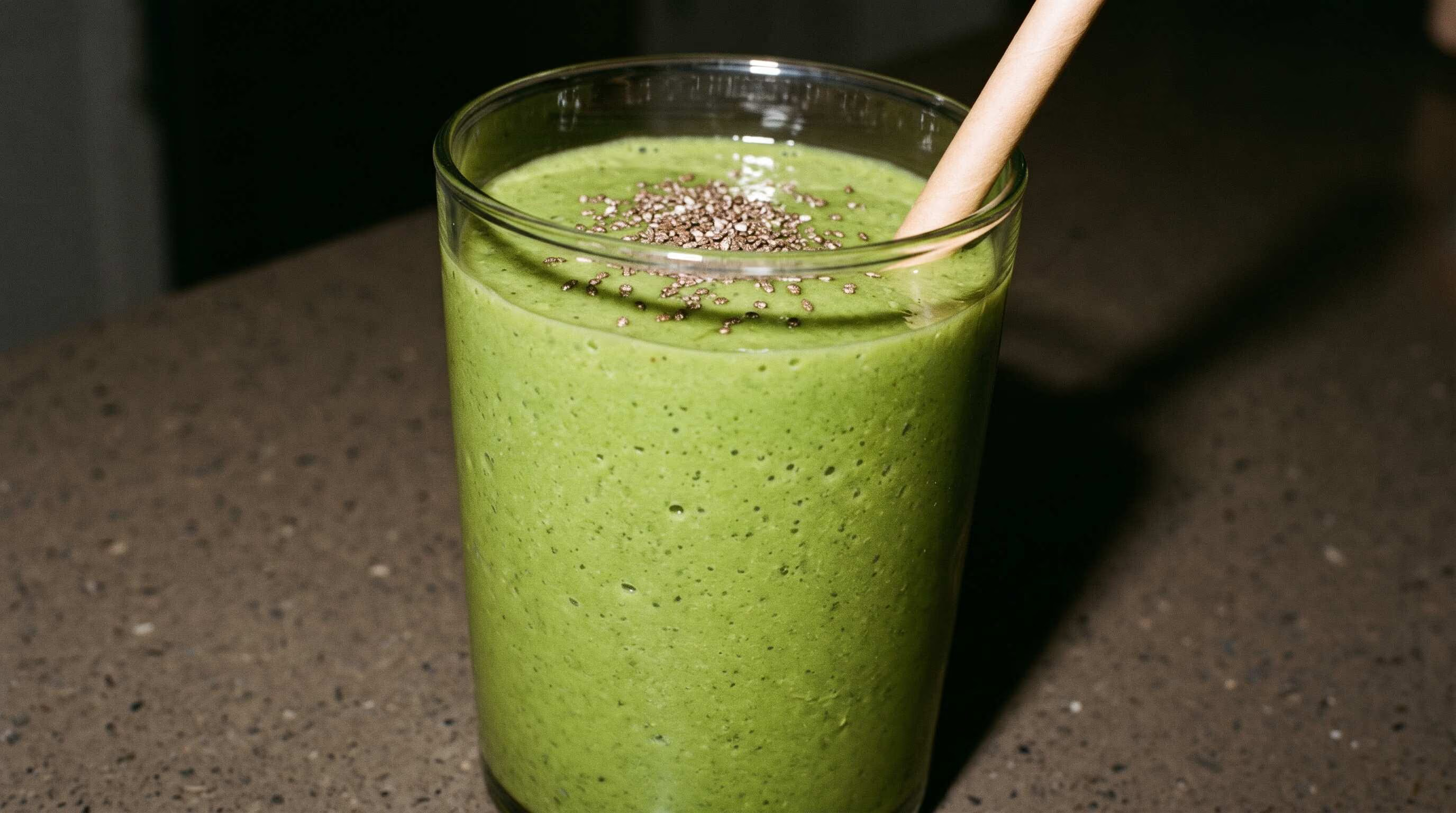
This matcha smoothie blends 1 teaspoon (2 g) of ceremonial matcha, whisked to a paste first, with a cup of unsweetened soy milk, half a frozen banana, a tablespoon each of almond butter and chia seeds, and ice. It comes to about 285 calories, 13 g of protein and 10 g of fiber, with no added sugar.
The same leaf that carries matcha’s caffeine also carries L-theanine. That may be part of why many people find a bowl of matcha feels different from an espresso, although in controlled studies the combination’s effects track the caffeine dose more than the theanine (Camfield et al. 2014). How the next few hours feel may depend as much on what you drink it with as on the tea itself.
Nothing here diagnoses, treats, prevents, or cures anything. See our medical disclaimer.
Evidence at a glance
How much caffeine is in a matcha smoothie?
About 38 to 88 mg per teaspoon of powder. Matcha holds roughly 19 to 44 mg of caffeine per gram (Kochman et al. 2020, Molecules), and this matcha smoothie recipe uses 2 g. Labels rarely state a figure.
For scale, that is more than a cup of brewed green tea and close to a single espresso, as set out in our matcha encyclopedia entry. The FDA cites 400 mg a day as not generally linked to negative effects in healthy adults (FDA). EFSA puts the figure for pregnancy at 200 mg a day from all sources (EFSA NDA Panel 2015). One glass fits well inside both, but a matcha smoothie on top of two coffees may not.
If you are sensitive to caffeine, start with half a teaspoon. Nothing else in the recipe needs to change.
What L-theanine adds
Evidence:Moderate Several small placebo-controlled trials and one meta-analysis agree in direction; most tested L-theanine doses above a typical matcha serving.
L-theanine is an amino acid that builds up in tea leaves, and shading before harvest raises it. In six commercial matcha powders, a 2 g serving supplied anywhere from under 10 mg to about 90 mg (Unno et al. 2018, Nutrients).
The best-known trial gave 27 adults 50 mg of caffeine with 100 mg of L-theanine. The pair improved both speed and accuracy on an attention-switching task at 60 minutes; caffeine alone improved alertness, and accuracy only at 90 minutes (Owen et al. 2008, Nutritional Neuroscience). A meta-analysis of 11 placebo-controlled studies found moderate gains in alertness and attention-switching accuracy in the first 2 hours with the combination (Camfield et al. 2014, Nutrition Reviews). A review of 49 intervention studies concluded that theanine appears to blunt some of caffeine’s arousal (Dietz & Dekker 2017, Current Pharmaceutical Design).
The calming side is less settled. In a small placebo-controlled study, 50 mg of L-theanine raised EEG alpha activity, a marker of a relaxed but alert state (Nobre et al. 2008). Later alpha-wave results have been inconsistent (Dashwood & Visioli 2025, Nutrition Research). No trial has tested a matcha smoothie.
Ceremonial vs. culinary matcha: which to buy
Buy ceremonial grade, or a high-grade culinary powder, when the matcha is the main flavor, as it is here. “Ceremonial” and “culinary” are trade labels, not regulated grades.
Ceremonial: usually first-harvest leaf from well-shaded plants. It tends to carry more L-theanine and less bitterness.
Culinary: often later harvests or less-shaded leaf. It is stronger and more astringent, which suits baking or a smoothie where cocoa or berries carry the flavor. Unno et al. found catechins tended to rise as theanine fell, so a high catechin figure is not a sign of grade.
What to check: a vivid green color (dull or yellow-green suggests oxidation), a sealed tin rather than a loose bag, and an ingredient line that reads only “matcha” or “green tea powder.” Because you drink the whole leaf, any lead or pesticide residue stays in the glass. USDA Organic covers pesticides but not heavy metals, so published third-party lead results are worth looking for. Our best matcha powder comparison ranks ceremonial, latte and culinary options on origin, harvest and lead-testing disclosure.
How do you keep matcha from clumping?
Sift it, then make a paste before it meets the blender. Matcha is ground so fine that it packs into clumps in the tin, and dry clumps resist wetting. A blender throws them against the pitcher wall instead of breaking them up.
The two steps take under a minute. Push the powder through a fine sieve, then whisk it with 2 tbsp of the milk until no dry streaks remain. Pour the paste in first, add the rest of the milk and the ice, and the solids last. Liquid at the bottom keeps the blades free and the powder suspended. No whisk? Shake the sifted matcha and milk in a small jar for 15 seconds.
Why the protein and fat matter
A matcha smoothie made with water or oat milk is mostly caffeine and fruit sugar. Unsweetened soy milk carries roughly 7 to 9 g of protein per cup, and the almond butter and chia seeds add fat and gel-forming soluble fiber.
That mix may change how the banana’s sugar is absorbed. In a small trial of 11 healthy adults, adding chicken, rapeseed oil and salad to mashed potato cut its glycemic index from 108 to 54 (Hätönen et al. 2011, British Journal of Nutrition). Whether a similar effect produces steadier energy after a smoothie has not been tested.
Milk choice drives the protein total. Oat and almond milks carry about 1 to 2 g per cup, so swapping one in drops the glass by roughly 5 to 6 g.
Matcha smoothie variations
Matcha protein smoothie: add one scoop of unflavored whey or pea protein. That takes the glass past 25 g of protein without changing the method.
Matcha banana smoothie, sweeter: use a whole frozen banana instead of half. The glass gets thicker and sweeter, and the sugar and calories rise with the extra fruit.
Banana-free and lower sugar: swap the banana for 1/4 avocado and a few extra ice cubes. Avocado brings the creaminess without the fruit sugar, though the drink tastes more of tea and less of dessert.
A little more lift: add 1 tsp of cacao nibs. They bring theobromine, a milder stimulant than caffeine; in a small trial it did not raise alertness the way caffeine did (Mitchell et al. 2011, Physiology & Behavior).
Dairy-free: the soy milk version already is. Check the protein powder if you add one.
Storing matcha and prepping ahead
Matcha oxidizes on contact with air, light and heat, which dulls both color and flavor. Keep the tin sealed, refrigerate it after opening, and aim to use it within a few weeks.
The smoothie itself does not keep well, because the chia gels and the matcha settles. Prep the parts instead. Slice and freeze bananas in half-banana portions, and measure the chia and almond butter into a jar the night before. In the morning, sift, whisk and blend.
The recipes
Frequently Asked Questions
Does a matcha smoothie have caffeine?
Yes. A 2 g teaspoon of matcha delivers roughly 38 to 88 mg of caffeine, depending on the powder. It also carries L-theanine, from under 10 mg to about 90 mg. If you are sensitive to caffeine, start with half a teaspoon.
Is a matcha smoothie healthy?
It can be a balanced breakfast drink. This version has about 285 calories, 13 g of protein, 10 g of fiber, 16 g of fat and 9 g of sugar, nearly all from the banana. Café versions are often sweetened, so what goes in beside the tea matters most. Claims for matcha itself rest mainly on small trials and green tea research.
Is a matcha smoothie sweet?
Only mildly. The half banana is the only sweetener, and vanilla softens matcha’s grassy edge without adding sugar. Ceremonial matcha is less bitter than culinary grade, which matters when nothing masks it. For a sweeter glass, add more frozen banana before reaching for syrup.
Is a matcha smoothie good for weight loss?
No drink causes weight loss on its own. A Cochrane review of green tea preparations in overweight adults found a small, statistically non-significant weight loss, too small to be clinically important (Jurgens et al. 2012). What a matcha smoothie can offer is a filling breakfast of about 285 calories with protein and fiber. Whether it fits a weight goal depends on the rest of the day.
Can I make a matcha smoothie ahead of time?
It is best drunk right away. The chia seeds start to gel within minutes, so the glass thickens as it stands, and the matcha settles out. Freeze the banana the night before; the morning blend takes about six minutes.
A Note on Health Claims
A matcha smoothie is a food, not a treatment. Caffeine is the main caution: people who are pregnant, sensitive to caffeine, or taking stimulant medication should count the glass toward their daily total. In one trial, green tea extract added to a meal lowered plant-based iron absorption in young women (Samman et al. 2001). If iron status is a concern, drink it between meals. Matcha also contains vitamin K, so anyone on warfarin should keep intake consistent and talk with a clinician. Green tea liver-injury reports involve extract supplements, not tea drunk as a beverage (matcha entry).
Related
- Recipes: Superfood smoothie recipes
- Roundup: The best matcha powder
- Encyclopedia: Matcha green tea
- Encyclopedia: Chia seeds
- Guide: How to take ashwagandha for sleep and anxiety
- Disclaimer: Medical disclaimer
References
Show all 13 referencesShow fewer
-
Kochman J, Jakubczyk K, Antoniewicz J, Mruk H, Janda K. Health benefits and chemical composition of matcha green tea: a review. Molecules. 2020;26(1):85. PubMed:33375458
-
Unno K, Furushima D, Hamamoto S, Iguchi K, et al. Stress-reducing function of matcha green tea in animal experiments and clinical trials. Nutrients. 2018;10(10):1468. PubMed:30308973
-
Owen GN, Parnell H, De Bruin EA, Rycroft JA. The combined effects of L-theanine and caffeine on cognitive performance and mood. Nutritional Neuroscience. 2008;11(4):193-198. PubMed:18681988
-
Camfield DA, Stough C, Farrimond J, Scholey AB. Acute effects of tea constituents L-theanine, caffeine, and epigallocatechin gallate on cognitive function and mood: a systematic review and meta-analysis. Nutrition Reviews. 2014;72(8):507-522. PubMed:24946991
-
Dietz C, Dekker M. Effect of green tea phytochemicals on mood and cognition. Current Pharmaceutical Design. 2017;23(19):2876-2905. PubMed:28056735
-
Nobre AC, Rao A, Owen GN. L-theanine, a natural constituent in tea, and its effect on mental state. Asia Pacific Journal of Clinical Nutrition. 2008;17(Suppl 1):167-168. PubMed:18296328
-
Dashwood R, Visioli F. L-theanine: from tea leaf to trending supplement: does the science match the hype for brain health and relaxation? Nutrition Research. 2025;134:39-48. PubMed:39854799
-
Hätönen KA, Virtamo J, Eriksson JG, Sinkko HK, et al. Protein and fat modify the glycaemic and insulinaemic responses to a mashed potato-based meal. British Journal of Nutrition. 2011;106(2):248-253. PubMed:21338539
-
Mitchell ES, Slettenaar M, vd Meer N, Transler C, et al. Differential contributions of theobromine and caffeine on mood, psychomotor performance and blood pressure. Physiology & Behavior. 2011;104(5):816-822. PubMed:21839757
-
Jurgens TM, Whelan AM, Killian L, Doucette S, et al. Green tea for weight loss and weight maintenance in overweight or obese adults. Cochrane Database of Systematic Reviews. 2012;12:CD008650. PubMed:23235664
-
Samman S, Sandström B, Toft MB, et al. Green tea or rosemary extract added to foods reduces nonheme-iron absorption. American Journal of Clinical Nutrition. 2001;73(3):607-612. PubMed:11237939
-
EFSA Panel on Dietetic Products, Nutrition and Allergies (NDA). Scientific opinion on the safety of caffeine. EFSA Journal. 2015;13(5):4102. doi:10.2903/j.efsa.2015.4102
-
U.S. Food and Drug Administration. Spilling the beans: how much caffeine is too much?
Shopping for matcha green tea?
Top-ranked of 6 products compared.

Compare all 6 picks →Affiliate links. Disclosure.
Read next
Written by Superfoods Advisor Editors·Published July 7, 2026