Resveratrol and Longevity: What the Evidence Actually Says About the Anti-Aging Molecule
By Superfoods Advisor Editors·July 4, 2026
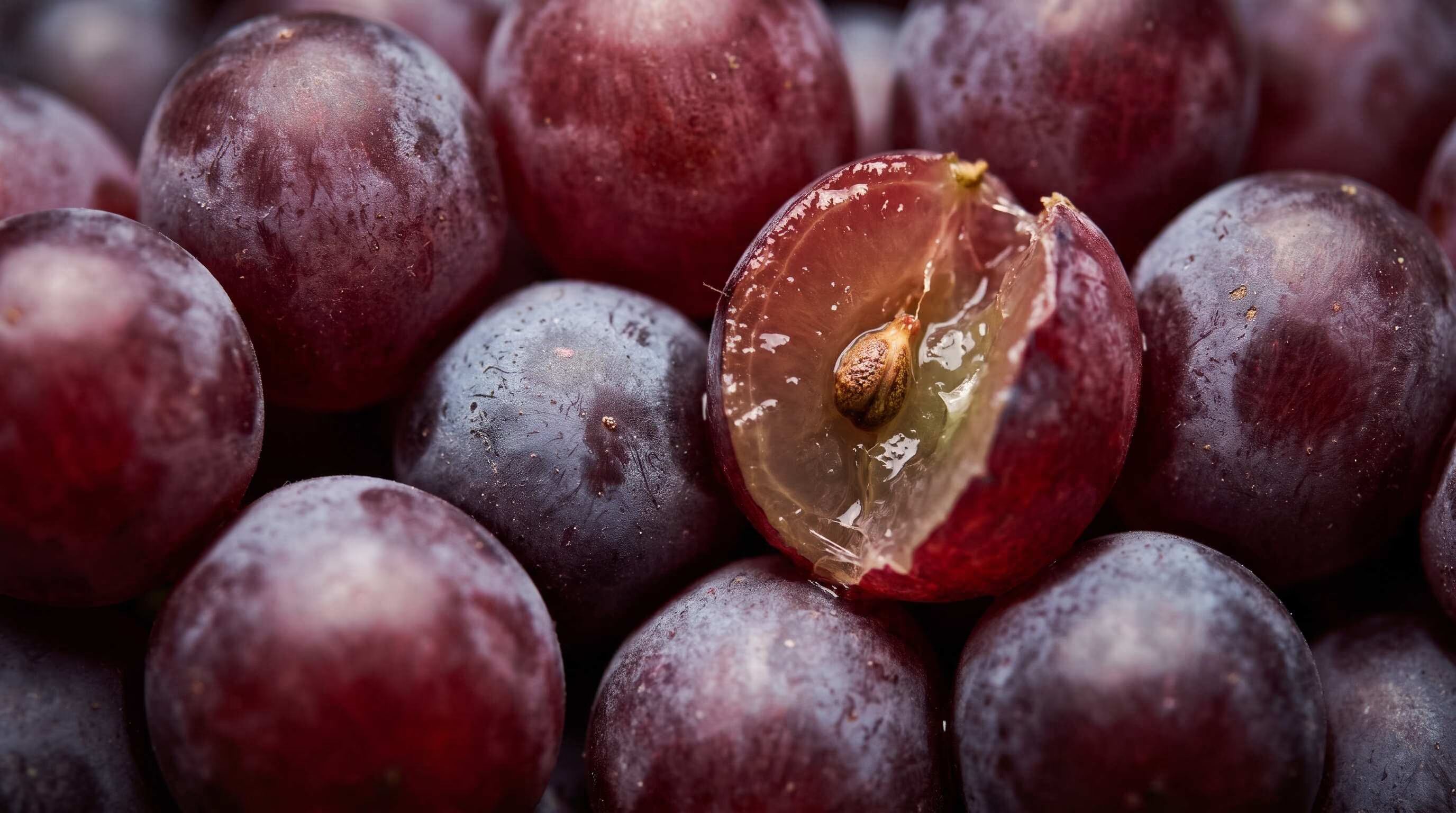
Resveratrol in red wine: a glass holds about 0.3 mg, against 150-1,000 mg in trials. What longevity research shows two decades after the 2003 Nature paper.
Red wine does contain resveratrol, but very little: about 1.9 mg per liter on average, or roughly 0.3 mg in a 150 mL glass. Human trials that report metabolic effects use 150-1,000 mg a day of this grape-skin polyphenol, so wine cannot explain any health effect through resveratrol. Its human longevity evidence is modest, and oral bioavailability is under 1%.
Few supplements have traveled a stranger arc than resveratrol. In 2003, a paper in Nature reported that the polyphenol activated the yeast sirtuin Sir2 and extended the lifespan of Saccharomyces cerevisiae. Within a few years, resveratrol was on magazine covers, red wine was reframed as a health drink, and GlaxoSmithKline paid $720 million for Sirtris Pharmaceuticals to commercialize sirtuin activators. Two decades later, the picture is much more restrained. Human bioavailability is dismal, the sirtuin activation model has been directly challenged, primate lifespan data are negative, and the longevity supplement conversation has largely moved on to NAD+ precursors. The compound still has interesting biology. It is not the anti-aging drug it was sold as.
What Is Resveratrol and Where Does It Come From?
Resveratrol (3,5,4’-trihydroxy-trans-stilbene) is a stilbenoid polyphenol produced by plants under stress, particularly fungal attack, UV exposure, or injury. It exists in two isomeric forms: trans-resveratrol, the biologically active isomer studied in almost all research, and cis-resveratrol, which is generally less stable and not the target of longevity claims. The trans form isomerizes to cis under UV light, which matters for supplement storage and formulation.
The best-known dietary sources are grapes, particularly the skins of red and purple varieties, and red wine produced from them. But the concentrations are low. Red wine averages about 1.9 mg of trans-resveratrol per liter, ranging from undetectable to around 14 mg/L (Stervbo et al., 2007); a 150 mL glass of an average red therefore provides roughly 0.3 mg. Blueberries, cranberries, and peanuts contribute smaller amounts. The most concentrated natural source is Polygonum cuspidatum (Japanese knotweed), the source of most resveratrol supplements sold in the US (Linus Pauling Institute). Grape-derived extracts exist but are more expensive per milligram of active compound.
What Is the Sirtuin Hypothesis?
Sirtuins are a family of NAD+-dependent deacetylases conserved from yeast to mammals. In yeast, Sir2 regulates gene silencing at telomeres and ribosomal DNA and had been linked to replicative lifespan in earlier work by Leonard Guarente’s lab at MIT. The mammalian homolog SIRT1 was proposed to mediate similar effects on metabolic regulation, DNA repair, and stress response. Because caloric restriction extended lifespan in multiple organisms and appeared to require sirtuin activity, small molecules that activated sirtuins were hypothesized to mimic caloric restriction pharmacologically. The 2003 Nature paper positioned resveratrol as the founding member of this “STAC” (sirtuin-activating compound) class.
The Sinclair Program and Sirtris
David Sinclair’s Harvard laboratory drove much of the subsequent research and commercialization. Sinclair and colleagues co-founded Sirtris Pharmaceuticals, which developed proprietary SRT compounds intended to be more potent SIRT1 activators than resveratrol itself. GlaxoSmithKline acquired Sirtris in 2008 for $720 million. Development of the lead compound SRT501, a formulated resveratrol, was halted in 2010, and GSK closed Sirtris in 2013, folding its remaining SRT compounds into its own research.
The Assay Artifact Problem
The mechanism came under direct challenge. Pacholec and colleagues at Pfizer (Journal of Biological Chemistry, 2010) reported that resveratrol and the SRT compounds only activated SIRT1 when the deacetylation assay used a fluorophore-tagged peptide substrate. When the fluorophore was removed and native substrates were used, activation disappeared. This suggested the effect was an assay artifact rather than direct enzyme activation. Sinclair’s group responded with follow-up work proposing allosteric activation that depends on hydrophobic motifs in certain native substrates (Hubbard et al., 2013). The dispute has not been fully resolved. What is clear is that “resveratrol directly activates SIRT1” is no longer a settled statement.
The commercial arc of Sirtris is instructive. GSK paid $720 million in 2008 and had closed the unit by 2013. If direct sirtuin activation had been robust and reproducible, a pharmaceutical company with those resources would have found a clinical indication. The absence of an approved sirtuin-activator drug two decades after the founding paper is itself evidence.
Does Resveratrol Actually Extend Lifespan?
The lifespan evidence stratifies sharply by organism. In yeast, the original lifespan result has not been reproduced consistently: Kaeberlein and colleagues (Journal of Biological Chemistry, 2005) found that resveratrol activated Sir2 and SIRT1 only with a fluorophore-tagged peptide substrate, and had no detectable effect on Sir2 activity or lifespan in three different yeast strain backgrounds. In Caenorhabditis elegans and Drosophila melanogaster, results are mixed. Some labs reported extension; Bass and colleagues (Mechanisms of Ageing and Development, 2007) saw no significant lifespan effect in flies across seven independent trials, and only slight, inconsistent increases in worms, including in worms lacking sir-2.1.
The Mouse Data
The mouse literature is the most-cited part of the resveratrol lifespan case. The critical qualification: extension was most reliably observed in mice on obesogenic diets, where resveratrol appeared to protect against metabolic dysfunction rather than extend intrinsic lifespan. Miller and colleagues (Journals of Gerontology, 2011) at the NIA Interventions Testing Program tested resveratrol at multiple doses across three sites and found no lifespan extension in genetically heterogeneous mice on standard chow. This is the field’s most rigorous negative result.
The Primate Study
A 2013 study in rhesus monkeys on a high-fat, high-sugar diet (Jimenez-Gomez et al., Cell Metabolism) gave resveratrol for two years and found improved insulin sensitivity and less inflammation in visceral (but not subcutaneous) fat; it did not measure lifespan. A lifelong study in 33 male grey mouse lemurs (Pifferi et al., Communications Biology, 2025) found better cognitive and motor performance at middle age and a longer median lifespan in the resveratrol group (7.9 vs 6.4 years), but no significant effect on all-cause or age-related mortality, and faster grey-matter atrophy in old age. No primate resveratrol study has demonstrated a significant survival benefit.
Summary of the Preclinical Case
Verdict: Species and diet dependent, not general.
Yeast: inconsistent, and mechanism disputed. Worms and flies: inconsistent. Mice: benefits concentrated in obesogenic-diet models, absent under rigorous NIA-ITP protocols. Primates: no significant survival benefit. The lifespan claim generalized poorly as researchers moved up the phylogenetic tree.
Why Is Oral Bioavailability Such a Problem?
This is the single most important fact about resveratrol as a supplement. It is absorbed well but metabolized almost immediately by phase II conjugation enzymes in the gut wall and liver. What reaches systemic circulation as free, active trans-resveratrol is a small fraction of the oral dose. The half-life of the parent compound is short; conjugated metabolites persist longer but have different, and generally weaker, biological activity.
What This Means for Doses in Trials
Many cell-culture effects of resveratrol require micromolar concentrations (chemopreventive effects need at least about 5 μM), so to reach them with free resveratrol, oral doses would need to be enormous, or delivery would need to be reformulated. Micronized formulations (SRT501), phospholipid complexes, and nanoformulations have all been tested to improve bioavailability. Micronized SRT501 at 5 g/day gave mean plasma levels about 3.6-fold higher than published values for standard resveratrol at the same dose (Howells et al., 2011), but still only at gram-level doses. Even a single 5 g oral dose produced a mean peak plasma resveratrol level of only about 2.4 μM in healthy volunteers (Boocock et al., 2007), and repeated doses of 2.5 g/day or more cause gastrointestinal side effects (Brown et al., 2010).
The Metabolite Question
An open question is whether resveratrol glucuronides and sulfates themselves have biological activity, or whether they can be deconjugated back to free resveratrol in target tissues. Cell and mouse work suggests sulfate conjugates can be converted back to free resveratrol inside some cells (Patel et al., 2013). This remains an active area of research and a hedge against the bioavailability critique, but it does not rescue the case for oral resveratrol as a systemic longevity intervention.
The Red Wine Paradox: A Reality Check on Dose
The “French paradox,” popularized in the early 1990s, described relatively low rates of coronary heart disease in France despite a diet rich in saturated fat, and speculated that red wine consumption was protective. Resveratrol became the leading candidate molecule. The story is culturally durable. The math does not support it.
The Dose Disparity
An average 150 mL glass of red wine contains roughly 0.3 mg of trans-resveratrol (Stervbo et al., 2007); even a glass of Pinot Noir, among the richest varieties, averages only about 0.5 mg. Human trials showing metabolic effects generally use 150-1,000 mg/day. To reach a 150 mg trial dose from an average red wine alone would require around 500 glasses per day, an amount of alcohol that would be lethal many times over. The “resveratrol from red wine” health story is dose-incoherent by roughly three orders of magnitude.
This dose disparity is not disputed in the scientific literature. It is a well-known artifact of how the French paradox narrative developed before quantitative pharmacology entered the conversation. Whatever health effects moderate red wine consumption may or may not have, they cannot be attributed to resveratrol at the concentrations present. Other polyphenols (procyanidins, anthocyanins), ethanol itself at low doses, and confounding lifestyle factors are all candidates that explain the observational associations more coherently.
What Do Human Trials Actually Show?
Human resveratrol trials have focused on metabolic and cardiovascular endpoints rather than lifespan, which is not directly testable in reasonable trial durations. The results are modest and mixed.
Insulin Sensitivity and Metabolic Health
The Timmers trial is the most-cited positive human study and is frequently invoked as evidence for “caloric restriction mimicry.” Its sample size (n=11) is small, and subsequent trials have not consistently replicated the metabolic profile. Poulsen and colleagues (Diabetes, 2013) randomized 24 obese but otherwise healthy men to high-dose resveratrol or placebo for 4 weeks and found no improvement in insulin sensitivity by hyperinsulinemic-euglycemic clamp, the reference measure, and no effect on blood pressure, body fat, or inflammatory markers. Yoshino and colleagues (Cell Metabolism, 2012) in nonobese postmenopausal women with normal glucose tolerance also found no effect on insulin sensitivity after 12 weeks at 75 mg/day.
Cardiovascular Markers
Meta-analyses of resveratrol trials for cardiovascular endpoints have been largely null. Sahebkar (Nutrition Reviews, 2013) pooled 7 RCTs (282 subjects) and found no significant effect on total, LDL, or HDL cholesterol or triglycerides. Fogacci and colleagues (Critical Reviews in Food Science and Nutrition, 2019) pooled 17 trials and found no significant overall effect on systolic or diastolic blood pressure; significant reductions appeared only in subgroups of trials using ≥300 mg/day and in people with diabetes. Endothelial function results (flow-mediated dilation) vary between trials, though a 2022 meta-analysis of 17 trials reported a small pooled improvement (Mohammadipoor et al., 2022).
Cognitive Endpoints
A 2014 trial by Witte and colleagues (Journal of Neuroscience, n=46 healthy overweight adults aged 50-75) reported better word retention and greater hippocampal functional connectivity after 26 weeks of 200 mg/day resveratrol compared with placebo. Turner and colleagues (Neurology, 2015) ran a 52-week phase 2 trial in 119 people with mild-to-moderate Alzheimer’s disease, escalating to 1,000 mg twice daily; CSF and plasma Aβ40 declined less than with placebo, but brain volume loss was greater in the resveratrol group, and the trial was not designed to show clinical benefit. Signals are preliminary; clinical significance is not established.
Verdict on Human Evidence
Modest, inconsistent, endpoint-dependent.
The most defensible human claims are possible blood pressure reductions at higher doses (seen only in subgroup analyses) and possible metabolic effects in obese or metabolically impaired populations. Nothing in the human trial literature approaches the “extends lifespan” or “mimics caloric restriction” framing used in popular writing.
Is Resveratrol Safe?
Resveratrol has a favorable acute safety profile in human trials. Doses up to 5 g/day for 29 days have been tested in healthy volunteers in cancer-prevention research; the 2.5 and 5 g doses caused mild to moderate gastrointestinal symptoms (Brown et al., 2010). Long-term safety at high doses is not well characterized.
Interactions to Consider
In 42 healthy volunteers taking 1 g/day for four weeks, resveratrol inhibited CYP3A4, CYP2D6, and CYP2C9 activity and induced CYP1A2, changes the authors warned could alter the effects of drugs cleared by those enzymes (Chow et al., 2010). Antiplatelet effects have been shown mainly in laboratory and animal studies; because of them, combining high-dose resveratrol with anticoagulants or antiplatelet drugs such as warfarin, aspirin, or NSAIDs is advised against as a precaution (Linus Pauling Institute), although clinical bleeding interactions have not been established. In cell studies, resveratrol bound the estrogen receptor and acted as an estrogen agonist at micromolar concentrations (Gehm et al., 1997), so people with a history of estrogen-sensitive cancers, or on tamoxifen or other hormone therapies, should discuss it with an oncologist. Its safety in pregnancy and lactation has not been established, so supplements are best avoided then (Linus Pauling Institute).
Product Quality Issues
Product analyses have found resveratrol content that departs from the label in both directions: in an Italian test of 14 brands, only five were within GMP range and two had none detectable (Rossi et al., 2012), while 19 of 20 Slovenian products differed from their declared content, more than half on the high side (Bensa et al., 2023). Because most commercial resveratrol is derived from Japanese knotweed rather than grape, emodin, an anthraquinone found in the plant (Avula et al., 2007) with laxative activity and liver toxicity at high or prolonged doses (Wang et al., 2024), can carry over into less purified extracts. Purified extracts specifying >98% trans-resveratrol and third-party testing are preferable.
Where Does the Field Stand in 2026?
Two decades after the founding Nature paper, resveratrol occupies a modest position in the longevity research conversation. The direct-SIRT1-activator hypothesis is contested and no clinical drug based on it has been approved. The animal lifespan case is weaker in more complex organisms. Human evidence supports small metabolic and cardiovascular effects at higher doses, not lifespan extension.
NMN and NAD+ Precursors Have Largely Displaced Resveratrol
The center of gravity in longevity supplement discussions has moved to NAD+ precursors: nicotinamide riboside (NR) and nicotinamide mononucleotide (NMN). The mechanistic story here is that sirtuin activity depends on cellular NAD+ availability, and NAD+ appears to decline with age in some tissues. Raising NAD+ through precursor supplementation is proposed as a more direct intervention than trying to activate sirtuins pharmacologically. NR and NMN both raise blood NAD+ levels in human trials (Christen et al., 2026). Whether this translates to meaningful healthspan or lifespan effects is not yet established, but the mechanistic evidence is cleaner and the pharmacokinetics are far more favorable than resveratrol’s.
Resveratrol is still sometimes co-formulated with NMN in commercial products on the theory that it might potentiate sirtuin activity once NAD+ is raised. This is speculative. No trial has demonstrated additive or synergistic benefit of the combination against NMN alone in humans.
Where Resveratrol Still Has a Reasonable Case
The most defensible modern use cases for resveratrol are as an adjunct in metabolic syndrome or insulin resistance where modest effects have been reported, and as a research compound. It is not a longevity drug in any evidence-based sense. Consumers who want polyphenol intake from food are better served by eating berries, grapes, dark chocolate, and other polyphenol-rich foods where the compounds arrive alongside their natural cofactors.
Frequently Asked Questions
Which red wine has the most resveratrol?
Grape variety and winemaking change the amount, but none comes close to a trial dose. Red wines range from undetectable to around 14 mg per liter, and Pinot Noir, among the richest varieties, averages only about 0.5 mg per 150 mL glass. Reaching a 150 mg trial dose from average red wine would take around 500 glasses a day.
Does resveratrol reverse aging?
No human study has shown that it does. Lifespan effects in yeast, worms and flies were inconsistent, mouse benefits appeared mainly on high-calorie diets and vanished in the NIA Interventions Testing Program, and a lifelong study in primates found no significant survival benefit. Human trials report modest changes in insulin sensitivity and some cardiovascular markers, not slower aging.
What is a safe dose of resveratrol?
Human trials have used 75-5,000 mg/day. Most metabolic and cardiovascular trials use 150-500 mg/day, which appears well-tolerated in short-term use. In a 29-day study, doses of 2.5 and 5 g/day caused mild to moderate gastrointestinal symptoms (Brown et al., 2010). Long-term safety at any dose is not fully characterized. There is no established RDA because resveratrol is not an essential nutrient.
Does drinking red wine actually help longevity?
Not through resveratrol. An average glass of red wine contains roughly 0.3 mg of resveratrol, versus 150-1,000 mg used in trials showing effects. Whatever health associations exist with moderate wine consumption in observational studies cannot be attributed to resveratrol at that dose. Recent large-scale analyses (Zhao et al., JAMA Network Open, 2023) have also called the “moderate drinking is protective” story into question generally.
Is trans-resveratrol different from cis-resveratrol?
Yes. Almost all research uses trans-resveratrol, which is the biologically active isomer. Cis-resveratrol is generally considered less active and less stable. Supplements should specify trans-resveratrol content. Exposure to UV light isomerizes trans to cis, so amber or opaque packaging matters.
How does resveratrol compare to NMN for longevity?
NMN raises blood NAD+ levels reliably in human trials; resveratrol’s proposed mechanism (direct SIRT1 activation) is disputed and its bioavailability is under 1%. On mechanistic evidence and pharmacokinetics, NMN has the stronger case. Neither has demonstrated lifespan extension in humans, which no supplement has. The NMN evidence is earlier-stage but cleaner.
Should I get resveratrol from food or supplements?
Food sources like grapes, blueberries, and peanuts provide small amounts of resveratrol alongside other polyphenols that may work in concert. Supplement doses vastly exceed dietary intake but face the bioavailability wall. If your goal is polyphenol intake for general health, food is the more defensible approach. If your goal is to test the pharmacological effects reported in the Timmers-style metabolic trials, that requires supplement doses under medical supervision.
Conclusion
Resveratrol is a real and interesting molecule. It was also badly oversold. The 2003 Nature paper set off a two-decade cycle of hype, commercial investment, and gradual scientific deflation. The direct-SIRT1-activator model has been directly challenged. Oral bioavailability is under 1%. Mouse lifespan effects concentrate in obesogenic-diet models and disappear in rigorous NIA-ITP protocols. Primate data show no significant survival benefit. Human trials show modest metabolic and cardiovascular effects at higher doses, not lifespan extension. The “red wine explains the French paradox” story is off by roughly a thousandfold on dose.
None of this makes resveratrol useless. It makes it a modest polyphenol supplement with some plausible metabolic benefit in specific populations, not the anti-aging drug that was promised. The longevity supplement field has largely moved on. So should consumer expectations. For the wider family of compounds resveratrol belongs to, and the foods that supply them, see the polyphenols and aging review.
Medical Disclaimer
The information in this article is for educational purposes only. It does not constitute medical advice, diagnosis, or treatment. Consult a qualified healthcare provider before using any supplement, particularly if you take prescription medications, have a chronic health condition, or are pregnant or breastfeeding. The statements on this site have not been evaluated by the Food and Drug Administration. Dietary supplements are not intended to diagnose, treat, cure, or prevent any disease.
References
Show all 34 referencesShow fewer
-
Howitz KT, Bitterman KJ, Cohen HY, et al. Small molecule activators of sirtuins extend Saccharomyces cerevisiae lifespan. Nature. 2003;425(6954):191-196. PubMed
-
Baur JA, Pearson KJ, Price NL, et al. Resveratrol improves health and survival of mice on a high-calorie diet. Nature. 2006;444(7117):337-342. PubMed
-
Walle T, Hsieh F, DeLegge MH, Oatis JE, Walle UK. High absorption but very low bioavailability of oral resveratrol in humans. Drug Metabolism and Disposition. 2004;32(12):1377-1382. PubMed
-
Timmers S, Konings E, Bilet L, et al. Calorie restriction-like effects of 30 days of resveratrol supplementation on energy metabolism and metabolic profile in obese humans. Cell Metabolism. 2011;14(5):612-622. PubMed
-
Pacholec M, Bleasdale JE, Chrunyk B, et al. SRT1720, SRT2183, SRT1460, and resveratrol are not direct activators of SIRT1. Journal of Biological Chemistry. 2010;285(11):8340-8351. PubMed
-
Miller RA, Harrison DE, Astle CM, et al. Rapamycin, but not resveratrol or simvastatin, extends life span of genetically heterogeneous mice. Journals of Gerontology Series A. 2011;66(2):191-201. PubMed
-
Poulsen MM, Vestergaard PF, Clasen BF, et al. High-dose resveratrol supplementation in obese men: an investigator-initiated, randomized, placebo-controlled clinical trial of substrate metabolism, insulin sensitivity, and body composition. Diabetes. 2013;62(4):1186-1195. PubMed
-
Turner RS, Thomas RG, Craft S, et al. A randomized, double-blind, placebo-controlled trial of resveratrol for Alzheimer disease. Neurology. 2015;85(16):1383-1391. PubMed
-
Kaeberlein M, McDonagh T, Heltweg B, et al. Substrate-specific activation of sirtuins by resveratrol. Journal of Biological Chemistry. 2005;280(17):17038-17045. PubMed
-
Bass TM, Weinkove D, Houthoofd K, Gems D, Partridge L. Effects of resveratrol on lifespan in Drosophila melanogaster and Caenorhabditis elegans. Mechanisms of Ageing and Development. 2007;128(10):546-552. PubMed
-
Pearson KJ, Baur JA, Lewis KN, et al. Resveratrol delays age-related deterioration and mimics transcriptional aspects of dietary restriction without extending life span. Cell Metabolism. 2008;8(2):157-168. PubMed
-
Jimenez-Gomez Y, Mattison JA, Pearson KJ, et al. Resveratrol improves adipose insulin signaling and reduces the inflammatory response in adipose tissue of rhesus monkeys on high-fat, high-sugar diet. Cell Metabolism. 2013;18(4):533-545. PubMed
-
Pifferi F, Terrien J, Marchal J, et al. Resveratrol does not mimic the positive effects of calorie restriction on lifespan in Microcebus murinus. Communications Biology. 2025;8(1):331. PubMed
-
Yoshino J, Conte C, Fontana L, et al. Resveratrol supplementation does not improve metabolic function in nonobese women with normal glucose tolerance. Cell Metabolism. 2012;16(5):658-664. PubMed
-
Sahebkar A. Effects of resveratrol supplementation on plasma lipids: a systematic review and meta-analysis of randomized controlled trials. Nutrition Reviews. 2013;71(12):822-835. PubMed
-
Fogacci F, Tocci G, Presta V, et al. Effect of resveratrol on blood pressure: a systematic review and meta-analysis of randomized, controlled, clinical trials. Critical Reviews in Food Science and Nutrition. 2019;59(10):1605-1618. PubMed
-
Witte AV, Kerti L, Margulies DS, Flöel A. Effects of resveratrol on memory performance, hippocampal functional connectivity, and glucose metabolism in healthy older adults. Journal of Neuroscience. 2014;34(23):7862-7870. PubMed
-
Zhao J, Stockwell T, Naimi T, et al. Association between daily alcohol intake and risk of all-cause mortality: a systematic review and meta-analyses. JAMA Network Open. 2023;6(3):e236185. PubMed
-
Walle T. Bioavailability of resveratrol. Annals of the New York Academy of Sciences. 2011;1215:9-15. PubMed
-
Boocock DJ, Faust GE, Patel KR, et al. Phase I dose escalation pharmacokinetic study in healthy volunteers of resveratrol, a potential cancer chemopreventive agent. Cancer Epidemiology, Biomarkers & Prevention. 2007;16(6):1246-1252. PubMed
-
Brown VA, Patel KR, Viskaduraki M, et al. Repeat dose study of the cancer chemopreventive agent resveratrol in healthy volunteers: safety, pharmacokinetics, and effect on the insulin-like growth factor axis. Cancer Research. 2010;70(22):9003-9011. PubMed
-
Stervbo U, Vang O, Bonnesen C. A review of the content of the putative chemopreventive phytoalexin resveratrol in red wine. Food Chemistry. 2007;101(2):449-457. DOI
-
Chow HH, Garland LL, Hsu CH, et al. Resveratrol modulates drug- and carcinogen-metabolizing enzymes in a healthy volunteer study. Cancer Prevention Research. 2010;3(9):1168-1175. PubMed
-
Gehm BD, McAndrews JM, Chien PY, Jameson JL. Resveratrol, a polyphenolic compound found in grapes and wine, is an agonist for the estrogen receptor. Proceedings of the National Academy of Sciences of the USA. 1997;94(25):14138-14143. PubMed
-
Hubbard BP, Gomes AP, Dai H, et al. Evidence for a common mechanism of SIRT1 regulation by allosteric activators. Science. 2013;339(6124):1216-1219. PubMed
-
Howells LM, Berry DP, Elliott PJ, et al. Phase I randomized, double-blind pilot study of micronized resveratrol (SRT501) in patients with hepatic metastases: safety, pharmacokinetics, and pharmacodynamics. Cancer Prevention Research. 2011;4(9):1419-1425. PubMed
-
Patel KR, Andreadi C, Britton RG, et al. Sulfate metabolites provide an intracellular pool for resveratrol generation and induce autophagy with senescence. Science Translational Medicine. 2013;5(205):205ra133. PubMed
-
Mohammadipoor N, Shafiee F, Rostami A, et al. Resveratrol supplementation efficiently improves endothelial health: a systematic review and meta-analysis of randomized controlled trials. Phytotherapy Research. 2022;36(9):3529-3539. PubMed
-
Rossi D, Guerrini A, Bruni R, et al. trans-Resveratrol in nutraceuticals: issues in retail quality and effectiveness. Molecules. 2012;17(10):12393-12405. PubMed
-
Bensa M, Vovk I, Glavnik V. Resveratrol food supplement products and the challenges of accurate label information to ensure food safety for consumers. Nutrients. 2023;15(2):474. PubMed
-
Avula B, Joshi VC, Wang YH, Khan IA. Simultaneous identification and quantification of anthraquinones, polydatin, and resveratrol in Polygonum multiflorum, various Polygonum species, and dietary supplements by liquid chromatography and microscopic study of Polygonum species. Journal of AOAC International. 2007;90(6):1532-1538. PubMed
-
Wang Y, Zhao M, Li B, Geng X. Advances in the mechanism of emodin-induced hepatotoxicity. Heliyon. 2024;10(13):e33631. PubMed
-
Christen S, Redeuil K, Goulet L, et al. The differential impact of three different NAD(+) boosters on circulatory NAD and microbial metabolism in humans. Nature Metabolism. 2026;8(1):62-73. PubMed
-
Linus Pauling Institute Micronutrient Information Center. Resveratrol. Oregon State University. Link
Read next
Written by Superfoods Advisor Editors·Published July 4, 2026