Is Broccoli Really "Cancer-Fighting"? What the Science on Sulforaphane Shows
By Superfoods Advisor Editors·July 4, 2026
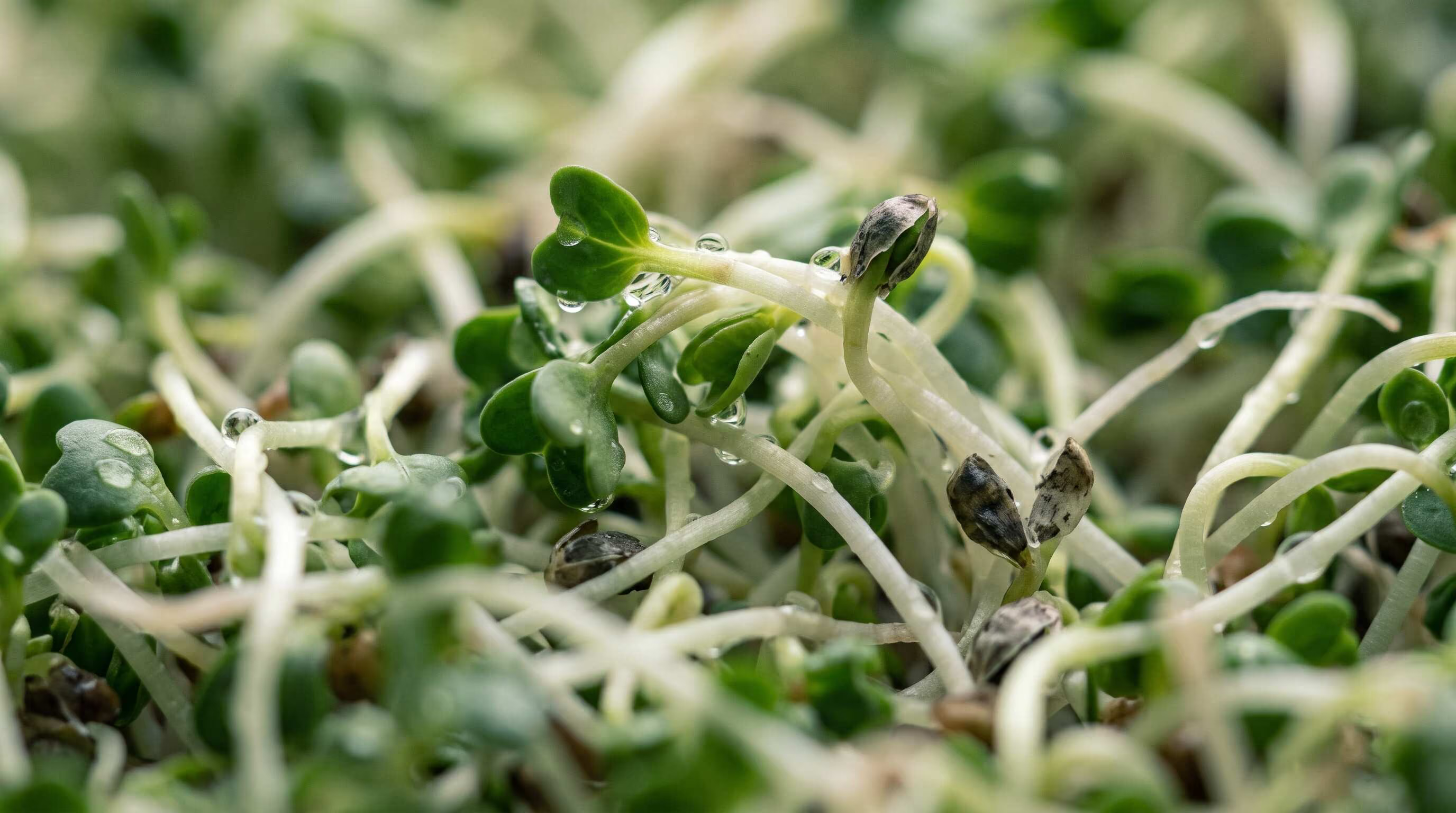
Sulforaphane benefits, checked: how it forms in chopped broccoli and sprouts, what Nrf2 activation means, and why cancer evidence stays observational.
Sulforaphane is an isothiocyanate that forms when broccoli, broccoli sprouts and other cruciferous vegetables are chopped or chewed. Its best-documented benefit is mechanistic: it switches on the Nrf2 pathway, which raises the body’s own detoxification enzymes. Human trials show increased carcinogen excretion, but no trial has shown that it prevents cancer.
Cruciferous vegetables belong to the Brassicaceae family. Broccoli, kale, cabbage, cauliflower, Brussels sprouts, bok choy and broccoli sprouts all produce sulfur-rich compounds called glucosinolates. When plant cells are disrupted, an enzyme called myrosinase converts those glucosinolates into isothiocyanates, the most studied of which is sulforaphane.
A review of the epidemiological evidence found that high cruciferous vegetable intake has been associated with lower risk of lung and colorectal cancer in some studies, while evidence for breast and prostate cancer is limited and inconsistent (Higdon et al., Pharmacological Research, 2007). Those findings come from observational associations, not from controlled trials showing a causal preventive effect. What the evidence actually shows, and what it does not show, is worth examining closely.
How Does Sulforaphane Actually Form?
Cruciferous vegetables produce sulforaphane through a two-step enzymatic process triggered by physical cell damage, not by the plant’s resting chemistry. Preparation matters: in a small crossover trial (n=8), sulforaphane bioavailability was 37% when broccoli was eaten raw versus 3.4% when it was cooked (Vermeulen et al., Journal of Agricultural and Food Chemistry, 2008). Understanding the mechanism explains every preparation tip you will encounter.
The Myrosinase-Glucoraphanin Reaction
Inside intact plant tissue, glucoraphanin and the enzyme myrosinase are stored in separate cellular compartments. When you chew, chop, or blend a cruciferous vegetable, those compartments rupture. Myrosinase contacts glucoraphanin and converts it to sulforaphane (4-methylsulfinylbutyl isothiocyanate), plus glucose and sulfate as byproducts.
The key detail is that myrosinase is heat-labile: in broccoli juice it lost activity progressively across roughly 45-60°C (Van Eylen et al., 2007). In one laboratory study, boiling and microwaving cut sulforaphane yield from broccoli within about a minute, while steaming for 1-3 minutes increased it (Wang et al., Journal of Agricultural and Food Chemistry, 2012). Once the enzyme is inactivated, glucoraphanin survives in the food but cannot be converted to sulforaphane by the plant’s own machinery.
Raw vs. Cooked: What the Evidence Shows
Cooking is not a complete dead end. Some gut bacteria can convert residual glucosinolates to isothiocyanates in the colon; the common commensal Bacteroides thetaiotaomicron carries an operon for this (Liou et al., Cell, 2020). Conversion varies widely from person to person (Bouranis et al., 2021) and is lower than with active plant myrosinase, but it is not zero.
A commonly recommended workaround is the “chop-and-rest” method: chopping raw broccoli and resting it at room temperature for a while before cooking is proposed to let myrosinase convert much of the glucoraphanin to sulforaphane before any heat is applied. In a laboratory study, sulforaphane survived stir-frying better than myrosinase did, and letting broccoli’s glucosinolates hydrolyze for 90 minutes before stir-frying left 2.8 times more sulforaphane than stir-frying it directly (Wu et al., Journal of Agricultural and Food Chemistry, 2018).
Adding raw mustard seed powder to cooked broccoli is another approach with early human data. In a randomized crossover study of 12 healthy adults, adding 1 g of powdered brown mustard to 200 g of cooked broccoli raised urinary excretion of a sulforaphane metabolite more than fourfold compared with the cooked broccoli alone (Okunade et al., 2018, Molecular Nutrition & Food Research).
What Is Nrf2 Activation and Why Does It Matter?
Sulforaphane’s primary mechanism of action is indirect antioxidant activity through the Nrf2-Keap1 signaling pathway. Rather than scavenging free radicals directly, it triggers cells to produce their own protective enzymes on a sustained basis. This mechanistic distinction separates sulforaphane from simpler antioxidants like vitamin C.
The Keap1-Nrf2-ARE Cascade
Under normal resting conditions, the transcription factor Nrf2 is kept inactive by a cytoplasmic protein called Keap1 (Kelch-like ECH-associated protein 1), which continuously targets Nrf2 for proteasomal degradation. Sulforaphane reacts covalently with cysteine thiol groups on Keap1, disrupting the Keap1-Nrf2 complex (Dinkova-Kostova et al., PNAS, 2002).
Released Nrf2 translocates to the cell nucleus, where it binds to the Antioxidant Response Element (ARE). This triggers expression of a battery of phase-II detoxification enzymes, including glutathione S-transferases (GSTs), NAD(P)H:quinone oxidoreductase 1 (NQO1), and heme oxygenase-1 (HO-1). These enzymes facilitate the conjugation and elimination of electrophilic carcinogens and reactive oxygen species.
Beyond Antioxidant Enzymes: HDAC Inhibition
In human cancer cell lines, sulforaphane’s metabolites also inhibit histone deacetylases (HDACs), enzymes that remove acetyl groups from histone proteins and can silence genes; treated cells showed more histone acetylation and higher expression of the cell-cycle gene p21 (Myzak et al., Cancer Research, 2004). The same group reported reduced HDAC activity in mice fed sulforaphane and, in a small human study, in blood cells 3 and 6 hours after a single serving of broccoli sprouts (Myzak et al., 2007). This epigenetic dimension adds a second biological rationale for interest in sulforaphane, separate from its antioxidant enzyme-induction role.
Is Broccoli “Cancer-Fighting”? What the Cancer Research Shows
Higher cruciferous vegetable intake is associated with modestly reduced cancer risk across dozens of epidemiological studies. In preclinical models, sulforaphane consistently inhibits tumor cell proliferation. These two bodies of evidence are promising, but they fall short of establishing that eating broccoli prevents cancer in humans. That distinction matters.
Epidemiological Associations
The association between cruciferous vegetable intake and cancer risk has been reported repeatedly, though not uniformly. Higdon et al. (2007) found the evidence most consistent for lung and colorectal cancer. For lung cancer, a systematic review of 30 studies found 22% lower risk at the highest intake in case-control studies (pooled OR 0.78, 95% CI 0.70-0.88) and 17% lower risk in cohort studies, an estimate that was not statistically significant (RR 0.83, 95% CI 0.62-1.08) (Lam et al., 2009, Cancer Epidemiology, Biomarkers & Prevention). In a network of Italian and Swiss case-control studies, eating cruciferous vegetables at least once a week was associated with lower odds of cancers of the oral cavity and pharynx, esophagus, colorectum, breast and kidney (ORs 0.68-0.83), with non-significant reductions for several other sites (Bosetti et al., 2012, Annals of Oncology).
These are associations. Cruciferous vegetable consumers also tend to eat more vegetables overall, smoke less, and have higher physical activity levels. Studies adjust for such confounders, but residual confounding cannot be ruled out.
Preclinical and Mechanistic Evidence
Cell culture and animal model data consistently show that sulforaphane and related isothiocyanates suppress proliferation, induce apoptosis, and reduce tumor growth across multiple cancer types. Human trials in Qidong, China, have tested broccoli sprout drinks against environmental carcinogens. In a 200-person randomized, placebo-controlled trial, urinary aflatoxin-DNA adducts did not differ between groups overall, although participants who converted more glucoraphanin to sulforaphane excreted fewer adducts (Kensler et al., 2005, Cancer Epidemiology, Biomarkers & Prevention). A later 12-week randomized trial in 291 residents found that a broccoli sprout beverage increased urinary excretion of detoxified conjugates of the air pollutants benzene (61%) and acrolein (23%) compared with placebo (Egner et al., 2014, Cancer Prevention Research).
What the Qidong trials measured was carcinogen excretion, not cancer incidence. It is a valid and important finding. But it is mechanistic proof of detoxification activity, not clinical proof of cancer prevention. The popular framing of this study often conflates the two.
No large randomized controlled trial has demonstrated that sulforaphane supplementation or increased cruciferous vegetable intake reduces cancer incidence in humans. Such a trial would require thousands of participants and decades of follow-up, making it methodologically challenging.
Who Benefits Most? GST Polymorphisms
One nuance often absent from popular summaries: the inverse association with lung cancer appears stronger in individuals with null polymorphisms in the GSTM1 and GSTT1 genes (encoding glutathione S-transferases). The GSTM1-null genotype is common, and its frequency differs markedly between populations of European, Asian and African ancestry (Garte et al., 2001). The direction is not consistent across cancers, though: for some sites the association with broccoli has looked stronger in GSTM1-positive people, and in a small crossover trial GSTM1-null participants excreted sulforaphane faster than GSTM1-positive ones (Gasper et al., American Journal of Clinical Nutrition, 2005). Why genotype changes the association is not settled.
How Do Cruciferous Vegetables Compare by Sulforaphane Yield?
Not all cruciferous vegetables deliver equal sulforaphane. The differences are large enough to matter practically. Knowing which vegetables are richest in glucoraphanin, and which carry other complementary bioactive compounds, helps you build a varied intake that covers the full glucosinolate spectrum.
Broccoli Sprouts: The Concentration Leader
Broccoli sprouts are germinated broccoli seeds harvested a few days after sprouting. Three-day-old sprouts of some cultivars contain 10-100 times the glucoraphanin concentration of the mature plants (Fahey et al., 1997). A small handful of sprouts (about 30 g) can deliver a glucoraphanin dose equivalent to several hundred grams of cooked mature broccoli.
Mature Broccoli: The Practical Standard
Broccoli glucoraphanin content varies widely by cultivar: across 50 broccoli accessions grown under uniform conditions it ranged from 0.8 to 21.7 µmol per gram dry weight (Kushad et al., 1999), or very roughly 0.1-2.4 µmol per gram fresh weight. Broccoli is the most extensively studied dietary sulforaphane source. Raw or lightly steamed broccoli using the chop-and-rest method is the practical gold standard for most people. Broccoli also provides indole glucosinolates (glucobrassicin), vitamin C (89 mg/100 g raw; USDA FoodData Central), vitamin K, and folate.
Brussels Sprouts: Glucosinolate Diversity
Brussels sprouts are a rich source of glucosinolates. Their profile is dominated by sinigrin (allyl isothiocyanate precursor), gluconapin and glucobrassicin (indole-3-carbinol precursor) (Kushad et al., 1999), with smaller amounts of glucoraphanin (sulforaphane precursor). This diversity is nutritionally meaningful because different glucosinolate hydrolysis products activate different enzymatic pathways.
Kale: Glucosinolate Breadth Plus Micronutrients
Kale glucosinolates are dominated by sinigrin and glucobrassicin (Kushad et al., 1999). Its sulforaphane precursor content is lower than broccoli on a per-gram basis, but kale’s exceptional micronutrient density (about 390 µg vitamin K1, 93 mg vitamin C and 6,260 µg lutein plus zeaxanthin per 100 g raw; USDA FoodData Central) makes it valuable across multiple health endpoints simultaneously.
Cabbage, Cauliflower, and Bok Choy
Cabbage provides sinigrin and glucobrassicin, plus S-methylmethionine (sometimes called vitamin U), which drew interest for peptic ulcer after uncontrolled case series in the 1950s (Cheney, 1952). Cauliflower is likewise dominated by sinigrin and glucobrassicin, the indole-3-carbinol precursor, rather than glucoraphanin (Kushad et al., 1999), and is a useful low-calorie vehicle for glucosinolate intake. Bok choy, a Brassica rapa rather than B. oleracea crop, is dominated by glucobrassicanapin and gluconapin, with smaller amounts of indole glucosinolates such as glucobrassicin (Nieto et al., European Food Research and Technology, 2025), alongside calcium that is about as well absorbed as the calcium in milk, as is true of other low-oxalate kale-family greens (Linus Pauling Institute), making it a useful non-dairy calcium source.
How Do You Maximize Sulforaphane Bioavailability?
Four preparation strategies have research support. Compared with boiling vegetables until tender, they can substantially increase the sulforaphane you absorb.
Chop Before You Cook
The chop-and-rest method is a simple change with laboratory support (Wu et al., 2018). Finely chop or process raw cruciferous vegetables and allow them to rest at room temperature before cooking. This gives endogenous myrosinase time to convert glucoraphanin to sulforaphane while the enzyme is still active and undamaged. The sulforaphane formed during this window is more heat-stable than the enzyme itself, so subsequent brief cooking does not destroy what has already been produced.
Steam Briefly, Do Not Boil
Brief steaming preserves more glucosinolate content and sulforaphane yield than boiling; in broccoli, steaming for 1-3 minutes increased sulforaphane yield while boiling cut it within a minute (Wang et al., 2012). In laboratory testing of broccoli, Brussels sprouts, cauliflower and green cabbage, steaming, microwaving and stir-frying caused no significant glucosinolate loss, while boiling caused significant losses, mostly by leaching into the cooking water (Song & Thornalley, 2007, Food and Chemical Toxicology). Steamed vegetables also keep their texture and water-soluble vitamins better.
Add a Myrosinase Source to Cooked Vegetables
When myrosinase has been inactivated by cooking, adding a raw myrosinase source to the dish restores enzyme activity externally. Possible sources include raw mustard seed powder (the one human trial used 1 g with a 200 g serving), raw daikon or radish, raw broccoli florets added at serving time, or chopped arugula used as a topping. The exogenous myrosinase acts on glucoraphanin remaining in the cooked vegetable.
Eat Sprouts Raw or Barely Warmed
For broccoli sprouts, eating them raw keeps their myrosinase intact. Raw is not automatically optimal, though: in a laboratory study, crushing raw broccoli or sprouts at room temperature produced mostly sulforaphane nitrile, an inactive by-product, and heating them to 60°C before crushing increased sulforaphane formation by inactivating the epithiospecifier protein that drives nitrile formation (Matusheski et al., Phytochemistry, 2004). Prolonged cooking that inactivates myrosinase gives up much of their advantage.
What Other Bioactive Compounds Do Cruciferous Vegetables Contain?
Sulforaphane receives most of the scientific attention, but cruciferous vegetables contain a second major class of bioactive compounds, the indoles, with distinct mechanisms and research profiles. Neither class should be considered in isolation.
Indole-3-Carbinol (I3C) and Diindolylmethane (DIM)
Cruciferous vegetables contain indolyl glucosinolates, primarily glucobrassicin. When myrosinase hydrolyzes glucobrassicin, indole-3-carbinol (I3C) is released. In the acidic environment of the stomach, I3C condenses into diindolylmethane (DIM) and other oligomers (Linus Pauling Institute).
I3C has been shown to modulate estrogen metabolism in small human studies. In 12 healthy volunteers given I3C (6-7 mg/kg/day) for 7 days, estradiol 2-hydroxylation rose by about 50%, and urinary excretion of 2-hydroxyestrone relative to estriol increased significantly (Michnovicz and Bradlow, 1991, Nutrition and Cancer). This effect has attracted research interest in hormone-sensitive cancers. Clinical evidence remains preliminary, and supplement doses used in trials (typically 200-400 mg I3C daily; Higdon et al., 2007) substantially exceed what normal food intake delivers.
Flavonoids: Quercetin and Kaempferol
Kale and Brussels sprouts contain the flavonols quercetin and kaempferol. These compounds exhibit anti-inflammatory activity in vitro, including inhibition of NF-κB signaling. Whether dietary flavonol intake from cruciferous vegetables translates to measurable anti-inflammatory effects in healthy adults has not been adequately tested in controlled human trials.
Sinigrin and Allyl Isothiocyanate
Cabbage and Brussels sprouts are high in sinigrin, which myrosinase converts to allyl isothiocyanate (AITC). AITC contributes the characteristic pungency of cabbage and has been studied for effects on apoptosis pathways in cell models. It is also bactericidal to Salmonella and E. coli O157:H7 in laboratory conditions (Lin et al., Journal of Food Protection, 2000), though this has limited direct relevance to human gut health at dietary concentrations.
Frequently Asked Questions
What are the benefits of sulforaphane?
The most consistent finding is that sulforaphane activates Nrf2, which raises phase-II detoxification enzymes in cell and animal studies. In humans, a 12-week randomized trial in 291 Qidong residents found a broccoli sprout beverage increased urinary excretion of detoxified benzene (61%) and acrolein (23%) conjugates. Claims beyond that, including cancer prevention, rest on observational data and lab studies.
Which vegetables are cruciferous?
Cruciferous vegetables are members of the Brassicaceae family. The common ones are broccoli, broccoli sprouts, kale, cabbage, cauliflower, Brussels sprouts, bok choy, collard greens, watercress and arugula. All make glucosinolates, but the mix differs: broccoli is the main glucoraphanin (sulforaphane precursor) source, while Brussels sprouts, cabbage and kale are dominated by sinigrin and glucobrassicin.
Are sulforaphane supplements as good as broccoli sprouts?
It depends on whether the product delivers active myrosinase. In small studies of human volunteers, broccoli sprouts or seeds given with their own myrosinase still active yielded sulforaphane 3- to 4-fold more bioavailable than glucoraphanin delivered without the enzyme. A glucoraphanin-only product relies on gut bacteria for the conversion, which is less efficient. Check the label for both ingredients.
Does eating broccoli prevent cancer?
Current evidence does not support the claim that broccoli or sulforaphane prevents cancer in humans. Epidemiological studies have found inverse associations between cruciferous vegetable intake and risk of some cancers, most consistently lung and colorectal cancer (Higdon et al., 2007); for lung cancer, pooled estimates suggest roughly 17-22% lower risk at the highest intakes (Lam et al., 2009). These are associations, not causal proof, and no large RCT has confirmed cancer prevention from sulforaphane or cruciferous vegetables.
How much sulforaphane is in a serving of broccoli?
Glucoraphanin in mature broccoli varies widely by cultivar, from 0.8 to 21.7 µmol per gram dry weight in one survey of 50 accessions (Kushad et al., 1999), and the sulforaphane actually formed depends on preparation. Chopping before cooking and steaming only briefly help preserve it. Broccoli sprouts of some cultivars deliver 10-100 times more glucoraphanin (Fahey et al., 1997), making a 30 g handful of sprouts functionally comparable to several hundred grams of cooked mature broccoli.
Is it better to eat cruciferous vegetables raw or cooked?
Raw consumption with adequate chewing maximizes sulforaphane yield. For those who prefer cooked vegetables, chopping and resting before cooking, followed by brief steaming (1-3 minutes in one laboratory study; Wang et al., 2012), helps preserve sulforaphane yield. Adding raw mustard seed powder to any cooked cruciferous dish provides exogenous myrosinase and partially restores sulforaphane formation, a strategy supported by one small crossover study (Okunade et al., 2018).
Do cruciferous vegetables interact with thyroid medication?
Two glucosinolate breakdown products can lower thyroid hormone production: goitrin, formed from progoitrin, and thiocyanate, formed from indole glucosinolates (Felker et al., Nutrition Reviews, 2016). The concern centres on very high raw intake, particularly in people with iodine deficiency or hypothyroidism. A published case of myxedema coma involved an 88-year-old woman who had eaten an estimated 1.0-1.5 kg of raw bok choy daily for several months (Chu & Seltzer, New England Journal of Medicine, 2010). At typical servings, commercial broccoli and B. oleracea kale contain too little goitrin to be considered more than a minimal risk, while collards and Brussels sprouts contain enough to potentially reduce thyroid iodine uptake (Felker et al., 2016). Cooking lowered goitrin content in a laboratory study of cabbage and Chinese kale (Panduang et al., Foods, 2023). Discuss high-dose cruciferous vegetable intake with your endocrinologist if you have a thyroid condition.
Which cruciferous vegetable has the most sulforaphane?
Broccoli sprouts contain the most sulforaphane precursor by a large margin, with 10-100 times the glucoraphanin of mature broccoli in some cultivars (Fahey et al., 1997). Among mature vegetables, broccoli is the main glucoraphanin source; Brussels sprouts, cabbage, cauliflower, and kale are dominated instead by sinigrin and glucobrassicin (Kushad et al., 1999), and bok choy by gluconapin and glucobrassicanapin. These produce different bioactive isothiocyanates and indoles.
Conclusion
Cruciferous vegetables are among the most biochemically complex foods in the human diet. The sulforaphane-Nrf2 pathway represents one of the better-characterized mechanisms by which a dietary compound influences cellular defense systems. Epidemiological associations with reduced cancer risk have been reported in many studies, though not uniformly, and they remain associations, not proven causal effects.
The practical message is grounded and actionable. Eating a variety of cruciferous vegetables regularly, preparing them in ways that preserve myrosinase activity, and including broccoli sprouts when practical are strategies with solid mechanistic support; at ordinary food amounts, the main documented caution is very high raw intake in people with thyroid conditions. The science does not support framing any of these foods as a cure or a guaranteed preventive. It does support eating them generously and often.
Start with the chop-and-rest habit. Add sprouts to sandwiches or salads. Vary across the family: broccoli, kale, Brussels sprouts, cabbage, cauliflower, and bok choy each contribute a distinct glucosinolate profile. Variety matters here.
This article is for informational purposes only. It does not constitute medical advice, a diagnosis, or a treatment recommendation. Individuals with health conditions, those taking prescription medications, or those who are pregnant or breastfeeding should consult a qualified healthcare provider before making significant dietary changes.
References
Show all 31 referencesShow fewer
- Talalay, P., & Fahey, J. W. (2001). Phytochemicals from cruciferous plants protect against cancer by modulating carcinogen metabolism. Journal of Nutrition, 131(11), 3027S-3033S.
- Higdon, J. V., Delage, B., Williams, D. E., & Dashwood, R. H. (2007). Cruciferous vegetables and human cancer risk: epidemiologic evidence and mechanistic basis. Pharmacological Research, 55(3), 224-236.
- Fahey, J. W., Holtzclaw, W. D., Wehage, S. L., Wade, K. L., Stephenson, K. K., & Talalay, P. (2015). Sulforaphane bioavailability from glucoraphanin-rich broccoli: control by active endogenous myrosinase. PLOS ONE, 10(11), e0140963.
- Vermeulen, M., Klöpping-Ketelaars, I. W., van den Berg, R., & Vaes, W. H. (2008). Bioavailability and kinetics of sulforaphane in humans after consumption of cooked versus raw broccoli. Journal of Agricultural and Food Chemistry, 56(22), 10505-10509.
- Michnovicz, J. J., & Bradlow, H. L. (1991). Altered estrogen metabolism and excretion in humans following consumption of indole-3-carbinol. Nutrition and Cancer, 16(1), 59-66.
- Bosetti, C., Filomeno, M., Riso, P., Polesel, J., Levi, F., Talamini, R., Montella, M., Negri, E., Franceschi, S., & La Vecchia, C. (2012). Cruciferous vegetables and cancer risk in a network of case-control studies. Annals of Oncology, 23(8), 2198-2203.
- Lam, T. K., Gallicchio, L., Lindsley, K., Shiels, M., Hammond, E., Tao, X. G., Chen, L., Robinson, K. A., Caulfield, L. E., Herman, J. G., Guallar, E., & Alberg, A. J. (2009). Cruciferous vegetable consumption and lung cancer risk: a systematic review. Cancer Epidemiology, Biomarkers and Prevention, 18(1), 184-195.
- Kensler, T. W., Chen, J. G., Egner, P. A., et al. (2005). Effects of glucosinolate-rich broccoli sprouts on urinary levels of aflatoxin-DNA adducts and phenanthrene tetraols in a randomized clinical trial in He Zuo township, Qidong, People’s Republic of China. Cancer Epidemiology, Biomarkers and Prevention, 14(11), 2605-2613.
- Egner, P. A., Chen, J. G., Zarth, A. T., et al. (2014). Rapid and sustainable detoxication of airborne pollutants by broccoli sprout beverage: results of a randomized clinical trial in China. Cancer Prevention Research, 7(8), 813-823.
- Okunade, O., Niranjan, K., Ghawi, S. K., Kuhnle, G., & Methven, L. (2018). Supplementation of the diet by exogenous myrosinase via mustard seeds to increase the bioavailability of sulforaphane in healthy human subjects after the consumption of cooked broccoli. Molecular Nutrition & Food Research, 62(18), e1700980.
- Song, L., & Thornalley, P. J. (2007). Effect of storage, processing and cooking on glucosinolate content of Brassica vegetables. Food and Chemical Toxicology, 45(2), 216-224.
- Fahey, J. W., Zhang, Y., & Talalay, P. (1997). Broccoli sprouts: an exceptionally rich source of inducers of enzymes that protect against chemical carcinogens. Proceedings of the National Academy of Sciences, 94(19), 10367-10372.
- Kushad, M. M., Brown, A. F., Kurilich, A. C., et al. (1999). Variation of glucosinolates in vegetable crops of Brassica oleracea. Journal of Agricultural and Food Chemistry, 47(4), 1541-1548.
- Van Eylen, D., Oey, I., Hendrickx, M., & Van Loey, A. (2007). Kinetics of the stability of broccoli myrosinase and isothiocyanates in broccoli juice during pressure/temperature treatments. Journal of Agricultural and Food Chemistry, 55(6), 2163-2170.
- Wang, G. C., Farnham, M., & Jeffery, E. H. (2012). Impact of thermal processing on sulforaphane yield from broccoli. Journal of Agricultural and Food Chemistry, 60(27), 6743-6748.
- Garte, S., Gaspari, L., Alexandrie, A. K., et al. (2001). Metabolic gene polymorphism frequencies in control populations. Cancer Epidemiology, Biomarkers & Prevention, 10(12), 1239-1248.
- Chu, M., & Seltzer, T. F. (2010). Myxedema coma induced by ingestion of raw bok choy. New England Journal of Medicine, 362(20), 1945-1946.
- Liou, C. S., Sirk, S. J., Diaz, C. A. C., et al. (2020). A metabolic pathway for activation of dietary glucosinolates by a human gut symbiont. Cell, 180(4), 717-728.
- Bouranis, J. A., Beaver, L. M., & Ho, E. (2021). Metabolic fate of dietary glucosinolates and their metabolites: a role for the microbiome. Frontiers in Nutrition, 8, 748433.
- Wu, Y., Shen, Y., Wu, X., et al. (2018). Hydrolysis before stir-frying increases the isothiocyanate content of broccoli. Journal of Agricultural and Food Chemistry, 66(6), 1509-1515.
- Dinkova-Kostova, A. T., Holtzclaw, W. D., Cole, R. N., et al. (2002). Direct evidence that sulfhydryl groups of Keap1 are the sensors regulating induction of phase 2 enzymes that protect against carcinogens and oxidants. Proceedings of the National Academy of Sciences, 99(18), 11908-11913.
- Myzak, M. C., Karplus, P. A., Chung, F. L., & Dashwood, R. H. (2004). A novel mechanism of chemoprotection by sulforaphane: inhibition of histone deacetylase. Cancer Research, 64(16), 5767-5774.
- Myzak, M. C., Tong, P., Dashwood, W. M., Dashwood, R. H., & Ho, E. (2007). Sulforaphane retards the growth of human PC-3 xenografts and inhibits HDAC activity in human subjects. Experimental Biology and Medicine, 232(2), 227-234.
- Gasper, A. V., Al-Janobi, A., Smith, J. A., et al. (2005). Glutathione S-transferase M1 polymorphism and metabolism of sulforaphane from standard and high-glucosinolate broccoli. American Journal of Clinical Nutrition, 82(6), 1283-1291.
- Cheney, G. (1952). Vitamin U therapy of peptic ulcer. California Medicine, 77(4), 248-252.
- Nieto, J. A., Hellín, P., Valverde, M., et al. (2025). Pak choi (Brassica rapa ssp. chinensis) glucosinolates profile and bioaccessibility through in vitro dynamic digestion model. European Food Research and Technology, 251, 205-212.
- Matusheski, N. V., Juvik, J. A., & Jeffery, E. H. (2004). Heating decreases epithiospecifier protein activity and increases sulforaphane formation in broccoli. Phytochemistry, 65(9), 1273-1281.
- Linus Pauling Institute. Indole-3-carbinol. Micronutrient Information Center, Oregon State University.
- Lin, C. M., Preston, J. F., & Wei, C. I. (2000). Antibacterial mechanism of allyl isothiocyanate. Journal of Food Protection, 63(6), 727-734.
- Felker, P., Bunch, R., & Leung, A. M. (2016). Concentrations of thiocyanate and goitrin in human plasma, their precursor concentrations in brassica vegetables, and associated potential risk for hypothyroidism. Nutrition Reviews, 74(4), 248-258.
- Panduang, T., Phucharoenrak, P., Karnpanit, W., & Trachootham, D. (2023). Cooking methods for preserving isothiocyanates and reducing goitrin in Brassica vegetables. Foods, 12(19), 3647.
Read next
Written by Superfoods Advisor Editors·Published July 4, 2026