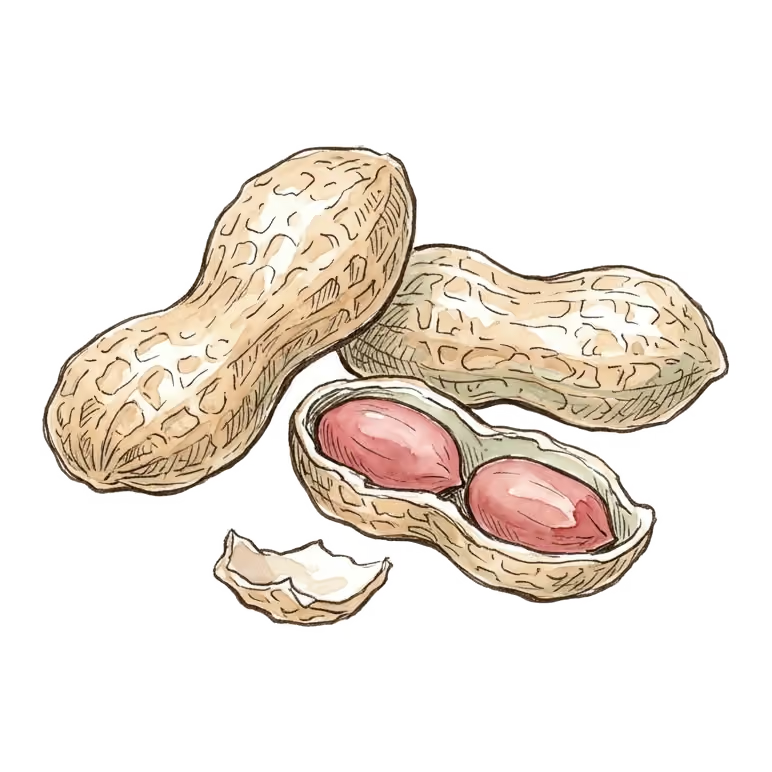
Peanuts (Arachis hypogaea)
Arachis hypogaea · also known as groundnut, goober, monkey nut, earthnut, arachide
By Superfoods Advisor Editors·August 19, 2026
Peanuts benefits and nutrition: 26 g protein per 100 g, what cohort studies show for heart health and weight, peanuts vs tree nuts, and allergy risks.
Peanuts (Arachis hypogaea, also called groundnuts) are legumes eaten like nuts, with more protein than any common tree nut: about 26 g per 100 g, or 7 g in a 28 g handful. Large cohort studies link regular nut and peanut eating to lower cardiovascular and all-cause mortality, though they cannot prove cause. Peanut allergy is the main risk.
Botanically, the peanut is the seed of an annual herb in the bean family, Fabaceae, not a tree nut. The plant is remarkable for geocarpy: after the flower is fertilised above ground, the stalk elongates downward and pushes the developing ovary into the soil, where the pod matures underground. This is the origin of the name hypogaea — “under the earth” — and of the more accurate common name groundnut.
Domestication occurred in South America, most likely in the valleys of present-day Bolivia and northern Argentina, and peanut macrofossils excavated on the western slopes of the northern Peruvian Andes have been directly radiocarbon-dated to between roughly 9,200 and 5,500 radiocarbon years before the present (Dillehay et al., 2007). Portuguese and Spanish trade carried the crop to West Africa and Asia in the sixteenth century, and the peanut returned to North America through the transatlantic slave trade. Its rise to a staple American crop came much later, driven by mechanised harvesting, the collapse of cotton to the boll weevil in the early twentieth century, and the agronomic advocacy of George Washington Carver, who catalogued industrial and culinary uses to make the rotation crop economically viable for Southern farmers. China and India now lead world production.
Evidence at a glance
Active Compounds
- Protein and amino acid profile: At roughly 26 g per 100 g, peanuts carry more protein than any common tree nut.
- Monounsaturated fatty acids: Oleic acid dominates the fat fraction, and high-oleic cultivars bred for shelf stability push it higher still. The fat is predominantly mono- and polyunsaturated, with saturated fat under 7 g per 100 g.
- Niacin (vitamin B3): Peanuts are among the densest food sources, supplying roughly three-quarters of the daily reference intake per 100 g.
- Folate: Around 240 µg per 100 g, unusually high for a fat-dense food and a point of difference from tree nuts.
- Vitamin E (alpha-tocopherol): Roughly 8.3 mg per 100 g, concentrated in the oil fraction, where it functions as the seed’s own oxidation brake.
- Phytosterols: Chiefly beta-sitosterol, which competes with dietary cholesterol for intestinal absorption and contributes modestly to the lipid effects seen in feeding trials.
- Resveratrol: Present in trace amounts, higher in the skins than the kernel, and — as with grapes — far below the doses used in research. It is a curiosity of composition rather than a reason to eat peanuts. See resveratrol.
- Phytates and tannins: Both can reduce absorption of iron and zinc. Tannins sit mainly in the papery skin, so blanched (skinless) peanuts carry less of them, at the cost of the skin’s polyphenol content.
Nutritional Profile
Per 100 g raw peanuts (USDA FoodData Central, SR Legacy):
| Nutrient | Amount | % DV |
|---|---|---|
| Energy | 567 kcal | — |
| Protein | 25.8 g | — |
| Total fat | 49.2 g | — |
| — Saturated fat | 6.3 g | — |
| — Monounsaturated fat | 24.4 g | — |
| — Polyunsaturated fat | 15.6 g | — |
| Carbohydrate | 16.1 g | — |
| Dietary fiber | 8.5 g | 30% |
| Total sugars | 4.7 g | — |
| Niacin | 12.1 mg | 76% |
| Folate | 240 µg | 60% |
| Vitamin E | 8.3 mg | 55% |
| Magnesium | 168 mg | 40% |
| Phosphorus | 376 mg | 30% |
| Copper | 1.1 mg | 127% |
| Manganese | 1.9 mg | 84% |
| Thiamine | 0.64 mg | 53% |
| Zinc | 3.3 mg | 30% |
| Potassium | 705 mg | 15% |
The protein and fiber figures are the ones that separate peanuts from tree nuts: 26 g and 8.5 g per 100 g, against roughly 15 g and 6.7 g for walnuts (USDA FoodData Central) and 21 g and 12.5 g for almonds (USDA FoodData Central). Peanuts are also markedly cheaper per gram of protein than any tree nut, which is a real nutritional consideration rather than a merely economic one.
Peanut butter’s profile depends entirely on the label. A product listing only peanuts and salt tracks the figures above; commercial butters with added sugar and hydrogenated palm oil do not, and the hydrogenated fraction is the specific thing worth avoiding.
Evidence for Purported Benefits
Cardiovascular Mortality
Evidence:Preliminary Large, consistent cohorts include peanuts; the supporting trial, PREDIMED, used tree nuts.
The cohort evidence for nut consumption is large, consistent, and includes peanuts explicitly. Bao and colleagues, pooling 76,464 women from the Nurses’ Health Study and 42,498 men from the Health Professionals Follow-up Study over up to 30 years, found that participants eating nuts seven or more times a week had a 20% lower all-cause mortality than non-consumers, with an inverse dose-response across categories and similar associations for peanuts and tree nuts analysed separately (2013, New England Journal of Medicine, PubMed:24256379). Later cohort work has reproduced the pattern; an Adventist Health Study 2 analysis of 80,529 participants found higher total nut intake (including peanuts and peanut butter) associated with lower cardiovascular and ischemic heart disease mortality, with somewhat stronger associations for tree nuts alone (2025, Journal of Nutrition, PubMed:41109638).
These are observational associations. Nut consumers differ systematically from non-consumers in smoking, physical activity and overall diet quality, and although the analyses adjust extensively, the design cannot establish causation. The strongest interventional support is indirect: the PREDIMED trial randomised participants at high cardiovascular risk to a Mediterranean diet supplemented with mixed nuts, with extra-virgin olive oil, or to a control diet, and reported a lower rate of major cardiovascular events in both supplemented arms (2018, New England Journal of Medicine, PubMed:29897866). The nut arm used walnuts, hazelnuts and almonds rather than peanuts, and the trial tested a dietary pattern rather than a single food.
Satiety and Body Weight
Evidence:Preliminary A meta-analysis of nut trials found no weight gain; peanut-specific data come from one small feeding study.
Peanuts are energy-dense, but a 2021 meta-analysis of 86 randomised trials found no adverse effect of nut intake on body weight (Nishi et al., 2021). In a small peanut feeding study, 15 adults given about 500 kcal of peanuts a day with no dietary instructions gained 1.0 kg over eight weeks against a predicted 3.6 kg, because they spontaneously ate less of other foods; resting energy expenditure also rose (Alper & Mattes, 2002). Incomplete chewing, which leaves some fat locked in intact cells, is another proposed explanation. The effect is a partial offset rather than a licence: peanuts eaten in addition to an unchanged diet still add calories.
Glycemic Response
Evidence:Preliminary One small crossover trial in 11 healthy adults.
The combination of fat, protein and fiber gives peanuts a low glycemic index. In a small crossover trial of 11 healthy adults, adding peanut products to a high-glycemic-load meal lowered the 60-minute glucose response, though not significantly for a lower-glycemic-load meal (Johnston & Buller, 2005). Comparable foods are discussed in Blood Sugar and Metabolic Superfoods.
Protein Quality
Evidence:Strong Amino acid content and digestibility are measured directly; peanut protein is low in some essential amino acids.
Peanut protein is deficient in some essential amino acids, though its true digestibility is comparable with that of animal protein, and peanut flour and meal have long been used to raise the protein value of cereal-based foods (Singh & Singh, 1991). For anyone building intake around plant sources, the practical role of peanuts is discussed in the Plant-Based Protein Guide.
Typical Use and Preparation
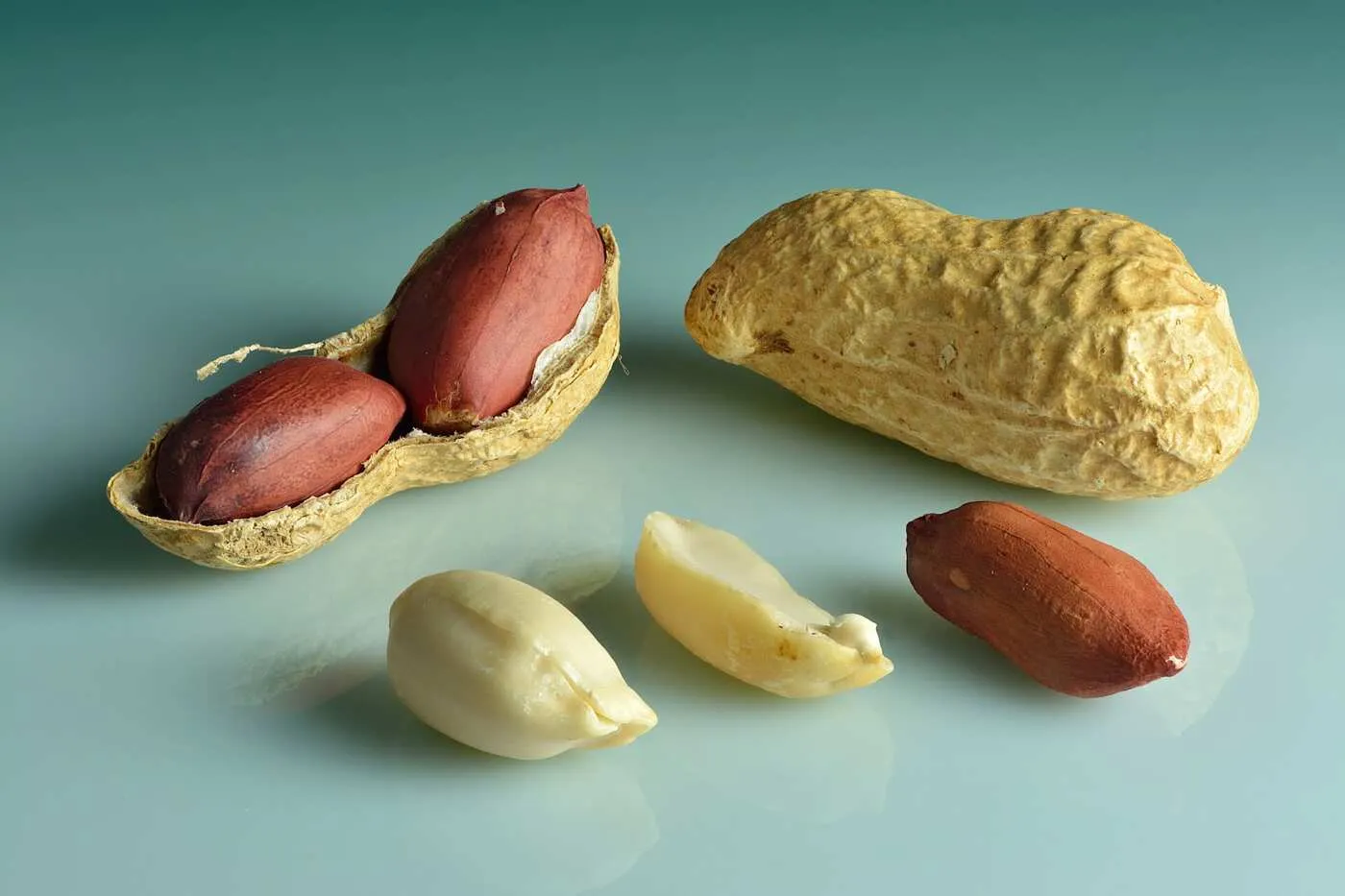 Photo: Ivar Leidus, CC BY-SA 4.0, via Wikimedia Commons
A standard serving is 28 g (about a small handful), providing around 159 kcal, 7 g protein and 2.4 g fiber. Two tablespoons of peanut butter is approximately 32 g and a comparable nutritional unit.
Roasting improves flavour, with some loss of thiamine and vitamin E. Dry roasting and oil roasting differ less in final fat content than the names suggest, since the kernel absorbs little added oil. Boiled peanuts, common in the American South and across West Africa and Asia, retain more moisture and have been reported to carry higher concentrations of certain isoflavones than raw or roasted kernels (Chukwumah et al., 2007).
Buy peanut butter on its ingredient list rather than its marketing: peanuts, optionally salt, and nothing else. Store shelled peanuts and natural peanut butter cold — the high unsaturated fat fraction oxidises, and rancidity is the most common quality failure in a product that otherwise keeps well.
Peanuts feature in the fat-and-protein anchors discussed in Heart Health Superfoods.
Safety, Interactions, and Contraindications
Allergy: Peanut allergy is among the most common and most severe food allergies, is a leading cause of food-related anaphylaxis, and unlike milk or egg allergy is usually lifelong. This is the dominant safety consideration for the food and it is not a matter of degree — for a sensitised individual, trace exposure can be life-threatening. Anyone with a diagnosed peanut allergy should avoid peanuts, peanut oil of unspecified refinement, and products carrying shared-equipment advisories, and should carry prescribed epinephrine.
Early introduction: Guidance on infant feeding reversed on the basis of the LEAP trial, which randomised 640 infants at high risk of peanut allergy to regular peanut consumption or avoidance from 4–11 months of age and found substantially lower rates of peanut allergy at 60 months in the consumption group (Du Toit et al., 2015, New England Journal of Medicine, PubMed:25705822). The US NIAID-sponsored addendum guidelines that followed sort infants by risk: those with severe eczema, egg allergy or both should have a clinician evaluation (specific IgE or skin-prick testing) before peanut is introduced at 4–6 months, those with mild-to-moderate eczema can start around 6 months without testing, and those with neither can start in line with family preference (Togias et al., 2017). A later US–Canadian allergy-society consensus advises introducing peanut around 6 months but not before 4, and no longer requires screening before introduction (Fleischer et al., 2021). For an infant with severe eczema or a known food allergy, the decision belongs with a pediatrician or allergist, and peanut is given as a thinned butter or powder, never as whole kernels.
Aflatoxin: Peanuts are susceptible to contamination by Aspergillus flavus and A. parasiticus, which produce aflatoxin B1, a potent hepatocarcinogen. Contamination is chiefly a problem where storage humidity is uncontrolled and regulatory monitoring is weak; the EU, among others, sets legal maximum aflatoxin levels for peanuts (Regulation (EU) 2023/915). A 2026 scoping review of studies from Malaysia, Thailand, Vietnam and the Philippines found peanuts and maize carried the highest aflatoxin B1 concentrations of the foods assessed, with estimated exposures in most cases indicating a public health concern, and called for better surveillance and post-harvest management (2026, Foods, PubMed:42279661). Discard any peanut that is shrivelled, discoloured or mouldy rather than trimming it.
Choking hazard: The American Academy of Pediatrics advises keeping nuts away from children until at least 4 years of age, depending on the child’s development (AAP, HealthyChildren.org).
Oxalate: Peanuts contain a modest amount of oxalate, and in a small study a large serving produced a moderate rise in urinary oxalate (Brinkley et al., 1990). This may be relevant to people with a history of calcium-oxalate kidney stones.
Energy density: At 567 kcal per 100 g, peanuts reward portioning. Eating from the jar is the common failure mode.
Frequently Asked Questions
Are peanuts good for you?
For people without a peanut allergy, they are a nutritious, inexpensive food: high in protein, fiber, niacin and folate, with mostly unsaturated fat. Large cohort studies associate regular nut eating, peanuts included, with lower mortality, but those studies cannot rule out that nut eaters are healthier in other ways. Unsalted peanuts and peanut butter without added sugar or hydrogenated oil are the better choices.
Are peanuts a tree nut?
No. Peanuts are legumes, related to beans and lentils; the pods ripen underground. In the kitchen and in nutrition studies they are grouped with nuts, and their fat profile is similar. For allergy purposes, peanut and tree nut allergies are separate diagnoses, though some people have both, so an allergist should advise anyone with either one.
Peanuts vs tree nuts: which is healthier?
Peanuts have more protein per 100 g (about 26 g) than almonds (21 g) or walnuts (15 g) and cost less per gram of protein. Tree nuts offer other strengths, such as walnuts’ omega-3 and almonds’ vitamin E. In the largest cohorts, peanuts and tree nuts had similar associations with lower mortality, and the main trial evidence comes from tree nuts.
How many peanuts can you eat a day?
A standard serving is 28 g, a small handful, providing about 159 kcal and 7 g protein; two tablespoons of peanut butter is a similar amount. The lowest mortality in cohort studies was seen with nuts eaten seven or more times a week, roughly one serving a day. Larger amounts mainly add calories, and people with oxalate kidney stones may want to discuss intake with a clinician.
Are peanuts good for people with diabetes?
Peanuts have a low glycemic index because of their fat, protein and fiber. In a small trial of 11 healthy adults, adding peanut products to a high-glycemic meal lowered the one-hour glucose response. That is preliminary evidence, not a treatment effect, but a portion of peanuts can be a reasonable snack in a diabetes meal plan.
When should babies be introduced to peanuts?
Current US and Canadian allergy-society guidance advises introducing peanut around 6 months of age, not before 4 months, after the LEAP trial showed early regular peanut eating cut allergy rates in high-risk infants. Babies with severe eczema or a known food allergy should be assessed by a pediatrician or allergist first. Give peanut as thinned butter or powder, never whole nuts.
References
Show all 19 referencesShow fewer
- Bao, Y., Han, J., Hu, F. B., Giovannucci, E. L., Stampfer, M. J., Willett, W. C., & Fuchs, C. S. (2013). Association of nut consumption with total and cause-specific mortality. New England Journal of Medicine, 369(21), 2001–2011.
- Estruch, R., Ros, E., Salas-Salvadó, J., et al. (2018). Primary prevention of cardiovascular disease with a Mediterranean diet supplemented with extra-virgin olive oil or nuts. New England Journal of Medicine, 378(25), e34.
- Du Toit, G., Roberts, G., Sayre, P. H., et al. (2015). Randomized trial of peanut consumption in infants at risk for peanut allergy. New England Journal of Medicine, 372(9), 803–813.
- Suprono, M. S., et al. (2025). Nut consumption and risk of cardiovascular disease and ischemic heart disease mortality: the Adventist Health Study 2. Journal of Nutrition, 155(12), 4465–4475.
- Ab Dullah, S. S., et al. (2026). A scoping review and risk assessment of aflatoxin B1 contamination in rice, maize, and peanut-based products across selected ASEAN countries. Foods, 15(11), 1874.
- USDA FoodData Central. Peanuts, all types, raw. FDC ID: 172430. U.S. Department of Agriculture.
- Dillehay, T. D., Rossen, J., Andres, T. C., & Williams, D. E. (2007). Preceramic adoption of peanut, squash, and cotton in northern Peru. Science, 316(5833), 1890–1893.
- Togias, A., Cooper, S. F., Acebal, M. L., et al. (2017). Addendum guidelines for the prevention of peanut allergy in the United States: Report of the NIAID-sponsored expert panel. Journal of Allergy and Clinical Immunology, 139(1), 29–44.
- Fleischer, D. M., Chan, E. S., Venter, C., et al. (2021). A consensus approach to the primary prevention of food allergy through nutrition: Guidance from the AAAAI, ACAAI and CSACI. Journal of Allergy and Clinical Immunology: In Practice, 9(1), 22–43.e4.
- USDA FoodData Central. Nuts, walnuts, english. FDC ID: 170187.
- USDA FoodData Central. Nuts, almonds. FDC ID: 170567.
- American Academy of Pediatrics. Choking prevention. HealthyChildren.org.
- Nishi, S. K., Viguiliouk, E., Blanco Mejia, S., et al. (2021). Are fatty nuts a weighty concern? A systematic review and meta-analysis and dose-response meta-regression of prospective cohorts and randomized controlled trials. Obesity Reviews, 22(11), e13330.
- Alper, C. M., & Mattes, R. D. (2002). Effects of chronic peanut consumption on energy balance and hedonics. International Journal of Obesity, 26(8), 1129–1137.
- Johnston, C. S., & Buller, A. J. (2005). Vinegar and peanut products as complementary foods to reduce postprandial glycemia. Journal of the American Dietetic Association, 105(12), 1939–1942.
- Singh, B., & Singh, U. (1991). Peanut as a source of protein for human foods. Plant Foods for Human Nutrition, 41(2), 165–177.
- Chukwumah, Y., Walker, L., Vogler, B., & Verghese, M. (2007). Changes in the phytochemical composition and profile of raw, boiled, and roasted peanuts. Journal of Agricultural and Food Chemistry, 55(22), 9266–9273.
- Brinkley, L. J., Gregory, J., & Pak, C. Y. (1990). A further study of oxalate bioavailability in foods. Journal of Urology, 144(1), 94–96.
- European Commission. Commission Regulation (EU) 2023/915 on maximum levels for certain contaminants in food.
Related content
More in Nuts & Seeds
- Almonds (Prunus dulcis)
Almonds benefits and nutrition: what trials show for LDL cholesterol, blood sugar and weight, plus serving size, vitamin E, oxalate and allergy risks.
- Brazil Nuts (Bertholletia excelsa)
Brazil nuts benefits come down to selenium: one nut can hold 8 to 200 mcg. How many to eat per day, what the research shows, and the toxicity limit.
- Cashews (Anacardium occidentale)
Cashews benefits and nutrition: copper, magnesium and iron per serving, what trials show for blood pressure and blood sugar, and allergy and oxalate risks.
- Chia Seeds (Salvia hispanica)
How to eat chia seeds: soaked, ground or in pudding, with serving size, nutrition and what trials show for blood sugar, blood pressure and weight loss.
- Flaxseed (Linum usitatissimum)
Flaxseed benefits explained: what trials show for blood pressure, cholesterol and constipation, why ground beats whole, daily amounts and side effects.
- Hazelnuts (Corylus avellana)
Hazelnuts benefits and nutrition: oleic acid, vitamin E and folate per serving, what trials show for cholesterol, and how birch-pollen allergy works.

Curated by Superfoods Advisor Editors·Last updated