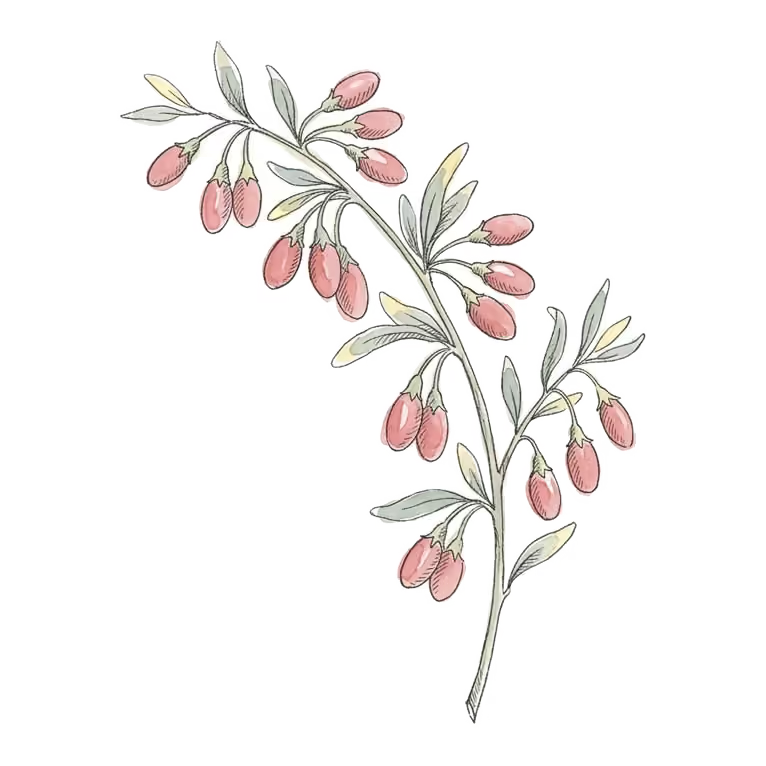
Goji Berry (Lycium barbarum)
Lycium barbarum · also known as wolfberry, Chinese wolfberry, gou qi zi, matrimony vine berry
By Superfoods Advisor Editors·July 3, 2026
What are goji berries good for? Small trials link them to higher zeaxanthin and macular pigment; other claims are early. Nutrition and warfarin risk.
Goji berries (Lycium barbarum, also called wolfberries) are bright-red fruits of a Chinese nightshade shrub, usually eaten dried. Their best-supported use is eye health: two small trials found goji raised blood zeaxanthin or macular pigment. Claims for immunity, blood sugar and longevity rest on preliminary or industry-funded research, and goji can interact with warfarin.
The plant belongs to the family Solanaceae and is native to northwestern China, particularly Ningxia and Xinjiang. Goji berries have been cultivated and consumed in East Asia for close to two millennia, appearing in Chinese materia medica texts as early as the Shennong Bencao Jing (Divine Farmer’s Classic of Materia Medica, Eastern Han dynasty), where they were recorded as a tonic; later TCM texts describe the fruit as “nourishing the liver and kidneys and brightening the eyes.” In Traditional Chinese Medicine (TCM), the dried fruit — known as gǒu qǐ zǐ — is a commonly used herb, traditionally used to address conditions associated with Yin deficiency, including dizziness, blurred vision, and lower back weakness.
Outside Asia, goji berries attracted mainstream Western interest in the early 2000s following the global superfood marketing boom, during which extravagant longevity claims circulated widely in popular media. The scientific literature offers a more measured picture: several bioactive fractions — particularly Lycium barbarum polysaccharides (LBP) and zeaxanthin — show meaningful activity in cell culture and animal models, with a growing body of small human trials investigating specific outcomes. The evidence base is promising but remains preliminary for most claimed benefits.
Evidence at a glance
Active Compounds
- Lycium barbarum polysaccharides (LBP): Heterogeneous glycoconjugates of widely varying molecular weight, comprising arabinose, glucose, galactose, rhamnose, and mannose; considered the primary bioactive fraction. Associated with immunomodulatory, antioxidant, and neuroprotective activity in preclinical studies.
- Zeaxanthin and zeaxanthin dipalmitate: Dominant carotenoids. Zeaxanthin dipalmitate (also called physalien) is the main form in the fruit and is split into free zeaxanthin during digestion; free zeaxanthin is what accumulates in the macula of the human retina. Total carotenoids in dried Lycium fruit range from about 0.03% to 0.5% by weight (roughly 30–500 mg per 100 g), with zeaxanthin dipalmitate making up 31–56% of that, depending on species and source (Peng et al., 2005).
- Betaine (glycine betaine): Methyl donor involved in homocysteine metabolism; may contribute to hepatoprotective effects observed in animal models.
- Rutin and other flavonoids: Including quercetin glycosides; contribute to the fruit’s antioxidant activity in laboratory (in vitro) assays, which do not necessarily reflect effects in the body.
- Scopoletin: A hydroxycinnamic acid lactone with reported anti-inflammatory activity in vitro.
- Taurine and free amino acids: Goji contains relatively high concentrations of free amino acids, including proline, serine, and aspartate.
- Minerals: Iron (6.8 mg/100 g dried; USDA FoodData Central) and calcium; other trace minerals are not reported in the USDA entry.
Nutritional Profile
Values below are for dried goji berries, per 100 g (USDA FoodData Central, FDC ID 173032). The USDA entry is calculated from a product label and does not report B vitamins, potassium, zinc, or selenium:
| Nutrient | Amount | % DV |
|---|---|---|
| Energy | 349 kcal | — |
| Carbohydrates | 77.1 g | — |
| Dietary fiber | 13.0 g | — |
| Sugars | 45.6 g | — |
| Protein | 14.3 g | — |
| Total fat | 0.4 g | — |
| Vitamin C | 48.4 mg | 54% |
| Iron | 6.8 mg | 38% |
| Calcium | 190 mg | 15% |
| Sodium | 298 mg | 13% |
Note: typical consumer portions are 28–40 g (1–1.5 oz) of dried berries, not 100 g.
Evidence for Purported Benefits
Eye Health and Macular Protection
Evidence:Limited Two small human trials, one industry-run and one unblinded, report higher zeaxanthin or macular pigment.
Zeaxanthin is a structural component of the macular pigment optical density (MPOD), a biomarker inversely associated with age-related macular degeneration (AMD) risk. In a double-masked, Nestlé-run RCT reported by Bucheli et al. (Optometry and Vision Science, 2011; n = 150 healthy adults aged 65–70), 13.7 g/day of a milk-based goji formulation for 90 days raised plasma zeaxanthin (+26%) and antioxidant capacity, and the macula remained stable on ophthalmic examination while the placebo group showed hypopigmentation and soft drusen accumulation. MPOD itself was not measured. A subsequent unmasked pilot trial by Li et al. (Nutrients, 2021; n = 27 healthy adults aged 45–65) found that 28 g of goji berries five times weekly for 90 days significantly increased MPOD, while a lutein/zeaxanthin supplement did not. The Bucheli trial was industry-funded and the Li trial was small and unblinded; independent replication is needed.
Immune Modulation
Evidence:Limited Two industry-funded RCTs found some immune markers improved and others unchanged; results conflict.
A double-blind, placebo-controlled trial by Amagase, Sun, and Nance (Journal of Medicinal Food, 2009; n = 60 healthy adults aged 55–72) found that 30 days of a standardized goji juice (120 ml/day, which the sponsor states is equivalent to at least 150 g of fresh berries) significantly increased lymphocyte counts, interleukin-2, and immunoglobulin G and improved subjective well-being measures compared with placebo, with no change in CD4, CD8, or natural killer cell counts. However, the commercial sponsor funded the study, and the proprietary juice formulation limits generalizability. The immune outcomes of what appears to be the same Nestlé trial as the Bucheli eye study (same sponsor and overlapping authors; 150 adults aged 65–70; 13.7 g/day of the milk-based formulation for 3 months) were reported separately by Vidal et al. (Rejuvenation Research, 2012): supplementation produced higher influenza-specific antibody levels and seroconversion after vaccination than placebo, but no effect on delayed-type hypersensitivity or inflammatory markers. Current evidence does not support definitive conclusions about immune effects in healthy adults.
Antioxidant Status
Evidence:Preliminary One manufacturer-funded 30-day RCT (n=50) on surrogate antioxidant markers; not replicated.
A 30-day double-blind, placebo-controlled trial by Amagase, Sun, and Borek (Nutrition Research, 2009; n = 50 healthy adults aged 55–72) found that a standardized goji juice (120 ml/day) increased serum superoxide dismutase (SOD) by 8.4% and glutathione peroxidase by 9.9% and lowered serum malondialdehyde by 8.7%, with no changes in the placebo group. The study was funded by the juice manufacturer and has not been independently replicated. The clinical relevance of surrogate antioxidant biomarkers remains debated; no randomized trials have linked goji consumption to downstream reductions in oxidative-stress-related disease endpoints.
Blood Glucose and Lipid Regulation
Evidence:Preliminary Rodent studies and one small RCT of goji polysaccharides in type 2 diabetes.
Multiple rodent studies have demonstrated hypoglycemic effects of LBP, attributed to enhanced insulin sensitivity and inhibition of alpha-glucosidase. A small randomized trial by Cai et al. (Medicinal Chemistry, 2015; n = 67 type-2 diabetic patients) found that LBP at 300 mg/day for 3 months lowered serum glucose during a post-meal tolerance test compared with control, though the authors note the small sample and short follow-up. No sufficiently powered, well-controlled human trial has yet confirmed glucose-lowering effects in diabetic populations. The available data do not support recommending goji as a substitute for established glycemic management strategies.
Neuroprotection
Evidence:Preliminary Cell and animal work, plus one small RCT in retinitis pigmentosa; no trials of brain outcomes.
Cell culture and animal studies suggest LBP may protect retinal ganglion cells and hippocampal neurons against oxidative and excitotoxic stress, potentially through Nrf2 pathway activation and BDNF upregulation. Human data are limited to one small trial: in a double-masked, placebo-controlled study of 42 people with retinitis pigmentosa, 12 months of a L. barbarum supplement was associated with preserved visual acuity and macular thickness relative to placebo, with no differences in visual field or electroretinogram measures (Chan et al., 2019). No trials have evaluated brain-related outcomes.
Typical Use and Preparation
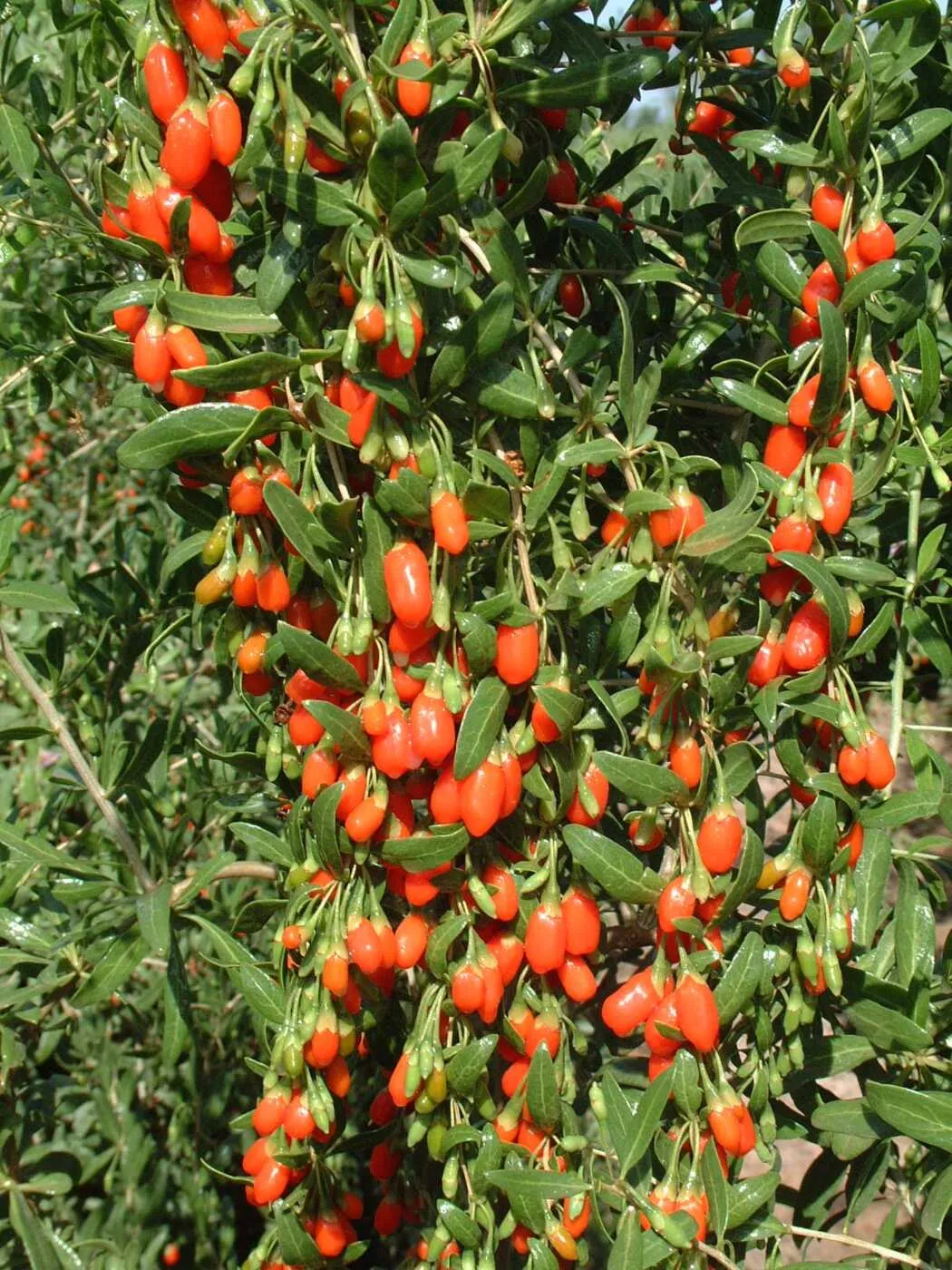 Photo: Paul Gross ( paul144 ) and Richard Zhang, public domain, via Wikimedia Commons
- Dried fruit: The most common commercial form; typically eaten as a snack or added to cereals, trail mixes, and smoothies. Drying concentrates sugars and carotenoids but degrades heat-sensitive vitamin C.
- Tea/infusion: Dried berries steeped in hot water; a traditional TCM preparation. The Chinese Pharmacopoeia’s medicinal dose for the dried fruit is 6–12 g per day, and one case report linked intake above that range to a warfarin interaction (Zhang et al., 2015).
- Juice: Cold-pressed or pasteurized; some commercial products are standardized to LBP content.
- Standardized extracts: Capsules standardized to LBP content; the diabetes trial described above used 300 mg/day of LBP (Cai et al., 2015).
- Culinary: Fresh goji berries (scarce outside Asia) can be used in soups, congee, and stir-fries. The berries are fragile and perishable.
For other food sources of zeaxanthin and lutein, see the entries on kale and spinach. Our guide to immune-supporting foods sets goji’s immune-modulation claims against the better-studied nutrients, including vitamin C, zinc, and beta-glucans.
Safety, Interactions, and Contraindications
A 2010 review found no signs of toxicity from the fruit, with drug interaction as the main documented risk (Potterat, 2010). Documented concerns include:
- Warfarin (coumadin) interaction: At least four published case reports describe elevated INR in patients stable on warfarin after a few days of drinking goji tea, juice, or wine, in some cases with bleeding (Lam et al., Annals of Pharmacotherapy, 2001; Leung et al., 2008; Rivera et al., Pharmacotherapy, 2012; Zhang et al., 2015). In the Rivera case the INR became unmeasurable (prothrombin time over 120 seconds) and the patient was hospitalized. The mechanism is unknown. Lam et al. found the tea inhibited CYP2C9, the enzyme that clears S-warfarin, only weakly in vitro and suggested factors other than CYP450 metabolism may be responsible. No controlled pharmacokinetic study in humans has been published. People taking warfarin or other vitamin K antagonists should avoid goji juice, tea, and supplements unless their prescriber is monitoring INR.
- Diabetes medications: Theoretical additive hypoglycemic risk based on preclinical glucose-lowering data; blood glucose monitoring is advisable if combined with insulin or secretagogues.
- Allergic reactions: Allergic reactions, including anaphylaxis, have been reported after eating goji berries (Monzón Ballarín et al., 2011). Sensitization appears to be driven mainly by lipid transfer proteins (LTPs), with cross-reactivity shown to tomato, peach, tobacco, tree nuts, and mugwort (Artemisia) pollen (Carnés et al., 2013). In a study of 30 plant-food-allergic patients in Spain, 77% had a positive skin test to goji, most of whom had never eaten it (Larramendi et al., 2012). People with LTP or peach allergy should be cautious.
- Atropine: As a nightshade, goji can contain trace tropane alkaloids. An analysis of eight commercial samples found atropine in all of them at no more than 19 parts per billion, far below toxic levels (Adams et al., 2006). Purchasing from suppliers with third-party testing limits the risk of contamination from other plant material.
- Pregnancy and lactation: Human safety data are insufficient. Avoid supplemental doses (extracts, concentrated juice) during pregnancy and breastfeeding unless a clinician advises otherwise.
- Drug interactions beyond warfarin: In a laboratory study, goji juice strongly inhibited most major drug-metabolizing CYP450 enzymes, including CYP3A4 and CYP2C9, while hot and cold water extracts (closer to a tea) inhibited them only weakly (Liu et al., 2016). No human study has tested whether this changes drug levels, so the clinical significance is unknown.
Frequently Asked Questions
What are goji berries?
Goji berries are the small, oblong red fruits of Lycium barbarum, a shrub in the nightshade family native to northwestern China. Known in Traditional Chinese Medicine as gǒu qǐ zǐ, they have been used for close to two millennia. Outside Asia they are sold mostly dried, and also as juice, tea and extracts standardized to Lycium barbarum polysaccharides.
Are goji berries good for your eyes?
They may help maintain macular pigment, but the evidence is small. Goji is rich in zeaxanthin, a carotenoid that accumulates in the retina. In a 27-person unblinded trial, 28 g of goji five times weekly for 90 days raised macular pigment density, and an industry-run trial in 150 older adults found higher plasma zeaxanthin. No trial shows goji prevents macular degeneration.
How many goji berries should you eat per day?
No official amount exists. Typical snack portions are 28–40 g (about 1–1.5 oz) of dried berries, and the eye trial used 28 g five days a week. The Chinese Pharmacopoeia lists 6–12 g a day of dried fruit as its medicinal dose. Dried goji contains about 45.6 g of sugar per 100 g, so a small handful is a reasonable portion.
Are goji berries good for diabetics?
The evidence is preliminary. Rodent studies and one small trial in 67 people with type 2 diabetes suggest goji polysaccharides at 300 mg/day may lower post-meal glucose, but no large, well-controlled trial confirms it. Dried goji berries are also high in sugar. Anyone on insulin or other glucose-lowering drugs should check with a clinician before adding goji supplements.
Can goji berries be eaten raw?
Yes. Fresh goji berries can be eaten raw, though they are fragile and scarce outside Asia, which is why most are sold dried. Dried berries can be eaten straight from the bag, soaked, steeped as tea or added to soups and congee. As with other nightshades, commercial samples contain only trace atropine, far below toxic levels.
References
Show all 19 referencesShow fewer
- Bucheli, P., Vidal, K., Shen, L., et al. (2011). Goji berry effects on macular characteristics and plasma antioxidant levels. Optometry and Vision Science, 88(2), 257–262.
- Amagase, H., Sun, B., & Nance, D. M. (2009). Immunomodulatory effects of a standardized Lycium barbarum fruit juice in Chinese older healthy human subjects. Journal of Medicinal Food, 12(5), 1159–1165.
- Li, X., Holt, R. R., Keen, C. L., et al. (2021). Goji berry intake increases macular pigment optical density in healthy adults: a randomized pilot trial. Nutrients, 13(12), 4409.
- Cai, H., Liu, F., Zuo, P., et al. (2015). Practical application of antidiabetic efficacy of Lycium barbarum polysaccharide in patients with type 2 diabetes. Medicinal Chemistry, 11(4), 383–390.
- Lam, A. Y., Elmer, G. W., & Mohutsky, M. A. (2001). Possible interaction between warfarin and Lycium barbarum L. Annals of Pharmacotherapy, 35(10), 1199–1201.
- USDA FoodData Central. Goji berries, dried. FDC ID 173032. U.S. Department of Agriculture.
- Amagase, H., Sun, B., & Borek, C. (2009). Lycium barbarum (goji) juice improves in vivo antioxidant biomarkers in serum of healthy adults. Nutrition Research, 29(1), 19–25.
- Vidal, K., Bucheli, P., Gao, Q., et al. (2012). Immunomodulatory effects of dietary supplementation with a milk-based wolfberry formulation in healthy elderly: a randomized, double-blind, placebo-controlled trial. Rejuvenation Research, 15(1), 89–97.
- Rivera, C. A., Ferro, C. L., Bursua, A. J., & Gerber, B. S. (2012). Probable interaction between Lycium barbarum (goji) and warfarin. Pharmacotherapy, 32(3), e50–e53.
- Leung, H., Hung, A., Hui, A. C., & Chan, T. Y. (2008). Warfarin overdose due to the possible effects of Lycium barbarum L. Food and Chemical Toxicology, 46(5), 1860–1862.
- Zhang, J., Tian, L., & Xie, B. (2015). Bleeding due to a probable interaction between warfarin and Gouqizi (Lycium barbarum L.). Toxicology Reports, 2, 1209–1212.
- Liu, R., Tam, T. W., Mao, J., et al. (2016). In vitro activity of Lycium barbarum (goji) against major human phase I metabolism enzymes. Journal of Complementary and Integrative Medicine, 13(3), 257–265.
- Peng, Y., Ma, C., Li, Y., et al. (2005). Quantification of zeaxanthin dipalmitate and total carotenoids in Lycium fruits (Fructus Lycii). Plant Foods for Human Nutrition, 60(4), 161–164.
- Adams, M., Wiedenmann, M., Tittel, G., & Bauer, R. (2006). HPLC-MS trace analysis of atropine in Lycium barbarum berries. Phytochemical Analysis, 17(5), 279–283.
- Chan, H. H., Lam, H. I., Choi, K. Y., et al. (2019). Delay of cone degeneration in retinitis pigmentosa using a 12-month treatment with Lycium barbarum supplement. Journal of Ethnopharmacology, 236, 336–344.
- Potterat, O. (2010). Goji (Lycium barbarum and L. chinense): phytochemistry, pharmacology and safety in the perspective of traditional uses and recent popularity. Planta Medica, 76(1), 7–19.
- Monzón Ballarín, S., López-Matas, M. A., Sáenz Abad, D., et al. (2011). Anaphylaxis associated with the ingestion of Goji berries (Lycium barbarum). Journal of Investigational Allergology and Clinical Immunology, 21(7), 567–570.
- Carnés, J., de Larramendi, C. H., Ferrer, A., et al. (2013). Recently introduced foods as new allergenic sources: sensitisation to Goji berries (Lycium barbarum). Food Chemistry, 137(1–4), 130–135.
- Larramendi, C. H., García-Abujeta, J. L., Vicario, S., et al. (2012). Goji berries (Lycium barbarum): risk of allergic reactions in individuals with food allergy. Journal of Investigational Allergology and Clinical Immunology, 22(5), 345–350.
More in Berries
- Acai Berry (Euterpe oleracea)
Is acai good for you? What small human trials show on acai benefits for antioxidants, lipids and blood sugar, plus nutrition, acai bowls and safety.
- Acerola Cherry (Malpighia emarginata)
Acerola cherry benefits come mostly from its vitamin C, about 1,680 mg per 100 g. What the evidence shows for immunity, skin and antioxidants, and safety.
- Blackberry (Rubus fruticosus)
What are blackberries good for? Fiber (5.3 g per 100 g), vitamin C, vitamin K and anthocyanins. Blackberry benefits, nutrition and what research shows.
- Blackcurrant (Ribes nigrum)
Blackcurrant benefits: a tart berry with 181 mg vitamin C per 100 g and dense anthocyanins. Small trials on eye fatigue, exercise recovery and cognition.
- Blueberry (Vaccinium corymbosum)
Are blueberries good for you? Trials suggest a daily cup (150 g) may help blood-vessel function; memory and blood-sugar data are early. Nutrition, safety.
- Camu Camu (Myrciaria dubia)
What is camu camu, and what are its benefits? An Amazonian berry with 1,800–3,000 mg vitamin C per 100 g, small trials on inflammation, and safety notes.

Curated by Superfoods Advisor Editors·Last updated