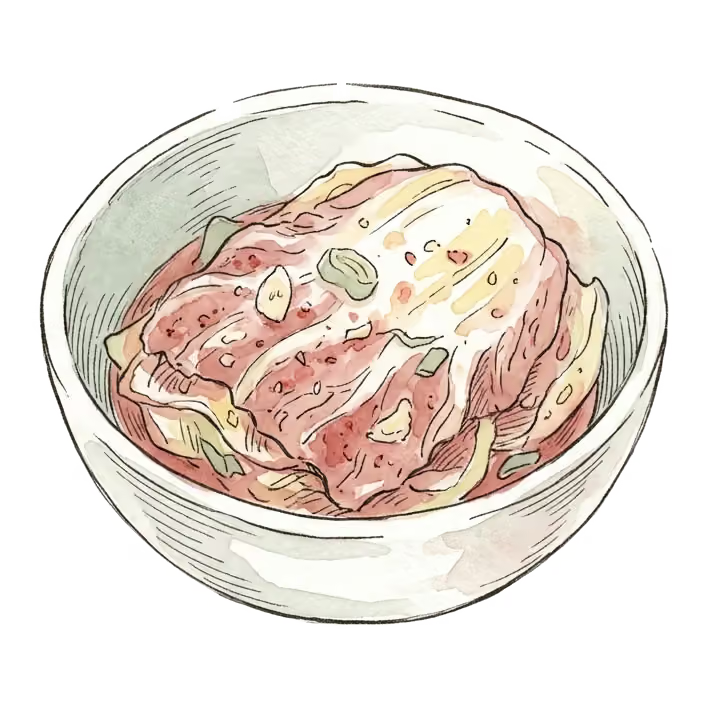
Kimchi
By Superfoods Advisor Editors·July 3, 2026
Is kimchi good for you? Korean fermented cabbage brings fiber, vitamin K and live cultures but a lot of sodium; what the limited human trials show.
Kimchi (also kimchee or gimchi) is a Korean fermented vegetable dish, most often napa cabbage (Brassica rapa subsp. pekinensis) seasoned with garlic, ginger, chili and fish sauce. It is low in calories and supplies fiber, vitamin K and live lactic acid bacteria, but it is high in sodium, and human evidence for specific health benefits is limited.
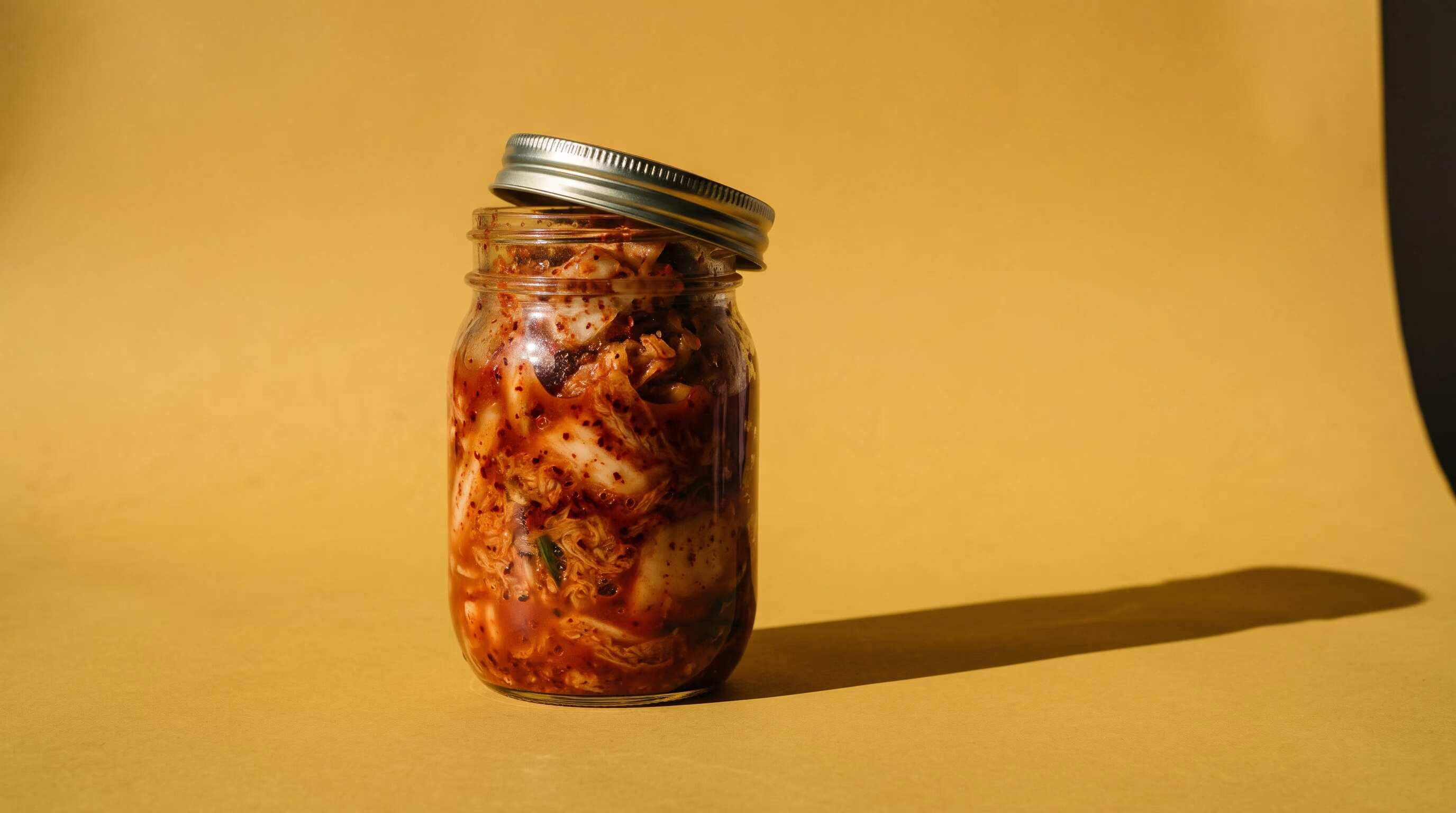
Kimchi evolved from simple salt-preserved vegetables into the chili-seasoned dish known today after chili peppers reached the Korean peninsula. For the common baechu-kimchi, the cabbage is salted to draw out moisture, then massaged with a paste of garlic, ginger, fish sauce or fermented shrimp (jeotgal), and gochugaru (Korean red pepper flakes). It is packed into airtight vessels, traditionally earthenware onggi pots buried underground, and ferments at cool temperatures for days to months.
During fermentation, lactic acid bacteria naturally present on the vegetable surfaces and in the seasoning ingredients dominate the microbial succession, progressively lowering pH from about 5.5 in freshly made kimchi to roughly 4.0–4.5 at optimal ripeness; a pH below 4.0 is generally treated as over-ripened (Kim et al., 2025). This acidification inhibits spoilage organisms, preserves the vegetables, and generates the characteristic sour, pungent flavor. Many kimchi varieties exist, incorporating radishes (kkakdugi), cucumber (oi-sobagi), green onions, and other vegetables.
Evidence at a glance
Microbial Profile and Active Compounds
The bacterial succession in kimchi fermentation follows a broadly predictable sequence, though raw materials, recipe, and temperature shift the details. Heterofermentative lactic acid bacteria in the genera Leuconostoc, Lactobacillus, and Weissella are the key players, producing lactic acid, acetic acid, and carbon dioxide (Jung et al., 2014). In one 120-day storage study, a diverse early community (Leuconostoc, Lactococcus, Weissella species) gave way to Lactobacillus sakei, Leuconostoc gasicomitatum, and Weissella koreensis as fermentation progressed (Jeong et al., 2013). Other species isolated from kimchi include Lactobacillus plantarum and Lactobacillus brevis.
In one laboratory study, Leuconostoc counts reached about 10⁸ CFU per mL of kimchi homogenate at optimal ripeness, then fell sharply once the kimchi over-fermented during prolonged cold storage (Kim et al., 2025). Counts in store-bought kimchi vary with age and storage, and pasteurized products carry few or no live cultures. Yeasts play a minor role during the main lactic fermentation, but Saccharomyces and later Candida grew during long-term storage in the 120-day study (Jeong et al., 2013).
Bioactive compounds generated or concentrated by fermentation include:
- Organic acids: lactic acid and acetic acid from LAB metabolism (acetate is a short-chain fatty acid; lactate is not)
- Glucosinolates and their breakdown products: napa cabbage and radish glucosinolates (mainly 4-methoxyglucobrassicin, glucobrassicanapin, and gluconapin) break down as kimchi ferments, with most gone by over-ripening (Kim et al., 2022); the cruciferous vegetables and sulforaphane review covers these compounds in fresh Brassica vegetables
- Bacteriocins: antimicrobial peptides produced by Lactobacillus and Leuconostoc species
- Capsaicin and carotenoids: from gochugaru, not produced by fermentation but concentrated in the product
Nutritional Profile
Kimchi is a low-calorie, high-sodium food: the USDA sample supplies 15 kcal and 498 mg of sodium per 100 g. Values per 100 g of kimchi from USDA FoodData Central (“Cabbage, kimchi”); recipes vary, especially in sodium:
| Nutrient | Amount | % DV |
|---|---|---|
| Energy | 15 kcal | — |
| Protein | 1.1 g | — |
| Total fat | 0.5 g | — |
| Carbohydrates | 2.4 g | — |
| Dietary fiber | 1.6 g | — |
| Sodium | 498 mg | 22% |
| Vitamin K | 44 µg | 36% |
| Beta-carotene | 55 µg | — |
| Live cultures | Variable; ~10⁸ CFU at peak ripeness | — |
Sodium content is a key dietary consideration — a 100 g serving of the USDA sample provides about 22% of the 2,300 mg Daily Value, and saltier recipes provide more. Reduced-sodium kimchi variants are available but may alter fermentation dynamics and flavor.
Kimchi vs. Sauerkraut
Kimchi and sauerkraut are both lacto-fermented cabbage, made without a starter culture. Kimchi uses napa cabbage with garlic, ginger, chili and often seafood, while sauerkraut is usually plain head cabbage and salt, so the two differ in flavor, sodium and the spread of other ingredients.
| Per 100 g (USDA) | Kimchi | Sauerkraut (canned) |
|---|---|---|
| Energy | 15 kcal | 19 kcal |
| Dietary fiber | 1.6 g | 2.9 g |
| Sodium | 498 mg | 661 mg |
| Vitamin K | 44 µg | 13 µg |
Sauerkraut values are from USDA FoodData Central and the sauerkraut entry. Neither food has trials showing it is better for gut health than the other; live cultures in either depend on buying an unpasteurized, refrigerated product.
Evidence for Purported Benefits
Kimchi’s human evidence rests on a few small trials. Most support for its gut, immune and antioxidant effects comes from laboratory work, and kimchi-specific microbiome trials are lacking.
Gut Microbiome Modulation
Evidence:Preliminary One mixed fermented-food study plus a small unblinded trial that did not measure the microbiome.
The Wastyk et al. (Cell, 2021) study of high-fermented-food diets, which included kimchi alongside other fermented foods, found increased gut microbiome diversity and reduced inflammatory markers. Kimchi-specific human RCT data are limited. A small Korean crossover trial by Kim et al. (Nutrition Research, 2011, n=22) found that fresh and fermented kimchi both reduced body weight in overweight and obese participants, with fasting blood glucose falling significantly only during the fermented-kimchi phase; the study was unblinded and small, and it did not measure the gut microbiome.
Immune Modulation
Evidence:Insufficient Signals come from in vitro work; the one small human trial found no effect.
In vitro, some Lactobacillus plantarum strains isolated from kimchi, including heat-killed cells, increased nitric oxide and cytokine production by macrophages (Jang et al., 2020). Human data do not yet show a comparable effect. A four-week randomized, open-label controlled trial by Lee et al. (Clinical Nutrition Research, 2014, n=43) gave healthy Chinese college students 100 g/day of kimchi or radish and found no significant between-group differences in lymphocyte subsets (including NK cells), cytokines, or immunoglobulins A, G, and M.
Antioxidant Activity
Evidence:Lab & animal only Laboratory radical-scavenging assays; no human antioxidant outcome data.
Kimchi’s antioxidant capacity derives from vitamin C, beta-carotene, and polyphenols from garlic, ginger, and chili peppers, as well as fermentation-derived compounds. Laboratory assays report DPPH and ABTS radical scavenging activity in kimchi extracts (Kim et al., 2025), and reviews by kimchi researchers list antioxidant effects among its studied functions (Park et al., 2014). Human clinical data on antioxidant outcomes are lacking.
Metabolic Effects
Evidence:Limited Two small, short trials, one unblinded; independent replication is needed.
In the Kim et al. crossover trial (Nutrition Research, 2011), which ran two 4-week diet phases in 22 overweight and obese adults, fermented kimchi (compared with fresh kimchi) produced significantly greater net reductions in systolic and diastolic blood pressure, percent body fat, fasting glucose, and total cholesterol. A 7-day dormitory feeding trial by Choi et al. (Journal of Medicinal Food, 2013, n=100) found that a high kimchi intake (210 g/day) lowered fasting blood glucose more than a low intake (15 g/day). Proposed mechanisms, such as effects of lactic acid bacteria and their metabolites, were not tested in these trials.
Typical Use and Preparation
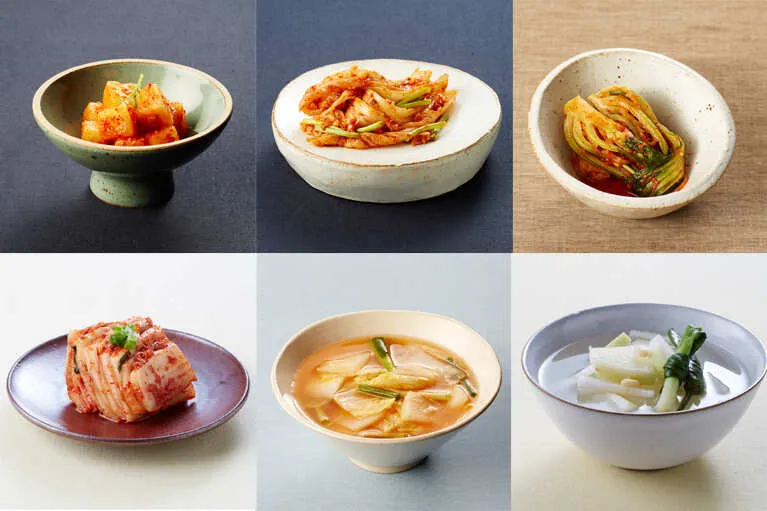 Photo: 국립국어원, CC BY-SA 2.0 kr, via Wikimedia Commons
Kimchi is served as a banchan (side dish) at virtually every Korean meal, consumed fresh or aged. It is also used as an ingredient in kimchi jjigae (stew), kimchi fried rice, kimchi pancakes (kimchijeon), and dumplings (mandu). Cooking kimchi substantially reduces or eliminates viable probiotic bacteria, since cooking temperatures kill most LAB, so culinary uses primarily deliver fiber, vitamins, and flavor rather than live cultures.
Freshly prepared kimchi is less sour and more crunchy; kimchi ripened for several weeks in the refrigerator is more acidic, and live-culture counts peak around optimal ripeness before declining. Very long-fermented kimchi (mukeunji, aged for many months or longer) is highly acidic and used primarily for cooking.
Vegan kimchi substitutes fish sauce and shrimp with fermented soy sauce, miso, or seaweed-based umami sources; in one study its bacterial community closely mirrored that of non-vegan kimchi through fermentation (Zabat et al., 2018).
Kimchi is one of the fermented foods discussed in the gut-health superfoods guide.
Safety, Interactions, and Contraindications
The main cautions with kimchi are its sodium, its variable histamine and tyramine content, and a gastric cancer association in Korean case-control studies.
Sodium: The high sodium content of kimchi (about 500 mg per 100 g in the USDA sample, more in saltier recipes) may be problematic for individuals with hypertension, heart failure, or chronic kidney disease who require sodium restriction. Consumption should be moderated and discussed with a clinician in these populations.
Gastric cancer association: A meta-analysis of Korean case-control studies associated high kimchi intake with higher gastric cancer risk (OR 2.21; 95% CI 1.29–3.77), alongside high salt intake (Woo et al., 2014). Case-control data cannot establish cause, and later reviewers describe the epidemiology as inconsistent, likely reflecting differences in sodium content, fermentation practice, and overall diet (Yang et al., 2026).
Histamine intolerance and MAOIs: Kimchi can contain histamine, tyramine, and other biogenic amines (putrescine, cadaverine) generated by microbial decarboxylase activity and carried in from fermented seafood ingredients (jeotgal, fish sauce). Levels vary widely between products; a review of published surveys found some kimchi with histamine and tyramine above the recommended limit of 100 mg/kg for each (Park et al., 2019). Individuals with histamine intolerance may experience flushing, headache, or gastrointestinal discomfort (Maintz & Novak, 2007). Because tyramine content is unlabeled and can be high in some products, people taking MAOIs should ask their prescriber about kimchi, given the risk of hypertensive crisis from tyramine-rich foods.
Immunocompromised individuals: Lactobacilli, the dominant bacteria in many fermented foods, rarely cause infections such as bacteremia and endocarditis, mostly in people with diabetes or weakened immunity who have added risk factors like prosthetic heart valves (Rossi et al., 2022). This is a risk from the live cultures themselves, separate from contamination by pathogens. Pasteurized kimchi carries few or no live cultures.
Iodine content: Versions containing fermented shrimp or dried seafood contribute dietary iodine, relevant for individuals with thyroid conditions requiring iodine restriction.
Goitrogen content: Some Brassica glucosinolates break down to goitrin and thiocyanate, which can reduce thyroid iodine uptake at high intakes (Felker et al., 2016); no data were found on how fermentation changes this for kimchi. Individuals with thyroid conditions should consult their healthcare provider.
This information is educational and does not constitute medical advice. Consult a qualified healthcare provider before making dietary changes, particularly if you have an underlying health condition.
Frequently Asked Questions
Is kimchi good for you?
Kimchi is a low-calorie fermented vegetable that supplies fiber, vitamin K and, when unpasteurized, live lactic acid bacteria. Its health effects are not well established: small, short trials have reported changes in fasting glucose and body weight, and one found no immune effect. Its high sodium is the main drawback, especially for people who need to limit salt.
What probiotics are in kimchi?
Kimchi is fermented by lactic acid bacteria that occur naturally on the vegetables and seasonings, mainly Leuconostoc, Lactobacillus and Weissella species. Lactobacillus sakei, Leuconostoc gasicomitatum and Weissella koreensis dominated later stages in one storage study, and L. plantarum and L. brevis are also isolated. Counts peak around optimal ripeness and fall as kimchi over-ferments.
How much kimchi should I eat a day?
There is no established daily amount. Trials have used about 100 g a day in one study and compared 210 g with 15 g a day in another, but they were short and small. Each 100 g carries roughly 500 mg of sodium in USDA data, so people on sodium restriction or MAOIs should talk to a clinician about portions.
What is kimchi made of?
The most common kimchi, baechu-kimchi, is napa cabbage salted and then coated with garlic, ginger, gochugaru (Korean red pepper flakes), and fish sauce or fermented shrimp. Other versions use radish (kkakdugi), cucumber (oi-sobagi) or green onions. Vegan kimchi replaces the seafood with soy sauce, miso or seaweed, and in one study kept a similar bacterial community.
Does kimchi have a lot of fiber?
Kimchi has a moderate amount of fiber for its calories: about 1.6 g per 100 g in USDA data, at 15 kcal. That is less than canned sauerkraut, at about 2.9 g per 100 g. A typical side-dish portion contributes some fiber but would not on its own cover a large share of daily needs.
Is kimchi or sauerkraut better for gut health?
No trial has compared them directly. Both are lacto-fermented cabbage with overlapping bacteria, and the human evidence for each is preliminary. Kimchi was part of the fermented-food diet in a ten-week study that raised microbiome diversity, while a sauerkraut trial in 87 adults found the microbiome largely resilient. Choosing an unpasteurized product matters more than choosing between them.
References
Show all 19 referencesShow fewer
- Wastyk, H. C., et al. (2021). Gut-microbiota-targeted diets modulate human immune status. Cell, 184(16), 4137–4153.
- Park, K. Y., et al. (2014). Health benefits of kimchi (Korean fermented vegetables) as a probiotic food. Journal of Medicinal Food, 17(1), 6–20.
- Lee, H., et al. (2014). Immunomodulatory effects of kimchi in Chinese healthy college students: a randomized controlled trial. Clinical Nutrition Research, 3(2), 98–105.
- Kim, E. K., et al. (2011). Fermented kimchi reduces body weight and improves metabolic parameters in overweight and obese patients. Nutrition Research, 31(6), 436–443.
- Choi, I. H., et al. (2013). Kimchi, a fermented vegetable, improves serum lipid profiles in healthy young adults. Journal of Medicinal Food, 16(3), 223–229.
- Kim, J., et al. (2025). Effect of fermentation conditions on functional quality of napa cabbage kimchi. Foods, 14(16), 2826.
- Jung, J. Y., et al. (2014). Kimchi microflora: history, current status, and perspectives for industrial kimchi production. Applied Microbiology and Biotechnology, 98, 2385–2393.
- Jeong, S. H., et al. (2013). Microbial succession and metabolite changes during long-term storage of kimchi. Journal of Food Science, 78(5), M763–M769.
- Park, Y. K., et al. (2019). Occurrence and reduction of biogenic amines in kimchi and Korean fermented seafood products. Foods, 8(11), 547.
- Woo, H. D., et al. (2014). Diet and cancer risk in the Korean population: a meta-analysis. Asian Pacific Journal of Cancer Prevention, 15(19), 8509–8519.
- Yang, J. Y., et al. (2026). Kimchi friend or foe: preserving cultural foods developed pre-refrigeration. Preventive Medicine Reports, 61, 103357.
- USDA FoodData Central. Cabbage, kimchi (FDC ID 170392).
- Kim, S. Y., et al. (2022). Effect of fermentation stages on glucosinolate profiles in kimchi. Food Chemistry: X, 15, 100417.
- Jang, H. J., et al. (2020). Immune-stimulating effect of Lactobacillus plantarum Ln1 isolated from the traditional Korean fermented food, kimchi. Journal of Microbiology and Biotechnology, 30(6), 926–929.
- Zabat, M. A., et al. (2018). The impact of vegan production on the kimchi microbiome. Food Microbiology, 74, 171–178.
- Maintz, L., & Novak, N. (2007). Histamine and histamine intolerance. American Journal of Clinical Nutrition, 85(5), 1185–1196.
- Felker, P., et al. (2016). Concentrations of thiocyanate and goitrin in human plasma, their precursor concentrations in brassica vegetables, and associated potential risk for hypothyroidism. Nutrition Reviews, 74(4), 248–258.
- Rossi, F., et al. (2022). Lactobacilli infection case reports in the last three years and safety implications. Nutrients, 14(6), 1178.
- USDA FoodData Central. Sauerkraut, canned, solids and liquids (FDC ID 169279).
Related content
More in Fermented Foods
- Kefir
Kefir vs yogurt: how the fermented milk drink differs in microbes, protein and calcium, and what human studies show about kefir benefits and side effects.
- Kombucha
Is kombucha good for you? What the fermented tea contains (sugar, caffeine, alcohol, live microbes) and what the few human trials show about its benefits.
- Miso
Is miso soup healthy? Miso, a Japanese koji-fermented soy paste, adds protein, isoflavones and umami but heavy sodium; what studies show for heart and gut.
- Sauerkraut
Is sauerkraut good for you? Fermented cabbage supplies fiber, vitamin C and, if raw, live bacteria, but plenty of sodium; what the human studies show.
- Tempeh
Tempeh vs tofu: what tempeh is, how this Rhizopus-fermented soy cake compares on protein, calcium and iron, and what studies show about its benefits.
- Yogurt
Is yogurt good for you? Nutrition of plain and Greek yogurt, what live cultures do for lactose digestion, and the evidence on gut, bone and diabetes risk.



Curated by Superfoods Advisor Editors·Last updated