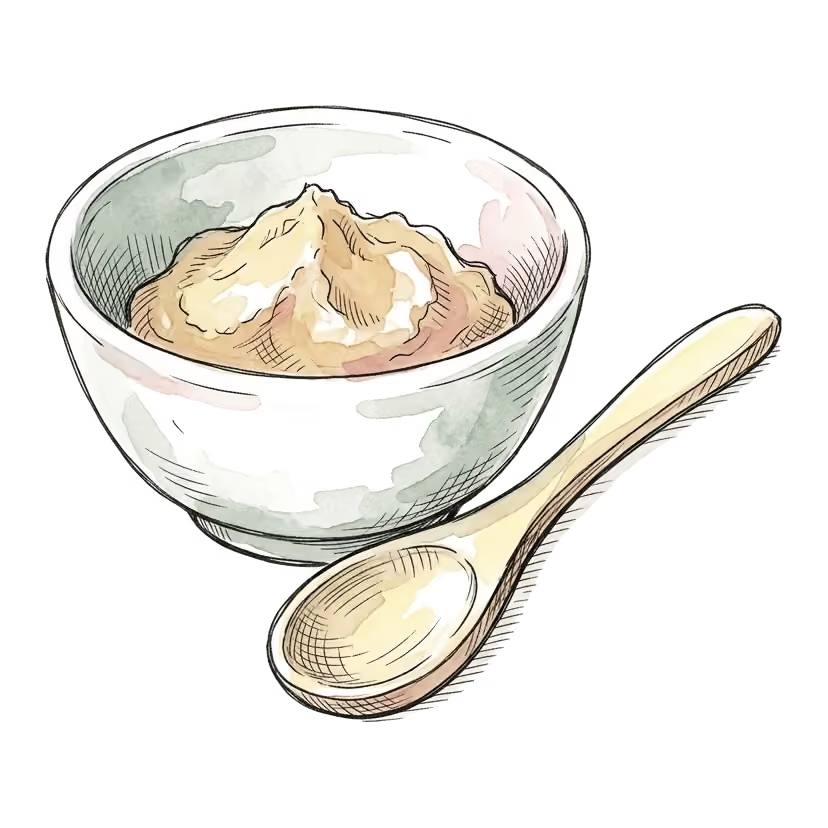
Miso
By Superfoods Advisor Editors·July 3, 2026
Is miso soup healthy? Miso, a Japanese koji-fermented soy paste, adds protein, isoflavones and umami but heavy sodium; what studies show for heart and gut.
Miso is a Japanese fermented paste of soybeans, salt and koji, the mold Aspergillus oryzae, often with rice or barley. Miso soup made with it is low in calories and supplies some protein, isoflavones and umami flavor, but a tablespoon of miso carries about 630 mg of sodium, and evidence for heart or gut benefits is preliminary.
Soybean fermentation is generally thought to have reached Japan from China around the 7th to 8th centuries CE and evolved over subsequent centuries into the diverse family of miso varieties consumed today. The koji mold is grown on steamed rice or barley for 2–3 days, then mixed with cooked soybeans and salt, packed into fermentation vessels, and allowed to age anywhere from a few weeks to three years or more.
During fermentation, A. oryzae secretes amylases, proteases, and lipases that break down starches, proteins, and fats into simpler, more bioavailable compounds: free amino acids (including abundant glutamate, which imparts the characteristic umami flavor), fatty acids, and simple sugars. In this second stage, salt-tolerant bacteria and yeasts take over: the halophilic lactic acid bacterium Tetragenococcus halophilus and the yeast Zygosaccharomyces rouxii are characteristic, and they add to flavor complexity while generating organic acids that lower the pH (Allwood et al., 2021; Santos et al., 2025).
Evidence at a glance
Microbial Profile and Active Compounds
The primary microorganism in miso production is the filamentous mold Aspergillus oryzae (koji). Unlike kefir or kimchi, miso is a paste in which the enzymatic products of fermentation rather than live probiotic bacteria are most prominently documented. Depending on fermentation method and pasteurization status, viable bacteria and yeasts may be negligible (in pasteurized commercial products) or present in meaningful numbers (in unpasteurized artisanal miso).
Key bioactive compounds include:
- Free glutamic acid: released from soy protein by koji proteases; responsible for the intense umami taste (USDA lists about 1.9 g of total glutamic acid per 100 g, free and protein-bound combined; USDA FoodData Central)
- Isoflavones: genistein and daidzein from soybeans, partially converted by fermentation to aglycone forms, which a small human study found were absorbed faster and in greater amounts than the glucoside forms (Izumi et al., 2000) (daidzein → equol in individuals harboring equol-producing gut bacteria)
- Bioactive peptides: peptides released from soy protein hydrolysis; several identified in miso inhibited ACE in vitro and appeared in the blood of rats fed a miso extract (Nagao et al., 2024), though effects in humans are untested
- Vitamin K: miso supplies phylloquinone (K1); menaquinone-7 (K2) is characteristic of Bacillus-fermented natto (about 939 µg/100 g; Kamao et al., 2007), and koji-fermented miso has not been shown to be a comparable source
- GABA (gamma-aminobutyric acid): some lactic acid bacteria can make it from glutamate, but how much ends up in miso is not well documented; proposed anxiolytic effects have not been shown for miso in clinical trials
Nutritional Profile
Miso paste is dense in protein, fiber and manganese but extremely high in sodium, at about 3,730 mg per 100 g. Values per 100 g of miso paste, variety unspecified (USDA FoodData Central; isoflavones from the USDA Isoflavone Database, Release 2.1). Composition varies substantially by variety and producer:
| Nutrient | Amount | % DV |
|---|---|---|
| Energy | 198 kcal | — |
| Protein | 12.8 g | — |
| Total fat | 6 g | — |
| Carbohydrates | 25.4 g | — |
| Dietary fiber | 5.4 g | — |
| Sodium | 3,730 mg | 162% |
| Calcium | 57 mg | — |
| Iron | 2.5 mg | 14% |
| Manganese | 0.86 mg | 37% |
| Vitamin K (phylloquinone) | 29 µg | 24% |
| Isoflavones | ~41 mg (reported range ~3–100 mg) | — |
Red (aka) miso has higher protein content and longer aging; barley (mugi) miso has a more complex carbohydrate profile. Sodium content is extremely high — a bowl of miso soup made with 1 tablespoon (~17 g) of miso provides roughly 630 mg sodium (USDA FoodData Central).
Is Miso Soup Healthy?
Miso soup is low in calories and adds some protein, fiber and isoflavones, but its sodium is the main trade-off. One tablespoon of miso, a typical amount for a bowl, supplies about 630 mg of sodium, roughly 27% of the 2,300 mg Daily Value, before any salt from the broth.
The heart-health picture is unsettled. Several Japanese observational studies found no relationship between how often people eat miso soup and their blood pressure, and in salt-sensitive animals miso raised blood pressure less than the same amount of salt (Ito, 2020). These findings may reflect the traditional Japanese diet as a whole rather than miso itself.
Where sodium is a concern, white (shiro) miso is the lowest in sodium of the common varieties. Stirring the paste into hot but not boiling broth preserves any live cultures in unpasteurized miso. People with hypertension, heart failure or kidney disease should count miso soup in their daily sodium. For other foods studied for heart health, see the heart health superfoods guide.
Evidence for Purported Benefits
Evidence for miso’s own health effects is preliminary. It comes mainly from Japanese observational studies, soy-intake research that is not specific to miso, and animal work.
Cardiovascular Health
Evidence:Preliminary Observational data plus animal work; dietary-pattern confounding limits causal inference.
Japanese epidemiological studies have generated a paradox: Japan has some of the world’s highest miso consumption alongside low rates of cardiovascular disease, yet miso’s high sodium content would predict increased hypertension risk. A 2020 review by Ito (Environmental Health and Preventive Medicine) notes that several observational studies have found no relationship between how often people eat miso soup and their blood pressure or hypertension incidence, and that in salt-sensitive animal models miso raised blood pressure less than an equivalent amount of salt, possibly by damping sympathetic nerve activity. The mechanism has not been worked out in humans. However, this association may reflect confounding from overall dietary pattern (traditional Japanese diet) rather than miso specifically.
Gut Health and Microbiome
Evidence:Lab & animal only Mechanistic and animal data; no controlled human trials of miso itself.
Unpasteurized miso contains live LAB that may confer probiotic benefits, but controlled human trials of miso itself on stool habits or the gut microbiome are lacking; most of the supporting work comes from animal studies and research on other fermented soy products.
Isoflavone Effects and Hormonal Activity
Evidence:Preliminary Observational soy-intake studies, inconsistent across populations; not miso-specific.
Soy isoflavones (genistein, daidzein) are phytoestrogens that weakly bind estrogen receptors. Epidemiological studies have associated higher soy intake with modestly lower breast cancer incidence, though the evidence base is observational and inconsistent across populations. A meta-analysis of 18 studies by Trock et al. (Journal of the National Cancer Institute, 2006) found that high soy intake was modestly associated with lower breast cancer risk overall (OR 0.86). The association was somewhat stronger in premenopausal women and was not statistically significant among women in Asian countries, and the authors cautioned about confounding and exposure misclassification.
Bone Health
Evidence:Insufficient No miso-specific data, and miso is not an established K2 source; trials of isolated MK-7 disagree.
Vitamin K2 (MK-7) is studied for bone health, though miso is not an established source of it (see above). A three-year RCT by Knapen et al. (Osteoporosis International, 2013) in 244 post-menopausal women — studying isolated MK-7 supplementation rather than miso specifically — found that 180 µg/day MK-7 slowed the age-related decline in bone mineral density at the lumbar spine and femoral neck and favorably affected bone strength indices. The relevance to miso consumption depends on total K2 intake and bioavailability from the paste matrix. A one-year trial of 360 µg/day MK-7 from natto capsules in 334 early-postmenopausal women, by contrast, found no effect on bone loss (Emaus et al., 2010).
Typical Use and Preparation
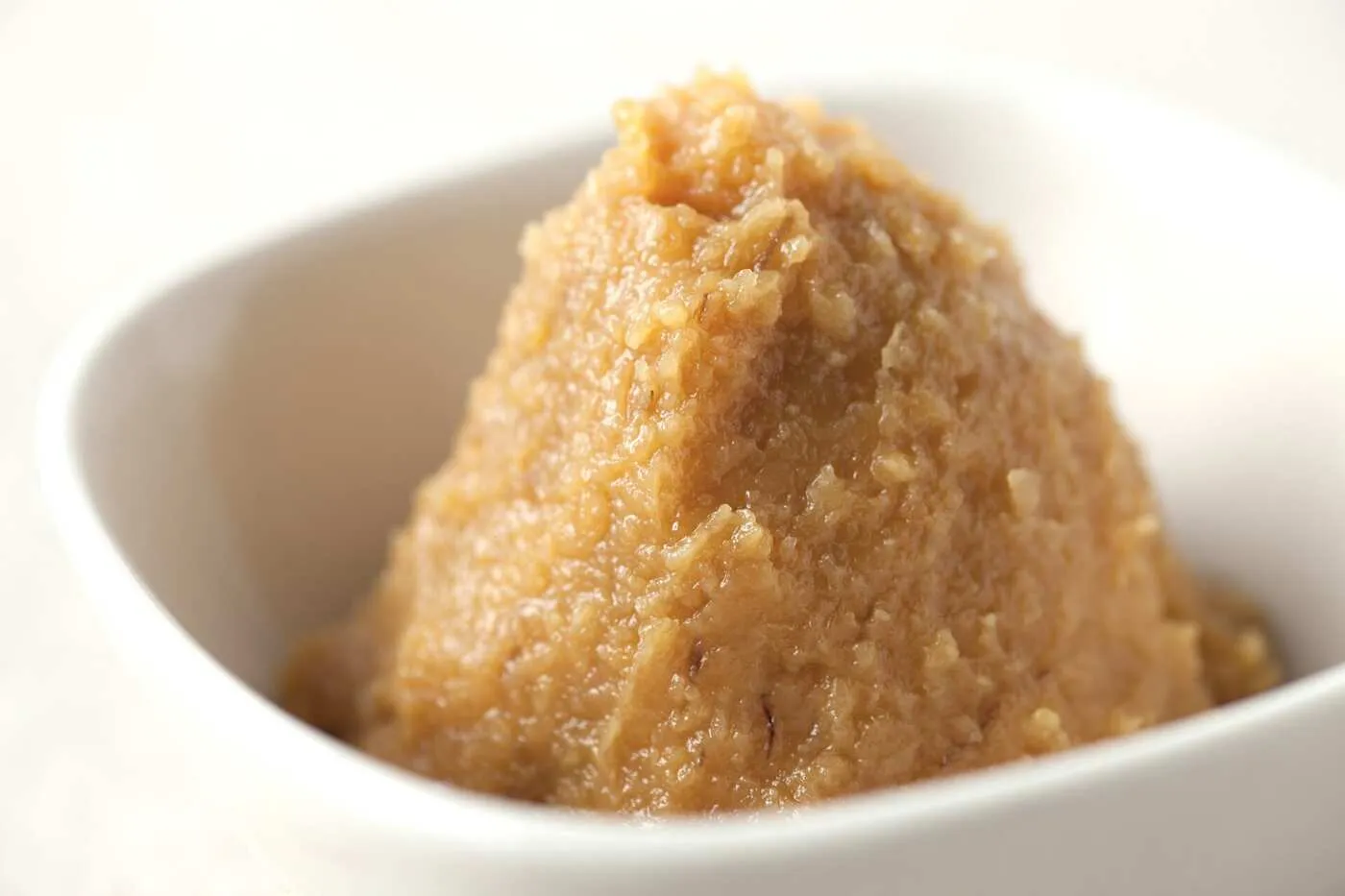 Photo: https://publicdomainq.net/miso-0018849/, CC0, via Wikimedia Commons
Miso is used primarily as a seasoning in soups, marinades, glazes, dressings, and dipping sauces. Miso soup is a daily staple in Japan, typically prepared by dissolving a small quantity of miso paste in dashi broth and adding tofu, wakame, and green onions. Boiling destroys live LAB — to preserve any probiotic activity, miso should be stirred into warm (not boiling) liquid after removing from heat.
Varieties differ considerably in flavor and intensity:
- Shiro (white) miso: short fermentation (1–3 months); mild, slightly sweet; highest sugar, lowest sodium of common varieties
- Aka (red) miso: long fermentation (1–3 years); strong, savory, salty; highest protein and umami
- Mugi (barley) miso: earthy, moderately aged; contains gluten from barley
Miso also appears in the gut-health guide, which places it among other fermented foods. Tempeh is a mold-fermented soy food eaten as a protein rather than a seasoning.
Safety, Interactions, and Contraindications
Miso’s main safety issue is sodium; tyramine, soy allergy, gluten in barley miso and soy’s interaction with thyroid medication are the other considerations.
Sodium: The principal safety concern with miso is very high sodium content. Individuals with hypertension, heart failure, chronic kidney disease, or sodium-restricted diets should use miso sparingly and account for it in total daily sodium calculations. The apparent paradox of high miso intake without hypertension in Japanese populations may not apply outside the context of the overall traditional Japanese dietary pattern.
MAOI interactions: Fermented soy products can contain tyramine produced by bacterial decarboxylase activity; a survey of commercial products found it in practically all fermented soy foods tested, with the highest and most variable levels in sufu, tamari and soybean paste (Toro-Funes et al., 2015). Individuals taking monoamine oxidase inhibitors (MAOIs, including certain antidepressants and the antibiotic linezolid) must strictly limit tyramine-containing foods due to the risk of severe hypertensive crisis. Miso should generally be avoided by patients on MAOIs.
Thyroid and goitrogens: Genistein inhibited thyroid peroxidase in vitro and in rats, although the rats’ thyroid hormone levels stayed normal; iodine deficiency increases soy’s antithyroid effects (Doerge & Sheehan, 2002). A review of 14 trials found little evidence that soy foods or isoflavones impair thyroid function in euthyroid, iodine-replete people, while noting that soy may reduce absorption of thyroid hormone medication (Messina & Redmond, 2006). Individuals with hypothyroidism or taking thyroid hormone replacement should discuss soy food intake with their endocrinologist.
Soy allergy: Miso is made from soybeans and should be avoided by individuals with IgE-mediated soy allergy. Fermentation partially breaks down soy proteins, but it has not been shown to make miso safe for people with soy allergy.
Gluten content: Barley (mugi) and mixed grain misos contain gluten and are not appropriate for individuals with celiac disease or non-celiac gluten sensitivity. Rice and soybean-only (hatcho) misos contain no gluten ingredients, but cross-contact is possible, so people with celiac disease should look for products labeled gluten-free.
Histamine: Fermented soybean pastes can also contain histamine and other biogenic amines, in amounts that vary widely between products (Toro-Funes et al., 2015). Individuals with histamine intolerance should exercise caution.
This information is educational and does not constitute medical advice. Consult a qualified healthcare provider before making dietary changes, particularly if you have an underlying health condition.
Frequently Asked Questions
Is miso made from soy?
Yes. Miso is made by fermenting cooked soybeans with salt and koji, the mold Aspergillus oryzae, which is usually grown on rice or barley first. Some varieties, such as hatcho miso, are made from soybeans alone. Because it is a soy food, miso contains soy proteins and isoflavones and is not suitable for people with a soy allergy.
Is miso soup gluten free?
Not always. Barley (mugi) and mixed-grain misos contain gluten and are unsuitable for people with celiac disease. Rice and soybean-only misos contain no gluten ingredients, but cross-contact during production is possible, so people with celiac disease should look for a product labeled gluten-free. Check the broth and any added ingredients as well.
Is miso soup vegan?
Miso paste is usually plant-based, made from soybeans, grains, salt and koji. Miso soup may not be: traditional dashi broth is commonly described as made with dried bonito (fish) flakes, while vegan versions use kombu (seaweed) or mushroom dashi. Instant soups and flavored pastes vary, and some add fish stock or soy sauce, so check the product label, or ask how a restaurant’s broth was made.
How much miso per cup of water?
Recipes commonly use about 1 tablespoon (17 g) of miso per cup (240 mL) of dashi or water, adjusted to taste. That amount adds roughly 630 mg of sodium. Dissolve the paste in a little warm broth first, then stir it in after the pot comes off the heat, since boiling kills any live cultures.
Does miso have probiotics?
Only unpasteurized miso carries meaningful numbers of live bacteria and yeasts, such as the salt-tolerant Tetragenococcus halophilus; pasteurized commercial miso has few or none. Miso’s documented value lies more in the enzymatic products of fermentation, such as free glutamate and isoflavone aglycones. Controlled human trials of miso on the gut microbiome have not been done.
References
Show all 14 referencesShow fewer
- Ito, K. (2020). Review of the health benefits of habitual consumption of miso soup: focus on the effects on sympathetic nerve activity, blood pressure, and heart rate. Environmental Health and Preventive Medicine, 25(1), 45.
- Trock, B. J., et al. (2006). Meta-analysis of soy intake and breast cancer risk. Journal of the National Cancer Institute, 98(7), 459–471.
- Knapen, M. H. J., et al. (2013). Three-year low-dose menaquinone-7 supplementation helps decrease bone loss in healthy postmenopausal women. Osteoporosis International, 24(9), 2499–2507.
- Messina, M., & Redmond, G. (2006). Effects of soy protein and soybean isoflavones on thyroid function in healthy adults and hypothyroid patients: a review of the relevant literature. Thyroid, 16(3), 249–258.
- Doerge, D. R., & Sheehan, D. M. (2002). Goitrogenic and estrogenic activity of soy isoflavones. Environmental Health Perspectives, 110(Suppl 3), 349–353.
- U.S. Department of Agriculture, Agricultural Research Service. FoodData Central: Miso (FDC ID 172442).
- Bhagwat, S., & Haytowitz, D. B. (2015). USDA Database for the Isoflavone Content of Selected Foods, Release 2.1. USDA Agricultural Research Service.
- Kamao, M., et al. (2007). Vitamin K content of foods and dietary vitamin K intake in Japanese young women. Journal of Nutritional Science and Vitaminology, 53(6), 464–470.
- Allwood, J. G., Wakeling, L. T., & Bean, D. C. (2021). Fermentation and the microbial community of Japanese koji and miso: A review. Journal of Food Science, 86(6), 2194–2207.
- Santos, R., et al. (2025). Fermentation process evaluation of a sustainable and innovative miso made from alternative legumes. Foods, 14(23), 4131.
- Toro-Funes, N., et al. (2015). Biologically active amines in fermented and non-fermented commercial soybean products from the Spanish market. Food Chemistry, 173, 1119–1124.
- Izumi, T., et al. (2000). Soy isoflavone aglycones are absorbed faster and in higher amounts than their glucosides in humans. Journal of Nutrition, 130(7), 1695–1699.
- Nagao, A., et al. (2024). Presence of modified peptides with high bioavailability and angiotensin-converting enzyme inhibitory activity in Japanese fermented soybean paste (miso). Journal of Agricultural and Food Chemistry, 72(34), 18942–18956.
- Emaus, N., et al. (2010). Vitamin K2 supplementation does not influence bone loss in early menopausal women: a randomised double-blind placebo-controlled trial. Osteoporosis International, 21(10), 1731–1740.
Related content
More in Fermented Foods
- Kefir
Kefir vs yogurt: how the fermented milk drink differs in microbes, protein and calcium, and what human studies show about kefir benefits and side effects.
- Kimchi
Is kimchi good for you? Korean fermented cabbage brings fiber, vitamin K and live cultures but a lot of sodium; what the limited human trials show.
- Kombucha
Is kombucha good for you? What the fermented tea contains (sugar, caffeine, alcohol, live microbes) and what the few human trials show about its benefits.
- Sauerkraut
Is sauerkraut good for you? Fermented cabbage supplies fiber, vitamin C and, if raw, live bacteria, but plenty of sodium; what the human studies show.
- Tempeh
Tempeh vs tofu: what tempeh is, how this Rhizopus-fermented soy cake compares on protein, calcium and iron, and what studies show about its benefits.
- Yogurt
Is yogurt good for you? Nutrition of plain and Greek yogurt, what live cultures do for lactose digestion, and the evidence on gut, bone and diabetes risk.

Curated by Superfoods Advisor Editors·Last updated