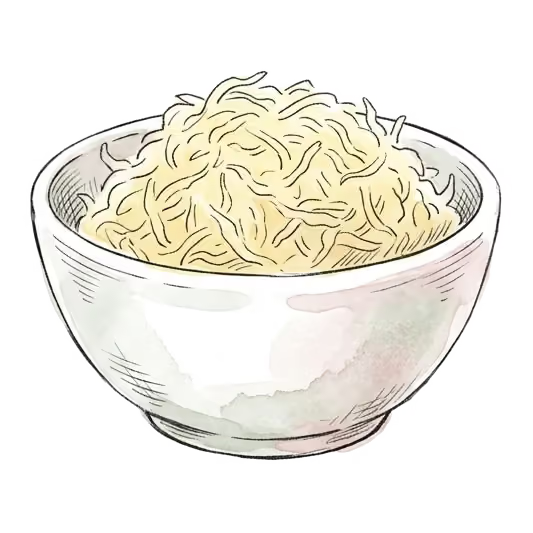
Sauerkraut
By Superfoods Advisor Editors·July 3, 2026
Is sauerkraut good for you? Fermented cabbage supplies fiber, vitamin C and, if raw, live bacteria, but plenty of sodium; what the human studies show.
Sauerkraut (German for “sour cabbage”; also choucroute) is shredded cabbage (Brassica oleracea var. capitata) fermented in its own brine by lactic acid bacteria. It is low in calories and provides fiber and vitamin C, and raw sauerkraut carries live bacteria, but it is high in sodium and human evidence for health benefits is preliminary.
Sauerkraut is one of the oldest and most widespread fermented vegetable preparations. Salting vegetables to preserve them is an ancient practice in both East Asia and Europe, though the precise origins of sauerkraut itself are poorly documented. In the 18th century, European navies, most famously on James Cook’s voyages, carried sauerkraut on long voyages as a vitamin C source against scurvy.
Preparation is disarmingly simple: shredded fresh cabbage (Brassica oleracea var. capitata) is combined with 2–3% salt by weight, massaged until it releases enough moisture to submerge under its own brine, packed tightly into a clean vessel, and kept at room temperature away from air for one to six weeks. No starter culture is required — lactic acid bacteria present in low numbers on fresh cabbage colonize the brine and drive fermentation. The progressive acidification, from near neutral to a pH of roughly 3.1–3.8 in finished commercial products (Choińska et al., 2025), preserves the cabbage and produces the characteristic tangy flavor.
Evidence at a glance
Microbial Profile and Active Compounds
Culture-based studies describe a three-phase microbial succession, summarized below. A 2018 sequencing study of a commercial ferment found the community established within days and stayed stable through packaging (Zabat et al., 2018), so the phases overlap more than the outline suggests:
-
Phase 1 (days 1–3): Heterofermentative bacteria including Leuconostoc mesenteroides and Weissella species dominate. They produce lactic acid, acetic acid, and carbon dioxide, rapidly lowering pH and creating anaerobic conditions that outcompete spoilage organisms.
-
Phase 2 (days 3–14): Lactobacillus brevis, Lactobacillus plantarum, and Pediococcus cerevisiae proliferate as pH drops below 4.5. These are more acid-tolerant hetero- and homofermentative species.
-
Phase 3 (days 14+): Lactobacillus plantarum and Lactobacillus brevis dominate the mature product. At refrigerator temperatures, fermentation slows but does not completely stop.
Published counts of viable LAB in sauerkraut range widely, from about 10³ to 10⁸ CFU/g (Rezac et al., 2018). Commercial pasteurized sauerkraut (canned or cooked) contains negligible or no live bacteria. Consumers seeking live cultures must select raw, unpasteurized sauerkraut sold under refrigeration.
Key bioactive compounds include:
- Lactic acid: primary organic acid; lowers brine pH and inhibits spoilage organisms
- Vitamin C: carried over from the raw cabbage rather than made by the bacteria; USDA lists about 15 mg/100 g for canned sauerkraut versus about 37 mg/100 g for raw cabbage (USDA FoodData Central)
- Vitamin K2 (menaquinones): data specific to sauerkraut are sparse, and MK-7 content has not been shown in meaningful amounts
- Glucosinolate breakdown products: cabbage glucosinolates are almost fully broken down within the first week of fermentation, yielding ascorbigen (the most abundant), indole-3-carbinol, and isothiocyanates; indole-3-carbinol declines during storage (Palani et al., 2016; Ciska et al., 2021); the cruciferous vegetables and sulforaphane review covers what these compounds do in fresh Brassica vegetables
- Biogenic amines: histamine, tyramine (safety consideration; see below)
Nutritional Profile
Sauerkraut is low in calories and a modest source of fiber and vitamin C, but canned sauerkraut is high in sodium at about 661 mg per 100 g. Values per 100 g of canned sauerkraut, solids and liquids (USDA FoodData Central); brands vary, especially in sodium:
| Nutrient | Amount | % DV |
|---|---|---|
| Energy | 19 kcal | — |
| Protein | 0.9 g | — |
| Total fat | 0.1 g | — |
| Carbohydrates | 4.3 g | — |
| Dietary fiber | 2.9 g | — |
| Sodium | 661 mg | 29% |
| Vitamin C | 14.7 mg | 16% |
| Vitamin K1 | 13 µg | 11% |
| Folate | 24 µg | 6% |
| Probiotics | ~10³–10⁸ CFU/g (unpasteurized only) | — |
The low calorie density and fiber content make sauerkraut a potentially useful adjunct to weight management strategies, though no clinical trials have specifically studied this application.
Evidence for Purported Benefits
Human evidence for sauerkraut is preliminary: one crossover trial in 87 adults and one case-control study, with the rest coming from laboratory work.
Gut Microbiome and Digestive Health
Evidence:Preliminary One crossover trial in 87 adults showed few microbiome changes; other support is laboratory work.
In laboratory tests, some Lactobacillus plantarum strains isolated from Chinese sauerkraut (two of seven in one study) survived acid at pH 2.0 and tolerated bile salts and pancreatin (Yu et al., 2013). In a crossover trial in 87 healthy adults (Schropp et al., 2025), four weeks of daily fresh or pasteurized sauerkraut changed the abundance of a few individual bacterial species, but overall gut microbiome composition proved largely resilient; only the pasteurized arm raised serum short-chain fatty acids. Rigorous human RCT data specific to sauerkraut are sparse compared to studies on yogurt and commercial probiotic supplements.
Immune Function
Evidence:Lab & animal only In vitro work on L. plantarum strains; no sauerkraut trials, and probiotic-supplement reviews don’t transfer directly.
Lactobacillus plantarum is among the most extensively studied LAB species for immune modulation. Multiple in vitro studies demonstrate its ability to increase IL-10 production, modulate Th1/Th2 balance, and enhance gut barrier integrity in cell culture models. Translation to clinical outcomes from sauerkraut specifically remains unproven. A 2022 Cochrane review of probiotic supplements in general (mixed strains, not L. plantarum specifically) found low-certainty evidence that they reduce the number of acute upper respiratory infections (Zhao et al., 2022); sauerkraut-specific data are not available.
Vitamin K2 and Bone Health
Evidence:Insufficient No direct evidence for sauerkraut; MK-7 supplement trials don’t apply to it.
Sauerkraut is sometimes promoted as a vitamin K2 (menaquinone) source because vitamin K is needed to activate osteocalcin, a bone matrix protein that binds calcium. In a three-year trial in 244 postmenopausal women, 180 µg/day of supplemental MK-7 slowed the age-related decline in bone mineral density at the lumbar spine and femoral neck, but not the total hip (Knapen et al., 2013). MK-7 is characteristic of natto; it has not been shown in meaningful amounts in sauerkraut, so these supplement results do not transfer to it.
Cancer-Preventive Potential
Evidence:Preliminary One case-control study that did not separate sauerkraut from cabbage, plus in vitro data.
A case-control study of Polish-born women living in the US found that higher consumption of raw or briefly cooked cabbage and sauerkraut, in adolescence or adulthood, was associated with lower breast cancer risk (Pathak et al., 2021). The study did not separate sauerkraut from fresh cabbage, and recall bias and confounding (overall diet quality, lifestyle) prevent causal inference. In vitro studies on indole-3-carbinol and isothiocyanates from Brassica vegetables suggest anti-proliferative activity; in sauerkraut these compounds form from glucosinolates during fermentation, and their levels vary with the cabbage and storage time.
Typical Use and Preparation
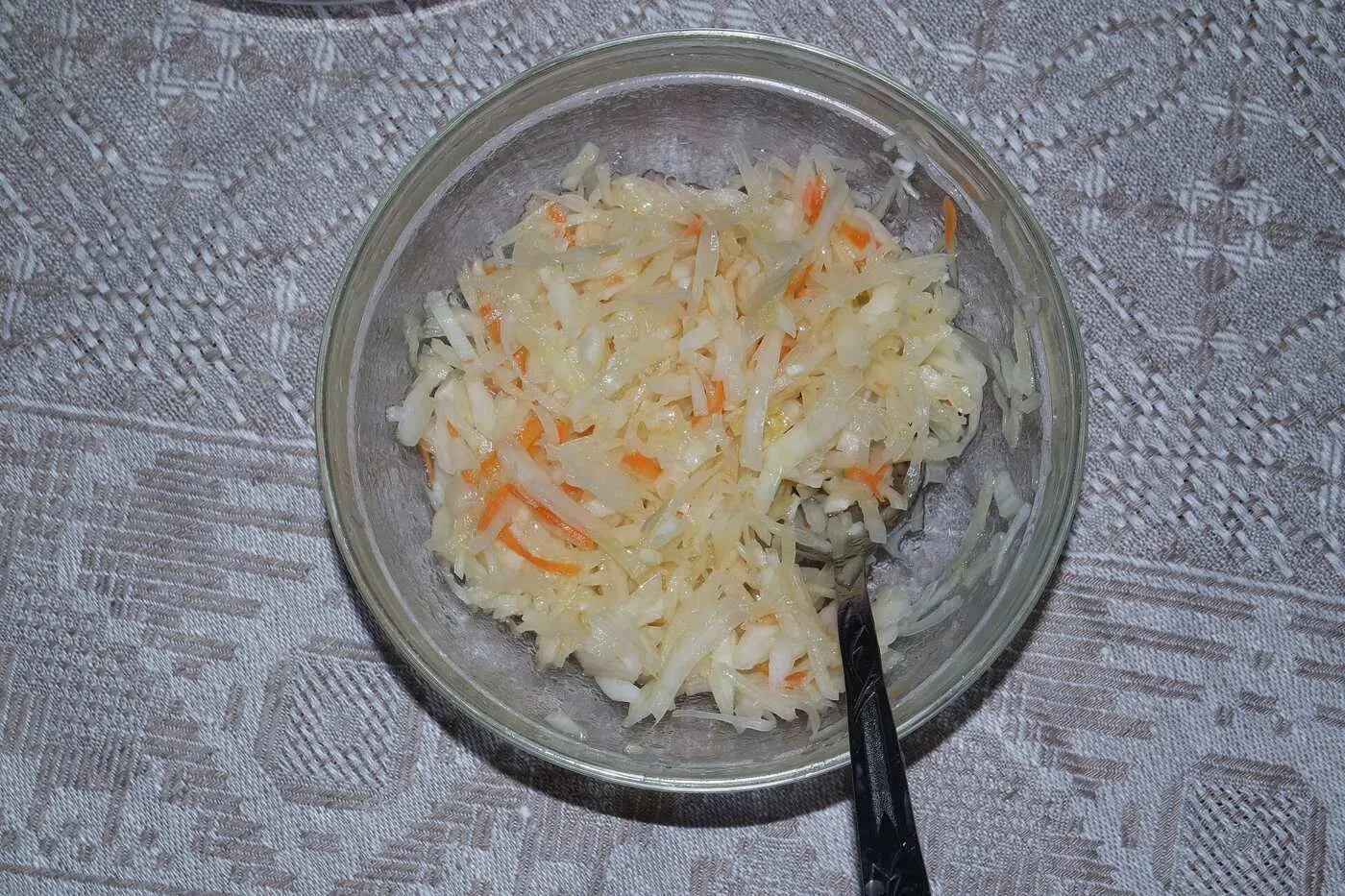 Photo: Eugene Zelenko, CC BY-SA 4.0, via Wikimedia Commons
Sauerkraut is consumed as a condiment, side dish, or topping — classically accompanying pork, sausages, and game meats in Central European cuisine, and used in dishes such as choucroute garnie (France) and bigos (Poland). It is also used as a topping on hot dogs, sandwiches, and Reuben sandwiches in American cuisine.
Heating destroys live cultures: sauerkraut added to hot dishes (choucroute garnie, soups) provides fiber, vitamin C, and flavor but not viable bacteria. For live cultures, consume unpasteurized sauerkraut cold or at room temperature as a condiment.
Home preparation is straightforward and cost-effective. Key steps: ensure cabbage is submerged below brine at all times, and ferment at 70–75°F (21–24°C), the USDA-recommended range (National Center for Home Food Preservation). Vessels should be covered but allow CO₂ to escape.
Superfoods for gut health puts sauerkraut in context with kefir, kimchi, and other fermented foods. The kimchi entry compares the two fermented cabbages side by side.
Safety, Interactions, and Contraindications
The main cautions with sauerkraut are its sodium, its histamine and tyramine content, live cultures in severe immunosuppression, and cabbage goitrogens in people with low iodine intake.
Sodium: USDA data list about 660 mg sodium per 100 g of canned sauerkraut (USDA FoodData Central) — a meaningful contribution to daily sodium intake. Individuals with hypertension, heart failure, or chronic kidney disease requiring sodium restriction should limit sauerkraut and account for its sodium in their daily totals. Low-sodium sauerkraut (produced with reduced salt) exists but may have altered fermentation quality.
Histamine and biogenic amines: Sauerkraut can be a substantial dietary source of histamine; in 14 commercial Polish samples, histamine ranged from undetectable to about 96 mg/L (Choińska et al., 2025). Individuals with histamine intolerance may experience flushing, headache, urticaria, or gastrointestinal symptoms (Maintz & Novak, 2007). This is also a consideration for individuals taking MAOIs: one analysis found 7.75 mg of tyramine in a 250 g serving of sauerkraut, above the 6 mg-per-serving level the authors classed as dangerous (Walker et al., 1996), and tyramine can precipitate a hypertensive crisis when combined with MAOIs (phenelzine, tranylcypromine, selegiline) and related drugs (linezolid). Avoidance is typically recommended for people taking phenelzine or tranylcypromine. Selegiline is a partial exception: the 6 mg/24 h transdermal patch raised tyramine sensitivity more than 20 times less than tranylcypromine, and the authors concluded it can be used without dietary tyramine restriction, while a higher 12 mg/24 h dose raised sensitivity further (Azzaro et al., 2006); oral selegiline at 10 mg/day had a similar, modest effect in the same study. Anyone on an MAOI should follow the dietary advice given for their specific drug and dose.
Immunocompromised individuals: Lactobacilli, the dominant bacteria in fermented foods and many probiotics, rarely cause infections such as bacteremia or endocarditis, mostly in diabetic or immunocompromised people with other risk factors such as prosthetic heart valves (Rossi et al., 2022). People who are severely immunocompromised may wish to ask their care team about raw fermented foods; pasteurized sauerkraut has no live cultures.
Thyroid considerations: Cabbage glucosinolates can break down into goitrin and thiocyanate, which can interfere with thyroid iodine uptake and hormone synthesis. Very high intakes of cruciferous vegetables caused hypothyroidism in animals, but in humans thiocyanate exposure does not appear to raise hypothyroidism risk unless iodine intake is also low (Linus Pauling Institute). Individuals with hypothyroidism or iodine deficiency may wish to discuss intake with their clinician.
This information is educational and does not constitute medical advice. Consult a qualified healthcare provider before making dietary changes, particularly if you have an underlying health condition.
Frequently Asked Questions
Is sauerkraut good for you?
Sauerkraut is a low-calorie food that supplies fiber, vitamin C and, when raw, live lactic acid bacteria. Its health effects are not well established: a crossover trial in 87 adults found the gut microbiome largely unchanged after four weeks, and other support comes from laboratory and case-control studies. Its high sodium is the main drawback for people who limit salt.
What is the healthiest way to eat sauerkraut?
For live cultures, eat raw, unpasteurized sauerkraut sold under refrigeration, served cold or at room temperature as a condiment or side. Heating it in soups or braises kills the bacteria, although the fiber and some vitamin C remain. Choosing a lower-sodium product, or a smaller portion, helps for anyone watching salt intake.
How much sauerkraut should you eat a day?
No official daily amount exists. The main limit is sodium: canned sauerkraut carries about 661 mg per 100 g in USDA data, close to 30% of the Daily Value. The one microbiome trial used a daily serving for four weeks but did not set a recommended dose. People with hypertension, kidney disease or on MAOIs should ask a clinician about portions.
Does sauerkraut need to be refrigerated?
Raw, unpasteurized sauerkraut is sold and stored refrigerated, which slows fermentation without stopping it entirely, so the flavor keeps getting more sour over time. Canned and pasteurized sauerkraut is heat-treated and contains negligible live bacteria. Home ferments are usually moved to the refrigerator once they reach the sourness you want.
What is sauerkraut made of?
Sauerkraut is made from just shredded cabbage and salt, about 2–3% salt by weight. The salt draws water out of the cabbage to form a brine, and lactic acid bacteria already present on the leaves ferment it over one to six weeks. No starter culture is needed. The USDA-recommended fermentation range is 70–75°F (21–24°C).
Is sauerkraut good for gut health?
The evidence is preliminary. In the largest trial, 87 healthy adults ate fresh or pasteurized sauerkraut daily for four weeks; a few bacterial species changed, but overall microbiome composition proved largely resilient, and only the pasteurized arm raised serum short-chain fatty acids. Laboratory work shows some sauerkraut strains survive acid and bile, which does not confirm a benefit in people.
References
Show all 18 referencesShow fewer
- Zabat, M. A., et al. (2018). Microbial community analysis of sauerkraut fermentation reveals a stable and rapidly established community. Foods, 7(5), e77.
- Knapen, M. H. J., et al. (2013). Three-year low-dose menaquinone-7 supplementation helps decrease bone loss in healthy postmenopausal women. Osteoporosis International, 24(9), 2499–2507.
- Schropp, N., Bauer, A., Stanislas, V., et al. (2025). The impact of regular sauerkraut consumption on the human gut microbiota: a crossover intervention trial. Microbiome, 13(1), 52.
- Maintz, L., & Novak, N. (2007). Histamine and histamine intolerance. American Journal of Clinical Nutrition, 85(5), 1185–1196.
- Rezac, S., Kok, C. R., Heermann, M., & Hutkins, R. (2018). Fermented foods as a dietary source of live organisms. Frontiers in Microbiology, 9, 1785.
- Choińska, R., et al. (2025). Microbiota and quality indexes of commercial sauerkraut and fermented cucumbers. Environmental Microbiology Reports, 17(6), e70250.
- Walker, S. E., Shulman, K. I., Tailor, S. A., & Gardner, D. (1996). Tyramine content of previously restricted foods in monoamine oxidase inhibitor diets. Journal of Clinical Psychopharmacology, 16(5), 383–388.
- USDA FoodData Central. Sauerkraut, canned, solids and liquids (FDC 169279).
- National Center for Home Food Preservation. Sauerkraut.
- USDA FoodData Central. Cabbage, raw (FDC 169975).
- Pathak, D. R., et al. (2021). Cabbage and sauerkraut consumption in adolescence and adulthood and breast cancer risk among US-resident Polish migrant women. International Journal of Environmental Research and Public Health, 18(20), 10795.
- Zhao, Y., Dong, B. R., & Hao, Q. (2022). Probiotics for preventing acute upper respiratory tract infections. Cochrane Database of Systematic Reviews, CD006895.
- Azzaro, A. J., et al. (2006). Tyramine pressor sensitivity during treatment with the selegiline transdermal system 6 mg/24 h in healthy subjects. Journal of Clinical Pharmacology, 46(8), 933–944.
- Palani, K., et al. (2016). Influence of fermentation on glucosinolates and glucobrassicin degradation products in sauerkraut. Food Chemistry, 190, 755–762.
- Ciska, E., Honke, J., & Drabińska, N. (2021). Changes in glucosinolates and their breakdown products during the fermentation of cabbage and prolonged storage of sauerkraut: focus on sauerkraut juice. Food Chemistry, 365, 130498.
- Yu, Z., et al. (2013). Evaluation of probiotic properties of Lactobacillus plantarum strains isolated from Chinese sauerkraut. World Journal of Microbiology and Biotechnology, 29(3), 489–498.
- Rossi, F., Amadoro, C., Gasperi, M., & Colavita, G. (2022). Lactobacilli infection case reports in the last three years and safety implications. Nutrients, 14(6), 1178.
- Linus Pauling Institute. Cruciferous vegetables.
Related content
More in Fermented Foods
- Kefir
Kefir vs yogurt: how the fermented milk drink differs in microbes, protein and calcium, and what human studies show about kefir benefits and side effects.
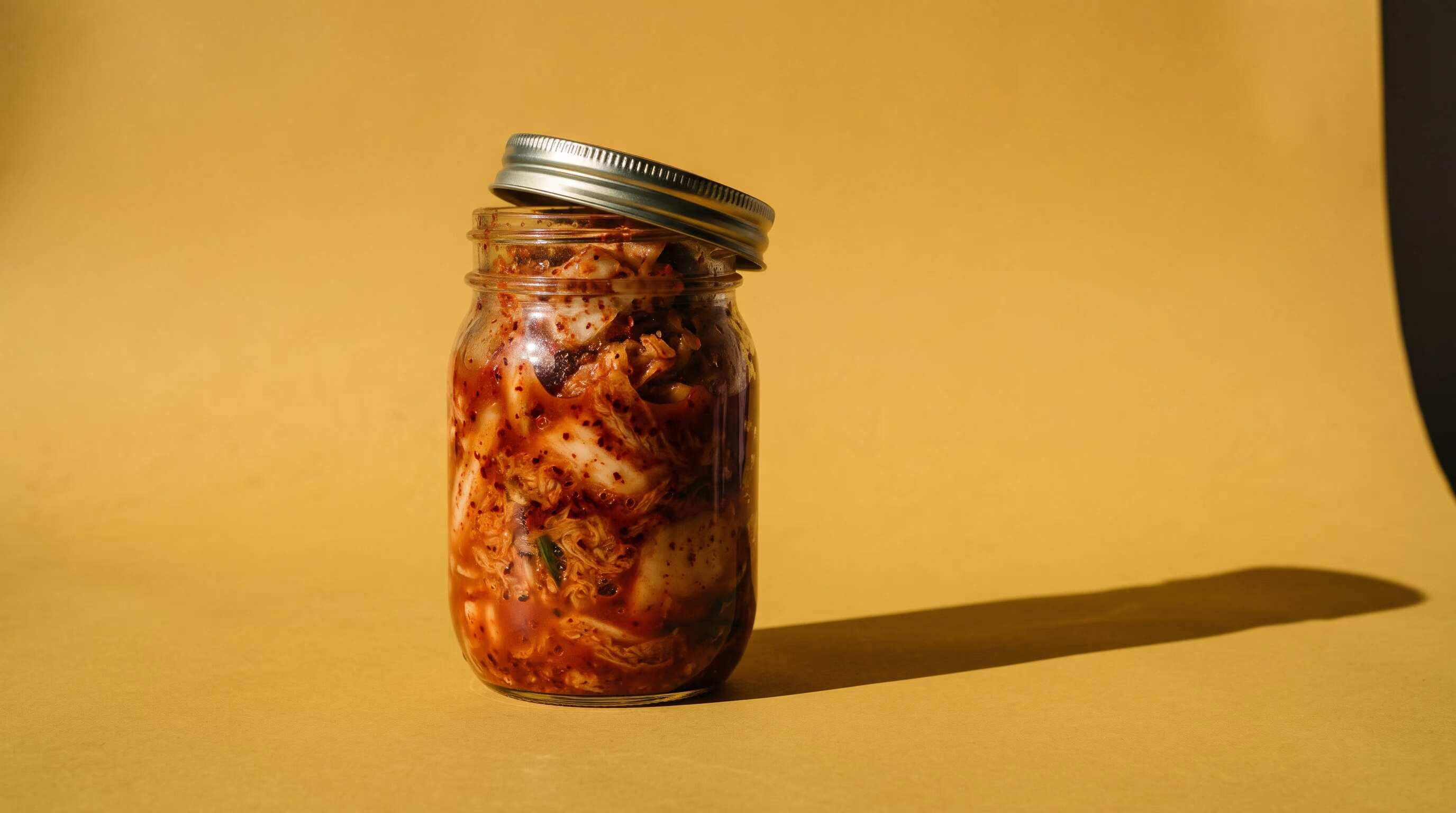
- Kimchi
Is kimchi good for you? Korean fermented cabbage brings fiber, vitamin K and live cultures but a lot of sodium; what the limited human trials show.
- Kombucha
Is kombucha good for you? What the fermented tea contains (sugar, caffeine, alcohol, live microbes) and what the few human trials show about its benefits.
- Miso
Is miso soup healthy? Miso, a Japanese koji-fermented soy paste, adds protein, isoflavones and umami but heavy sodium; what studies show for heart and gut.
- Tempeh
Tempeh vs tofu: what tempeh is, how this Rhizopus-fermented soy cake compares on protein, calcium and iron, and what studies show about its benefits.
- Yogurt
Is yogurt good for you? Nutrition of plain and Greek yogurt, what live cultures do for lactose digestion, and the evidence on gut, bone and diabetes risk.


Curated by Superfoods Advisor Editors·Last updated