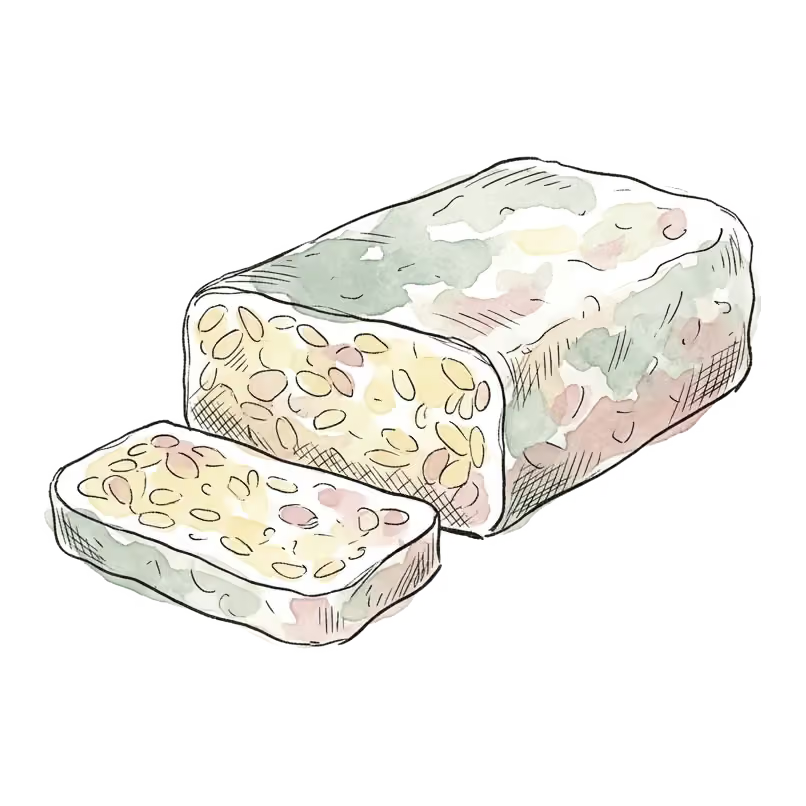
Tempeh
By Superfoods Advisor Editors·July 3, 2026
Tempeh vs tofu: what tempeh is, how this Rhizopus-fermented soy cake compares on protein, calcium and iron, and what studies show about its benefits.
Tempeh (also tempe) is an Indonesian fermented soy food made by binding cooked, dehulled whole soybeans into a firm cake with the mold Rhizopus oligosporus. Compared with tofu, which is curdled soy milk, tempeh is denser, nuttier and higher in protein, at about 20 g per 100 g against about 8 g in regular tofu.
Tempeh originated on Java, where the earliest known written reference appears in the Serat Centhini manuscript of about 1815 (Shurtleff & Aoyagi, 2011); its story is set in the early 1600s, so the food may be older. It remains a staple protein across Southeast Asia. Because it is made from whole beans, tempeh keeps most of their fiber (minus the hulls), isoflavones and complex carbohydrates, while fungal fermentation changes its digestibility.
Production begins with soybeans that are soaked, partially cooked, and dehulled, then inoculated with Rhizopus spores. The inoculated beans are spread into flat packages (traditionally banana leaves; now commonly perforated plastic bags) and incubated at 30–32°C for 24–48 hours. As the white mycelium grows through and around the beans, it binds them into a solid cake, generates heat (requiring ventilation), and secretes proteases, lipases, and phytases that transform the substrate. The finished tempeh is firm, slightly nutty in aroma, and sliceable.
Evidence at a glance
Microbial Profile and Active Compounds
The dominant organism is Rhizopus oligosporus, a filamentous mold. Unlike most fermented foods discussed in this encyclopedia, tempeh is primarily a mold-fermented product rather than a bacterial one. After fermentation is complete and tempeh is sold commercially, the mold is no longer metabolically active. Tempeh does not deliver live probiotics in the conventional sense; its health-relevant properties derive instead from the enzymatic transformations performed during fermentation.
During fermentation, R. oligosporus accomplishes several nutritionally significant transformations:
- Phytate reduction: Phytic acid (which binds zinc, iron, and calcium and reduces their absorption) fell by about one-third during fermentation in one laboratory study, through phytase produced by the mold (Sudarmadji & Markakis, 1977), which may modestly improve mineral availability compared to unfermented soybeans
- Protein hydrolysis: Soy proteins are partially broken down to peptides and free amino acids, improving digestibility and generating bioactive peptides
- Isoflavone conversion: Isoflavone glycosides (daidzin, genistin) are hydrolyzed to aglycone forms (daidzein, genistein), which make up a considerable share of the isoflavones in fermented soy foods (Messina, 2016)
- Vitamin B12: The Rhizopus mold does not make physiologically active B12; in laboratory fermentations, bacteria isolated from Indonesian tempeh (Citrobacter freundii, Klebsiella pneumoniae) did (Keuth & Bisping, 1993). Content therefore depends on which bacteria happen to be present, and USDA data list only about 0.08 µg per 100 g (USDA FoodData Central) — tempeh should not be relied upon as a B12 source without confirmation of active cobalamin content
- Riboflavin and niacin: Rhizopus strains form riboflavin (B2), niacin, and vitamin B6 during fermentation, with final amounts depending on the strain and fermentation time (Keuth & Bisping, 1993)
Nutritional Profile
Tempeh is one of the most protein-dense plant foods, with 20 g of protein and 1.3 mg of manganese (57% DV) per 100 g. Values per 100 g of plain, uncooked tempeh (USDA FoodData Central; isoflavones from the USDA Isoflavone Database, Release 2.0):
| Nutrient | Amount | % DV |
|---|---|---|
| Energy | 192 kcal | — |
| Protein | 20 g | — |
| Total fat | 11 g (primarily unsaturated) | — |
| Carbohydrates | 7.6 g | — |
| Calcium | 111 mg | 9% |
| Iron | 2.7 mg | 15% |
| Zinc | 1.1 mg | 10% |
| Magnesium | 81 mg | 19% |
| Manganese | 1.3 mg | 57% |
| Riboflavin (B2) | 0.36 mg | 28% |
| Niacin (B3) | 2.6 mg | 16% |
| Isoflavones | ~61 mg (USDA mean; samples range widely) | — |
Tempeh is one of the most protein-dense plant foods available. Its amino acid profile is complete, making it a clinically relevant protein source for vegetarian and vegan populations.
Tempeh vs. Tofu
Tempeh and tofu are both soy foods, but tempeh is fermented whole soybeans while tofu is unfermented soy milk curdled and pressed. That difference makes tempeh firmer, higher in protein and calories per 100 g, and closer to the whole bean; calcium-set tofu is softer, lower in calories and much higher in calcium.
| Per 100 g (USDA) | Tempeh (uncooked) | Tofu (regular, calcium sulfate) |
|---|---|---|
| Made from | Whole dehulled soybeans fermented with Rhizopus | Soy milk curdled with a coagulant |
| Energy | 192 kcal | 76 kcal |
| Protein | 20 g | 8.1 g |
| Total fat | 11 g | 4.8 g |
| Calcium | 111 mg | 350 mg |
| Iron | 2.7 mg | 5.4 mg |
| Dietary fiber | Retains whole-bean fiber | 0.3 g |
Tofu values are from USDA FoodData Central; much of the gap in protein and calories reflects tofu’s higher water content. Neither is clearly healthier overall. Tempeh suits someone seeking more protein per bite and fermentation-modified isoflavones, while calcium-set tofu is the better calcium source. The plant-based protein guide compares both with other plant proteins.
Evidence for Purported Benefits
Trials of tempeh itself are scarce. Most of the evidence below comes from soy protein and isoflavone research applied to tempeh’s composition.
Cholesterol and Cardiovascular Health
Evidence:Limited Soy protein meta-analyses show modest LDL reductions; trials of tempeh itself are scarce.
In 1999 the US FDA authorized a health claim linking about 25 g/day of soy protein, in a diet low in saturated fat and cholesterol, to reduced heart-disease risk; it has since proposed revoking that claim because later trial results were inconsistent (Blanco Mejia et al., 2019). A meta-analysis by Harland and Haffner (Atherosclerosis, 2008) of 30 studies (n = 2,913) found that about 25 g/day of soy protein reduced LDL cholesterol by roughly 0.23 mmol/L compared to control diets. Controlled human trials testing tempeh itself on blood lipids are scarce, so the tempeh-specific case rests largely on its soy protein content. The heart health superfoods guide covers other foods studied for blood lipids.
Gut Health and Microbiome
Evidence:Preliminary Human data are scarce; the case rests on fiber content and animal and in vitro work.
Tempeh supplies fermentable fiber, which gut bacteria can use, and has been proposed as a prebiotic food. Human trials measuring tempeh’s effect on gut bacteria are scarce; the prebiotic rationale rests mainly on its fiber content and on animal and in vitro data. Whether tempeh confers greater prebiotic benefit than unfermented soy products with similar fiber content is not well established.
Isoflavone Effects
Evidence:Limited Isoflavone supplement trials reduce hot flashes; tempeh itself has only a small absorption study.
The aglycone isoflavones (daidzein, genistein) in tempeh are absorbed faster and in higher amounts than the glycoside forms that dominate unfermented soy, according to a small human pharmacokinetic study (Izumi et al., 2000, Journal of Nutrition). Potential effects of isoflavone consumption include modest estrogenic activity (relevant to menopausal symptoms, hormone-sensitive conditions) and antioxidant activity. A meta-analysis by Taku et al. (Menopause, 2012) found that soy isoflavone supplementation reduced hot flash frequency by about 21% and severity by about 26% in menopausal women compared to placebo. Tempeh’s isoflavone content (about 61 mg/100 g on average in USDA data, though individual samples vary several-fold) is substantial, though daily intake from food is typically lower than supplement doses used in trials.
Bone Health
Evidence:Limited Isoflavone trials conflict, including one null 2-year RCT; no tempeh-specific trials.
Tempeh’s combination of calcium, manganese, isoflavones, and protein has been studied for bone mineral density effects. A 2-year double-blind trial in 248 women within 5 years of menopause by Levis et al. (Archives of Internal Medicine, 2011) found no significant effect of 200 mg/day soy isoflavone tablets on spine or hip bone mineral density compared to placebo, though some other trials report modest benefit.
Typical Use and Preparation
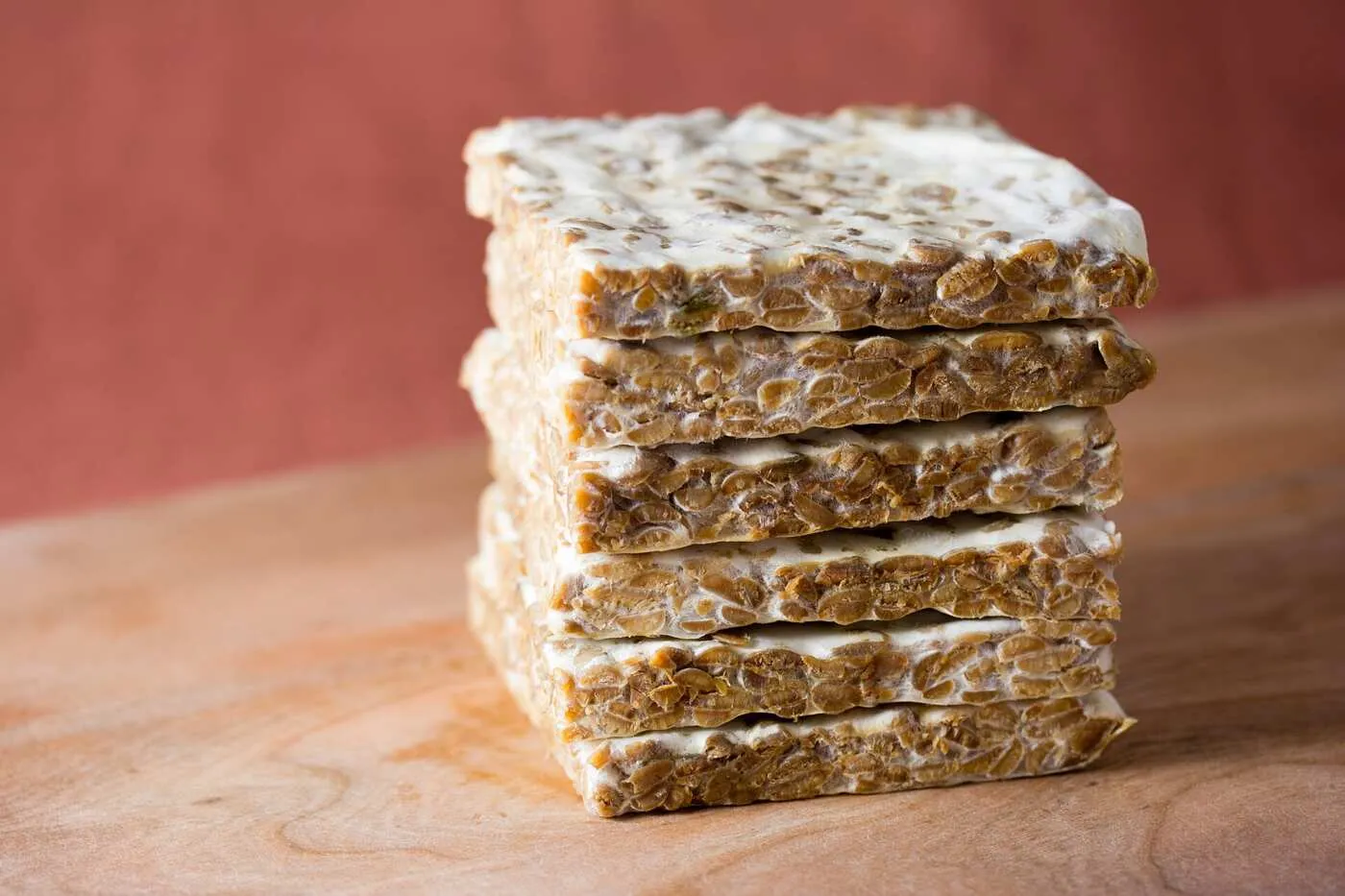 Photo: Veganbaking.net from USA, CC BY-SA 2.0, via Wikimedia Commons
Tempeh has a firm, dense texture and a mild, nutty flavor that intensifies when browned. It can be sliced, crumbled, or cubed and prepared by:
- Pan-frying or sautéing: develops a golden crust and rich savory flavor; most common preparation
- Baking or grilling: produces a drier, chewier texture; suitable for sandwiches and bowls
- Steaming or simmering: softens texture; often done before marinating
- Marinating: tempeh absorbs liquid quickly through its porous mycelial structure, making it responsive to bold marinades (soy sauce, citrus, chili, ginger)
Tempeh is widely used in Indonesian cuisine as a meat substitute in dishes such as tempeh goreng (fried tempeh), tempeh bacem (sweet-braised tempeh), and tempeh kering (spiced tempeh crisps). Western applications include tempeh burgers, tacos, salads, and grain bowls.
Heat and live organisms: Tempeh is nearly always cooked before consumption. Since the Rhizopus mold is not a probiotic organism in the conventional sense, cooking does not eliminate a probiotic benefit. Any live bacteria present in some traditionally prepared batches would be eliminated by cooking.
Tempeh’s place among other plant proteins is covered in the plant-based protein guide. Miso is the other mold-fermented soy food in this encyclopedia, used as a seasoning rather than a protein.
Safety, Interactions, and Contraindications
The main cautions with tempeh are soy allergy, its unreliable B12 content for vegans, isoflavones in hormone-sensitive conditions, and tyramine for people on MAOIs.
Soy allergy: Tempeh is contraindicated in individuals with IgE-mediated soy allergy. Partial hydrolysis of soy proteins during fermentation does not reliably eliminate allergenic epitopes.
Vitamin B12 note: Tempeh is sometimes promoted as a B12 source for vegans. However, the B12 in tempeh comes from bacteria rather than the mold, so the amount is unpredictable, and USDA data list only about 0.08 µg per 100 g (roughly 3% of the Daily Value). The Academy of Nutrition and Dietetics advises that vegans need reliable sources of vitamin B12, such as fortified foods or supplements (Melina et al., 2016); with its unpredictable content, tempeh does not meet that standard.
Isoflavones and hormone-sensitive conditions: Individuals with hormone-sensitive conditions (estrogen receptor-positive breast cancer, endometriosis, uterine fibroids) may be advised by their oncologists or gynecologists to moderate soy isoflavone intake. Prospective cohort data have not shown harm from soy food intake after a breast cancer diagnosis; post-diagnosis intake was associated with lower recurrence in a pooled analysis, per a review by an author who directs a soy-industry-funded institute (Messina, 2016). Consultation with a clinician is recommended.
MAOI interactions: Fermented soy products contain some tyramine; individuals taking MAOIs should consult their clinician about appropriate intake levels.
Gout: Soy foods contain moderate amounts of purines; in one HPLC analysis, Japanese soy products all stayed below the 200 mg/100 g level usually used to define high-purine foods (Kaneko et al., 2008). Individuals with gout or hyperuricemia may wish to discuss intake with their clinician.
This information is educational and does not constitute medical advice. Consult a qualified healthcare provider before making dietary changes, particularly if you have an underlying health condition.
Frequently Asked Questions
What is tempeh made of?
Tempeh is made from cooked, dehulled soybeans inoculated with spores of the mold Rhizopus oligosporus. The beans are packed into flat packages and incubated at 30–32°C for 24–48 hours, while the white mycelium grows through them and binds them into a sliceable cake. Some products list other legumes or grains as well, so check the ingredient list.
Is tempeh good for you?
Tempeh is a nutrient-dense plant protein, supplying 20 g of protein, plus manganese, magnesium, riboflavin and isoflavones per 100 g. Evidence for specific health effects is limited: soy protein meta-analyses report modest LDL reductions and isoflavone trials report fewer hot flashes, but trials of tempeh itself are scarce. It is not a reliable vitamin B12 source.
Is tempeh gluten free?
Tempeh made only from soybeans and the Rhizopus culture has no gluten-containing ingredients. Some products, though, list other grains alongside the soybeans, and marinated tempeh may use soy sauce, which is commonly brewed with wheat. The ingredient list is what settles it, so people with celiac disease should check the product label and look for one labeled gluten-free rather than assume plain tempeh.
Does tempeh need to be cooked?
Tempeh is nearly always cooked before it is eaten, by pan-frying, baking, steaming or simmering, and cooking also improves its texture and flavor. Because the Rhizopus mold is not a probiotic organism, cooking does not remove a probiotic benefit. Follow the preparation instructions on the package.
How much tempeh is too much?
No upper limit has been set for tempeh. A 100 g portion supplies about 61 mg of isoflavones on average, though samples vary widely, and some soy foods contain moderate purines. People with a soy allergy should avoid it, and those with gout, hormone-sensitive conditions or on MAOIs should talk to a clinician about how much suits them.
References
Show all 14 referencesShow fewer
- Harland, J. I., & Haffner, T. A. (2008). Systematic review, meta-analysis and regression of randomised controlled trials reporting an association between an intake of circa 25 g soya protein per day and blood cholesterol. Atherosclerosis, 200(1), 13–27.
- Taku, K., et al. (2012). Extracted or synthesized soybean isoflavones reduce menopausal hot flash frequency and severity. Menopause, 19(7), 776–790.
- Levis, S., Strickman-Stein, N., Ganjei-Azar, P., et al. (2011). Soy isoflavones in the prevention of menopausal bone loss and menopausal symptoms: a randomized, double-blind trial. Archives of Internal Medicine, 171(15), 1363–1369.
- Shurtleff, W., & Aoyagi, A. (2011). History of Tempeh and Tempeh Products (1815–2011): Extensively Annotated Bibliography and Sourcebook. Lafayette, CA: Soyinfo Center.
- Keuth, S., & Bisping, B. (1993). Formation of vitamins by pure cultures of tempe moulds and bacteria during the tempe solid substrate fermentation. Journal of Applied Bacteriology, 75(5), 427–434.
- Izumi, T., Piskula, M. K., Osawa, S., et al. (2000). Soy isoflavone aglycones are absorbed faster and in higher amounts than their glucosides in humans. Journal of Nutrition, 130(7), 1695–1699.
- Messina, M. (2016). Soy and health update: evaluation of the clinical and epidemiologic literature. Nutrients, 8(12), 754.
- Sudarmadji, S., & Markakis, P. (1977). The phytate and phytase of soybean tempeh. Journal of the Science of Food and Agriculture, 28(4), 381–383.
- U.S. Department of Agriculture, Agricultural Research Service. (2008). USDA Database for the Isoflavone Content of Selected Foods, Release 2.0.
- U.S. Department of Agriculture. FoodData Central: Tempeh (FDC ID 174272).
- U.S. Department of Agriculture. FoodData Central: Tofu, raw, regular, prepared with calcium sulfate (FDC ID 172476).
- Blanco Mejia, S., Messina, M., Li, S. S., et al. (2019). A meta-analysis of 46 studies identified by the FDA demonstrates that soy protein decreases circulating LDL and total cholesterol concentrations in adults. Journal of Nutrition, 149(6), 968–981.
- Melina, V., Craig, W., & Levin, S. (2016). Position of the Academy of Nutrition and Dietetics: Vegetarian diets. Journal of the Academy of Nutrition and Dietetics, 116(12), 1970–1980.
- Kaneko, K., Kudo, Y., Yamanobe, T., et al. (2008). Purine contents of soybean-derived foods and selected Japanese vegetables and mushrooms. Nucleosides, Nucleotides & Nucleic Acids, 27(6), 628–630.
Related content
More in Fermented Foods
- Kefir
Kefir vs yogurt: how the fermented milk drink differs in microbes, protein and calcium, and what human studies show about kefir benefits and side effects.
- Kimchi
Is kimchi good for you? Korean fermented cabbage brings fiber, vitamin K and live cultures but a lot of sodium; what the limited human trials show.
- Kombucha
Is kombucha good for you? What the fermented tea contains (sugar, caffeine, alcohol, live microbes) and what the few human trials show about its benefits.
- Miso
Is miso soup healthy? Miso, a Japanese koji-fermented soy paste, adds protein, isoflavones and umami but heavy sodium; what studies show for heart and gut.
- Sauerkraut
Is sauerkraut good for you? Fermented cabbage supplies fiber, vitamin C and, if raw, live bacteria, but plenty of sodium; what the human studies show.
- Yogurt
Is yogurt good for you? Nutrition of plain and Greek yogurt, what live cultures do for lactose digestion, and the evidence on gut, bone and diabetes risk.

Curated by Superfoods Advisor Editors·Last updated