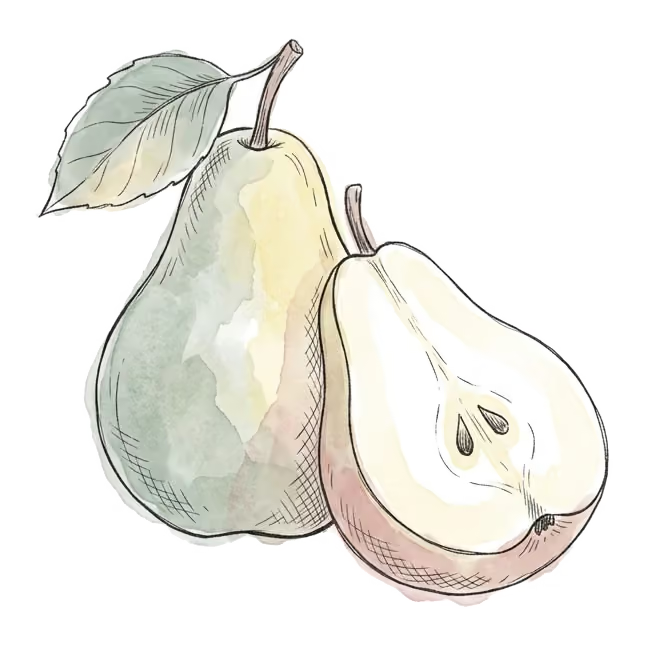
Pear (Pyrus communis)
Pyrus communis · also known as European pear, common pear, Williams pear, Bartlett pear, Bosc pear
By Superfoods Advisor Editors·July 3, 2026
Pears benefits, weighed: pears give 3.1 g of fiber per 100 g, a low glycemic index of 38 and copper, but their sorbitol can upset FODMAP-sensitive guts.
The main benefits of pears come from fiber: raw pear (Pyrus communis, the European pear, such as Bartlett or Bosc) provides 57 kcal and 3.1 g of fiber per 100 g. Its glycemic index of about 38 is low, and its sorbitol and pectin give it a reputation as a mild laxative. The same sorbitol can bloat people with IBS.
The pear is a pome fruit of the rose family (Rosaceae), closely related to the apple. Cultivation dates to antiquity in both China, home of the Asian pear species, and the Mediterranean; Homer mentions pears in the Odyssey, and Pliny the Elder catalogued dozens of Roman varieties.
Unlike apples, pears are usually picked before maturity and ripened off the tree, since they tend to turn mealy on the branch. Traditional European medicine used pear as a mild digestive aid, a use a 2015 review attributed to its fiber and fructose (Reiland & Slavin, 2015).
Evidence at a glance
Active Compounds
The pear’s nutritional identity is shaped by several compounds that interact with digestive physiology:
- Pectin: A soluble dietary fiber fermented by colonic bacteria to produce short-chain fatty acids (acetate, propionate, butyrate). Raw pear with skin contains about 3.1 g/100 g total fiber (USDA FoodData Central), part of which is soluble pectin.
- Sorbitol: A sugar alcohol (polyol) reported at about 2.5% of fresh pear weight (roughly 2.5 g/100 g) in a compositional analysis cited by Reiland & Slavin, 2015, who note that pears are particularly rich in sorbitol compared with other fruits. Sorbitol is incompletely absorbed in the small intestine and enters the colon, where it draws water by osmosis, contributing to pear’s traditional reputation as a mild laxative. This same mechanism is relevant to gastrointestinal intolerance in sensitive individuals (see Safety section).
- Arbutin (hydroquinone-β-D-glucopyranoside): A phenolic glycoside that yields hydroquinone after ingestion; pears contained 4–15 ppm arbutin in one analysis of food sources (Deisinger et al., 1996). Arbutin has antimicrobial properties and is used topically in cosmetics as a skin-lightening agent. See the Safety section for hydroquinone exposure.
- Chlorogenic acid and related hydroxycinnamic acids: Chlorogenic acid is among the dominant phenolics in pear peel and flesh, alongside arbutin and epicatechin (Li et al., 2014); it (5-caffeoylquinic acid) is responsible for the browning of cut pear through enzymatic oxidation by polyphenol oxidase.
- Quercetin and kaempferol glycosides: Concentrated in the peel, as with apple; across ten (Chinese) pear cultivars, peel phenolics and flavonoids were roughly 6–20 times higher than in flesh (Li et al., 2014), so peeling substantially reduces flavonol intake.
- Catechins and procyanidins: Present in smaller amounts; epicatechin is among the dominant phenolics reported in pear.
- Copper: Pear is a relatively good source of copper among common fruits (about 0.08 mg/100 g; USDA FoodData Central), an essential trace element for ferroxidase activity, connective tissue synthesis, and neurological function.
- Vitamin K: Provides about 4.4 µg/100 g (USDA FoodData Central), a small contribution to daily requirements.
Nutritional Profile
Per 100 g raw pear with skin (USDA FoodData Central, “Pears, raw”):
| Nutrient | Amount | % DV |
|---|---|---|
| Energy | 57 kcal | — |
| Water | 84.0 g | — |
| Carbohydrate | 15.2 g | — |
| Dietary fiber | 3.1 g | — |
| Sugars | 9.8 g | — |
| Sorbitol | ~2.5 g (not in USDA data) | — |
| Protein | 0.4 g | — |
| Fat | 0.1 g | — |
| Vitamin C | 4.3 mg | 5% |
| Vitamin K | 4.4 µg | 4% |
| Copper | 0.08 mg | 9% |
| Potassium | 116 mg | 2% |
| Folate | 7 µg | 2% |
The glycemic index of raw pear averages 38 ± 2 across four studies (all in people with type 2 diabetes or impaired glucose tolerance), similar to raw apple at 36 ± 2; the glycemic load of a 120 g serving is about 4, categorized as low (Atkinson et al., 2008).
Evidence for Purported Benefits
Digestive Health and Laxation
Evidence:Preliminary Rests on fiber and sorbitol content; no pear feeding trials have been conducted.
The combination of fiber, sorbitol, and excess fructose underlies pear’s traditional reputation as a mild laxative. Sorbitol draws water into the intestinal lumen osmotically (similar in mechanism to the osmotic laxative lactulose), and pectin fermentation increases stool bulk and moisture by stimulating bacterial growth. A 2015 systematic review of pears and health (Reiland & Slavin, Nutrition Today) attributed the laxative properties to pears’ high fiber and fructose content but found that human feeding studies with pears had not been conducted, so the effect rests on composition and mechanism rather than pear-specific trials.
Cardiovascular Risk Markers
Evidence:Preliminary Cohort associations for apples and pears combined; soluble fiber lowers LDL in trials, but pear-specific RCTs are absent.
Pear and apple are frequently grouped together in epidemiological analyses of pome fruit. In the Iowa Women’s Health Study, eating apples or pears (or both) was associated with lower coronary heart disease and cardiovascular mortality (Mink et al., 2007). The soluble fiber fraction of pear (pectin) is mechanistically linked to reduced LDL cholesterol through bile acid binding and hepatic cholesterol synthesis regulation — a well-established effect of soluble fiber in general. Brown et al. (1999), in a meta-analysis of soluble fiber interventions found that, across intakes of 2–10 g/day, each additional gram of soluble fiber was associated with an LDL cholesterol reduction of about 0.057 mmol/L (roughly 2.2 mg/dL). Pear-specific RCT data on cardiovascular outcomes are not available.
Blood Sugar and Glycemic Response
Evidence:Preliminary Pear’s low glycemic index is measured; no pear-specific outcome trials in people with diabetes.
The low glycemic index of pear reflects both the fruit’s fructose/sorbitol composition (absorbed more slowly than glucose) and the viscosity of pectin, which slows gastric emptying and intestinal glucose absorption. Compared to higher-GI fruits (raw watermelon GI ~76, pineapple ~59, mango ~51; Atkinson et al., 2008), pear’s GI of approximately 38 places it in the low-GI category, which may be relevant for people managing blood sugar, including those with type 2 diabetes, within the context of overall carbohydrate intake. This rests on the low-GI classification rather than outcome data from pear-specific trials in diabetic populations.
Antioxidant and Anti-inflammatory Properties
Evidence:Lab & animal only In vitro and animal data; pear-specific human data are sparse.
Chlorogenic acid and quercetin in pear peel have demonstrated antioxidant and anti-inflammatory activity in vitro. In vivo human data on pear-specific anti-inflammatory effects are sparse. Pears provide roughly 27–41 mg of phenolics per 100 g (Reiland & Slavin, 2015), a more modest total polyphenol content than deeply pigmented fruits. Older ORAC antioxidant figures are in-vitro assay results only, and the USDA withdrew its ORAC database in 2012 because such values do not reflect effects in the body.
Typical Use and Preparation
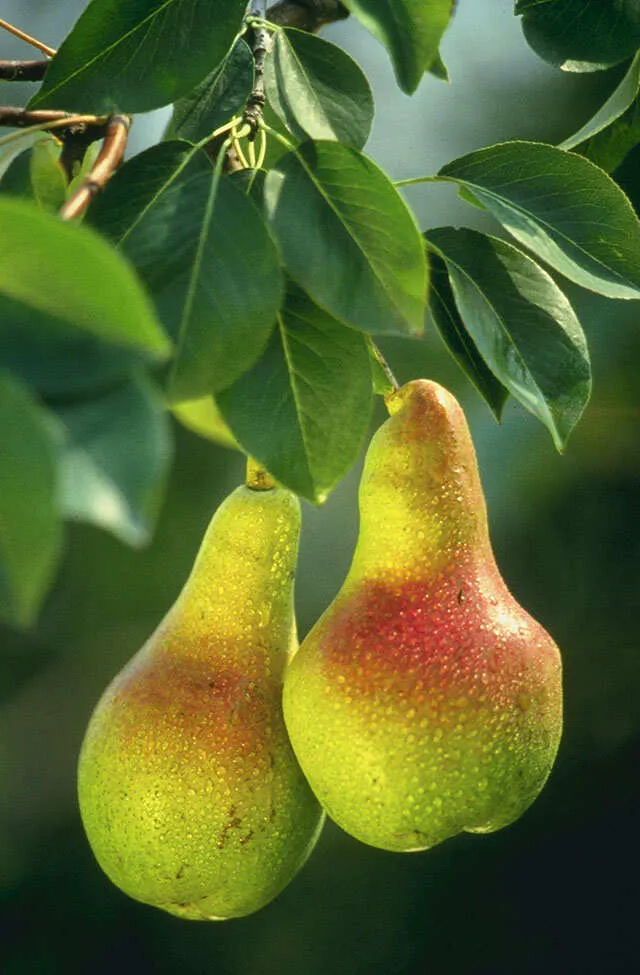 Photo: Keith Weller, public domain, via Wikimedia Commons
Pears are eaten fresh, poached, baked, dried, and pressed into juice or perry (pear cider). Preparation considerations:
- Fresh, unpeeled: Maximizes fiber and flavonol content. The skin accounts for a large fraction of quercetin and much of the insoluble fiber.
- Ripeness and texture: Ripe pears soften significantly. Ripen at room temperature, then refrigerate.
- Poached or baked: Reduces vitamin C; pectin largely retained.
- Dried pears: Higher caloric density and sugar concentration per gram; sorbitol remains; glycemic impact per serving increases due to caloric density.
- Pear juice: Commercially prepared pear juice retains minimal fiber; sorbitol is retained in juice and can cause gastrointestinal symptoms (see Safety section). Pediatric use should be limited because pear juice sorbitol content is a recognized cause of “toddler’s diarrhea.”
Our review of fiber and microbiome research explains how soluble and insoluble fibers like those in pears behave differently in the gut. The gut health superfoods guide puts pear alongside other fiber-rich foods, and the closely related apple has the stronger trial evidence on cholesterol.
Safety, Interactions, and Contraindications
FODMAP considerations: Pear is classified as high-FODMAP due to its sorbitol content (polyols) and excess fructose relative to glucose. Individuals with irritable bowel syndrome (IBS) or fructose malabsorption following a low-FODMAP dietary protocol are typically advised to avoid pear or limit intake to small portions. Symptoms include bloating, gas, cramping, and diarrhea, which can be pronounced even at one-serving quantities in sensitive individuals. The Monash University Low FODMAP Diet database lists common pear varieties as high-FODMAP; the FODMAP approach itself is described by Gibson & Shepherd (2010).
Pediatric diarrhea: Excessive consumption of pear juice is a recognized cause of chronic nonspecific diarrhea in toddlers (“toddler’s diarrhea”), primarily driven by the high sorbitol load in juice. In a breath-hydrogen study of children aged 9–36 months, pear juice (about 2% sorbitol) caused carbohydrate malabsorption in virtually all participants (Hyams et al., 1988). The American Academy of Pediatrics advises limiting juice consumption in young children (Heyman & Abrams, 2017).
Arbutin and hydroquinone: The arbutin in pear yields hydroquinone after ingestion. In volunteers who ate a meal of arbutin- and hydroquinone-containing foods (including pears, wheat products, coffee, and tea), plasma total hydroquinone peaked at about 5 times background two hours later (Deisinger et al., 1996).
Vitamin K content: While pear is not a high vitamin K food, individuals on warfarin (Coumadin) are advised to maintain consistent vitamin K intake rather than avoid dietary sources. The amount in pear is modest and consistent intake is unlikely to cause significant INR fluctuation.
Pollen-food allergy: Pear is a recognized trigger of oral allergy syndrome in people allergic to birch pollen; its major allergen, Pyr c 1, is a Bet v 1–related protein that cross-reacts with birch pollen and apple allergens (Karamloo et al., 2001). Pear is not among the fruits most often involved in latex-fruit syndrome, which are banana, avocado, kiwifruit, and papaya (Gromek et al., 2024).
Frequently Asked Questions
Are pears good for you?
For most people, yes. Pears are a good fiber source, at 3.1 g per 100 g with the skin, and also supply copper, vitamin K and peel flavonoids such as quercetin. They have a low glycemic index, and cohort data link apple and pear intake to lower cardiovascular mortality. People with IBS may need to limit them because of their sorbitol and fructose.
Are pears good for constipation?
They may help, though the evidence is indirect. Pears combine fiber with sorbitol, a sugar alcohol that draws water into the bowel, and with more fructose than glucose. That composition explains their traditional use as a mild laxative, but a 2015 systematic review found no human feeding trials of pears for bowel function. Pear juice keeps the sorbitol but loses most of the fiber.
Are pears good for diabetics?
Pears are one of the lower-glycemic fruits. Raw pear has an average glycemic index of 38 across four studies in people with type 2 diabetes or impaired glucose tolerance, and a 120 g serving has a glycemic load of about 4. No trials have tested pear intake on diabetes outcomes, so pears fit within an overall carbohydrate plan rather than acting as a treatment.
Are pears better than apples?
They are similar, and both are pome fruits. Per 100 g, pear has a bit more fiber (3.1 g versus 2.4 g for apple) and a similar glycemic index (38 versus 36). Apples have more research behind them, including a cholesterol trial. Both carry most of their flavonoids in the peel, and both are high-FODMAP.
Can pears cause bloating or diarrhea?
They can in sensitive people. Pears contain about 2.5 g of sorbitol per 100 g plus excess fructose, which is why they are classified as high-FODMAP. People with IBS or fructose malabsorption may get bloating, gas, cramping or diarrhea even from one serving. In young children, pear juice caused carbohydrate malabsorption in nearly all participants of a breath-hydrogen study.
Are pears high in potassium?
No. Raw pear contains about 116 mg of potassium per 100 g, roughly 2% of the Daily Value, according to USDA FoodData Central. That is far less than banana or avocado, so pears are generally considered a lower-potassium fruit. Anyone on a potassium-restricted kidney diet should still confirm portions with their dietitian.
References
Show all 13 referencesShow fewer
- Reiland, H., & Slavin, J. (2015). Systematic review of pears and health. Nutrition Today, 50(6), 301–305.
- Mink, P. J., Scrafford, C. G., Barraj, L. M., Harnack, L., Hong, C.-P., Nettleton, J. A., & Jacobs, D. R. (2007). Flavonoid intake and cardiovascular disease mortality: a prospective study in postmenopausal women. American Journal of Clinical Nutrition, 85(3), 895–909.
- Brown, L., Rosner, B., Willett, W. W., & Sacks, F. M. (1999). Cholesterol-lowering effects of dietary fiber: a meta-analysis. American Journal of Clinical Nutrition, 69(1), 30–42.
- Gibson, P. R., & Shepherd, S. J. (2010). Evidence-based dietary management of functional gastrointestinal symptoms: the FODMAP approach. Journal of Gastroenterology and Hepatology, 25(2), 252–258.
- Potter, D., Eriksson, T., Evans, R. C., et al. (2007). Phylogeny and classification of Rosaceae. Plant Systematics and Evolution, 266(1–2), 5–43.
- Atkinson, F. S., Foster-Powell, K., & Brand-Miller, J. C. (2008). International tables of glycemic index and glycemic load values: 2008. Diabetes Care, 31(12), 2281–2283.
- Hyams, J. S., Etienne, N. L., Leichtner, A. M., & Theuer, R. C. (1988). Carbohydrate malabsorption following fruit juice ingestion in young children. Pediatrics, 82(1), 64–68.
- U.S. Department of Agriculture. FoodData Central: Pears, raw (FDC ID 169118).
- Deisinger, P. J., Hill, T. S., & English, J. C. (1996). Human exposure to naturally occurring hydroquinone. Journal of Toxicology and Environmental Health, 47(1), 31–46.
- Li, X., Wang, T., Zhou, B., et al. (2014). Chemical composition and antioxidant and anti-inflammatory potential of peels and flesh from 10 different pear varieties (Pyrus spp.). Food Chemistry, 152, 531–538.
- Heyman, M. B., & Abrams, S. A. (2017). Fruit juice in infants, children, and adolescents: current recommendations. Pediatrics, 139(6), e20170967.
- Karamloo, F., Scheurer, S., Wangorsch, A., et al. (2001). Pyr c 1, the major allergen from pear (Pyrus communis), is a new member of the Bet v 1 allergen family. Journal of Chromatography B, 756(1–2), 281–293.
- Gromek, W., Kołdej, N., Świtała, S., Majsiak, E., & Kurowski, M. (2024). Revisiting latex-fruit syndrome after 30 years of research: a comprehensive literature review and description of two cases. Journal of Clinical Medicine, 13(14), 4222.
More in Fruits
- Apple (Malus domestica)
Are apples good for you? Apples supply pectin fiber and quercetin, and large cohort studies link regular intake to lower heart disease and diabetes risk.
- Avocado (Persea americana)
Is avocado good for you? Avocado is high in monounsaturated fat, fiber and potassium, and small trials link a daily avocado to lower LDL cholesterol.
- Banana (Musa acuminata)
Are bananas good for you? Bananas supply potassium, vitamin B6 and fiber, and green bananas add resistant starch. The evidence, and who should limit them.
- Cherry (Prunus avium / Prunus cerasus)
Tart cherry juice benefits, weighed: small trials suggest faster muscle recovery and longer sleep, and gout data are early. Sweet vs tart cherry nutrition.
- Grapefruit (Citrus × paradisi)
Is grapefruit good for you? It is low in calories and rich in vitamin C, but it interacts with statins and 85+ other drugs. Benefits, nutrition and risks.
- Grapes (Vitis vinifera)
Are grapes good for you? Grapes supply skin polyphenols and vitamin K but little fiber and plenty of sugar. What the vascular and resveratrol data show.

Curated by Superfoods Advisor Editors·Last updated