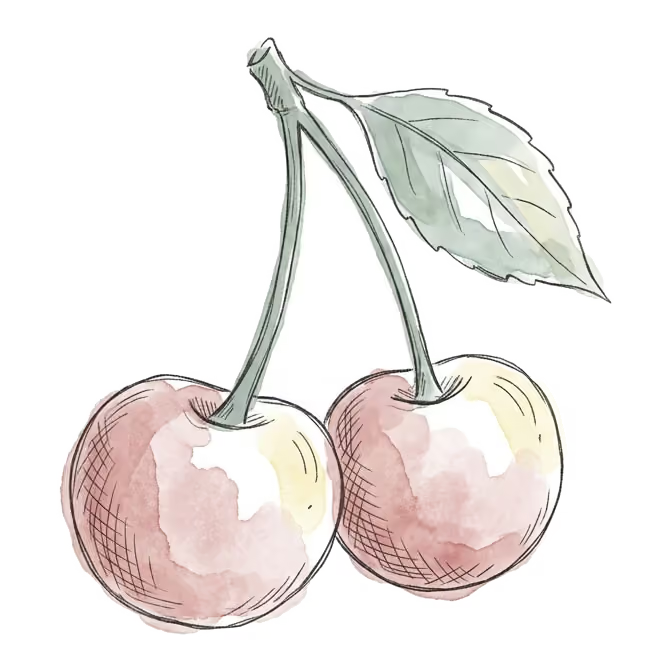
Cherry (Prunus avium / Prunus cerasus)
Prunus avium / Prunus cerasus · also known as sweet cherry, sour cherry, tart cherry, Montmorency cherry
By Superfoods Advisor Editors·July 3, 2026
Tart cherry juice benefits, weighed: small trials suggest faster muscle recovery and longer sleep, and gout data are early. Sweet vs tart cherry nutrition.
Tart cherry juice, made from sour cherries (Prunus cerasus, mainly the Montmorency cultivar), is the most studied cherry product. Several small randomized trials suggest it speeds strength recovery after hard exercise, two small crossover trials reported longer sleep, and observational data link cherry intake to fewer gout flares. Sweet cherries (Prunus avium) are eaten fresh and studied less.
Both species are stone fruits of the genus Prunus in the rose family. Sweet cherry originated between the Black Sea and the Caspian Sea, and sour cherry is likely a natural hybrid of P. avium and P. fruticosa from the same region. Montmorency sour cherries became economically important in North America, and Michigan remains the largest US producer.
Folk medicine used cherry stalks as a diuretic; in a small study of 13 volunteers, powdered stalk mildly increased urine volume (Hooman et al., 2009). Interest in cherries for gout traces to a 1950 report on a cherry diet (Blau, 1950), and tart cherry concentrate later became a sports nutrition product after published recovery trials.
Evidence at a glance
Active Compounds
- Anthocyanins — Cyanidin glycosides dominate: cyanidin-3-rutinoside and cyanidin-3-glucoside in sweet cherries, and cyanidin-3-glucosylrutinoside followed by cyanidin-3-rutinoside in sour cherries (Damar & Ekşi, 2012). Sour cherries contain significantly higher concentrations (approximately 80–200 mg per 100 g fresh weight) than sweet cherries (~15–30 mg per 100 g). In test-tube assays, cyanidin, the anthocyanin aglycone isolated from tart cherries, inhibited the cyclooxygenase enzymes COX-1 and COX-2, the same targets as NSAIDs (Wang et al., 1999); whether this happens at dietary intakes in humans is not established.
- Melatonin — Sour cherry is a recognized dietary source, containing approximately 13–17 ng per gram of fresh weight, though amounts vary considerably by cultivar; Balaton tart cherries contained about one-sixth the melatonin of Montmorency (Burkhardt et al., 2001). Seven days of Montmorency tart cherry juice concentrate raised urinary melatonin in healthy adults (Howatson et al., 2012).
- Quercetin — A flavonol with anti-inflammatory and antioxidant activity; present at approximately 7–10 mg per 100 g in sweet cherries.
- Chlorogenic acid — A hydroxycinnamic acid derivative and one of the predominant phenolic acids; studied in laboratory models for effects on glucose absorption and inflammation.
- Ellagic acid — A polyphenol reported in some cherry varieties; it is the hydrolysis product of ellagitannins (the polyphenols abundant in pomegranate) and shows antioxidant activity in cell culture models.
- Vitamin C — Present at approximately 7 mg per 100 g in sweet cherries and 10 mg per 100 g in sour cherries; contributes to total antioxidant capacity and supports collagen biosynthesis.
- Potassium — Approximately 222 mg per 100 g; supports electrolyte balance and blood pressure regulation.
- Hydroxycinnamates (neochlorogenic acid, chlorogenic acid, p-coumaric acid derivatives) — Additional phenolic acids, found at higher levels in sour than in sweet cherries (Kim et al., 2005).
Nutritional Profile
Per 100 g of raw sweet cherry (Prunus avium, USDA FoodData Central):
| Nutrient | Amount | % DV |
|---|---|---|
| Energy | 63 kcal | — |
| Total fat | 0.2 g | — |
| Carbohydrate | 16.0 g | — |
| — Dietary fiber | 2.1 g | — |
| — Sugars | 12.8 g | — |
| Protein | 1.1 g | — |
| Potassium | 222 mg | — |
| Vitamin C | 7.0 mg | — |
| Vitamin A | 3 µg RAE | — |
| Folate | 4 µg | — |
| Copper | 0.06 mg | — |
Per 100 g of raw sour cherry (Prunus cerasus):
| Nutrient | Amount |
|---|---|
| Energy | 50 kcal |
| Total fat | 0.3 g |
| Carbohydrate | 12.2 g |
| — Dietary fiber | 1.6 g |
| — Sugars | 8.5 g |
| Protein | 1.0 g |
| Vitamin C | 10.0 mg |
Sour cherries have a lower sugar content and generally higher anthocyanin and total phenolic concentrations than sweet varieties (Kim et al., 2005), which informs most of the clinical research reviewed below.
Evidence for Purported Benefits
Exercise-Induced Muscle Damage and Recovery
Evidence:Moderate Several small RCTs, mostly of tart cherry juice, agree on faster strength recovery; participants cannot be blinded to taste.
Tart cherry juice or concentrate has been the most extensively studied fruit-derived recovery intervention in sports nutrition. A placebo-controlled trial by Howatson et al. (2010, Scandinavian Journal of Medicine & Science in Sports, n = 20 recreational marathon runners, parallel groups) found that tart cherry juice taken for five days before, on the day of, and for 48 hours after a marathon lowered post-race inflammation markers (IL-6, CRP, uric acid) and one lipid peroxidation marker (TBARS) compared with a placebo drink, and isometric strength recovered significantly faster; other muscle damage markers, including creatine kinase and lactate dehydrogenase, did not differ between groups. A subsequent crossover trial by Bowtell et al. (2011, Medicine & Science in Sports & Exercise, n = 10 well-trained male athletes) found faster recovery of knee-extensor strength and a smaller rise in protein carbonyls (an oxidative damage marker) after intensive single-leg exercise with tart cherry concentrate, though the rise in creatine kinase was not different. Effect sizes in these studies are generally moderate, and studies are limited by their inability to blind participants to the intervention taste.
Sleep Quality
Evidence:Limited Two small crossover trials (n=20, and 8 completers) of tart cherry juice; the placebo is hard to mask.
The melatonin content of Montmorency tart cherry juice has been proposed to extend sleep duration and improve sleep quality. Howatson et al. (2012, European Journal of Nutrition, n = 20 healthy adults) found in a double-blind crossover trial that seven days of tart cherry juice concentrate significantly increased urinary melatonin content, time in bed, total sleep time and sleep efficiency compared with placebo. A 2018 pilot crossover study by Losso et al. (American Journal of Therapeutics) randomized 11 adults over 50 with insomnia; among the 8 who completed it, two weeks of tart cherry juice increased polysomnography-measured sleep time by approximately 84 minutes compared with placebo. The sample sizes are small and the placebo condition is difficult to mask; replication in larger trials is needed before clinical recommendations can be made.
Gout and Uric Acid Reduction
Evidence:Preliminary A case-crossover study (n=633), a 10-person intervention and rat data on xanthine oxidase.
In hyperuricemic rats, tart cherry juice inhibited liver xanthine oxidase, the enzyme that catalyzes uric acid production, and lowered serum uric acid (Haidari et al., 2009); in humans, cherries increased urinary urate excretion (Jacob et al., below). An internet-based case-crossover study by Zhang et al. (2012, Arthritis & Rheumatism, n = 633 people with gout followed for one year) found that cherry consumption over a two-day period was associated with a 35% lower risk of recurrent gout attacks compared with no cherry intake; the risk reduction was 75% when cherry consumption was combined with allopurinol. A small intervention study by Jacob et al. (2003, Journal of Nutrition, n = 10 women) showed that consumption of 280 g of sweet cherries (Bing cultivar) reduced plasma urate concentrations by about 15% at five hours and increased urinary urate excretion acutely. These data are promising but must be interpreted cautiously given the observational design and small sample sizes.
Anti-Inflammatory Effects in Osteoarthritis
Evidence:Preliminary A single RCT (n=58) lowered CRP, but pain and function did not differ significantly from placebo.
A randomized, double-blind, placebo-controlled crossover trial by Schumacher et al. (2013, Osteoarthritis and Cartilage, n = 58 patients with radiographic knee OA) found that tart cherry juice consumed twice daily for six weeks lowered high-sensitivity CRP compared with placebo; WOMAC pain and function scores improved during the cherry period, but the difference from placebo was not statistically significant. Larger trials with patient-reported outcomes as primary endpoints are required.
Typical Use and Preparation
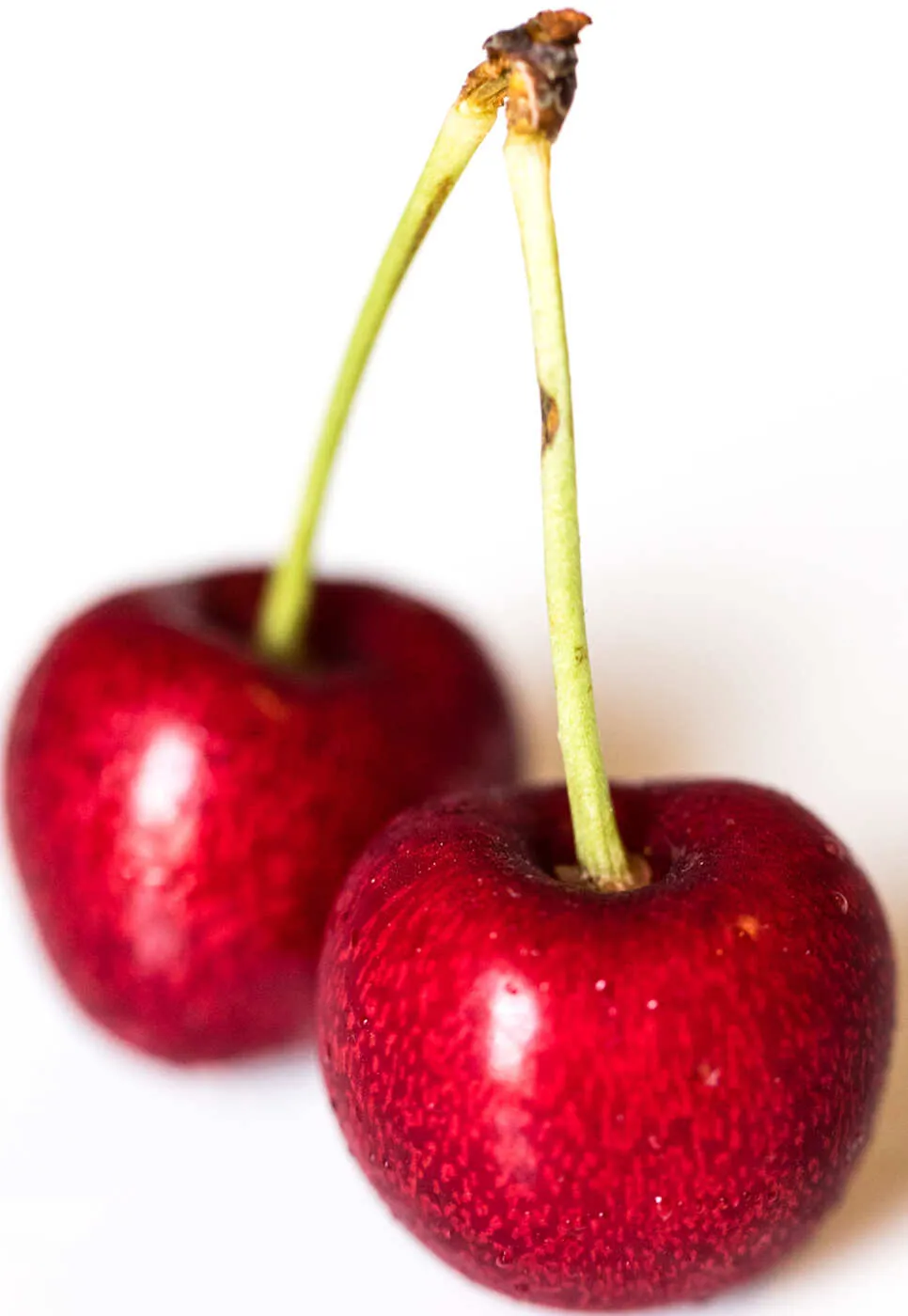 Photo: spurekar, CC BY 2.0, via Wikimedia Commons
Sweet cherries (P. avium) are primarily consumed fresh and have a short season (late spring to midsummer in the Northern Hemisphere) that makes them a perishable commodity. They are also sold canned (frequently in heavy syrup, which substantially increases sugar content), frozen, or dried. Dried sweet cherries (often sweetened) are incorporated into trail mixes, baked goods, and cereals.
Sour cherries (P. cerasus) are more commonly processed than consumed fresh, due to their astringency and high acidity. Commercial products include tart cherry juice, concentrate (typical research dose: 30 mL twice daily, representing approximately 60 Montmorency cherries per serving), freeze-dried powder, and soft gel capsules. Water-packed canned sour cherries avoid the added sugar of syrup-packed versions. Heat processing can reduce heat-sensitive compounds such as vitamin C and anthocyanins, so polyphenol content varies between products.
Cherries pair with cacao in the chocolate-cherry version among the overnight oats recipes. For other foods studied for inflammation, see the anti-inflammatory pantry guide; the polyphenols and aging research review covers the wider evidence on anthocyanins and related compounds. Pomegranate is the richer source of the ellagitannins mentioned above.
Safety, Interactions, and Contraindications
Cherries are a common food and are generally well tolerated at typical dietary quantities. Specific considerations include:
Allergy: Cherry allergy occurs. In central and northern Europe it is mostly oral allergy syndrome in people with birch pollen allergy (driven by the allergen Pru av 1), while in Mediterranean populations reactions are more often caused by lipid transfer proteins (Scheurer et al., 2001).
Anticoagulant interaction (theoretical): No interaction between cherries and warfarin has been documented in humans. In laboratory work, quercetin and its metabolites displaced warfarin from blood albumin but inhibited CYP2C9, the enzyme that clears warfarin, only weakly, making a CYP2C9-mediated interaction unlikely (Poór et al., 2017). People on warfarin should still tell their clinician about high-dose cherry or quercetin supplements.
Gastrointestinal effects of concentrate: Cherries contain sorbitol, the main sugar alcohol in the fruit (Hayaloglu & Demir, 2015), so large quantities of tart cherry concentrate or juice may cause loose stools or bloating in sensitive people.
Sulfite sensitivity: Some processed cherry products, such as dried or maraschino cherries, may contain added sulfites as preservatives. Sulfite-sensitive individuals, including people whose asthma is triggered by sulfites, should review product labels.
Pits (seeds): Cherry kernels contain cyanogenic glycosides, chiefly amygdalin (Senica et al., 2016), a compound that can release hydrogen cyanide upon enzymatic hydrolysis in the gastrointestinal tract. Intact pits swallowed whole pose little risk because the hard endocarp limits enzymatic access; crushed or chewed pits should be avoided, as they release cyanide-forming compounds.
Diabetes and glycemic management: Sweet cherries have a glycemic index of approximately 22 (low). Both are generally compatible with diabetic dietary patterns at moderate serving sizes, though carbohydrate content should be tracked.
Frequently Asked Questions
What are the benefits of tart cherry juice?
The best-supported use is exercise recovery: several small randomized trials found tart cherry juice helped strength return faster after marathons or intense strength work, though participants could usually taste which drink they had. Two small crossover trials reported longer sleep, and observational data link cherries to fewer gout attacks. Each of these findings needs larger trials.
Does tart cherry juice help you sleep?
Limited evidence suggests it may. In a double-blind crossover trial of 20 healthy adults, seven days of Montmorency tart cherry juice concentrate raised urinary melatonin and increased time in bed, total sleep time and sleep efficiency compared with placebo. A pilot study in adults over 50 with insomnia reported about 84 more minutes of sleep among its 8 completers. Both trials were small.
How much tart cherry juice do studies use?
A typical research dose of tart cherry concentrate is 30 mL twice a day, which represents roughly 60 Montmorency cherries per serving. Some trials used ready-to-drink juice instead, so the amount varies by study and product. Concentrate is high in fruit sugar and sorbitol, and anyone with diabetes, a bowel condition or regular medication should check with a clinician first.
Is it safe to drink tart cherry juice every day?
Cherries are a common food, and trials have given tart cherry juice daily for periods of a week up to six weeks. Long-term daily use has not been studied. The likeliest side effects are digestive: cherries contain sorbitol, so large amounts can cause loose stools or bloating. People on warfarin should mention high-dose cherry or quercetin products to their clinician.
Are tart cherries healthier than sweet cherries?
They differ more than they rank. Tart cherries have less sugar (8.5 g versus 12.8 g per 100 g) and generally higher anthocyanin and phenolic levels, which is why most clinical trials use them. Sweet cherries are lower in acid and are usually eaten fresh; one small study found 280 g of sweet Bing cherries lowered plasma urate for several hours.
Does tart cherry juice help with gout?
Preliminary evidence suggests a possible benefit. In a case-crossover study of 633 people with gout, cherry intake over a two-day period was associated with a 35% lower risk of a recurrent attack, and a small study in 10 women found cherries lowered plasma urate. These are not trials of gout treatment, so cherries are not a substitute for prescribed urate-lowering therapy.
References
Show all 18 referencesShow fewer
- Howatson, G., McHugh, M. P., Hill, J. A., Brouner, J., Jewell, A. P., van Someren, K. A., Shave, R. E., & Howatson, S. A. (2010). Influence of tart cherry juice on indices of recovery following marathon running. Scandinavian Journal of Medicine & Science in Sports, 20(6), 843–852.
- Howatson, G., Bell, P. G., Tallent, J., Middleton, B., McHugh, M. P., & Ellis, J. (2012). Effect of tart cherry juice (Prunus cerasus) on melatonin levels and enhanced sleep quality. European Journal of Nutrition, 51(8), 909–916.
- Zhang, Y., Neogi, T., Chen, C., Chaisson, C., Hunter, D. J., & Choi, H. K. (2012). Cherry consumption and decreased risk of recurrent gout attacks. Arthritis & Rheumatism, 64(12), 4004–4011.
- Jacob, R. A., Spinozzi, G. M., Simon, V. A., Kelley, D. S., Prior, R. L., Hess-Pierce, B., & Kader, A. A. (2003). Consumption of cherries lowers plasma urate in healthy women. Journal of Nutrition, 133(6), 1826–1829.
- Schumacher, H. R., Pullman-Mooar, S., Gupta, S. R., Dinnella, J. E., Kim, R., & McHugh, M. P. (2013). Randomized double-blind crossover study of the efficacy of a tart cherry juice blend in treatment of osteoarthritis (OA) of the knee. Osteoarthritis and Cartilage, 21(8), 1035–1041.
- Losso, J. N., Finley, J. W., Karki, N., Liu, A. G., Prudente, A., Tipton, R., Yu, Y., & Greenway, F. L. (2018). Pilot study of the tart cherry juice for the treatment of insomnia and investigation of mechanisms. American Journal of Therapeutics, 25(2), e194–e201.
- Bowtell, J. L., Sumners, D. P., Dyer, A., Fox, P., & Mileva, K. N. (2011). Montmorency cherry juice reduces muscle damage caused by intensive strength exercise. Medicine & Science in Sports & Exercise, 43(8), 1544–1551.
- Hooman, N., Mojab, F., Nickavar, B., & Pouryousefi-Kermani, P. (2009). Diuretic effect of powdered Cerasus avium (cherry) tails on healthy volunteers. Pakistan Journal of Pharmaceutical Sciences, 22(4), 381–383.
- Blau, L. W. (1950). Cherry diet control for gout and arthritis. Texas Reports on Biology and Medicine, 8(3), 309–311.
- Damar, I., & Ekşi, A. (2012). Antioxidant capacity and anthocyanin profile of sour cherry (Prunus cerasus L.) juice. Food Chemistry, 135(4), 2910–2914.
- Wang, H., Nair, M. G., Strasburg, G. M., et al. (1999). Antioxidant and antiinflammatory activities of anthocyanins and their aglycon, cyanidin, from tart cherries. Journal of Natural Products, 62(2), 294–296.
- Burkhardt, S., Tan, D. X., Manchester, L. C., Hardeland, R., & Reiter, R. J. (2001). Detection and quantification of the antioxidant melatonin in Montmorency and Balaton tart cherries (Prunus cerasus). Journal of Agricultural and Food Chemistry, 49(10), 4898–4902.
- Kim, D. O., Heo, H. J., Kim, Y. J., Yang, H. S., & Lee, C. Y. (2005). Sweet and sour cherry phenolics and their protective effects on neuronal cells. Journal of Agricultural and Food Chemistry, 53(26), 9921–9927.
- Haidari, F., Mohammad Shahi, M., Keshavarz, S. A., & Rashidi, M. R. (2009). Inhibitory effects of tart cherry (Prunus cerasus) juice on xanthine oxidoreductase activity and its hypouricemic and antioxidant effects on rats. Malaysian Journal of Nutrition, 15(1), 53–64.
- Scheurer, S., Pastorello, E. A., Wangorsch, A., et al. (2001). Recombinant allergens Pru av 1 and Pru av 4 and a newly identified lipid transfer protein in the in vitro diagnosis of cherry allergy. Journal of Allergy and Clinical Immunology, 107(4), 724–731.
- Poór, M., Boda, G., Needs, P. W., Kroon, P. A., Lemli, B., & Bencsik, T. (2017). Interaction of quercetin and its metabolites with warfarin: Displacement of warfarin from serum albumin and inhibition of CYP2C9 enzyme. Biomedicine & Pharmacotherapy, 88, 574–581.
- Hayaloglu, A. A., & Demir, N. (2015). Physicochemical characteristics, antioxidant activity, organic acid and sugar contents of 12 sweet cherry (Prunus avium L.) cultivars grown in Turkey. Journal of Food Science, 80(3), C564–C570.
- Senica, M., Stampar, F., Veberic, R., & Mikulic-Petkovsek, M. (2016). Transition of phenolics and cyanogenic glycosides from apricot and cherry fruit kernels into liqueur. Food Chemistry, 203, 483–490.
Related content
More in Fruits
- Apple (Malus domestica)
Are apples good for you? Apples supply pectin fiber and quercetin, and large cohort studies link regular intake to lower heart disease and diabetes risk.
- Avocado (Persea americana)
Is avocado good for you? Avocado is high in monounsaturated fat, fiber and potassium, and small trials link a daily avocado to lower LDL cholesterol.
- Banana (Musa acuminata)
Are bananas good for you? Bananas supply potassium, vitamin B6 and fiber, and green bananas add resistant starch. The evidence, and who should limit them.
- Grapefruit (Citrus × paradisi)
Is grapefruit good for you? It is low in calories and rich in vitamin C, but it interacts with statins and 85+ other drugs. Benefits, nutrition and risks.
- Grapes (Vitis vinifera)
Are grapes good for you? Grapes supply skin polyphenols and vitamin K but little fiber and plenty of sugar. What the vascular and resveratrol data show.
- Kiwi (Actinidia deliciosa)
Is kiwi good for you? Kiwifruit has more vitamin C than orange, plus fiber and vitamin K, and trials show two kiwis a day can ease constipation.

Curated by Superfoods Advisor Editors·Last updated