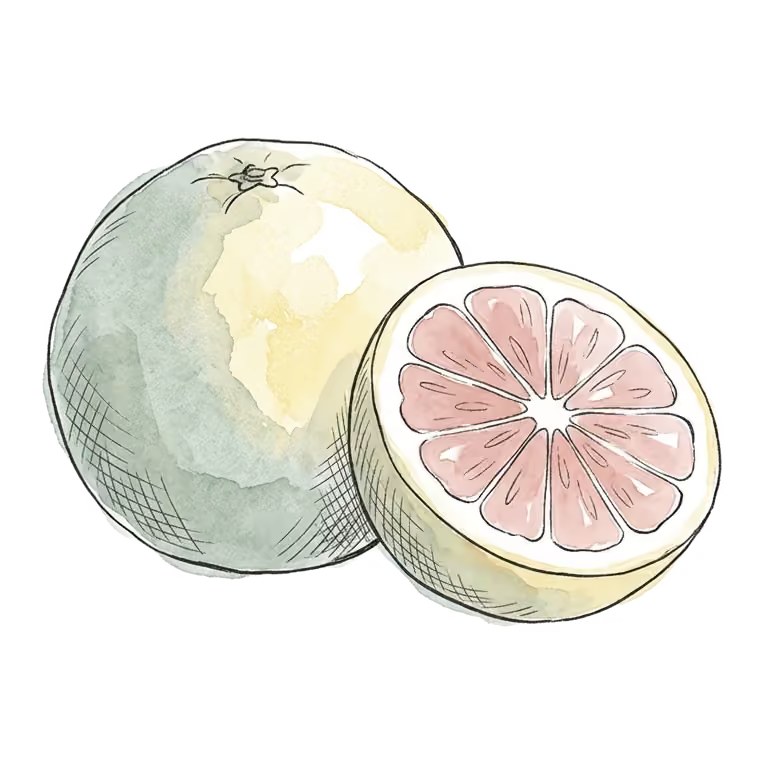
Grapefruit (Citrus × paradisi)
Citrus × paradisi · also known as forbidden fruit, toronja, pamplemousse
By Superfoods Advisor Editors·July 3, 2026
Is grapefruit good for you? It is low in calories and rich in vitamin C, but it interacts with statins and 85+ other drugs. Benefits, nutrition and risks.
Grapefruit is a nutritious, low-calorie fruit for most people, but it interacts with many medications. Grapefruit (Citrus × paradisi), a pomelo and sweet orange hybrid, provides 42 kcal and about 31 mg of vitamin C per 100 g, and pink and red varieties add lycopene. Its furanocoumarins block the gut enzyme CYP3A4, raising levels of drugs such as simvastatin.
The fruit was first documented in Barbados in the eighteenth century; Reverend Griffith Hughes described it in 1750 as the “forbidden fruit of Barbados,” and the name “grapefruit” comes from its cluster-like growth on the tree. Commercial cultivation expanded in Florida and California in the late nineteenth century.
Grapefruit entered early twentieth-century diet fads, some of which claimed it contained fat-burning enzymes. Research has not confirmed fat burning. The fruit’s documented contributions come from its flavanones (chiefly naringin), vitamin C and lycopene, and its interactions with commonly prescribed drugs have made it a standard topic in pharmacology.
Evidence at a glance
Active Compounds
- Naringenin and naringin — Naringin (naringenin-7-O-neohesperidoside) is the principal bitter flavanone of grapefruit, concentrated in the peel and present in commercial juice at roughly 100–630 mg per liter, with white-grapefruit juices higher than pink or ruby red (Wanwimolruk & Marquez, 2006). It is hydrolyzed in the colon to naringenin, which exerts anti-inflammatory, antioxidant, and hypolipidemic activity in experimental models. Naringenin also suppressed hepatic lipogenesis in a mouse study (Mulvihill et al., 2009).
- Furanocoumarins (bergamottin, 6′,7′-dihydroxybergamottin) — Psoralen-family compounds present in the juice and pulp. These are the primary agents responsible for grapefruit’s inhibition of intestinal CYP3A4. They are metabolized by the enzyme into reactive intermediates that bind it covalently, so activity returns only as new enzyme is synthesized (Bailey et al., 2013). In one crossover study, simvastatin exposure was still about doubled when the drug was taken 24 hours after a course of grapefruit juice, about 1.4-fold after 3 days (not statistically significant), and back to baseline after 7 days (Lilja et al., 2000). A separate transporter effect, inhibition of intestinal organic anion transporting polypeptide 1A2 (OATP1A2), is attributed mainly to naringin rather than furanocoumarins and lowers, rather than raises, levels of drugs such as fexofenadine (Bailey et al., 2007).
- Lycopene — The carotenoid responsible for the pink/red coloration of Ruby Red and pink varieties; USDA lists about 1,420 µg per 100 g for raw pink and red grapefruit (USDA FoodData Central), and content varies with variety and ripeness. Lycopene is a potent singlet-oxygen quencher. White/yellow grapefruit varieties contain negligible lycopene (USDA FoodData Central).
- Vitamin C (ascorbic acid) — Approximately 31–33 mg per 100 g fresh flesh (pink/red and white raw grapefruit, USDA FoodData Central); grapefruit is a good dietary source of ascorbic acid, supporting collagen synthesis and immune function.
- Pectin — A soluble dietary fiber concentrated in the peel and segment membranes; primarily galacturonic acid polymers that may reduce LDL cholesterol by binding bile acids in the small intestine.
- Limonoids (limonin, nomilin) — Triterpene bitter compounds associated with antioxidant and antiproliferative activity in cell culture; present predominantly in seeds and peel.
- Potassium — 135 mg per 100 g (pink/red); relevant to blood pressure regulation.
- Folate — 13 µg per 100 g (pink/red; 10 µg in white); lower than orange but contributes to one-carbon metabolism requirements.
Nutritional Profile
Per 100 g of raw pink/red grapefruit (USDA FoodData Central, SR Legacy 174673):
| Nutrient | Amount | % DV |
|---|---|---|
| Energy | 42 kcal | — |
| Total fat | 0.1 g | — |
| Carbohydrate | 10.7 g | — |
| — Dietary fiber | 1.6 g | — |
| — Sugars | 6.9 g | — |
| Protein | 0.8 g | — |
| Vitamin C | 31.2 mg | — |
| Potassium | 135 mg | — |
| Folate | 13 µg | — |
| Vitamin A | 58 µg RAE | — |
| Lycopene | 1,420 µg (pink/red varieties) | — |
| Calcium | 22 mg | — |
| Magnesium | 9 mg | — |
White grapefruit varieties are lower in lycopene and vitamin A but otherwise nutritionally similar (USDA FoodData Central).
Evidence for Purported Benefits
Cardiovascular Risk Factors
Evidence:Limited Two small, short-term RCTs (n=57 and 85) reported favorable lipid changes.
A randomized trial by Gorinstein et al. (2006, Journal of Agricultural and Food Chemistry, n = 57 patients post-coronary bypass surgery) found that daily consumption of one red or white grapefruit for 30 days significantly reduced total cholesterol (by 15.5% in the red variety and 7.6% in white), LDL cholesterol (by 20.3% and 10.7%), and plasma triglycerides (by 17.2% and 5.6%) compared with control, with red grapefruit producing greater reductions; the authors linked this to red grapefruit’s higher content of bioactive compounds and antioxidant capacity. In a 2011 trial by Silver et al. (Nutrition & Metabolism, n = 85 obese adults on a calorie-restricted diet), participants eating grapefruit, drinking grapefruit juice, or drinking water before meals for 12 weeks lost a similar amount of weight (7.1% overall, with no significant difference between groups), though HDL cholesterol rose more in the grapefruit and grapefruit juice groups than in the water group. These studies are small and short-term, limiting generalizability.
Glycemic Regulation
Evidence:Preliminary One 12-week trial lowered post-glucose insulin; naringenin data come from cell and mouse studies.
Naringenin activated peroxisome proliferator-activated receptors (PPAR-α and PPAR-γ) in human and rat liver cells (Goldwasser et al., 2010) and improved insulin sensitivity in mice fed a high-fat diet (Mulvihill et al., 2009). Controlled human trials of naringenin supplementation on insulin sensitivity are lacking. In one 12-week trial in obese adults, fresh grapefruit before meals lowered 2-hour post-glucose insulin compared with placebo (Fujioka et al., 2006), but evidence from whole grapefruit trials in humans with diabetes is very limited; individuals with diabetes should not substitute grapefruit for established pharmacological management.
Antioxidant and Anti-inflammatory Activity
Evidence:Preliminary Observational links to dietary lycopene and laboratory antioxidant assays; no trials with clinical endpoints.
Pink and red grapefruit are among the higher lycopene-containing common fruits and contribute to dietary lycopene intake, which observational studies associate with lower prostate cancer risk (Rowles et al., 2017) and lower cardiovascular disease and stroke risk (Cheng et al., 2019). Grapefruit flavanones such as naringenin also show antioxidant activity in laboratory assays. However, in vitro antioxidant assays do not reliably translate to in vivo effects, and no RCTs have used clinical endpoints related to grapefruit’s antioxidant capacity.
Weight Management
Evidence:Limited Two RCTs; results conflict, with one showing modestly greater weight loss and the other none.
A randomized trial (Fujioka et al., 2006, Journal of Medicinal Food, n = 91 obese adults) found that eating half a fresh grapefruit before meals for 12 weeks resulted in modestly greater weight loss compared with a placebo capsule, whereas the Silver et al. (2011) trial found no difference in weight loss between grapefruit and water preloads. The mechanisms proposed include grapefruit’s low energy density, satiety from dietary fiber and water content, and possible insulin-modulating effects of naringenin. However, the caloric displacement effect (replacing higher-calorie foods with a low-calorie fruit) is a confounding variable in all such trials, and no evidence supports a direct fat-burning mechanism.
Typical Use and Preparation
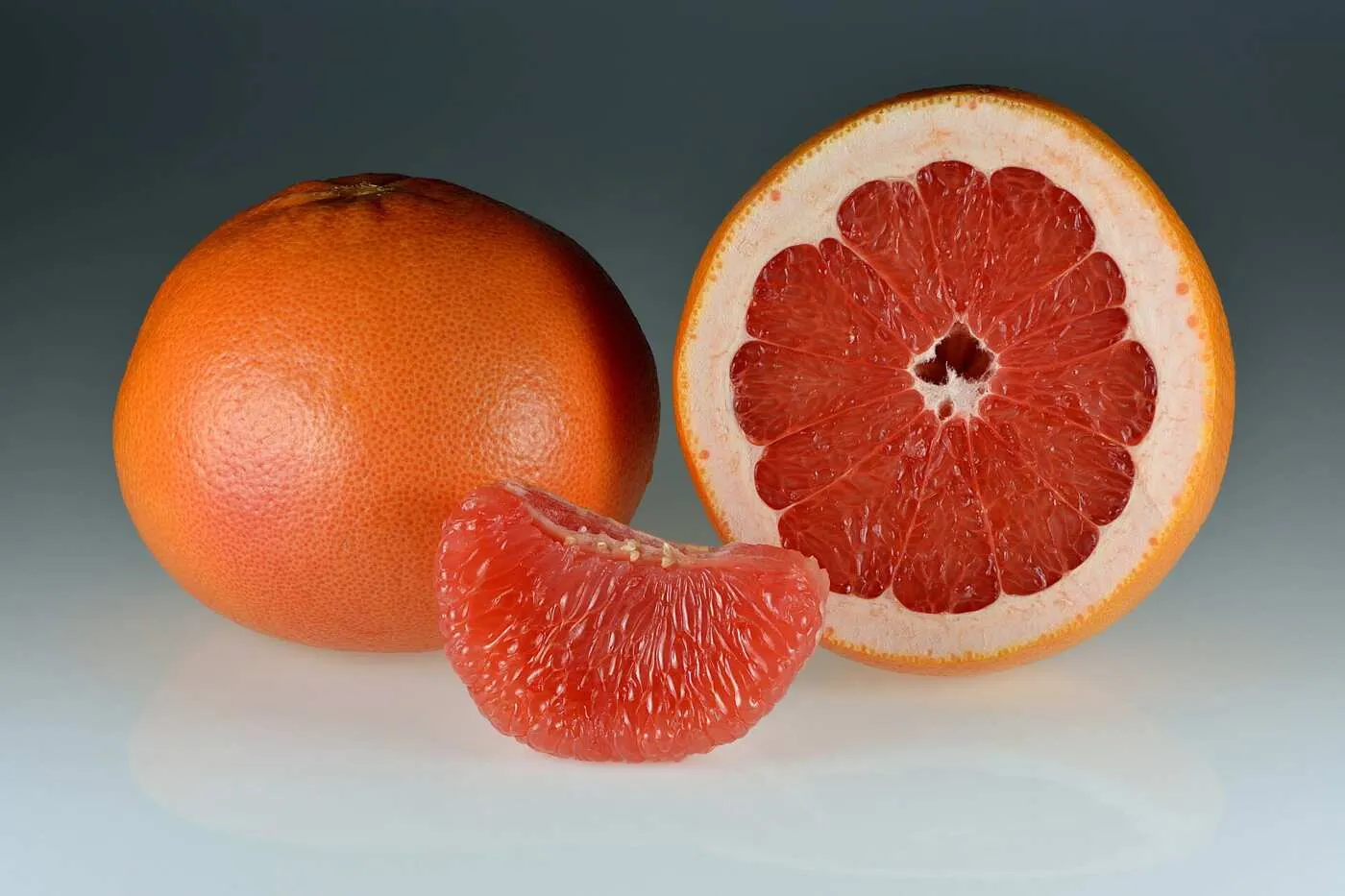 Photo: Ivar Leidus, CC BY-SA 4.0, via Wikimedia Commons
Grapefruit is consumed fresh (halved and sectioned, or peeled and segmented), as chilled juice, or as a component of fruit salads and citrus blends. The bitter flavor can be mitigated by sugar or artificial sweeteners. Pink and red varieties (Ruby Red, Star Ruby) are considerably sweeter and milder than white varieties (Marsh White, Duncan) and command a higher commercial premium.
Because furanocoumarins are innate to the fruit, every form of grapefruit (whole fruit, freshly squeezed juice, frozen concentrate) can inhibit CYP3A4, and one whole grapefruit or about 200 mL of juice is enough to produce a clinically relevant interaction (Bailey et al., 2013). The same review describes a case of acute renal dysfunction in a tacrolimus patient after eating a large amount of grapefruit marmalade. Patients on affected medications should discuss all grapefruit product types with their pharmacist or physician.
Grapefruit zest (peel) is used as a culinary flavoring and contains concentrated limonoids, naringin, and essential oils (primarily limonene). Grapefruit seed extract (GSE), sold as an antimicrobial supplement, has been found in several analyses to owe its antimicrobial activity primarily to synthetic preservative contaminants rather than seed-derived compounds (von Woedtke et al., 1999); one analysis of commercial products found benzethonium chloride at 0.29–21.84% and triclosan in two samples (Avula et al., 2007); evidence for its purported benefits is unreliable.
Citrus fruit is compared with other vitamin C sources, several of them richer per gram, in our guide to immune-supporting foods. For a citrus fruit without the drug interaction, see orange; limes do contain furanocoumarins.
Safety, Interactions, and Contraindications
CYP3A4 and OATP Drug Interactions — Clinical Priority
This is the most clinically significant safety consideration for grapefruit. Grapefruit irreversibly inhibits intestinal CYP3A4 and also suppresses OATP1A2 transporter activity. More than 85 drugs are known or predicted to interact with grapefruit, 43 of them with potentially serious adverse effects; the drugs at risk are taken orally, have very low to intermediate oral bioavailability, and are metabolized by CYP3A4 (Bailey et al., 2013). A single usual serving (200–250 mL of juice or one whole fruit) is enough: felodipine taken with that amount reached about three times the blood concentration seen with water. The effect fades slowly, falling to about half its maximum when the drug is taken 10 hours after the juice and about a quarter at 24 hours (Bailey et al., 2013).
Drug classes with documented or predicted grapefruit interactions include (the size of the effect varies widely between drugs in the same class):
- HMG-CoA reductase inhibitors (statins): Simvastatin and lovastatin are most severely affected. One 200 mL glass of juice daily for 3 days raised simvastatin exposure (AUC) 3.6-fold (Lilja et al., 2004), and large amounts of double-strength juice raised it about 16-fold (Lilja et al., 1998); the same high-dose regimen raised lovastatin AUC about 15-fold (Kantola et al., 1998). Atorvastatin is moderately affected (atorvastatin acid AUC about 2.5-fold), while pravastatin showed no interaction (Lilja et al., 1999); rosuvastatin is eliminated largely unchanged and fluvastatin is metabolized by CYP2C9, so neither is expected to interact (Bailey et al., 2013). Risk includes myopathy and, at extreme exposure, rhabdomyolysis; the FDA-approved simvastatin label tells patients to avoid grapefruit juice (Zocor prescribing information).
- Calcium channel blockers (CCBs): Felodipine, nifedipine, and nisoldipine. Amlodipine, by contrast, showed no appreciable change in a controlled study (Vincent et al., 2000), and its FDA label states that grapefruit juice has no impact on its exposure (Norvasc prescribing information). In the first report of the interaction, felodipine bioavailability with grapefruit juice averaged 284% of that with water (range 164–469%) in six men with borderline hypertension, while orange juice had no such effect (Bailey et al., 1991, Lancet). Risks include excessive blood pressure reduction, reflex tachycardia, and peripheral edema.
- Immunosuppressants: Cyclosporine and tacrolimus are highly sensitive CYP3A4 substrates used in organ transplant recipients; in a meta-analysis of healthy-volunteer trials, grapefruit juice raised cyclosporine exposure (AUC) by about 53% on average (Sridharan & Sivaramakrishnan, 2016), and because both drugs have a narrow therapeutic range the increase can precipitate nephrotoxicity (Bailey et al., 2013). Transplant patients are typically instructed to avoid grapefruit entirely.
- Benzodiazepines: Triazolam, midazolam, and diazepam (CYP3A4-mediated). Grapefruit juice raised oral midazolam AUC by 52% (Kupferschmidt et al., 1995), and a small study of 8 subjects reported a 3.2-fold rise in diazepam AUC (Ozdemir et al., 1998); the main risk is excessive sedation.
- Antiarrhythmics: Grapefruit juice raised amiodarone AUC by 50% and Cmax by 84% in healthy volunteers; in that study it blocked formation of the main metabolite and the drug’s QT effect was actually smaller (Libersa et al., 2000), although QT prolongation and torsade de pointes with the combination have been reported in clinical practice (Bailey et al., 2013). Grapefruit juice roughly tripled dronedarone exposure (Bailey et al., 2013), and the dronedarone label says to avoid it (Multaq prescribing information).
- Antiretrovirals: Evidence varies by drug. Grapefruit juice doubled the low oral bioavailability of saquinavir in 8 volunteers (Kupferschmidt et al., 1998) but did not change indinavir pharmacokinetics (Penzak et al., 2002). Bailey et al. list maraviroc and rilpivirine among drugs with a high or very high predicted interaction risk (2013).
- Hormonal contraceptives: Ethinyl estradiol is partly CYP3A4-metabolized; in one crossover study grapefruit juice raised its AUC to 128% of control (Weber et al., 1996), but the clinical significance at dietary grapefruit quantities is unclear.
- Erectile dysfunction drugs: Grapefruit juice raised sildenafil AUC by 23% and made its absorption less predictable (Jetter et al., 2002). The tadalafil label states that grapefruit juice would likely increase exposure, although this has not been studied directly (Cialis prescribing information).
Patients taking any of the above drug categories — or any medication labeled “avoid with grapefruit” — should consult their pharmacist or prescribing physician before consuming grapefruit or grapefruit juice. Switching to a non-interacting alternative (e.g., sweet orange juice) is the safest approach. Pomelo (Citrus maxima) also contains furanocoumarins and poses similar interaction risks; Seville orange (Citrus aurantium, used in marmalades) and limes are other furanocoumarin-containing fruits, whereas sweet oranges such as navel and Valencia do not produce the interaction (Bailey et al., 2013).
Photosensitivity (topical): Furanocoumarins in grapefruit peel and zest may cause phototoxic dermatitis upon skin contact followed by UV light exposure (a reaction termed phytophotodermatitis). This is primarily a risk with concentrated peel products, not fresh fruit consumption.
Kidney stone risk: In a prospective cohort of 45,289 men, each daily 240 mL serving of grapefruit juice was associated with a 37% higher risk of kidney stones, a similar association to that seen for apple juice (Curhan et al., 1996, American Journal of Epidemiology). This is an observational finding, and the mechanism is not established: in a small crossover study, three daily glasses of grapefruit juice raised urinary oxalate but also citrate, with no net change in calcium oxalate supersaturation (Goldfarb & Asplin, 2001).
Frequently Asked Questions
Is grapefruit good for you?
For people not taking interacting medications, grapefruit is a low-calorie source of vitamin C, fiber and, in pink and red varieties, lycopene. Two small trials reported favorable cholesterol changes. The main reason for caution is drug interactions: more than 85 medications are known or predicted to interact with it, so anyone on regular prescriptions should check with a pharmacist.
Why does grapefruit interact with medications?
Grapefruit contains furanocoumarins, such as bergamottin, that permanently disable the CYP3A4 enzyme in the gut wall. That enzyme normally breaks down part of some oral drugs before they reach the bloodstream, so blocking it raises drug levels. Activity returns only as the body makes new enzyme, which is why the effect lasts more than a day after one serving.
How much grapefruit is safe with medication?
For drugs that interact, no amount is reliably safe. One whole grapefruit or about 200 mL of juice can be enough: felodipine taken with that amount reached about three times its usual blood concentration. Spacing doses does not solve it, since the effect was still about a quarter of its maximum 24 hours later. Ask a pharmacist whether your specific drug is affected.
Is grapefruit good for weight loss?
The evidence is mixed. In one 12-week trial of 91 obese adults, half a fresh grapefruit before meals led to modestly greater weight loss than a placebo capsule. Another trial of 85 adults found no difference between grapefruit, grapefruit juice and water preloads. Any effect likely comes from replacing higher-calorie foods with a low-calorie fruit, not from fat burning.
Is grapefruit good for diabetics?
Evidence in people with diabetes is very limited. One 12-week trial in obese adults found that fresh grapefruit before meals lowered insulin two hours after a glucose drink compared with placebo, and naringenin improved insulin sensitivity in mice. Grapefruit is not a substitute for diabetes treatment, and some drugs used alongside diabetes care, such as certain statins, interact with it.
Is grapefruit juice as good as the whole fruit?
Juice keeps much of the vitamin C but loses most of the fiber found in segment membranes. It carries the same drug-interaction risk as whole fruit, and a 200 mL glass is enough to trigger it. In a cohort of 45,289 men, each daily 240 mL serving of grapefruit juice was associated with a 37% higher risk of kidney stones, though the mechanism is not established.
References
Show all 32 referencesShow fewer
- Bailey, D. G., Spence, J. D., Munoz, C., & Arnold, J. M. O. (1991). Interaction of citrus juices with felodipine and nifedipine. Lancet, 337(8736), 268–269.
- Gorinstein, S., Caspi, A., Libman, I., Lerner, H. T., Huang, D., Leontowicz, H., Leontowicz, M., Tashma, Z., Katrich, E., Feng, S., & Trakhtenberg, S. (2006). Red grapefruit positively influences serum triglyceride level in patients suffering from coronary atherosclerosis: Studies in vitro and in humans. Journal of Agricultural and Food Chemistry, 54(5), 1887–1892.
- Fujioka, K., Greenway, F., Sheard, J., & Ying, Y. (2006). The effects of grapefruit on weight and insulin resistance: Relationship to the metabolic syndrome. Journal of Medicinal Food, 9(1), 49–54.
- Curhan, G. C., Willett, W. C., Rimm, E. B., Spiegelman, D., & Stampfer, M. J. (1996). Prospective study of beverage use and the risk of kidney stones. American Journal of Epidemiology, 143(3), 240–247.
- Silver, H. J., Dietrich, M. S., & Niswender, K. D. (2011). Effects of grapefruit, grapefruit juice and water preloads on energy balance, weight loss, body composition, and cardiometabolic risk in free-living obese adults. Nutrition & Metabolism, 8, 8.
- Bailey, D. G., Dresser, G., & Arnold, J. M. O. (2013). Grapefruit–medication interactions: Forbidden fruit or avoidable consequences? CMAJ, 185(4), 309–316.
- Bailey, D. G., Dresser, G. K., Leake, B. F., & Kim, R. B. (2007). Naringin is a major and selective clinical inhibitor of organic anion-transporting polypeptide 1A2 (OATP1A2) in grapefruit juice. Clinical Pharmacology & Therapeutics, 81(4), 495–502.
- Lilja, J. J., Kivistö, K. T., & Neuvonen, P. J. (1998). Grapefruit juice–simvastatin interaction: Effect on serum concentrations of simvastatin, simvastatin acid, and HMG-CoA reductase inhibitors. Clinical Pharmacology & Therapeutics, 64(5), 477–483.
- Lilja, J. J., Kivistö, K. T., & Neuvonen, P. J. (1999). Grapefruit juice increases serum concentrations of atorvastatin and has no effect on pravastatin. Clinical Pharmacology & Therapeutics, 66(2), 118–127.
- Lilja, J. J., Kivistö, K. T., & Neuvonen, P. J. (2000). Duration of effect of grapefruit juice on the pharmacokinetics of the CYP3A4 substrate simvastatin. Clinical Pharmacology & Therapeutics, 68(4), 384–390.
- Lilja, J. J., Neuvonen, M., & Neuvonen, P. J. (2004). Effects of regular consumption of grapefruit juice on the pharmacokinetics of simvastatin. British Journal of Clinical Pharmacology, 58(1), 56–60.
- Kantola, T., Kivistö, K. T., & Neuvonen, P. J. (1998). Grapefruit juice greatly increases serum concentrations of lovastatin and lovastatin acid. Clinical Pharmacology & Therapeutics, 63(4), 397–402.
- Vincent, J., Harris, S. I., Foulds, G., Dogolo, L. C., Willavize, S., & Friedman, H. L. (2000). Lack of effect of grapefruit juice on the pharmacokinetics and pharmacodynamics of amlodipine. British Journal of Clinical Pharmacology, 50(5), 455–463.
- Sridharan, K., & Sivaramakrishnan, G. (2016). Interaction of citrus juices with cyclosporine: Systematic review and meta-analysis. European Journal of Drug Metabolism and Pharmacokinetics, 41(6), 665–673.
- Kupferschmidt, H. H., Ha, H. R., Ziegler, W. H., Meier, P. J., & Krähenbühl, S. (1995). Interaction between grapefruit juice and midazolam in humans. Clinical Pharmacology & Therapeutics, 58(1), 20–28.
- Ozdemir, M., Aktan, Y., Boydag, B. S., Cingi, M. I., & Musmul, A. (1998). Interaction between grapefruit juice and diazepam in humans. European Journal of Drug Metabolism and Pharmacokinetics, 23(1), 55–59.
- Libersa, C. C., Brique, S. A., Motte, K. B., Caron, J. F., Guédon-Moreau, L. M., Humbert, L., Vincent, A., Devos, P., & Lhermitte, M. A. (2000). Dramatic inhibition of amiodarone metabolism induced by grapefruit juice. British Journal of Clinical Pharmacology, 49(4), 373–378.
- Kupferschmidt, H. H., Fattinger, K. E., Ha, H. R., Follath, F., & Krähenbühl, S. (1998). Grapefruit juice enhances the bioavailability of the HIV protease inhibitor saquinavir in man. British Journal of Clinical Pharmacology, 45(4), 355–359.
- Penzak, S. R., Acosta, E. P., Turner, M., Edwards, D. J., Hon, Y. Y., Desai, H. D., & Jann, M. W. (2002). Effect of Seville orange juice and grapefruit juice on indinavir pharmacokinetics. Journal of Clinical Pharmacology, 42(10), 1165–1170.
- Weber, A., Jäger, R., Börner, A., Klinger, G., Vollanth, R., Matthey, K., & Balogh, A. (1996). Can grapefruit juice influence ethinylestradiol bioavailability? Contraception, 53(1), 41–47.
- Jetter, A., Kinzig-Schippers, M., Walchner-Bonjean, M., Hering, U., Bulitta, J., Schreiner, P., Sörgel, F., & Fuhr, U. (2002). Effects of grapefruit juice on the pharmacokinetics of sildenafil. Clinical Pharmacology & Therapeutics, 71(1), 21–29.
- Wanwimolruk, S., & Marquez, P. V. (2006). Variations in content of active ingredients causing drug interactions in grapefruit juice products sold in California. Drug Metabolism and Drug Interactions, 21(3–4), 233–243.
- Avula, B., Dentali, S., & Khan, I. A. (2007). Simultaneous identification and quantification by liquid chromatography of benzethonium chloride, methyl paraben and triclosan in commercial products labeled as grapefruit seed extract. Pharmazie, 62(8), 593–596.
- U.S. Department of Agriculture. FoodData Central: Grapefruit, raw, pink and red, all areas (FDC 174673).
- U.S. Department of Agriculture. FoodData Central: Grapefruit, raw, white, all areas (FDC 174676).
- U.S. Food and Drug Administration. Prescribing information: Zocor (simvastatin), Norvasc (amlodipine), Multaq (dronedarone), Cialis (tadalafil). DailyMed.
- Mulvihill, E. E., Allister, E. M., Sutherland, B. G., et al. (2009). Naringenin prevents dyslipidemia, apolipoprotein B overproduction, and hyperinsulinemia in LDL receptor-null mice with diet-induced insulin resistance. Diabetes, 58(10), 2198–2210.
- Goldwasser, J., Cohen, P. Y., Yang, E., Balaguer, P., Yarmush, M. L., & Nahmias, Y. (2010). Transcriptional regulation of human and rat hepatic lipid metabolism by the grapefruit flavonoid naringenin: Role of PPARalpha, PPARgamma and LXRalpha. PLoS One, 5(8), e12399.
- Rowles, J. L., 3rd, Ranard, K. M., Smith, J. W., An, R., & Erdman, J. W., Jr. (2017). Increased dietary and circulating lycopene are associated with reduced prostate cancer risk: A systematic review and meta-analysis. Prostate Cancer and Prostatic Diseases, 20(4), 361–377.
- Cheng, H. M., Koutsidis, G., Lodge, J. K., Ashor, A. W., Siervo, M., & Lara, J. (2019). Lycopene and tomato and risk of cardiovascular diseases: A systematic review and meta-analysis of epidemiological evidence. Critical Reviews in Food Science and Nutrition, 59(1), 141–158.
- von Woedtke, T., Schlüter, B., Pflegel, P., Lindequist, U., & Jülich, W. D. (1999). Aspects of the antimicrobial efficacy of grapefruit seed extract and its relation to preservative substances contained. Pharmazie, 54(6), 452–456.
- Goldfarb, D. S., & Asplin, J. R. (2001). Effect of grapefruit juice on urinary lithogenicity. Journal of Urology, 166(1), 263–267.
More in Fruits
- Apple (Malus domestica)
Are apples good for you? Apples supply pectin fiber and quercetin, and large cohort studies link regular intake to lower heart disease and diabetes risk.
- Avocado (Persea americana)
Is avocado good for you? Avocado is high in monounsaturated fat, fiber and potassium, and small trials link a daily avocado to lower LDL cholesterol.
- Banana (Musa acuminata)
Are bananas good for you? Bananas supply potassium, vitamin B6 and fiber, and green bananas add resistant starch. The evidence, and who should limit them.
- Cherry (Prunus avium / Prunus cerasus)
Tart cherry juice benefits, weighed: small trials suggest faster muscle recovery and longer sleep, and gout data are early. Sweet vs tart cherry nutrition.
- Grapes (Vitis vinifera)
Are grapes good for you? Grapes supply skin polyphenols and vitamin K but little fiber and plenty of sugar. What the vascular and resveratrol data show.
- Kiwi (Actinidia deliciosa)
Is kiwi good for you? Kiwifruit has more vitamin C than orange, plus fiber and vitamin K, and trials show two kiwis a day can ease constipation.

Curated by Superfoods Advisor Editors·Last updated