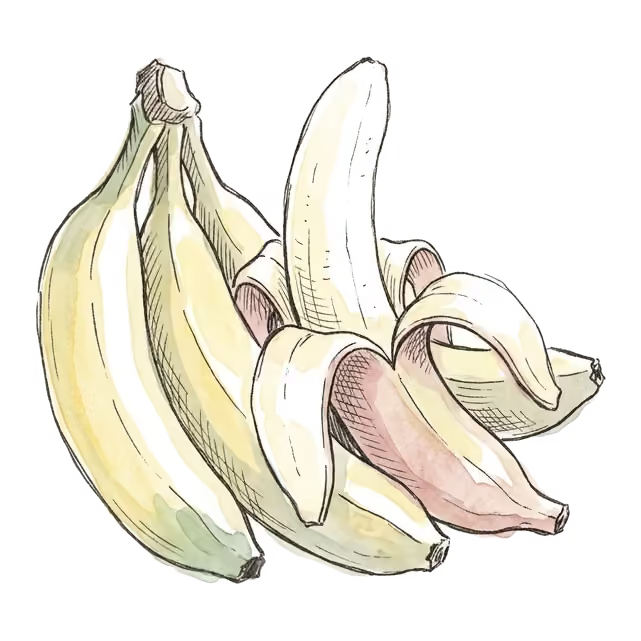
Banana (Musa acuminata)
Musa acuminata · also known as plantain (cooking banana), dessert banana, Cavendish
By Superfoods Advisor Editors·July 3, 2026
Are bananas good for you? Bananas supply potassium, vitamin B6 and fiber, and green bananas add resistant starch. The evidence, and who should limit them.
For most people, bananas are a nutritious everyday fruit. The banana (Musa acuminata and its hybrids, including the Cavendish dessert banana) is a tropical fruit that provides 89 kcal, 358 mg of potassium, 0.37 mg of vitamin B6 and 2.6 g of fiber per 100 g, according to USDA data. Green, unripe bananas also carry resistant starch.
The plant is a monocot native to tropical South and Southeast Asia, and bananas were intensively cultivated at Kuk Swamp in the New Guinea highlands by roughly 7,000 years ago (Denham et al., 2003). The Cavendish sub-group accounts for roughly 47% of world production by FAO estimates (FAO), though hundreds of cultivars exist.
Throughout the tropics, banana and plantain have long served as carbohydrate staples, and the fruit has a history of use in folk medicine (Singh et al., 2016). Modern research has focused on its potassium content and on the resistant starch in green bananas.
Evidence at a glance
Active Compounds
- Potassium — 358 mg per 100 g in ripe fruit (USDA FoodData Central); a good fruit source, though potatoes, legumes, and many leafy greens supply more per 100 g. Potassium is the primary intracellular cation and is central to membrane potential, cardiac rhythm regulation, and blood pressure regulation.
- Resistant starch (RS2) — In an ileostomy study, starch made up about 37% of dry weight in the least ripe bananas and about 3% in the most ripe, and up to 90% of the starch eaten was recovered undigested in ileal effluent (Englyst & Cummings, 1986). Resistant starch escapes small intestinal digestion and is fermented by colonic microbiota, producing short-chain fatty acids (SCFAs) including butyrate. As bananas ripen, resistant starch is progressively hydrolyzed to simple sugars (predominantly sucrose, glucose, and fructose), which raises the fruit’s glycemic response.
- Vitamin B6 (pyridoxine) — 0.37 mg per 100 g (~22% of the 1.7 mg Daily Value; USDA FoodData Central); banana is one of the richest fruit sources. Pyridoxal-5’-phosphate is an essential cofactor in amino acid transamination and serotonin biosynthesis from tryptophan.
- Dopamine and serotonin — Ripe banana pulp contains measurable dopamine (2.5–10 mg per 100 g; the peel far more) (Kanazawa & Sakakibara, 2000) and serotonin (about 15 µg per gram, roughly 1.5 mg per 100 g) (Feldman & Lee, 1985). Dietary dopamine does not cross the blood-brain barrier in meaningful quantities, and its antioxidant activity has been shown in vitro; its neurotransmitter effects are not achievable through banana consumption alone.
- Catechins and epicatechins — (+)-catechin, gallocatechin, and (−)-epicatechin, along with condensed tannins, have been detected in banana pulp (Bennett et al., 2010); they contribute to the fruit’s antioxidant capacity in in-vitro assays, which do not reflect effects in the body.
- Magnesium — 27 mg per 100 g (USDA FoodData Central); a modest amount; magnesium is a cofactor for more than 300 enzymes.
- Fructooligosaccharides (FOS) — Ripe bananas accumulate small amounts of 1-kestose, the simplest FOS (297–1,600 µg per gram of dry matter across eight cultivars); the study’s authors concluded these amounts fall below a functional prebiotic dose, so banana is not a meaningful FOS source (Der Agopian et al., 2008).
Nutritional Profile
Per 100 g of raw ripe banana flesh (USDA FoodData Central, SR Legacy 173944):
| Nutrient | Amount | % DV |
|---|---|---|
| Energy | 89 kcal | — |
| Total fat | 0.3 g | — |
| Carbohydrate | 22.8 g | — |
| — Dietary fiber | 2.6 g | — |
| — Sugars | 12.2 g | — |
| — Starch | 5.4 g | — |
| Protein | 1.1 g | — |
| Potassium | 358 mg | — |
| Magnesium | 27 mg | — |
| Vitamin B6 | 0.37 mg | — |
| Vitamin C | 8.7 mg | — |
| Folate | 20 µg | — |
| Manganese | 0.27 mg | — |
The glycemic index of raw banana is approximately 51, which falls in the low-GI band (55 or below) (Atkinson et al., 2008). Less ripe fruit, with more resistant starch, raises blood glucose less: in a small trial in 10 people with type 2 diabetes, under-ripe banana had a GI of 43 versus 74 for over-ripe banana (Hermansen et al., 1992).
Evidence for Purported Benefits
Blood Pressure Regulation
Evidence:Limited Potassium supplementation lowers blood pressure in RCT meta-analyses; trials using banana itself are few.
High dietary potassium intake is associated with lower blood pressure in multiple large prospective cohort studies. A meta-analysis by Poorolajal et al. (2017, PLOS ONE; 23 placebo-controlled RCTs, n = 1,213) found that oral potassium supplementation for at least 4 weeks reduced systolic blood pressure by a mean of 4.25 mmHg and diastolic by 2.53 mmHg in people with essential hypertension. Bananas, as a whole-food potassium source, are frequently cited in dietary guidelines for blood pressure management (DASH diet). Direct RCT evidence using banana as the test food is limited, but the potassium content provides plausible mechanistic support.
Gut Microbiome and Prebiotic Effects
Evidence:Preliminary Fermentation data come from other resistant starches; human trials of banana resistant starch are few and small.
Resistant starch from green bananas undergoes fermentation by saccharolytic bacteria in the colon. A review by Topping and Clifton (2001, Physiological Reviews) describes how colonic bacteria ferment resistant starch to short-chain fatty acids, mainly acetate, propionate, and butyrate, and notes that some resistant starch types favor butyrate production; human trials testing banana resistant starch specifically remain few and small. A 2020 study by Deehan et al. (Cell Host & Microbe) found that structurally distinct type-IV resistant starches each enriched specific bacterial taxa and shifted SCFA output toward either propionate or butyrate, though it did not test banana starch directly. The clinical relevance — particularly for gastrointestinal disease outcomes — requires larger and longer trials.
Exercise Recovery and Athletic Performance
Evidence:Preliminary A single small crossover trial (n=14 cyclists) found banana performed comparably to a sports drink.
Bananas are widely consumed as a pre- and intra-exercise food source due to their readily available carbohydrate content and electrolyte profile. A crossover study by Nieman et al. (2012, PLOS ONE, n = 14 cyclists) found that banana consumption during 75 km of cycling sustained performance comparably to a 6% carbohydrate sports drink, with similar blood glucose, inflammation, and oxidative stress profiles. Of 103 metabolites measured, only dopamine changed differently between trials, rising more with banana, though the functional significance of this difference remains unclear.
Mood and Serotonin Precursor Activity
Evidence:Insufficient Theoretical only; no controlled trials show banana changes serotonin turnover or mood.
Banana’s tryptophan and vitamin B6 content theoretically supports serotonin biosynthesis, as B6 (pyridoxal phosphate) is the cofactor for aromatic L-amino acid decarboxylase, the enzyme that converts 5-hydroxytryptophan to serotonin. However, no well-controlled RCTs have demonstrated measurable increases in central serotonin turnover or mood outcomes attributable to banana consumption in healthy adults. Claims that banana “boosts serotonin” are not supported by current clinical evidence.
Typical Use and Preparation
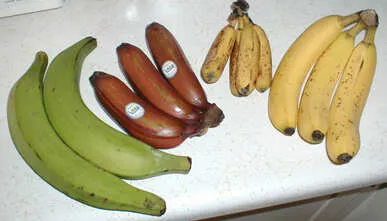 Photo: TimothyPilgrim, CC BY-SA 3.0, via Wikimedia Commons
Ripe dessert bananas are consumed raw as a portable snack or incorporated into smoothies, baked goods, pancakes, and puddings. Overripe bananas with darkened skins contain higher sugar concentrations and more complex flavor compounds resulting from enzymatic hydrolysis of starch and ester formation, making them preferred for baking applications.
Green bananas and plantains (cooking bananas, Musa × paradisiaca) are typically cooked — boiled, roasted, or fried — and function nutritionally more like a starchy vegetable than a sweet fruit due to their high resistant starch content. Green banana flour, produced by drying and milling unripe fruit, is used as a gluten-free flour substitute in some applications and as a resistant starch supplement.
Banana peel is edible and consumed in some culinary traditions, though it contains higher concentrations of tannins and fiber than the flesh. Commercial bananas are commonly treated with ethylene gas to accelerate uniform ripening post-harvest.
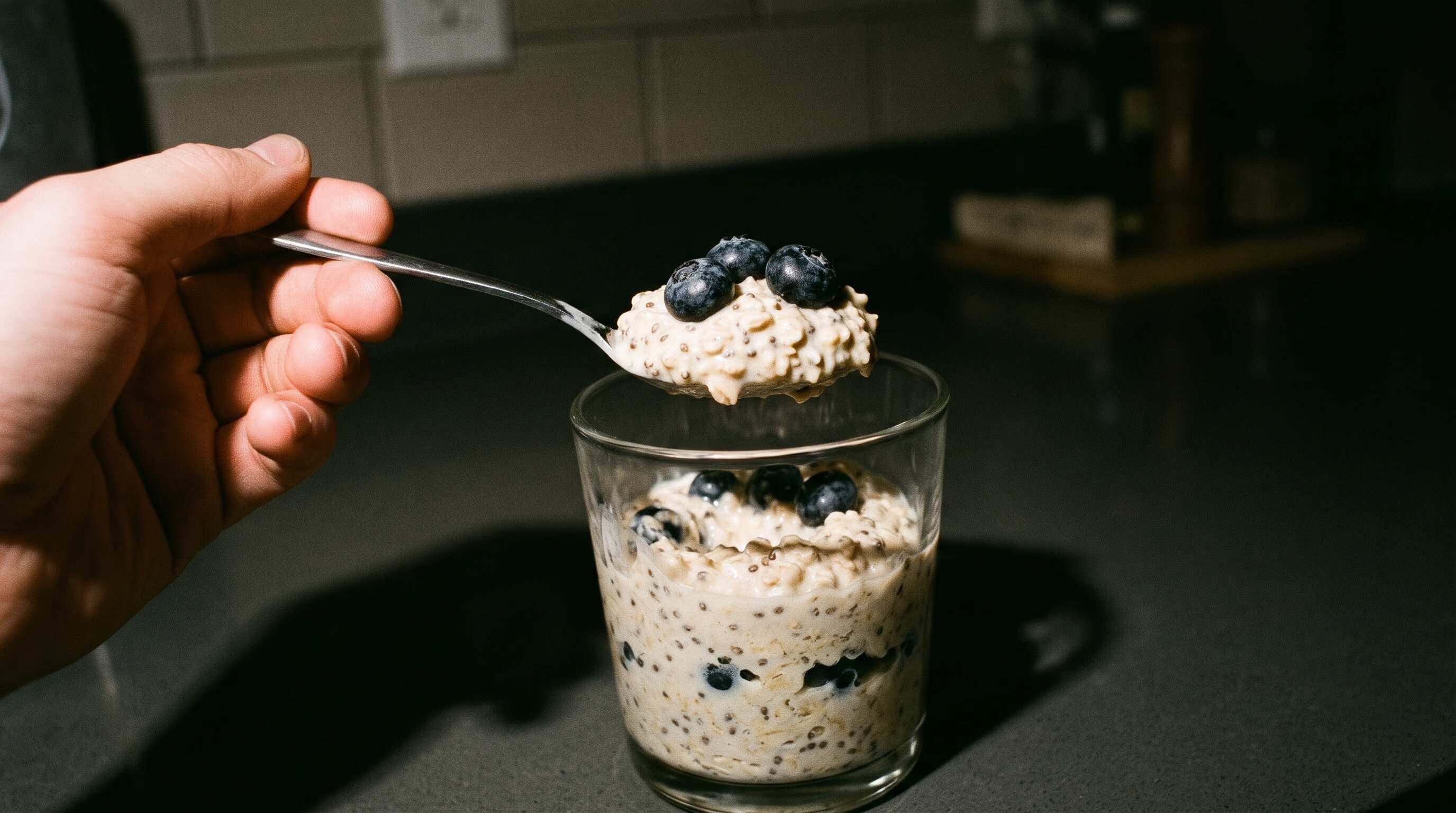
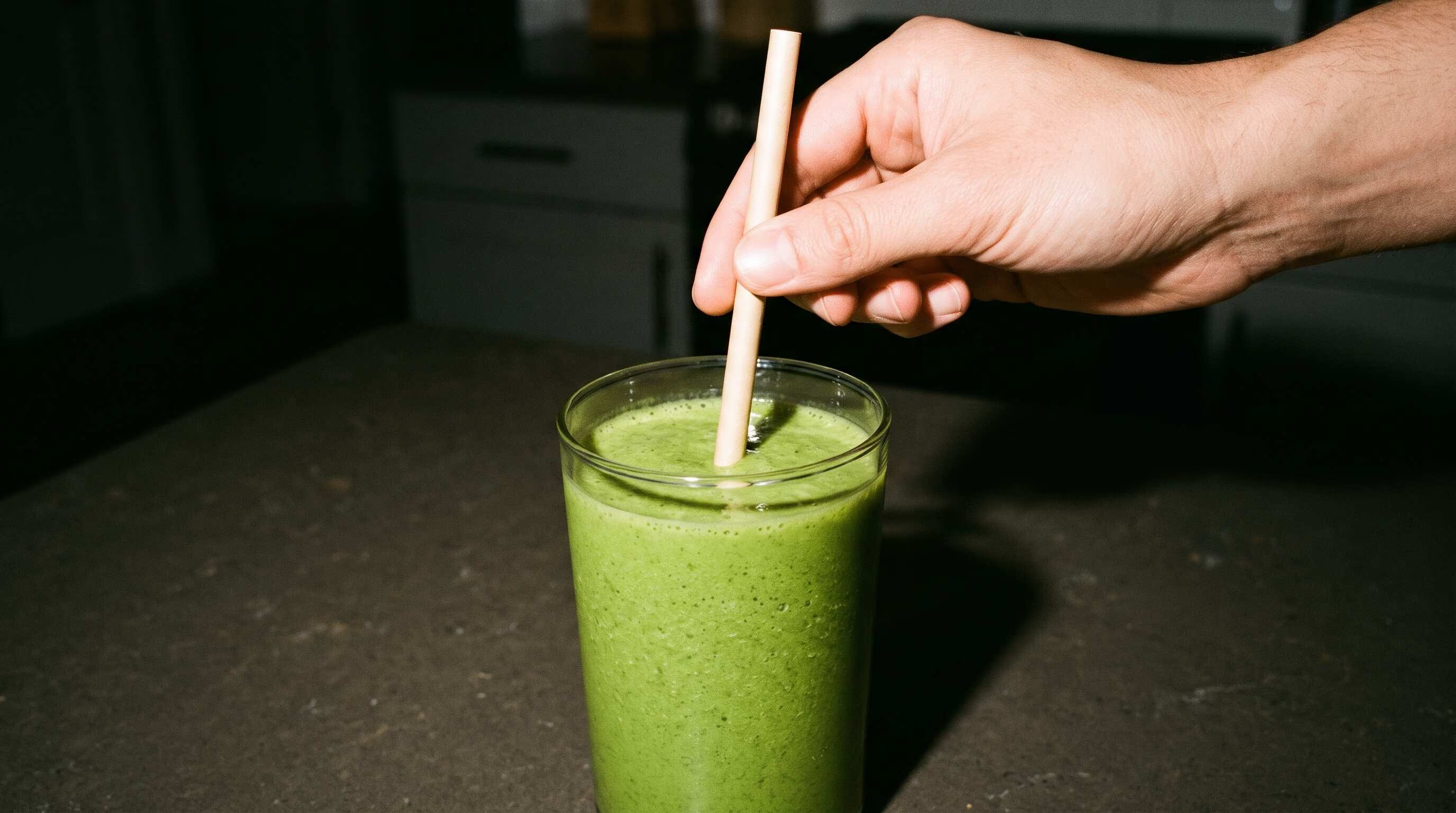
Frozen banana gives body to several of the superfood smoothie recipes. For how resistant starch and other fermentable fibers feed gut bacteria, see the gut health superfoods guide; for other foods studied for blood pressure, see the heart health superfoods guide. Avocado supplies more potassium per 100 g than banana.
Safety, Interactions, and Contraindications
The following considerations apply to banana as a food:
Hyperkalemia risk: Individuals with chronic kidney disease (CKD stage 3–5) or those taking potassium-sparing diuretics (spironolactone, amiloride), ACE inhibitors, or ARBs may need to limit high-potassium foods including banana, as impaired renal excretion can lead to hyperkalemia with cardiac arrhythmia risk (Linus Pauling Institute). These individuals should follow guidance from their nephrologist or dietitian regarding potassium restriction.
Tyramine and monoamine oxidase inhibitors (MAOIs): Banana contains small amounts of tyramine, and an analysis of foods on MAOI restriction lists that tested both banana pulp and peel did not place either among those dangerously high in tyramine (Walker et al., 1996). Individuals taking MAOI antidepressants (phenelzine, tranylcypromine, isocarboxazid) are typically advised to limit high-tyramine foods, though banana’s tyramine content is considerably lower than aged cheeses or fermented meats. Clinical risk at typical banana consumption levels is likely low but warrants discussion with the prescribing clinician.
Glycemic response: Despite a low glycemic index, individuals with type 1 or type 2 diabetes should account for banana’s carbohydrate content (approximately 23 g per 100 g) in their meal planning. Choosing less ripe bananas may reduce the glycemic impact due to higher resistant starch.
Latex-fruit syndrome: An estimated 30–50% of latex-allergic individuals react to some plant foods, banana among the most common (Wagner & Breiteneder, 2002); a later systematic review found reported prevalence ranging from 4% to 88% depending on diagnostic method (Gromek et al., 2024). Cross-reactivity is attributed mainly to class I chitinases with a hevein-like domain. Symptoms range from oral itching to urticaria, and anaphylaxis has been reported.
Frequently Asked Questions
Are bananas good for you?
For most people, yes. Bananas supply potassium, vitamin B6, vitamin C and fiber in a low-fat, portable form, and their potassium content fits dietary patterns such as DASH that are used for blood pressure. Most claims beyond basic nutrition, such as mood or serotonin effects, lack controlled human evidence. People with advanced kidney disease should follow their care team’s potassium guidance.
Do bananas have fiber?
Yes. A ripe banana contains about 2.6 g of dietary fiber per 100 g, according to USDA FoodData Central. Green bananas also contain resistant starch, which behaves like fiber: in an ileostomy study, up to 90% of the starch eaten from the least ripe bananas reached the end of the small intestine undigested. That starch converts to sugar as the fruit ripens.
Are bananas good for diabetics?
Bananas can fit a diabetes meal plan when their carbohydrate is counted, about 23 g per 100 g. Raw banana has a glycemic index of about 51, and ripeness matters: in a small trial of 10 people with type 2 diabetes, under-ripe banana had a GI of 43 versus 74 for over-ripe. Portion and ripeness are worth discussing with a dietitian or clinician.
How many bananas is too much?
There is no set limit for healthy adults, whose kidneys clear excess potassium. The concern is for people with chronic kidney disease (stage 3 to 5) or those taking potassium-sparing diuretics, ACE inhibitors or ARBs, in whom high-potassium foods can contribute to hyperkalemia. Anyone in those groups should follow their nephrologist or dietitian’s potassium target rather than a general rule.
What is the difference between bananas and plantains?
Both belong to the genus Musa. Dessert bananas such as the Cavendish are eaten raw when ripe and sweet. Plantains, or cooking bananas (Musa × paradisiaca), are usually boiled, roasted or fried, and nutritionally behave more like a starchy vegetable because of their high resistant starch content.
Are bananas a berry?
Botanists generally classify the banana as a berry, because it is described as developing from a single flower’s ovary with its seeds embedded in soft flesh; in commercial cultivars those seeds are tiny and undeveloped. The label is about plant structure, not nutrition. In everyday use, and in the nutrition data on this page, the banana is treated simply as a tropical fruit.
References
Show all 18 referencesShow fewer
- Poorolajal, J., Zeraati, F., Soltanian, A. R., Sheikh, V., Hooshmand, E., & Maleki, A. (2017). Oral potassium supplementation for management of essential hypertension: A meta-analysis of randomized controlled trials. PLOS ONE, 12(4), e0174967.
- Nieman, D. C., Gillitt, N. D., Henson, D. A., Sha, W., Shanely, R. A., Knab, A. M., Cialdella-Kam, L., & Jin, F. (2012). Bananas as an energy source during exercise: A metabolomics approach. PLOS ONE, 7(5), e37479.
- Deehan, E. C., Yang, C., Perez-Muñoz, M. E., Nguyen, N. K., Cheng, C. C., Triador, L., Zhang, Z., Bakal, J. A., & Walter, J. (2020). Precision microbiome modulation with discrete dietary fiber structures directs short-chain fatty acid production. Cell Host & Microbe, 27(3), 389–404.
- Singh, B., Singh, J. P., Kaur, A., & Singh, N. (2016). Bioactive compounds in banana and their associated health benefits – A review. Food Chemistry, 206, 1–11.
- Topping, D. L., & Clifton, P. M. (2001). Short-chain fatty acids and human colonic function: Roles of resistant starch and nonstarch polysaccharides. Physiological Reviews, 81(3), 1031–1064.
- Denham, T. P., et al. (2003). Origins of agriculture at Kuk Swamp in the highlands of New Guinea. Science, 301(5630), 189–193.
- Food and Agriculture Organization of the United Nations. Overview of world banana production and trade.
- Englyst, H. N., & Cummings, J. H. (1986). Digestion of the carbohydrates of banana (Musa paradisiaca sapientum) in the human small intestine. American Journal of Clinical Nutrition, 44(1), 42–50.
- Kanazawa, K., & Sakakibara, H. (2000). High content of dopamine, a strong antioxidant, in Cavendish banana. Journal of Agricultural and Food Chemistry, 48(3), 844–848.
- Feldman, J. M., & Lee, E. M. (1985). Serotonin content of foods: Effect on urinary excretion of 5-hydroxyindoleacetic acid. American Journal of Clinical Nutrition, 42(4), 639–643.
- Der Agopian, R. G., Soares, C. A., Purgatto, E., Cordenunsi, B. R., & Lajolo, F. M. (2008). Identification of fructooligosaccharides in different banana cultivars. Journal of Agricultural and Food Chemistry, 56(9), 3305–3310.
- Atkinson, F. S., Foster-Powell, K., & Brand-Miller, J. C. (2008). International tables of glycemic index and glycemic load values: 2008. Diabetes Care, 31(12), 2281–2283.
- Walker, S. E., et al. (1996). Tyramine content of previously restricted foods in monoamine oxidase inhibitor diets. Journal of Clinical Psychopharmacology, 16(5), 383–388.
- Wagner, S., & Breiteneder, H. (2002). The latex-fruit syndrome. Biochemical Society Transactions, 30(6), 935–940.
- Gromek, W., et al. (2024). Revisiting latex-fruit syndrome after 30 years of research: A comprehensive literature review and description of two cases. Journal of Clinical Medicine, 13(14), 4222.
- Bennett, R. N., et al. (2010). Phenolics and antioxidant properties of fruit pulp and cell wall fractions of postharvest banana (Musa acuminata Juss.) cultivars. Journal of Agricultural and Food Chemistry, 58(13), 7991–8003.
- Hermansen, K., Rasmussen, O., Gregersen, S., & Larsen, S. (1992). Influence of ripeness of banana on the blood glucose and insulin response in type 2 diabetic subjects. Diabetic Medicine, 9(8), 739–743.
- Linus Pauling Institute, Micronutrient Information Center. Potassium.
Related content
More in Fruits
- Apple (Malus domestica)
Are apples good for you? Apples supply pectin fiber and quercetin, and large cohort studies link regular intake to lower heart disease and diabetes risk.
- Avocado (Persea americana)
Is avocado good for you? Avocado is high in monounsaturated fat, fiber and potassium, and small trials link a daily avocado to lower LDL cholesterol.
- Cherry (Prunus avium / Prunus cerasus)
Tart cherry juice benefits, weighed: small trials suggest faster muscle recovery and longer sleep, and gout data are early. Sweet vs tart cherry nutrition.
- Grapefruit (Citrus × paradisi)
Is grapefruit good for you? It is low in calories and rich in vitamin C, but it interacts with statins and 85+ other drugs. Benefits, nutrition and risks.
- Grapes (Vitis vinifera)
Are grapes good for you? Grapes supply skin polyphenols and vitamin K but little fiber and plenty of sugar. What the vascular and resveratrol data show.
- Kiwi (Actinidia deliciosa)
Is kiwi good for you? Kiwifruit has more vitamin C than orange, plus fiber and vitamin K, and trials show two kiwis a day can ease constipation.

Curated by Superfoods Advisor Editors·Last updated