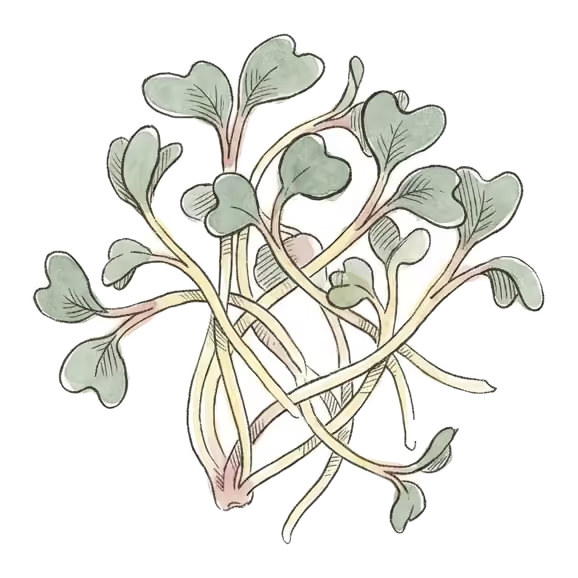
Broccoli Sprouts (Brassica oleracea var. italica sprouts)
Brassica oleracea var. italica · also known as broccoli microgreens, broccoli seedlings, sulforaphane sprouts
By Superfoods Advisor Editors·July 3, 2026
Broccoli sprouts benefits: why 3-day sprouts carry 10–100x more glucoraphanin than broccoli, what human trials found, how to eat them, and sprout safety.
Broccoli sprouts are the 2–4-day-old seedlings of broccoli (Brassica oleracea var. italica), a cruciferous vegetable. Their main draw is glucoraphanin, the precursor of sulforaphane: three-day sprouts contain 10 to 100 times more than mature broccoli. Small human trials have studied them for H. pylori, detoxification markers and blood lipids, with early, mixed results.
At this stage the plant is just a stem (hypocotyl), two seed leaves and an early root, and its chemistry differs from the mature vegetable. Research interest took off after a 1997 Johns Hopkins paper by Fahey and colleagues reported that glucoraphanin figure, which made the sprouts one of the most concentrated dietary sources of sulforaphane precursors.
When the sprout is chewed, chopped or blended, the enzyme myrosinase, stored apart from glucoraphanin in the intact plant, converts it to sulforaphane. In cell and animal studies, sulforaphane is a potent inducer of phase II detoxification enzymes (Zhang et al., 1992).
Evidence at a glance
Active Compounds
The Glucosinolate-to-Sulforaphane Pathway
Glucoraphanin: The predominant glucosinolate in broccoli sprouts (4-methylsulfinylbutyl glucosinolate). Glucoraphanin itself is a relatively inert precursor (Fahey et al., 2015); most of its studied activity comes from its enzymatic hydrolysis product, sulforaphane.
Myrosinase (β-thioglucosidase): A plant enzyme stored in specialized vacuoles (myrosin cells or idioblasts) physically separated from glucosinolate-containing cells in intact tissue. Mechanical disruption of the plant — through chewing, chopping, or blending — brings myrosinase into contact with glucoraphanin, initiating hydrolysis. Heat inactivates myrosinase: broccoli myrosinase loses activity progressively at about 45–60 °C (Van Eylen et al., 2007), so ordinary cooking largely abolishes endogenous enzyme activity. When cooked sprouts are consumed, residual glucoraphanin can still be partially converted to sulforaphane by gut bacteria, but conversion is substantially lower (Shapiro et al., 2001) and varies widely between individuals (Fahey et al., 2012).
Sulforaphane (1-isothiocyanato-4-(methylsulfinyl)butane): The isothiocyanate product of myrosinase-catalyzed glucoraphanin hydrolysis. Sulforaphane is a potent activator of the transcription factor Nrf2 (nuclear factor erythroid 2-related factor 2), which upregulates expression of phase II detoxification enzymes including glutathione S-transferases, NAD(P)H:quinone oxidoreductase 1 (NQO1), heme oxygenase-1 (HO-1), and thioredoxin reductase. This mechanism underlies many of sulforaphane’s studied biological effects.
Indole-3-carbinol (I3C) and indoles: Produced via myrosinase hydrolysis of indole glucosinolates present in smaller quantities. In small human studies, oral I3C supplements shifted estrogen metabolism toward 2-hydroxylation (Michnovicz et al., 1997). Fahey et al. (1997) found that sprouts of many broccoli cultivars contain negligible quantities of indole glucosinolates, which predominate in the mature vegetable.
Erucin and iberin: Minor isothiocyanates present in broccoli sprouts with overlapping Nrf2-activating properties.
Vitamin C: Broccoli sprouts also contain ascorbic acid.
Nutritional Profile
This entry does not give a per-100 g nutrient table for broccoli sprouts, because no laboratory-analyzed USDA FoodData Central value for them could be confirmed. For comparison, raw mature broccoli provides about 34 kcal, 2.8 g protein, 2.6 g fiber, 89 mg vitamin C and 102 µg vitamin K per 100 g; sprout values on commercial labels differ from these and from one another.
Glucoraphanin content varies substantially by cultivar, seed source, growing conditions, and harvest timing. Standardized extracts exist with defined sulforaphane or glucoraphanin content, but fresh sprout composition must be confirmed through testing rather than assumed.
Evidence for Purported Benefits
Nrf2 Pathway Activation and Cytoprotection
Evidence:Lab & animal only Nrf2 activation is shown in cell and animal studies; human studies so far measure only sulforaphane absorption.
Sulforaphane’s activation of the Nrf2-Keap1 pathway is well characterized in cell and animal studies. In a small human study, Fahey et al. (2015) found that sulforaphane from broccoli sprouts or seeds given with their active plant myrosinase intact was 3- to 4-fold more bioavailable than glucoraphanin delivered without active myrosinase. Pharmacokinetic data in humans show peak plasma sulforaphane roughly 1.6 hours after eating crushed raw broccoli, with bioavailability markedly higher from raw than from cooked preparations (see Vermeulen et al., below).
Chemoprevention
Evidence:Limited Animal tumor data and two randomized biomarker trials in China; results conflict, and no trial measured cancer incidence.
Zhang et al. (1994) demonstrated that sulforaphane given by gavage reduced the incidence, multiplicity, and weight of DMBA-induced mammary tumors in rats, establishing the animal model rationale. Human trials in Qidong, China have been mixed. In a 2-week randomized trial in 200 adults (Kensler et al., 2005), a broccoli sprout infusion did not change urinary aflatoxin-DNA adducts compared with placebo, although adduct levels were lower in participants who converted more glucoraphanin. In a later 12-week randomized trial in 291 adults (Egner et al., 2014), a broccoli sprout beverage significantly increased urinary excretion of detoxified conjugates of the air pollutants benzene (61%) and acrolein (23%) compared with placebo, consistent with enhanced detoxification enzyme activity. However, the translation of these mechanistic findings into meaningful cancer risk reduction in healthy human populations has not been definitively demonstrated in prospective intervention trials.
Helicobacter pylori Eradication Support
Evidence:Preliminary One 48-person randomized trial and a nine-patient uncontrolled pilot; effects faded after the sprouts stopped.
Yanaka et al. (2009) randomly assigned 48 Japanese adults with H. pylori infection to broccoli sprouts (70 g/day) or an equal weight of alfalfa sprouts (as placebo) for 8 weeks. The broccoli sprout group, but not the alfalfa group, showed reduced urea breath test and H. pylori stool antigen values, with levels returning toward baseline 2 months after the sprouts were stopped. An earlier uncontrolled pilot by Galan et al. (2004) reported stool-antigen-negative results in 7 of 9 patients after one week of sprouts, though only 3 of 9 appeared to clear the infection on follow-up testing. These findings are consistent with sulforaphane’s bacteriostatic activity against H. pylori in vitro, including antibiotic-resistant strains (Fahey et al., 2002), but sample sizes are small and the clinical significance of partial colonization reduction without eradication is uncertain.
Neurological and Behavioral Effects
Evidence:Preliminary A single 44-person randomized trial of sulforaphane in young men with autism; not yet replicated.
Singh et al. (2014) published a randomized, double-blind, placebo-controlled trial in 44 young men (aged 13–27) with moderate-to-severe autism spectrum disorder (ASD), reporting improvements in aberrant behavior, social interaction, and verbal communication scores after 18 weeks of broccoli sprout-derived sulforaphane (50–150 µmol/day); scores drifted back toward baseline after treatment stopped. The trial was small and limited to males, and needs replication. Research in schizophrenia and other neurological conditions remains at early stages. No conclusions can be drawn for general cognitive enhancement in the healthy population.
Cardiovascular Risk Markers
Evidence:Preliminary A single four-week randomized trial in 81 adults with type 2 diabetes; not yet replicated.
A randomized, double-blind, placebo-controlled trial by Bahadoran et al. (2012) in 81 adults with type 2 diabetes found that broccoli sprout powder at 10 g/day (but not 5 g/day) for four weeks significantly lowered serum triglycerides, the oxidized LDL/LDL ratio, and the atherogenic index of plasma compared with placebo. These results require replication in larger, longer-duration trials before clinical significance can be assessed.
Typical Use and Preparation
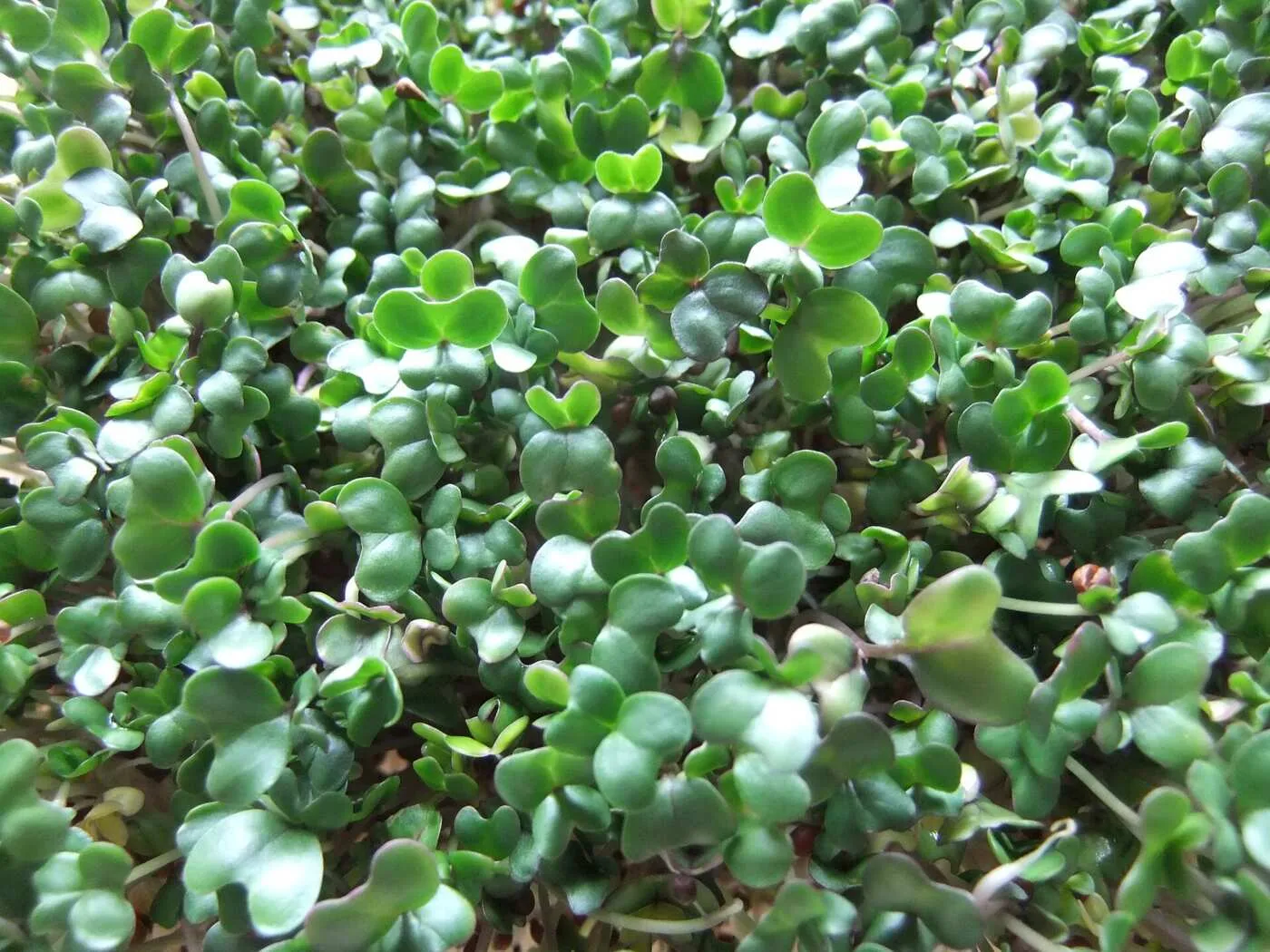 Photo: Julie Gibbons, CC BY 2.0, via Wikimedia Commons
Raw consumption: Raw sprouts keep their myrosinase active. Thorough chewing raised sulforaphane metabolite excretion compared with swallowing sprouts whole (Shapiro et al., 2001), and chopping then resting broccoli before heating increased its sulforaphane content (Wu et al., 2018). Raw is not automatically optimal: in laboratory work, crushing raw sprouts at room temperature yielded mostly sulforaphane nitrile, an inactive by-product, while warming them to 60 °C before homogenizing reduced nitrile formation and raised sulforaphane yield (Matusheski et al., 2004). The case against full cooking is supported by a small crossover trial by Vermeulen et al. (2008) in 8 men eating 200 g of crushed mature broccoli, in which sulforaphane bioavailability was 37% from raw broccoli versus 3.4% from cooked broccoli.
Light cooking: If cooking is desired for palatability or food safety reasons, adding a small amount of raw mustard seed powder (a rich exogenous myrosinase source) or raw daikon radish (shown in laboratory work on frozen broccoli, Dosz & Jeffery, 2013) to cooked sprouts can partially restore sulforaphane production. In a small crossover study by Okunade et al. (2018) in 12 adults, adding 1 g of powdered brown mustard to 200 g of cooked broccoli raised urinary sulforaphane metabolites more than fourfold.
Smoothies and juicing: Blending disrupts plant cells and brings myrosinase into contact with glucoraphanin. Adding blended sprouts to hot liquids should be avoided, since heat inactivates myrosinase.
Sprout powder and extracts: Standardized extracts are available providing defined glucoraphanin or sulforaphane content. Heat-dried powders typically have reduced myrosinase activity; look for products that co-supply myrosinase or specify sulforaphane content directly.
Home sprouting: Seeds are germinated in jars or trays over 3–5 days with twice-daily rinsing. Rinsing does not make sprouts safe: the FDA notes that a few bacteria on a seed can grow to high levels during sprouting, even when sprouts are grown under sanitary conditions at home.
No therapeutic dose is established. Doses in human trials have varied widely: 70 g of fresh sprouts per day (Yanaka et al., 2009), sprout preparations delivering 400 µmol (Kensler et al., 2005) or 600 µmol of glucoraphanin daily (Egner et al., 2014), and 50–150 µmol of sulforaphane daily (Singh et al., 2014).
The research review on cruciferous vegetables and sulforaphane covers broccoli sprouts in the context of the wider crucifer literature, and the anti-inflammatory pantry guide shows where they fit in everyday cooking. Sprouts are often confused with microgreens, which are harvested later, 7–21 days after germination, and cut above the growing medium so the root is not eaten.
Safety, Interactions, and Contraindications
Thyroid/goitrogen concerns: Some glucosinolates break down into goitrogens (progoitrin into goitrin, indole glucosinolates into thiocyanate) that may reduce thyroid hormone production at high intakes (Felker et al., 2016), particularly in individuals with pre-existing iodine deficiency or subclinical hypothyroidism. Broccoli sprouts are low in indole glucosinolates (Fahey et al., 1997), and in a 12-week randomized trial in 45 women, a broccoli sprout beverage did not change thyroid hormone levels or thyroid autoimmunity (Chartoumpekis et al., 2019). Individuals with thyroid disorders should still discuss supplemental or concentrated sprout intake with their physician.
Vitamin K and anticoagulants: Broccoli sprouts contain vitamin K1, relevant to patients on warfarin. Moderate, consistent consumption is generally manageable with INR monitoring, but erratic high intake should be avoided.
Drug interactions: In cultured human liver cells, sulforaphane reduced CYP3A4 expression and activity while leaving CYP1A2 expression unchanged (Mahéo et al., 1997), and it blocked the receptor (PXR) that switches CYP3A4 on (Zhou et al., 2007). These are laboratory findings, and human results can differ: in a controlled feeding study, a diet rich in brassica vegetables increased CYP1A2 activity (Lampe et al., 2000). No clinical drug-interaction study of broccoli sprouts or sulforaphane supplements was found. Individuals taking narrow-therapeutic-index drugs should consult their pharmacist.
Foodborne illness risk: The warm, humid conditions used for sprouting favor the growth of Salmonella, Listeria, and E. coli. The FDA advises children, older adults, pregnant women, and people with weakened immune systems to avoid raw or lightly cooked sprouts of any kind, and notes that home-grown sprouts carry the same risk. Cooking sprouts thoroughly kills these bacteria but also inactivates myrosinase.
Pregnancy: The FDA advises pregnant women to eat sprouts only when cooked thoroughly. The safety of high-dose sulforaphane supplements during pregnancy has not been established.
This entry is informational. It does not constitute medical advice, diagnosis, or treatment. Individuals with health conditions should consult a qualified healthcare provider before initiating supplementation.
Frequently Asked Questions
What are the benefits of broccoli sprouts?
Their studied benefits come from sulforaphane, which activates the body’s Nrf2 antioxidant pathway in lab studies. In people, small randomized trials found lower H. pylori markers with 70 g of sprouts a day, higher excretion of detoxified air pollutants with a sprout drink, and lower triglycerides with 10 g/day of sprout powder in type 2 diabetes. None has been widely replicated.
How many broccoli sprouts should you eat per day?
No dose is established. Trials have used 70 g of fresh sprouts a day or sprout preparations delivering 400–600 µmol of glucoraphanin. Because raw sprouts can carry Salmonella, Listeria and E. coli, people in higher-risk groups should eat them only cooked, and anyone with a thyroid condition or on warfarin should ask a clinician before eating large amounts.
Are broccoli sprouts better than broccoli?
For glucoraphanin, yes by weight: three-day sprouts contain 10 to 100 times more than mature broccoli. Mature broccoli has the better documented nutrient profile, with about 89 mg vitamin C, 102 µg vitamin K and 2.6 g fiber per 100 g raw, while lab-verified sprout values are not available. Sprouts are also low in the indole glucosinolates that dominate mature broccoli.
Are broccoli sprouts good for your liver?
Evidence for a liver benefit in people is thin. Sulforaphane raises liver detoxification enzymes in cell and animal studies, and in a 12-week trial in 291 Chinese adults a sprout drink increased urinary excretion of detoxified benzene and acrolein. That shows a biomarker change, not better liver health. Anyone with liver disease should discuss supplements with their clinician.
Should broccoli sprouts be eaten raw or cooked?
Raw or lightly warmed keeps myrosinase active, and chewing well raises sulforaphane uptake. Full cooking largely destroys the enzyme. The trade-off is food safety: sprouting conditions favor bacteria, so the FDA advises vulnerable groups to eat sprouts only when cooked thoroughly. Adding 1 g of mustard powder to cooked brassicas restored sulforaphane output in one small trial.
References
Show all 27 referencesShow fewer
- Zhang, Y., Talalay, P., Cho, C. G., & Posner, G. H. (1992). A major inducer of anticarcinogenic protective enzymes from broccoli: isolation and elucidation of structure. Proceedings of the National Academy of Sciences, 89(6), 2399–2403.
- Fahey, J. W., Zhang, Y., & Talalay, P. (1997). Broccoli sprouts: an exceptionally rich source of inducers of enzymes that protect against chemical carcinogens. Proceedings of the National Academy of Sciences, 94(19), 10367–10372.
- Singh, K., Connors, S. L., Macklin, E. A., Smith, K. D., Fahey, J. W., Talalay, P., & Zimmerman, A. W. (2014). Sulforaphane treatment of autism spectrum disorder (ASD). Proceedings of the National Academy of Sciences, 111(43), 15550–15555.
- Bahadoran, Z., Mirmiran, P., Hosseinpanah, F., Rajab, A., Asghari, G., & Azizi, F. (2012). Broccoli sprouts powder could improve serum triglyceride and oxidized LDL/LDL-cholesterol ratio in type 2 diabetic patients. Diabetes Research and Clinical Practice, 96(3), 348–354.
- Yanaka, A., Fahey, J. W., Fukumoto, A., Nakayama, M., Inoue, S., Zhang, S., Tauchi, M., Suzuki, H., Hyodo, I., & Yamamoto, M. (2009). Dietary sulforaphane-rich broccoli sprouts reduce colonization and attenuate gastritis in Helicobacter pylori–infected mice and humans. Cancer Prevention Research, 2(4), 353–360.
- Vermeulen, M., Klöpping-Ketelaars, I. W., van den Berg, R., & Vaes, W. H. (2008). Bioavailability and kinetics of sulforaphane in humans after consumption of cooked versus raw broccoli. Journal of Agricultural and Food Chemistry, 56(22), 10505–10509.
- Zhang, Y., Kensler, T. W., Cho, C. G., Posner, G. H., & Talalay, P. (1994). Anticarcinogenic activities of sulforaphane and structurally related synthetic norbornyl isothiocyanates. Proceedings of the National Academy of Sciences, 91(8), 3147–3150.
- Kensler, T. W., et al. (2005). Effects of glucosinolate-rich broccoli sprouts on urinary levels of aflatoxin-DNA adducts and phenanthrene tetraols in a randomized clinical trial in He Zuo township, Qidong, People’s Republic of China. Cancer Epidemiology, Biomarkers & Prevention, 14(11), 2605–2613.
- Egner, P. A., et al. (2014). Rapid and sustainable detoxication of airborne pollutants by broccoli sprout beverage: Results of a randomized clinical trial in China. Cancer Prevention Research, 7(8), 813–823.
- Fahey, J. W., Holtzclaw, W. D., Wehage, S. L., Wade, K. L., Stephenson, K. K., & Talalay, P. (2015). Sulforaphane bioavailability from glucoraphanin-rich broccoli: Control by active endogenous myrosinase. PLoS One, 10(11), e0140963.
- Galan, M. V., Kishan, A. A., & Silverman, A. L. (2004). Oral broccoli sprouts for the treatment of Helicobacter pylori infection: A preliminary report. Digestive Diseases and Sciences, 49(7–8), 1088–1090.
- Okunade, O., Niranjan, K., Ghawi, S. K., Kuhnle, G., & Methven, L. (2018). Supplementation of the diet by exogenous myrosinase via mustard seeds to increase the bioavailability of sulforaphane in healthy human subjects after the consumption of cooked broccoli. Molecular Nutrition & Food Research, 62(18), e1700980.
- Van Eylen, D., Oey, I., Hendrickx, M., & Van Loey, A. (2007). Kinetics of the stability of broccoli (Brassica oleracea cv. Italica) myrosinase and isothiocyanates in broccoli juice during pressure/temperature treatments. Journal of Agricultural and Food Chemistry, 55(6), 2163–2170.
- U.S. Food and Drug Administration. Selecting and serving produce safely.
- USDA FoodData Central. Broccoli, raw (FDC 170379).
- Mahéo, K., Morel, F., Langouët, S., Kramer, H., Le Ferrec, E., Ketterer, B., & Guillouzo, A. (1997). Inhibition of cytochromes P-450 and induction of glutathione S-transferases by sulforaphane in primary human and rat hepatocytes. Cancer Research.
- Zhou, C., Poulton, E. J., Grün, F., et al. (2007). The dietary isothiocyanate sulforaphane is an antagonist of the human steroid and xenobiotic nuclear receptor. Molecular Pharmacology.
- Shapiro, T. A., et al. (2001). Chemoprotective glucosinolates and isothiocyanates of broccoli sprouts: metabolism and excretion in humans. Cancer Epidemiology, Biomarkers & Prevention.
- Fahey, J. W., et al. (2012). Protection of humans by plant glucosinolates: efficiency of conversion of glucosinolates to isothiocyanates by the gastrointestinal microflora. Cancer Prevention Research.
- Michnovicz, J. J., et al. (1997). Changes in levels of urinary estrogen metabolites after oral indole-3-carbinol treatment in humans. Journal of the National Cancer Institute.
- Fahey, J. W., et al. (2002). Sulforaphane inhibits extracellular, intracellular, and antibiotic-resistant strains of Helicobacter pylori and prevents benzo[a]pyrene-induced stomach tumors. Proceedings of the National Academy of Sciences.
- Wu, Y., et al. (2018). Hydrolysis before stir-frying increases the isothiocyanate content of broccoli. Journal of Agricultural and Food Chemistry.
- Matusheski, N. V., Juvik, J. A., & Jeffery, E. H. (2004). Heating decreases epithiospecifier protein activity and increases sulforaphane formation in broccoli. Phytochemistry.
- Dosz, E. B., & Jeffery, E. H. (2013). Modifying the processing and handling of frozen broccoli for increased sulforaphane formation. Journal of Food Science.
- Felker, P., Bunch, R., & Leung, A. M. (2016). Concentrations of thiocyanate and goitrin in human plasma, their precursor concentrations in brassica vegetables, and associated potential risk for hypothyroidism. Nutrition Reviews.
- Chartoumpekis, D. V., et al. (2019). Broccoli sprout beverage is safe for thyroid hormonal and autoimmune status: results of a 12-week randomized trial. Food and Chemical Toxicology.
- Lampe, J. W., et al. (2000). Brassica vegetables increase and apiaceous vegetables decrease cytochrome P450 1A2 activity in humans. Carcinogenesis.
Related content
More in Leafy Greens
- Arugula (Eruca vesicaria ssp. sativa)
Is arugula good for you? Nutrition per 100 g, nitrate and blood pressure, vitamin K, cancer research and safety for this peppery cruciferous green.
- Barley Grass (Hordeum vulgare)
Barley grass benefits weighed against the evidence: antioxidant and blood sugar research, whether it contains gluten, vitamin K, dosing and safety.
- Bok Choy (Brassica rapa subsp. chinensis)
Bok choy benefits and nutrition: well-absorbed calcium, vitamin C and K per 100 g, glucosinolates, the raw-intake thyroid caveat, and how to cook it.
- Collard Greens (Brassica oleracea var. viridis)
Health benefits of collard greens: vitamin K, calcium and fiber per 100 g, what research shows for bones and heart, cooking tips, and warfarin cautions.
- Kale (Brassica oleracea var. sabellica)
Is kale good for you? Kale nutrition per 100 g, what research shows for heart, eyes and bones, kale vs spinach, how much is too much, and safety.
- Microgreens (various species)
Microgreens benefits and nutrition: how 7–21-day seedlings compare with mature vegetables, what human studies show, microgreens vs sprouts, and safety.

Curated by Superfoods Advisor Editors·Last updated