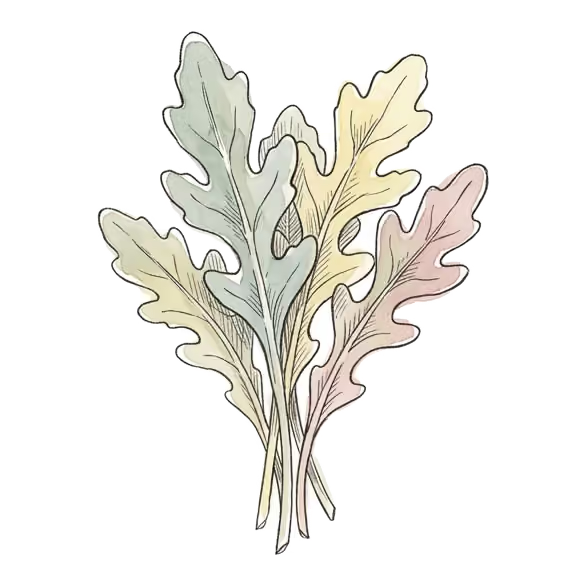
Arugula (Eruca vesicaria ssp. sativa)
Eruca vesicaria ssp. sativa · also known as rocket, roquette, rucola, rugula, garden rocket, Italian cress
By Superfoods Advisor Editors·July 3, 2026
Is arugula good for you? Nutrition per 100 g, nitrate and blood pressure, vitamin K, cancer research and safety for this peppery cruciferous green.
Arugula (Eruca vesicaria ssp. sativa), also called rocket or rucola, is a peppery cruciferous leafy green. It is nutrient-dense for its calories: 100 g of raw leaves has 25 kcal and about 91% of the daily value for vitamin K, and it is one of the highest-nitrate vegetables, a property one small study linked to a short-term drop in blood pressure.
Native to the Mediterranean basin and western Asia, arugula has been grown as a salad green and pot herb since at least Roman times. It stayed largely within southern Italian, French, and North African cooking until the salad-green trend of the 1980s and 1990s brought it into mainstream Western restaurants and supermarkets.
Botanically, arugula belongs to the Brassicaceae family, alongside broccoli, kale, and bok choy. Like its relatives, it produces glucosinolates, sulfur-containing compounds that the enzyme myrosinase converts to isothiocyanates when the leaf is chewed or chopped. Its peppery bite tracks that content: in UK sensory testing, leaves with more glucosinolates were rated more peppery, bitter, and hot (Bell et al., 2020).
Arugula is also among the highest dietary sources of inorganic nitrate, a distinction it shares with beets, spinach, and celery. That links it to the nitrate–nitric oxide pathway studied in cardiovascular research.
Evidence at a glance
Active Compounds
- Dietary nitrate (NO3-): Arugula consistently ranks as one of the highest nitrate-containing vegetables, and an Italian survey of 900 vegetable and cured-meat samples found the highest mean nitrate level in rocket, about 440 mg/100 g (4,415 mg/kg) fresh weight (Roila et al., 2018); levels vary with cultivar, season, and growing conditions. Dietary nitrate is reduced to nitrite by oral bacteria and subsequently converted to nitric oxide (NO) in the acidic environment of the stomach and in blood and tissues, a route separate from the classical L-arginine/nitric oxide synthase pathway (Lundberg et al., 2008). NO is a potent vasodilator with roles in blood pressure regulation, platelet aggregation inhibition, and endothelial function.
- Glucosinolates: Arugula leaves contain mainly glucosativin (4-mercaptobutyl glucosinolate), with lower levels of glucoerucin (4-methylthiobutyl glucosinolate) and glucoraphanin (4-methylsulfinylbutyl glucosinolate, the sulforaphane precursor prominent in broccoli); glucoerucin is the dominant glucosinolate in the seeds (Bennett et al., 2006). Myrosinase hydrolysis of glucoerucin yields erucin, 4-(methylthio)butyl isothiocyanate, a sulfide analogue of sulforaphane (Singh et al., 2020).
- Erucic acid: A monounsaturated fatty acid that occurs at high concentrations mainly in the seeds of Brassicaceae species; at high doses it caused myocardial lipidosis in young rats and newborn piglets, and EFSA identified bakery goods, not vegetables, as the main dietary source (EFSA, 2016).
- Vitamin K: Arugula is a notable source, providing approximately 109 mcg/100 g — approximately 90% of the daily value (USDA FoodData Central). Relevant for blood coagulation physiology and bone mineral density.
- Folate: Approximately 97 mcg/100 g, approximately 24% of the daily value.
- Beta-carotene and lutein/zeaxanthin: Carotenoids; lutein and zeaxanthin are the pigments concentrated in the retina’s macula.
- Vitamin C: Approximately 15 mg/100 g.
- Calcium and potassium: In moderate amounts.
Nutritional Profile
Per 100 g raw arugula (USDA FoodData Central):
| Nutrient | Amount | % DV |
|---|---|---|
| Energy | 25 kcal | — |
| Water | 91.7 g | — |
| Carbohydrate | 3.7 g | — |
| Dietary fiber | 1.6 g | — |
| Sugars | 2.1 g | — |
| Protein | 2.6 g | — |
| Fat | 0.7 g | — |
| Vitamin K | 109 mcg | 91% |
| Folate | 97 mcg | 24% |
| Vitamin A (beta-carotene) | 119 mcg RAE | 13% |
| Vitamin C | 15.0 mg | 17% |
| Calcium | 160 mg | 12% |
| Potassium | 369 mg | 8% |
| Dietary nitrate | approx. 440 mg/100 g (survey mean; varies widely) | — |
Evidence for Purported Benefits
Nitrate, Nitric Oxide, and Blood Pressure
Evidence:Limited One small acute arugula crossover study; longer trials used beetroot juice, so arugula’s effect is inferred from its nitrate content.
The dietary nitrate pathway is among the better-characterized mechanisms linking vegetable consumption to cardiovascular benefit. Dietary nitrate from high-nitrate vegetables (including arugula, beets, and spinach) is absorbed in the upper gastrointestinal tract, concentrated in saliva by active transport, and reduced to nitrite by commensal oral bacteria, a group spanning many genera, including Neisseria, Rothia, Actinomyces, and Veillonella (L’Heureux et al., 2023). Nitrite is further converted to NO under acidic and reducing conditions in the stomach and, particularly under low-oxygen conditions, in blood and tissues (Lundberg et al., 2008). NO is the canonical signaling molecule for endothelium-dependent vasodilation and is produced endogenously by eNOS; the dietary nitrate pathway provides an alternative, eNOS-independent source.
The most rigorous clinical evidence comes from beetroot studies (beetroot is similarly high in nitrate): Kapil et al. (2015) conducted an RCT (n=68) in hypertensive patients in which dietary nitrate (about 6.4 mmol, or roughly 400 mg, of inorganic nitrate a day, delivered as 250 mL of beetroot juice) reduced clinic systolic blood pressure by 7.7 mmHg over four weeks versus a nitrate-depleted placebo juice. Arugula-specific long-term trials are not available; in one small acute crossover study in 18 healthy adults, a rocket-salad beverage supplying about 800 mg of nitrate lowered systolic blood pressure from 122 to 116 mmHg 150 minutes after ingestion (Jonvik et al., 2016). Otherwise the case rests on arugula’s nitrate content, which is similar to or higher than beet greens, and the mechanism is generic to dietary inorganic nitrate regardless of vegetable source. Antiseptic mouthwash may blunt this pathway: in 19 healthy volunteers, a week of chlorhexidine mouthwash cut oral nitrite production and raised blood pressure slightly (Kapil et al., 2013).
Glucosinolates and Cancer Biology
Evidence:Preliminary Cell and animal data plus case-control studies of cruciferous vegetables as a group; no arugula-specific human data.
The isothiocyanates derived from arugula glucosinolates have been extensively studied in cancer biology contexts. Erucin, the isothiocyanate formed from arugula’s glucoerucin, has inhibited cancer cell proliferation in laboratory studies, acting on targets such as telomerase activity, microtubule dynamics, and histone deacetylases (Singh et al., 2020). These findings motivated human epidemiological interest in cruciferous vegetable consumption and cancer risk. A network of Italian and Swiss case-control studies (Bosetti et al., 2012) found that eating cruciferous vegetables at least weekly was associated with lower odds of several cancers, including colorectal cancer, though prospective cohort data are less consistent. Arugula-specific human cancer data do not exist; the evidence is extrapolated from cruciferous vegetables as a class.
Anti-inflammatory and Antioxidant Effects
Evidence:Lab & animal only Cell culture and mouse studies of erucin; no human trials of arugula.
Glucosinolate hydrolysis products have been studied for anti-inflammatory activity mainly in cell culture. Myrosinase-treated glucoerucin, which releases erucin, activated Nrf2 and raised expression of the antioxidant enzyme heme oxygenase-1 in cultured colon cells and in the intestine and liver of mice (Wagner et al., 2015). Human trial data demonstrating anti-inflammatory biomarker changes from arugula consumption specifically are not available.
Bone Health (Vitamin K Contribution)
Evidence:Limited Vitamin K trials show a small, possibly biased bone-density effect; no arugula-specific data.
Vitamin K (phylloquinone, K1) is essential for carboxylation of osteocalcin, a protein required for normal bone mineralization. A meta-analysis of RCTs by Fang et al. (2012) found that vitamin K supplementation modestly increased bone mineral density at the lumbar spine but not the femoral neck, and cautioned that the effect may be biased. Arugula’s high vitamin K content (approximately 109 mcg/100 g, about 91% of the daily value) makes it a meaningful contributor to daily vitamin K intake from a single serving. This benefit is generic to high-vitamin-K vegetables and not specific to arugula’s glucosinolate chemistry.
Typical Use and Preparation
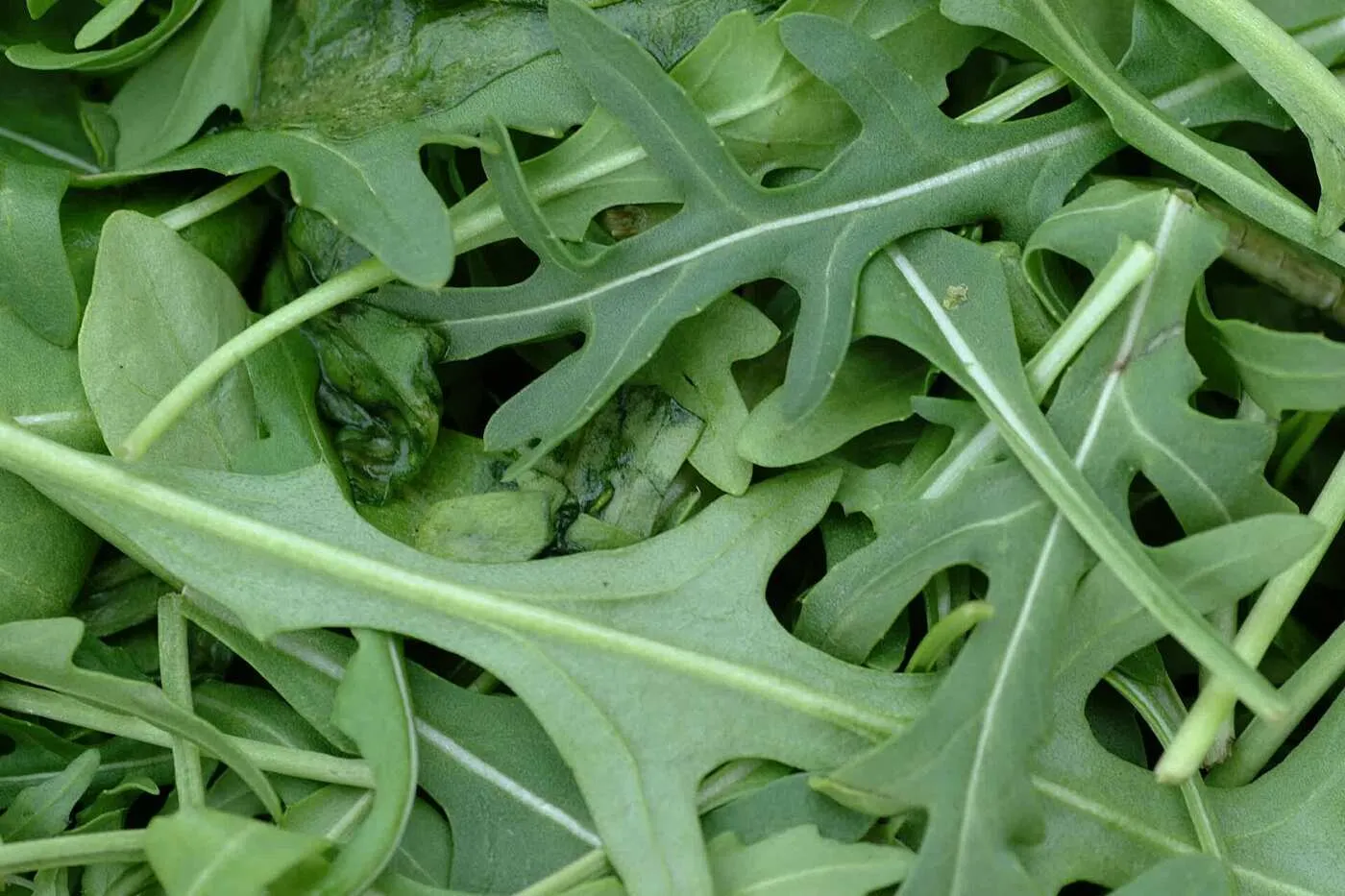 Photo: Schlaghecken Josef, CC BY-SA 4.0, via Wikimedia Commons
Arugula is most commonly consumed raw in salads, where its peppery character is most pronounced. Common preparations include:
- Raw in salads: The most nutritionally complete preparation; myrosinase is active, and chewing starts hydrolysis of glucosinolates to isothiocyanates. The bitter-peppery flavor intensity varies by cultivar and leaf maturity — baby arugula is milder, mature leaves more pungent.
- Wilted or briefly sauteed: Quick heating partially inactivates myrosinase, reducing isothiocyanate yield. Adding a source of active myrosinase may partially restore isothiocyanate formation: in a crossover study of 12 adults, adding 1 g of powdered brown mustard to cooked broccoli raised sulforaphane metabolite excretion about fourfold (Okunade et al., 2018).
- On pizza: A traditional Neapolitan preparation in which fresh arugula is added after baking, preserving its raw character and myrosinase activity.
- In pesto: Blended with olive oil, parmesan, and pine nuts as an alternative to basil pesto; flavor is sharper and more bitter. Blending disrupts cell walls, releasing myrosinase and maximizing isothiocyanate conversion.
- Juiced or in smoothies: Nitrate is fully retained in juice; myrosinase is inactivated by heat but not by cold-pressing.
- Storage: Arugula wilts rapidly after harvest; refrigeration extends shelf life to 3–5 days. Washing before storage accelerates deterioration.
Boiling reduces glucosinolate content. Arugula-specific cooking data are lacking, but in broccoli, Brussels sprouts, cauliflower, and cabbage, boiling caused significant losses, mostly by leaching into the cooking water, while steaming, microwaving, and stir-frying did not significantly reduce glucosinolates (Song & Thornalley, 2007).
Arugula is one of the base greens in the superfood salad bowl recipe, and it appears among the nitrate-rich vegetables in the guide to heart health superfoods.
Safety, Interactions, and Contraindications
Vitamin K and anticoagulants: Arugula’s very high vitamin K content is clinically relevant for patients taking warfarin (coumadin). Vitamin K antagonizes warfarin’s anticoagulant effect; large and variable consumption of high-vitamin-K greens can cause INR instability. Patients on warfarin are not advised to avoid vitamin K-containing vegetables but should maintain consistent intake and inform their healthcare provider of dietary changes. A one-cup serving of arugula (about 20 g) contains approximately 22 mcg of vitamin K.
Thyroid function (goitrogens): In cruciferous vegetables, the glucosinolate breakdown products of thyroid concern are goitrin (from progoitrin) and thiocyanate (from indole glucosinolates), which may reduce thyroid iodine uptake and hormone production — the so-called goitrogenic effect. A review estimated that thiocyanate from indole glucosinolates adds little to normal background plasma levels and that most commonly eaten brassicas contain too little goitrin to pose a meaningful risk (Felker et al., 2016); progoitrin is not among the glucosinolates reported in arugula leaves. Any effect is most plausible at very high habitual intake in people with iodine deficiency or existing thyroid disease. For most people consuming normal dietary quantities of arugula, this is not a clinically meaningful concern.
Nitrate considerations in specific populations: About 80% of dietary nitrate comes from vegetables, and some researchers argue the evidence supports treating plant nitrate as a nutrient rather than a contaminant (Hord et al., 2009). Vegetables also supply vitamin C and polyphenols, which can inhibit nitrosamine formation, though whether vegetable nitrate carries any of the nitrosamine concern raised for processed meat is still debated. Infants are the main exception: the American Academy of Pediatrics identifies formula made with nitrate-contaminated well water as the chief risk for infant methemoglobinemia, but also notes that cases from home-prepared vegetable foods for infants continue to be reported (Greer & Shannon, 2005).
Erucic acid: Concentrated mainly in Brassicaceae seeds; EFSA did not identify leafy vegetables as a meaningful dietary source (EFSA, 2016).
Drug interactions (nitrate and PDE5 inhibitors): The additive vasodilatory effect of dietary nitrate and PDE5 inhibitor medications (sildenafil, tadalafil) is theoretically possible but has not been documented as clinically significant at dietary nitrate levels.
Allergies: Arugula allergy appears rare, but case reports describe intraoral and respiratory symptoms (Liccardi et al., 1998), an IgE-mediated reaction after eating it (Damiani et al., 2014), and anaphylaxis (Ruiz Garcia et al., 2014). Cross-reactivity with other Brassicaceae is plausible.
Frequently Asked Questions
Is arugula good for you?
Arugula is a low-calorie, nutrient-dense green. Per 100 g raw it has 25 kcal, about 109 mcg of vitamin K, 97 mcg of folate and roughly 440 mg of nitrate. One small study of 18 adults found a rocket-salad drink lowered blood pressure for a few hours; longer-term benefits are inferred from nitrate research on beetroot, not shown for arugula itself.
Is arugula a lettuce?
No. Lettuce belongs to the daisy family (Asteraceae), while arugula is a cruciferous plant in the Brassicaceae family, the same family as kale, broccoli and watercress. That is why it contains glucosinolates and tastes peppery rather than mild. It is sold and eaten like a salad green, which is why the two are often grouped together.
Does arugula have fiber?
Some, but not much by weight. Raw arugula provides about 1.6 g of dietary fiber per 100 g, according to USDA FoodData Central. Because a typical cup weighs only about 20 g, one serving adds well under half a gram. Arugula is better described as a source of vitamin K, folate and nitrate than as a fiber source.
How much arugula is a serving, and how much is too much?
One cup of raw arugula weighs about 20 g and contains roughly 22 mcg of vitamin K. There is no established upper limit for arugula in healthy adults. The main reason to watch quantity is warfarin: large swings in vitamin K intake can unsettle INR, so people on that drug are advised to keep their intake steady and talk to their clinician before big changes.
Can arugula be cooked?
Yes. It can be wilted, sautéed, or added to pizza after baking. Heat partly inactivates myrosinase, the enzyme that turns glucosinolates into isothiocyanates, and boiling leaches glucosinolates into the water. Brief heating or eating it raw keeps more of that chemistry; adding a little mustard powder to cooked brassicas raised sulforaphane output in one small crossover study.
Is arugula better than spinach?
Neither is simply better. Both rank among the highest-nitrate leafy greens. Arugula is peppery and cruciferous, so it also supplies glucosinolates, which spinach lacks. Spinach is a different plant family with its own nutrient profile and is high in oxalate. Rotating several greens gives a broader mix of compounds than relying on one.
References
Show all 22 referencesShow fewer
- Kapil, V., Khambata, R. S., Robertson, A., Caulfield, M. J., & Ahluwalia, A. (2015). Dietary nitrate provides sustained blood pressure lowering in hypertensive patients: a randomized, phase 2, double-blind, placebo-controlled study. Hypertension, 65(2), 320–327.
- Bosetti, C., Filomeno, M., Riso, P., Polesel, J., Levi, F., Talamini, R., Montella, M., Negri, E., Franceschi, S., & La Vecchia, C. (2012). Cruciferous vegetables and cancer risk in a network of case-control studies. Annals of Oncology, 23(8), 2198–2203.
- Fang, Y., Hu, C., Tao, X., Wan, Y., & Tao, F. (2012). Effect of vitamin K on bone mineral density: a meta-analysis of randomized controlled trials. Journal of Bone and Mineral Metabolism, 30(1), 60–68.
- Jonvik, K. L., Nyakayiru, J., Pinckaers, P. J., Senden, J. M., van Loon, L. J., & Verdijk, L. B. (2016). Nitrate-rich vegetables increase plasma nitrate and nitrite concentrations and lower blood pressure in healthy adults. Journal of Nutrition, 146(5), 986–993.
- Roila, R., et al. (2018). Contribution of vegetables and cured meat to dietary nitrate and nitrite intake in Italian population: safe level for cured meat and controversial role of vegetables. Italian Journal of Food Safety, 7(3), 7692.
- Song, L., & Thornalley, P. J. (2007). Effect of storage, processing and cooking on glucosinolate content of Brassica vegetables. Food and Chemical Toxicology, 45(2), 216–224.
- U.S. Department of Agriculture. Arugula, raw (FDC ID 169387). FoodData Central.
- Bennett, R. N., et al. (2006). Ontogenic profiling of glucosinolates, flavonoids, and other secondary metabolites in Eruca sativa (salad rocket), Diplotaxis erucoides (wall rocket), Diplotaxis tenuifolia (wild rocket), and Bunias orientalis (Turkish rocket). Journal of Agricultural and Food Chemistry.
- Singh, D., et al. (2020). Molecular targets in cancer prevention by 4-(methylthio)butyl isothiocyanate — a comprehensive review. Life Sciences.
- L’Heureux, J. E., et al. (2023). Localisation of nitrate-reducing and highly abundant microbial communities in the oral cavity. PLoS One.
- Felker, P., Bunch, R., & Leung, A. M. (2016). Concentrations of thiocyanate and goitrin in human plasma, their precursor concentrations in brassica vegetables, and associated potential risk for hypothyroidism. Nutrition Reviews.
- Bell, L., et al. (2020). High glucosinolate content in rocket leaves (Diplotaxis tenuifolia and Eruca sativa) after multiple harvests is associated with increased bitterness, pungency, and reduced consumer liking. Foods.
- Lundberg, J. O., Weitzberg, E., & Gladwin, M. T. (2008). The nitrate-nitrite-nitric oxide pathway in physiology and therapeutics. Nature Reviews Drug Discovery, 7(2), 156–167.
- Kapil, V., et al. (2013). Physiological role for nitrate-reducing oral bacteria in blood pressure control. Free Radical Biology and Medicine, 55, 93–100.
- Wagner, A. E., et al. (2015). Myrosinase-treated glucoerucin is a potent inducer of the Nrf2 target gene heme oxygenase 1: studies in cultured HT-29 cells and mice. Journal of Nutritional Biochemistry, 26(6), 661–666.
- Okunade, O., et al. (2018). Supplementation of the diet by exogenous myrosinase via mustard seeds to increase the bioavailability of sulforaphane in healthy human subjects after the consumption of cooked broccoli. Molecular Nutrition and Food Research, 62(18), e1700980.
- Hord, N. G., Tang, Y., & Bryan, N. S. (2009). Food sources of nitrates and nitrites: the physiologic context for potential health benefits. American Journal of Clinical Nutrition, 90(1), 1–10.
- Greer, F. R., & Shannon, M. (2005). Infant methemoglobinemia: the role of dietary nitrate in food and water. Pediatrics, 116(3), 784–786.
- EFSA Panel on Contaminants in the Food Chain (2016). Erucic acid in feed and food. EFSA Journal, 14(11), 4593.
- Liccardi, G., et al. (1998). Intraoral and respiratory allergy to Eruca sativa (Cruciferae family) in a subject with sensitization to pollen allergens. Journal of Allergy and Clinical Immunology, 101(4), 559–560.
- Damiani, E., et al. (2014). IgE-mediated reaction induced by arugula (Eruca sativa) ingestion compared with a spectrum of Brassicaceae proteins. Allergologia et Immunopathologia, 42(5), 501–503.
- Ruiz Garcia, M., et al. (2014). Anaphylaxis due to Eruca sativa. Journal of Investigational Allergology and Clinical Immunology, 24(6), 453–454.
Related content
More in Leafy Greens
- Barley Grass (Hordeum vulgare)
Barley grass benefits weighed against the evidence: antioxidant and blood sugar research, whether it contains gluten, vitamin K, dosing and safety.
- Bok Choy (Brassica rapa subsp. chinensis)
Bok choy benefits and nutrition: well-absorbed calcium, vitamin C and K per 100 g, glucosinolates, the raw-intake thyroid caveat, and how to cook it.
- Broccoli Sprouts (Brassica oleracea var. italica sprouts)
Broccoli sprouts benefits: why 3-day sprouts carry 10–100x more glucoraphanin than broccoli, what human trials found, how to eat them, and sprout safety.
- Collard Greens (Brassica oleracea var. viridis)
Health benefits of collard greens: vitamin K, calcium and fiber per 100 g, what research shows for bones and heart, cooking tips, and warfarin cautions.
- Kale (Brassica oleracea var. sabellica)
Is kale good for you? Kale nutrition per 100 g, what research shows for heart, eyes and bones, kale vs spinach, how much is too much, and safety.
- Microgreens (various species)
Microgreens benefits and nutrition: how 7–21-day seedlings compare with mature vegetables, what human studies show, microgreens vs sprouts, and safety.

Curated by Superfoods Advisor Editors·Last updated