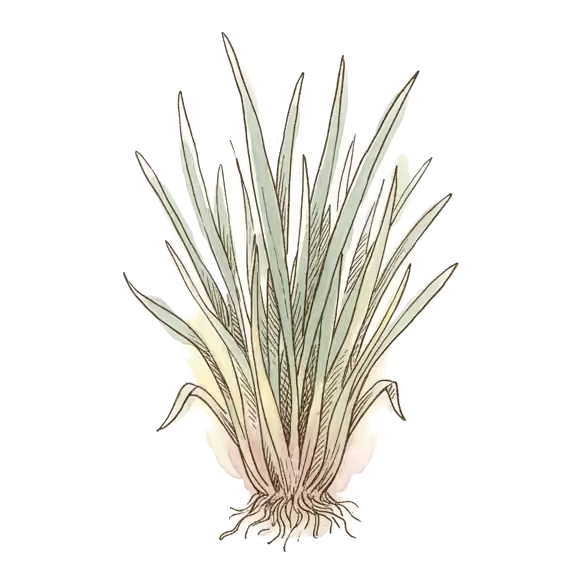
Wheatgrass (Triticum aestivum)
Triticum aestivum · also known as wheat grass, common wheatgrass, young wheat shoots
By Superfoods Advisor Editors·July 3, 2026
Wheatgrass benefits weighed against the evidence: juice and shot research on colitis, thalassemia and chemotherapy, gluten, dosing, and safety.
Wheatgrass consists of the young first leaves of the common wheat plant (Triticum aestivum), cut 7–10 days after germination and taken as juice “shots” or powder. Its claimed benefits are mostly unproven: the best human evidence is a single 23-patient trial in ulcerative colitis, plus small uncontrolled studies in thalassemia and chemotherapy. It supplies modest nutrients per typical serving.
Wheatgrass is harvested before jointing, the stage at which the shoot begins to form a stem node. At this stage the leaf tissue is generally considered gluten-free: the gluten proteins associated with celiac disease (gliadins and glutenins) are seed storage proteins, synthesized and deposited in the developing grain (Shewry & Halford, 2002). Cross-contamination with wheat grain during harvesting and processing remains a concern for people with celiac disease.
The popularization of wheatgrass as a health food is largely attributed to Ann Wigmore (1909–1994), a Lithuanian-born health promoter based in Boston, who established the Hippocrates Health Institute there around 1963 (Jarvis, NCAHF, 2001). Wigmore promoted wheatgrass juice as a way to “detoxify” the body and as a remedy for people with serious illnesses, including cancer — claims that lacked scientific substantiation. The Massachusetts Attorney General sued her in 1982 over claims about diabetes and childhood immunization, and again in 1988 over a claim that her “energy enzyme soup” could cure AIDS (same source). Nevertheless, wheatgrass juice and dried powder became widely marketed products, and scientific investigation into the plant’s chemical composition and biological effects has grown since the 1990s.
Evidence at a glance
Active Compounds
The phytochemical composition of wheatgrass is dominated by chlorophyll and several micronutrients, though the relevance of many claimed compounds to human health requires scrutiny:
Chlorophyll: Wheatgrass owes much of its marketing identity to its high chlorophyll content (one analysis found about 0.3% chlorophyll by dry weight in freeze-dried juice powder from white wheat, with higher levels in colored wheat lines; Sharma et al., 2022). Content varies considerably with growing conditions and processing (Bar-Sela et al., 2015). Chlorophyll is the green photosynthetic pigment in plant leaves and has been studied for antioxidant, antimicrobial, and antimutagenic properties in laboratory settings. A critical point for human pharmacology: natural chlorophyll has little to no bioavailability itself (Hayes & Ferruzzi, 2020), and most is converted during digestion to derivatives such as pheophytin and pheophorbide (Ferruzzi & Blakeslee, 2007). The premise that dietary chlorophyll “oxygenates the blood” or functions as a “blood builder” by structural analogy to hemoglobin is not supported by biochemical or clinical evidence. Magnesium in the chlorophyll porphyrin ring is not transferred to heme; the molecular pathways are entirely distinct.
Chlorophyllin: A water-soluble semi-synthetic derivative of chlorophyll used in some studies; in the US, sodium copper chlorophyllin is permitted as a color additive only in citrus-based dry beverage mixes (21 CFR 73.125). In a randomized, placebo-controlled trial in Qidong, China, 180 adults at high risk of aflatoxin exposure took 100 mg chlorophyllin three times daily for four months; median urinary levels of an aflatoxin-DNA adduct biomarker were 55% lower than with placebo (Egner et al., 2001). That trial measured a biomarker, not cancer incidence, and used a semi-synthetic compound distinct from the naturally occurring chlorophyll in wheatgrass juice. Evidence from chlorophyllin studies should not be used to support clinical claims about wheatgrass consumption.
Superoxide dismutase (SOD): Wheatgrass is marketed as containing antioxidant enzymes including SOD. However, dietary proteins, enzymes included, are denatured and largely broken down to peptides and amino acids during digestion, and there is no evidence that SOD from wheatgrass reaches the circulation intact to exert systemic antioxidant effects. Claims based on wheatgrass SOD content are therefore not biologically plausible through this mechanism.
Flavonoids and phenolic acids: Wheatgrass contains flavonoids, mainly apigenin and luteolin derivatives such as vitexin and isovitexin, and phenolic acids including ferulic and syringic acids (Złotek et al., 2019; Kaur et al., 2021). These compounds have antioxidant properties and, like other dietary flavonoids, may contribute modestly to overall dietary antioxidant intake.
Vitamins and minerals: Wheatgrass provides vitamin K, vitamin C, vitamin E, iron, calcium, and magnesium (Bar-Sela et al., 2015; Kaur et al., 2021). However, the serving sizes commonly consumed (30 mL juice or approximately 1 teaspoon/2 g powder) are small relative to whole vegetable portions, limiting the absolute micronutrient contribution.
Nutritional Profile
USDA FoodData Central has no laboratory-analyzed entry for raw wheatgrass or wheatgrass juice, so per-100 g figures circulating online and on product labels cannot be checked against a reference database. Published analyses report that composition varies with wheat variety, seedling age, growing conditions, and processing (Bar-Sela et al., 2015; Sharma et al., 2022). Product labels are the most practical source for a specific powder.
Note on serving size context: Wheatgrass is rarely consumed in 100 g quantities. A standard serving of wheatgrass juice is approximately 30–60 mL (roughly 30–60 g), and powdered wheatgrass is typically used in 2–5 g amounts. At these serving sizes, micronutrient contributions are modest. Per ounce (28 g) of wheatgrass juice, the practical vitamin and mineral contribution is considerably lower than from an equivalent serving of spinach, kale, or other leafy greens consumed in typical portions.
Evidence for Purported Benefits
Ulcerative Colitis Symptom Management
Evidence:Preliminary A single placebo-controlled trial in 23 patients; never replicated.
The most methodologically sound human clinical trial for wheatgrass involves ulcerative colitis. A double-blind, placebo-controlled trial by Ben-Arye et al. (2002) randomized 23 patients with active distal ulcerative colitis to receive either 100 mL/day of wheatgrass juice or a matching placebo for one month; 21 completed the study. Wheatgrass juice was associated with significant reductions in the overall disease activity index and in the severity of rectal bleeding. The study is notable as a rigorous design but extremely small; replication in larger trials has not occurred. The authors detected compounds with antioxidant activity in the fresh juice and suggested they might be involved, but the trial did not test a mechanism.
Hematological Outcomes (Anemia and Thalassemia)
Evidence:Preliminary Small uncontrolled studies in thalassemia; one in 16 patients reported fewer transfusions, a 53-patient study found no effect.
Several small studies from India have investigated wheatgrass supplementation in patients with beta-thalassemia and hemoglobin E/beta-thalassemia, motivated by the hypothesis that chlorophyll may support hemoglobin synthesis. A study by Marwaha et al. (2004) analyzed 16 patients with transfusion-dependent beta-thalassemia who drank about 100 mL/day of home-grown wheatgrass juice; transfusion requirement fell by more than 25% in 8 of them compared with the preceding year. Each patient served as their own control, there was no separate control group, and statistical analysis was limited. A larger uncontrolled study gave wheatgrass tablets to 53 patients with thalassemia major for a year and found no significant reduction in transfusion requirement (Choudhary et al., 2009). A later review by Bar-Sela et al. (2015) noted that all clinical trials of wheatgrass, including those in hematological disease, were small and had methodological problems, and concluded that larger studies are needed before clinical recommendations can be made. The proposed mechanism (chlorophyll-to-hemoglobin conversion) is biochemically implausible as noted above, and alternative explanations for observed effects have not been adequately investigated.
Antioxidant Biomarker Changes
Evidence:Preliminary A few small, uncontrolled human studies plus animal work, all methodologically weak.
Animal experiments and a few small human trials have reported changes in oxidative stress markers with wheatgrass, but the Bar-Sela et al. (2015) review found these trials small and methodologically limited. Antioxidant biomarkers are also highly variable with diet and can shift with any dietary change, so uncontrolled findings are difficult to interpret.
Cancer Supportive Care
Evidence:Insufficient One non-randomized pilot in 60 women on chemotherapy; no randomized trials or survival data.
Wheatgrass has been marketed as a cancer preventive and as a complement to conventional cancer therapy. A review by Bar-Sela et al. (2015) reported that small clinical trials suggested wheatgrass might ease chemotherapy-related side effects, but noted that all were small with methodological problems. The main example is a non-randomized pilot study in 60 women receiving chemotherapy for breast cancer, in which those drinking wheatgrass juice had fewer treatment interruptions, dose reductions, or growth-factor starts than matched controls (Bar-Sela et al., 2007). That pilot did not assess survival, and no large trial has tested wheatgrass in cancer care. Claims that wheatgrass “detoxifies” the body or cures cancer are not supported by clinical evidence.
Typical Use and Preparation
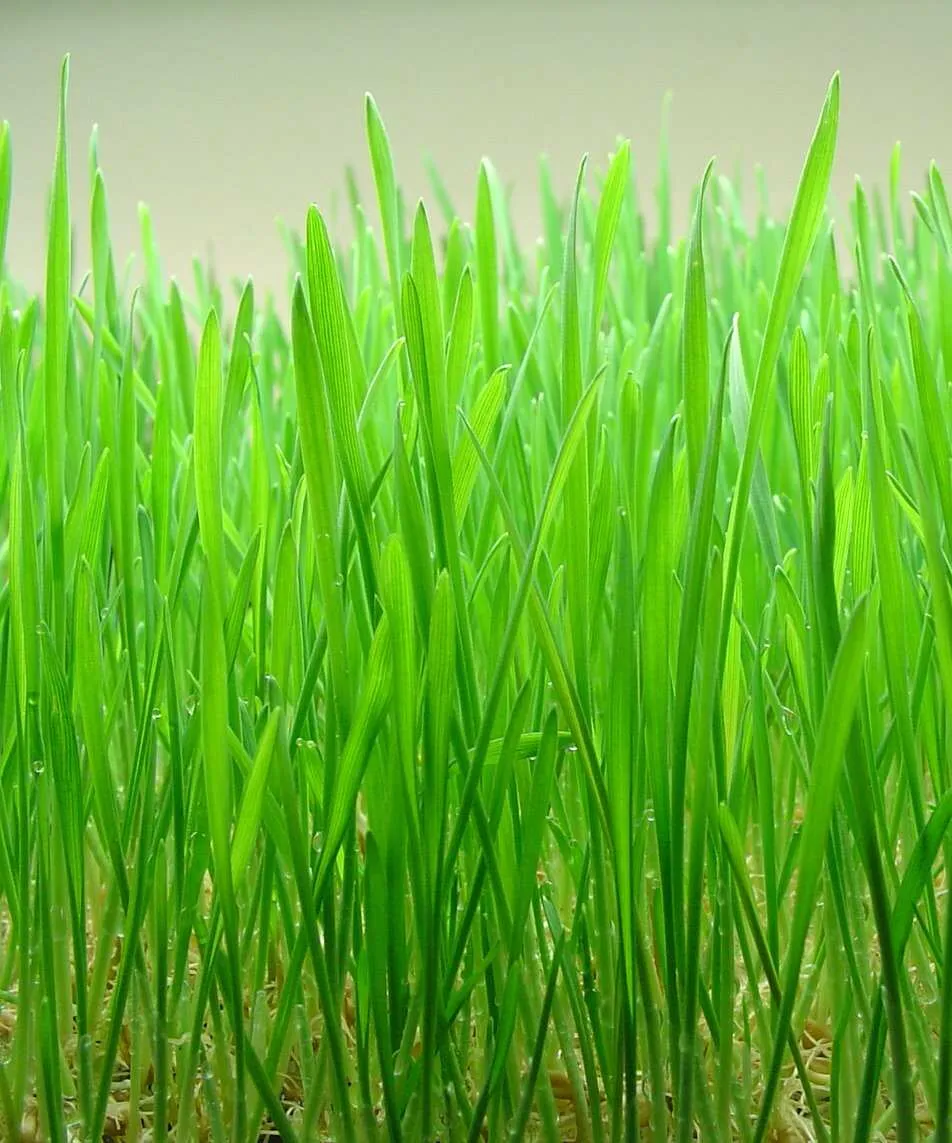 Photo: Anthon01 at English Wikipedia, CC BY-SA 3.0, via Wikimedia Commons
Wheatgrass is primarily consumed as freshly pressed juice, extracted using a masticating (cold-press) juicer, which processes fibrous grass blades more efficiently than centrifugal juicers. Standard commercial servings are typically 30–60 mL (one or two “shots”). The flavor is intensely grassy and slightly sweet; many consumers blend wheatgrass juice with fruit juice to moderate palatability.
Dried wheatgrass powder is a more shelf-stable alternative. It is added to smoothies, water, or other beverages, typically in 2–5 g amounts. In one comparison, freeze-dried wheatgrass retained more vitamin C, beta-carotene, and chlorophyll than oven- or shade-dried wheatgrass (Devi et al., 2019).
Home cultivation of wheatgrass from wheat berries is straightforward: seeds are soaked overnight, spread on a growing medium (soil or hydroponic mat), and grown in indirect light for 7–10 days before harvesting. Homegrown wheatgrass carries a risk of mold contamination during the high-humidity sprouting phase; mold-contaminated wheatgrass should not be consumed.
Wheatgrass tablets and capsules deliver concentrated dried material and offer a tasteless alternative, though the compressed doses per tablet are typically small (500 mg–1 g) and lack the fresh juice’s full phytochemical profile.
If you use wheatgrass powder, our superfood smoothie recipes show how to mix a green powder evenly into a blended drink. Its closest relative on the shelf is barley grass, another young cereal-grass leaf; for a green powder with a larger body of human research, see spirulina.
Safety, Interactions, and Contraindications
Celiac disease and wheat allergy: Gluten proteins (gliadins, glutenins) accumulate in the grain rather than the young leaf, so wheatgrass leaf tissue is distinct from wheat grain in terms of celiac disease risk. However, commercial wheatgrass products may contain seed or grain particles from harvesting and processing. In the US, a product labeled gluten-free must contain less than 20 ppm gluten (FDA, 21 CFR 101.91). Individuals with celiac disease or wheat allergy should seek products labeled or certified gluten-free, and should consult their gastroenterologist before use.
Vitamin K and anticoagulants: Wheatgrass contains vitamin K. While the amounts per typical serving (30 mL juice) are modest, individuals on warfarin or other vitamin K-antagonist anticoagulants should maintain consistent intake and inform their anticoagulation clinician.
Mold contamination: Freshly grown wheatgrass grown in high-humidity conditions is susceptible to mold. Moldy wheatgrass should be discarded; only visually clean, unblemished wheatgrass from reputable sources should be consumed.
Nausea and gastrointestinal effects: A 2015 review found no reported adverse events in clinical trials, although some forms of wheatgrass were poorly tolerated (Bar-Sela et al., 2015). Nausea has been reported: in the breast cancer pilot study, worsening nausea led six patients to stop drinking the juice (Bar-Sela et al., 2007). Practitioners often suggest starting with small amounts (15 mL) and building gradually.
Drug interactions: Wheatgrass has not been formally studied for drug interactions, so the absence of reported interactions is not evidence of safety. The vitamin K point above applies; people taking prescription medicines should tell their clinician before using wheatgrass regularly.
Pregnancy and breastfeeding: Insufficient human safety data exist for wheatgrass supplementation (as opposed to culinary quantities of whole grains) during pregnancy or lactation. Caution is warranted, particularly regarding high-dose juice or concentrated extracts.
This content is for educational purposes only and does not constitute medical advice, diagnosis, or treatment. Consult a qualified healthcare provider before making changes to your diet or supplement regimen.
Frequently Asked Questions
What are the benefits of wheatgrass?
Few are established. The strongest human trial randomized 23 people with active distal ulcerative colitis: 100 mL a day of wheatgrass juice for a month reduced disease activity and rectal bleeding compared with placebo. Small uncontrolled studies in thalassemia and in women on chemotherapy reported encouraging results, but none had a proper control group. Claims for detox and cancer prevention lack support.
What are the benefits of a wheatgrass shot?
A shot is usually 30–60 mL of fresh juice. At that size it provides some vitamin K, vitamin C, iron and chlorophyll, but less than a typical portion of spinach or kale. The colitis trial used 100 mL a day, more than a standard shot. Some people feel nauseated; starting with about 15 mL and building up is a common suggestion.
Is wheatgrass gluten free?
The leaf is, in principle. Gluten proteins (gliadins and glutenins) are stored in the developing grain, and wheatgrass is cut before the grain forms. Commercial products can still contain seed or grain particles from harvesting and processing. In the US a gluten-free label means under 20 ppm gluten, so people with celiac disease or wheat allergy should choose labeled or certified products.
Is wheatgrass the same as wheat?
It is the same plant at a different stage. Wheat grain is the mature seed, which carries the gluten and starch. Wheatgrass is the young leaf, harvested 7–10 days after germination and consumed as juice or powder for its chlorophyll, flavonoids and vitamins. Nutritionally they are different foods, and wheatgrass is not a substitute for whole grains.
How much wheatgrass per day?
There is no established dose. Typical servings are 30–60 mL of juice or 2–5 g of powder a day, and the clinical studies used about 100 mL of juice. People on warfarin should keep intake consistent because wheatgrass contains vitamin K, and safety in pregnancy and breastfeeding has not been established. Anyone on prescription medicines should check with their clinician first.
Wheatgrass vs barley grass: which is better?
They are close equivalents: both are young cereal-grass leaves, both are sold as juice or powder, and both are gluten-free in the leaf but at risk of grain contamination. Wheatgrass has slightly more human research, including the colitis trial; barley grass is distinguished by its flavones saponarin and lutonarin. Neither has strong evidence for health outcomes.
References
Show all 15 referencesShow fewer
- Ben-Arye, E., Goldin, E., Wengrower, D., Stamper, A., Kohn, R., & Berry, E. (2002). Wheat grass juice in the treatment of active distal ulcerative colitis: A randomized double-blind placebo-controlled trial. Scandinavian Journal of Gastroenterology, 37(4), 444–449.
- Marwaha, R. K., Bansal, D., Kaur, S., & Trehan, A. (2004). Wheatgrass juice reduces transfusion requirement in patients with thalassemia major: A pilot study. Indian Pediatrics, 41(7), 716–720.
- Bar-Sela, G., Cohen, M., Ben-Arye, E., & Epelbaum, R. (2015). The medical use of wheatgrass: Review of the gap between basic and clinical applications. Mini-Reviews in Medicinal Chemistry, 15(12), 1002–1010.
- Ferruzzi, M. G., & Blakeslee, J. (2007). Digestion, absorption, and cancer preventative activity of dietary chlorophyll derivatives. Nutrition Research, 27(1), 1–12.
- Hayes, M., & Ferruzzi, M. G. (2020). Update on the bioavailability and chemopreventative mechanisms of dietary chlorophyll derivatives. Nutrition Research.
- Sharma, A., et al. (2022). Comparison of wheatgrass juices from colored wheat (white, black, blue, and purple) for health promoting phytochemicals. Food Research International.
- Shewry, P. R., & Halford, N. G. (2002). Cereal seed storage proteins: structures, properties and role in grain utilization. Journal of Experimental Botany, 53(370), 947–958.
- Egner, P. A., et al. (2001). Chlorophyllin intervention reduces aflatoxin-DNA adducts in individuals at high risk for liver cancer. Proceedings of the National Academy of Sciences, 98(25), 14601–14606.
- Bar-Sela, G., Tsalic, M., Fried, G., & Goldberg, H. (2007). Wheat grass juice may improve hematological toxicity related to chemotherapy in breast cancer patients: A pilot study. Nutrition and Cancer, 58(1), 43–48.
- Choudhary, D. R., et al. (2009). Effect of wheat grass therapy on transfusion requirement in beta-thalassemia major. Indian Journal of Pediatrics, 76(4), 375–376.
- Złotek, U., Szymanowska, U., Jakubczyk, A., Sikora, M., & Świeca, M. (2019). Effect of arachidonic and jasmonic acid elicitation on the content of phenolic compounds and antioxidant and anti-inflammatory properties of wheatgrass (Triticum aestivum L.). Food Chemistry, 288, 256–261.
- Kaur, N., et al. (2021). Effect of growing conditions on proximate, mineral, amino acid, phenolic composition and antioxidant properties of wheatgrass from different wheat (Triticum aestivum L.) varieties. Food Chemistry, 341, 128201.
- Devi, C. B., et al. (2019). Effect of drying procedures on nutritional composition, bioactive compounds and antioxidant activity of wheatgrass (Triticum aestivum L). Journal of Food Science and Technology, 56(1).
- Jarvis, W. T. (2001). Wheatgrass therapy. National Council Against Health Fraud.
- 21 CFR 73.125. Sodium copper chlorophyllin. Code of Federal Regulations (Legal Information Institute).
More in Leafy Greens
- Arugula (Eruca vesicaria ssp. sativa)
Is arugula good for you? Nutrition per 100 g, nitrate and blood pressure, vitamin K, cancer research and safety for this peppery cruciferous green.
- Barley Grass (Hordeum vulgare)
Barley grass benefits weighed against the evidence: antioxidant and blood sugar research, whether it contains gluten, vitamin K, dosing and safety.
- Bok Choy (Brassica rapa subsp. chinensis)
Bok choy benefits and nutrition: well-absorbed calcium, vitamin C and K per 100 g, glucosinolates, the raw-intake thyroid caveat, and how to cook it.
- Broccoli Sprouts (Brassica oleracea var. italica sprouts)
Broccoli sprouts benefits: why 3-day sprouts carry 10–100x more glucoraphanin than broccoli, what human trials found, how to eat them, and sprout safety.
- Collard Greens (Brassica oleracea var. viridis)
Health benefits of collard greens: vitamin K, calcium and fiber per 100 g, what research shows for bones and heart, cooking tips, and warfarin cautions.
- Kale (Brassica oleracea var. sabellica)
Is kale good for you? Kale nutrition per 100 g, what research shows for heart, eyes and bones, kale vs spinach, how much is too much, and safety.

Curated by Superfoods Advisor Editors·Last updated