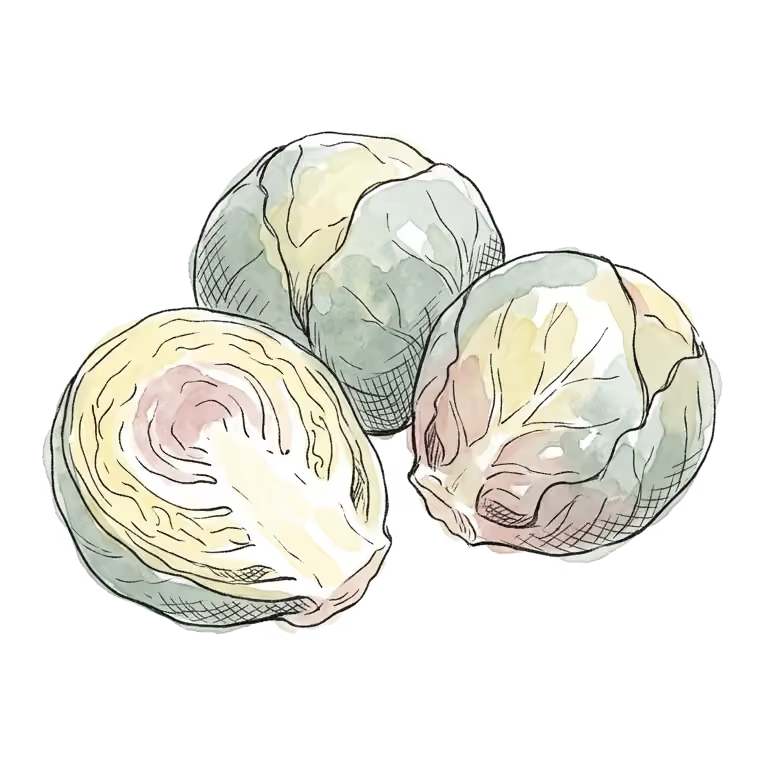
Brussels Sprouts (Brassica oleracea var. gemmifera)
Brassica oleracea var. gemmifera · also known as mini cabbages, Brussels sprout, sprouts
By Superfoods Advisor Editors·July 3, 2026
Brussels sprouts benefits and nutrition per 100 g (148% DV vitamin K, 94% vitamin C), their glucosinolates, what studies show, gas, and warfarin safety.
Brussels sprouts are the edible buds of Brassica oleracea var. gemmifera, a cruciferous vegetable of the same species as cabbage, kale, broccoli and cauliflower. Their clearest benefits are nutritional: 100 g raw provides 43 kcal, 3.8 g of fiber, 177 µg of vitamin K and 85 mg of vitamin C. Cancer and detoxification claims rest on preliminary evidence.
The plant likely emerged from selective cultivation of wild cabbage in the southern Low Countries, and its long association with the area around Brussels gave the vegetable its common name. Production later spread across northern Europe, where cool, moist climates favor tight bud formation.
Traditionally, Brussels sprouts occupied a modest role in northern European peasant cooking as a hardy autumn and winter crop. Modern nutritional science has elevated their profile: Brassica vegetables are the main dietary source of glucosinolates, although reported totals for the same vegetable vary several-fold between studies (McNaughton & Marks, 2003), and Brussels sprouts sit alongside broccoli and watercress as frequent subjects of chemopreventive research.
Evidence at a glance
Active Compounds
Brussels sprouts owe their distinctive sulfurous aroma and much of their purported bioactivity to a family of sulfur-nitrogen compounds called glucosinolates. Upon cell disruption (chopping, chewing, or cooking), the enzyme myrosinase hydrolyzes glucosinolates into biologically active isothiocyanates and indoles.
- Glucobrassicin — the predominant indole glucosinolate in Brussels sprouts; hydrolysis yields indole-3-carbinol (I3C), which modulates estrogen metabolism and activates xenobiotic-processing enzymes via the aryl hydrocarbon receptor (AhR).
- Sinigrin — hydrolyzed to allyl isothiocyanate (AITC); contributes pungency and has been studied for effects on apoptosis pathways in cell models.
- Glucoraphanin — the precursor to sulforaphane (SFN), an isothiocyanate that activates the Nrf2/ARE pathway, upregulating phase II detoxification enzymes (glutathione S-transferases, quinone reductase). In a comparison of B. oleracea crops grown under uniform conditions, glucoraphanin was a predominant glucosinolate in broccoli, whereas Brussels sprouts were dominated by sinigrin, gluconapin, and glucobrassicin (Kushad et al., 1999).
- Kaempferol and quercetin — flavonol antioxidants present in smaller amounts that contribute to the total polyphenol load.
Myrosinase is heat-labile and is significantly inactivated by boiling. However, some gut bacteria, including Bacteroides thetaiotaomicron, can convert glucosinolates to isothiocyanates (Liou et al., 2020), providing a secondary hydrolysis route, though conversion is lower and varies widely between people compared with eating preformed isothiocyanates (Fahey et al., 2012).
Nutritional Profile (per 100 g raw)
| Nutrient | Amount | % DV (approx.) |
|---|---|---|
| Energy | 43 kcal | — |
| Carbohydrate | 8.9 g | 3% |
| Dietary fiber | 3.8 g | 14% |
| Protein | 3.4 g | 7% |
| Fat | 0.3 g | — |
| Vitamin C | 85 mg | 94% |
| Vitamin K1 | 177 µg | 148% |
| Folate (B9) | 61 µg | 15% |
| Vitamin B6 | 0.22 mg | 13% |
| Potassium | 389 mg | 8% |
| Manganese | 0.34 mg | 15% |
Source: USDA FoodData Central, Brussels sprouts, raw (FDC ID 170383).
Vitamin K1 content is exceptionally high — a single 80 g serving provides over 100% of the adult adequate intake. This has direct clinical relevance for patients on vitamin K antagonist anticoagulants (see Safety section).
Evidence for Purported Benefits
Cancer Chemoprevention
Evidence:Preliminary Mixed cohort data for Brassica vegetables plus lab and rodent work; no trials test Brussels sprouts against cancer.
The glucosinolate-isothiocyanate pathway has been extensively studied in vitro and in rodent models. Sulforaphane activates Nrf2 transcription factor signaling, which upregulates detoxification enzymes capable of neutralizing carcinogenic electrophiles. Indole-3-carbinol, which forms condensation products such as diindolylmethane (DIM) in stomach acid, induces oxidative P-450 metabolism in animals; in a small study of 12 healthy volunteers, oral I3C increased estradiol 2-hydroxylation (Michnovicz & Bradlow, 1991).
Epidemiological cohort data — including the Netherlands Cohort Study on Diet and Cancer (Voorrips et al., 2000) — have associated higher Brassica vegetable intake with lower colon cancer risk, though in that cohort the association did not extend to rectal cancer, where Brassica intake was positively associated with risk in women. However, confounding by overall diet quality limits causal interpretation. Randomized controlled trials directly testing Brussels sprouts against cancer endpoints in humans are absent; the existing evidence is insufficient to establish preventive efficacy.
Antioxidant and Detoxification Support
Evidence:Preliminary One small controlled study (10 men) found a lower oxidative DNA damage marker after three weeks.
A small controlled study by Verhagen et al. (1995) in 10 healthy male non-smokers found that eating 300 g/day of cooked Brussels sprouts for three weeks lowered urinary 8-oxo-deoxyguanosine (an oxidative DNA damage marker) by 28%, while levels in the five men on a cruciferous-free diet did not change. Phase II enzyme induction was not directly measured, but the finding is consistent with the proposed glucosinolate mechanism.
Cardiovascular Risk Factors
Evidence:Preliminary Cohorts link cruciferous vegetables to lower cardiovascular mortality; Brussels sprouts have not been tested on their own.
Some large cohorts have associated higher cruciferous vegetable intake with lower cardiovascular mortality (Zhang et al., 2011), but specific Brussels sprout trials are lacking. Viscous soluble fibers lower LDL cholesterol partly by binding bile acids; Brussels sprouts supply fiber (3.8 g/100 g), but this effect has not been tested for them specifically.
Typical Use and Preparation
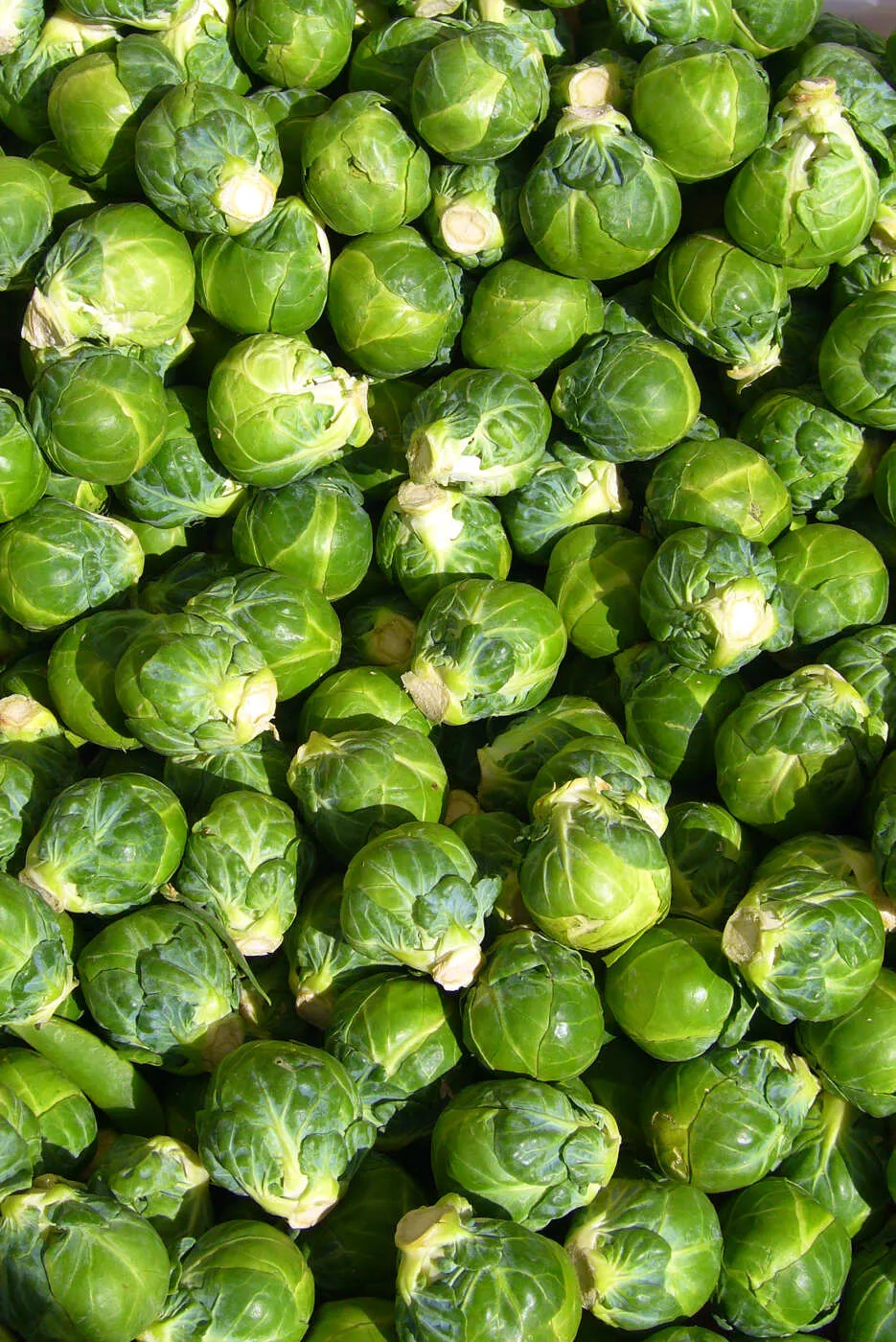 Photo: Eric Hunt, CC BY 2.5, via Wikimedia Commons
Brussels sprouts are consumed cooked — roasted, steamed, braised, or sautéed. Preparation method materially affects bioavailability of glucosinolates:
- Steaming, like microwaving and stir-frying, produced no significant glucosinolate loss in a laboratory comparison of cooking methods, unlike boiling (Song & Thornalley, 2007).
- Roasting (200°C, 20–25 min) likely inactivates most myrosinase but generates Maillard reaction products and concentrates flavors; glucosinolate hydrolysis then depends on gut microbial enzymes.
- Boiling in excess water leaches water-soluble glucosinolates and inactivates myrosinase; Song and Thornalley (2007) found significant glucosinolate losses from boiled Brassica vegetables, including Brussels sprouts, with about 90% of the lost glucosinolates recovered in the cooking water. Dekker et al. (2000) modelled how such processing steps shape the glucosinolate content of cooked cabbage.
- Raw consumption (shredded in slaws) maximizes myrosinase activity but may increase digestive discomfort due to raffinose content.
Adding a raw myrosinase source after cooking, such as powdered mustard seed, supplies the enzyme that cooking destroyed: in a small crossover trial, 1 g of brown mustard powder added to cooked broccoli raised sulforaphane bioavailability more than fourfold (Okunade et al., 2018).
Brussels sprouts are discussed with other crucifers in the sulforaphane research review.
Safety, Interactions, and Contraindications
Vitamin K and anticoagulant therapy: The high vitamin K1 content of Brussels sprouts is clinically significant for patients taking warfarin (Coumadin) or other vitamin K antagonists. Consistent daily intake is generally manageable with dose adjustment, but sudden large increases or decreases can destabilize international normalized ratio (INR). Patients on warfarin should maintain consistent cruciferous vegetable intake and consult their anticoagulant care team before making dietary changes. Newer direct oral anticoagulants (DOACs, such as apixaban, rivaroxaban, and dabigatran) inhibit clotting factors directly rather than acting through vitamin K, so dietary vitamin K is not expected to affect them the way it affects warfarin, although this has not been formally studied in humans (Kampouraki & Kamali, 2017); patients on any anticoagulant should still confirm dietary advice with their prescriber.
Thyroid considerations: Brassica glucosinolates break down to goitrogens: progoitrin yields goitrin and indole glucosinolates yield thiocyanate. A review estimated that Brussels sprouts, along with collards and some Russian kale, contain enough goitrin to potentially decrease iodine uptake by the thyroid, whereas thiocyanate from indole glucosinolates likely poses minimal risk (Felker et al., 2016; two of its three authors worked for a produce company). Thiocyanate is thought to matter mainly in people with iodine deficiency (Linus Pauling Institute). In a small study, 150 g/day of cooked Brussels sprouts for four weeks did not change thyroid hormone levels in 10 volunteers; the authors attributed this to cooking inactivating myrosinase (McMillan et al., 1986). People with hypothyroidism who eat large amounts of raw brassicas can raise it with their doctor.
Gastrointestinal discomfort: Raffinose (an oligosaccharide not digested in the small intestine) is fermented by colonic bacteria, producing gas. Individuals with irritable bowel syndrome or otherwise sensitive gastrointestinal tracts may experience bloating. Gradual introduction may help.
Allergic cross-reactivity: In a study of 38 patients with mustard allergy, all were sensitized to other members of the Brassicaceae family, and cross-reactivity among them was confirmed in laboratory tests (Figueroa et al., 2005). Sensitization does not always cause symptoms, but people with mustard or other brassica allergy may react to Brussels sprouts and can ask an allergist.
Drug interactions beyond warfarin: In a controlled crossover feeding study, a brassica-rich diet increased CYP1A2 activity, measured with a caffeine probe (Lampe et al., 2000), and an earlier study reported that Brussels sprouts and cabbage stimulated human drug metabolism (Pantuck et al., 1979). Whether typical intake changes blood levels of CYP1A2-metabolized medications enough to matter clinically has not been established; people on such drugs who plan a large dietary change can ask their pharmacist.
Frequently Asked Questions
What are the health benefits of Brussels sprouts?
Brussels sprouts are a concentrated source of vitamin K and vitamin C, with fiber, folate and manganese, for 43 kcal per 100 g raw. Their glucosinolates break down into isothiocyanates and indoles that induce detoxification enzymes in laboratory studies. In humans, evidence is limited to cohort associations for Brassica vegetables and one small study of a DNA damage marker, so disease-prevention claims remain preliminary.
Can Brussels sprouts cause gas?
Yes. Brussels sprouts contain raffinose, an oligosaccharide the small intestine cannot digest, so colon bacteria ferment it and produce gas. The sulfur compounds that give the sprouts their smell can add to the odor. People with irritable bowel syndrome or sensitive digestion may notice bloating; eaten raw in slaws they may be harder to tolerate, and introducing them gradually may help.
Are Brussels sprouts high in fiber?
They are among the more fiber-rich common vegetables: 100 g raw contains about 3.8 g of dietary fiber, roughly 14% of the daily value, for 43 kcal (USDA FoodData Central). The same serving has 8.9 g of total carbohydrate and 3.4 g of protein, which is high for a vegetable.
Are Brussels sprouts baby cabbages?
No, though they are close relatives and are sometimes called mini cabbages. Both are cultivars of Brassica oleracea: cabbage is one large terminal head, while Brussels sprouts are the many small buds that form along a tall stem. They share the same glucosinolate chemistry, but in their proportions of individual glucosinolates the crops differ (Kushad et al., 1999).
Are Brussels sprouts good for people with diabetes?
They are a low-calorie, high-fiber vegetable with modest carbohydrate, about 8.9 g per 100 g raw, of which 3.8 g is fiber, so they fit most diabetes meal plans. No clinical trial has tested Brussels sprouts on blood sugar control specifically. People managing diabetes, especially those also on warfarin, should take portion advice from their care team.
References
Show all 19 referencesShow fewer
- Michnovicz, J. J., & Bradlow, H. L. (1991). Altered estrogen metabolism and excretion in humans following consumption of indole-3-carbinol. Nutrition and Cancer, 16(1), 59–66.
- Voorrips, L. E., et al. (2000). Vegetable and fruit consumption and risks of colon and rectal cancer in a prospective cohort study: the Netherlands Cohort Study on Diet and Cancer. American Journal of Epidemiology, 152(11), 1081–1092.
- Verhagen, H., Poulsen, H. E., Loft, S., van Poppel, G., Willems, M. I., & van Bladeren, P. J. (1995). Reduction of oxidative DNA-damage in humans by Brussels sprouts. Carcinogenesis, 16(4), 969–970.
- Dekker, M., Verkerk, R., & Jongen, W. M. F. (2000). Predictive modelling of health aspects in the food production chain: a case study on glucosinolates in cabbage. Trends in Food Science & Technology, 11(4–5), 174–181.
- USDA FoodData Central. Brussels sprouts, raw. FDC ID 170383. Retrieved 2026.
- Song, L., & Thornalley, P. J. (2007). Effect of storage, processing and cooking on glucosinolate content of Brassica vegetables. Food and Chemical Toxicology, 45(2), 216–224.
- Kushad, M. M., et al. (1999). Variation of glucosinolates in vegetable crops of Brassica oleracea. Journal of Agricultural and Food Chemistry, 47(4), 1541–1548.
- McNaughton, S. A., & Marks, G. C. (2003). Development of a food composition database for the estimation of dietary intakes of glucosinolates, the biologically active constituents of cruciferous vegetables. British Journal of Nutrition, 90(3), 687–697.
- Lampe, J. W., et al. (2000). Brassica vegetables increase and apiaceous vegetables decrease cytochrome P450 1A2 activity in humans: changes in caffeine metabolite ratios in response to controlled vegetable diets. Carcinogenesis, 21(6), 1157–1162.
- Pantuck, E. J., et al. (1979). Stimulatory effect of Brussels sprouts and cabbage on human drug metabolism. Clinical Pharmacology & Therapeutics, 25(1), 88–95.
- Liou, C. S., et al. (2020). A metabolic pathway for activation of dietary glucosinolates by a human gut symbiont. Cell, 180(4), 717–728.
- Fahey, J. W., et al. (2012). Protection of humans by plant glucosinolates: efficiency of conversion of glucosinolates to isothiocyanates by the gastrointestinal microflora. Cancer Prevention Research, 5(4), 603–611.
- Zhang, X., et al. (2011). Cruciferous vegetable consumption is associated with a reduced risk of total and cardiovascular disease mortality. American Journal of Clinical Nutrition, 94(1), 240–246.
- Okunade, O., et al. (2018). Supplementation of the diet by exogenous myrosinase via mustard seeds to increase the bioavailability of sulforaphane in healthy human subjects after the consumption of cooked broccoli. Molecular Nutrition & Food Research, 62(18), e1700980.
- Kampouraki, E., & Kamali, F. (2017). Dietary implications for patients receiving long-term oral anticoagulation therapy for treatment and prevention of thromboembolic disease. Expert Review of Clinical Pharmacology, 10(8), 789–797.
- Felker, P., Bunch, R., & Leung, A. M. (2016). Concentrations of thiocyanate and goitrin in human plasma, their precursor concentrations in brassica vegetables, and associated potential risk for hypothyroidism. Nutrition Reviews, 74(4), 248–258.
- Linus Pauling Institute. Cruciferous vegetables. Micronutrient Information Center, Oregon State University.
- McMillan, M., Spinks, E. A., & Fenwick, G. R. (1986). Preliminary observations on the effect of dietary Brussels sprouts on thyroid function. Human Toxicology, 5(1), 15–19.
- Figueroa, J., et al. (2005). Mustard allergy confirmed by double-blind placebo-controlled food challenges: clinical features and cross-reactivity with mugwort pollen and plant-derived foods. Allergy, 60(1), 48–55.
Related content
More in Vegetables
- Artichoke (Cynara cardunculus var. scolymus)
Artichokes benefits explained: prebiotic inulin, cynarin, nutrition per 100 g, and what leaf-extract trials show for cholesterol, digestion and the liver.
- Asparagus (Asparagus officinalis)
Is asparagus good for you? Nutrition per 100 g, including 37% DV folate and 42% vitamin K, its prebiotic fiber, what studies show, and safety notes.
- Beets / Beetroot (Beta vulgaris)
Beet juice benefits explained: how beetroot nitrates lowered systolic blood pressure and aided endurance in trials, beets nutrition per 100 g, and safety.
- Broccoli (Brassica oleracea var. italica)
Is broccoli good for you? Broccoli nutrition per 100 g, including 118% DV vitamin K, how sulforaphane forms, what human studies show, and safety notes.
- Cabbage (Brassica oleracea var. capitata)
Is cabbage good for you? Cabbage nutrition per 100 g (63% DV vitamin K, 41% vitamin C), red vs green, sauerkraut, what studies show, and thyroid safety.
- Carrot (Daucus carota)
Carrots benefits explained: beta-carotene (93% DV vitamin A per 100 g), what studies show for eyes and heart, carrot nutrition facts, and safety notes.

Curated by Superfoods Advisor Editors·Last updated