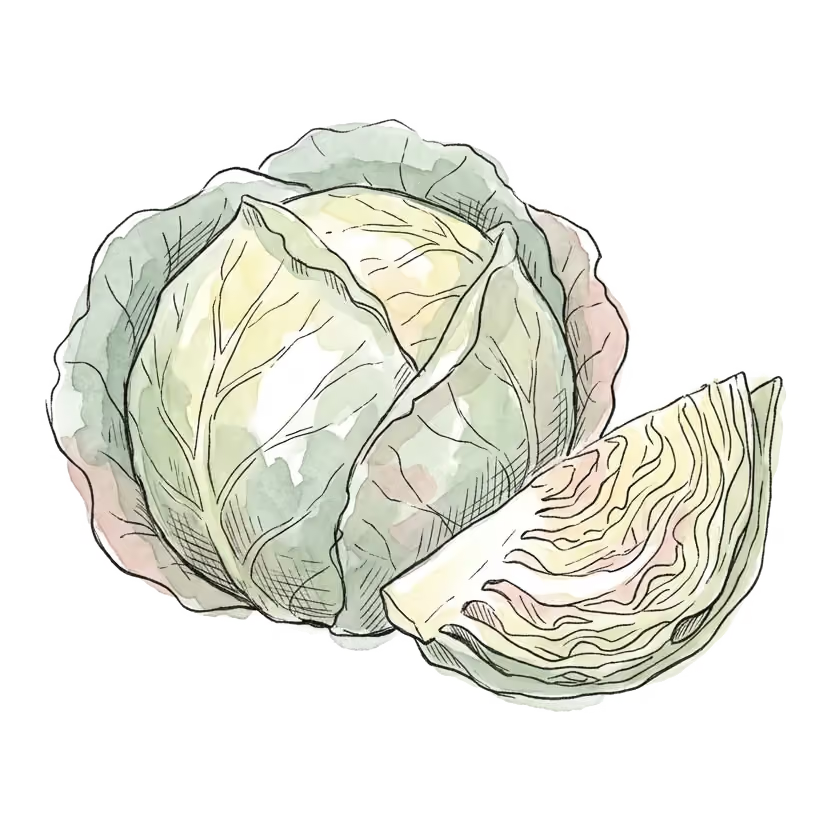
Cabbage (Brassica oleracea var. capitata)
Brassica oleracea var. capitata · also known as green cabbage, red cabbage, savoy cabbage, sauerkraut, napa cabbage
By Superfoods Advisor Editors·July 3, 2026
Is cabbage good for you? Cabbage nutrition per 100 g (63% DV vitamin K, 41% vitamin C), red vs green, sauerkraut, what studies show, and thyroid safety.
Cabbage (Brassica oleracea var. capitata) is a cruciferous leafy vegetable in the family Brassicaceae, grown in green, red and savoy forms. It is good for you mainly as a low-calorie source of vitamins K and C: 100 g raw provides 25 kcal, 63% of the daily value for vitamin K and 41% for vitamin C. Disease-prevention evidence is observational.
A leafy biennial and one of the most widely cultivated vegetables in the world, cabbage is one of several cultivated forms of B. oleracea, which grows wild or feral on coastal cliffs of western and southern Europe; a 2021 genomic study identified the Aegean B. cretica as its closest living wild relative, pointing to an origin of cultivation in the eastern Mediterranean (Mabry et al., 2021). Ancient Greeks and Romans used cabbage medicinally; Cato the Elder praised it at length, and Pliny the Elder listed it in Naturalis Historia as a remedy for many ailments, and it remained a dietary staple of European peasant cuisine for centuries.
From a bioactive standpoint, cabbage is closely related to broccoli, Brussels sprouts, cauliflower, and kale — sharing the same glucosinolate-myrosinase chemical system responsible for pungent flavor and chemopreventive properties. The dominant glucosinolates vary by variety: in six cabbage accessions grown under uniform conditions, sinigrin (allyl isothiocyanate precursor) predominated at about 7.8 µmol/g dry weight, followed by glucobrassicin (indole-3-carbinol precursor) at about 0.9 µmol/g, while glucoraphanin (sulforaphane precursor) was a minor component compared with broccoli (Kushad et al., 1999). Cabbage is also the base of sauerkraut, and related napa cabbage (Brassica rapa) is the base of most Korean kimchi. Fermentation with lactic acid bacteria (LAB) largely breaks the glucosinolates down: in sauerkraut they were essentially gone within about a week, leaving breakdown products such as ascorbigen, indole-3-carbinol, and isothiocyanates (Palani et al., 2016; Ciska et al., 2021). China and India are the world’s largest cabbage producers.
Evidence at a glance
Active Compounds
Glucosinolates and the Glucosinolate-Myrosinase Pathway
Cabbage contains several glucosinolates hydrolyzed by myrosinase upon cell disruption into biologically active metabolites:
- Gluconapin and glucoraphanin: aliphatic glucosinolates; hydrolysis yields 3-butenyl isothiocyanate and sulforaphane, respectively. The glucosinolate-myrosinase system is described in detail in the broccoli entry.
- Sinigrin: yields allyl isothiocyanate (AITC), a pungent isothiocyanate studied for antimicrobial and antiproliferative properties.
- Glucobrassicin: indolyl glucosinolate; yields indole-3-carbinol (I3C), which further condenses to diindolylmethane (DIM) in the acidic stomach. Brassica-rich diets increased CYP1A2 activity in a controlled human feeding study (Lampe et al., 2000), and I3C supplements shifted urinary estrogen metabolites toward 2-hydroxylated forms (Michnovicz et al., 1997).
Myrosinase is heat-labile: in broccoli juice it loses activity progressively between about 45 and 60 °C (Van Eylen et al., 2007). The “chop-and-rest” method (letting chopped cabbage stand for a while before cooking) allows enzymatic hydrolysis before heat deactivation; in broccoli, 90 minutes of hydrolysis before stir-frying left 2.8 times more sulforaphane (Wu et al., 2018). Gut bacteria can convert some glucosinolate from cooked preparations, though conversion varied from about 1% to over 40% between individuals (Fahey et al., 2012).
Antibacterial Properties
Cabbage glucosinolate hydrolysis products — particularly AITC — demonstrate bactericidal activity against food-borne pathogens including E. coli O157:H7 and Salmonella in laboratory models (Lin et al., 2000).
Anthocyanins (Red and Purple Cabbage)
Red and purple cabbage varieties derive their distinctive color from cyanidin-3-diglucoside-5-glucoside and related anthocyanins, many of them acylated. Red cabbage is one of the richer vegetable sources of anthocyanins, though concentrations vary with cultivar and growing conditions.
Fermentation Metabolites (Sauerkraut and Kimchi)
During lacto-fermentation (days to weeks), lactic acid bacteria convert cabbage sugars into lactic acid, with concurrent production of bacteriocins, biogenic amines, and B vitamins. LAB-generated lactic acid lowers the pH, preserving the product and inhibiting pathogenic organisms. The probiotic potential of strains from unpasteurized fermented cabbage has been studied mostly in vitro.
Nutritional Profile
Per 100 g of raw green cabbage (USDA FoodData Central):
| Nutrient | Amount | % DV |
|---|---|---|
| Energy | 25 kcal | — |
| Protein | 1.3 g | — |
| Total fat | 0.1 g | — |
| Carbohydrate | 5.8 g | — |
| Dietary fiber | 2.5 g | — |
| Sugars | 3.2 g | — |
| Vitamin C | 36.6 mg | 41% |
| Vitamin K | 76 µg | 63% |
| Folate | 43 µg | 11% |
| Vitamin B6 | 0.12 mg | 7% |
| Potassium | 170 mg | 4% |
| Manganese | 0.16 mg | 7% |
Red cabbage (raw) provides similar macronutrients but about 1.5× the vitamin C (57 mg/100 g, USDA FoodData Central) and substantially higher anthocyanins.
Evidence for Purported Benefits
Cancer Risk Reduction (Chemopreventive Activity)
Evidence:Preliminary Observational meta-analyses link cruciferous vegetables to lower colorectal and prostate cancer risk; no trials test cabbage against cancer.
Many epidemiological studies report inverse associations between cruciferous vegetable consumption and cancer risk, though results are not uniform. A meta-analysis of 24 case-control and 11 prospective studies by Wu et al. (2013, Annals of Oncology) found an inverse association between total cruciferous vegetable intake and colorectal cancer risk (pooled RR 0.82, 95% CI 0.75–0.90); a cabbage-specific analysis gave a similar result, while the prospective studies alone reached only borderline significance. For prostate cancer, a meta-analysis by Liu et al. (2012, International Journal of Urology) found a small inverse association overall (RR 0.90, 95% CI 0.85–0.96) that was seen in case-control studies but not in cohort studies. These are observational associations and cannot show that cabbage itself lowers cancer risk.
Mechanistically, isothiocyanates such as sulforaphane induce phase-II detoxification enzymes (Talalay & Fahey, 2001) and have shown pro-apoptotic and antiproliferative effects in cancer cell lines (Higdon et al., 2007). In a small human study, indole-3-carbinol (I3C) supplements shifted estrogen metabolism toward 2-hydroxylated metabolites, generally regarded as less estrogenic (Michnovicz et al., 1997). RCTs testing cancer incidence endpoints with dietary cabbage are absent; proof-of-concept biomarker trials support mechanistic plausibility.
Gut Health and Digestive Benefits
Evidence:Preliminary One small randomized study of mixed fermented foods; effects cannot be attributed to cabbage.
Unpasteurized sauerkraut and kimchi are among the most studied traditional fermented foods. In a 17-week randomized study of healthy adults (18 per arm), Wastyk et al. (2021, Cell) found that a high-fermented-food diet (including fermented vegetables, yogurt, kefir, and kombucha) steadily increased gut microbiota diversity and decreased inflammatory markers, while a high-fiber diet left microbial diversity unchanged. The trial’s primary outcome, a cytokine response score, did not change. Fermented cabbage was one of several fermented foods in the intervention, so the effects cannot be attributed to it specifically. The fiber in raw cabbage itself (2.5 g/100 g) contributes to fecal bulk and colonic transit.
Anti-inflammatory Activity
Evidence:Lab & animal only Cell culture and mouse studies; no human trials of cabbage on inflammatory markers.
Cabbage anthocyanins (red cabbage) and isothiocyanates (both varieties) have suppressed NF-κB signaling and pro-inflammatory cytokine release in cell culture models; allyl isothiocyanate, for example, was strongly anti-inflammatory in cultured macrophages but showed little effect in mice (Wagner et al., 2012). Controlled human trials testing cabbage itself against inflammatory markers are lacking.
Gastric Ulcer and Mucosal Protection
Evidence:Insufficient An uncontrolled 1952 case series predates modern ulcer care; later support is laboratory work only.
Raw cabbage juice gained clinical attention in the 1950s after Cheney (1952, California Medicine) reported that, in an uncontrolled series of 100 patients with peptic ulcer, raw cabbage juice was followed by rapid pain relief and ulcer healing times shorter than those reported in the literature for standard diet and drug therapy. Cheney called the unidentified active factor “vitamin U”; the name is now applied to S-methylmethionine, which is not a true vitamin and whose human evidence remains limited (Ananian et al., 2026). This older literature predates modern ulcer treatment (proton pump inhibitors, H. pylori eradication therapy) and does not meet current trial standards. Sulforaphane, an isothiocyanate found mainly in broccoli and only in small amounts in cabbage, inhibited Helicobacter pylori in laboratory studies (Fahey et al., 2002), but rigorous human clinical data for cabbage are lacking.
Typical Use and Preparation
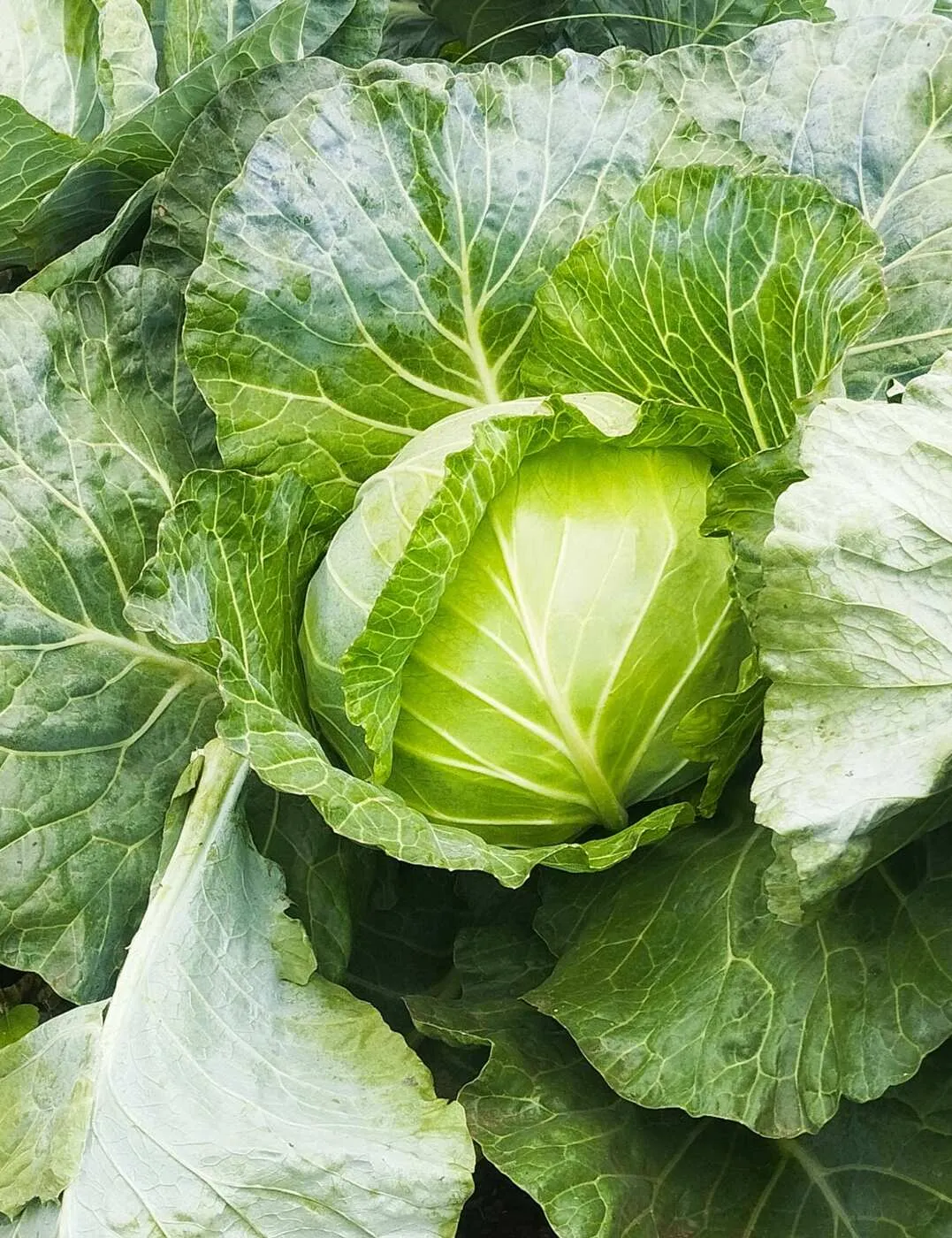 Photo: Yusuf Muhammed Thanni, CC BY-SA 4.0, via Wikimedia Commons
Raw: Shredded raw cabbage is used in coleslaw, salads, spring rolls, and tacos. Raw consumption preserves myrosinase activity, vitamin C, and (in red cabbage) anthocyanin delivery.
Briefly cooked: Quick stir-frying, brief steaming (under 5 minutes), or sautéing softens texture while partially preserving myrosinase. Using the chop-and-rest method before cooking improves isothiocyanate delivery.
Fermented (sauerkraut, kimchi): Finely shredded cabbage is salted (2–3% by weight), massaged to release liquid, packed into an anaerobic vessel, and fermented at room temperature for 1–4 weeks. This method produces unpasteurized sauerkraut containing live LAB. Shelf-stable sauerkraut in cans or jars is typically pasteurized (no live cultures). Korean kimchi adds additional seasonings (gochugaru, garlic, ginger, fish sauce or soy sauce).
Boiled: Traditional recipes (stuffed cabbage rolls, boiled cabbage with corned beef) use prolonged boiling, which destroys myrosinase and leaches water-soluble vitamins. Nutritional value of the cooking liquid should be considered.
For cabbage in the context of the broader crucifer research, see cruciferous vegetables and sulforaphane.
Safety, Interactions, and Contraindications
Goitrogen content and thyroid function: Two glucosinolate breakdown products are goitrogenic: thiocyanate, formed mainly from indole glucosinolates such as glucobrassicin, competes with iodine uptake by the thyroid, and goitrin, formed from progoitrin, inhibits thyroid hormone synthesis. A review estimated that thiocyanate from dietary indole glucosinolates adds little to background plasma levels and poses minimal thyroid risk (Felker et al., 2016). The same review found that goitrin content differs widely by crop: collards and Brussels sprouts can contain enough to potentially reduce thyroid iodine uptake, while broccoli and B. oleracea kale were minimal risk (cabbage was not among the crops it singled out); its authors include employees of a produce company. Thiocyanate from cruciferous vegetables does not appear to raise hypothyroidism risk unless iodine intake is deficient (Linus Pauling Institute). Cooking inactivates myrosinase and may reduce goitrogenic potential. Individuals with hypothyroidism who consume very large amounts of raw cabbage daily may wish to discuss this with their endocrinologist; restriction of normal dietary portions is generally not warranted in adequately iodine-replete individuals.
Warfarin (anticoagulant) interaction: Cabbage is a high-vitamin-K food (76 µg per 100 g raw). Patients taking warfarin should maintain consistent cabbage intake rather than avoid it; a sudden increase in vitamin K intake can lower INR and weaken warfarin’s effect (Violi et al., 2016).
CYP1A2-metabolized drugs: Brassica-rich diets increased CYP1A2 activity in healthy adults (Lampe et al., 2000), which could modestly lower levels of drugs cleared by this enzyme (such as theophylline or clozapine) when intake changes sharply; ordinary, steady intake is not known to be a problem.
Gastrointestinal gas and bloating: Fermentation of raffinose and sulfur-containing compounds by colonic bacteria generates gas. This is a normal physiological response, not a safety concern, but may be uncomfortable for individuals with irritable bowel syndrome (IBS) or functional bloating.
Sauerkraut and sodium: Commercial sauerkraut is high in sodium (about 660 mg per 100 g for canned sauerkraut, USDA FoodData Central). Individuals following low-sodium diets for cardiovascular or renal reasons should account for sauerkraut’s sodium content.
Allergies: True cabbage allergy is uncommon but documented, including anaphylaxis; the cabbage lipid transfer protein Bra o 3 cross-reacts with mugwort pollen and peach, and most patients in one series were also sensitized to mustard (Palacín et al., 2006). Cross-reactivity among Brassicaceae foods has been confirmed in mustard-allergic patients (Figueroa et al., 2005).
Pregnancy and lactation: Cabbage is an ordinary food, and no pregnancy-specific risk from normal culinary amounts has been established. Iodine needs rise in pregnancy, so the thyroid considerations above matter most for anyone whose iodine intake may be low; very large daily amounts of raw cabbage are best discussed with a clinician.
Frequently Asked Questions
What is cabbage good for?
Cabbage is a cheap, low-calorie way to add vitamin K, vitamin C, folate and fiber to a diet; 100 g raw has 25 kcal. It also supplies glucosinolates that break down into isothiocyanates and indoles, which induce detoxification enzymes in laboratory studies. Observational studies associate cruciferous vegetables with lower risk of some cancers, but that preliminary evidence cannot show cabbage itself is protective.
Does cabbage have fiber?
Yes. Raw green cabbage contains about 2.5 g of dietary fiber per 100 g, along with 5.8 g of total carbohydrate and 3.2 g of sugars (USDA FoodData Central). The fiber adds fecal bulk and supports regular transit. Cabbage also contains raffinose and sulfur compounds that colon bacteria ferment, which is why it can cause gas and bloating.
What is the best way to cook cabbage?
It depends on what you want to keep. Raw cabbage, as in coleslaw, preserves vitamin C and the myrosinase enzyme. Quick stir-frying or steaming for under five minutes, after letting chopped cabbage stand for a while, keeps some enzyme activity. Long boiling destroys myrosinase and leaches water-soluble vitamins. Fermenting it into sauerkraut converts most glucosinolates into breakdown products.
How much cabbage is too much?
There is no set upper limit for cabbage as a food. The main cautions are practical. Large raw amounts can cause gas and bloating, warfarin users should keep vitamin K intake consistent (Violi et al., 2016), and people with hypothyroidism or low iodine intake who eat very large amounts of raw cabbage daily may want to discuss it with a clinician.
Is cabbage the same as lettuce?
No. Cabbage is a brassica, a form of Brassica oleracea in the mustard family, while lettuce (Lactuca sativa) belongs to the daisy family (Asteraceae). Cabbage leaves are thicker and waxier and form a dense head, and cabbage contains the glucosinolates studied in cruciferous vegetables, which lettuce does not. The two are often used interchangeably in slaws and wraps, but they differ in chemistry.
References
Show all 25 referencesShow fewer
- Liu, B., Mao, Q., Cao, M., & Xie, L. (2012). Cruciferous vegetables intake and risk of prostate cancer: a meta-analysis. International Journal of Urology, 19(2), 134–141.
- Wastyk, H. C., Fragiadakis, G. K., Perelman, D., Dahan, D., Merrill, B. D., Yu, F. B., … & Sonnenburg, J. L. (2021). Gut-microbiota-targeted diets modulate human immune status. Cell, 184(16), 4137–4153.e14.
- Higdon, J. V., Delage, B., Williams, D. E., & Dashwood, R. H. (2007). Cruciferous vegetables and human cancer risk: epidemiologic evidence and mechanistic basis. Pharmacological Research, 55(3), 224–236.
- Wu, Q. J., Yang, Y., Vogtmann, E., Wang, J., Han, L. H., Li, H. L., & Xiang, Y. B. (2013). Cruciferous vegetables intake and the risk of colorectal cancer: a meta-analysis of observational studies. Annals of Oncology, 24(4), 1079–1087.
- Cheney, G. (1952). Vitamin U therapy of peptic ulcer. California Medicine, 77(4), 248–252.
- Talalay, P., & Fahey, J. W. (2001). Phytochemicals from cruciferous plants protect against cancer by modulating carcinogen metabolism. Journal of Nutrition, 131(11), 3027S–3033S.
- USDA FoodData Central. Cabbage, raw. FDC ID 169975. Also Cabbage, red, raw (FDC ID 169977) and Sauerkraut, canned, solids and liquids (FDC ID 169279).
- Van Eylen, D., Oey, I., Hendrickx, M., & Van Loey, A. (2007). Kinetics of the stability of broccoli (Brassica oleracea cv. Italica) myrosinase and isothiocyanates in broccoli juice during pressure/temperature treatments. Journal of Agricultural and Food Chemistry, 55(6), 2163–2170.
- Kushad, M. M., Brown, A. F., Kurilich, A. C., Juvik, J. A., Klein, B. P., Wallig, M. A., & Jeffery, E. H. (1999). Variation of glucosinolates in vegetable crops of Brassica oleracea. Journal of Agricultural and Food Chemistry, 47(4), 1541–1548.
- Felker, P., Bunch, R., & Leung, A. M. (2016). Concentrations of thiocyanate and goitrin in human plasma, their precursor concentrations in brassica vegetables, and associated potential risk for hypothyroidism. Nutrition Reviews, 74(4), 248–258.
- Mabry, M. E., et al. (2021). The evolutionary history of wild, domesticated, and feral Brassica oleracea (Brassicaceae). Molecular Biology and Evolution, 38(10), 4419–4434.
- Palani, K., et al. (2016). Influence of fermentation on glucosinolates and glucobrassicin degradation products in sauerkraut. Food Chemistry, 190, 755–762.
- Ciska, E., et al. (2021). Changes in glucosinolates and their breakdown products during the fermentation of cabbage and prolonged storage of sauerkraut: focus on sauerkraut juice. Food Chemistry, 365, 130498.
- Lampe, J. W., et al. (2000). Brassica vegetables increase and apiaceous vegetables decrease cytochrome P450 1A2 activity in humans. Carcinogenesis, 21(6), 1157–1162.
- Michnovicz, J. J., Adlercreutz, H., & Bradlow, H. L. (1997). Changes in levels of urinary estrogen metabolites after oral indole-3-carbinol treatment in humans. Journal of the National Cancer Institute, 89(10), 718–723.
- Wu, Y., et al. (2018). Hydrolysis before stir-frying increases the isothiocyanate content of broccoli. Journal of Agricultural and Food Chemistry, 66(6), 1509–1515.
- Fahey, J. W., et al. (2012). Protection of humans by plant glucosinolates: efficiency of conversion of glucosinolates to isothiocyanates by the gastrointestinal microflora. Cancer Prevention Research, 5(4), 603–611.
- Lin, C. M., Preston, J. F., & Wei, C. I. (2000). Antibacterial mechanism of allyl isothiocyanate. Journal of Food Protection, 63(6), 727–734.
- Wagner, A. E., et al. (2012). Anti-inflammatory potential of allyl-isothiocyanate: role of Nrf2, NF-κB and microRNA-155. Journal of Cellular and Molecular Medicine, 16(4), 836–843.
- Ananian, A. A., et al. (2026). S-Methylmethionine (vitamin U): a critical narrative review of pharmacological mechanisms, evidence levels, and translational barriers. Pharmaceuticals, 19(5), 743.
- Fahey, J. W., et al. (2002). Sulforaphane inhibits extracellular, intracellular, and antibiotic-resistant strains of Helicobacter pylori and prevents benzo[a]pyrene-induced stomach tumors. PNAS, 99(11), 7610–7615.
- Violi, F., et al. (2016). Interaction between dietary vitamin K intake and anticoagulation by vitamin K antagonists: is it really true? A systematic review. Medicine, 95(10), e2895.
- Palacín, A., et al. (2006). Cabbage lipid transfer protein Bra o 3 is a major allergen responsible for cross-reactivity between plant foods and pollens. Journal of Allergy and Clinical Immunology, 117(6), 1423–1429.
- Figueroa, J., et al. (2005). Mustard allergy confirmed by double-blind placebo-controlled food challenges: clinical features and cross-reactivity with mugwort pollen and plant-derived foods. Allergy, 60(1), 48–55.
- Linus Pauling Institute Micronutrient Information Center. Cruciferous vegetables.
Related content
More in Vegetables
- Artichoke (Cynara cardunculus var. scolymus)
Artichokes benefits explained: prebiotic inulin, cynarin, nutrition per 100 g, and what leaf-extract trials show for cholesterol, digestion and the liver.
- Asparagus (Asparagus officinalis)
Is asparagus good for you? Nutrition per 100 g, including 37% DV folate and 42% vitamin K, its prebiotic fiber, what studies show, and safety notes.
- Beets / Beetroot (Beta vulgaris)
Beet juice benefits explained: how beetroot nitrates lowered systolic blood pressure and aided endurance in trials, beets nutrition per 100 g, and safety.
- Broccoli (Brassica oleracea var. italica)
Is broccoli good for you? Broccoli nutrition per 100 g, including 118% DV vitamin K, how sulforaphane forms, what human studies show, and safety notes.
- Brussels Sprouts (Brassica oleracea var. gemmifera)
Brussels sprouts benefits and nutrition per 100 g (148% DV vitamin K, 94% vitamin C), their glucosinolates, what studies show, gas, and warfarin safety.
- Carrot (Daucus carota)
Carrots benefits explained: beta-carotene (93% DV vitamin A per 100 g), what studies show for eyes and heart, carrot nutrition facts, and safety notes.

Curated by Superfoods Advisor Editors·Last updated