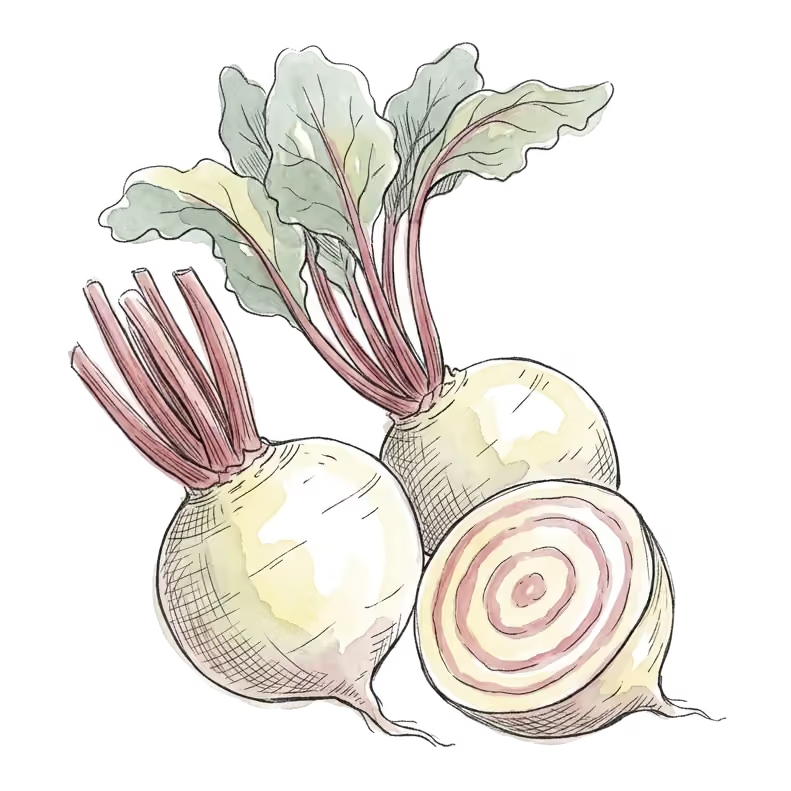
Beets / Beetroot (Beta vulgaris)
Beta vulgaris · also known as Beetroot, Red beet, Garden beet, Table beet, Beets, Beet juice, Beetroot juice
By Superfoods Advisor Editors·July 3, 2026
Beet juice benefits explained: how beetroot nitrates lowered systolic blood pressure and aided endurance in trials, beets nutrition per 100 g, and safety.
Beetroot (Beta vulgaris), sold as beets, red beet or table beet, is a root vegetable in the family Amaranthaceae. Most of the studied benefits of beet juice come from its dietary nitrate, which the body converts to nitric oxide. In meta-analyses of small trials, beetroot juice lowered systolic blood pressure by about 4–5 mmHg and improved some endurance measures.
The cultivated beet descends from the sea beet (Beta vulgaris subsp. maritima) native to the coastlines of Europe and the Mediterranean. Humans have cultivated beets for millennia — initially for their leaves, which were used similarly to Swiss chard (a close relative). The swollen, pigmented taproot was selectively developed through centuries of agricultural breeding and became a distinct food crop in medieval Europe. By the 16th century, red-rooted table beets were being grown in parts of Europe.
Beetroot rose to prominence in nutritional science in the late 2000s when researchers at the University of Exeter demonstrated that dietary nitrate from beetroot juice reduced the oxygen cost of exercise and lowered systolic blood pressure (Bailey et al., 2009), building on work that had traced such effects to the enterosalivary nitrate-to-nitric oxide pathway (Webb et al., 2008). This mechanistic insight has generated a substantial body of clinical research, making beetroot one of the better-studied dietary interventions for cardiovascular and sports-performance outcomes.
Evidence at a glance
Active Compounds
Dietary Nitrates and the Enterosalivary Nitric Oxide Pathway
The primary bioactive constituents responsible for beetroot’s cardiovascular and ergogenic effects are inorganic dietary nitrates (NO₃⁻), present at high but widely variable concentrations depending on cultivar, growing conditions, and storage; an analysis of 24 commercial beetroot juice products found a roughly 50-fold range in nitrate content between the lowest and highest (Gallardo & Coggan, 2019).
The conversion pathway operates in two sequential steps:
- Oral reduction: Ingested nitrate is absorbed, and a portion is concentrated in saliva, where bacteria on the tongue reduce nitrate (NO₃⁻) to nitrite (NO₂⁻) via bacterial nitrate reductase enzymes (Lundberg et al., 2008). This step appears to be essential: in a study by Webb and colleagues (2008), interrupting the enterosalivary conversion (volunteers spat out their saliva instead of swallowing it) prevented the rise in plasma nitrite and blocked the blood-pressure-lowering effect of beetroot juice. Similarly, antiseptic mouthwash that suppressed oral bacteria lowered oral and plasma nitrite and was followed by a small rise in blood pressure in healthy volunteers (Kapil et al., 2013).
- Gastric and tissue conversion: Some swallowed nitrite (NO₂⁻) is converted to nitric oxide (NO) in the acidic stomach; the rest is absorbed into the circulation and can be reduced to NO in tissues, particularly under low-oxygen (hypoxic) or acidic conditions, without requiring nitric oxide synthase (Lundberg et al., 2008). NO is a potent vasodilator, inhibitor of platelet aggregation, and regulator of mitochondrial respiration.
This enterosalivary cycle (dietary NO₃⁻ → salivary NO₂⁻ → tissue NO) represents a physiologically distinct and diet-dependent route to nitric oxide production, separate from the classical L-arginine–nitric oxide synthase pathway.
Betalains
Beetroot’s vivid red-purple color comes from betalain pigments — specifically betacyanins (primarily betanin/betanine) and betaxanthins (primarily vulgaxanthin I and II). Betalains are found in relatively few plant families and are structurally distinct from the anthocyanins that color most other red/purple produce. Betanin has demonstrated antioxidant, anti-inflammatory, and chemopreventive activity in cell and animal studies. Its absorption appears to be very low: in a study of 100 volunteers, less than 1% of an oral dose of beetroot betacyanins was recovered in urine over the following 8 hours (Watts et al., 1993).
Betacyaninuria — the excretion of red-pigmented urine or stools after beet consumption — is reported in roughly 10–14% of people, more often in those with iron deficiency or malabsorption (Watts et al., 1993), and is harmless, though individuals who are unaware of the phenomenon may mistake it for hematuria (blood in urine).
Folate and Other Micronutrients
Beetroot is a meaningful source of folate (80 µg per 100 g cooked, per USDA FoodData Central), manganese, and potassium. It also contains trimethylglycine (betaine), a methyl donor involved in homocysteine metabolism.
Nutritional Profile
Per 100 g of cooked beetroot (boiled, drained, USDA FoodData Central):
| Nutrient | Amount | % DV |
|---|---|---|
| Energy | 44 kcal | — |
| Protein | 1.7 g | — |
| Total fat | 0.2 g | — |
| Carbohydrate | 10.0 g | — |
| Dietary fiber | 2.0 g | — |
| Sugars | 8.0 g | — |
| Folate | 80 µg | 20% |
| Vitamin C | 3.6 mg | 4% |
| Manganese | 0.33 mg | 14% |
| Potassium | 305 mg | 6% |
| Magnesium | 23 mg | 5% |
| Iron | 0.8 mg | 4% |
Cooking method affects nitrate content: in an analysis of several other vegetables, boiling reduced nitrate content by roughly 25–65% while baking left it nearly unchanged (Prasad & Chetty, 2011). Because nitrate is water-soluble, raw or roasted beets, or beet juice, are likely to retain more of it than boiled beets, and consuming the cooking liquid recovers some of what leaches out.
Evidence for Purported Benefits
Blood Pressure Reduction
Evidence:Moderate Meta-analyses of small, short RCTs show lower systolic pressure; diastolic and long-term effects are uncertain.
A landmark study by Webb et al. (2008, Hypertension) found that about 3 hours after healthy volunteers drank 500 mL of beetroot juice, blood pressure had fallen by up to 10.4/8 mmHg, an effect that tracked the rise in plasma nitrite. A 2013 meta-analysis by Siervo et al. (Journal of Nutrition) pooled 16 small randomized crossover trials (254 participants, interventions lasting 2 hours to 15 days) and found that inorganic nitrate and beetroot juice supplementation lowered systolic blood pressure by a mean of 4.4 mmHg; the 1.1 mmHg fall in diastolic pressure was not statistically significant. A systolic reduction of that size could matter at a population level, where a pooled analysis of 61 prospective studies associated a 2 mmHg lower usual systolic pressure in middle age with roughly 10% lower stroke mortality (Lewington et al., 2002).
In people with clinically diagnosed hypertension, a 2024 meta-analysis of 11 RCTs (349 patients) found that beetroot juice lowered clinic systolic pressure by a mean of 5.3 mmHg but did not significantly change diastolic or 24-hour blood pressure; the authors rated the certainty of evidence as low (Grönroos et al., 2024). Long-term effects (beyond a few weeks) and use alongside antihypertensive medications have not been adequately studied.
Exercise Performance and Oxygen Efficiency
Evidence:Moderate Small crossover RCTs, mostly in healthy or trained adults, largely agree; some studies conflict.
In a small double-blind crossover study, Bailey et al. (2009, Journal of Applied Physiology) gave eight men 500 mL of beetroot juice or a low-nitrate placebo daily for 6 days; beetroot juice reduced the oxygen cost of moderate exercise and extended time to exhaustion during severe exercise (675 vs. 583 seconds). Larsen et al. (2011, Cell Metabolism), in a double-blind crossover trial using inorganic nitrate, found improved mitochondrial efficiency (P/O ratio) in muscle biopsies that correlated with the lower oxygen cost of exercise. A 2017 systematic review of 23 studies by Domínguez et al. (Nutrients) concluded that beetroot juice may improve cardiorespiratory endurance in athletes, including performance over various distances and time to exhaustion at submaximal intensities, while noting that the literature contains contradictory data.
The proposed mechanism involves nitric oxide-mediated improvement of mitochondrial efficiency and muscle contractile function; in mice, a week of dietary nitrate increased calcium handling and force in fast-twitch (type II) muscle but not in slow-twitch muscle (Hernández et al., 2012).
Anti-inflammatory and Antioxidant Activity
Evidence:Limited Human trial results conflict; one RCT (30 people) found less muscle pain after exercise.
Betanin and other betalains scavenge free radicals in vitro, but test-tube antioxidant assays such as ORAC do not predict effects in the body, and the USDA withdrew its ORAC database in 2012 for that reason. In human trials, antioxidant effects have been inconsistent, possibly reflecting low betanin absorption. A 2017 RCT by Clifford et al. (Applied Physiology, Nutrition, and Metabolism; n = 30) found that beetroot juice attenuated muscle pain after strenuous jumping exercise more than a nitrate-matched drink, which the authors attributed to phytonutrients other than nitrate; creatine kinase did not differ between groups. Larger and longer trials are needed.
Typical Use and Preparation
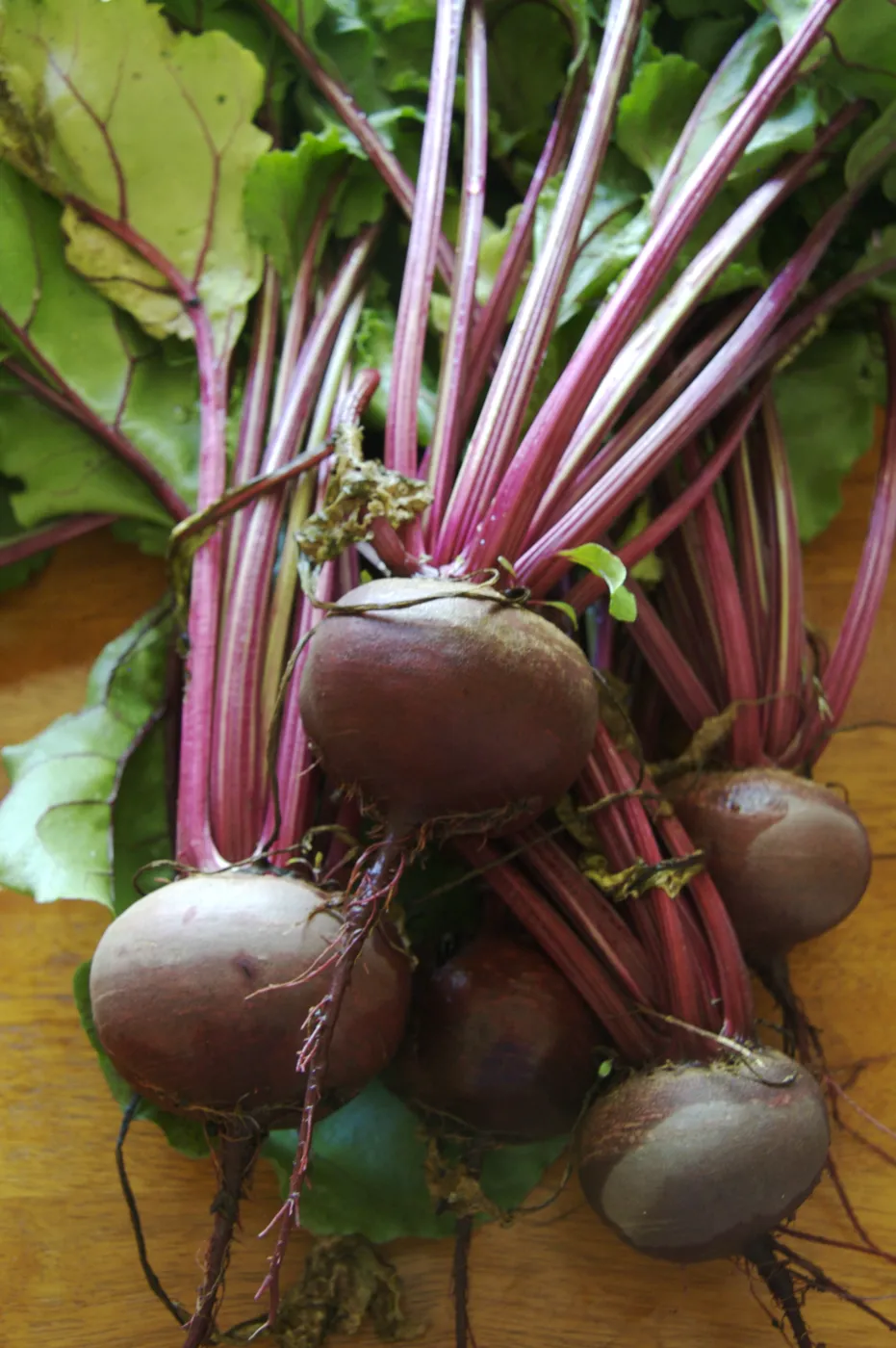 Photo: BriannaWalther, CC BY-SA 3.0, via Wikimedia Commons
Raw beetroot can be grated into salads or blended into smoothies and juices; this preparation best preserves dietary nitrates and heat-labile betanin. Roasting concentrates flavors through caramelization of natural sugars and, as dry-heat cooking, avoids leaching nitrate into water. Steaming (10–20 minutes) is a lower-impact alternative to boiling. Pickling in vinegar is common in Eastern European cuisines.
Boiling caveat: Boiling whole or sliced beets in water depletes water-soluble nitrates and betanin into the cooking liquid. If boiling is preferred, using the cooking liquid in soups, sauces, or borscht recovers some of the leached nitrates.
Concentrated beetroot juice is the form used in most clinical studies. About 5 mmol (roughly 310 mg) of nitrate per serving appears to be the minimum needed to enhance exercise performance in most people, yet in one analysis only 5 of 24 commercial beetroot juice products consistently supplied that much (Gallardo & Coggan, 2019). Whole beets would have to be eaten in considerably larger amounts, and their nitrate content varies too much to give a reliable gram-for-dose equivalent.
The heart-health guide reviews the beetroot juice trials on blood pressure and how they compare with studies of nitrate-rich leafy greens such as arugula and spinach.
Safety, Interactions, and Contraindications
Oxalates: Beetroot contains soluble oxalates. Individuals with a history of calcium oxalate kidney stones or those predisposed to hyperoxaluria should moderate beetroot consumption. Boiling lowers soluble oxalate in vegetables because it leaches into the cooking water, but does not eliminate it (Chai & Liebman, 2005).
Betacyaninuria: Reddish discoloration of urine and stools (beeturia) is common, harmless, and should not be confused with blood. Disclosure is important for patients who are unfamiliar with the phenomenon, particularly those monitored for gastrointestinal bleeding.
Interaction with erectile dysfunction medications (PDE5 inhibitors): Because dietary nitrates lower blood pressure through nitric oxide pathways, combining high-dose beet/nitrate supplementation with PDE5 inhibitors (sildenafil, tadalafil) could in theory cause additive hypotension; this has not been studied directly. This combination should be discussed with a prescribing physician.
Hypotension: Individuals with already-low blood pressure or those taking antihypertensive drugs may experience symptomatic hypotension with high-dose beetroot juice supplementation.
Blood sugar: Cooked beetroot contains about 8 g of sugars per 100 g (USDA FoodData Central). Individuals with diabetes should monitor intake, particularly beet juice, which concentrates sugars.
Pregnancy: Beetroot eaten as an ordinary vegetable is a normal part of the diet. Concentrated nitrate supplements have been tested in pregnancy only in small feasibility trials, such as an 8-day trial in 40 women with chronic hypertension (Ormesher et al., 2018), which were not designed to establish safety; discuss supplement use with a clinician.
Infants: The American Academy of Pediatrics notes that infant methemoglobinemia (nitrate poisoning) from home-prepared vegetable foods continues to be reported, whereas commercially prepared infant foods appear to carry little or no risk; formula made with nitrate-contaminated well water remains the main risk (Greer & Shannon, 2005). Beets are among the higher-nitrate vegetables.
Frequently Asked Questions
What are the benefits of beet juice?
The best-supported benefit is a modest, short-term fall in systolic blood pressure: about 4.4 mmHg on average across 16 small crossover trials (Siervo et al., 2013). Small trials in athletes also suggest it reduces the oxygen cost of exercise and extends time to exhaustion, though results conflict. Both effects are attributed to the juice’s nitrate, and long-term effects beyond a few weeks have not been established.
Is beet juice safe to drink every day?
Daily beet juice has been studied only over short periods, typically from a few days to a few weeks, and was generally well tolerated in those trials. Longer daily use has not been adequately studied. People with calcium oxalate kidney stones, low blood pressure, diabetes, or who take blood-pressure drugs or PDE5 inhibitors such as sildenafil should talk to a clinician before making concentrated juice a daily habit.
What are beets good for?
As a food, beets supply folate (80 µg per 100 g cooked, 20% DV), manganese, potassium and fiber for 44 kcal. They are also one of the richer dietary sources of nitrate, the compound behind the blood-pressure and exercise findings, and of betalain pigments, whose antioxidant activity in the body is uncertain because very little is absorbed (Watts et al., 1993).
Can beets be eaten raw?
Yes. Raw beetroot can be grated into salads or blended into juices and smoothies, and raw or roasted beets are likely to keep more of their nitrate than boiled ones, because nitrate is water-soluble and leaches into cooking water. Boiling also lowers soluble oxalate, which may matter for people prone to kidney stones (Chai & Liebman, 2005).
Is beetroot juice good for pregnancy?
Beetroot eaten as an ordinary vegetable is a normal part of a pregnancy diet. Concentrated beet juice and nitrate supplements have been tested in pregnancy only in small feasibility trials, such as an 8-day trial in 40 women with chronic hypertension (Ormesher et al., 2018), which were not designed to establish safety. Supplement use during pregnancy is best discussed with a clinician.
Why does beetroot turn urine red?
Red or pink urine or stools after eating beets, called beeturia, comes from betacyanin pigments that pass through unchanged. It affects roughly 10–14% of people, more often those with iron deficiency or malabsorption, and is harmless (Watts et al., 1993). It can be mistaken for blood, so anyone unsure should mention it to a clinician.
References
Show all 18 referencesShow fewer
- Webb, A. J., Patel, N., Loukogeorgakis, S., Okorie, M., Aboud, Z., Misra, S., … & Ahluwalia, A. (2008). Acute blood pressure lowering, vasoprotective, and antiplatelet properties of dietary nitrate via bioconversion to nitrite. Hypertension, 51(3), 784–790.
- Siervo, M., Lara, J., Ogbonmwan, I., & Mathers, J. C. (2013). Inorganic nitrate and beetroot juice supplementation reduces blood pressure in adults: a systematic review and meta-analysis. Journal of Nutrition, 143(6), 818–826.
- Larsen, F. J., Schiffer, T. A., Borniquel, S., Sahlin, K., Ekblom, B., Lundberg, J. O., & Weitzberg, E. (2011). Dietary inorganic nitrate improves mitochondrial efficiency in humans. Cell Metabolism, 13(2), 149–159.
- Bailey, S. J., Winyard, P., Vanhatalo, A., Blackwell, J. R., Dimenna, F. J., Wilkerson, D. P., … & Jones, A. M. (2009). Dietary nitrate supplementation reduces the O₂ cost of low-intensity exercise and enhances tolerance to high-intensity exercise in humans. Journal of Applied Physiology, 107(4), 1144–1155.
- Domínguez, R., Cuenca, E., Maté-Muñoz, J. L., García-Fernández, P., Serra-Paya, N., Estevan, M. C. L., … & Garnacho-Castaño, M. V. (2017). Effects of beetroot juice supplementation on cardiorespiratory endurance in athletes: A systematic review. Nutrients, 9(1), 43.
- Clifford, T., Howatson, G., West, D. J., & Stevenson, E. J. (2017). Beetroot juice is more beneficial than sodium nitrate for attenuating muscle pain after strenuous eccentric-bias exercise. Applied Physiology, Nutrition, and Metabolism, 42(11), 1185–1191.
- USDA FoodData Central. (2019). Beets, cooked, boiled, drained. FDC ID 169146. U.S. Department of Agriculture.
- Watts, A. R., Lennard, M. S., Mason, S. L., Tucker, G. T., & Woods, H. F. (1993). Beeturia and the biological fate of beetroot pigments. Pharmacogenetics, 3(6), 302–311.
- Lewington, S., Clarke, R., Qizilbash, N., Peto, R., & Collins, R.; Prospective Studies Collaboration. (2002). Age-specific relevance of usual blood pressure to vascular mortality: a meta-analysis of individual data for one million adults in 61 prospective studies. Lancet, 360(9349), 1903–1913.
- Gallardo, E. J., & Coggan, A. R. (2019). What’s in your beet juice? Nitrate and nitrite content of beet juice products marketed to athletes. International Journal of Sport Nutrition and Exercise Metabolism, 29(4), 345–349.
- Chai, W., & Liebman, M. (2005). Effect of different cooking methods on vegetable oxalate content. Journal of Agricultural and Food Chemistry, 53(8), 3027–3030.
- Lundberg, J. O., Weitzberg, E., & Gladwin, M. T. (2008). The nitrate-nitrite-nitric oxide pathway in physiology and therapeutics. Nature Reviews Drug Discovery, 7(2), 156–167.
- Kapil, V., Haydar, S. M., Pearl, V., Lundberg, J. O., Weitzberg, E., & Ahluwalia, A. (2013). Physiological role for nitrate-reducing oral bacteria in blood pressure control. Free Radical Biology and Medicine, 55, 93–100.
- Prasad, S., & Chetty, A. A. (2011). Flow injection assessment of nitrate contents in fresh and cooked fruits and vegetables grown in Fiji. Journal of Food Science, 76(8), C1143–C1148.
- Grönroos, R., Eggertsen, R., Bernhardsson, S., & Praetorius Björk, M. (2024). Effects of beetroot juice on blood pressure in hypertension according to European Society of Hypertension Guidelines: A systematic review and meta-analysis. Nutrition, Metabolism and Cardiovascular Diseases, 34(10), 2240–2256.
- Hernández, A., Schiffer, T. A., Ivarsson, N., Cheng, A. J., Bruton, J. D., Lundberg, J. O., Weitzberg, E., & Westerblad, H. (2012). Dietary nitrate increases tetanic [Ca²⁺]i and contractile force in mouse fast-twitch muscle. Journal of Physiology, 590(15), 3575–3583.
- Ormesher, L., Myers, J. E., Chmiel, C., et al. (2018). Effects of dietary nitrate supplementation, from beetroot juice, on blood pressure in hypertensive pregnant women: A randomised, double-blind, placebo-controlled feasibility trial. Nitric Oxide, 80, 37–44.
- Greer, F. R., & Shannon, M.; American Academy of Pediatrics Committee on Nutrition and Committee on Environmental Health. (2005). Infant methemoglobinemia: the role of dietary nitrate in food and water. Pediatrics, 116(3), 784–786.
Related content
More in Vegetables
- Artichoke (Cynara cardunculus var. scolymus)
Artichokes benefits explained: prebiotic inulin, cynarin, nutrition per 100 g, and what leaf-extract trials show for cholesterol, digestion and the liver.
- Asparagus (Asparagus officinalis)
Is asparagus good for you? Nutrition per 100 g, including 37% DV folate and 42% vitamin K, its prebiotic fiber, what studies show, and safety notes.
- Broccoli (Brassica oleracea var. italica)
Is broccoli good for you? Broccoli nutrition per 100 g, including 118% DV vitamin K, how sulforaphane forms, what human studies show, and safety notes.
- Brussels Sprouts (Brassica oleracea var. gemmifera)
Brussels sprouts benefits and nutrition per 100 g (148% DV vitamin K, 94% vitamin C), their glucosinolates, what studies show, gas, and warfarin safety.
- Cabbage (Brassica oleracea var. capitata)
Is cabbage good for you? Cabbage nutrition per 100 g (63% DV vitamin K, 41% vitamin C), red vs green, sauerkraut, what studies show, and thyroid safety.
- Carrot (Daucus carota)
Carrots benefits explained: beta-carotene (93% DV vitamin A per 100 g), what studies show for eyes and heart, carrot nutrition facts, and safety notes.

Curated by Superfoods Advisor Editors·Last updated