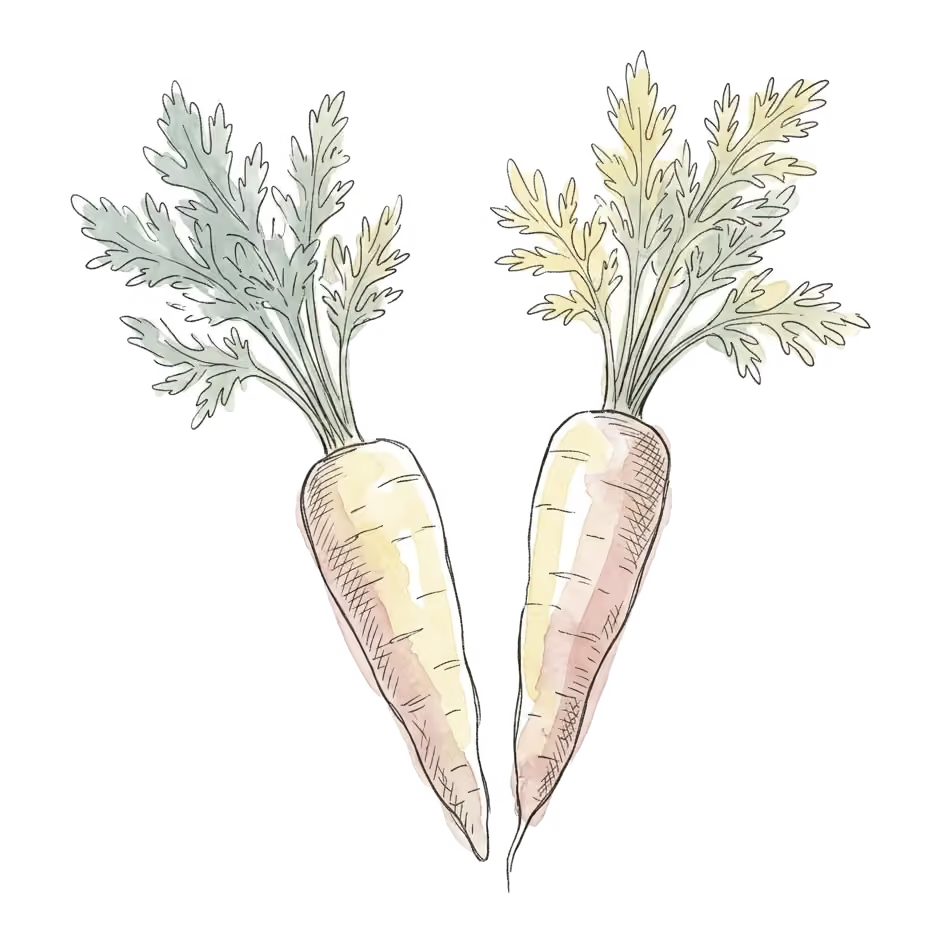
Carrot (Daucus carota)
Daucus carota · also known as zanahoria, carotte, Carrots, Orange carrot
By Superfoods Advisor Editors·July 3, 2026
Carrots benefits explained: beta-carotene (93% DV vitamin A per 100 g), what studies show for eyes and heart, carrot nutrition facts, and safety notes.
Carrot (Daucus carota subsp. sativus) is a root vegetable in the Apiaceae family, a botanical relative of parsley, celery and fennel. Its main benefit is beta-carotene, which the body converts to vitamin A: 100 g raw supplies 835 µg of retinol activity equivalents, 93% of the daily value, for 41 kcal. Evidence beyond vitamin A status is preliminary.
Carrot is one of the most widely cultivated root vegetables on Earth, with origins traced to the region spanning western and Central Asia, where purple and yellow varieties were domesticated during the Early Middle Ages. Orange carrots, now the global standard, were probably selected in western Europe during the Renaissance (Coe et al., 2023) and became dominant in European and colonial agriculture.
In traditional medicine systems, including Ayurveda and Unani, carrot root and seed have been used for purported diuretic and carminative properties. Today, carrot occupies a central place in global cuisine and clinical nutrition research, primarily due to its exceptionally high concentration of carotenoid pigments, particularly beta-carotene, which serves as a principal dietary precursor to vitamin A.
Evidence at a glance
Active Compounds
Carrot’s nutritional significance derives from a dense array of bioactive constituents concentrated in the taproot:
- Beta-carotene (provitamin A): The most abundant carotenoid in orange carrot, beta-carotene is a fat-soluble pigment that undergoes enzymatic cleavage in the intestinal mucosa to yield retinol (vitamin A). Bioavailability is markedly enhanced by concurrent ingestion of dietary fat; the amount of fat needed in a meal appears to be small, roughly 3–5 g, though longer-term dose-response data are lacking (Ribaya-Mercado, 2002). Cooking and mechanical processing (pureeing, juicing) also disrupt cell walls and increase bioaccessibility.
- Alpha-carotene: Present in significant quantities alongside beta-carotene; also converted to vitamin A, though at roughly half the efficiency of beta-carotene (24 µg dietary alpha-carotene vs 12 µg beta-carotene per 1 µg retinol activity equivalent; Linus Pauling Institute).
- Lutein and zeaxanthin: Xanthophyll carotenoids concentrated in yellow carrot varieties and present in smaller quantities in orange types; associated with macular pigment density.
- Polyacetylenes (falcarinol, falcarindiol): Bioactive lipophilic compounds found mainly in the Apiaceae, Araliaceae (such as ginseng), and Asteraceae (Dawid et al., 2015); preliminary cell and animal studies suggest cytostatic activity, though human evidence remains limited.
- Dietary fiber (pectin, cellulose): Carrot is a meaningful source of soluble pectin, a fermentable fiber that has been studied for effects on postprandial glucose and colonic fermentation.
- Chlorogenic acid and other hydroxycinnamic acids: Phenolic antioxidants present in the phloem and skin; contribute to total antioxidant capacity.
Nutritional Profile
The following values represent raw, orange carrot per 100 g edible portion (USDA FoodData Central, SR Legacy 170393):
| Nutrient | Amount | % DV |
|---|---|---|
| Energy | 41 kcal | — |
| Carbohydrates | 9.6 g | — |
| Dietary fiber | 2.8 g | — |
| Sugars | 4.7 g | — |
| Protein | 0.9 g | — |
| Total fat | 0.2 g | — |
| Vitamin A (as beta-carotene) | 835 µg RAE | 93% |
| Vitamin K1 | 13.2 µg | 11% |
| Vitamin C | 5.9 mg | 7% |
| Potassium | 320 mg | 7% |
| Folate | 19 µg DFE | 5% |
| Beta-carotene | 8,280 µg | — |
Cooked carrot delivers slightly higher beta-carotene bioaccessibility per gram than raw, due to cell wall softening, though water-soluble vitamin C is partially degraded by heat.
Evidence for Purported Benefits
Eye Health and Vitamin A Adequacy
Evidence:Moderate For vitamin A status in people with low intake: carrot raised serum retinol in a feeding trial; no benefit is shown once status is adequate.
Evidence:Limited For age-related macular degeneration: lutein/zeaxanthin supplements did not slow progression in AREDS2’s primary analysis; carrot supplies less.
Vitamin A deficiency is the world’s leading preventable cause of childhood blindness (WHO). Dietary beta-carotene can help where preformed retinol is scarce: in a Zimbabwean trial in lactating women, 100 g of grated carrot daily for 60 days raised serum retinol (Ncube et al., 2001). The conversion of beta-carotene to retinol supports rhodopsin synthesis in rod photoreceptors, maintaining dim-light vision. A pooled analysis by Stevens et al. (2015) estimated that 29% of children aged 6–59 months in low- and middle-income countries were still vitamin A deficient in 2013, and a meta-analysis of randomized trials by Mayo-Wilson et al. (2011) found that vitamin A supplements reduced night blindness and xerophthalmia in children under 5. Those trials used synthetic preformed vitamin A rather than dietary beta-carotene. For individuals with adequate vitamin A status, there is no evidence that extra carrot intake further improves visual acuity.
Lutein and zeaxanthin from carrot may contribute modestly to macular pigment optical density; the Age-Related Eye Disease Study 2 (AREDS2, 2013) found no significant reduction in AMD progression from supplemental lutein/zeaxanthin in its primary analysis, with only exploratory signals in people with low dietary intake, though dietary amounts from carrot alone are lower than studied supplement doses.
Antioxidant Activity and Cardiovascular Markers
Evidence:Preliminary Cohorts link carotenoid intake to lower heart disease; beta-carotene supplement trials showed no benefit, and whole carrot is untested.
A meta-analysis of prospective studies by Aune et al. (2018) found that higher dietary intake and blood concentrations of carotenoids, including beta-carotene, were inversely associated with coronary heart disease, stroke, and overall cardiovascular disease. However, randomized controlled trials using isolated beta-carotene supplements (ATBC, 1994; CARET, Omenn et al., 1996) showed no cardiovascular benefit and, in smokers, an increased risk of lung cancer at pharmacological doses — a finding that does not generalize to whole-food carrot consumption at typical dietary amounts.
Glycemic Regulation and Metabolic Health
Evidence:Lab & animal only Rests on pectin’s proposed mechanism; no controlled human trials of carrot are available.
Carrot’s soluble pectin content may attenuate postprandial glucose excursions by slowing gastric emptying and reducing the rate of monosaccharide absorption. Cooking softens the food matrix and may raise carrot’s glycemic response, but controlled human trials comparing raw and cooked carrot are lacking. Because a typical serving contains little carbohydrate, its glycemic load is low either way.
Gut Microbiota and Digestive Health
Evidence:Lab & animal only In vitro and animal work suggests prebiotic effects; human trials of carrot are scarce.
Carrot-derived pectin and insoluble fiber serve as substrates for colonic fermentation, which yields short-chain fatty acids (SCFAs). In vitro and animal studies suggest possible prebiotic effects, but well-controlled human intervention trials specifically examining carrot consumption on microbiota composition remain scarce.
Typical Use and Preparation
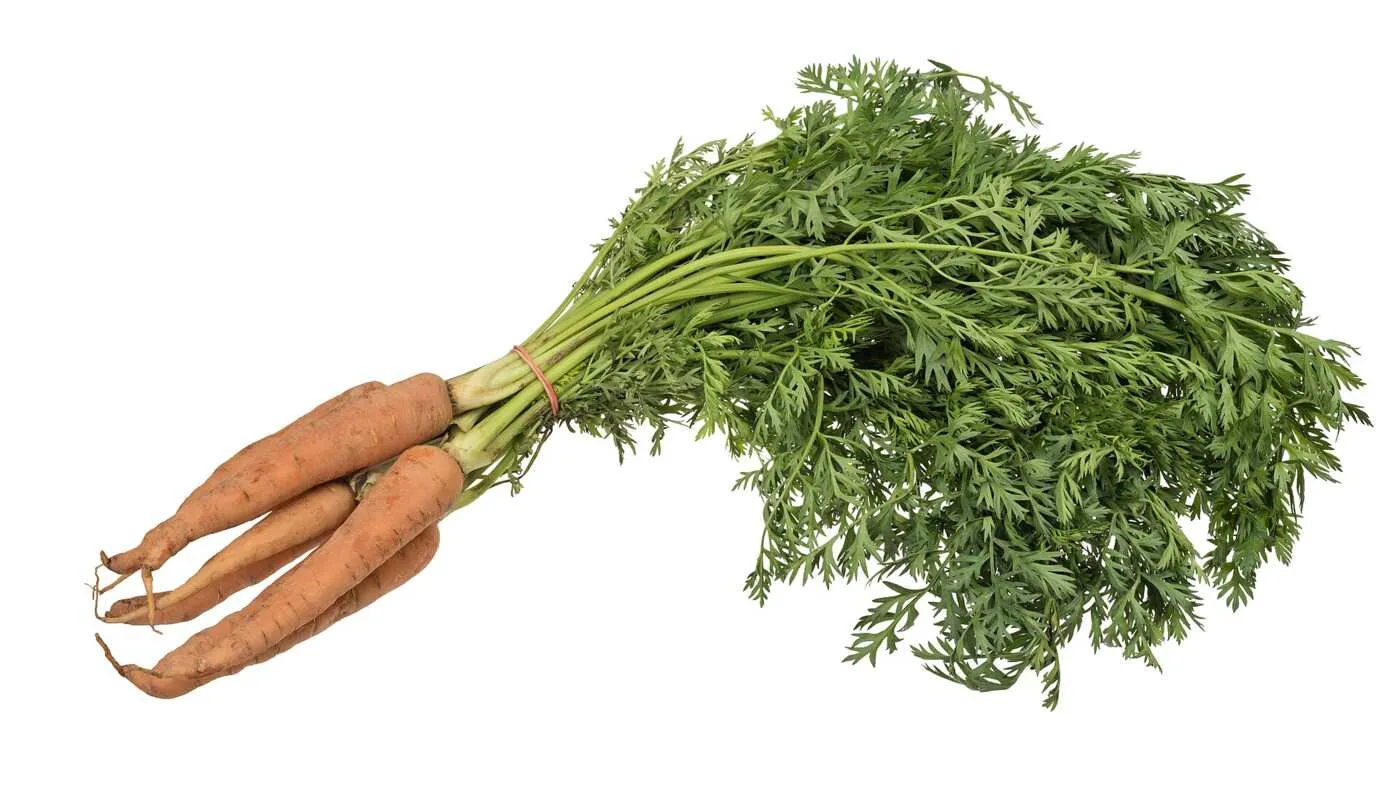 Photo: Evan-Amos, public domain, via Wikimedia Commons
Carrot is consumed raw, steamed, roasted, boiled, and pureed across virtually all culinary traditions. Key preparation considerations:
- Fat co-ingestion: To maximize beta-carotene absorption, carrot is best consumed with a source of dietary fat (olive oil, nuts, avocado). In a small study of 7 adults, Brown et al. (2004) found essentially no carotenoid absorption from a salad eaten with fat-free dressing.
- Light cooking: Steaming or roasting at moderate temperatures softens cell walls and increases bioaccessibility of carotenoids relative to raw consumption, while preserving most heat-stable nutrients.
- Juicing: Carrot juice concentrates beta-carotene and sugars; the fiber matrix is largely removed, which may allow faster sugar absorption than whole carrot.
- Whole vs. baby carrot: Baby-cut carrots are pieces cut and shaped from full-size carrots; their nutrient profile is broadly similar to whole carrots.
Typical culinary servings range from about 61 g (one medium carrot) to 128 g (1 cup chopped), per USDA FoodData Central.
Beta-carotene from carrots also accumulates in skin, a topic covered in the skin-health nutrition guide.
Safety, Interactions, and Contraindications
Carrot is well tolerated by most people at typical dietary quantities. Specific considerations include:
Carotenodermia: Sustained high intake of carotenoid-rich foods or supplements — reported at more than about 30 mg beta-carotene per day over months (Priyadarshani, 2018), roughly 360 g of raw carrot or regular carrot juice — can lead to carotenodermia, a harmless yellowing of the skin (particularly palms, soles, and nasolabial folds) caused by excess circulating beta-carotene. The condition resolves upon reducing intake and should be distinguished from jaundice, which involves yellowing of the sclera.
Beta-carotene supplementation risk (smokers): High-dose beta-carotene supplements are not advised for current smokers, because they increased lung cancer incidence in the ATBC and CARET trials. This risk does not apply to dietary carrot consumption at normal culinary amounts.
Carrot allergy: Carrot allergy is commonly linked to birch pollen sensitization. The major allergen, Dau c 1, is related to the birch pollen allergen Bet v 1; in a double-blind food-challenge study, all confirmed carrot-allergic patients had IgE only to birch-pollen-related carrot allergens (Ballmer-Weber et al., 2001). Symptoms are typically oral allergy syndrome (itching or mild swelling of the mouth) after raw carrot. Dau c 1 is considered heat-labile, but cooked carrot extract still provoked allergic mediator release in laboratory tests, so cooking may not prevent reactions (Jacob et al., 2020).
Vitamin K and anticoagulants: Carrot contains small amounts of vitamin K1 (about 13 µg per 100 g raw); individuals on warfarin (coumadin) should maintain consistent vegetable intake rather than making abrupt dietary changes, as variable vitamin K intake can affect INR stability.
This entry is for informational purposes only. Carrot is a food, not a medicine, and is not intended to diagnose, treat, prevent, or cure any disease or health condition. Consult a qualified healthcare provider for medical guidance.
Frequently Asked Questions
Are carrots good for your eyes?
Carrots support vision mainly by supplying vitamin A, which the retina needs to make rhodopsin for dim-light vision. Where intake is low, they can improve vitamin A status: 100 g of grated carrot daily raised serum retinol in a 60-day trial (Ncube et al., 2001). For people whose vitamin A status is already adequate, there is no evidence that eating more carrots further improves eyesight.
What are carrots good for?
Carrots are among the richest common sources of beta-carotene, so their clearest role is helping meet vitamin A needs. They also provide fiber, potassium and vitamin K1 for 41 kcal per 100 g raw. Observational studies associate diets high in carotenoids with lower cardiovascular risk, but that evidence is preliminary and has not been shown for carrots specifically.
Do carrots have fiber?
Yes. Raw carrot contains about 2.8 g of dietary fiber per 100 g, so one medium carrot (about 61 g) supplies roughly 1.7 g (USDA FoodData Central). Part of it is soluble pectin, which colon bacteria ferment into short-chain fatty acids. Juicing removes most of the fiber, which may let the sugars in carrot juice be absorbed faster than from whole carrots.
Are carrots high in potassium?
Carrots are a moderate rather than high source. 100 g raw provides about 320 mg of potassium, roughly 7% of the daily value, which is similar to many other root vegetables. People on potassium-restricted diets for kidney disease should follow the portion advice of their care team rather than general guidance.
Can eating too many carrots turn your skin orange?
Yes. Sustained intake of more than about 30 mg of beta-carotene a day over months, roughly 360 g of raw carrot daily or regular carrot juice, can cause carotenodermia, a harmless yellow-orange tint most visible on the palms and soles (Priyadarshani, 2018). It fades when intake drops. Unlike jaundice, it does not yellow the whites of the eyes.
References
Show all 17 referencesShow fewer
- Stevens, G. A., Bennett, J. E., Hennocq, Q., et al. (2015). Trends and mortality effects of vitamin A deficiency in children in 138 low-income and middle-income countries between 1991 and 2013: a pooled analysis of population-based surveys. Lancet Global Health, 3(9), e528–e536.
- Brown, M. J., et al. (2004). Carotenoid bioavailability is higher from salads ingested with full-fat than with fat-reduced salad dressings. American Journal of Clinical Nutrition, 80(2), 396–403.
- Aune, D., Keum, N., Giovannucci, E., et al. (2018). Dietary intake and blood concentrations of antioxidants and the risk of cardiovascular disease, total cancer, and all-cause mortality: a systematic review and dose-response meta-analysis of prospective studies. American Journal of Clinical Nutrition, 108(5), 1069–1091.
- Mayo-Wilson, E., Imdad, A., Herzer, K., Yakoob, M. Y., & Bhutta, Z. A. (2011). Vitamin A supplements for preventing mortality, illness, and blindness in children aged under 5: systematic review and meta-analysis. BMJ, 343, d5094.
- USDA FoodData Central. Carrots, raw (FDC 170393). SR Legacy. Retrieved 2026.
- Omenn, G. S., et al. (1996). Effects of a combination of beta carotene and vitamin A on lung cancer and cardiovascular disease. New England Journal of Medicine, 334(18), 1150–1155.
- The Alpha-Tocopherol, Beta Carotene Cancer Prevention Study Group. (1994). The effect of vitamin E and beta carotene on the incidence of lung cancer and other cancers in male smokers. New England Journal of Medicine, 330(15), 1029–1035.
- Age-Related Eye Disease Study 2 Research Group. (2013). Lutein + zeaxanthin and omega-3 fatty acids for age-related macular degeneration: the Age-Related Eye Disease Study 2 (AREDS2) randomized clinical trial. JAMA, 309(19), 2005–2015.
- Coe, K., Bostan, H., Rolling, W., et al. (2023). Population genomics identifies genetic signatures of carrot domestication and improvement and uncovers the origin of high-carotenoid orange carrots. Nature Plants, 9(10), 1643–1658.
- Ribaya-Mercado, J. D. (2002). Influence of dietary fat on beta-carotene absorption and bioconversion into vitamin A. Nutrition Reviews, 60(4), 104–110.
- Priyadarshani, A. M. B. (2018). Insights of hypercarotenaemia: A brief review. Clinical Nutrition ESPEN, 23, 19–24.
- Linus Pauling Institute Micronutrient Information Center. Vitamin A.
- World Health Organization. Vitamin A deficiency. Nutrition Landscape Information System.
- Ncube, T. N., et al. (2001). Supplementing lactating women with puréed papaya and grated carrots improved vitamin A status in a placebo-controlled trial. Journal of Nutrition, 131(5), 1497–1502.
- Ballmer-Weber, B. K., et al. (2001). Carrot allergy: double-blinded, placebo-controlled food challenge and identification of allergens. Journal of Allergy and Clinical Immunology, 108(2), 301–307.
- Jacob, T., et al. (2020). Food processing does not abolish the allergenicity of the carrot allergen Dau c 1: influence of pH, temperature, and the food matrix. Molecular Nutrition & Food Research, 64(18), e2000334.
- Dawid, C., et al. (2015). Bioactive C17-polyacetylenes in carrots (Daucus carota L.): current knowledge and future perspectives. Journal of Agricultural and Food Chemistry, 63(42), 9211–9222.
Related content
More in Vegetables
- Artichoke (Cynara cardunculus var. scolymus)
Artichokes benefits explained: prebiotic inulin, cynarin, nutrition per 100 g, and what leaf-extract trials show for cholesterol, digestion and the liver.
- Asparagus (Asparagus officinalis)
Is asparagus good for you? Nutrition per 100 g, including 37% DV folate and 42% vitamin K, its prebiotic fiber, what studies show, and safety notes.
- Beets / Beetroot (Beta vulgaris)
Beet juice benefits explained: how beetroot nitrates lowered systolic blood pressure and aided endurance in trials, beets nutrition per 100 g, and safety.
- Broccoli (Brassica oleracea var. italica)
Is broccoli good for you? Broccoli nutrition per 100 g, including 118% DV vitamin K, how sulforaphane forms, what human studies show, and safety notes.
- Brussels Sprouts (Brassica oleracea var. gemmifera)
Brussels sprouts benefits and nutrition per 100 g (148% DV vitamin K, 94% vitamin C), their glucosinolates, what studies show, gas, and warfarin safety.
- Cabbage (Brassica oleracea var. capitata)
Is cabbage good for you? Cabbage nutrition per 100 g (63% DV vitamin K, 41% vitamin C), red vs green, sauerkraut, what studies show, and thyroid safety.

Curated by Superfoods Advisor Editors·Last updated