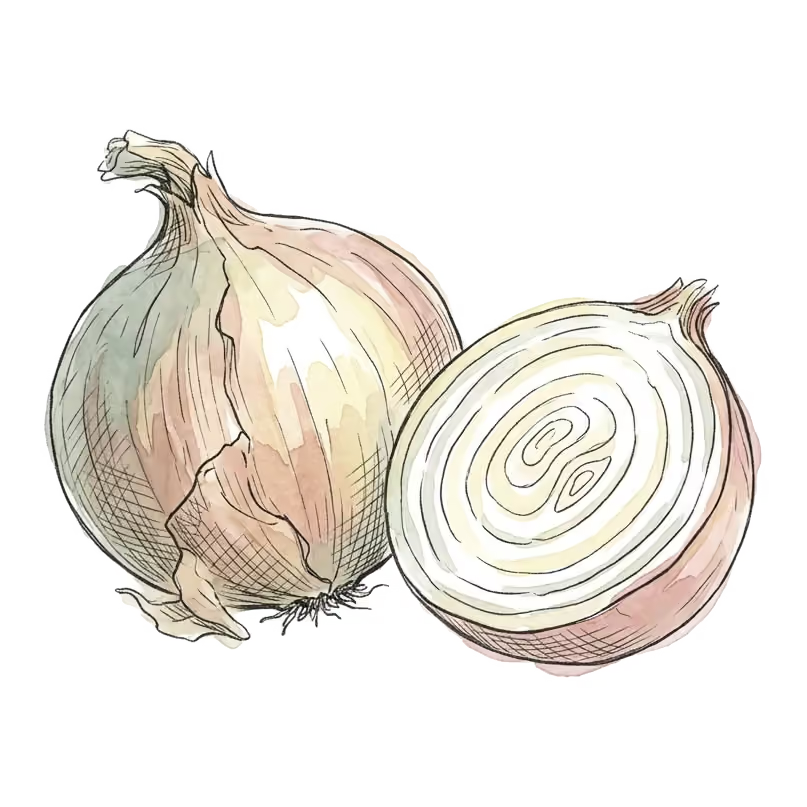
Onion (Allium cepa)
Allium cepa · also known as common onion, bulb onion, garden onion, spring onion, Onions, Red onion, Yellow onion
By Superfoods Advisor Editors·July 3, 2026
Onions benefits explained: quercetin and sulfur compounds, onion nutrition per 100 g, red vs white, what studies show for heart and blood sugar, FODMAPs.
The onion (Allium cepa), also called the bulb or common onion, is an allium vegetable in the family Amaryllidaceae, related to garlic, leeks and shallots. Its studied benefits centre on quercetin, a flavonol that onions supply in an unusually well-absorbed form, and on prebiotic fructans. Evidence for heart and blood-sugar effects in people is preliminary.
One of the oldest and most widely cultivated food plants, the onion is thought to have been domesticated in Central Asia several thousand years ago. Onions appear in ancient Egyptian art and burials, and the Greek historian Herodotus recorded an inscription on the Great Pyramid listing what was spent on onions, radishes, and garlic for its laborers. The plant spread with trade routes across Europe and the Mediterranean, and reached the Americas after European contact, becoming a foundational culinary ingredient across virtually every global cuisine.
Within the genus Allium — which includes garlic (A. sativum), leeks (A. ampeloprasum), shallots (A. cepa var. aggregatum), and chives (A. schoenoprasum) — onion occupies a distinct biochemical niche. Unlike garlic, whose primary sulfur compound is allicin-derived (from alliin and alliinase), onions are a major dietary source of the flavonol quercetin, in a form absorbed better than quercetin from apples or tea (Hollman et al., 1997), and their organosulfur profile is dominated by propyl and 1-propenyl compounds rather than garlic’s allyl compounds.
Evidence at a glance
Active Compounds
Quercetin is the predominant flavonoid in onions and the feature most extensively studied in relation to human health. Onions deliver quercetin almost entirely as glucosides, mainly quercetin 4′-glucoside and quercetin 3,4′-diglucoside (Slimestad et al., 2007), whereas the main quercetin compound in tea is the rhamnose-containing rutinoside. In a human feeding study, quercetin from apples and pure quercetin rutinoside was about 30% as bioavailable as quercetin from onions (Hollman et al., 1997). Hollman et al. (American Journal of Clinical Nutrition, 1995) demonstrated in an ileostomy model that 52% of quercetin glucosides from onions were absorbed in the small intestine, compared with 17% for pure quercetin rutinoside and 24% for pure quercetin aglycone.
In laboratory studies, quercetin and its metabolites (isorhamnetin, tamarixetin) act as:
- Inhibitors of platelet aggregation (also seen after a high-quercetin onion meal in a small human study; Hubbard et al., 2006)
- Modulators of NF-κB signaling, reducing expression of inflammatory cytokines
- Aldose reductase inhibitors (relevant to glucose-related cell damage)
- Inhibitors of LDL oxidation in vitro
Organosulfur compounds: When onion tissue is cut or crushed, the enzyme alliinase breaks down trans-S-1-propenyl-L-cysteine sulfoxide (isoalliin) into 1-propenyl sulfenic acid. A second enzyme, lachrymatory factor synthase, converts that acid into propanethial S-oxide, the compound responsible for eye irritation (Imai et al., 2002); the rest forms thiosulfinates that break down further into disulfides such as dipropyl disulfide. These compounds differ structurally and functionally from garlic’s allicin and diallyl disulfide. They are studied in the context of blood glucose lowering and cardiovascular effects, but are less extensively characterized than garlic sulfides.
Fructooligosaccharides (FOS): Onions contain fructan-type inulin and FOS. In a meta-analysis of fiber trials, fructan supplements raised colonic Bifidobacterium and, to a lesser extent, Lactobacillus (So et al., 2018). These are fermented in the colon, producing short-chain fatty acids (SCFAs).
Flavonoid content by color: Red and yellow onions are generally reported to contain more quercetin than white onions. Flavonoid content falls steadily from the outermost to the innermost scales (Lee et al., 2008); peeling away multiple layers discards considerable quercetin content.
Nutritional Profile (per 100 g raw)
| Nutrient | Amount | % DV (approx.) |
|---|---|---|
| Energy | 40 kcal | — |
| Carbohydrate | 9.3 g | 3% |
| Dietary fiber | 1.7 g | 6% |
| Sugars | 4.2 g | — |
| Protein | 1.1 g | 2% |
| Fat | 0.1 g | — |
| Vitamin C | 7.4 mg | 8% |
| Folate (B9) | 19 µg | 5% |
| Vitamin B6 | 0.12 mg | 7% |
| Potassium | 146 mg | 3% |
| Flavonols (as quercetin) | ~27–192 mg* | — |
Source: USDA FoodData Central, Onions, raw (FDC ID 170000). *Flavonols are not in the USDA record; the range is 27–119 mg for yellow and 42–192 mg for red cultivars (Slimestad et al., 2007).
Evidence for Purported Benefits
Cardiovascular Risk Factors
Evidence:Preliminary Cohort links and one small onion-soup pilot on platelets; quercetin supplement trials used doses far above dietary onion.
Observational studies have linked higher intake of onions and other flavonoid-rich foods with lower cardiovascular risk. In the Zutphen Elderly Study (Hertog et al., Lancet, 1993; 805 men aged 65–84 followed for 5 years), onions supplied about 13% of flavonoid intake, and higher flavonoid intake was associated with lower coronary heart disease mortality; intakes of tea, onions, and apples were also inversely related to it. Confounding by overall dietary pattern cannot be excluded.
Quercetin supplementation trials provide more direct mechanistic evidence: a meta-analysis of 7 randomized controlled trials (587 participants) by Serban et al. (Journal of the American Heart Association, 2016) found that isolated quercetin supplementation, not dietary onion, significantly reduced systolic (−3.04 mmHg) and diastolic (−2.63 mmHg) blood pressure, with the effect possibly limited to doses of 500 mg/day or more. Whether these effects are achievable through dietary onion consumption is unknown: at the 27–119 mg of flavonols per 100 g reported for yellow onions (Slimestad et al., 2007), 500 mg would take roughly 0.4–1.9 kg of onion a day.
Anti-platelet activity: Quercetin and onion thiosulfinates both inhibit platelet aggregation in laboratory studies. A double-blind randomized crossover pilot study by Hubbard et al. (British Journal of Nutrition, 2006) found that an onion soup high in quercetin (69 mg) inhibited collagen-stimulated platelet aggregation in a time-dependent manner compared with a low-quercetin soup (5 mg). Whether this effect is sustained, or translates into lower cardiovascular risk, has not been tested.
Blood Glucose Modulation
Evidence:Lab & animal only A meta-analysis of diabetic-rat studies found lower glucose; controlled human trials of whole onion are scarce.
An older, unconfirmed hypothesis holds that allyl propyl disulfide competes with insulin for hepatic inactivation, potentially increasing circulating insulin and reducing blood glucose. A meta-analysis of studies in experimentally diabetic rats (Kook et al., Journal of Medicinal Food, 2009) found that onion extract and single sulfur compounds significantly lowered blood glucose, while garlic extract did not. Controlled human trials using whole onion in typical quantities are scarce, so the evidence is suggestive but not conclusive.
Anti-inflammatory Effects
Evidence:Lab & animal only Cell studies only for onion; quercetin supplement trials disagree on CRP.
Quercetin’s inhibition of NF-κB and COX-2 has been demonstrated in cell models. Meta-analyses of quercetin supplement trials disagree on C-reactive protein (CRP): one found a small reduction, mainly at 500 mg/day or more (Mohammadi-Sartang et al., 2017), while another found no overall effect on CRP, IL-6, or TNF-α (Ou et al., 2020). Inflammatory biomarker changes from dietary onion consumption specifically have not been established.
Typical Use and Preparation
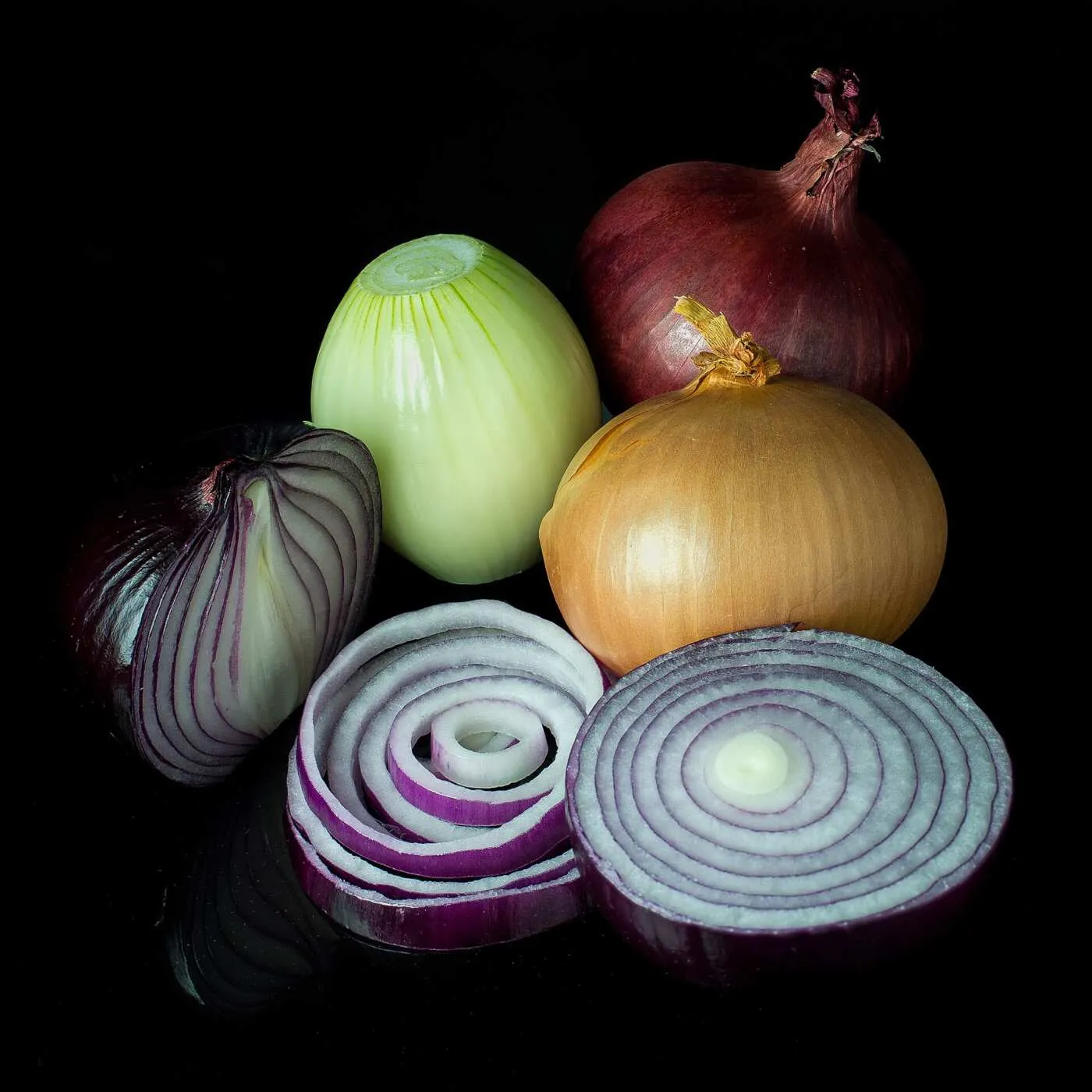 Photo: Colin, CC BY-SA 3.0, via Wikimedia Commons
Onions are eaten raw or cooked; the preparation method substantially alters both flavor and quercetin content:
- Raw onions retain the maximum quercetin concentration. Thinly sliced raw onion in salads or sandwiches represents the highest dietary quercetin delivery.
- Cooking reduces quercetin: In one analysis of home-cooked onions, flavonoid losses were about 33% for frying, 21% for sautéing, 14–20% for boiling, 14% for steaming, 4% for microwaving, and none for baking (Lee et al., 2008).
- Caramelizing browns the onion’s sugars through caramelization and Maillard reactions, producing a sweet flavor.
Red and yellow varieties should be preferred over white for quercetin content. Shallots fall within the same flavonol range as onions rather than above it (Pobłocka-Olech et al., 2016).
Onions are one of the main prebiotic fructan sources discussed in the gut-health guide.
Safety, Interactions, and Contraindications
Allium sensitivity and allergy: Allergic reactions to eaten onion are reported only sporadically, including a case of anaphylaxis after cooked onion; handling onion has been linked to contact dermatitis, rhinoconjunctivitis, and asthma (Albanesi et al., 2019). Gastrointestinal symptoms such as bloating and gas are more often linked to onion’s fructans (see FODMAP below). A garlic–onion cross-reactive allergen has been identified in spice-mill workers (van der Walt et al., 2010), so individuals with confirmed allergy to one allium species should exercise caution with others (garlic, leeks, chives), though cross-reactivity is variable.
Anticoagulant and antiplatelet interactions: Onion’s quercetin and organosulfur compounds inhibit platelet aggregation. In individuals on anticoagulant therapy (warfarin) or antiplatelet medications (aspirin, clopidogrel), very high onion consumption might theoretically augment bleeding risk. At typical culinary amounts, this interaction is unlikely to be clinically significant, but patients on anticoagulants should maintain consistent dietary intake and report major dietary changes to their healthcare provider.
FODMAP content: Onions are among the highest dietary sources of fructans (a type of FODMAP), making them a common trigger for gastrointestinal symptoms in individuals with IBS. Cooked onion retains fructan content; garlic-infused oil (where fructans do not leach into oil) is a common low-FODMAP alternative for flavor.
Blood glucose-lowering medications: The theoretical blood glucose-lowering activity of onion compounds suggests caution when consuming large supplemental quantities alongside hypoglycemic medications, though culinary quantities pose minimal risk of hypoglycemia.
Eye irritation: Propanethial S-oxide, released from cut onion, is a well-characterized lachrymatory agent (Imai et al., 2002). This is an irritant effect with no systemic safety implications at normal food preparation exposures.
Frequently Asked Questions
Are onions good for you?
Onions are a low-calorie vegetable, about 40 kcal per 100 g raw, that supply vitamin C, vitamin B6, fiber and prebiotic fructans. They are also one of the main dietary sources of quercetin. Cohort studies associate flavonoid-rich diets, including onions, with lower coronary heart disease mortality (Hertog et al., 1993), but that preliminary evidence cannot show onions themselves are protective.
Are red onions healthier than white onions?
Red and yellow onions generally contain more quercetin than white ones: reported flavonol ranges are 42–192 mg per 100 g for red cultivars and 27–119 mg for yellow (Slimestad et al., 2007). Red onions also carry anthocyanins. Their basic nutrients, such as calories, fiber and vitamin C, are similar. Peeling off several outer layers discards much of the flavonoid content in any color.
What is the difference between onions and shallots?
Shallots are a variety of the same species, Allium cepa var. aggregatum, that grows in clusters of smaller, elongated bulbs with a milder, sweeter flavor. Nutritionally they are close: a comparison of cultivars found shallots fall within the same flavonol range as onions rather than above it (Pobłocka-Olech et al., 2016). In cooking they are often used raw in dressings or for delicate sauces.
Are onions good for people with diabetes?
Onions are moderate in carbohydrate, about 9.3 g per 100 g raw with 4.2 g of sugars, and are usually eaten in small amounts, so they fit most diabetes meal plans. Blood-sugar lowering has been shown mainly in diabetic rats (Kook et al., 2009); controlled human trials with whole onion are scarce. People on glucose-lowering drugs who plan to take concentrated onion supplements should check with their clinician.
Do onions cause bloating?
They can. Onions are among the highest dietary sources of fructans, fermentable carbohydrates that colon bacteria break down into gas, and cooking does not remove them. That makes onion a common trigger for bloating and pain in people with irritable bowel syndrome. Garlic-infused oil, which carries flavor without fructans, is a common substitute on low-FODMAP diets.
References
Show all 17 referencesShow fewer
- Hollman, P. C., et al. (1995). Absorption of dietary quercetin glycosides and quercetin in healthy ileostomy volunteers. American Journal of Clinical Nutrition, 62(6), 1276–1282.
- Serban, M. C., et al. (2016). Effects of quercetin on blood pressure: a systematic review and meta-analysis of randomized controlled trials. Journal of the American Heart Association, 5(7), e002713.
- Hubbard, G. P., et al. (2006). Ingestion of onion soup high in quercetin inhibits platelet aggregation and essential components of the collagen-stimulated platelet activation pathway in man: a pilot study. British Journal of Nutrition, 96(3), 482–488.
- Kook, S., Kim, G. H., & Choi, K. (2009). The antidiabetic effect of onion and garlic in experimental diabetic rats: meta-analysis. Journal of Medicinal Food, 12(3), 552–560.
- Hertog, M. G., Feskens, E. J., Hollman, P. C., Katan, M. B., & Kromhout, D. (1993). Dietary antioxidant flavonoids and risk of coronary heart disease: the Zutphen Elderly Study. Lancet, 342(8878), 1007–1011.
- Slimestad, R., Fossen, T., & Vågen, I. M. (2007). Onions: a source of unique dietary flavonoids. Journal of Agricultural and Food Chemistry, 55(25), 10067–10080.
- USDA FoodData Central. Onions, raw. FDC ID 170000.
- Lee, S. U., et al. (2008). Flavonoid content in fresh, home-processed, and light-exposed onions and in dehydrated commercial onion products. Journal of Agricultural and Food Chemistry, 56(18), 8541–8548.
- Hollman, P. C., et al. (1997). Relative bioavailability of the antioxidant flavonoid quercetin from various foods in man. FEBS Letters, 418(1–2), 152–156.
- Imai, S., et al. (2002). Plant biochemistry: an onion enzyme that makes the eyes water. Nature, 419(6908), 685.
- So, D., et al. (2018). Dietary fiber intervention on gut microbiota composition in healthy adults: a systematic review and meta-analysis. American Journal of Clinical Nutrition, 107(6), 965–983.
- Mohammadi-Sartang, M., et al. (2017). Effects of supplementation with quercetin on plasma C-reactive protein concentrations: a systematic review and meta-analysis of randomized controlled trials. European Journal of Clinical Nutrition, 71(9), 1033–1039.
- Ou, Q., et al. (2020). Impact of quercetin on systemic levels of inflammation: a meta-analysis of randomised controlled human trials. International Journal of Food Sciences and Nutrition, 71(2), 152–163.
- Pobłocka-Olech, L., et al. (2016). TLC determination of flavonoids from different cultivars of Allium cepa and Allium ascalonicum. Acta Pharmaceutica, 66(4), 543–554.
- Albanesi, M., et al. (2019). Immunological characterization of onion (Allium cepa) allergy. Postepy Dermatologii i Alergologii, 36(1), 98–103.
- van der Walt, A., et al. (2010). Work-related allergy and asthma in spice mill workers: the impact of processing dried spices on IgE reactivity patterns. International Archives of Allergy and Immunology, 152(3), 271–278.
- Herodotus. The Histories, Book 2, chapter 125 (trans. A. D. Godley). Perseus Digital Library.
Related content
More in Vegetables
- Artichoke (Cynara cardunculus var. scolymus)
Artichokes benefits explained: prebiotic inulin, cynarin, nutrition per 100 g, and what leaf-extract trials show for cholesterol, digestion and the liver.
- Asparagus (Asparagus officinalis)
Is asparagus good for you? Nutrition per 100 g, including 37% DV folate and 42% vitamin K, its prebiotic fiber, what studies show, and safety notes.
- Beets / Beetroot (Beta vulgaris)
Beet juice benefits explained: how beetroot nitrates lowered systolic blood pressure and aided endurance in trials, beets nutrition per 100 g, and safety.
- Broccoli (Brassica oleracea var. italica)
Is broccoli good for you? Broccoli nutrition per 100 g, including 118% DV vitamin K, how sulforaphane forms, what human studies show, and safety notes.
- Brussels Sprouts (Brassica oleracea var. gemmifera)
Brussels sprouts benefits and nutrition per 100 g (148% DV vitamin K, 94% vitamin C), their glucosinolates, what studies show, gas, and warfarin safety.
- Cabbage (Brassica oleracea var. capitata)
Is cabbage good for you? Cabbage nutrition per 100 g (63% DV vitamin K, 41% vitamin C), red vs green, sauerkraut, what studies show, and thyroid safety.

Curated by Superfoods Advisor Editors·Last updated