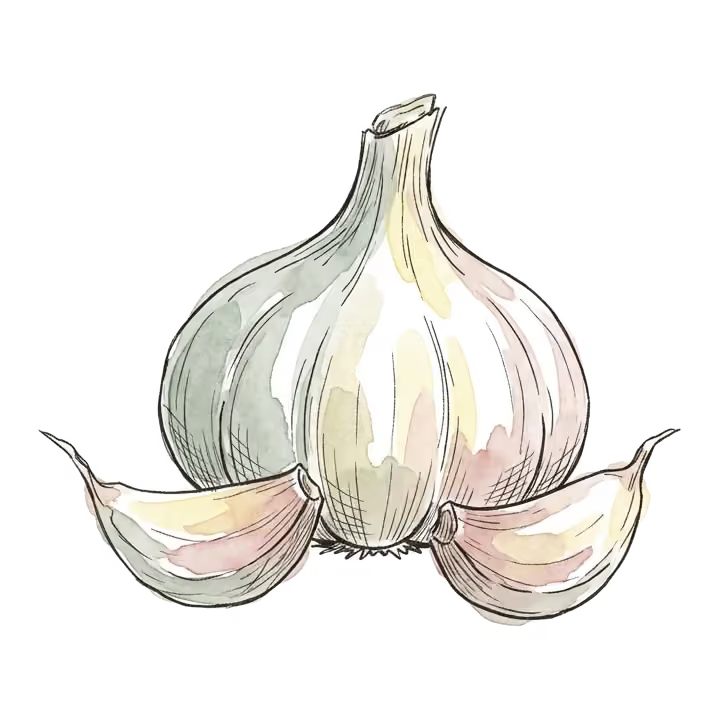
Garlic (Allium sativum)
Allium sativum · also known as Common garlic, Stinking rose, Lahsun
By Superfoods Advisor Editors·July 3, 2026
Garlic benefits for blood pressure, cholesterol and colds: what trials show, how much raw garlic or supplement they used, and bleeding risks.
Garlic (Allium sativum) is a bulb in the onion family (Amaryllidaceae), eaten as a staple food and taken as a herbal supplement. Its best-supported benefit is a modest fall in blood pressure: a meta-analysis of 20 trials found systolic pressure dropped by 5.1 mmHg on average. Most of its activity comes from allicin, which forms only when a clove is crushed or chopped.
The plant likely originated in Central Asia and spread through cultivation across the globe over the past six thousand years. It is one of the oldest documented medicinal plants: Egyptian papyri from approximately 1550 BCE describe garlic preparations for a range of conditions, and it was used in ancient Greek medicine, where Hippocrates is said to have prescribed it for various ailments (Rivlin, 2001). The “stinking rose” has maintained continuous use in virtually every major culinary and medical tradition globally, from Ayurveda to Traditional Chinese Medicine to European folk medicine.
Garlic’s characteristic odor and most of its bioactivity derive from a cascade of sulfur-containing compounds generated when the bulb’s cells are disrupted — a system thought to serve the plant as a chemical defense against insects and microbial pathogens.
Evidence at a glance
Active Compounds
Garlic’s bioactive chemistry is distinctive in that the most pharmacologically active compounds do not exist preformed in the intact clove; they are generated enzymatically during cellular disruption.
The alliin-alliinase cascade: Intact garlic cells contain alliin (S-allyl-L-cysteine sulfoxide) stored in the cytoplasm, and the enzyme alliinase (alliin lyase) sequestered separately in vacuoles. When the cell is disrupted by crushing, chopping, chewing, or other mechanical action, alliin and alliinase come into contact. Alliinase converts alliin to allicin (diallyl thiosulfinate) within seconds. Allicin is thermolabile and decomposes rapidly to a range of secondary organosulfur compounds:
- Diallyl disulfide (DADS) and diallyl trisulfide (DATS) — formed when allicin breaks down in an oil or at elevated temperatures.
- Ajoene — formed when crushed garlic is macerated in edible oil (oil macerates); steam-distilled garlic essential oil does not contain it (MSK). Has antiplatelet activity.
- S-allylcysteine (SAC) and S-allylmercaptocysteine (SAMC) — water-soluble organosulfur compounds that accumulate in aged garlic extract (AGE); more stable than allicin and the primary bioactives in AGE-based supplements.
Practical implication: Cooking whole garlic cloves without crushing or chopping them first inactivates alliinase before the alliin-allicin conversion can occur, substantially reducing the formation of allicin and most downstream sulfur compounds. Letting crushed garlic rest before heating allows the conversion to proceed before alliinase is inactivated; in rat experiments, crushed garlic left to stand for 10 minutes before 60 seconds of microwaving kept part of its activity, while garlic microwaved immediately lost it (Song & Milner, 2001).
Epigenetic activity — HDAC inhibition: Diallyl disulfide (DADS) and other garlic organosulfur compounds have been shown in cell culture studies to inhibit histone deacetylase (HDAC) enzymes, producing histone hyperacetylation and altering gene expression in cancer cell lines; in colon tumor cells, the DADS metabolite allyl mercaptan was a stronger HDAC inhibitor than DADS itself (Druesne et al., 2004). This activity is being actively studied in the context of cancer chemoprevention but remains at a preclinical stage.
Other constituents: Garlic contains fructooligosaccharides (prebiotic fiber), flavonoids (quercetin, kaempferol), saponins, and amino acids in amounts that contribute to overall nutritional value but are not unique to garlic.
Evidence for Purported Benefits
Cardiovascular Effects
Evidence:Moderate Meta-analyses of 20 and 26 RCTs show modest drops in blood pressure and total cholesterol; trial quality varies.
Garlic’s most extensively studied clinical application is cardiovascular risk modification; the heart health superfoods guide sets it beside other foods with blood pressure and cholesterol data. Effects reported across trials include:
Blood pressure: An updated meta-analysis by Ried (2016, Journal of Nutrition) pooled 20 randomized controlled trials (970 participants) and reported that garlic preparations reduced systolic blood pressure by a mean of 5.1 mmHg and diastolic blood pressure by 2.5 mmHg compared with placebo; in the subgroup of trials in hypertensive participants the reductions were larger (8.7 and 6.1 mmHg), though individual trial quality was variable. Effects were smaller in normotensive individuals.
Lipid profile: Meta-analyses have reported modest lipid changes, with results that differ by outcome. A meta-analysis of 26 placebo-controlled trials by Zeng and colleagues (2012, Journal of the Science of Food and Agriculture) found that garlic lowered total cholesterol by about 0.28 mmol/L (roughly 11 mg/dL) and triglycerides by 0.13 mmol/L, with larger effects in longer trials and in people with higher baseline cholesterol, but no significant effect on LDL-C or HDL-C.
Platelet aggregation and thrombosis: In laboratory studies, ajoene irreversibly inhibits platelet aggregation, partly by reducing thromboxane A2 formation from arachidonic acid (Srivastava & Tyagi, 1993). In a 13-week study in healthy volunteers, aged garlic extract inhibited ADP-induced platelet aggregation measured ex vivo (Rahman & Billington, 2000). This antiplatelet activity is the basis of the bleeding-risk warning for garlic supplements (see Safety section).
Antimicrobial Activity
Evidence:Preliminary Broad lab activity; the one clinical trial cited used a topical ajoene cream for athlete’s foot.
Allicin demonstrates potent broad-spectrum antimicrobial activity in laboratory settings against bacteria (including methicillin-resistant Staphylococcus aureus), fungi (including Candida albicans), and some viruses and parasites. Because allicin is rapidly degraded and metabolized after oral intake, laboratory inhibitory concentrations are unlikely to be reached in systemic tissues, and whether oral garlic can treat infections is unclear (MSK). In a small trial in 47 soldiers with tinea pedis, a topical cream of purified ajoene gave mycological cure rates comparable to terbinafine (Ledezma et al., 2000).
Cancer Chemoprevention
Evidence:Limited Observational links are inconsistent; one large Chinese trial found no significant drop in gastric cancer incidence.
Observational cohort data have linked garlic intake with lower gastrointestinal cancer risk, though not consistently. In the Iowa Women’s Health Study (Steinmetz et al., 1994, American Journal of Epidemiology; 41,837 women), the highest garlic intake was associated with a lower relative risk of colon cancer (0.68), but the confidence interval included no effect (0.46–1.02). DADS and DATS induce apoptosis and G2/M cell-cycle arrest in cancer cell lines via HDAC inhibition and other mechanisms. Randomized evidence is limited: in the Shandong Intervention Trial in a high-risk region of China, 7.3 years of garlic extract and oil supplementation did not significantly reduce gastric cancer incidence, though the authors reported a borderline reduction in gastric cancer mortality over 22 years of follow-up (Li et al., 2019). Observational associations may reflect confounding by overall dietary pattern.
Immune Modulation
Evidence:Limited Two RCTs suggest fewer or milder colds; neither has been replicated in larger trials.
Garlic is also covered in the immune-boosting superfoods guide. A randomized trial by Josling (2001, Advances in Therapy) in 146 volunteers reported that a daily allicin-containing garlic supplement taken for twelve weeks over winter reduced cold incidence and shortened symptom duration compared to placebo. This finding has not been definitively replicated in larger trials. A proposed mechanism is enhanced immune cell function: in a 120-person randomized trial, aged garlic extract improved NK and γδ-T cell proliferation and was associated with milder cold and flu symptoms, though not fewer illnesses (Nantz et al., 2012).
Typical Use and Dosing
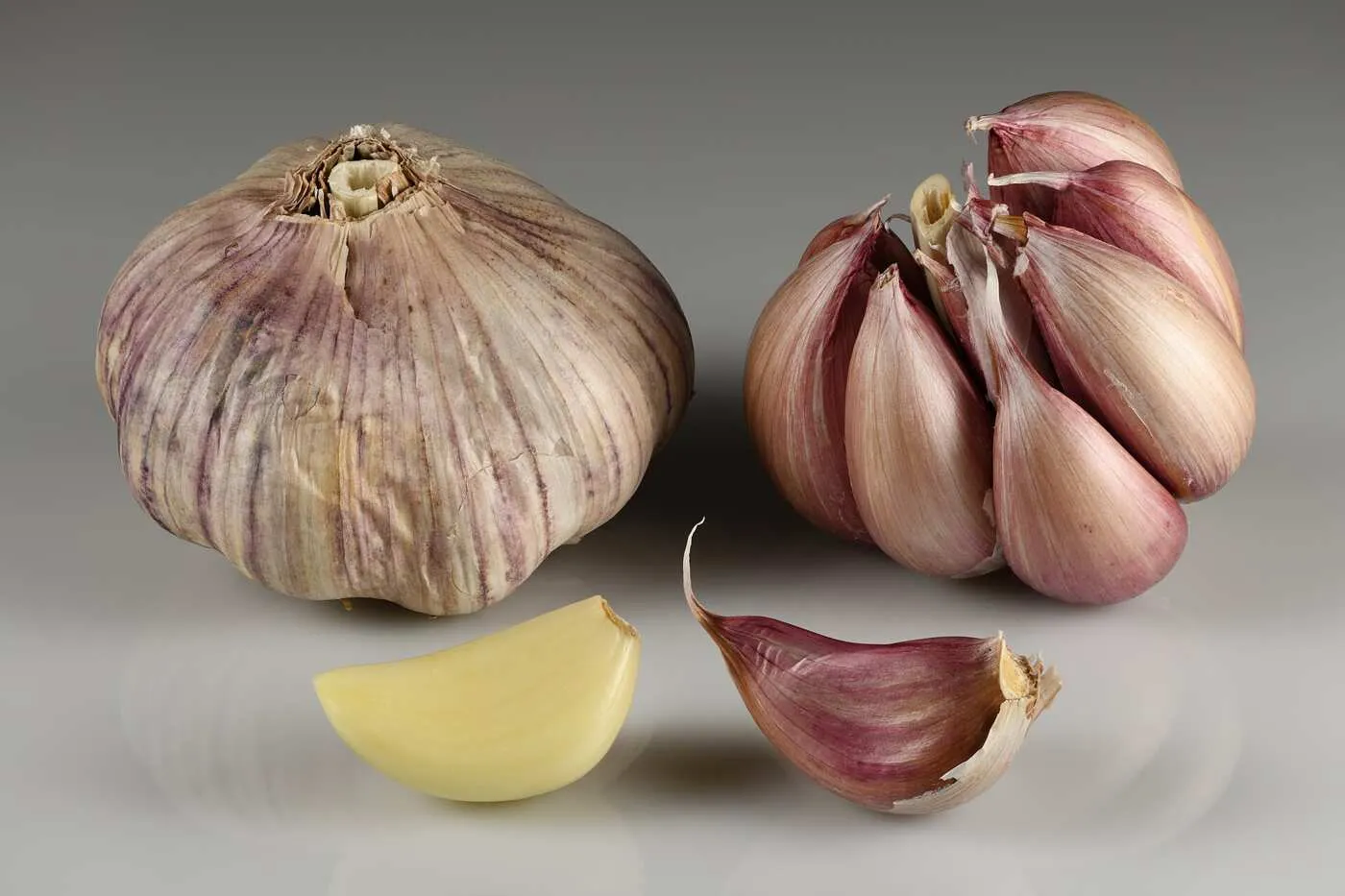 Photo: Ivar Leidus, CC BY-SA 4.0, via Wikimedia Commons
Culinary use: Raw garlic cloves have an average allicin potential of about 3.6 mg per gram fresh weight, so one medium clove (~3 g), crushed raw, can yield roughly 11 mg of allicin (Lawson & Hunsaker, 2018). Dose is highly variable based on preparation method — as noted above, cooking before crushing substantially reduces allicin yield.
Supplement forms and dosing:
- Garlic powder (dehydrated): Must be produced at temperatures low enough to preserve alliinase activity. Standardized to alliin content and “allicin potential” (the amount of allicin that would be released given optimal enzyme activity). The Kwai tablets used in most trials were standardized to 1.3% alliin and 0.6% allicin yield (1.8 mg allicin per 300 mg tablet), and three tablets (900 mg/day) was the most common trial dose — roughly the alliin of 1 g of raw garlic (Lawson & Hunsaker, 2018).
- Aged garlic extract (AGE / Kyolic): Produced by long-term extraction in ethanol at room temperature, converting allicin to more stable water-soluble sulfur compounds (primarily SAC). Contains little or no allicin. The most extensively studied AGE formulation (Kyolic) has been tested at a range of doses in cardiovascular trials; the AGE at Heart trial used 1.2 g/day containing 1.2 mg S-allylcysteine (Ried et al., 2016).
- Garlic oil: Steam-distilled garlic oil contains mainly diallyl sulfides (DADS, DATS) and no allicin or ajoene (MSK); ajoene is found in oil macerates of crushed garlic. Typically sold in softgel form.
The European Medicines Agency’s herbal committee has published an EU herbal monograph on garlic bulb covering traditional use for cough and cold and for circulatory disorders, but no clinical body has issued evidence-based dosing guidance. Most garlic powder trials used a daily dose equivalent to about 1–2 g of raw garlic, most commonly 900 mg/day of standardized powder (Lawson & Hunsaker, 2018).
Garlic is one of the staples covered in the anti-inflammatory pantry guide.
Safety, Side Effects, and Interactions
Garlic in food is safe for most people, with heartburn, gas and breath odor as the usual side effects; supplements add a bleeding risk and several drug interactions.
Anticoagulant and antiplatelet interactions — potential bleeding risk: This is the most important safety consideration for garlic supplementation. Garlic supplements may increase the risk of bleeding, particularly around surgery or alongside medicines that also affect clotting (NCCIH). Considerations include:
- Warfarin (coumadin): Garlic may enhance warfarin’s effect and raise INR values (MSK), and bleeding has been reported after excessive garlic intake (Rose et al., 1990). In a 12-week pilot trial in 48 closely monitored warfarin patients, aged garlic extract did not increase bleeding (Macan et al., 2006), but that finding does not extend to other preparations. Garlic supplements should not be added to warfarin therapy without close INR monitoring and prescriber knowledge.
- Aspirin and clopidogrel: Additive antiplatelet effects; may increase bleeding risk, particularly perioperatively.
- Recommendation: A JAMA review advised stopping garlic supplements at least 7 days before elective surgery (Ang-Lee et al., 2001).
Antiretroviral drugs: In a study of 10 healthy volunteers, three weeks of garlic supplements lowered saquinavir (an HIV protease inhibitor) exposure by 51% (AUC), and levels had recovered only to 60–70% of baseline after a 10-day washout (Piscitelli et al., 2002). The authors advised caution when garlic supplements are combined with saquinavir as the sole protease inhibitor.
Diabetes medications: In a meta-analysis of trials in people with diabetes, garlic lowered fasting blood glucose and HbA1c compared with placebo (Shabani et al., 2019); it could theoretically add to the glucose-lowering effects of insulin or oral antidiabetics.
Gastrointestinal effects: Garlic can cause GI side effects, including heartburn, upset stomach, nausea, flatulence, and diarrhea (NCCIH).
Allergy and topical use: Some people are allergic to garlic. Applied to the skin, garlic can cause severe irritation and chemical burns (NCCIH).
Halitosis: Allyl methyl sulfide produced from garlic metabolism is absorbed into the bloodstream and excreted via the lungs, producing characteristic garlic breath lasting several hours; breath allyl methyl sulfide is used as a marker of allicin bioavailability (Lawson & Hunsaker, 2018). Aged garlic extract produces less malodor.
Pregnancy and breastfeeding: Garlic in food amounts is a normal part of the diet in pregnancy. Oral garlic in amounts greater than those found in food may not be safe during pregnancy or breastfeeding (NCCIH).
Product Selection Criteria
- Standardization: For garlic powder supplements, select products standardized to a defined alliin content and allicin potential (the Kwai preparation used in many trials was 1.3% alliin and 0.6% allicin yield) rather than to total garlic extract weight alone.
- Aged garlic extract pedigree: If selecting AGE-type products, Kyolic (Wakunaga) has the broadest clinical evidence base and has been used in most cardiovascular trials involving AGE.
- Enteric coating: Enteric coating is often marketed as protecting alliinase from stomach acid, but in a breath-metabolite bioassay enteric tablets gave variable and often lower allicin bioavailability (36–104%, falling to 22–57% with a high-protein meal), while non-enteric tablets gave 80–111% regardless of meal (Lawson & Hunsaker, 2018). Coating alone is not a marker of better delivery.
- Third-party testing: NSF or USP verification checks that a product contains the ingredients and amounts on its label and screens for contaminants such as heavy metals, which, as with any crop, can come from the soil it was grown in.
- Odor-modified claims: “Odorless” garlic products achieve reduced odor by modifying the allicin content or using preparations (like AGE) that minimize allicin. These products may not have equivalent bioactivity to standardized allicin-yielding preparations for all applications.
Frequently Asked Questions
Is garlic good for high blood pressure?
Moderate evidence suggests a modest effect. A 2016 meta-analysis of 20 randomized trials found garlic preparations lowered systolic pressure by 5.1 mmHg and diastolic by 2.5 mmHg on average, with larger drops (8.7 and 6.1 mmHg) in people with hypertension. Most trials used standardized powder or aged garlic extract, not cooking garlic. Garlic does not replace prescribed blood pressure treatment.
Is raw garlic better than cooked?
For allicin, yes. Allicin forms only when alliin and the enzyme alliinase mix after a clove is crushed, and heat destroys the enzyme. Cooking whole cloves before crushing greatly reduces allicin and its downstream compounds. Crushing garlic and letting it stand about 10 minutes before heating preserved part of its activity in a rat study.
How much garlic per day did studies use?
Most garlic powder trials used about 900 mg a day of standardized powder, roughly the alliin in 1 to 2 g of raw garlic. One medium clove weighs about 3 g and, crushed raw, can yield around 11 mg of allicin. The AGE at Heart trial used 1.2 g a day of aged garlic extract. No clinical body has set an official dose.
How much garlic is too much?
No upper limit has been set, but the more garlic, the more likely heartburn, stomach upset, gas and diarrhea become. Bleeding has been reported after excessive intake, and supplements may raise warfarin’s effect. A JAMA review advised stopping garlic supplements at least seven days before surgery. People on blood thinners should check with their clinician before taking supplements.
Is garlic a vegetable or an herb?
Botanically, garlic is the bulb of a plant in the same family as onions and leeks, so it is usually grouped with vegetables in cooking. Because it is used in small amounts for flavor, it is also treated as an herb or spice, and as a supplement it is classed as an herbal product.
References
Show all 22 referencesShow fewer
- Ried, K., Travica, N., & Sali, A. (2016). The effect of aged garlic extract on blood pressure and other cardiovascular risk factors in uncontrolled hypertensives: The AGE at Heart trial. Integrated Blood Pressure Control, 9, 9–21.
- Piscitelli, S. C., Burstein, A. H., Welden, N., Gallicano, K. D., & Falloon, J. (2002). The effect of garlic supplements on the pharmacokinetics of saquinavir. Clinical Infectious Diseases, 34(2), 234–238.
- Josling, P. (2001). Preventing the common cold with a garlic supplement: A double-blind, placebo-controlled survey. Advances in Therapy, 18(4), 189–193.
- Ried, K. (2016). Garlic lowers blood pressure in hypertensive individuals, regulates serum cholesterol, and stimulates immunity: an updated meta-analysis and review. Journal of Nutrition, 146(2), 389S–396S.
- Zeng, T., Guo, F. F., Zhang, C. L., Song, F. Y., Zhao, X. L., & Xie, K. Q. (2012). A meta-analysis of randomized, double-blind, placebo-controlled trials for the effects of garlic on serum lipid profiles. Journal of the Science of Food and Agriculture, 92(9), 1892–1902.
- Steinmetz, K. A., Kushi, L. H., Bostick, R. M., Folsom, A. R., & Potter, J. D. (1994). Vegetables, fruit, and colon cancer in the Iowa Women’s Health Study. American Journal of Epidemiology, 139(1), 1–15.
- Song, K., & Milner, J. A. (2001). The influence of heating on the anticancer properties of garlic. Journal of Nutrition, 131(3s), 1054S–1057S.
- Lawson, L. D., & Hunsaker, S. M. (2018). Allicin bioavailability and bioequivalence from garlic supplements and garlic foods. Nutrients, 10(7), 812.
- Ang-Lee, M. K., Moss, J., & Yuan, C. S. (2001). Herbal medicines and perioperative care. JAMA, 286(2), 208–216.
- Rivlin, R. S. (2001). Historical perspective on the use of garlic. Journal of Nutrition, 131(3s), 951S–954S.
- Druesne, N., et al. (2004). Diallyl disulfide (DADS) increases histone acetylation and p21(waf1/cip1) expression in human colon tumor cell lines. Carcinogenesis, 25(7).
- Srivastava, K. C., & Tyagi, O. D. (1993). Effects of a garlic-derived principle (ajoene) on aggregation and arachidonic acid metabolism in human blood platelets. Prostaglandins, Leukotrienes and Essential Fatty Acids, 49(2), 587–595.
- Rahman, K., & Billington, D. (2000). Dietary supplementation with aged garlic extract inhibits ADP-induced platelet aggregation in humans. Journal of Nutrition, 130(11), 2662–2665.
- Ledezma, E., et al. (2000). Efficacy of ajoene in the treatment of tinea pedis: a double-blind and comparative study with terbinafine. Journal of the American Academy of Dermatology, 43(5).
- Li, W. Q., et al. (2019). Effects of Helicobacter pylori treatment and vitamin and garlic supplementation on gastric cancer incidence and mortality: follow-up of a randomized intervention trial. BMJ, 366, l5016.
- Nantz, M. P., Rowe, C. A., Muller, C. E., Creasy, R. A., Stanilka, J. M., & Percival, S. S. (2012). Supplementation with aged garlic extract improves both NK and γδ-T cell function and reduces the severity of cold and flu symptoms. Clinical Nutrition, 31(3), 337–344.
- Rose, K. D., et al. (1990). Spontaneous spinal epidural hematoma with associated platelet dysfunction from excessive garlic ingestion: a case report. Neurosurgery, 26(5).
- Macan, H., et al. (2006). Aged garlic extract may be safe for patients on warfarin therapy. Journal of Nutrition, 136(3 Suppl), 793S–795S.
- Shabani, E., Sayemiri, K., & Mohammadpour, M. (2019). The effect of garlic on lipid profile and glucose parameters in diabetic patients: A systematic review and meta-analysis. Primary Care Diabetes, 13(1), 28–42.
- Memorial Sloan Kettering Cancer Center. About Herbs: Garlic.
- National Center for Complementary and Integrative Health. Garlic.
- European Medicines Agency. Allii sativi bulbus: herbal medicinal product.
Related content
More in Roots & Herbs
- Ashwagandha (Withania somnifera)
Ashwagandha side effects, who should avoid it, and drug interactions, plus what trials show for stress, sleep and strength at clinical doses.
- Basil (Ocimum basilicum)
Basil benefits: what lab and human studies show, vitamin K per serving, sweet basil vs holy basil, and the estragole and warfarin cautions.
- Black Pepper (Piper nigrum)
Black pepper benefits: how piperine raises absorption of curcumin and some drugs, what human studies show, side effects, and drug interactions.
- Cilantro / Coriander (Coriandrum sativum)
Cilantro vs parsley: how the two herbs differ in flavor, vitamin K and vitamin C, plus what the evidence says about cilantro benefits and safety.
- Cinnamon (Cinnamomum verum / C. cassia)
Ceylon cinnamon vs cassia: coumarin levels and liver risk, how much is safe per day, and what trials show for blood sugar and cholesterol.
- Ginger (Zingiber officinale)
Ginger for nausea: what trials show for morning sickness, chemotherapy, surgery and motion sickness, the doses studied, and ginger's side effects.

Curated by Superfoods Advisor Editors·Last updated