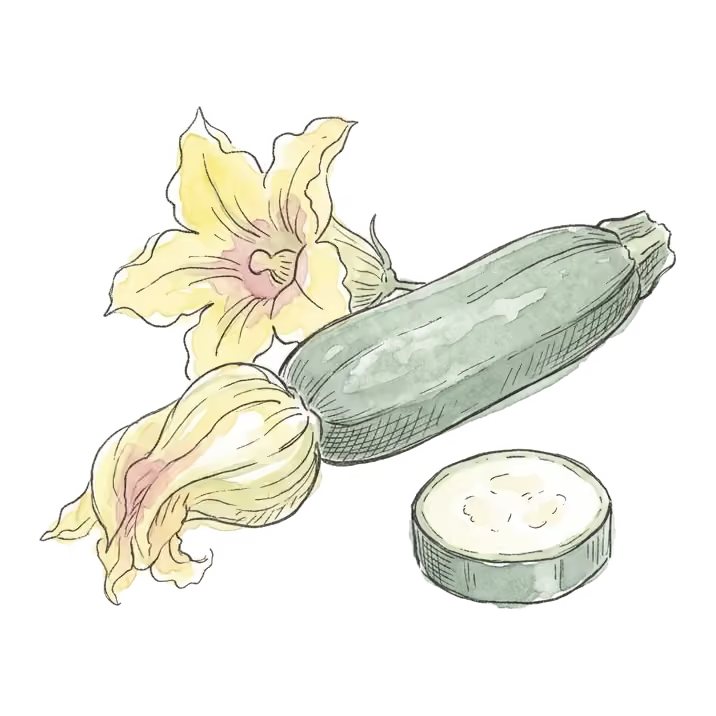
Zucchini / Courgette (Cucurbita pepo)
Cucurbita pepo · also known as courgette, summer squash, marrow, zucchino, Zucchini squash
By Superfoods Advisor Editors·July 3, 2026
Zucchini vs cucumber compared, plus zucchini nutrition per 100 g (17 kcal, 20% DV vitamin C), lutein, health benefits and the bitter-zucchini side effect.
Zucchini (Cucurbita pepo), called courgette in Britain and France, is a summer squash in the gourd family (Cucurbitaceae), botanically a fruit but cooked as a vegetable. It resembles cucumber but belongs to a different genus: zucchini is usually cooked and has more vitamin C and potassium, while cucumber is mostly eaten raw. 100 g of raw zucchini has 17 kcal.
The plant is derived from wild Cucurbita pepo varieties originating in Mesoamerica, where archaeological evidence places cultivation of squash at 8,000–10,000 years ago (Smith, 1997) — making it one of the oldest cultivated food plants. Modern zucchini, with its elongated cylindrical form and mild flavor, is the youngest C. pepo cultivar group: it emerged around Milan in the second half of the 19th century (Lust & Paris, 2016); the name derives from the Italian zucchino (small squash), and the French term courgette (small gourd) is the preferred name in the United Kingdom and France.
Zucchini is harvested immature — typically at 15–20 cm in length — before its rind hardens and seeds develop fully. Allowed to mature on the vine, it becomes a “marrow” with tougher skin and denser flesh. The culinary preference for immature fruit captures the vegetable at its most tender, highest moisture content, and mildest flavor point. Nutritionally, zucchini is defined by what it lacks as much as what it contains: extremely low energy density and high water content position it as a versatile calorie-diluting ingredient, while it supplies carotenoids with specific relevance to ocular health.
Evidence at a glance
Active Compounds
Lutein and zeaxanthin: Zucchini supplies lutein and zeaxanthin — xanthophyll carotenoids that accumulate selectively in the macula lutea and lens of the human eye. These pigments absorb high-energy blue light and quench reactive oxygen species in photoreceptor-dense retinal tissue. The Age-Related Eye Disease Study 2 (AREDS2), a large NIH-sponsored RCT (AREDS2 Research Group, 2013), found in its primary analysis that adding lutein and zeaxanthin to the AREDS supplement formula did not significantly further reduce progression to advanced age-related macular degeneration (AMD) in high-risk individuals (hazard ratio 0.90), although the trial supported lutein/zeaxanthin as a replacement for beta-carotene, which was linked to more lung cancers in former smokers. Because the study used isolated supplement forms (10 mg lutein + 2 mg zeaxanthin), it does not directly test dietary sources.
Vitamin B6 (pyridoxine): Zucchini is a moderate source of vitamin B6 (approximately 0.16 mg/100 g, USDA FoodData Central), a water-soluble vitamin required as a cofactor in over 100 enzymatic reactions, particularly in amino acid metabolism, neurotransmitter synthesis (dopamine, serotonin, GABA), and glycogen breakdown (as the cofactor of glycogen phosphorylase).
Vitamin C: Present at approximately 18 mg/100 g (USDA FoodData Central); contributes to antioxidant defense and collagen synthesis but is not as concentrated as in other vegetables.
Cucurbitacins: A class of oxygenated tetracyclic triterpenoids used by the Cucurbitaceae family as chemical defenses. Commercial zucchini varieties are bred to extremely low cucurbitacin levels, producing characteristically mild, non-bitter fruit. However, cucurbitacins remain a documented safety consideration — see Safety section.
Water and dietary fiber: Zucchini is approximately 94–95% water, accounting for its very low caloric density. Dietary fiber, primarily insoluble (cellulose, hemicellulose), is approximately 1.0 g/100 g — modest, but the quantity consumed per eating occasion can be large given zucchini’s bulk.
Nutritional Profile (per 100 g raw)
| Nutrient | Amount | % DV (approx.) |
|---|---|---|
| Energy | 17 kcal | — |
| Carbohydrate | 3.1 g | 1% |
| Dietary fiber | 1.0 g | 4% |
| Sugars | 2.5 g | — |
| Protein | 1.2 g | 2% |
| Fat | 0.3 g | — |
| Vitamin C | 17.9 mg | 20% |
| Vitamin B6 | 0.16 mg | 10% |
| Riboflavin (B2) | 0.09 mg | 7% |
| Folate (B9) | 24 µg | 6% |
| Potassium | 261 mg | 6% |
| Lutein + Zeaxanthin | ~2,120 µg | — |
Source: USDA FoodData Central, “Squash, summer, zucchini, includes skin, raw” (FDC ID 169291).
The energy density of 17 kcal/100 g places zucchini among the lowest-calorie vegetables by weight, comparable to cucumber and lettuce, making it useful in dietary strategies aimed at increasing food volume without increasing caloric load.
Zucchini vs Cucumber
Zucchini and cucumber look alike but are different plants: zucchini is Cucurbita pepo, a squash, and cucumber is Cucumis sativus. Both belong to the gourd family. Zucchini has a matte skin and firmer flesh and is usually cooked; cucumber has a waxy skin and watery, seedy flesh and is usually eaten raw. Per 100 g raw (USDA FoodData Central; cucumber):
| Per 100 g raw | Zucchini (with skin) | Cucumber (with peel) |
|---|---|---|
| Energy | 17 kcal | 15 kcal |
| Carbohydrate | 3.1 g | 3.6 g |
| Dietary fiber | 1.0 g | 0.5 g |
| Protein | 1.2 g | 0.7 g |
| Vitamin C | 17.9 mg | 2.8 mg |
| Potassium | 261 mg | 147 mg |
| Vitamin K1 | 4.3 µg | 16.4 µg |
Both are about 95% water and very low in calories. Zucchini supplies more vitamin C, potassium, fiber and protein; cucumber supplies more vitamin K. Either can be swapped for the other raw in salads, though cucumber turns limp and watery when cooked.
Evidence for Purported Benefits
Eye Health and Macular Degeneration
Evidence:Preliminary Cohorts link dietary lutein to lower late-AMD risk; AREDS2 supplements added no benefit, and zucchini is untested.
As noted above, the AREDS2 trial (AREDS2 Research Group, JAMA, 2013) did not show a significant added benefit from lutein and zeaxanthin in its primary analysis; the case for these carotenoids rests mainly on mechanistic and observational evidence, including the Nurses’ Health Study and Health Professionals Follow-up Study cohorts (Wu et al., 2015) and the Eye Disease Case-Control Study (Seddon et al., 1994). In a small feeding study, adding spinach and corn to the diet raised macular pigment optical density (MPOD) in most but not all participants (Hammond et al., 1997); no such study has tested zucchini, and whether raising MPOD lowers AMD risk is not established. A meta-analysis by Ma et al. (British Journal of Nutrition, 2012) found that higher dietary lutein and zeaxanthin intake was associated with lower risk of late AMD (RR 0.74) but not early AMD, based on six cohort studies. Zucchini is a moderate dietary lutein source, with lutein and zeaxanthin making up 30–50% of its carotenoids (Sommerburg et al., 1998); dark leafy greens (kale, spinach) provide substantially higher concentrations per gram.
Weight Management and Satiety
Evidence:Lab & animal only Energy-density trials support water-rich foods for satiety; zucchini itself has not been tested.
The extremely low energy density of zucchini (17 kcal/100 g, 95% water) is consistent with evidence from dietary energy density research supporting that high-water, high-volume foods promote satiety with reduced caloric intake. A review by Rolls (Physiology & Behavior, 2009) noted that in several clinical trials, lowering dietary energy density by adding water-rich foods such as fruits and vegetables was associated with weight loss. Zucchini’s culinary versatility — as a pasta substitute (zoodles), pizza base, or bulk ingredient in baked goods — makes it a frequently employed food in calorie-controlled dietary patterns.
Blood Glucose
Evidence:Lab & animal only Based on low carbohydrate content; no studies of zucchini and blood glucose.
Zucchini’s glycemic load per standard serving is negligible because its total carbohydrate content is low (about 3 g/100 g). The combination of low sugar, moderate fiber, and high water content places it among the non-starchy vegetables in carbohydrate-counting meal plans for type 2 diabetes.
Cardiovascular Support
Evidence:Lab & animal only Based on potassium and fiber content; zucchini has not been studied for cardiovascular outcomes.
Potassium content (261 mg/100 g) contributes to the recommended daily intake associated with blood pressure reduction in the context of overall dietary patterns (DASH diet). Fiber, though modest per gram, contributes to overall fiber targets when zucchini is consumed in quantity.
Typical Use and Preparation
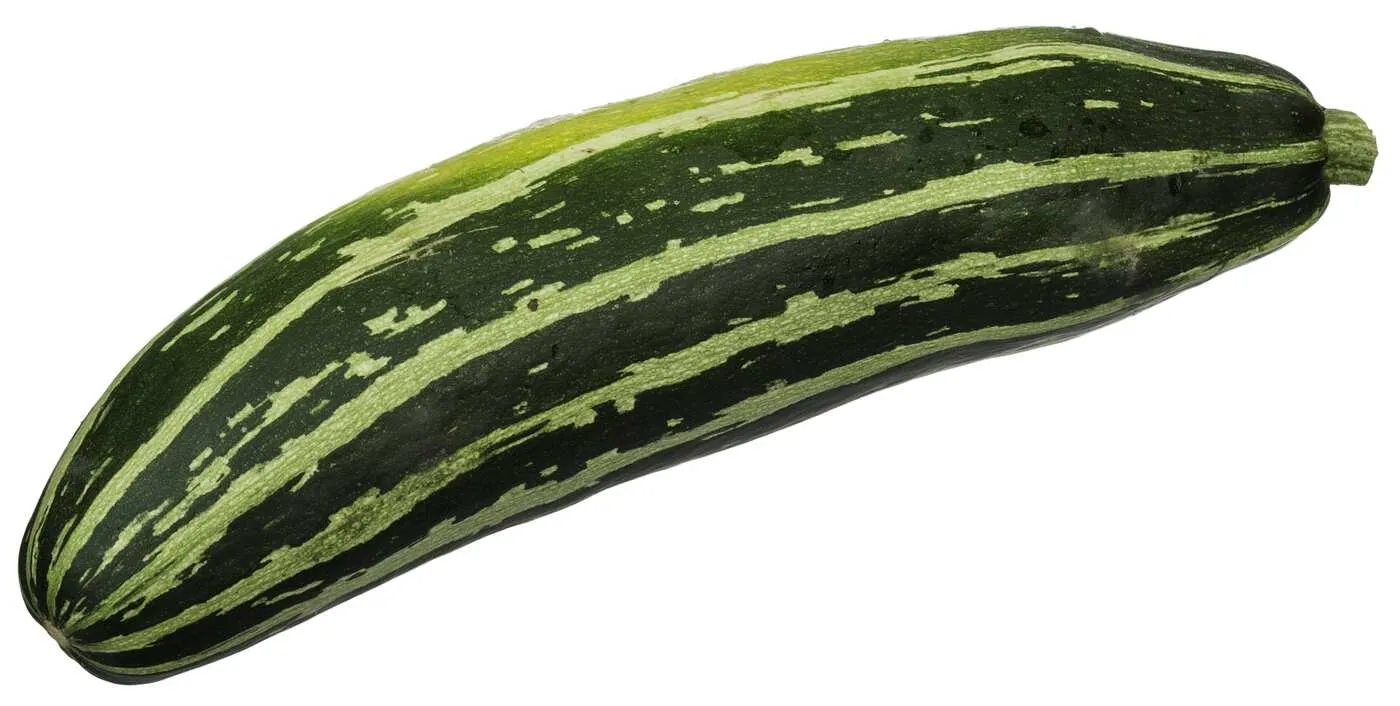 Photo: Evan-Amos, public domain, via Wikimedia Commons
Zucchini is one of the most culinary-versatile vegetables, suitable for raw or cooked preparation:
- Raw: Thinly sliced or ribboned in salads, or spiralized into “zoodles” (zucchini noodles) as a pasta substitute; retains maximum vitamin C and lutein.
- Sautéed and stir-fried: Quick cooking (3–5 minutes) preserves nutrients well; zucchini softens rapidly and releases water.
- Roasted: Higher heat (200–220°C) caramelizes surface sugars and concentrates flavor; some vitamin C loss occurs at sustained high temperatures.
- Grilled: Produces characteristic grill marks and smoky flavor; minimal nutrient loss for brief cooking times.
- Incorporated into baked goods: Grated zucchini adds moisture to quick breads, muffins, and cakes without imparting strong flavor; its water content replaces fat in some recipes.
- Stuffed: Halved and hollow, zucchini is commonly filled with cheese, grains, or meat and baked.
Harvesting or purchasing zucchini at small-to-medium size (under 20 cm) gives the most tender texture; very large, overripe zucchini (“marrow”) has tougher skin and larger seeds.
Carotenoids such as zucchini’s lutein are absorbed better with some fat, an idea our superfood salad recipe builds its dressing around.
Safety, Interactions, and Contraindications
Cucurbitacin toxicity — bitter zucchini: Cucurbitacins are intensely bitter triterpenoids that cause dose-dependent gastrointestinal toxicity in humans. Commercial zucchini is bred to contain negligible cucurbitacin levels, but two documented routes to elevated cucurbitacin content exist:
- Cross-pollination with ornamental or wild cucurbits: Zucchini plants can cross-pollinate with bitter ornamental gourds or other Cucurbitaceae species, introducing cucurbitacin genes into the next generation. Cross-pollination affects the seeds, not the fruit harvested that season; the risk lies in “volunteer” plants from saved seeds or self-sown plants from compost, which may express cucurbitacins at toxic levels. The resulting fruit is noticeably bitter.
- Stress conditions: Environmental stresses such as heat or drought may increase cucurbitacin production; a German case report linked a hospital admission for bitter garden zucchini to high summer temperatures (Jung et al., 2020).
Cases of zucchini-associated cucurbitacin toxicity are rare but documented in medical literature. A French poison-centre series (Le Roux et al., 2018, Clinical Toxicology) recorded 353 people exposed to bitter, non-edible squash over five years; most cases were minor, 14 were of moderate severity, and none were fatal. Symptoms include nausea, vomiting, abdominal cramping, and severe diarrhea. Some cases have required hospital care, including one of hemorrhagic colitis after bitter zucchini (Jung et al., 2020). Any bitter-tasting zucchini should be discarded without further consumption — cooking is not considered to neutralize cucurbitacins, and continuing to eat a bitter specimen increases dose and toxicity. The precaution applies to store-bought squash as much as home-grown: in the French series, 55.8% of the squash had been bought in a store and 25.5% came from gardens.
Allergic reactions: Zucchini allergy is uncommon; the first four cases were described in 2000, with oral allergy syndrome, nausea, diarrhea, or itching after eating zucchini (Reindl et al., 2000). Some patients reacted through cross-reactivity to profilin, a panallergen shared with pollens, or to cross-reacting carbohydrate determinants; one appeared to be sensitized to zucchini directly. The allergens can cause systemic reactions and are at least partly heat-stable, so cooking may not prevent a reaction. Zucchini has also been reported in latex-fruit syndrome (Pereira et al., 2007).
Vitamin K: Zucchini contains a modest amount of vitamin K (approximately 4.3 µg/100 g, USDA FoodData Central). People taking warfarin are generally advised to keep their vitamin K intake consistent rather than avoid particular foods (NIH Office of Dietary Supplements); discuss any large dietary change with your clinician.
Frequently Asked Questions
Is zucchini good for you?
Zucchini is a low-calorie, high-water vegetable that supplies vitamin C, vitamin B6, potassium and the carotenoids lutein and zeaxanthin: 100 g raw has 17 kcal and about a fifth of the daily value for vitamin C. It adds bulk to meals with little energy. Specific health benefits, such as for eye health, have not been tested for zucchini itself.
Is zucchini a fruit or a vegetable?
Botanically, zucchini is a fruit: it develops from the flower and contains seeds, and it is harvested immature, at about 15–20 cm, before the seeds and rind harden. In cooking and nutrition it is treated as a vegetable. Left on the plant, a zucchini grows into a marrow, with tougher skin and larger seeds.
Can zucchini be eaten raw?
Yes. Raw zucchini can be sliced thinly, ribboned into salads or spiralized into “zoodles” as a pasta substitute, and raw preparation keeps the most vitamin C and lutein. The skin is edible. The one rule is to taste it first: a zucchini that is noticeably bitter may contain cucurbitacins and should be thrown away rather than eaten (Le Roux et al., 2018).
Does zucchini have fiber?
A modest amount: about 1.0 g of dietary fiber per 100 g raw, mostly insoluble cellulose and hemicellulose, out of 3.1 g of total carbohydrate (USDA FoodData Central). That is twice the fiber of cucumber per 100 g. Because zucchini is often eaten in large portions, such as a plate of zucchini noodles, it can still contribute meaningfully toward daily fiber targets.
What are the side effects of zucchini?
Ordinary zucchini is well tolerated. The documented risk is cucurbitacin poisoning from bitter fruit, which causes nausea, vomiting, cramps and diarrhea; most cases in a French series of 353 people were minor, and none were fatal (Le Roux et al., 2018). Zucchini allergy is uncommon and can be linked to pollen allergy.
References
Show all 15 referencesShow fewer
- AREDS2 Research Group. (2013). Lutein + zeaxanthin and omega-3 fatty acids for age-related macular degeneration: the Age-Related Eye Disease Study 2 (AREDS2) randomized clinical trial. JAMA, 309(19), 2005–2015.
- Ma, L., et al. (2012). Lutein and zeaxanthin intake and the risk of age-related macular degeneration: a systematic review and meta-analysis. British Journal of Nutrition, 107(3), 350–359.
- Rolls, B. J. (2009). The relationship between dietary energy density and energy intake. Physiology & Behavior, 97(5), 609–615.
- Le Roux, G., Leborgne, I., Labadie, M., et al. (2018). Poisoning by non-edible squash: retrospective series of 353 patients from French Poison Control Centers. Clinical Toxicology, 56(8), 790–794.
- Sommerburg, O., et al. (1998). Fruits and vegetables that are sources for lutein and zeaxanthin: the macular pigment in human eyes. British Journal of Ophthalmology, 82(8), 907–910.
- USDA FoodData Central. Squash, summer, zucchini, includes skin, raw. SR Legacy, FDC ID 169291. Retrieved 2026.
- Smith, B. D. (1997). The initial domestication of Cucurbita pepo in the Americas 10,000 years ago. Science, 276(5314), 932–934.
- Lust, T. A., & Paris, H. S. (2016). Italian horticultural and culinary records of summer squash (Cucurbita pepo, Cucurbitaceae) and emergence of the zucchini in 19th-century Milan. Annals of Botany, 118(1), 53–69.
- Wu, J., Cho, E., Willett, W. C., Sastry, S. M., & Schaumberg, D. A. (2015). Intakes of lutein, zeaxanthin, and other carotenoids and age-related macular degeneration during 2 decades of prospective follow-up. JAMA Ophthalmology, 133(12), 1415–1424.
- Seddon, J. M., et al. (1994). Dietary carotenoids, vitamins A, C, and E, and advanced age-related macular degeneration. Eye Disease Case-Control Study Group. JAMA, 272(18), 1413–1420.
- Hammond, B. R., Jr., et al. (1997). Dietary modification of human macular pigment density. Investigative Ophthalmology & Visual Science, 38(9), 1795–1801.
- Jung, C., Steuber, B., & Schwörer, H. (2020). Lebensmittelvergiftung durch Cucurbitacine [Food poisoning by cucurbitacines]. Deutsche Medizinische Wochenschrift, 145(14), 988–990.
- Reindl, J., Anliker, M. D., Karamloo, F., Vieths, S., & Wüthrich, B. (2000). Allergy caused by ingestion of zucchini (Cucurbita pepo): characterization of allergens and cross-reactivity to pollen and other foods. Journal of Allergy and Clinical Immunology, 106(2), 379–385.
- Pereira, C., Tavares, B., Loureiro, G., Lundberg, M., & Chieira, C. (2007). Turnip and zucchini: new foods in the latex-fruit syndrome. Allergy, 62(4), 452–453.
- NIH Office of Dietary Supplements. Vitamin K: Fact Sheet for Health Professionals.
More in Vegetables
- Artichoke (Cynara cardunculus var. scolymus)
Artichokes benefits explained: prebiotic inulin, cynarin, nutrition per 100 g, and what leaf-extract trials show for cholesterol, digestion and the liver.
- Asparagus (Asparagus officinalis)
Is asparagus good for you? Nutrition per 100 g, including 37% DV folate and 42% vitamin K, its prebiotic fiber, what studies show, and safety notes.
- Beets / Beetroot (Beta vulgaris)
Beet juice benefits explained: how beetroot nitrates lowered systolic blood pressure and aided endurance in trials, beets nutrition per 100 g, and safety.
- Broccoli (Brassica oleracea var. italica)
Is broccoli good for you? Broccoli nutrition per 100 g, including 118% DV vitamin K, how sulforaphane forms, what human studies show, and safety notes.
- Brussels Sprouts (Brassica oleracea var. gemmifera)
Brussels sprouts benefits and nutrition per 100 g (148% DV vitamin K, 94% vitamin C), their glucosinolates, what studies show, gas, and warfarin safety.
- Cabbage (Brassica oleracea var. capitata)
Is cabbage good for you? Cabbage nutrition per 100 g (63% DV vitamin K, 41% vitamin C), red vs green, sauerkraut, what studies show, and thyroid safety.

Curated by Superfoods Advisor Editors·Last updated