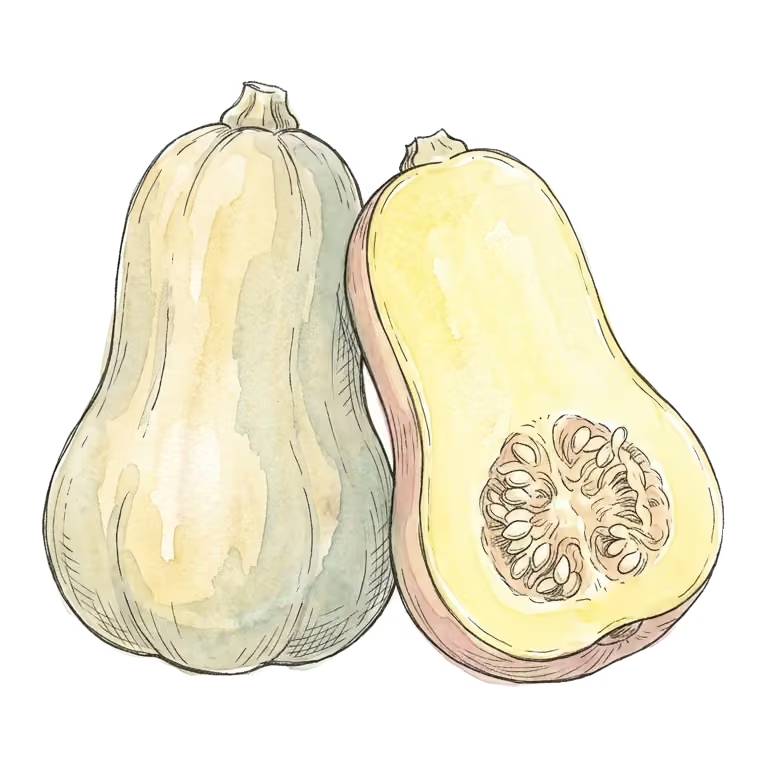
Squash (Cucurbita spp.)
Cucurbita spp. · also known as winter squash, summer squash, zucchini, butternut squash, acorn squash, pumpkin, calabaza
By Superfoods Advisor Editors·July 3, 2026
Is squash good for you? Butternut and zucchini nutrition per 100 g, beta-carotene (62% DV vitamin A), summer vs winter squash, studies, and safety.
Squash (Cucurbita spp.) is a genus of gourds in the family Cucurbitaceae that includes summer squash, such as zucchini, and winter squash, such as butternut, acorn and pumpkin. It is good for you mainly as a low-calorie source of fiber, potassium and, in orange winter varieties, beta-carotene: 100 g of baked butternut supplies 62% of the daily value for vitamin A.
The genus includes six separately domesticated crop lineages (Kates et al., 2017) and many cultivated varieties. It was domesticated in the Americas independently in multiple locations — Mesoamerica, South America, and eastern North America — with archaeological C. pepo seeds from Mexico dated to roughly 8,000 to 10,000 years ago (Smith, 1997), making squash among the earliest domesticated crops in the Western Hemisphere. The three principal cultivated species are Cucurbita pepo (including zucchini, acorn squash, and most pumpkins), Cucurbita maxima (including Hubbard, buttercup, and kabocha), and Cucurbita moschata (including butternut squash and most canned pumpkin). Squash, chiefly C. pepo in eastern North America, was one of the “Three Sisters” intercropped by Indigenous peoples of North America alongside maize and beans.
Spanish and Portuguese colonizers carried squash seeds to Europe in the 16th century; from there, cultivation spread globally, and today squash is a major crop on every inhabited continent. The genus divides culinarily into two broad categories: summer squash (harvested immature with tender skin and seeds, including zucchini and yellow crookneck) and winter squash (harvested mature with hard rind and concentrated flesh, including butternut, acorn, spaghetti, and delicata). These two categories differ substantially in nutritional composition — winter squash is considerably denser in beta-carotene, complex carbohydrates, and micronutrients than summer varieties.
Evidence at a glance
Active Compounds
The bioactive profile of squash varies by species and maturity at harvest, with winter squash generally more nutrient-dense:
- Beta-carotene (provitamin A): The dominant carotenoid in orange-fleshed winter squash varieties (butternut, Hubbard, kabocha). As in carrot, beta-carotene is fat-soluble and is converted enzymatically to retinol in the intestinal mucosa. Bioavailability is significantly enhanced by fat co-ingestion; roasting squash with olive oil or other lipid sources is a practical means of maximizing carotenoid absorption.
- Alpha-carotene: Present alongside beta-carotene in orange varieties; also a provitamin A precursor at approximately 50% the efficiency of beta-carotene (24 µg versus 12 µg of dietary carotenoid per µg retinol; Linus Pauling Institute).
- Lutein and zeaxanthin: Concentrated in yellow-fleshed cultivars; these xanthophylls accumulate in retinal macular tissue and are studied for AMD risk reduction.
- Cucurbitacins: Bitter triterpenoid compounds; cultivated squash is bred for low cucurbitacin content, but bitter, high-cucurbitacin fruits still occur occasionally (see Safety).
- Cucurmosin: A type 1 ribosome-inactivating protein isolated from the flesh (sarcocarp) of C. moschata (Hou et al., 2008); it has been studied for cytotoxicity against cancer cell lines in laboratory work only.
- Seed fatty acids: Squash seed oil is dominated by linoleic (omega-6) and oleic acids, with very little alpha-linolenic acid (under 1% across 12 C. maxima cultivars; Stevenson et al., 2007), so the seeds are not a meaningful omega-3 source.
- Dietary fiber: Both summer and winter squash contribute meaningful dietary fiber; winter squash has higher total fiber per serving due to greater flesh density.
- Potassium: Winter squash is a notable potassium source, relevant to blood pressure regulation via the DASH dietary pattern.
- Vitamin C: Present in meaningful amounts in both summer and winter squash, supporting immune function and collagen synthesis.
- B-vitamins (B6, folate, pantothenic acid): Squash contributes to B-vitamin adequacy, particularly folate, which supports DNA synthesis and one-carbon metabolism.
Nutritional Profile
Because squash varieties differ substantially, two representative examples are provided.
Butternut squash, baked, per 100 g (USDA FoodData Central):
| Nutrient | Amount | % DV |
|---|---|---|
| Energy | 40 kcal | — |
| Carbohydrates | 10.5 g | — |
| Dietary fiber | 3.2 g | — |
| Sugars | 2.0 g | — |
| Protein | 0.9 g | — |
| Total fat | 0.1 g | — |
| Vitamin A (RAE, from beta- and alpha-carotene) | 558 mcg RAE | 62% |
| Vitamin C | 15.1 mg | 17% |
| Potassium | 284 mg | 6% |
| Folate | 19 mcg DFE | 5% |
| Vitamin B6 | 0.12 mg | 7% |
Zucchini (summer squash), raw, per 100 g (USDA FoodData Central):
| Nutrient | Amount |
|---|---|
| Energy | 17 kcal |
| Carbohydrates | 3.1 g |
| Dietary fiber | 1.0 g |
| Sugars | 2.5 g |
| Protein | 1.2 g |
| Total fat | 0.3 g |
| Vitamin C | 17.9 mg (20% DV) |
| Potassium | 261 mg (6% DV) |
| Folate | 24 mcg DFE (6% DV) |
Winter squash is meaningfully higher in energy, carbohydrate, and carotenoids than summer squash due to its greater starch content and concentrated carotenoid pigmentation.
Evidence for Purported Benefits
Vitamin A Adequacy and Eye Health
Evidence:Moderate Plant beta-carotene sources raised vitamin A status in community trials; squash was not studied separately.
Orange-fleshed winter squash is among the richest plant-based sources of beta-carotene and alpha-carotene. As a dietary source of vitamin A, it plays a role similar to carrot and sweet potato; vitamin A deficiency can progress to blinding eye disease in children (WHO). The fat-soluble nature of these carotenoids means bioavailability from squash dishes prepared with added fat (roasted with oil, prepared in soups with dairy or coconut) is substantially higher than from fat-free preparations. A review by Haskell (2012) found that the vitamin A equivalency of beta-carotene from plant foods varies widely (roughly 4:1 to 28:1 by weight) with food matrix, processing, and dietary fat, but that providing vegetable and fruit sources of beta-carotene significantly increased vitamin A status in women and children in community settings in developing countries. Squash was not studied separately.
Cardiovascular and Blood Pressure Support
Evidence:Preliminary The DASH trial lowered blood pressure with potassium-rich diets; squash itself has not been studied.
Potassium in winter squash contributes to the well-established blood pressure-lowering effect of potassium-rich diets. The Dietary Approaches to Stop Hypertension (DASH) dietary pattern, which emphasizes potassium-rich vegetables, lowered systolic blood pressure by 11.4 mmHg among hypertensive participants, and by 5.5 mmHg across all 459 participants, compared with a control diet typical of the United States in the original eight-week DASH feeding trial (Appel et al., 1997). Squash fiber also contributes to lipid management; soluble fiber reduces LDL cholesterol through bile acid sequestration in the gut.
Anti-inflammatory Effects
Evidence:Preliminary Preclinical work plus survey data linking serum carotenoids to lower CRP; squash is untested in humans.
Squash contains multiple compounds with demonstrated anti-inflammatory activity in preclinical models, including beta-carotene, vitamin C, and cucurbitacin derivatives. In a US NHANES sample, higher serum carotenoid levels were associated with lower C-reactive protein (CRP) (Mazidi et al., 2018), but squash itself has not been studied for inflammatory outcomes in humans.
Glycemic Health
Evidence:Preliminary Boiled butternut has a moderate measured GI; blood-sugar studies used a less common species, mostly in rodents.
Winter squash contains complex carbohydrates and meaningful fiber, and boiled butternut tested at a glycemic index of about 51 in the University of Sydney GI database, compared with about 75 for white bread (Atkinson et al., 2008); other boiled pumpkin samples in the same database have tested higher (66). Fruit extracts of Cucurbita ficifolia (a less common species used in Mexican traditional medicine) have been studied for blood-sugar effects, mostly in rodents plus small human studies (Hernandez-Mixteco et al., 2024), but these findings are not established for common culinary squash species. Summer squash has a very low glycemic load overall due to minimal carbohydrate content.
Prostate Health (Squash Seeds)
Evidence:Limited One large RCT (1,431 men): whole pumpkin seed eased symptoms but a seed extract did not; confirmation is needed.
Pumpkin seed preparations have been studied in the context of benign prostatic hyperplasia (BPH); phytosterols are among the constituents proposed to explain any effect. In the randomized, placebo-controlled GRANU trial by Vahlensieck et al. (2015) (n=1,431 men), 12 months of pumpkin seed (5 g twice daily) produced a greater reduction in prostate symptom scores than placebo, while a pumpkin seed extract did not differ from placebo; the authors called for confirmatory studies. These findings relate specifically to seed preparations, not squash flesh, and should not be generalized to whole-vegetable consumption for this purpose.
Typical Use and Preparation
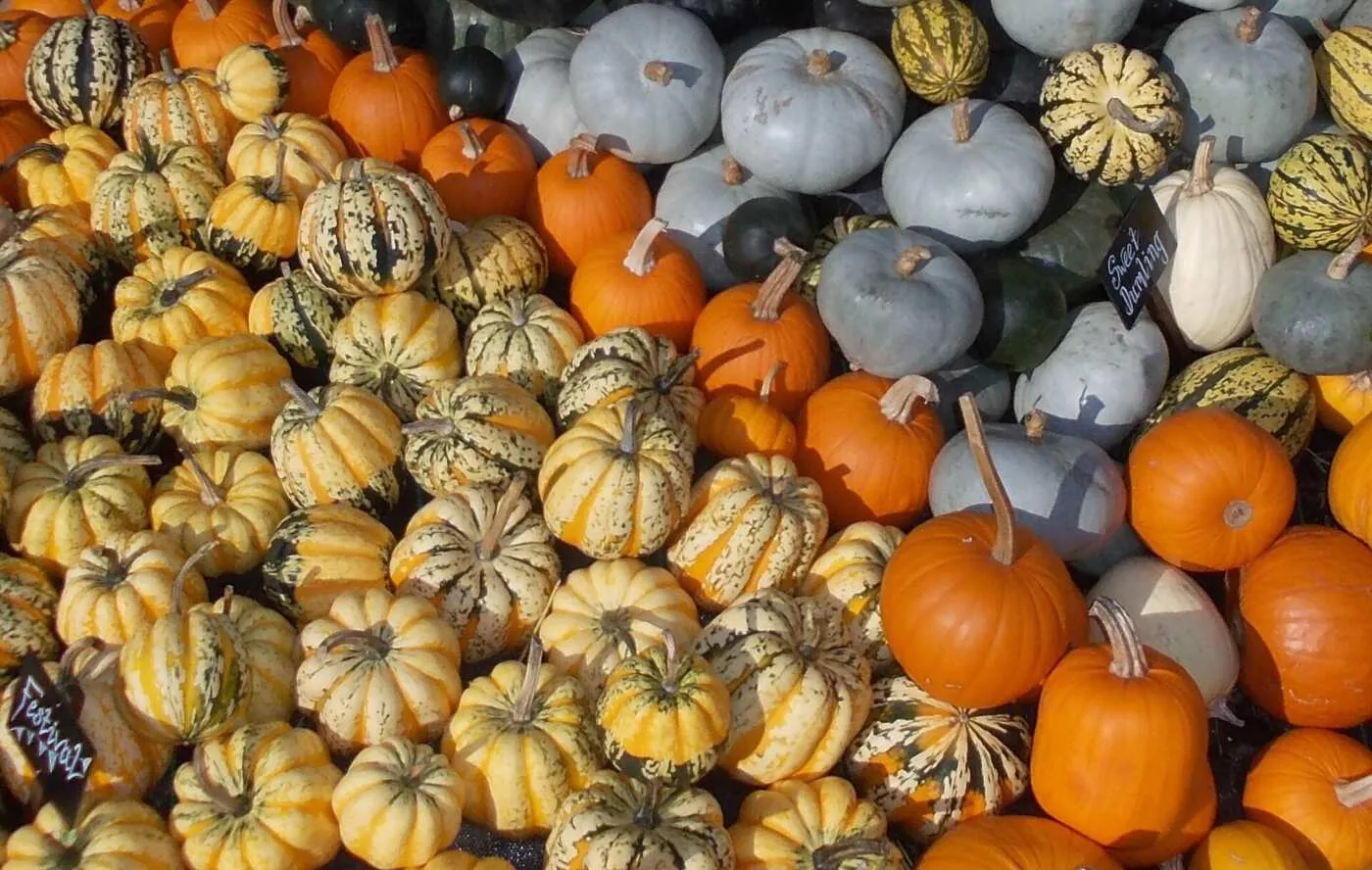 Photo: Chiswick Chap, CC BY-SA 4.0, via Wikimedia Commons
Summer squash (zucchini, yellow squash):
- Consumed raw in salads or with dips; sauteed, grilled, roasted, or spiralized into noodles.
- Very quick to cook; overcooking yields mushy texture and increases nutrient loss.
- The skin is fully edible and contributes nutrients and texture.
Winter squash (butternut, acorn, kabocha):
- Roasting whole or halved at 190–210 degrees C (375–425 degrees F) caramelizes natural sugars and deepens flavor while softening the dense flesh.
- Steaming and mashing preserves more water-soluble vitamins than high-heat roasting.
- Seeds may be rinsed, seasoned, and toasted for a nutritious whole-food garnish.
- The hard rind of most winter squash is not typically eaten, though some varieties (delicata, kabocha) have edible skin when roasted.
Fat co-ingestion: Roasting with olive oil, preparing in soups with dairy or coconut milk, or serving with a fat-containing dressing maximizes carotenoid absorption from orange-fleshed varieties.
Pumpkin and other orange squash are mentioned as beta-carotene sources in the skin-health nutrition guide.
Safety, Interactions, and Contraindications
Squash is a common food that most people eat without problems. Specific considerations:
Cucurbitacin toxicity: Poisoning from bitter, high-cucurbitacin squash is reported regularly. In a series of 353 cases from French poison control centers, most of the squash had been bought in stores (about a quarter came from gardens), and symptoms were mainly diarrhea, vomiting, and abdominal pain, with no severe cases (Le Roux et al., 2018). Hair loss weeks after cucurbit poisoning has been described in case reports (Assouly, 2018). Any squash tasting unusually bitter should be discarded rather than eaten.
Beta-carotene and carotenodermia: Very high habitual intake of orange-fleshed winter squash in combination with other carotenoid-rich foods can cause carotenodermia — a harmless yellowing of the skin. The condition resolves with dietary reduction and should be distinguished from jaundice.
High-dose beta-carotene supplements: As noted in the carrot entry, the carcinogenic risk observed in the ATBC and CARET trials applied to pharmacological supplement doses in smokers, not to dietary squash consumption.
Allergic reactions: Squash allergy is uncommon. The first zucchini allergy cases were reported in 2000, with reactions linked partly to profilin, a pollen-related panallergen, and to cross-reacting carbohydrate determinants (Reindl et al., 2000). Squash is not among the main foods of latex-fruit syndrome, which centers on banana, avocado, kiwifruit, and papaya (Gromek et al., 2024). Pumpkin seed allergy is a separate issue from reactions to squash flesh.
Vitamin K: Squash is low in vitamin K1 (about 1 µg per 100 g baked butternut and 4.3 µg raw zucchini, per USDA FoodData Central), so it is not a notable concern for people taking warfarin; anyone on an anticoagulant should still discuss overall dietary patterns with their prescribing clinician.
Potassium in renal disease: Individuals with chronic kidney disease who require potassium restriction should account for squash’s potassium content and consult a registered dietitian for personalized guidance.
This entry is for informational purposes only and does not constitute medical advice. Consult a qualified healthcare provider for medical guidance.
Frequently Asked Questions
Is squash a fruit or a vegetable?
Botanically, squash is a fruit: it develops from the flower and contains the seeds, and its type of fruit is called a pepo. In cooking and nutrition it is treated as a vegetable. “Squash” covers several Cucurbita species, from tender summer squash such as zucchini and yellow crookneck to hard-rinded winter squash such as butternut, acorn, kabocha and pumpkin.
Is squash the same as zucchini?
Zucchini is one kind of squash. It is a summer squash, a variety of Cucurbita pepo harvested young, when its skin and seeds are still tender. Other squashes, including butternut and kabocha, are winter squash from C. moschata and C. maxima, harvested mature with hard rinds. Zucchini is much lower in calories and beta-carotene than orange winter squash.
Does squash have fiber?
Yes, though the amount depends on the type. Baked butternut squash provides about 3.2 g of dietary fiber per 100 g, while raw zucchini provides about 1.0 g (USDA FoodData Central). Winter squash has more fiber per serving because its flesh is denser and less watery. Both count toward the roughly 28 g daily value.
Can squash be eaten raw?
Summer squash such as zucchini and yellow squash is commonly eaten raw, sliced into salads or spiralized into noodles, and its skin is edible. Winter squash has dense, hard flesh and is almost always roasted, steamed or baked. Whichever type you eat, discard any squash that tastes unusually bitter, because bitterness signals cucurbitacins that can cause gastrointestinal poisoning (Le Roux et al., 2018).
How much squash is too much?
There is no set upper limit for squash as a food. Very high habitual intake of orange winter squash, alongside other carotenoid-rich foods, can cause carotenodermia, a harmless yellowing of the skin that fades when intake drops. People with chronic kidney disease who must restrict potassium should account for squash’s potassium and ask their dietitian about portion sizes.
References
Show all 16 referencesShow fewer
- Appel, L. J., et al. (1997). A clinical trial of the effects of dietary patterns on blood pressure. New England Journal of Medicine, 336(16), 1117–1124.
- Haskell, M. J. (2012). The challenge to reach nutritional adequacy for vitamin A: β-carotene bioavailability and conversion — evidence in humans. American Journal of Clinical Nutrition, 96(5), 1193S–1203S.
- Vahlensieck, W., et al. (2015). Effects of pumpkin seed in men with lower urinary tract symptoms due to benign prostatic hyperplasia in the one-year, randomized, placebo-controlled GRANU study. Urologia Internationalis, 94(3), 286–295.
- USDA FoodData Central. Squash, winter, butternut, cooked, baked, without salt (FDC 169296); Squash, summer, zucchini, includes skin, raw (FDC 169291). SR Legacy. Retrieved 2026.
- Kates, H. R., Soltis, P. S., & Soltis, D. E. (2017). Evolutionary and domestication history of Cucurbita (pumpkin and squash) species inferred from 44 nuclear loci. Molecular Phylogenetics and Evolution, 111, 98–109.
- Smith, B. D. (1997). The initial domestication of Cucurbita pepo in the Americas 10,000 years ago. Science, 276(5314), 932–934.
- Atkinson, F. S., Foster-Powell, K., & Brand-Miller, J. C. (2008). International tables of glycemic index and glycemic load values: 2008. Diabetes Care, 31(12), 2281–2283.
- Hou, X., et al. (2008). Atomic resolution structure of cucurmosin, a novel type 1 ribosome-inactivating protein from the sarcocarp of Cucurbita moschata. Journal of Structural Biology, 164(1), 81–87.
- Stevenson, D. G., et al. (2007). Oil and tocopherol content and composition of pumpkin seed oil in 12 cultivars. Journal of Agricultural and Food Chemistry, 55(10), 4005–4013.
- Mazidi, M., et al. (2018). Inverse association between serum antioxidant levels and inflammatory markers is moderated by adiposity. British Journal of Nutrition, 120(11), 1272–1278.
- Hernandez-Mixteco, M., et al. (2024). Effect of Cucurbita ficifolia Bouché on glutathione level and glycosylated hemoglobin percentage in a Mexican rural population with type 2 diabetes. Journal of Ethnopharmacology, 326, 117924.
- Le Roux, G., et al. (2018). Poisoning by non-edible squash: retrospective series of 353 patients from French Poison Control Centers. Clinical Toxicology, 56(8), 790–794.
- Assouly, P. (2018). Hair loss associated with cucurbit poisoning. JAMA Dermatology, 154(5), 617–618.
- Reindl, J., et al. (2000). Allergy caused by ingestion of zucchini (Cucurbita pepo): characterization of allergens and cross-reactivity to pollen and other foods. Journal of Allergy and Clinical Immunology, 106(2), 379–385.
- Gromek, W., et al. (2024). Revisiting latex-fruit syndrome after 30 years of research: a comprehensive literature review and description of two cases. Journal of Clinical Medicine.
- World Health Organization. Vitamin A deficiency. Nutrition Landscape Information System.
Related content
More in Vegetables
- Artichoke (Cynara cardunculus var. scolymus)
Artichokes benefits explained: prebiotic inulin, cynarin, nutrition per 100 g, and what leaf-extract trials show for cholesterol, digestion and the liver.
- Asparagus (Asparagus officinalis)
Is asparagus good for you? Nutrition per 100 g, including 37% DV folate and 42% vitamin K, its prebiotic fiber, what studies show, and safety notes.
- Beets / Beetroot (Beta vulgaris)
Beet juice benefits explained: how beetroot nitrates lowered systolic blood pressure and aided endurance in trials, beets nutrition per 100 g, and safety.
- Broccoli (Brassica oleracea var. italica)
Is broccoli good for you? Broccoli nutrition per 100 g, including 118% DV vitamin K, how sulforaphane forms, what human studies show, and safety notes.
- Brussels Sprouts (Brassica oleracea var. gemmifera)
Brussels sprouts benefits and nutrition per 100 g (148% DV vitamin K, 94% vitamin C), their glucosinolates, what studies show, gas, and warfarin safety.
- Cabbage (Brassica oleracea var. capitata)
Is cabbage good for you? Cabbage nutrition per 100 g (63% DV vitamin K, 41% vitamin C), red vs green, sauerkraut, what studies show, and thyroid safety.

Curated by Superfoods Advisor Editors·Last updated