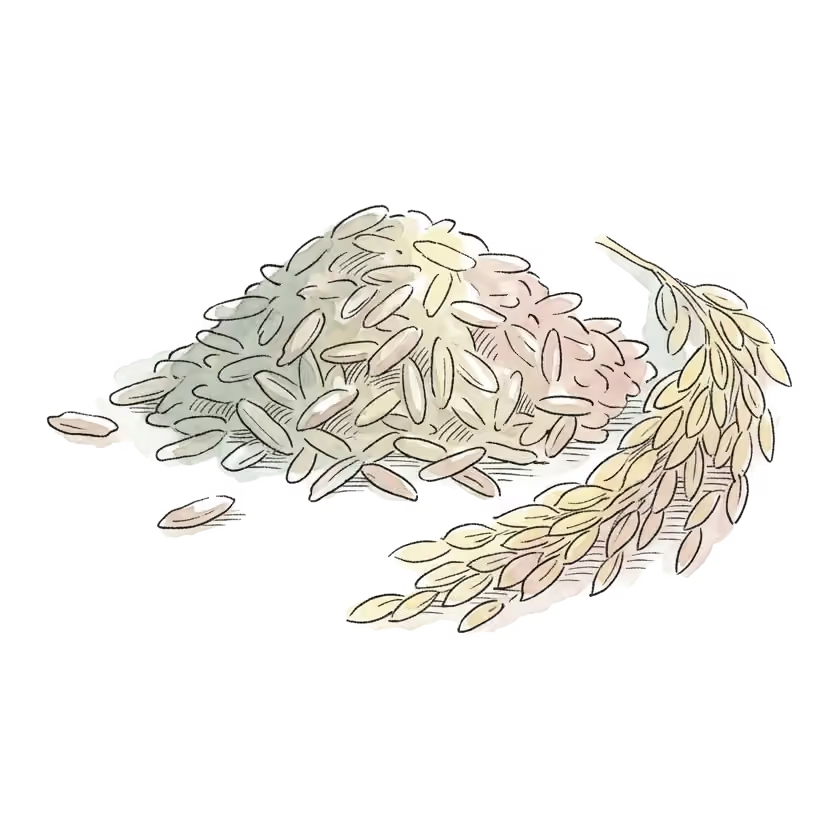
Brown Rice (Oryza sativa)
Oryza sativa · also known as whole grain rice, unpolished rice, hulled rice
By Superfoods Advisor Editors·July 3, 2026
Brown rice vs white rice: brown keeps the bran, with 4x the fiber and 3x the magnesium, a slightly lower GI and more arsenic. Benefits and evidence.
Brown rice is whole-grain rice (Oryza sativa) with only the inedible husk removed; white rice is the same grain milled to strip off the bran and germ. Per 100 g cooked, brown rice has about four times the fiber (1.6 g vs 0.4 g) and three times the magnesium of white rice, a slightly lower glycemic index, and more inorganic arsenic.
The distinction between brown and white rice is purely one of processing: after harvesting, the inedible outer husk is removed to produce brown rice, while white rice undergoes a further milling step that strips away the bran layer and germ, leaving only the starchy endosperm. This additional milling dramatically increases shelf life and reduces cook time, which explains why white rice historically replaced brown rice in many cultures as milling technology became affordable. The cost is the loss of virtually all of the bran’s fiber, B vitamins, minerals, and phytochemicals.
Cultivated rice is one of the oldest domesticated crops, with rice phytoliths from the Lower Yangtze valley of China dated to roughly 9,000–9,400 years ago and already showing domesticated traits (Zuo et al., 2017). For the majority of that history, minimally processed rice resembling modern brown rice was the norm. Today, brown rice is consumed across Asia, the Americas, and increasingly in Western health-conscious markets, though it constitutes a small fraction of global rice consumption compared with white rice. Its higher fiber content, lower glycemic index, and richer micronutrient profile make it nutritionally preferable to white rice — with meaningful caveats around arsenic content and phytic acid.
Evidence at a glance
Brown Rice vs White Rice
Brown rice is the more nutrient-dense of the two, but the gap is narrower than often assumed once enrichment is counted. Milling removes most of the fiber, magnesium, manganese and vitamin B6; enrichment then restores thiamine, iron and folic acid to white rice, leaving it higher than brown in those added nutrients (USDA FoodData Central: brown, white, enriched).
| Per 100 g, cooked long-grain | Brown rice | White rice (enriched) |
|---|---|---|
| Energy | 123 kcal | 130 kcal |
| Carbohydrate | 25.6 g | 28.2 g |
| Protein | 2.7 g | 2.7 g |
| Dietary fiber | 1.6 g | 0.4 g |
| Magnesium | 39 mg | 12 mg |
| Manganese | 0.97 mg | 0.47 mg |
| Phosphorus | 103 mg | 43 mg |
| Niacin (B3) | 2.6 mg | 1.5 mg |
| Iron | 0.6 mg | 1.2 mg |
| Folate | 9 µg | 97 µg |
| Glycemic index (average) | 68 | 73 |
| Inorganic arsenic (uncooked, FDA average) | 154 µg/kg | 92 µg/kg |
For most adults eating rice a few times a week, brown rice adds fiber and minerals at a modest cost in arsenic exposure. For infants, pregnant women and people who eat rice at most meals, the arsenic difference carries more weight, and varying grains matters more than the brown-or-white choice.
Active Compounds
- Bran-layer fiber: The bran layer of brown rice contains primarily insoluble fiber (cellulose and hemicellulose) along with smaller amounts of soluble fiber. Cooked long-grain brown rice provides about 1.6 g of total fiber per 100 g, roughly four times the 0.4 g in cooked enriched white rice (USDA FoodData Central; white rice). While modest compared with legumes, this fiber meaningfully contributes to daily intake given the quantities in which rice is typically consumed.
- B vitamins: The bran and germ retain thiamine (B1), niacin (B3), and pyridoxine (B6). In USDA data, raw unenriched white rice has about 87% less thiamine, 75% less niacin, and two-thirds less vitamin B6 than raw brown rice, while pantothenic acid (B5) is barely affected (brown; white, unenriched); enriched white rice attempts to compensate by adding synthetic B vitamins and iron back to the milled grain, but not all micronutrients are restored and the forms added may differ in bioavailability. Brown rice is a minor folate source (about 9 µg per 100 g cooked); enriched white rice, fortified with folic acid, contains considerably more (USDA FoodData Central).
- Magnesium: The bran layer is a meaningful source of magnesium, supplying about 39 mg per 100 g cooked (roughly 9% of the Daily Value), versus 12 mg in cooked white rice (USDA FoodData Central). Magnesium is involved in over 300 enzymatic reactions, including glucose metabolism, protein synthesis, and blood pressure regulation. Populations that transition from brown to polished white rice as a dietary staple lose much of this magnesium. The same milling removes thiamine, and its loss from polished rice was the cause of the beriberi epidemics seen in rice-dependent populations in the late 19th and early 20th centuries.
- Phytic acid (phytate): Concentrated in the bran, phytate is an antinutrient that chelates divalent minerals — iron, zinc, calcium, and magnesium — forming insoluble complexes that resist absorption in the small intestine. Soaking brown rice (particularly warm and at slightly acidic pH) activates the grain’s own phytase enzymes, which partly degrade phytic acid; the size of the reduction varies widely with time and conditions. Germination (sprouting) also reduces phytate and is the basis of commercially available GABA brown rice products, where germination also increases gamma-aminobutyric acid content.
- Inorganic arsenic: Rice is particularly efficient at accumulating arsenic from flooded paddy soils because arsenite enters the roots through the same transporters the plant uses for silicon (Ma et al., 2008). Because arsenic concentrates in the bran layer removed during milling, brown rice carries more inorganic arsenic than white: Consumer Reports testing found about 80% more on average than white rice of the same type (Consumer Reports, 2014), and FDA sampling averaged 154 µg/kg in brown versus 92 µg/kg in white rice (FDA, 2016). Inorganic arsenic is a Group 1 IARC carcinogen. The US FDA and the European Food Safety Authority (EFSA) have both assessed dietary inorganic arsenic, including from rice, as a public health concern (FDA, 2016; EFSA CONTAM Panel, 2024), with the FDA’s assessment focusing on infants fed rice cereal and pregnant women.
- Ferulic acid and other phenolics: Brown rice bran contains ferulic acid, tricin, and other phenolic compounds with demonstrated antioxidant activity in vitro. Whether these translate to meaningful in vivo antioxidant effects in humans consuming ordinary portions is uncertain; circulating antioxidant capacity is tightly regulated by endogenous systems.
- Gamma-oryzanol: A mixture of ferulic acid esters with phytosterols found in rice bran oil and present in smaller amounts in whole brown rice. Proposed benefits for cholesterol reduction and sports performance rest on limited human evidence for gamma-oryzanol itself. A meta-analysis of 11 randomized trials found that rice bran oil lowered LDL and total cholesterol (Jolfaie et al., 2016), but that effect cannot be credited to gamma-oryzanol alone or carried over to whole brown rice.
Nutritional Profile
Per 100 g cooked long-grain brown rice (USDA FoodData Central):
| Nutrient | Amount | % DV |
|---|---|---|
| Energy | 123 kcal | — |
| Protein | 2.7 g | — |
| Total fat | 1.0 g | — |
| Carbohydrate | 25.6 g | — |
| Dietary fiber | 1.6 g | — |
| Sugars | 0.2 g | — |
| Thiamine (B1) | 0.18 mg | 15% |
| Niacin (B3) | 2.56 mg | 16% |
| Magnesium | 39 mg | 9% |
| Phosphorus | 103 mg | 8% |
| Selenium | 5.8 µg | 11% |
| Manganese | 0.97 mg | 42% |
| Inorganic arsenic | ~154 µg/kg uncooked grain (US average, FDA 2016; varies by origin) | — |
Glycemic index: boiled brown rice averaged 68 versus 73 for boiled white rice in the international GI tables, and both vary widely by variety, with low-GI cultivars of each (Atkinson et al., 2008). At a GI of 68, a 150 g serving of cooked brown rice (about 36 g available carbohydrate) has a glycemic load of roughly 24.
Evidence for Purported Benefits
Reduced Risk of Type 2 Diabetes vs. White Rice
Evidence:Preliminary Large cohort meta-analyses link swapping white for brown rice to lower risk; no long-term trials exist.
Choosing brown over white rice is associated with lower type 2 diabetes risk in large cohorts, but that has not been tested in long-term trials. A meta-analysis (Hu et al., BMJ, 2012) pooling seven prospective cohort analyses in Asian and Western populations (352,384 participants) found that each daily serving of white rice was associated with a higher risk of type 2 diabetes (relative risk 1.11). In three US cohorts, Sun et al. (Archives of Internal Medicine, 2010) estimated that replacing 50 g/day of cooked white rice with brown rice was associated with a 16% lower diabetes risk. The mechanistic basis is plausible but modest: on average brown rice has only a somewhat lower glycemic index than white rice (68 vs. 73 in the international tables; Atkinson et al., 2008), so its postprandial glucose rise tends to be slightly smaller. The intact bran layer may also slow starch digestion by limiting water and enzyme access to the endosperm. The white rice association was strongest in Chinese and Japanese populations, where rice intake is highest.
Cardiovascular Risk Markers
Evidence:Limited Short crossover trials report modest, inconsistent changes; no long-term outcome trials.
Short-term dietary intervention studies substituting brown rice for white rice report modest and inconsistent changes in cardiometabolic markers. In a randomized crossover trial in 40 overweight or obese women (Kazemzadeh et al., International Journal of Preventive Medicine, 2014), 150 g/day of cooked brown rice for 6 weeks reduced body weight, waist circumference, diastolic blood pressure, and hs-CRP relative to white rice, but did not change blood lipids or fasting glucose. The effect sizes are modest, and long-term randomized trials powered for cardiovascular outcomes do not exist. Observational evidence is confounded by healthy eating behavior in individuals who choose brown over white rice.
Gastrointestinal Health
Evidence:Limited Rests on general fiber physiology; rice bran data are mostly animal, with a few small human trials.
The additional fiber in brown rice relative to white rice is expected to contribute to normal stool frequency and colon transit time, consistent with well-established fiber physiology. Rice bran fiber has shown prebiotic-like effects on the gut microbiota, mostly in animal studies; human data are limited to small trials. However, rice is not the highest-fiber whole grain; oats, barley, and legumes provide substantially more fiber per serving. The clinically meaningful fiber contribution of brown rice depends on total portion size and overall dietary context.
Weight Management
Evidence:Limited Whole-grain cohort data cover all grains; studies isolating brown rice show variable results.
The lower glycemic index and modest additional fiber content of brown rice relative to white rice are theoretically expected to support satiety and attenuate postprandial insulin responses, both factors associated with reduced energy intake in controlled settings. A systematic review of prospective cohorts (Ye et al., Journal of Nutrition, 2012) found that people eating 3–5 servings of whole grains a day gained less weight over 8–13 years than rare consumers (1.27 vs. 1.64 kg), but this covered all whole grains, not brown rice specifically. Studies isolating brown vs. white rice effects on weight are limited and show variable results.
Typical Use and Preparation
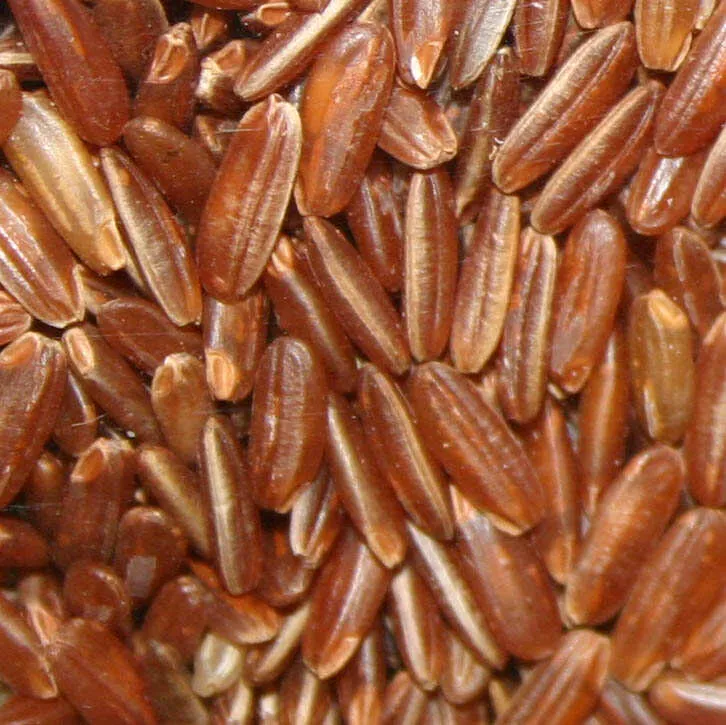 Photo: Sven Teschke, CC BY-SA 2.0 de, via Wikimedia Commons
Brown rice requires longer cooking than white rice due to the intact bran layer: approximately 40–50 minutes stovetop with a 1:2 rice-to-water ratio, or 20–25 minutes in a pressure cooker. The bran layer also makes brown rice more prone to rancidity than white rice due to the fat-containing germ; it should be stored in an airtight container in the refrigerator or freezer and used within 6 months of opening.
The FDA advises consumers who eat rice regularly to vary their grain sources (oats, barley, wheat, etc.) to limit arsenic exposure (FDA, 2016). Specific mitigation strategies for arsenic include:
- Rinsing before cooking: Rinsing has a small effect. One study found it removed about 10% of inorganic arsenic from basmati rice and less from other types (Raab et al., 2009), and an FDA study found a minimal effect on the cooked grain (Gray et al., 2016).
- High water-to-rice ratio cooking: The “pasta method” — cooking rice in a large volume of water (6:1 or higher) then draining — reduced inorganic arsenic by an average of 50% in brown rice (40% in polished long-grain, 60% in parboiled) in FDA testing (Gray et al., 2016). It also removes some iron and B vitamins, though far less from brown rice than from enriched white rice.
- Geographic origin: In Consumer Reports testing, basmati rice from California, India, and Pakistan generally contained less inorganic arsenic than rice labeled as from Arkansas, Louisiana, or Texas, though values vary significantly even within regions (Consumer Reports, 2014).
Brown rice is used in pilafs, grain bowls, stir-fries, sushi (in macrobiotic preparations), brown rice syrup, and rice milk. Germinated (GABA) brown rice is a specialty form popular in Japan.
For how whole-grain fiber interacts with gut bacteria, see our review of fiber and microbiome research. Other whole grains to rotate in, as the FDA suggests, include oats, quinoa and millet, and the blood sugar superfoods guide covers whole grains in the context of glucose control.
Safety, Interactions, and Contraindications
Arsenic exposure: Inorganic arsenic in brown rice is the most clinically significant safety concern. The US FDA finalized a non-binding action level of 100 µg inorganic arsenic per kg for infant rice cereal in 2020 (FDA, 2020); no comparable limit exists for adult rice in the US. EFSA has not set a tolerable daily intake, because inorganic arsenic is a genotoxic carcinogen; its 2024 reassessment instead used a margin-of-exposure approach and concluded that current dietary exposure in European adults raises a health concern (EFSA CONTAM Panel, 2024). Epidemiological studies associate chronic inorganic arsenic intake from diet and drinking water with higher risk of skin, bladder, and lung cancers (EFSA CONTAM Panel, 2024), though absolute risk elevations for individuals consuming typical amounts of brown rice (1–2 servings per day) are difficult to quantify precisely. The FDA and most public health agencies recommend dietary variety rather than rice elimination. Infants, pregnant women, and individuals consuming rice as the predominant starch at multiple meals daily are at highest relative risk and should apply arsenic mitigation strategies and diversify grain choices.
Phytic acid and mineral absorption: The phytate content of brown rice bran can meaningfully reduce iron, zinc, and calcium absorption from a meal. This is most relevant in populations where rice is the dietary foundation and micronutrient diversity is limited. Soaking and germinating reduce phytate content, and vitamin C–rich foods eaten in the same meal can partly offset phytate’s inhibition of non-heme iron absorption (Hallberg et al., 1986).
Celiac disease and gluten sensitivity: Brown rice is naturally gluten-free and is a staple grain for individuals with celiac disease or non-celiac gluten sensitivity, provided it is processed in facilities without gluten cross-contamination.
Drug interactions: The vitamin K content of brown rice is negligible (about 0.2 µg per 100 g cooked; USDA FoodData Central), so it is not a meaningful variable for people keeping vitamin K intake steady on warfarin.
Kidney disease: The phosphorus and potassium content of brown rice is higher than that of white rice (brown; white); individuals with advanced CKD requiring dietary phosphorus restriction should account for this difference.
Frequently Asked Questions
Is brown rice healthier than white rice?
On most measures, yes. Brown rice keeps its bran and germ, so it has about four times the fiber and three times the magnesium of white rice, plus a slightly lower average glycemic index. Enriched white rice has more added folate and iron, and less arsenic. Cohort studies link the swap to lower diabetes risk, though no long-term trials confirm it.
Can I eat brown rice every day?
Most adults can, but the FDA advises people who eat rice often to vary their grains because of inorganic arsenic, which brown rice carries more of than white. Cooking rice in about six parts water and draining it cut inorganic arsenic in brown rice by about half in FDA testing. Infants and pregnant women have the most reason to limit exposure.
Is brown rice good for weight loss?
The evidence is limited. In a 6-week crossover trial in 40 overweight or obese women, 150 g a day of cooked brown rice reduced body weight and waist circumference compared with white rice. Cohort data show that people who eat more whole grains gain slightly less weight over a decade, but those studies cover all whole grains, not brown rice alone.
Is brown rice gluten free?
Yes. Rice contains no gluten, and brown rice is a staple grain for people with celiac disease or non-celiac gluten sensitivity. The only concern is cross-contamination where rice is milled or packed alongside wheat, barley or rye, so people with celiac disease may prefer products labeled gluten-free.
Does brown rice have a lower glycemic index than white rice?
Slightly, on average. The international GI tables list boiled brown rice at 68 and boiled white rice at 73, but values vary widely by variety, and low-GI cultivars of both exist. A 150 g serving of cooked brown rice carries a glycemic load of roughly 24, so portion size matters as much as the type.
References
Show all 16 referencesShow fewer
- Hu, E. A., et al. (2012). White rice consumption and risk of type 2 diabetes: meta-analysis and systematic review. BMJ, 344, e1454.
- Ye, E. Q., Chacko, S. A., Chou, E. L., Kugizaki, M., & Liu, S. (2012). Greater whole-grain intake is associated with lower risk of type 2 diabetes, cardiovascular disease, and weight gain. Journal of Nutrition, 142(7), 1304–1313.
- US Food and Drug Administration. (2016). Arsenic in Rice and Rice Products Risk Assessment.
- Ma, J. F., Yamaji, N., Mitani, N., et al. (2008). Transporters of arsenite in rice and their role in arsenic accumulation in rice grain. PNAS, 105(29), 9931–9935.
- Jolfaie, N. R., Rouhani, M. H., Surkan, P. J., Siassi, F., & Azadbakht, L. (2016). Rice bran oil decreases total and LDL cholesterol in humans: a systematic review and meta-analysis of randomized controlled clinical trials. Hormone and Metabolic Research, 48(7), 417–426.
- Gray, P. J., Conklin, S. D., Todorov, T. I., & Kasko, S. M. (2016). Cooking rice in excess water reduces both arsenic and enriched vitamins in the cooked grain. Food Additives & Contaminants: Part A, 33(1), 78–85.
- Raab, A., Baskaran, C., Feldmann, J., & Meharg, A. A. (2009). Cooking rice in a high water to rice ratio reduces inorganic arsenic content. Journal of Environmental Monitoring, 11(1), 41–44.
- Sun, Q., Spiegelman, D., van Dam, R. M., et al. (2010). White rice, brown rice, and risk of type 2 diabetes in US men and women. Archives of Internal Medicine, 170(11), 961–969.
- Kazemzadeh, M., Safavi, S. M., Nematollahi, S., & Nourieh, Z. (2014). Effect of brown rice consumption on inflammatory marker and cardiovascular risk factors among overweight and obese non-menopausal female adults. International Journal of Preventive Medicine, 5(4), 478–488.
- Consumer Reports. (2014). How much arsenic is in your rice?
- EFSA Panel on Contaminants in the Food Chain (CONTAM). (2024). Update of the risk assessment of inorganic arsenic in food. EFSA Journal, 22(1), e8488.
- US Food and Drug Administration. (2020). FDA issues final guidance for industry on action level for inorganic arsenic in infant rice cereals.
- Atkinson, F. S., Foster-Powell, K., & Brand-Miller, J. C. (2008). International tables of glycemic index and glycemic load values: 2008. Diabetes Care, 31(12), 2281–2283.
- Zuo, X., et al. (2017). Dating rice remains through phytolith carbon-14 study reveals domestication at the beginning of the Holocene. PNAS, 114(25).
- USDA FoodData Central. Rice, brown, long-grain, cooked (FDC 169704).
- Hallberg, L., Brune, M., & Rossander, L. (1986). Effect of ascorbic acid on iron absorption from different types of meals. Human Nutrition: Applied Nutrition, 40(2), 97–113.
More in Grains & Legumes
- Amaranth (Amaranthus spp.)
Amaranth benefits and nutrition: a gluten-free pseudocereal high in lysine, manganese and iron, what human studies show, and its side effects.
- Beans (Phaseolus spp.)
Beans benefits and nutrition: protein, fiber, folate and resistant starch in navy, pinto, black and kidney beans, what studies show, and side effects.
- Black Beans (Phaseolus vulgaris)
Black beans vs pinto beans compared, plus black beans nutrition and benefits: 8.9 g protein and 8.7 g fiber per 100 g cooked, and what studies show.
- Buckwheat (Fagopyrum esculentum)
Is buckwheat gluten free? Yes: it is a seed unrelated to wheat. Buckwheat nutrition, rutin, glycemic index, benefits, allergy and side effects.
- Chickpeas (Cicer arietinum)
Chickpeas (garbanzo beans) benefits and nutrition: 8.9 g protein, 7.6 g fiber and 43% DV folate per 100 g, a GI near 28, what studies show, side effects.
- Edamame (Glycine max)
Is edamame good for you? These young soybeans give 11.9 g complete protein, 5.2 g fiber and 78% DV folate per 100 g. Benefits, downsides and safety.



Curated by Superfoods Advisor Editors·Last updated