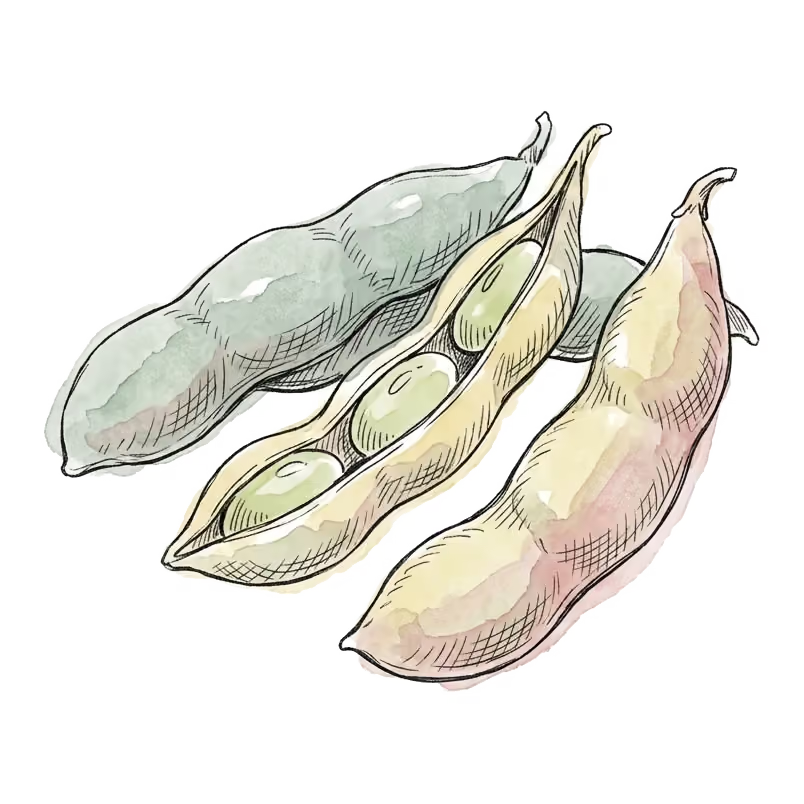
Edamame (Glycine max)
Glycine max · also known as immature soybean, green soybean, maodou, young soybeans
By Superfoods Advisor Editors·July 3, 2026
Is edamame good for you? These young soybeans give 11.9 g complete protein, 5.2 g fiber and 78% DV folate per 100 g. Benefits, downsides and safety.
Edamame is good for most people: these young green soybeans (Glycine max) provide about 11.9 g complete protein, 5.2 g fiber and 78% of the Daily Value for folate per 100 g cooked, for 121 kcal. The main downsides are soy allergy, gas in larger servings, and a vitamin K content that matters for people taking warfarin.
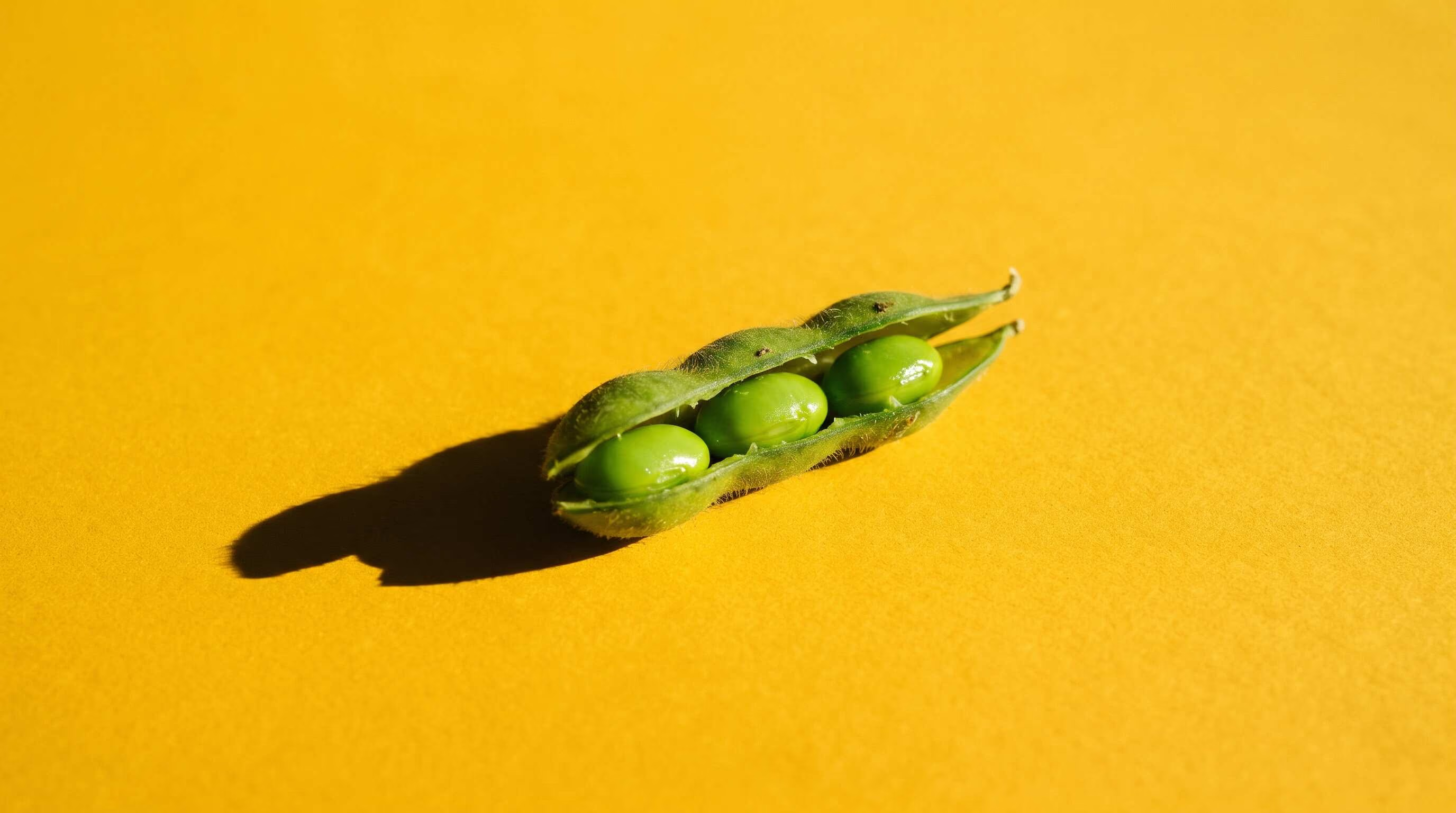
Edamame (枝豆, eda = branch, mame = bean) are whole, immature soybeans harvested at the R6 (full-seed) growth stage — when the green seeds fill the pod cavity but before the bean has dried and hardened into the familiar yellow dry soybean. At this stage, the bean retains a high water content (about 73% in cooked frozen edamame, per USDA FoodData Central), a bright green color, and a sweet, slightly grassy flavor markedly different from the mature legume. The word describes both the whole pod (typically served boiled in salted water as an appetizer or snack) and the shelled beans used in salads, stir-fries, and grain bowls.
Edamame has a long history of consumption in China and Japan. It became widely popular in Japanese cuisine and is now consumed globally, particularly in East Asian restaurants and as a frozen food product in Western markets. Nutritionally, edamame occupies a distinct position from mature dry soybeans (see the soybeans entry): the high water content reduces caloric density, the isoflavone content is lower, and the vitamin and mineral profile reflects the nutritional composition of a vegetable-stage legume rather than a fully matured seed.
Evidence at a glance
Active Compounds
- Complete protein: Like mature soybeans, edamame is one of the few plant foods providing all nine essential amino acids in proportions adequate to meet human requirements. A quantitative review of soy products reported a mean protein digestibility-corrected amino acid score (PDCAAS) of about 0.86, with wide variation by product and processing (van den Berg et al., 2022); that is high for a plant protein, though below the 1.0 typical of milk and egg proteins. This is particularly notable because other plant proteins — beans, lentils, wheat — are typically limiting in at least one essential amino acid.
- Isoflavones: Edamame contains the phytoestrogen isoflavones genistein and daidzein, but at lower concentrations than dried soybeans or soy protein isolate, partly because of its high water content and partly because isoflavones accumulate in the seed as it develops, peaking at maturity (Dhaubhadel et al., 2003). One analysis of 30 soybean varieties found total isoflavones of 0.02–0.12% in edamame varieties versus 0.16–0.25% in mature tofu-type soybeans (Wu et al., 2004). For the evidence base and controversy around soy isoflavones as phytoestrogens, see the soybeans entry.
- Vitamin K (phylloquinone): Edamame is a notable source of vitamin K1, providing about 27 µg per 100 g cooked — roughly 22% of the adult daily value (USDA FoodData Central). Vitamin K is essential for coagulation (carboxylation of clotting factors II, VII, IX, X) and for bone metabolism (carboxylation of osteocalcin and matrix Gla protein). That is well above most mature legumes; cooked lentils, for example, provide about 2 µg per 100 g (USDA FoodData Central).
- Folate: A 100 g serving of cooked edamame provides about 311 µg DFE of folate — approximately 78% of the adult daily value (USDA FoodData Central). That is more than cooked lentils, themselves a well-known folate source, at 181 µg DFE (USDA FoodData Central). Folate status matters most for people who could become pregnant, because low folate in early pregnancy raises the risk of neural tube defects.
- Fiber: Edamame provides about 5.2 g dietary fiber per 100 g cooked (USDA FoodData Central), drawn from the seed coat and cotyledon cell walls, which in mature soybeans are made up of pectin-rich, hemicellulose and cellulose fractions (Ouhida et al., 2002).
- Oligosaccharides (FODMAPs): Like other legumes, edamame contains fermentable oligosaccharides. The Monash University FODMAP app, as quoted by dietitians, currently lists about 75 g of shelled edamame as a low-FODMAP serving, with larger servings rated moderate or high; older resources may still give a higher figure. Individuals following a low-FODMAP diet for irritable bowel syndrome (IBS) symptom management are typically advised to keep to that serving size.
- Choline: Edamame contains meaningful choline content (approximately 56 mg per 100 g, per USDA FoodData Central), contributing to the recommended intake of this essential nutrient; the large majority of people in the US eat less than the adequate intake (Linus Pauling Institute). Choline is required for phosphatidylcholine synthesis, neurotransmitter (acetylcholine) production, and methyl group donation.
Nutritional Profile
Per 100 g edamame, frozen, prepared (USDA FoodData Central, SR Legacy 168411):
| Nutrient | Amount | % DV |
|---|---|---|
| Energy | 121 kcal | — |
| Protein | 11.9 g | — |
| Total fat | 5.2 g | — |
| Saturated fat | 0.6 g | — |
| Carbohydrate | 8.9 g | — |
| Dietary fiber | 5.2 g | — |
| Sugars | 2.2 g | — |
| Folate | 311 µg DFE | 78% |
| Vitamin K | 27 µg | 22% |
| Vitamin C | 6.1 mg | 7% |
| Iron | 2.3 mg | 13% |
| Magnesium | 64 mg | 15% |
| Potassium | 436 mg | 9% |
| Zinc | 1.4 mg | 13% |
| Calcium | 63 mg | 5% |
The fat profile skews toward polyunsaturated fatty acids (linoleic acid, alpha-linolenic acid), with negligible trans fat and minimal saturated fat. Per-serving caloric density is substantially lower than mature dry soybeans due to the high water content.
Evidence for Purported Benefits
Protein Adequacy for Plant-Based Diets
Evidence:Strong Amino acid profile and protein content are measured directly in food composition data.
Edamame’s complete amino acid profile is well characterized by multiple food composition analyses and is not a matter of active scientific debate. At approximately 11–12 g protein per 100 g cooked, edamame provides substantially more protein per calorie than most vegetables. By weight it is close to hard-boiled egg (12.6 g per 100 g) but well under half of roasted chicken breast (31 g) (USDA FoodData Central; USDA FoodData Central). For individuals following vegetarian or vegan diets, edamame offers a convenient, minimally processed complete protein source.
Cardiovascular Risk Markers
Evidence:Limited Soy protein trials show about 4.8 mg/dL lower LDL; no cardiovascular trials have tested edamame itself.
Soy protein modestly lowers LDL cholesterol in trials, but edamame itself has not been studied for heart outcomes. A landmark meta-analysis of soy protein interventions (Anderson et al., 1995, New England Journal of Medicine) sparked significant interest in soy for cholesterol reduction; subsequent systematic reviews have generally confirmed a modest LDL-lowering effect of soy protein (a 2019 meta-analysis of the 46 trials the FDA identified found an average drop of about 4.8 mg/dL, roughly 3–4%; Blanco Mejia et al., 2019), although in 2017 the FDA proposed revoking its 1999 authorized health claim for soy protein and heart disease, citing inconsistent trial results. Whether the cardiovascular effects observed with soy protein are attributable to the protein itself, the isoflavones, or displacement of saturated fat-containing foods is not fully resolved. No cardiovascular trials have tested edamame itself, so whether it has the same modest effect as soy protein in the trials is unknown.
Bone Health and Vitamin K
Evidence:Preliminary Vitamin K links to fracture risk are observational, supplement trials are inconclusive, and none studied legumes.
Vitamin K is required for carboxylation of osteocalcin and matrix Gla protein, bone-associated proteins involved in calcium binding and skeletal mineralization. Some, but not all, observational studies link higher vitamin K intake or status with lower fracture risk and higher bone mineral density, and supplementation trials have been inconclusive (Linus Pauling Institute). A meta-analysis of five cohort studies found higher dietary phylloquinone was associated with a modestly lower fracture risk (Hao et al., 2017). None of this work looked at legumes specifically; green vegetables are the main dietary source of vitamin K1. Edamame’s contribution of approximately 22% of the daily vitamin K value per serving is noteworthy for a legume, which typically provides far less vitamin K than leafy vegetables.
Pregnancy and Neural Tube Defects (Folate)
Evidence:Moderate Folic acid supplements prevent neural tube defects with high certainty; edamame is a rich folate source alongside them, not instead.
The link between folate and neural tube defects is one of the most firmly established diet-disease relationships in nutrition, but the trial evidence is for folic acid supplements. The US Preventive Services Task Force recommends that anyone planning to or able to become pregnant take a daily supplement with 400–800 µg of folic acid, rating the evidence of benefit as high certainty (USPSTF, 2023). Edamame’s folate content (approximately 78% DV per 100 g serving) makes it an excellent food source alongside that supplement, not in place of it, and it also provides protein and iron.
Typical Use and Preparation
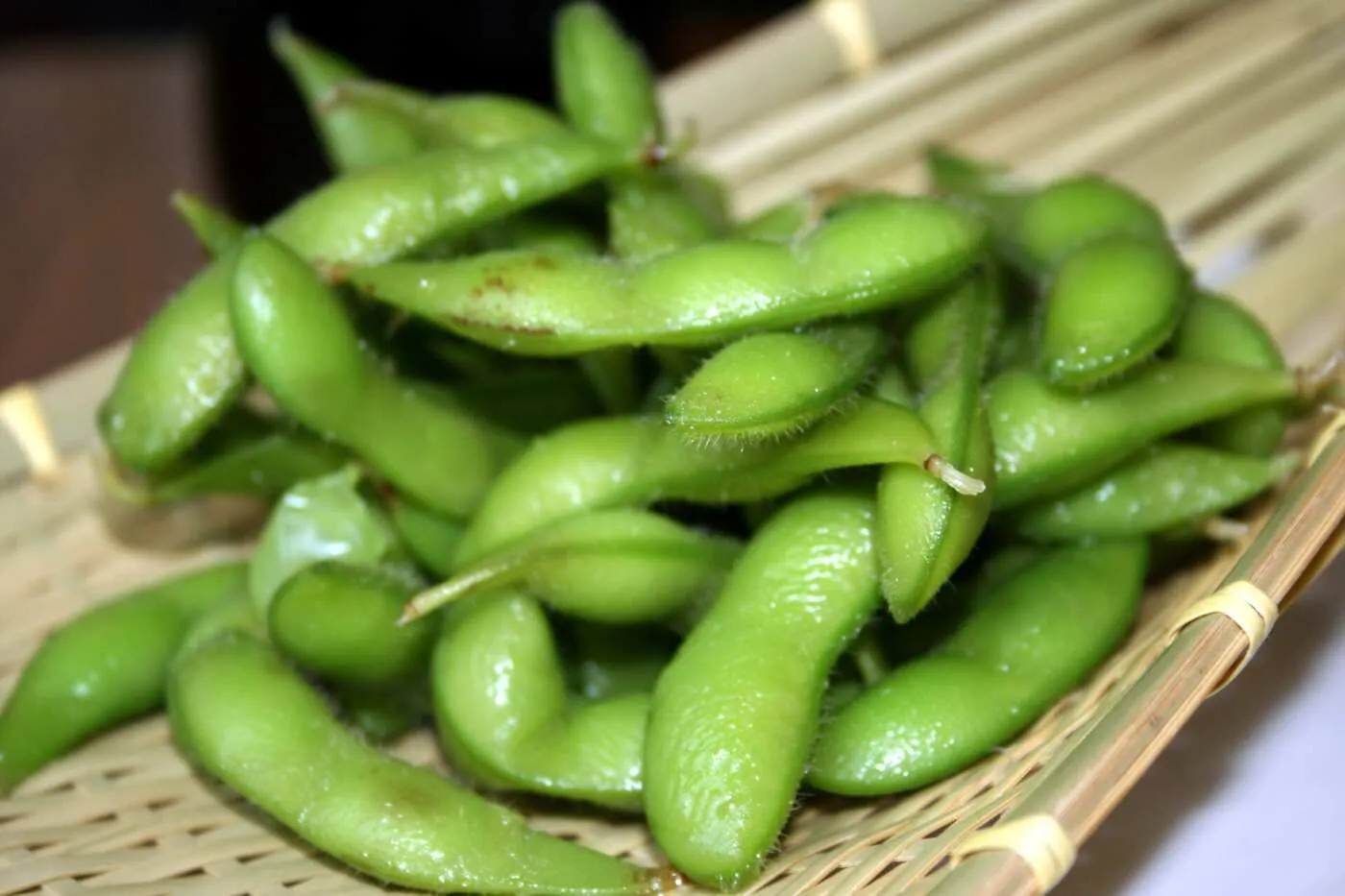 Photo: Tammy Green (aka Zesmerelda) from Chicago Upscale Dining + Lounge Republic Pan-A, CC BY-SA 2.0, via Wikimedia Commons
Fresh edamame pods are boiled or steamed in salted water for 5–7 minutes until the beans are tender but still slightly firm — overcooking dulls the color and flavor. The pods themselves are not eaten; the beans are squeezed directly into the mouth. Frozen edamame (shelled or in-pod) is available year-round and retains the majority of the nutritional profile of fresh, as blanching before freezing inactivates enzymes that would otherwise degrade color and vitamins during storage.
Shelled edamame beans are widely used in: Japanese rice dishes (takikomi gohan), Korean bibimbap, grain bowls, pasta dishes as a protein addition, hummus-style dips, stir-fries, and fresh salads. They are sold as a snack food in both roasted/dried (significantly higher caloric density) and fresh/frozen forms; the nutritional data above refers to the boiled or steamed fresh form.
Edamame requires no soaking (unlike dried beans) and is among the most convenient whole-food protein sources. It is an excellent finger food for children and a practical addition to meals requiring little preparation. Salted edamame pods are a traditional accompaniment to beer in Japanese izakaya culture.
The plant-based protein guide covers edamame alongside quinoa, tempeh, and hemp seeds as complete plant proteins. Soy’s role in cholesterol and heart health is covered in the heart health superfoods guide.
Safety, Interactions, and Contraindications
Soy allergy: Soy is one of the nine major food allergens recognized by the FDA (required label declaration) (FDA). Soy allergy is most common in infants and children and is frequently outgrown; in one referral cohort, resolution was predicted in 45% of affected children by age 6 and 69% by age 10 (Savage et al., 2010). Individuals with known soy allergy must avoid edamame. Cross-reactivity with other legumes (peanut, lentil, chickpea) is possible but not universal; consult an allergist for individual assessment.
Warfarin (anticoagulant) interaction: The vitamin K content of edamame is relevant for individuals taking warfarin (Coumadin). Vitamin K opposes warfarin’s anticoagulant mechanism by promoting clotting factor synthesis. Individuals on warfarin should maintain consistent vitamin K intake rather than abruptly increasing or decreasing edamame consumption; large changes in intake can destabilize INR. People on warfarin are generally advised to keep vitamin K intake steady rather than avoid it (Linus Pauling Institute).
FODMAP consideration: As noted above, edamame contains fermentable oligosaccharides and is rated low FODMAP only in small servings. Individuals with IBS following a low-FODMAP diet should limit serving size to approximately 75 g shelled edamame and consult a registered dietitian for individualized guidance.
Thyroid function: Soy isoflavones can inhibit thyroid peroxidase in vitro and in rats, though the rats’ thyroid hormone levels stayed normal (Doerge & Sheehan, 2002), a concern that has been extrapolated to clinical hypothyroidism risk. A review of 14 human trials found little effect of soy on thyroid function in healthy people with adequate iodine intake (Messina & Redmond, 2006). Individuals with hypothyroidism taking levothyroxine should consume edamame (and soy foods generally) several hours apart from their medication, as case reports suggest soy can reduce levothyroxine absorption (the only randomized crossover trial found no difference; Gatta et al., 2023). See the soybeans entry for full thyroid discussion.
Frequently Asked Questions
What is edamame?
Edamame is soybeans harvested young, while the seeds are still green and soft inside the pod. The name is Japanese for “branch bean.” It is usually boiled or steamed in salted water and eaten from the pod as a snack, or shelled for salads, rice dishes and bowls. Frozen edamame is sold shelled or in the pod year-round.
Is edamame a soybean?
Yes. Edamame and mature soybeans are the same plant, Glycine max, picked at different stages. Edamame is harvested at the green, full-seed stage, about 73% water when cooked; mature soybeans are left to dry and harden. As a result edamame has fewer calories per gram, a sweeter flavor and lower isoflavone levels than dry soybeans.
Is there a downside to edamame?
For most people, few. Soy is a major allergen, so anyone with soy allergy must avoid it. Its fermentable oligosaccharides can cause gas and bloating, especially in IBS above about 75 g shelled. Its vitamin K means people on warfarin should keep intake steady, and people taking levothyroxine are advised to separate soy foods from their dose by several hours.
Is it okay to eat edamame daily?
For most healthy adults, the studies summarized here give no reason to avoid edamame as a daily food within a varied diet. A review of 14 human trials found little effect of soy on thyroid function in healthy people with adequate iodine intake. People with soy allergy, IBS, warfarin therapy or thyroid medication have specific reasons to talk to a clinician first.
Does edamame have protein?
Yes, more than most plant foods. Cooked edamame has about 11.9 g protein per 100 g, close to a hard-boiled egg at 12.6 g by weight. Soy protein contains all nine essential amino acids, and soy products averaged a PDCAAS of about 0.86, high for a plant protein. That makes edamame a convenient complete protein for vegetarian and vegan diets.
Is edamame a natural laxative?
Not in a medical sense, but it is a good fiber source. A 100 g serving of cooked edamame provides about 5.2 g of fiber, and its oligosaccharides are fermented in the colon. In some people, especially those not used to legumes, a large serving may cause gas or looser stools. No trials have tested edamame for constipation.
References
Show all 17 referencesShow fewer
- Anderson, J. W., et al. (1995). Meta-analysis of the effects of soy protein intake on serum lipids. New England Journal of Medicine, 333(5), 276–282.
- USDA FoodData Central. Edamame, frozen, prepared. SR Legacy, FDC ID 168411.
- Monash University FODMAP Diet App. Edamame (shelled). Monash University. (Serving data is published in the app only.)
- van den Berg, L. A., et al. (2022). Protein quality of soy and the effect of processing: A quantitative review. Frontiers in Nutrition, 9, 1004754.
- Wu, Q., et al. (2004). LC/UV/ESI-MS analysis of isoflavones in Edamame and Tofu soybeans. Journal of Agricultural and Food Chemistry, 52(10), 2763–2769.
- Dhaubhadel, S., et al. (2003). Isoflavonoid biosynthesis and accumulation in developing soybean seeds. Plant Molecular Biology, 53(6), 733–743.
- Ouhida, I., et al. (2002). Soybean (Glycine max) cell wall composition and availability to feed enzymes. Journal of Agricultural and Food Chemistry, 50(7), 1933–1938.
- Blanco Mejia, S., et al. (2019). A meta-analysis of 46 studies identified by the FDA demonstrates that soy protein decreases circulating LDL and total cholesterol concentrations in adults. Journal of Nutrition, 149(6), 968–981.
- Hao, G., et al. (2017). Vitamin K intake and the risk of fractures: A meta-analysis. Medicine, 96(17), e6725.
- US Preventive Services Task Force (2023). Folic acid supplementation to prevent neural tube defects: reaffirmation recommendation statement. JAMA, 330(5), 454–459.
- Savage, J. H., et al. (2010). The natural history of soy allergy. Journal of Allergy and Clinical Immunology, 125(3), 683–686.
- Doerge, D. R., & Sheehan, D. M. (2002). Goitrogenic and estrogenic activity of soy isoflavones. Environmental Health Perspectives, 110(Suppl 3), 349–353.
- Messina, M., & Redmond, G. (2006). Effects of soy protein and soybean isoflavones on thyroid function in healthy adults and hypothyroid patients: a review of the relevant literature. Thyroid, 16(3), 249–258.
- Gatta, E., et al. (2023). Interference or noninterference between soy and levothyroxine: That is the question. A narrative review of literature. Endocrine Practice, 29(11).
- Linus Pauling Institute. Vitamin K. Micronutrient Information Center.
- Linus Pauling Institute. Choline. Micronutrient Information Center.
- U.S. Food and Drug Administration. Food Allergies.
Related content
More in Grains & Legumes
- Amaranth (Amaranthus spp.)
Amaranth benefits and nutrition: a gluten-free pseudocereal high in lysine, manganese and iron, what human studies show, and its side effects.
- Beans (Phaseolus spp.)
Beans benefits and nutrition: protein, fiber, folate and resistant starch in navy, pinto, black and kidney beans, what studies show, and side effects.
- Black Beans (Phaseolus vulgaris)
Black beans vs pinto beans compared, plus black beans nutrition and benefits: 8.9 g protein and 8.7 g fiber per 100 g cooked, and what studies show.
- Brown Rice (Oryza sativa)
Brown rice vs white rice: brown keeps the bran, with 4x the fiber and 3x the magnesium, a slightly lower GI and more arsenic. Benefits and evidence.
- Buckwheat (Fagopyrum esculentum)
Is buckwheat gluten free? Yes: it is a seed unrelated to wheat. Buckwheat nutrition, rutin, glycemic index, benefits, allergy and side effects.
- Chickpeas (Cicer arietinum)
Chickpeas (garbanzo beans) benefits and nutrition: 8.9 g protein, 7.6 g fiber and 43% DV folate per 100 g, a GI near 28, what studies show, side effects.


Curated by Superfoods Advisor Editors·Last updated