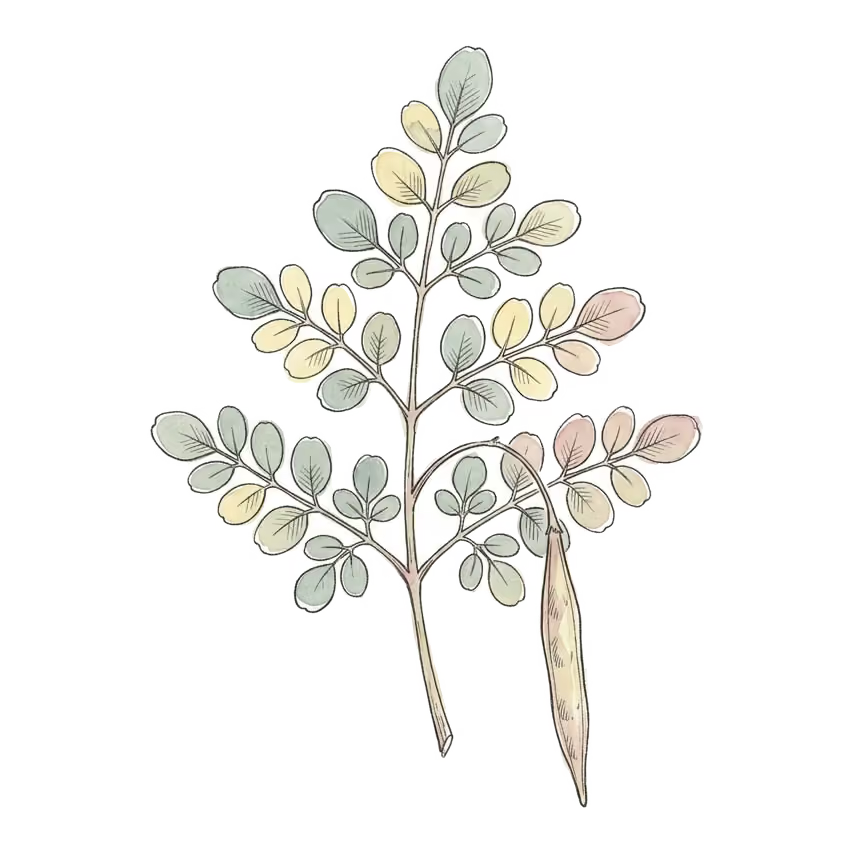
Moringa (Moringa oleifera)
Moringa oleifera · also known as drumstick tree, miracle tree, ben oil tree, horseradish tree
By Superfoods Advisor Editors·July 3, 2026
What is moringa good for? Moringa leaf and powder nutrition, what trials show for blood sugar, cholesterol and lactation, and who should avoid it.
Moringa (Moringa oleifera), also called the drumstick tree, is a tropical tree whose leaves are eaten as a vegetable and sold as a dried powder. Its leaves are nutritious, with 9.4 g protein, 4.0 mg iron and 51.7 mg vitamin C per 100 g raw, but claims for blood sugar, cholesterol and lactation have not held up in human trials.
The tree belongs to the family Moringaceae and is native to the sub-Himalayan tracts of India, Pakistan, Bangladesh and Afghanistan (Fahey, 2005). It is now cultivated across tropical and subtropical Africa, Latin America and Southeast Asia. In South Asian traditional medicine, nearly every part of the plant, from leaves and pods to seeds, roots and bark, has been used for a wide range of ailments (Anwar et al., 2007), and the leaves were given to promote breast-milk production.
The nickname “miracle tree” reflects its tolerance of drought and poor soils as much as its leaf nutrients. Moringa powder, teas and capsules are now sold widely in Europe and North America. Research on its compounds has grown since the 2000s, but most human studies are small and preliminary.
Evidence at a glance
Active Compounds
Moringa leaves contain an unusually diverse array of bioactive phytochemicals. The most pharmacologically studied include:
Isothiocyanates: Moringa isothiocyanate-1 (4-[(α-L-rhamnosyloxy)benzyl] isothiocyanate, also referred to as moringin) is the hydrolysis product of glucomoringin, the main glucosinolate of Moringa species; glucomoringin is rare elsewhere, though it has been found in some populations of the Brassicaceae species Noccaea caerulescens (de Graaf et al., 2015). It has demonstrated antimicrobial and anti-inflammatory properties in cell and animal studies. Isothiocyanates in general are known to activate the Nrf2 pathway, which upregulates endogenous antioxidant enzymes.
Chlorogenic acid: A hydroxycinnamic acid found in high concentrations in moringa leaves. Experimental studies suggest chlorogenic acid may blunt postprandial blood glucose by slowing intestinal glucose absorption, though human evidence specific to moringa remains limited.
Quercetin and kaempferol: Flavonoid glycosides present in significant amounts. Both have well-characterized antioxidant and anti-inflammatory activity in vitro; their bioavailability from whole leaf sources varies depending on preparation method.
Zeatin: A plant cytokinin listed among moringa’s characteristic constituents (Anwar et al., 2007). Its health relevance in humans has not been studied.
Proteins and essential amino acids: Dried moringa leaf is relatively protein-rich, though reported crude protein varies widely between samples; one 2026 analysis measured about 16% and found all essential amino acids present, with lysine and the sulfur amino acids limiting (Harasym et al., 2026).
Nutritional Profile
The following values are for raw moringa leaves per 100 g edible portion (USDA FoodData Central, SR Legacy, “Drumstick leaves, raw”):
| Nutrient | Amount | % DV |
|---|---|---|
| Energy | 64 kcal | — |
| Protein | 9.4 g | — |
| Total fat | 1.4 g | — |
| Carbohydrates | 8.3 g | — |
| Dietary fiber | 2.0 g | — |
| Vitamin C | 51.7 mg | 57% |
| Vitamin A (RAE) | 378 µg | 42% |
| Folate | 40 µg | 10% |
| Calcium | 185 mg | 14% |
| Iron | 4.0 mg | 22% |
| Potassium | 337 mg | 7% |
| Magnesium | 42 mg | 10% |
Raw leaves are about 79% water in the USDA data, so fully dried leaf powder is roughly 4- to 5-fold more concentrated by weight for nutrients that survive drying. However, vitamin C is substantially degraded by heat drying, so fresh leaves remain a superior source of ascorbic acid.
Evidence for Purported Benefits
Blood Glucose Regulation
Evidence:Limited A small single-meal study was positive; a meta-analysis of nine trials found no effect. Results conflict, and certainty is very low.
Following a 2007 rat study by Ndong et al. (Journal of Clinical Biochemistry and Nutrition, 40(3):229–233) reporting improved glucose tolerance with oral moringa, a 2018 study by Leone et al. (Nutrients, 10(10):1494) in 17 diabetic and 10 healthy adults found that adding 20 g of dried moringa leaf powder to a single meal lowered the postprandial blood glucose rise in the diabetic participants compared to the control meal, with no difference in healthy subjects. The proposed mechanism involves inhibition of carbohydrate-digesting enzymes; the Leone study showed in vitro inhibition of α-amylase by the leaf powder. A 2025 meta-analysis of nine randomized trials found no significant effect of moringa on glycemic indices, rating the certainty of evidence very low (Crișan et al., 2025). Larger confirmatory trials are needed before clinical recommendations can be made.
Lipid Profile Modification
Evidence:Insufficient Rodent studies were positive, but a meta-analysis of nine small human trials found no effect on blood lipids.
Rodent studies have reported reductions in total and LDL cholesterol with moringa leaf preparations, but a 2025 meta-analysis of nine small randomized trials in adults found no significant effect on the lipid profile, with very low certainty of evidence (Crișan et al., 2025). Claims of cholesterol benefit should be interpreted cautiously.
Anti-inflammatory Effects
Evidence:Lab & animal only Cell and rodent studies broadly agree; there are too few human studies to judge.
Multiple in vitro and rodent studies have documented suppression of pro-inflammatory cytokines (TNF-α, IL-6, IL-1β) by moringa leaf extracts, attributed primarily to isothiocyanates and flavonoids. A 2015 review by Leone et al. (International Journal of Molecular Sciences, 16(6):12791–12835) found cell and animal studies broadly concordant but noted that there are still too few human studies. Translation from animal models to clinical benefit has not yet been established.
Antioxidant Capacity
Evidence:Preliminary One 90-woman study without placebo or blinding reported higher antioxidant enzyme levels.
Several small studies have reported increases in serum antioxidant biomarkers following moringa leaf supplementation. A 2014 study by Kushwaha et al. (Journal of Food Science and Technology, 51(11):3464–3469) in 90 postmenopausal women found that 7 g/day of moringa leaf powder for 3 months increased glutathione peroxidase (+18%) and superoxide dismutase (+10%) and lowered malondialdehyde (−16%) compared with baseline, with an unsupplemented comparison group. Methodological limitations including lack of placebo control and blinding constrain interpretation.
Lactation Support
Evidence:Insufficient Traditional use; the one small randomized trial found no significant increase in milk volume.
Traditional use as a galactagogue is widespread in the Philippines and parts of Africa. A small double-blind randomized trial in 88 Thai postpartum women (Fungtammasan & Phupong, 2022, European Journal of Obstetrics & Gynecology and Reproductive Biology: X, 16:100171) found no statistically significant difference in breast milk volume on day 3 with 900 mg/day moringa leaf capsules, although the moringa group’s median volume was numerically higher. Larger, rigorous trials are needed.
Typical Use and Preparation
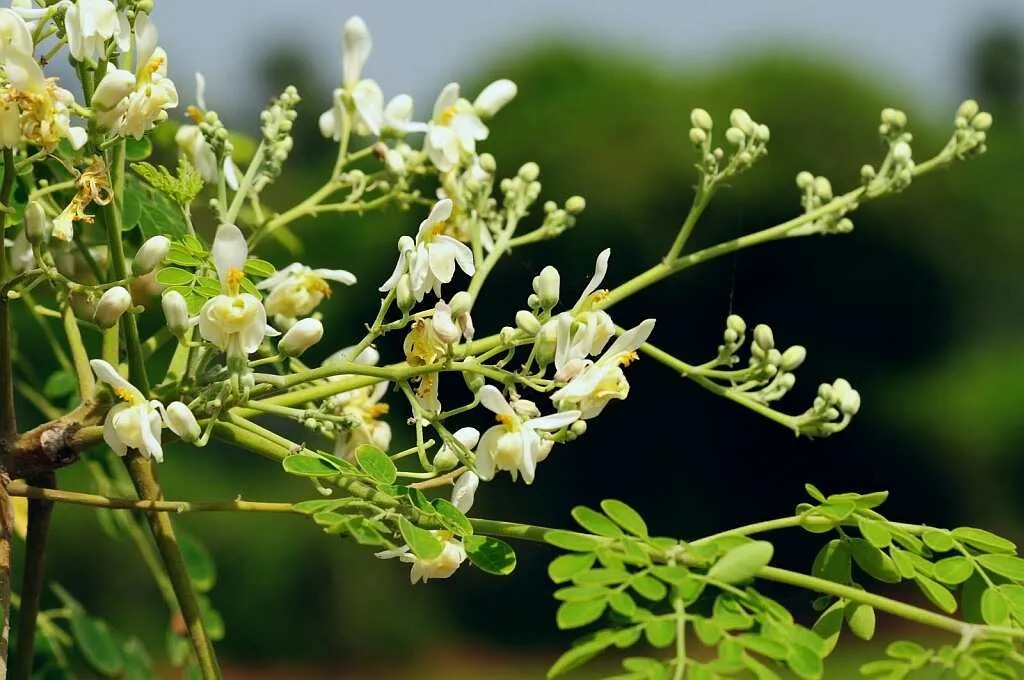 Photo: Venkatx5, CC BY-SA 3.0, via Wikimedia Commons
Fresh moringa leaves are consumed as cooked vegetables in South Asian, African, and Southeast Asian cuisines — stir-fried, added to soups, or blanched and used in salads. Cooking reduces the content of heat-labile vitamin C but does not substantially diminish iron, calcium, or protein. The slightly bitter taste of raw leaves mellows considerably with gentle sautéing.
Dried and powdered moringa leaf (commonly sold as a supplement) is typically added to smoothies, juices, yogurt, or porridge in amounts of 1–3 teaspoons (approximately 2–6 g) per serving. Bioavailability of fat-soluble vitamins (A, K, E) is enhanced when moringa is consumed with a dietary fat source.
Moringa pods (drumsticks) are a separate culinary ingredient prepared by simmering in curries; their nutritional profile differs meaningfully from leaves.
The blood sugar and metabolic health guide offers context on which foods have the stronger glucose evidence, useful when weighing moringa’s preliminary findings. Moringa powder is often blended into drinks alongside other green powders such as spirulina and wheatgrass; the superfood smoothie recipes show common combinations.
Safety, Interactions, and Contraindications
Moringa leaves consumed as a food in culinary quantities are generally regarded as safe for most adults. A 2015 safety review found no adverse effects reported in the human studies of powdered whole leaf published to that point, though those studies were few and small (Stohs & Hartman, 2015).
Pregnancy: Moringa root and bark have a history of folk use as abortifacients, and an aqueous root extract left the uterus of pregnant rats unreceptive to implantation (Prakash et al., 1987). Moringa root and bark preparations are contraindicated during pregnancy. Leaf extract is not exempt: in a rat screen of Indian folk abortifacients, a moringa leaf extract given for 10 days after mating was 100% abortive at a dose equivalent to 175 mg/kg of dried plant material (Nath et al., 1992). Leaves are eaten as a vegetable during pregnancy in many cultures, but concentrated leaf supplements and extracts have not been adequately evaluated in pregnant people and should be avoided until safety is established.
Anticoagulant/antiplatelet medications: Moringa leaves contain vitamin K1 (phylloquinone), as other leafy greens do (Sriwichai et al., 2021), and vitamin K antagonizes warfarin and similar anticoagulants. No human study of a moringa–warfarin interaction was found. Individuals on warfarin (Coumadin) or other vitamin K-sensitive anticoagulants should maintain consistent moringa intake and monitor INR with their prescribing clinician.
Thyroid medications: In a rat study, moringa leaf extract lowered serum T3 by about 30% and raised T4, consistent with reduced conversion of T4 to T3 (Tahiliani & Kar, 2000); no human data are available. Individuals on levothyroxine or other thyroid medications should consult their healthcare provider before supplementing.
Hypoglycemic medications: Given preliminary evidence for blood glucose-lowering effects, concurrent use with insulin or oral hypoglycemic agents warrants monitoring for additive effects.
Other medications: Moringa leaf extracts inhibit CYP3A4 and other drug-metabolizing enzymes in vitro, but in a small study of 11 adults with HIV, 1.85 g/day of leaf powder for 14 days did not significantly change nevirapine levels (Monera-Penduka et al., 2017). Interactions with other drugs have not been studied in humans.
This content is for educational purposes only. It does not constitute medical advice, diagnosis, or treatment. Consult a qualified healthcare provider before making changes to your diet or supplement regimen.
Frequently Asked Questions
What is moringa good for?
Moringa is best supported as a food. Its leaves are a good plant source of protein, iron, calcium, vitamin A and vitamin C, and dried powder concentrates most of these. Claimed medicinal uses, including lowering blood sugar or cholesterol, reducing inflammation and boosting breast milk, rest on lab and animal work or small human trials that have not been confirmed.
Is moringa good for diabetes?
Evidence is conflicting. In one study of 17 adults with diabetes, adding 20 g of moringa leaf powder to a single meal reduced the post-meal glucose rise. A 2025 meta-analysis of nine randomized trials found no significant effect on glucose, with very low certainty. Moringa is not a diabetes treatment, and people on insulin or glucose-lowering drugs should ask their clinician before supplementing.
What should you avoid when taking moringa?
Avoid moringa root and bark during pregnancy; both have folk use as abortifacients, and concentrated leaf extracts are also untested in pregnancy. People on warfarin should keep intake consistent because of its vitamin K1. A rat study suggested effects on thyroid hormones, so anyone on levothyroxine should consult their clinician first. Glucose-lowering medicines warrant monitoring too.
Does moringa help with weight loss?
There is no good human evidence that moringa causes weight loss. Moringa leaves are relatively low in energy, 64 kcal per 100 g raw, and powder is used in small amounts, typically 2–6 g a serving, so it adds nutrients rather than calories. Claims of fat-burning effects are not supported by human data.
What are the benefits of moringa for women?
Two uses are often promoted. For lactation, a randomized trial of 88 postpartum women found no significant increase in milk volume with moringa capsules. In 90 postmenopausal women, 7 g/day of leaf powder raised antioxidant enzyme levels, but the study had no placebo or blinding. Women who are pregnant should avoid moringa supplements and extracts until safety is established.
How much moringa powder per day?
There is no established dose. Culinary use is typically 1–3 teaspoons, roughly 2–6 g, mixed into smoothies, yogurt or porridge, and the human studies used between 1.85 g and 20 g of leaf powder. A 2015 safety review found no adverse effects reported in the small human studies to date. Check with a clinician if you take prescription medicines.
References
Show all 17 referencesShow fewer
- Fahey, J. W. (2005). Moringa oleifera: A review of the medical evidence for its nutritional, therapeutic, and prophylactic properties. Part 1. Trees for Life Journal, 1, 5. (Archived copy; the journal’s site is offline.)
- Leone, A., Bertoli, S., Di Lello, S., Bassoli, A., Ravasenghi, S., Borgonovo, G., Forlani, F., & Battezzati, A. (2018). Effect of Moringa oleifera leaf powder on postprandial blood glucose response: In vivo study on Saharawi people living in refugee camps. Nutrients, 10(10), 1494.
- Fungtammasan, S., & Phupong, V. (2022). The effect of Moringa oleifera capsule in increasing breast milk volume in early postpartum patients: A double-blind, randomized controlled trial. European Journal of Obstetrics & Gynecology and Reproductive Biology: X, 16, 100171.
- Leone, A., Spada, A., Battezzati, A., Schiraldi, A., Aristil, J., & Bertoli, S. (2015). Cultivation, genetic, ethnopharmacology, phytochemistry and pharmacology of Moringa oleifera leaves. International Journal of Molecular Sciences, 16(6), 12791–12835.
- Ndong, M., Uehara, M., Katsumata, S., & Suzuki, K. (2007). Effects of oral administration of Moringa oleifera Lam on glucose tolerance in Goto-Kakizaki and Wistar rats. Journal of Clinical Biochemistry and Nutrition, 40(3), 229–233.
- Kushwaha, S., Chawla, P., & Kochhar, A. (2014). Effect of supplementation of drumstick (Moringa oleifera) and amaranth (Amaranthus tricolor) leaves powder on antioxidant profile and oxidative status among postmenopausal women. Journal of Food Science and Technology, 51(11), 3464–3469.
- Anwar, F., Latif, S., Ashraf, M., & Gilani, A. H. (2007). Moringa oleifera: A food plant with multiple medicinal uses. Phytotherapy Research, 21(1), 17–25.
- Harasym, J., et al. (2026). Tryptophan-rich Moringa oleifera leaves expand plant protein potential: Nutritional characteristics and spectroscopic fingerprinting. Molecules, 31(7), 1188.
- USDA FoodData Central. Drumstick leaves, raw (FDC ID 168416), SR Legacy.
- Stohs, S. J., & Hartman, M. J. (2015). Review of the safety and efficacy of Moringa oleifera. Phytotherapy Research, 29(6), 796–804.
- Prakash, A. O., Pathak, S., Shukla, S., & Mathur, R. (1987). Uterine histoarchitecture during pre and post-implantation periods of rats treated with aqueous extract of Moringa oleifera Lam. Acta Europaea Fertilitatis, 18(2), 129–135.
- Nath, D., Sethi, N., Singh, R. K., & Jain, A. K. (1992). Commonly used Indian abortifacient plants with special reference to their teratologic effects in rats. Journal of Ethnopharmacology, 36(2), 147–154.
- Sriwichai, W., Collin, M., & Avallone, S. (2021). Partial disintegration of vegetable cell wall during cooking improves vitamin K1 (phylloquinone) bioaccessibility in in vitro digestion. International Journal for Vitamin and Nutrition Research, 91(5–6), 439–450.
- Tahiliani, P., & Kar, A. (2000). Role of Moringa oleifera leaf extract in the regulation of thyroid hormone status in adult male and female rats. Pharmacological Research, 41(3), 319–323.
- Monera-Penduka, T. G., et al. (2017). Effect of Moringa oleifera Lam. leaf powder on the pharmacokinetics of nevirapine in HIV-infected adults: A one sequence cross-over study. AIDS Research and Therapy, 14, 12.
- de Graaf, R. M., et al. (2015). Isolation and identification of 4-α-rhamnosyloxy benzyl glucosinolate in Noccaea caerulescens showing intraspecific variation. Phytochemistry, 110, 166–171.
- Crișan, D., et al. (2025). Effects of Moringa oleifera Lam. supplementation on cardiometabolic outcomes: A meta-analysis of randomized controlled trials with GRADE assessment. Nutrients, 17(22), 3501.
More in Leafy Greens
- Arugula (Eruca vesicaria ssp. sativa)
Is arugula good for you? Nutrition per 100 g, nitrate and blood pressure, vitamin K, cancer research and safety for this peppery cruciferous green.
- Barley Grass (Hordeum vulgare)
Barley grass benefits weighed against the evidence: antioxidant and blood sugar research, whether it contains gluten, vitamin K, dosing and safety.
- Bok Choy (Brassica rapa subsp. chinensis)
Bok choy benefits and nutrition: well-absorbed calcium, vitamin C and K per 100 g, glucosinolates, the raw-intake thyroid caveat, and how to cook it.
- Broccoli Sprouts (Brassica oleracea var. italica sprouts)
Broccoli sprouts benefits: why 3-day sprouts carry 10–100x more glucoraphanin than broccoli, what human trials found, how to eat them, and sprout safety.
- Collard Greens (Brassica oleracea var. viridis)
Health benefits of collard greens: vitamin K, calcium and fiber per 100 g, what research shows for bones and heart, cooking tips, and warfarin cautions.
- Kale (Brassica oleracea var. sabellica)
Is kale good for you? Kale nutrition per 100 g, what research shows for heart, eyes and bones, kale vs spinach, how much is too much, and safety.

Curated by Superfoods Advisor Editors·Last updated