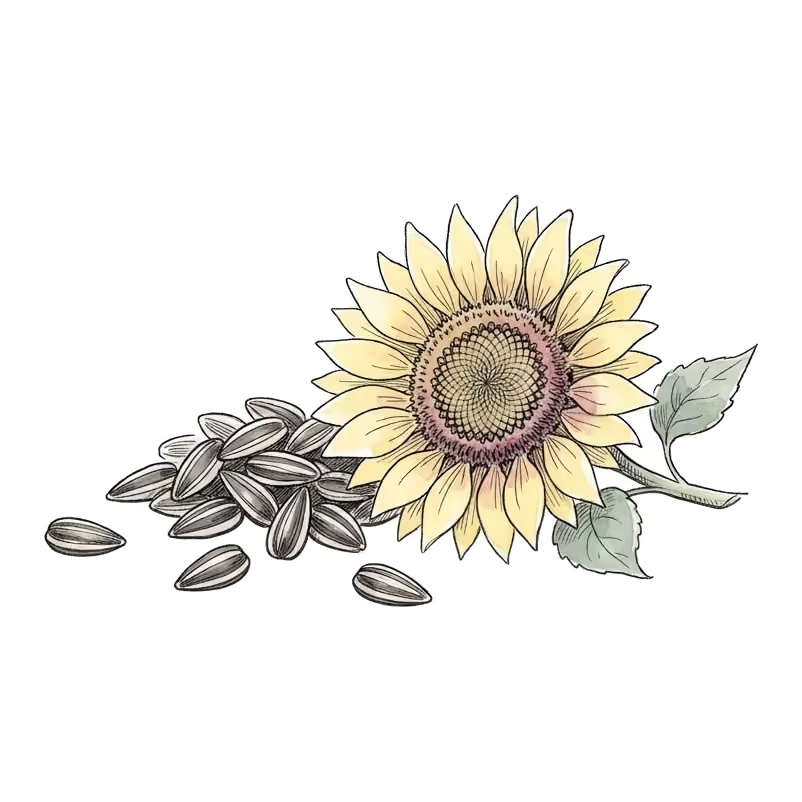
Sunflower Seeds (Helianthus annuus)
Helianthus annuus · also known as sunflower kernels, sunflower oil, black oil sunflower, confection sunflower
By Superfoods Advisor Editors·July 3, 2026
Sunflower seeds benefits and nutrition: vitamin E, selenium and magnesium per serving, calories, what the evidence shows, and allergy and nickel cautions.
Sunflower seeds (Helianthus annuus) are the edible kernels of the common sunflower and one of the richest whole-food sources of vitamin E. A 28 g serving of dry-roasted kernels provides about 163 kcal and roughly 7 to 10 mg of alpha-tocopherol, close to half or more of the Daily Value, plus selenium and magnesium. Seed-specific health trials are scarce.
The sunflower is an annual plant in the daisy family, Asteraceae, native to North America. Domestication occurred in eastern North America: the earliest seeds identified as domesticated — distinguishable from wild populations by achene size — come from the Hayes site in Tennessee and have been directly dated to about 4,840 calibrated years before present, roughly 2900 BCE (Smith 2006, PNAS). Proposed early domesticated specimens from Mexico remain disputed. Sunflower was one of the few crop plants domesticated in North America north of Mexico, preceding the arrival of maize in some eastern agricultural systems. Indigenous peoples of the Great Plains, Eastern Woodlands, and Southwest cultivated sunflower for seed as a high-calorie food, for oil extracted by boiling, and for ceremonial and decorative purposes; ground sunflower seed was mixed with animal fat to produce a pemmican-type travel food.
Following European contact, sunflower reached Europe in the sixteenth century, primarily as an ornamental. Russia became the first major commercial producer for edible oil, with the Russian Orthodox Church inadvertently accelerating adoption by permitting sunflower oil consumption during Lent (while prohibiting many other fats). Russian selection, extended by twentieth-century Soviet breeding, produced high-oil varieties that were later introduced to North America, establishing the commercial confection (food) and oilseed (industrial) cultivar distinction that persists today. Ukraine and Russia remain the world’s dominant sunflower oil producers, followed by the European Union and Argentina.
Confection-type sunflower seeds (larger achenes with striped hulls) are roasted in the hull and consumed as a snack or sold as shelled kernels; oilseed types (smaller, high-oil achenes) are crushed for sunflower oil. From a nutritional standpoint, sunflower seeds are remarkable for their exceptional vitamin E content — among the highest of any single whole food per serving — alongside meaningful selenium, magnesium, betaine, and chlorogenic acid concentrations.
Evidence at a glance
Active Compounds
Alpha-tocopherol (vitamin E): Sunflower seeds provide approximately 35.2 mg of alpha-tocopherol per 100 g of dried kernel (USDA FoodData Central, FDC 170562) — among the highest vitamin E concentrations of commonly consumed whole foods (excluding pure oils), exceeding almonds (~25.6 mg/100 g; FDC 170567), hazelnuts (~15 mg/100 g; FDC 170581), and pine nuts (~9 mg/100 g; FDC 170591). Unlike walnuts, pecans, and pistachios (where gamma-tocopherol predominates), sunflower seeds are overwhelmingly alpha-tocopherol dominant, with minimal gamma- or delta-tocopherol. Alpha-tocopherol is the predominant form of vitamin E in human plasma because the liver’s alpha-tocopherol transfer protein (alpha-TTP) preferentially binds it and loads it into circulating lipoproteins (Linus Pauling Institute). A 28 g serving of sunflower seeds provides approximately 9.9 mg alpha-tocopherol, or ~66% of the US Daily Value. Vitamin E acts as a chain-breaking antioxidant in cell membranes and lipoproteins, interrupting lipid radical chain reactions.
Chlorogenic acid: Sunflower seeds are a significant source of chlorogenic acid (3-O-caffeoylquinic acid) — the same polyphenol found abundantly in coffee and green coffee bean extract. It is the predominant phenolic in sunflower kernels, at roughly three-quarters of total phenolic content, though absolute levels vary with variety and processing (Zhang et al. 2022, Frontiers in Nutrition). Chlorogenic acid has been studied for its potential effects on glucose metabolism: laboratory studies suggest it may slow intestinal glucose absorption and later glucose utilisation, but decaffeinated coffee has shown minimal effect on postprandial blood glucose in humans (Williamson 2020, Food & Function). Human evidence comes mainly from coffee studies; sunflower seed-specific chlorogenic acid trials in humans are limited.
Betaine (trimethylglycine): Dried sunflower seed kernels contain about 35 mg betaine per 100 g (USDA FoodData Central, FDC 170562) — modest in absolute terms but meaningful given that betaine is present in few widely consumed whole foods (others include beets, spinach, wheat germ, and quinoa). Betaine is an osmolyte and methyl donor: it donates methyl groups in the BHMT pathway to remethylate homocysteine to methionine, a route that runs independently of folate and vitamin B12 (Craig 2004, American Journal of Clinical Nutrition). Elevated homocysteine is associated with cardiovascular risk in multiple epidemiological analyses, though whether homocysteine reduction per se reduces cardiovascular events has been debated.
Selenium: Sunflower seeds provide approximately 53 µg selenium per 100 g (~96% DV; USDA FoodData Central, FDC 170562), though this value varies substantially with soil selenium content in the growing region. Selenium is an essential trace element incorporated into selenoproteins including glutathione peroxidases (GPx, antioxidant enzymes), thioredoxin reductases, and deiodinases (involved in thyroid hormone metabolism). Selenium status has been studied in relation to thyroid function, immunity, and other outcomes, with mixed results outside deficiency (Rayman 2012, The Lancet).
Magnesium: Approximately 325 mg/100 g (~77% DV; USDA FoodData Central, FDC 170562), among the higher magnesium densities in the food supply. Magnesium participates in hundreds of enzymatic reactions including ATP synthesis, DNA replication, and insulin receptor kinase activation. In a meta-analysis of prospective cohorts, each additional 100 mg/day of dietary magnesium was associated with a 19% lower risk of type 2 diabetes (Fang et al. 2016, BMC Medicine).
Linoleic acid (omega-6, C18:2n-6): Sunflower seeds have a relatively high PUFA content compared to most tree nuts, with linoleic acid making up roughly half to over two-thirds of total fatty acids in USDA analyses of sunflower kernels (dried, FDC 170562; dry-roasted, FDC 170563). High-oleic sunflower varieties, bred specifically to raise monounsaturated (oleic) fat to more than 80% of the oil (USDA FoodData Central, FDC 172338), are increasingly dominant in the sunflower oil market for their improved oxidative stability; confection sunflower seeds consumed whole retain higher linoleic acid proportions typical of traditional varieties.
Phytosterols: A US analysis that also counted steryl glycosides measured 270–289 mg/100 g in sunflower kernels and pistachios, the richest of the snack nuts and seeds tested; only sesame seed and wheat germ ranked higher, with beta-sitosterol, delta-5-avenasterol, and campesterol predominant (Phillips et al. 2005, Journal of Agricultural and Food Chemistry). USDA’s legacy entry, dated 1984, lists a higher 534 mg/100 g (USDA FoodData Central, FDC 170562); this page uses the newer analytical figure.
Nickel: Sunflower seeds contain naturally elevated nickel concentrations (2.3–5.3 mg/kg, or about 0.2–0.5 mg/100 g, in Danish analyses of kernels sold for human consumption; Andersen & Hansen 1984), relevant for individuals with systemic nickel allergy or contact dermatitis from nickel, who may be advised to limit high-nickel foods.
Nutritional Profile
Per 100 g of dried (raw) sunflower seed kernels (USDA FoodData Central, FDC 170562):
| Nutrient | Amount | % DV |
|---|---|---|
| Energy | 584 kcal | — |
| Protein | 20.8 g | — |
| Total fat | 51.5 g | — |
| — Saturated fat | 4.5 g | — |
| — Monounsaturated fat | 18.5 g (~40% of fatty acids) | — |
| — Polyunsaturated fat | 23.1 g (~50% of fatty acids) | — |
| — Omega-6 (linoleic) | ~23.0 g | — |
| — Omega-3 (ALA) | ~0.06 g | — |
| Carbohydrates | 20.0 g | — |
| Dietary fiber | 8.6 g | — |
| Vitamin E (alpha-tocopherol) | 35.2 mg | 235% |
| Selenium | 53 µg | 96% |
| Magnesium | 325 mg | 77% |
| Phosphorus | 660 mg | 53% |
| Copper | 1.8 mg | 200% |
| Zinc | 5.0 mg | 45% |
| Manganese | 1.95 mg | 85% |
| Folate | 227 µg | 57% |
| Thiamine (B1) | 1.48 mg | 123% |
| Vitamin B6 | 1.34 mg | 79% |
| Iron | 5.25 mg | 29% |
| Potassium | 645 mg | 14% |
| Betaine | ~35 mg | — |
Note: Dry-roasted kernels list less alpha-tocopherol than raw (~26 mg vs ~35 mg per 100 g; USDA FoodData Central, FDC 170563), consistent with heat losses during roasting.
Evidence for Purported Benefits
Vitamin E Status and Oxidative Protection
Evidence:Moderate A documented rich alpha-tocopherol source; supplement trials did not prevent disease, and seed-specific data are scarce.
Sunflower seeds are among the richest food sources of alpha-tocopherol (Linus Pauling Institute), although trials measuring the plasma response to whole sunflower seeds specifically are scarce. In the ATBC trial (1994), 50 mg/day of synthetic alpha-tocopherol did not reduce lung cancer in male smokers, and more deaths from hemorrhagic stroke occurred in the vitamin E group; in the HOPE trial (2000), 400 IU/day of natural-source vitamin E did not reduce cardiovascular events in high-risk patients, and its HOPE-TOO extension (2005) found a higher risk of heart failure. These negative trials pertain to supplement doses and should not be directly extrapolated to whole food sources providing physiological doses (~9–10 mg/serving from sunflower seeds). Several large observational studies have associated higher vitamin E intake with lower risk of heart disease and dementia (Linus Pauling Institute), though confounding by overall diet quality is difficult to eliminate.
Cardiovascular Risk and Lipid Modulation
Evidence:Limited Seed-specific trials are scarce; evidence mostly concerns polyunsaturated fat in general.
Trials of whole sunflower seeds are scarce; most of the relevant evidence concerns polyunsaturated fat and linoleic acid in general. A 2017 American Heart Association presidential advisory recommends replacing saturated fat with polyunsaturated vegetable oils to lower cardiovascular risk (Sacks et al. 2017, Circulation). A meta-analysis of prospective cohort studies found that higher linoleic acid intake was associated with fewer coronary heart disease events (Farvid et al. 2014, Circulation). Phytosterols from sunflower seeds (~270–289 mg/100 g; Phillips et al. 2005) may contribute to modest LDL reduction (a meta-analysis of 124 trials found intakes of 0.6–3.3 g/day lowered LDL cholesterol by an average of 6–12% (Ras et al. 2014, British Journal of Nutrition), far exceeding typical dietary intake from seeds). Alpha-tocopherol from sunflower seeds may reduce LDL oxidizability, though, as noted, supplement trials have not confirmed cardiovascular event reduction.
Glucose Metabolism and Chlorogenic Acid
Evidence:Preliminary Rests on coffee cohort data and one small coffee trial; no sunflower seed trials.
Chlorogenic acid’s inhibitory effects on intestinal glucose absorption and hepatic gluconeogenesis have been most thoroughly studied in the context of coffee consumption. Prospective cohort studies have associated habitual coffee consumption, caffeinated or decaffeinated, with reduced type 2 diabetes incidence (Ding et al. 2014, Diabetes Care), and chlorogenic acid is proposed as a contributory mechanism. Whether chlorogenic acid from sunflower seeds — present at lower concentrations than in several cups of coffee — produces clinically meaningful effects on postprandial glucose at typical serving sizes has not been established in dedicated human trials. A small randomized crossover trial by Johnston et al. (American Journal of Clinical Nutrition, 2003; n = 9) found that decaffeinated coffee rich in chlorogenic acid produced gut-hormone changes consistent with delayed intestinal glucose absorption, supporting mechanism plausibility but not translating directly to sunflower seed consumption.
Homocysteine Lowering and Betaine
Evidence:Insufficient Betaine lowers homocysteine at gram doses; sunflower seeds supply milligrams, and no seed trials exist.
Betaine supplementation lowers plasma homocysteine in controlled trials. A meta-analysis of five RCTs in healthy adults taking at least 4 g/day for 6–24 weeks found a pooled reduction of 1.23 µmol/L (McRae 2013, Journal of Chiropractic Medicine), and in a six-week dose-response trial, fasting homocysteine was 12%, 15% and 20% lower than placebo with 1.5, 3 and 6 g/day (Olthof et al. 2003, Journal of Nutrition). Sunflower seeds provide about 35 mg/100 g of betaine — orders of magnitude below supplement trial doses, meaning their contribution to betaine-mediated homocysteine lowering is modest in isolation. As a component of an overall dietary pattern rich in betaine (beets, wheat germ, spinach, sunflower seeds, quinoa), cumulative intake may be nutritionally relevant.
Selenium Status and Thyroid Function
Evidence:Moderate A plant source of selenium for status; thyroid data come from supplement trials, not seeds.
Sunflower seeds are one of the better plant-based sources of selenium in populations dependent on plants grown in selenium-replete soils. Selenium’s role in selenoprotein function (glutathione peroxidase, thioredoxin reductase, iodothyronine deiodinase) is biochemically well established. In autoimmune (Hashimoto’s) thyroiditis, a 2024 meta-analysis of randomized trials found that selenium supplementation lowered thyroid peroxidase antibody titers (moderate certainty) without changing thyroid hormone levels (Huwiler et al. 2024, Thyroid). Whether selenium from food sources (sunflower seeds) at typical serving sizes achieves similar effects as supplemental selenium trials is not established.
The skin-health nutrition guide covers dietary vitamin E, which sunflower seeds supply in quantity, and the limited trial evidence on skin outcomes.
Typical Use and Preparation
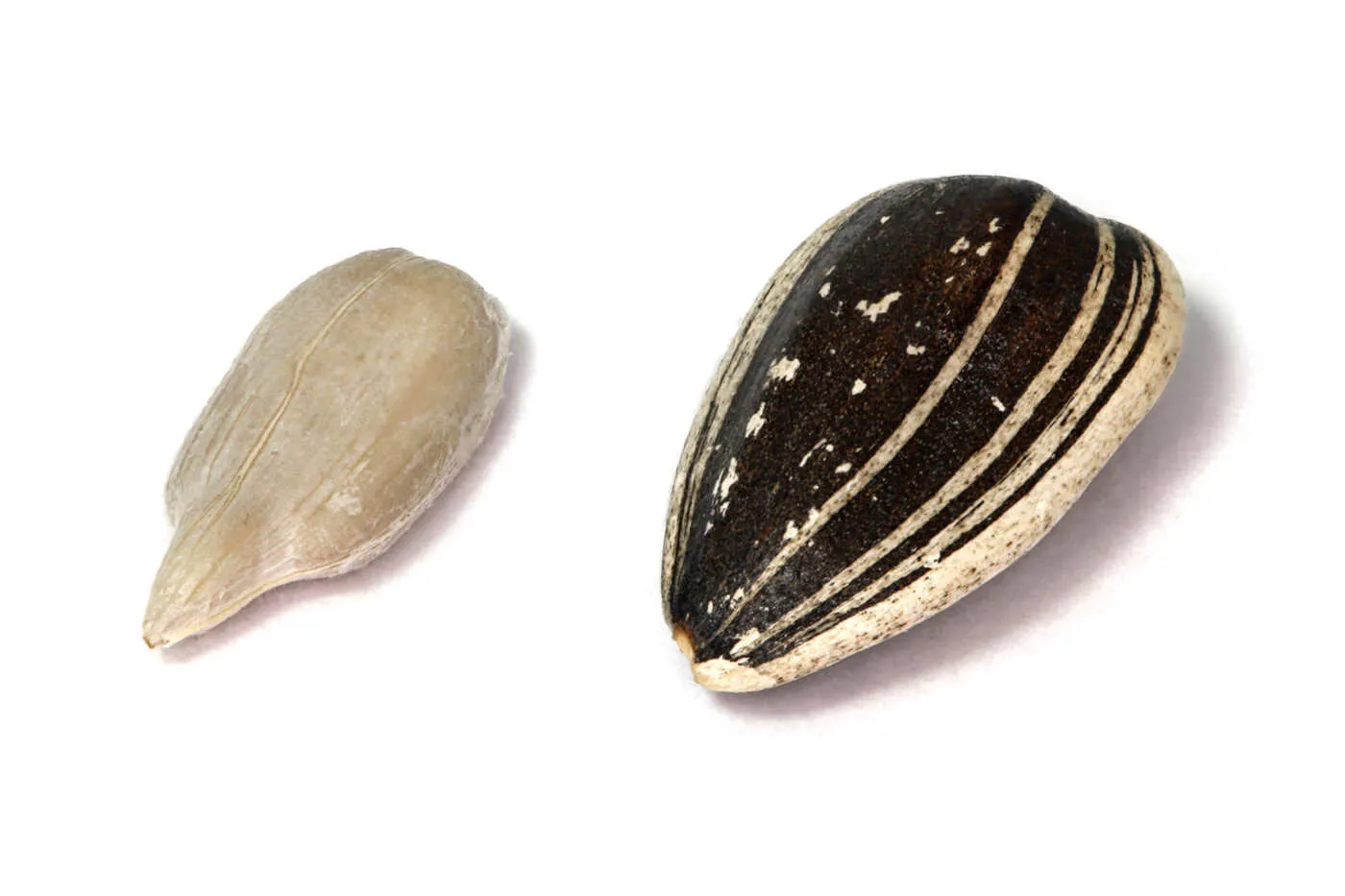 Photo: Kaldari, public domain, via Wikimedia Commons
Sunflower seeds are consumed roasted-in-shell as a snack (spitting or shelling at consumption), as shelled kernels added to salads, granola, trail mix, bread, and baked goods, and as sunflower seed butter (a peanut-butter alternative for tree nut-allergic individuals). They are also the source of sunflower oil, one of the world’s most widely consumed culinary oils.
Raw versus dry-roasted — oxidative stability concerns: Sunflower seed kernels are high in linoleic acid (~50–65% of fatty acids in standard varieties), a highly polyunsaturated fatty acid with two double bonds that is considerably more susceptible to oxidative degradation than oleic acid (one double bond) or saturated fats. High roasting temperatures accelerate linoleic acid oxidation, generating lipid peroxidation products including malondialdehyde, 4-hydroxynonenal, and acrolein; excessive heat or prolonged roasting results in rancid off-flavors and higher aldehyde content. Raw sunflower seed kernels retain the highest alpha-tocopherol content (~35 mg/100 g vs ~26 mg/100 g after dry-roasting, about 26% lower; FDC 170562, FDC 170563) and generate fewer lipid oxidation products. However, raw seeds have lower palatability for most consumers.
Sunflower seed butter: Made from roasted sunflower seed kernels, sunflower seed butter is nutritionally similar to roasted seeds in macronutrients and provides a peanut- and tree-nut-free alternative for individuals with those allergies. Because it is made from the kernels, sunflower seed butter also carries the seeds’ nickel, which matters for people following a low-nickel diet.
Storage: The high PUFA content of sunflower seeds makes proper storage critical. Shelled kernels oxidize more rapidly than in-shell seeds. Storing in airtight containers, refrigerated or frozen, substantially extends shelf life; ambient storage, especially in open containers, accelerates rancidity. The rancid smell itself comes from volatile lipid oxidation products, so seeds that smell off have already oxidized.
Sunflower oil: Depending on the variety, sunflower oil ranges from ~20% MUFA / ~66% PUFA (standard/linoleic type; USDA FoodData Central, FDC 171025) to ~84% MUFA / ~4% PUFA (high-oleic type; FDC 172338). High-oleic sunflower oil has significantly better thermal stability and is preferable for high-heat cooking.
A 28 g serving of dry-roasted sunflower seed kernels provides approximately 163 kcal, 5.4 g protein, 13.9 g fat (2.7 g MUFA, 9.2 g PUFA), and 3.1 g fiber (USDA FoodData Central, FDC 170563).
For a seed with more magnesium, zinc and protein but far less vitamin E, see pumpkin seeds; for a tree nut with a similar vitamin E profile, almonds.
Safety, Interactions, and Contraindications
Seed allergy: Sunflower seed allergy exists but is not among the major regulated allergens in the US (Big 9) or EU (Big 14). Published reports are relatively few and mostly case reports (Patel & Bahna 2016, Allergy), but a US pediatric referral center described sunflower seed allergy as emerging and potentially severe, usually alongside tree nut, sesame, or peanut allergy, with sensitization on testing far more common than true reactions at oral food challenge (Shah et al. 2026, J Allergy Clin Immunol Pract). Identified allergens include 2S albumins (such as SFA-8), lipid transfer proteins, and defensin-like proteins (Achour et al. 2024; Ukleja-Sokołowska et al. 2016). Clinical presentations include oral allergy syndrome, urticaria, angioedema, and (rarely) anaphylaxis. Reactions linked to mugwort (Artemisia) pollen allergy have been documented, consistent with cross-reactivity within the Asteraceae family (García Ortiz et al. 1996). Sensitization by inhaling sunflower seed dust has also been reported (Asero et al. 2004).
Nickel content and nickel sensitivity: Sunflower seeds contain elevated nickel concentrations (about 0.2–0.5 mg/100 g in one Danish analysis; Andersen & Hansen 1984). Systemic nickel allergy (systemic contact dermatitis) affects a minority of nickel-sensitized people, an estimated 1% of whom may react at normal daily dietary exposure (Jensen et al. 2006), and is characterized by worsening of dermatitis with consumption of high-nickel foods. Low-nickel diets in the literature vary widely in which foods they restrict, and their benefit is debated (Pizzutelli 2011); high-nickel seeds such as sunflower are among the foods such diets may limit. Individuals managing nickel allergy through diet should consult a dietitian.
Cadmium accumulation: Sunflowers (Helianthus annuus) take up cadmium from soil readily and have been tested for phytoremediation of contaminated land, although they are not true hyperaccumulators and one comparison found removal rates too small to be practical (Benavides et al. 2021). Seeds grown on cadmium-contaminated soils may contain elevated cadmium; a Danish survey reported high cadmium in sunflower kernels sold for food (Andersen & Hansen 1984). EU maximum levels for cadmium in food (now Commission Regulation (EU) 2023/915, which replaced Regulation 1881/2006) address this risk for commercially produced seeds, but awareness is warranted for seeds grown in contaminated regions without regulatory oversight.
Omega-6 to omega-3 ratio: Standard sunflower seeds are very high in linoleic acid (omega-6) and very low in ALA (omega-3), with an omega-6:omega-3 ratio exceeding 200:1 in USDA data (FDC 170562, FDC 170563). While linoleic acid is an essential fatty acid, a very high omega-6 to omega-3 ratio is often said to promote inflammation. Randomized trials in healthy adults have not supported this: a systematic review found that adding linoleic acid to the diet did not raise inflammatory markers (Johnson & Fritsche 2012). Getting enough omega-3 (from fatty fish, flaxseed, or other sources) is still advisable for people who rely heavily on sunflower seeds or sunflower oil.
Drug interactions: High supplemental doses of alpha-tocopherol may increase bleeding risk in people taking warfarin or other anticoagulant and antiplatelet drugs (Linus Pauling Institute). At the levels provided by typical sunflower seed servings (~7–10 mg alpha-tocopherol per 28 g), this interaction is unlikely to be clinically significant in most individuals, but those on warfarin who consume large amounts of seeds regularly should maintain awareness.
This entry is for informational purposes only and does not constitute medical advice, diagnosis, or treatment.
Frequently Asked Questions
Are sunflower seeds good for you?
In normal portions, they are a nutrient-dense food: rich in vitamin E, selenium, magnesium, copper, thiamine and folate, with mostly unsaturated fat. Direct evidence of health benefits is limited, because few trials have tested sunflower seeds themselves; the case rests on their nutrient content and on research into polyunsaturated fat in general. Unsalted kernels are the better everyday choice.
How much vitamin E is in sunflower seeds?
Raw kernels contain about 35.2 mg of alpha-tocopherol per 100 g, and dry-roasted kernels about 26 mg, so a 28 g serving supplies roughly 7 to 10 mg. That is close to half or more of the 15 mg Daily Value, and more per gram than almonds or hazelnuts. Food amounts like these are far below the supplement doses that raised safety concerns in trials.
Are sunflower seeds high in calories?
Yes, like all nuts and seeds. Raw kernels contain 584 kcal per 100 g, and a 28 g serving of dry-roasted kernels provides about 163 kcal. Salted, flavored in-shell seeds also add sodium, so check the label.
Are sunflower seeds a nut?
No. Botanically, a sunflower seed is the fruit of the sunflower plant, and it is classed as a seed. It is not one of the major regulated allergens in the US or EU, and sunflower seed butter is often used as a peanut- and tree-nut-free spread. People with tree nut, peanut or sesame allergy can still react to sunflower seeds, so new exposure is best discussed with an allergist.
Sunflower seeds vs pumpkin seeds: which is better?
They have different strengths. Sunflower seeds are the vitamin E source, at about 35 mg per 100 g raw, and supply more selenium. Pumpkin seeds have more protein (30.2 g vs 20.8 g per 100 g), nearly twice the magnesium and more zinc and iron. Both are high in omega-6 and low in omega-3, so mixing them is a reasonable approach.
Who should limit sunflower seeds?
People with systemic nickel allergy may be advised to limit them, since sunflower seeds are naturally high in nickel. Anyone with sunflower seed allergy or a related mugwort pollen allergy should avoid them. Seeds grown on contaminated soils can carry cadmium, which EU limits address for commercial products. People on warfarin eating large amounts regularly should mention it to their clinician.
References
Show all 32 referencesShow fewer
- Farvid, M. S., Ding, M., Pan, A., Sun, Q., Chiuve, S. E., Steffen, L. M., … Hu, F. B. (2014). Dietary linoleic acid and risk of coronary heart disease: a systematic review and meta-analysis of prospective cohort studies. Circulation, 130(18), 1568–1578.
- Johnston, K. L., Clifford, M. N., & Morgan, L. M. (2003). Coffee acutely modifies gastrointestinal hormone secretion and glucose tolerance in humans: glycemic effects of chlorogenic acid and caffeine. American Journal of Clinical Nutrition, 78(4), 728–733.
- Lonn, E., Bosch, J., Yusuf, S., Sheridan, P., Pogue, J., Arnold, J. M., … Dagenais, G. R. (HOPE and HOPE-TOO Trial Investigators). (2005). Effects of long-term vitamin E supplementation on cardiovascular events and cancer: a randomized controlled trial. JAMA, 293(11), 1338–1347.
- Rayman, M. P. (2012). Selenium and human health. The Lancet, 379(9822), 1256–1268.
- Craig, S. A. S. (2004). Betaine in human nutrition. American Journal of Clinical Nutrition, 80(3), 539–549.
- USDA FoodData Central. (2019). Seeds, sunflower seed kernels, dried. FDC ID 170562. U.S. Department of Agriculture.
- The Alpha-Tocopherol, Beta Carotene Cancer Prevention Study Group. (1994). The effect of vitamin E and beta carotene on the incidence of lung cancer and other cancers in male smokers. New England Journal of Medicine, 330(15), 1029–1035.
- The Heart Outcomes Prevention Evaluation Study Investigators. (2000). Vitamin E supplementation and cardiovascular events in high-risk patients. New England Journal of Medicine, 342(3), 154–160.
- McRae, M. P. (2013). Betaine supplementation decreases plasma homocysteine in healthy adult participants: a meta-analysis. Journal of Chiropractic Medicine, 12(1), 20–25.
- Olthof, M. R., van Vliet, T., Boelsma, E., & Verhoef, P. (2003). Low dose betaine supplementation leads to immediate and long term lowering of plasma homocysteine in healthy men and women. Journal of Nutrition, 133(12), 4135–4138.
- Smith, B. D. (2006). Eastern North America as an independent center of plant domestication. Proceedings of the National Academy of Sciences, 103(33), 12223–12228.
- Zhang, Y., Xiao, H., Lv, X., Wang, D., Chen, H., & Wei, F. (2022). Comprehensive review of composition distribution and advances in profiling of phenolic compounds in oilseeds. Frontiers in Nutrition, 9, 1044871.
- Andersen, A., & Hansen, H. N. (1984). High cadmium and nickel contents in sunflower kernels. Zeitschrift für Lebensmittel-Untersuchung und -Forschung, 179(5), 399–400.
- Ras, R. T., Geleijnse, J. M., & Trautwein, E. A. (2014). LDL-cholesterol-lowering effect of plant sterols and stanols across different dose ranges: a meta-analysis of randomised controlled studies. British Journal of Nutrition, 112(2), 214–219.
- USDA FoodData Central. (2019). Seeds, sunflower seed kernels, dry roasted, without salt. FDC ID 170563. U.S. Department of Agriculture.
- Williamson, G. (2020). Protection against developing type 2 diabetes by coffee consumption: assessment of the role of chlorogenic acid and metabolites on glycaemic responses. Food & Function, 11(6), 4826–4833.
- Fang, X., Wang, K., Han, D., et al. (2016). Dietary magnesium intake and the risk of cardiovascular disease, type 2 diabetes, and all-cause mortality: a dose-response meta-analysis of prospective cohort studies. BMC Medicine, 14(1), 210.
- Phillips, K. M., Ruggio, D. M., & Ashraf-Khorassani, M. (2005). Phytosterol composition of nuts and seeds commonly consumed in the United States. Journal of Agricultural and Food Chemistry, 53(24), 9436–9445.
- Linus Pauling Institute Micronutrient Information Center. Vitamin E. Oregon State University.
- Sacks, F. M., Lichtenstein, A. H., Wu, J. H. Y., et al. (2017). Dietary fats and cardiovascular disease: a presidential advisory from the American Heart Association. Circulation, 136(3), e1–e23.
- Ding, M., Bhupathiraju, S. N., Chen, M., van Dam, R. M., & Hu, F. B. (2014). Caffeinated and decaffeinated coffee consumption and risk of type 2 diabetes: a systematic review and a dose-response meta-analysis. Diabetes Care, 37(2), 569–586.
- Huwiler, V. V., et al. (2024). Selenium supplementation in patients with Hashimoto thyroiditis: a systematic review and meta-analysis of randomized clinical trials. Thyroid, 34(3).
- Patel, A., & Bahna, S. L. (2016). Hypersensitivities to sesame and other common edible seeds. Allergy, 71(10).
- Shah, A., Patel, N., Dehbozorgi, S., Cox, A. L., & Baker, M. G. (2026). Sunflower seed allergy: natural history, oral food challenge outcomes, and review of the literature. Journal of Allergy and Clinical Immunology: In Practice.
- Achour, J., Reche, M., Valbuena, T., et al. (2024). Sunflower seed allergy: identification of novel 2S-albumins as potential marker allergens. Allergy, 79(8), 2273–2276.
- Ukleja-Sokołowska, N., Gawrońska-Ukleja, E., Żbikowska-Gotz, M., Bartuzi, Z., & Sokołowski, Ł. (2016). Sunflower seed allergy. International Journal of Immunopathology and Pharmacology, 29(3), 498–503.
- García Ortiz, J. C., Cosmes, P. M., & López-Asunsolo, A. (1996). Allergy to foods in patients monosensitized to Artemisia pollen. Allergy, 51(12), 927–931.
- Asero, R., Mistrello, G., Roncarolo, D., & Amato, S. (2004). Airborne allergy to sunflower seed. Journal of Investigational Allergology and Clinical Immunology.
- Jensen, C. S., Menné, T., & Johansen, J. D. (2006). Systemic contact dermatitis after oral exposure to nickel: a review with a modified meta-analysis. Contact Dermatitis, 54(2).
- Pizzutelli, S. (2011). Systemic nickel hypersensitivity and diet: myth or reality? European Annals of Allergy and Clinical Immunology, 43(1).
- Benavides, B. J., Drohan, P. J., Spargo, J. T., et al. (2021). Cadmium phytoextraction by Helianthus annuus (sunflower), Brassica napus cv Wichita (rapeseed), and Chyrsopogon zizanioides (vetiver). Chemosphere, 265, 129086.
- Johnson, G. H., & Fritsche, K. (2012). Effect of dietary linoleic acid on markers of inflammation in healthy persons: a systematic review of randomized controlled trials. Journal of the Academy of Nutrition and Dietetics, 112(7).
More in Nuts & Seeds
- Almonds (Prunus dulcis)
Almonds benefits and nutrition: what trials show for LDL cholesterol, blood sugar and weight, plus serving size, vitamin E, oxalate and allergy risks.
- Brazil Nuts (Bertholletia excelsa)
Brazil nuts benefits come down to selenium: one nut can hold 8 to 200 mcg. How many to eat per day, what the research shows, and the toxicity limit.
- Cashews (Anacardium occidentale)
Cashews benefits and nutrition: copper, magnesium and iron per serving, what trials show for blood pressure and blood sugar, and allergy and oxalate risks.
- Chia Seeds (Salvia hispanica)
How to eat chia seeds: soaked, ground or in pudding, with serving size, nutrition and what trials show for blood sugar, blood pressure and weight loss.
- Flaxseed (Linum usitatissimum)
Flaxseed benefits explained: what trials show for blood pressure, cholesterol and constipation, why ground beats whole, daily amounts and side effects.
- Hazelnuts (Corylus avellana)
Hazelnuts benefits and nutrition: oleic acid, vitamin E and folate per serving, what trials show for cholesterol, and how birch-pollen allergy works.

Curated by Superfoods Advisor Editors·Last updated