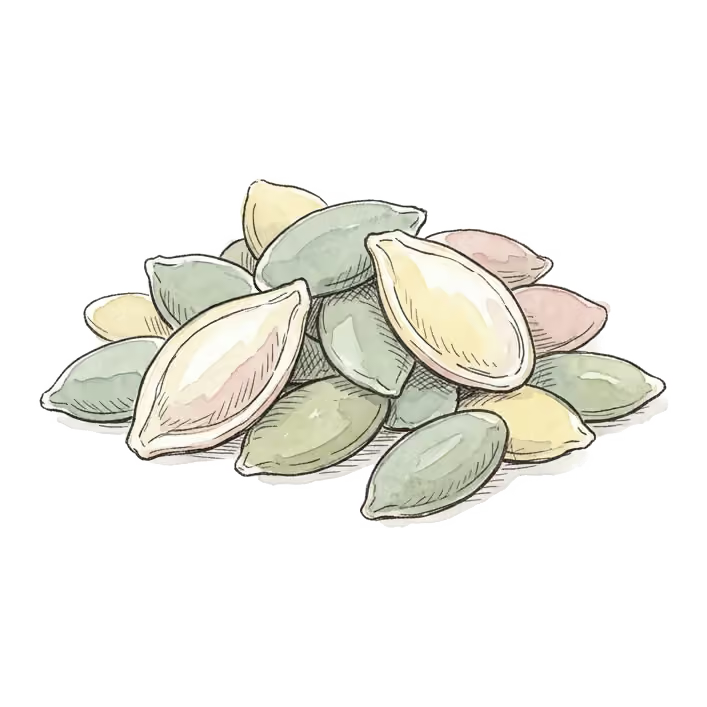
Pumpkin Seeds / Pepitas (Cucurbita pepo)
Cucurbita pepo · also known as pepitas, pepita de calabaza, kürbiskerne, pumpkin kernels
By Superfoods Advisor Editors·July 3, 2026
Pumpkin seeds benefits and nutrition: magnesium, zinc and protein per serving, what trials show for prostate symptoms, sleep and blood sugar, and pepitas.
Pumpkin seeds (Cucurbita pepo; the hulled green kernels are called pepitas) are among the richest foods in magnesium and plant zinc. A 28 g serving provides about 157 kcal, 8.5 g protein, 166 mg magnesium and 2.2 mg zinc. Their most-studied use, for enlarged-prostate urinary symptoms, has mixed results from one large trial.
The species is a squash native to southern Mexico and Central America, where archaeological seeds from Oaxaca show domestication roughly 10,000 years ago (Smith, 1997, Science). Among the earliest agricultural plants in Mesoamerica, Cucurbita pepo encompassed both the flesh-valued squash and the seed-valued pepita — the hull-less, flat, dark-green kernel prized as a food crop in its own right. Spanish colonizers introduced Cucurbita species to Europe in the sixteenth century, where cultivation rapidly spread; Austria’s Styrian pumpkin (Cucurbita pepo var. styriaca), whose seeds naturally lack the outer hull, became a regional specialty whose oil, pressed from the roasted seeds (“Kürbiskernöl”), carries protected geographical indication (PGI) status in the EU.
In folk medicine, pumpkin seeds were used against intestinal worms, and modern phytochemical research has proposed cucurbitin as one possible active compound. Beyond traditional antiparasitic applications, contemporary nutrition research has focused on pumpkin seeds as one of the most concentrated dietary sources of zinc and magnesium, and on pumpkin seed oil for urological applications.
Evidence at a glance
Active Compounds
Zinc: Pumpkin seeds consistently rank among the top plant-based sources of zinc, providing about 7.8 mg per 100 g of dried kernels (USDA FoodData Central). Zinc is an essential trace element required for the catalytic activity of numerous enzymes, immune function, protein synthesis, wound healing, DNA synthesis, and spermatogenesis. Plant-based zinc carries lower bioavailability than zinc from animal sources due to phytic acid chelation, but soaking or germinating can reduce phytate content and may improve absorption.
Magnesium: At about 590 mg per 100 g (USDA FoodData Central), pumpkin seeds are among the highest-magnesium foods in the human diet. Magnesium is a cofactor in more than 300 enzyme systems, including ATP synthesis, neuromuscular signaling, blood pressure regulation, and glycemic control. Inadequate magnesium intake has been associated in observational studies with increased risk of type 2 diabetes, cardiovascular disease, and osteoporosis (Linus Pauling Institute).
Cucurbitin: This non-proteinogenic amino acid (3-aminopyrrolidine-3-carboxylic acid) is found in seeds of Cucurbita species and has been studied for antiparasitic properties. In mice, an aqueous pumpkin seed extract reduced the number and length of adult dwarf tapeworms (Hymenolepis nana) (Alhawiti et al., 2019), but how much of such effects comes from cucurbitin itself, and by what mechanism, has not been established. Human data are limited to traditional use and small uncontrolled studies.
Tryptophan: Pumpkin seeds are a notable plant source of L-tryptophan (~0.58 g per 100 g; USDA FoodData Central), an essential amino acid that serves as precursor to serotonin and melatonin. Dietary tryptophan availability may influence sleep quality and mood, though how much reaches the brain depends on competition with other large neutral amino acids (see Sleep Quality below).
Phytosterols: Pumpkin seeds contain beta-sitosterol (about 25 mg per 100 g in one analysis, Ryan et al., 2007; higher concentrations in the oil). Beta-sitosterol has been studied for its potential role in 5-alpha-reductase inhibition and in benign prostatic hyperplasia (BPH) symptom relief.
Cucurbitacins: Trace amounts of cucurbitacins (tetracyclic triterpenoids) may be present, though concentrations in edible cultivars are generally low. Cucurbitacins are under investigation for cytotoxic properties in vitro.
Tocopherols and carotenoids: Commercial pumpkin seed oil contains alpha- and gamma-tocopherol and the carotenoids lutein and zeaxanthin (Procida et al., 2013), contributing to its antioxidant capacity.
Nutritional Profile
Per 100 g of dried, hulled pumpkin seed kernels (pepitas) (USDA FoodData Central, FDC ID 170556):
| Nutrient | Amount | % DV |
|---|---|---|
| Energy | 559 kcal | — |
| Protein | 30.2 g | — |
| Total fat | 49.0 g | — |
| — Saturated fat | 8.7 g | — |
| — Monounsaturated fat | 16.2 g | — |
| — Polyunsaturated fat | 21.0 g | — |
| — Omega-6 (linoleic) | ~20.7 g | — |
| — Omega-3 (ALA) | ~0.12 g | — |
| Carbohydrates | 10.7 g | — |
| Dietary fiber | 6.0 g | — |
| Magnesium | 592 mg | 141% |
| Phosphorus | 1230 mg | 98% |
| Zinc | 7.8 mg | 71% |
| Iron | 8.8 mg | 49% |
| Potassium | 809 mg | 17% |
| Manganese | 4.5 mg | 197% |
| Copper | 1.3 mg | 149% |
| Vitamin K | 7.3 µg | 6% |
| Tryptophan | ~580 mg | — |
Pumpkin seeds are notably lower in omega-3 fats than flaxseed or hemp seeds, and their omega-6:omega-3 ratio is very high (~170:1 on the USDA figures above), which warrants consideration in the context of overall dietary fat balance.
Evidence for Purported Benefits
Benign Prostatic Hyperplasia (BPH) Symptom Relief
Evidence:Limited One large RCT with mixed results: whole seed beat placebo descriptively, extract did not.
The most clinically studied application of pumpkin seed preparations is urological. The randomized, partially blinded, placebo-controlled GRANU trial by Vahlensieck et al. (Urologia Internationalis, 2015) assigned 1,431 men with BPH-related urinary symptoms to whole pumpkin seed (5 g twice daily), pumpkin seed extract capsules (500 mg twice daily), or placebo for 12 months. The extract did not differ from placebo; with whole seed, 58.5% of men achieved at least a 5-point drop in International Prostate Symptom Score (IPSS) versus 47.3% on placebo, a difference the authors described as descriptively significant and in need of confirmation. Proposed but unconfirmed mechanisms include 5-alpha-reductase inhibition and anti-inflammatory activity of beta-sitosterol. A Cochrane systematic review by Wilt et al. (Cochrane Database of Systematic Reviews, 2000) of four short-term placebo-controlled trials (519 men) found that beta-sitosterol preparations improved urinary symptom scores and flow measures; these were isolated sterol preparations, not pumpkin seeds. Pumpkin seeds are not a substitute for medical management of BPH.
Sleep Quality and Tryptophan
Evidence:Preliminary One small trial of a seed-derived product; no adequately powered trials on pumpkin seeds.
A small crossover study by Wurtman et al. (American Journal of Clinical Nutrition, 2003) in nine adults found that a carbohydrate-rich breakfast raised the plasma tryptophan:large neutral amino acid ratio relative to a protein-rich one; this ratio governs how much tryptophan reaches the brain for serotonin synthesis. In a small double-blind trial with 49 completers, de-oiled gourd seed (a tryptophan-rich protein source) combined with glucose improved subjective and objective insomnia measures compared with glucose alone (Hudson et al., 2005); the lead author was affiliated with the product’s developer. Whether whole pumpkin seeds, consumed as part of an evening meal, improve sleep outcomes has not been tested in well-powered RCTs.
Glycemic Control and Diabetes
Evidence:Preliminary Rodent studies and one small acute crossover trial in 15 healthy adults.
Rodent studies have reported lower blood glucose with pumpkin seed extracts, for example an aqueous Cucurbita maxima seed extract in diabetic rats (Kushawaha et al., 2017). In humans, a small single-blind crossover trial in 15 normoglycemic adults found that adding 65 g of pumpkin seed to a high-carbohydrate meal lowered the post-meal glucose response by about 35% (Cândido et al., 2018); longer-term trials, and trials in people with diabetes, are lacking.
Zinc Repletion and Immune Function
Evidence:Moderate A documented rich zinc source; deficiency trials used zinc supplements, not seeds.
While pumpkin seeds as a zinc source are nutritionally well-established, zinc bioavailability from plant sources is reduced by phytate. Soaking seeds in water activates phytase enzymes that partially degrade phytate, which may modestly improve zinc absorption. Zinc deficiency treatment studies use zinc supplements (salts such as zinc sulfate or gluconate), not seed-based zinc, making direct evidence for pumpkin seeds as a therapeutic zinc source limited.
Antiparasitic Activity
Evidence:Preliminary Traditional use plus one uncontrolled study combining seeds with areca nut.
Traditional use of pumpkin seeds for intestinal parasites (particularly tapeworms) predates modern pharmacology. Pumpkin seeds have been used in combination approaches, historically often followed by a purgative to expel the worms. In a community-based study in Sichuan, China (Li et al., 2012, Acta Tropica), pumpkin seeds combined with areca nut extract led to expulsion of whole tapeworms in 40 of 45 confirmed taeniasis cases; the study had no placebo arm and used areca nut, which carries its own toxicity concerns. Pumpkin seeds are not a validated replacement for antiparasitic medication in confirmed infections.
Typical Use and Preparation
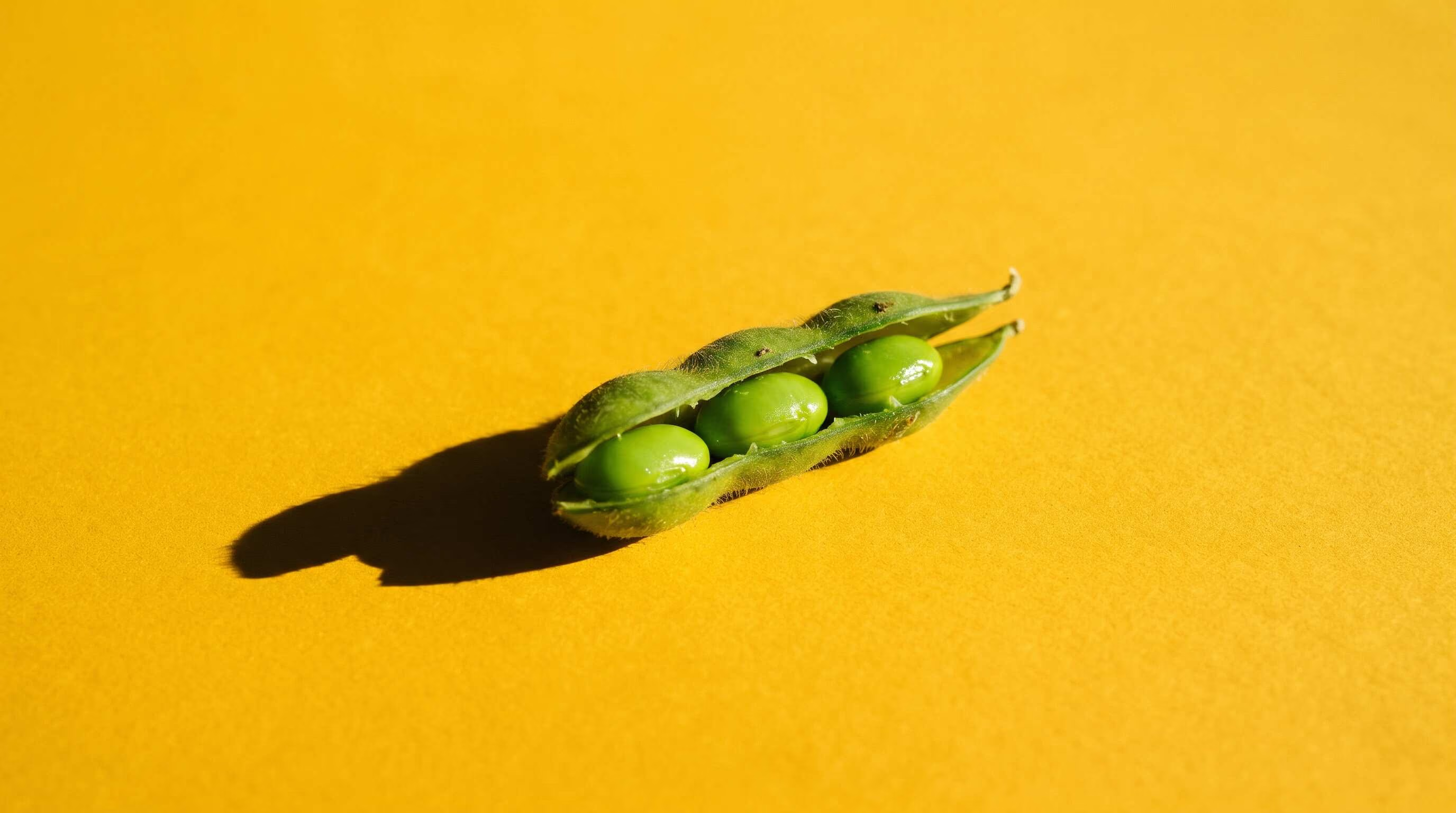
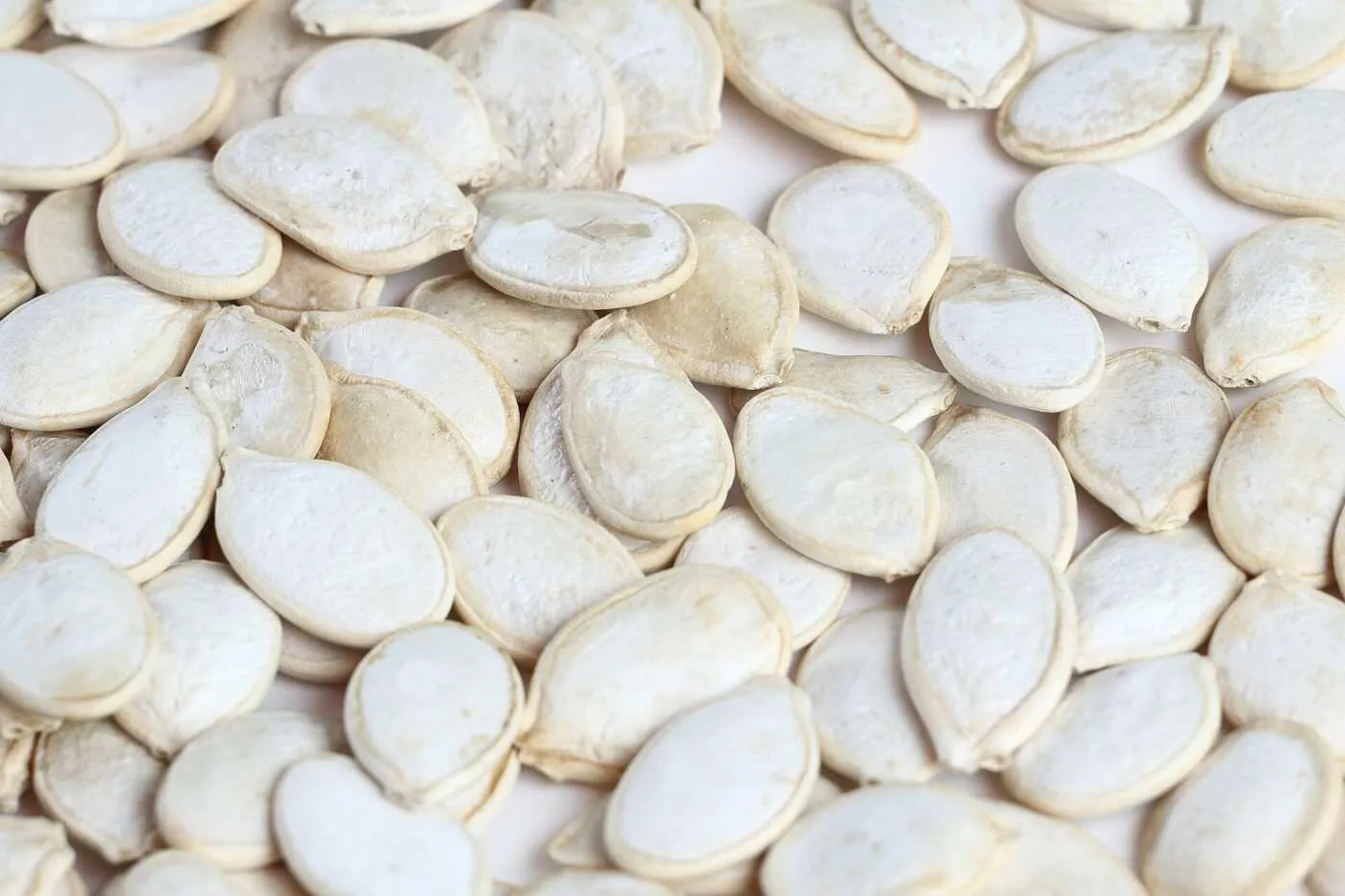 Photo: Dmitry Makeev, CC BY-SA 4.0, via Wikimedia Commons
Raw vs. roasted: Raw, hulled pepitas can be eaten directly or added to muesli, trail mix, salads, or soups. Roasting at moderate temperatures (150–160°C / 300–320°F for 15–20 minutes) enhances flavor through Maillard browning; harsher roasting promotes oxidation of the polyunsaturated fats. Dry-roasting without added oil keeps the fat profile to that of the seeds themselves. Minerals such as magnesium and zinc are not destroyed by roasting.
Pumpkin seed oil (Kürbiskernöl): Traditionally pressed from ground, roasted seeds (Procida et al., 2013), this dark-green oil has a distinctive nutty flavor used in salad dressings and as a finishing oil in Central European cuisines. It is not suitable for high-heat cooking due to its unsaturated fat content. It should be stored in dark, cool conditions.
Pumpkin seed butter: Ground seeds produce a paste comparable to tahini or almond butter, rich in minerals and moderately high in protein.
Soaking for bioavailability: Soaking raw seeds overnight and rinsing before consumption may reduce phytate somewhat; its effect on zinc and magnesium absorption from pumpkin seeds specifically has not been measured.
A standard serving of 28 g provides approximately 157 kcal, 8.5 g protein, 2.2 mg zinc, and 166 mg magnesium (USDA FoodData Central).
The guide to high-protein vegan foods covers pumpkin seeds among other seed-based protein sources, and they are one of the plant zinc sources in the guide to immune-boosting foods.
Safety, Interactions, and Contraindications
Seed allergies: Pumpkin seed allergy is uncommon but can be severe. In a case series of 25 children with IgE-mediated pumpkin seed allergy, 64% had anaphylaxis; most were also allergic to tree nuts or other seeds, many were sensitized to watermelon seed, and all tolerated pumpkin flesh (Acikalin et al., 2026). People with tree nut or other seed allergies should discuss pumpkin seeds with an allergist.
Hypoglycemic medications: Given the glucose-lowering effects seen in rodents and one small human meal study, concurrent use of concentrated pumpkin seed extracts with antidiabetic medications could theoretically increase hypoglycemia risk. Blood glucose should be monitored if pumpkin seed supplements are introduced alongside antidiabetic drugs.
High omega-6 content: Given pumpkin seeds’ high linoleic acid and low ALA content, consuming large amounts may increase dietary omega-6:omega-3 ratio imbalance. This is particularly relevant for individuals whose diet is already high in omega-6 fats; balancing with omega-3-rich foods is advisable.
Caloric density: At ~559 kcal/100 g, overconsumption can contribute to positive energy balance. A typical serving should be limited to 28–30 g (approximately 1 oz) in the context of a calorie-managed diet.
Pregnancy and breastfeeding: Concentrated pumpkin seed oil and extract supplements lack adequate safety data for use in pregnancy or breastfeeding and should be discussed with a clinician.
This entry is for informational purposes only and does not constitute medical advice, diagnosis, or treatment.
Frequently Asked Questions
What are pumpkin seeds good for?
Mainly nutrition: they are one of the densest food sources of magnesium, and a good plant source of zinc, iron and protein. Health-outcome evidence is thinner. A large trial in men with enlarged-prostate urinary symptoms found a modest, unconfirmed benefit from whole seeds, and studies on sleep, blood sugar and parasites are small, uncontrolled or done in animals.
How many pumpkin seeds should you eat a day?
A typical serving is 28 to 30 g, about 1 oz, which provides roughly 157 kcal and 8.5 g protein. The prostate trial used 5 g of whole seed twice a day. No official limit exists; at 559 kcal per 100 g, calories and the high omega-6 content are the practical reasons not to eat them by the handful all day.
Are pumpkin seeds good for men’s prostate health?
The evidence is limited. In the 12-month GRANU trial of 1,431 men with urinary symptoms from benign prostatic hyperplasia, 58.5% eating whole pumpkin seed improved meaningfully against 47.3% on placebo, a difference the authors said needs confirmation; the extract capsule did no better than placebo. Pumpkin seeds are not a substitute for medical care of prostate symptoms.
Are pumpkin seeds and pepitas the same thing?
Pepitas are pumpkin seed kernels without the hull. Most are shelled seeds, but some varieties, such as the Styrian oil pumpkin, grow seeds with no outer hull. Whole white-hulled seeds, often roasted from a carving pumpkin, contain more fiber from the shell; the nutrition figures on this page are for hulled kernels.
Are pumpkin seeds safe for kids?
For most children, yes, in a form suited to their age; ground seeds or seed butter avoid the choking risk of small, hard foods in young children. Pumpkin seed allergy is uncommon but can be severe: in a series of 25 allergic children, 64% had anaphylaxis, and most also reacted to tree nuts or other seeds. Children with existing nut or seed allergies should see an allergist first.
Can you eat sunflower and pumpkin seeds together?
Yes. They are often mixed in trail mixes and salads and complement each other: pumpkin seeds bring more magnesium, zinc and iron, while sunflower seeds are far richer in vitamin E. Both are high in omega-6 and low in omega-3, so pairing them with chia or flaxseed helps balance fat intake.
References
Show all 13 referencesShow fewer
- Vahlensieck, W., Theurer, C., Pfitzer, E., Patz, B., Banik, N., & Engelmann, U. (2015). Effects of pumpkin seed in men with lower urinary tract symptoms due to benign prostatic hyperplasia in the one-year, randomized, placebo-controlled GRANU study. Urologia Internationalis, 94(3), 286–295.
- Wilt, T., Ishani, A., MacDonald, R., Stark, G., Mulrow, C., & Lau, J. (2000). Beta-sitosterols for benign prostatic hyperplasia. Cochrane Database of Systematic Reviews, (2), CD001043.
- Wurtman, R. J., Wurtman, J. J., Regan, M. M., McDermott, J. M., Tsay, R. H., & Breu, J. J. (2003). Effects of normal meals rich in carbohydrates or proteins on plasma tryptophan and tyrosine ratios. American Journal of Clinical Nutrition, 77(1), 128–132.
- Li, T., Ito, A., Chen, X., et al. (2012). Usefulness of pumpkin seeds combined with areca nut extract in community-based treatment of human taeniasis in northwest Sichuan Province, China. Acta Tropica, 124(2), 152–157.
- Ryan, E., Galvin, K., O’Connor, T. P., Maguire, A. R., & O’Brien, N. M. (2007). Phytosterol, squalene, tocopherol content and fatty acid profile of selected seeds, grains, and legumes. Plant Foods for Human Nutrition, 62(3), 85–91.
- Smith, B. D. (1997). The initial domestication of Cucurbita pepo in the Americas 10,000 years ago. Science, 276(5314), 932–934.
- Hudson, C., Hudson, S. P., Hecht, T., & MacKenzie, J. (2005). Protein source tryptophan versus pharmaceutical grade tryptophan as an efficacious treatment for chronic insomnia. Nutritional Neuroscience, 8(2), 121–127.
- Cândido, F. G., de Oliveira, F. C. E., Lima, M. F. C., et al. (2018). Addition of pooled pumpkin seed to mixed meals reduced postprandial glycemia: a randomized placebo-controlled clinical trial. Nutrition Research, 56, 90–97.
- Kushawaha, D. K., Yadav, M., Chatterji, S., Srivastava, A. K., & Watal, G. (2017). Evidence based study of antidiabetic potential of C. maxima seeds – in vivo. Journal of Traditional and Complementary Medicine, 7(4), 466–470.
- Alhawiti, A. O., Toulah, F. H., & Wakid, M. H. (2019). Anthelmintic potential of Cucurbita pepo seeds on Hymenolepis nana. Acta Parasitologica, 64(2), 276–281.
- Procida, G., Stancher, B., Cateni, F., & Zacchigna, M. (2013). Chemical composition and functional characterisation of commercial pumpkin seed oil. Journal of the Science of Food and Agriculture, 93(5), 1035–1041.
- Acikalin, B., Ocak, M., & Sekerel, B. E. (2026). Immunoglobulin E-mediated pumpkin seed allergy in children: case series and narrative review with a structured literature search. Allergy and Asthma Proceedings, 47(4), e50–e56.
- Linus Pauling Institute Micronutrient Information Center. Magnesium.
Related content
More in Nuts & Seeds
- Almonds (Prunus dulcis)
Almonds benefits and nutrition: what trials show for LDL cholesterol, blood sugar and weight, plus serving size, vitamin E, oxalate and allergy risks.
- Brazil Nuts (Bertholletia excelsa)
Brazil nuts benefits come down to selenium: one nut can hold 8 to 200 mcg. How many to eat per day, what the research shows, and the toxicity limit.
- Cashews (Anacardium occidentale)
Cashews benefits and nutrition: copper, magnesium and iron per serving, what trials show for blood pressure and blood sugar, and allergy and oxalate risks.
- Chia Seeds (Salvia hispanica)
How to eat chia seeds: soaked, ground or in pudding, with serving size, nutrition and what trials show for blood sugar, blood pressure and weight loss.
- Flaxseed (Linum usitatissimum)
Flaxseed benefits explained: what trials show for blood pressure, cholesterol and constipation, why ground beats whole, daily amounts and side effects.
- Hazelnuts (Corylus avellana)
Hazelnuts benefits and nutrition: oleic acid, vitamin E and folate per serving, what trials show for cholesterol, and how birch-pollen allergy works.

Curated by Superfoods Advisor Editors·Last updated