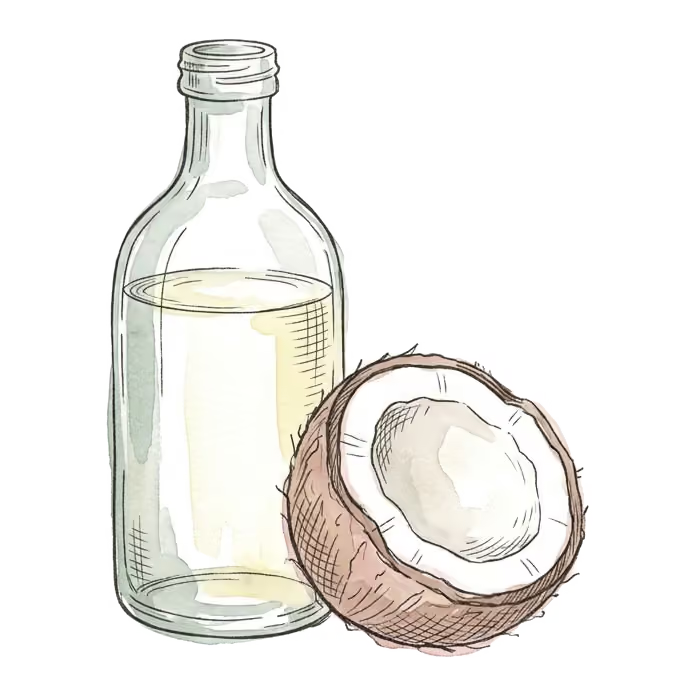
MCT Oil (Medium-Chain Triglycerides)
By Superfoods Advisor Editors·July 3, 2026
What is MCT oil? C8 and C10 fats fractionated from coconut or palm kernel oil. Ketones, weight and brain evidence, vs coconut oil, dose and side effects.
MCT oil is a supplement oil made of medium-chain triglycerides, mostly caprylic (C8) and capric (C10) acid, fractionated from coconut or palm kernel oil. It travels straight to the liver, where part of it is turned into ketones. Trials show it raises blood ketones modestly; its effects on weight and cognition are small and limited.
Medium-chain triglycerides are a class of saturated fats defined by fatty acid chain lengths of 6–12 carbon atoms, in contrast to the long-chain fatty acids (C14–C22) that constitute the bulk of dietary fat from animal and plant sources. Commercial MCT oil is derived primarily from coconut oil (Cocos nucifera) and, less commonly, palm kernel oil (Elaeis guineensis), through a fractionation process that concentrates the medium-chain fatty acids and removes longer-chain components. The resulting product is a clear, nearly tasteless liquid used as a dietary supplement and functional food ingredient.
MCT oil occupies a distinctive metabolic position: because medium-chain fatty acids are shorter and more water-soluble than long-chain fats, they are absorbed through the gut enterocytes and transported directly to the liver via the portal venous system, bypassing the lymphatic chylomicron route used by long-chain dietary fats. This unique absorption pathway means MCTs are rapidly oxidized in hepatic mitochondria and may generate ketone bodies (beta-hydroxybutyrate, acetoacetate) even in non-fasted, non-ketogenic dietary conditions, albeit at lower concentrations than achieved during prolonged fasting or strict ketogenic dieting.
Evidence at a glance
Active Compounds and Composition
The four fatty acids classified as medium-chain are:
- Caproic acid (C6:0): Hexanoic acid. Rarely included in commercial MCT oil due to its strong, unpleasant taste and gastrointestinal irritation at even modest doses.
- Caprylic acid (C8:0): The most rapidly and efficiently converted to ketones of the medium-chain fatty acids; in acute human studies it gave the largest ketone response (Vandenberghe et al., 2017). Most premium MCT products emphasize C8 content.
- Capric acid (C10:0): Slower ketogenic conversion than C8 but still significantly faster than long-chain fats. Contributes to antimicrobial properties in in vitro studies.
- Lauric acid (C12:0): Classified as a medium-chain fatty acid by chain length, but far less ketogenic than C8 or C10: in one acute study, C8 produced about six times the ketone response of C12 (St-Pierre et al., 2019). How much lauric acid travels to the liver by the portal route rather than in chylomicrons is debated (Dayrit, 2015). Despite this, lauric acid makes up about 42 g of every 100 g of coconut oil, against roughly 7 g of C8 and 5 g of C10 (USDA FoodData Central) — which is why coconut oil is not metabolically equivalent to MCT oil (see the coconut entry for the whole oil’s evidence). Many marketing claims about “MCTs in coconut oil” conflate lauric acid with the genuinely ketogenic shorter-chain MCTs. MCT oil is specifically fractionated to concentrate C8 and C10.
Commercial MCT oils consist mostly of caprylic acid (C8) and capric acid (C10), with little to no C6 or C12; the “classical” MCT oil used in one Canadian study was 55% C8 and 35% C10 (Vandenberghe et al., 2017). Some products sell “C8-only” MCT oil at a premium, claiming superior ketogenic efficiency.
Evidence for Purported Benefits
Ketone Production and Metabolic Energy
Evidence:Moderate Several trials and a meta-analysis show MCT raises blood ketones, though far less than fasting or a ketogenic diet.
The ketogenic pathway is well characterized: MCTs enter hepatic mitochondria largely independently of carnitine (unlike long-chain fats, which require carnitine acyltransferases), undergo rapid beta-oxidation to acetyl-CoA, and — when acetyl-CoA exceeds the TCA cycle’s capacity — are converted to ketone bodies. Clinical trials confirm that oral MCT raises plasma beta-hydroxybutyrate (BHB) in people eating normal mixed diets: in the Henderson et al. (2009) trial in people with Alzheimer’s disease, a 10 g dose of tricaprylin (C8 MCT) raised mean serum BHB from 0.09 mM before dosing to 0.14 mM two hours afterward, and the full 20 g dose gave average post-dose levels of 0.36–0.39 mM (Henderson et al., 2009), and a meta-analysis by Avgerinos et al. (2020) found that MCTs raised BHB relative to placebo. The degree of ketosis achieved is substantially lower than during fasting or ketogenic diets and at supplement doses is unlikely to produce the neurometabolic effects associated with therapeutic ketosis in epilepsy management. In a small crossover study in healthy adults, C8 (caprylic acid) was about three times more ketogenic than C10 and about six times more ketogenic than C12 (lauric acid) (St-Pierre et al., 2019).
Weight Management
Evidence:Limited A meta-analysis of 13 small RCTs found about 0.5 kg loss, with commercial bias and poor reporting.
Several short-term trials suggest MCTs may modestly reduce energy intake and body fat compared to isocaloric long-chain fat consumption. St-Onge and Bosarge (2008) compared 18–24 g/day of MCT oil vs. olive oil within a 16-week weight-loss program in overweight adults (49 enrolled, 31 completed) and found 1.67 kg lower endpoint body weight with MCT oil, with a non-significant trend toward greater fat-mass loss. The proposed mechanisms include greater postprandial energy expenditure and fat oxidation, earlier satiety signaling, and reduced fat deposition; in a 4-week crossover feeding trial in 19 overweight men, a larger rise in fat oxidation with MCT than with olive oil tended to go with greater weight loss (St-Onge & Jones, 2003). A meta-analysis by Mumme and Stonehouse (2015) of 13 RCTs (749 participants) found that replacing long-chain fats with MCTs reduced body weight by about 0.5 kg and waist circumference by about 1.5 cm, but many trials lacked information for quality assessment, commercial bias was detected, and designs varied in duration, dose, and control of energy intake; the authors called for larger independent trials. MCT oil is calorie-dense, like any fat, and not a weight-loss agent when added to rather than substituted within a diet.
Cognitive Function and Neurological Applications
Evidence:Limited A few trials in Alzheimer’s or mild cognitive impairment show small, genotype-dependent effects at risk of bias; none in healthy adults.
The brain can utilize ketone bodies as an alternative energy substrate to glucose. This has generated interest in MCT oil as a cognitive support for populations with impaired cerebral glucose metabolism, particularly in Alzheimer’s disease (AD) and mild cognitive impairment. In a 90-day randomized, placebo-controlled trial in 152 people with mild to moderate Alzheimer’s disease, Henderson et al. (2009) reported that 20 g/day of tricaprylin (AC-1202, later marketed as Axona) produced a small ADAS-Cog difference versus placebo at day 45 in the whole study population, with larger differences at days 45 and 90 in participants who did not carry the APOE4 allele. This genotype-dependency and the restriction of positive effects to a subpopulation substantially limits generalizability. A 2020 meta-analysis by Avgerinos et al. (12 records, 422 participants with mild cognitive impairment or Alzheimer’s disease) found a trend toward better ADAS-Cog scores and a small improvement on a combined cognitive measure with MCTs, while noting that risk of bias in the existing studies calls for further trials. No meaningful cognitive benefits in healthy young to middle-aged adults have been established.
Athletic Performance and Endurance
Evidence:Insufficient Small crossover trials found no performance benefit over carbohydrate, and GI symptoms were common.
MCTs have been investigated as an alternative fuel source for endurance exercise, with the hypothesis that MCT-derived ketones could spare muscle glycogen. In a randomized crossover study in eight endurance-trained cyclists (Goedecke et al., 2005), 32 g of MCT before exercise plus MCT with carbohydrate during 270 minutes of cycling did not alter substrate use; half the riders had GI symptoms, and sprint and time-trial performance were slower than with carbohydrate alone. An earlier study by the same group (Goedecke et al., 1999) found that adding smaller amounts of MCT to a carbohydrate drink did not change fuel oxidation or time-trial performance. The evidence does not support MCT oil as an ergogenic aid for endurance athletes beyond its caloric contribution.
Typical Use and Dosing
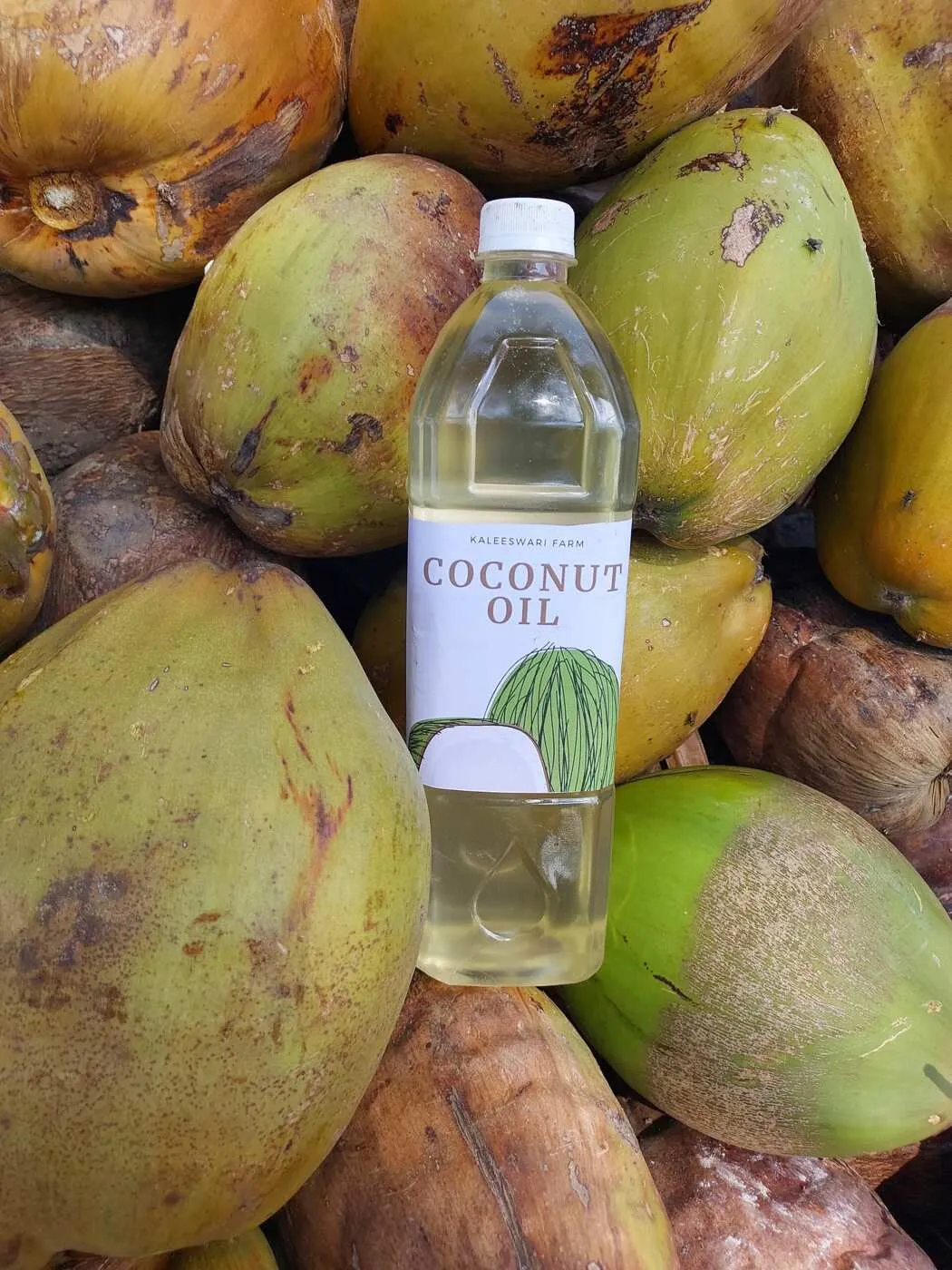 Photo: deadrat, CC BY-SA 4.0, via Wikimedia Commons
MCT oil is available as liquid oil, powder (emulsified with tapioca starch, acacia fiber, or similar carriers), and soft gel capsules.
- Doses used in trials: the weight-management trial above used 18–24 g/day (St-Onge & Bosarge, 2008); a tablespoon (15 mL) of MCT oil weighs about 14 g.
- Ketone production: two 20 mL doses of C8 or mixed C8/C10 oil raised plasma ketones in healthy adults, with C8 giving the largest rise (Vandenberghe et al., 2017).
- Cognitive/AD research dose: 20 g/day of tricaprylin (AC-1202) was used in the Henderson et al. trial.
- GI tolerance starting dose: Starting with a small amount, such as 1 teaspoon (5 mL) per day, and increasing gradually is the usual advice. Rapid introduction at full doses commonly causes diarrhea and cramping.
MCT oil has a relatively low smoke point and is not suitable for high-heat cooking. It is typically added cold to beverages (coffee, smoothies), salad dressings, or used as a post-cook finishing oil.
Our golden milk recipes list a spoonful of MCT oil as one way to add the fat that may help curcumin absorption.
Safety, Interactions, and Contraindications
GI distress: The most common adverse effect at any dose. Diarrhea, nausea, abdominal cramping, and vomiting are dose-dependent and common at larger single doses in unacclimated individuals; in one cycling trial, half the riders given 32 g of MCT had GI symptoms (Goedecke et al., 2005). GI tolerance improves with gradual dose escalation over weeks.
Caloric density: MCT oil supplies slightly less energy per gram than long-chain fats, but it is still a concentrated calorie source. Supplementing without accounting for caloric displacement in the overall diet will contribute to a positive energy balance and weight gain.
Liver disease: MCTs are primarily oxidized in the liver, but they are also used clinically as a fat source when bile flow is poor, as in infants with biliary atresia, though the evidence behind that practice is limited (Mancell et al., 2026). A small early study in people with cirrhosis found no clinical, EEG or blood-ammonia changes after oral MCTs (Morgan et al., 1974). People with liver disease should still use MCT oil only under medical supervision.
Cardiovascular considerations: Coconut oil, whose main fatty acid is C12 lauric acid (largely absent from purified MCT oil), raised LDL cholesterol by about 10.5 mg/dL compared with nontropical vegetable oils in a meta-analysis of 16 trials (Neelakantan et al., 2020). Concentrated C8/C10 MCT oil appears to behave differently: a meta-analysis of 13 trials found no differences in blood lipid levels when MCTs replaced long-chain fats, though lipids were a secondary outcome (Mumme & Stonehouse, 2015). Individuals with hyperlipidemia should monitor lipids when initiating MCT supplementation.
Diabetic ketoacidosis (DKA) risk: In individuals with Type 1 diabetes or uncontrolled Type 2 diabetes, MCT-driven ketogenesis could theoretically contribute to ketoacid accumulation. Medical supervision is warranted.
Drug interactions: Data on drug interactions with MCT oil are sparse; anyone taking prescription medication can check with a pharmacist before adding it.
Product Selection Criteria
- Fatty acid profile disclosure: A quality MCT oil will declare its C8:C10 ratio on the label. Products composed entirely or primarily of C8 (caprylic acid) have a superior ketogenic efficiency profile. Avoid products that include lauric acid (C12) in the MCT fractions without disclosure.
- Coconut vs. palm kernel source: Both are acceptable; coconut-derived is more common and preferred by consumers avoiding palm oil for sustainability reasons.
- Purity and additives: Liquid MCT oil should contain no fillers, carriers, or hydrogenated fats. MCT powders necessarily contain an emulsification carrier (e.g., tapioca starch, acacia fiber) — verify the carrier contributes negligible net carbohydrate if keto-specific use is the goal.
- Third-party testing: Verify for heavy metals, pesticide residues, and accurate fatty acid profile as labeled.
- Packaging: Because MCTs are fully saturated, they are more resistant to oxidation than unsaturated oils; standard sealed packaging stored away from heat is adequate.
Frequently Asked Questions
Is MCT oil good for you?
It is a well-tolerated fat for most people when introduced gradually, and it reliably raises blood ketones a little. The benefits people buy it for are less certain: about 0.5 kg of weight loss in pooled trials when it replaces other fats, and small cognitive effects only in some people with Alzheimer’s disease. It is still a concentrated calorie source.
What is the difference between MCT oil and coconut oil?
MCT oil is a fraction of coconut or palm kernel oil concentrated to C8 and C10 fatty acids. Coconut oil is about 42% lauric acid (C12), with roughly 7% C8 and 5% C10. In one crossover study, coconut oil’s ketone peak was about a quarter of pure C8’s, so studies on MCT oil do not apply to coconut oil.
Does MCT oil break a fast?
In terms of calories, yes: a tablespoon (about 14 g) is almost pure fat. It does raise blood ketones, but supplement doses produce levels well below those of prolonged fasting, so it does not reproduce a fasted state. Whether that matters depends on why someone is fasting, a point worth raising with a clinician for medical fasting protocols.
How much MCT oil per day?
No standard dose exists. Weight trials used 18 to 24 g a day, and the Alzheimer’s trial used 20 g a day of C8. Starting with about 1 teaspoon (5 mL) a day and increasing over weeks helps avoid diarrhea and cramping. People with liver disease or type 1 diabetes should use it only with medical supervision.
What are the side effects of MCT oil?
Digestive symptoms are the most common: diarrhea, nausea, cramping and sometimes vomiting, especially with large single doses. In one cycling trial, half the riders given 32 g had gut symptoms. Tolerance usually improves with gradual escalation. Because it drives ketone production, people with type 1 or poorly controlled type 2 diabetes need medical oversight.
References
Show all 13 referencesShow fewer
- St-Onge, M. P., & Jones, P. J. (2003). Greater rise in fat oxidation with medium-chain triglyceride consumption relative to long-chain triglyceride is associated with lower initial body weight and greater loss of subcutaneous adipose tissue. International Journal of Obesity, 27(12), 1565–1571.
- Mumme, K., & Stonehouse, W. (2015). Effects of medium-chain triglycerides on weight loss and body composition: A meta-analysis of randomized controlled trials. Journal of the Academy of Nutrition and Dietetics, 115(2), 249–263.
- Henderson, S. T., Vogel, J. L., Barr, L. J., et al. (2009). Study of the ketogenic agent AC-1202 in mild to moderate Alzheimer’s disease: A randomized, double-blind, placebo-controlled, multicenter trial. Nutrition & Metabolism, 6, 31.
- Goedecke, J. H., Clark, V. R., Noakes, T. D., & Lambert, E. V. (2005). The effects of medium-chain triacylglycerol and carbohydrate ingestion on ultra-endurance exercise performance. International Journal of Sport Nutrition and Exercise Metabolism, 15(1), 15–27.
- Avgerinos, K. I., Egan, J. M., Mattson, M. P., & Kapogiannis, D. (2020). Medium chain triglycerides induce mild ketosis and may improve cognition in Alzheimer’s disease. A systematic review and meta-analysis of human studies. Ageing Research Reviews, 58, 101001.
- Dayrit, F. M. (2015). The properties of lauric acid and their significance in coconut oil. Journal of the American Oil Chemists’ Society, 92(1), 1–15.
- St-Onge, M. P., & Bosarge, A. (2008). Weight-loss diet that includes consumption of medium-chain triacylglycerol oil leads to a greater rate of weight and fat mass loss than does olive oil. American Journal of Clinical Nutrition, 87(3), 621–626.
- Goedecke, J. H., Elmer-English, R., Dennis, S. C., Schloss, I., Noakes, T. D., & Lambert, E. V. (1999). Effects of medium-chain triacylglycerol ingested with carbohydrate on metabolism and exercise performance. International Journal of Sport Nutrition, 9(1), 35–47.
- Vandenberghe, C., St-Pierre, V., Pierotti, T., Fortier, M., Castellano, C. A., & Cunnane, S. C. (2017). Tricaprylin alone increases plasma ketone response more than coconut oil or other medium-chain triglycerides: An acute crossover study in healthy adults. Current Developments in Nutrition, 1(4), e000257.
- St-Pierre, V., Vandenberghe, C., Lowry, C. M., et al. (2019). Plasma ketone and medium chain fatty acid response in humans consuming different medium chain triglycerides during a metabolic study day. Frontiers in Nutrition, 6, 46.
- Neelakantan, N., Seah, J. Y. H., & van Dam, R. M. (2020). The effect of coconut oil consumption on cardiovascular risk factors: A systematic review and meta-analysis of clinical trials. Circulation, 141(10), 803–814.
- Mancell, S., Dhawan, A., Ayis, S., & Whelan, K. (2026). Medium-chain triglyceride supplementation in infants with biliary atresia: a review of the evidence for impacts on fat absorption, growth, nutritional status and clinical outcomes. Proceedings of the Nutrition Society, 1–8.
- Morgan, M. H., Bolton, C. H., Morris, J. S., & Read, A. E. (1974). Medium chain triglycerides and hepatic encephalopathy. Gut, 15(3), 180–184.
More in Supplements & Ingredients
- Berberine
Berberine for weight loss: trials show about 1 to 2 kg, not Ozempic-level results, plus blood sugar and LDL effects, dosage, side effects and interactions.
- CBD (Cannabidiol)
CBD for sleep: what the research shows, how CBD differs from THC, plus the anxiety and epilepsy evidence, dosing, legal status and side effects.
- Collagen (Hydrolyzed Collagen Peptides)
Collagen peptides benefits weighed against the trials: skin elasticity, joint pain, bone density and muscle, plus daily dose, timing and side effects.
- Inulin
What is inulin? A prebiotic fiber from chicory root and other plants: how it feeds gut bacteria, benefits, daily dose, side effects and inulin vs psyllium.
- Nutritional Yeast
Is nutritional yeast good for you? About 8 g complete protein per 15 g, B vitamins and B12 if fortified, vs brewer's yeast, daily amounts and gout.
- Resveratrol (trans-3,5,4'-Trihydroxystilbene)
Resveratrol benefits weighed against the evidence: under 1% bioavailability, mixed human trials, no lifespan gain in rigorous mouse tests, plus safety.




Browse all supplements & ingredients →
Curated by Superfoods Advisor Editors·Last updated