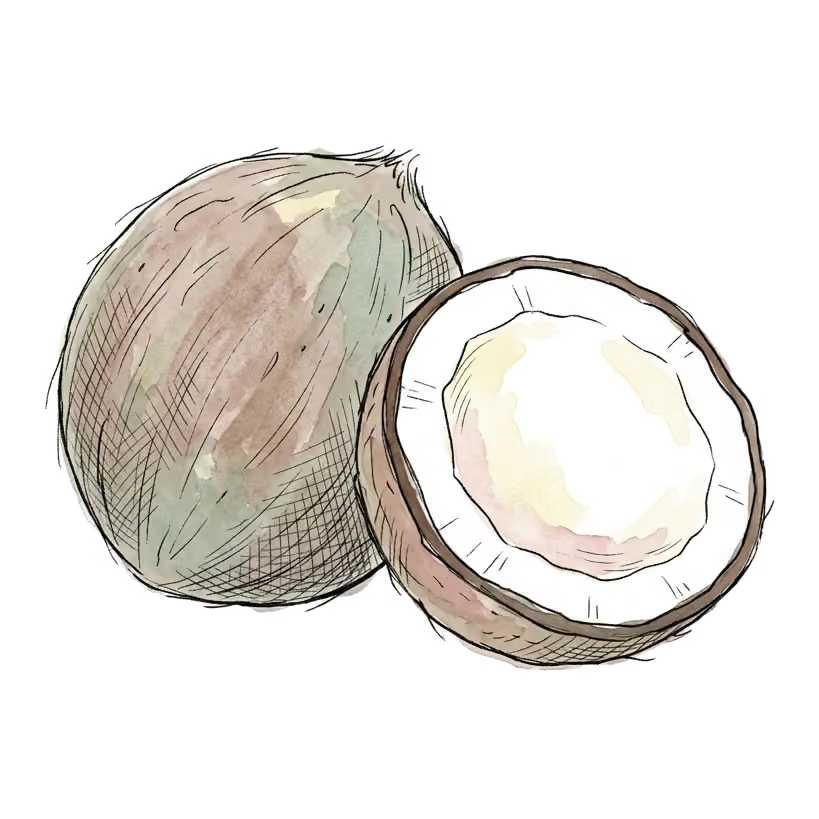
Coconut (Cocos nucifera)
Cocos nucifera · also known as coconut oil, virgin coconut oil, coconut meat, coconut milk, coconut water, desiccated coconut, MCT source, copra
By Superfoods Advisor Editors·July 3, 2026
Is coconut oil good for you? What trials show on LDL, HDL, weight and MCTs, how it compares with olive and MCT oil, plus coconut flesh, milk and water.
Coconut oil, pressed from the flesh of the coconut palm (Cocos nucifera), is best treated as a saturated fat to use in moderation rather than a health food. About 83% of it is saturated, and a meta-analysis of 16 trials found it raised LDL cholesterol by 10.5 mg/dL compared with non-tropical vegetable oils, while also raising HDL.
The coconut fruit supplies several distinct foods: the white flesh (“meat”), the liquid coconut water, oil extracted from dried flesh (copra oil) or fresh flesh (virgin coconut oil), and coconut milk blended and strained from the meat. Each has its own nutritional profile and evidence.
The debate centres on coconut oil’s saturated fat content: about 83 g of every 100 g of coconut oil is saturated fat (USDA FoodData Central), compared with ~14 g in olive oil (USDA FoodData Central) and ~51 g in unsalted butter, which is itself only about 81% fat (USDA FoodData Central). The American Heart Association has maintained guidance recommending limitation of saturated fat intake and advises against coconut oil for the same LDL-raising reason it gives for butter and other saturated fats (Sacks et al., 2017). Proponents of coconut oil counter that its unique medium-chain triglyceride (MCT) composition confers distinct metabolic properties not shared by the long-chain saturated fats in animal products. Both positions have caveats, set out below.
Evidence at a glance
Active Compounds
Fatty acid profile of coconut oil. Coconut oil’s saturated fatty acids are predominantly medium-chain (C8–C12). Shares below are approximate percentages of total fatty acids, derived from USDA FoodData Central:
- Lauric acid (C12:0): ~45–50% of total fatty acids (USDA lists 41.8 g per 100 g of oil). Lauric acid is technically classified as a medium-chain fatty acid but is metabolically ambiguous. Unlike true short-chain MCTs (C8 caprylic and C10 capric acids), a large share of lauric acid is thought to be packaged into chylomicrons and absorbed through the lymphatic system — as long-chain fats are — rather than travelling directly to the liver via the portal vein for rapid ketone conversion. This distinction is important when evaluating claims about coconut oil and MCT metabolism.
- Caprylic acid (C8:0): ~6–8%. The most ketogenic medium-chain fatty acid in a head-to-head crossover study (Vandenberghe et al., 2017); rapidly converted to ketone bodies in the liver, providing an alternative fuel source independent of glucose.
- Capric acid (C10:0): ~5–8%. Also rapidly oxidized to ketones, though with slightly lower efficiency than C8.
- Myristic acid (C14:0): ~17–19%. A long-chain saturated fat with potent LDL-raising properties.
- Palmitic acid (C16:0): ~9–10%. Another LDL-raising long-chain saturated fat.
The net effect of coconut oil on the lipid profile reflects all these fatty acids together, not merely its MCT fraction.
Polyphenols in virgin coconut oil. Unrefined (virgin) coconut oil produced from fresh coconut milk contains phenolic acids, chiefly ferulic acid and p-coumaric acid, as well as tocopherols. Refined coconut oil (RBD: refined, bleached, deodorized) showed lower antioxidant capacity than virgin oil in a comparison that attributed the difference to phenolic content (Marina et al., 2009).
Coconut flesh (meat). Whole raw coconut flesh is a meaningful source of dietary fiber (~9 g/100 g), manganese (~1.5 mg/100 g, ~65% DV), copper, and selenium (USDA FoodData Central). The fiber is predominantly insoluble. Desiccated coconut retains these nutrients in concentrated form.
Coconut water. The liquid endosperm is composed primarily of water (~95%), sugars (~2.6 g/100 g), and electrolytes including potassium (~250 mg/100 g), sodium, and magnesium (USDA FoodData Central). It is not a significant source of fat or protein, and its nutritional value lies in hydration and modest electrolyte provision rather than the fatty acid compounds discussed above.
Medium-chain triglycerides (MCTs). Commercial MCT oil is typically fractionated coconut or palm kernel oil, containing predominantly C8 and C10 fatty acids with lauric acid removed. Pure MCT oil and coconut oil are therefore not interchangeable in the context of MCT metabolism research; most MCT oil studies do not apply directly to whole coconut oil. The fractionated product has its own entry: MCT oil.
Evidence for Purported Benefits
Weight management and satiety
Evidence:Insufficient The satiety and energy-use data come from MCT oil, not coconut oil, which is mostly lauric acid.
Medium-chain fatty acids (particularly C8 and C10) are absorbed and oxidized more rapidly than long-chain fats, producing greater satiety per calorie in some studies and greater thermogenic effect. A narrative review by St-Onge and Jones (Journal of Nutrition, 2002) concluded that MCTs increase energy expenditure and may promote satiety and help weight control when they replace long-chain fats, though it noted the satiety mechanism was not established. However, these studies used fractionated MCT oil (high in C8 and C10), not coconut oil, which is primarily lauric acid and contains relatively little C8 and C10 combined. Extrapolating MCT oil findings to coconut oil is scientifically tenuous.
Ketone production and cognitive function
Evidence:Insufficient A C8 formulation helped a subgroup in one trial; a 24-week trial of virgin coconut oil in Alzheimer’s found no cognitive difference.
Caprylic acid (C8) produced the largest ketone response of the medium-chain oils tested in a small crossover study in healthy adults (Vandenberghe et al., 2017). Ketone bodies serve as an alternative fuel for the brain and have been studied as a potential support for cognitive function in aging, particularly in Alzheimer’s disease, where neuronal glucose metabolism is impaired. A 90-day randomized, placebo-controlled trial (Henderson et al., Nutrition & Metabolism, 2009; n=152, mild to moderate Alzheimer’s disease) of AC-1202, a caprylic triglyceride formulation, found a small advantage over placebo on the ADAS-Cog at day 45; by day 90 the difference was confined to participants who did not carry the APOE4 allele. This remains a preliminary and contested area; clinical trials using actual coconut oil (rather than purified C8) for cognitive outcomes have not demonstrated consistent benefit; a 24-week trial in 120 people with mild-to-moderate Alzheimer’s disease found no overall cognitive difference between virgin coconut oil and canola oil (Fernando et al., 2023).
Antimicrobial activity
Evidence:Lab & animal only Lauric acid and monolaurin act in lab studies; human data cover only topical monolaurin, not eating coconut oil.
Lauric acid and its monoglyceride derivative monolaurin exhibit antimicrobial activity against enveloped viruses, certain bacteria, and fungi in in vitro studies. Clinical evidence that dietary coconut oil at typical intake levels produces meaningful systemic antimicrobial effects in humans is limited; a literature review found human in vivo evidence for monolaurin only for topical (intravaginal and intraoral) use (Barker et al., 2019).
HDL cholesterol
Evidence:Moderate A meta-analysis of 16 trials found coconut oil raises HDL, but it also raises LDL, as other saturated fats do.
Some trials have found that coconut oil raises HDL cholesterol more than other fats; in a 4-week trial in 94 healthy adults, coconut oil raised HDL more than butter or olive oil, and LDL less than butter (Khaw et al., 2018). However, across trials it also raises LDL cholesterol. A 2020 meta-analysis by Neelakantan et al. (Circulation) pooled 16 trials and found that coconut oil significantly increased LDL cholesterol compared with non-tropical vegetable oils (+10.5 mg/dL), while also increasing HDL (+4 mg/dL) — a pattern consistent with other saturated fats rather than indicating unique benefit.
Is Coconut Oil Bad for Your Heart?
The weight of trial evidence says it raises LDL cholesterol, a recognised cardiovascular risk factor, but no trial has measured its effect on heart attacks or strokes directly. The AHA presidential advisory on dietary fats (Sacks et al., Circulation, 2017) concluded that replacing saturated fat with unsaturated fats, especially polyunsaturated fats, lowers cardiovascular disease incidence. It advised against the use of coconut oil because it raises LDL cholesterol and has no known offsetting favourable effects, and noted that trials comparing coconut oil with other oils on cardiovascular events have not been reported.
Proponents argue: (1) LDL particle size may matter as much as LDL concentration, (2) HDL increases may partially offset risk, (3) indigenous populations consuming traditional coconut-based diets (Kitavans, Tokelauans) show low rates of cardiovascular disease (Lindeberg & Lundh, 1993); in the Pukapuka and Tokelau studies, the islanders with the higher coconut intake had serum cholesterol 35–40 mg/dL higher, yet vascular disease was uncommon in both groups (Prior et al., 1981). Critics counter that these populations’ overall dietary patterns differ dramatically from Westernized consumption contexts, making attribution to coconut specifically unreliable.
The honest assessment: coconut oil is not equivalent to trans fats in harm profile, but it is not a cardiovascular-neutral food. Individuals with elevated LDL or familial hypercholesterolemia should exercise particular caution.
Typical Use and Culinary Applications
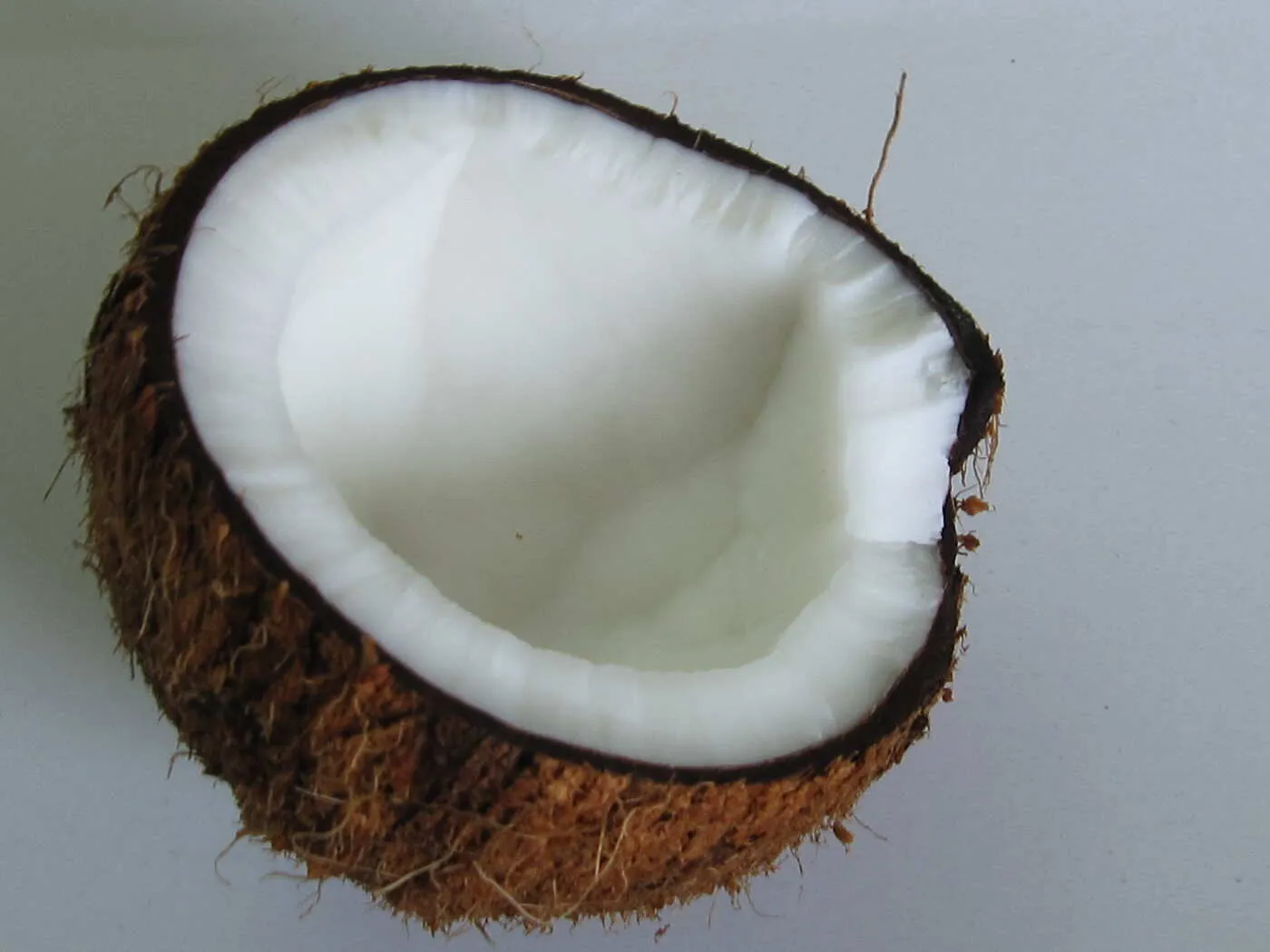 Photo: Chandrika Nair from Cochin, India, CC BY 2.0, via Wikimedia Commons
Virgin coconut oil smoke point. Unrefined virgin coconut oil has a moderate smoke point that varies with its free fatty acid content; refined coconut oil smokes at a higher temperature. It is suitable for sautéing at medium heat, baking, and adding flavor to curries and Asian dishes.
Solid at room temperature. Coconut oil melts at warm room temperature. Its solid-at-room-temperature property makes it useful as a butter substitute in vegan baking, where saturated fat solidity contributes to texture.
Whole coconut and coconut milk. Coconut flesh (raw or desiccated) and coconut milk (canned, full-fat) are culinary staples in South and Southeast Asian, Caribbean, and Pacific cooking. Full-fat canned coconut milk provides ~21 g fat per 100 g, most of it saturated (USDA FoodData Central); light coconut milk is typically diluted or partially defatted.
Coconut water. Most appropriately used as a natural hydration beverage. Its potassium content makes it a modest electrolyte drink, though commercial coconut water products often have added sugars.
Coconut milk and coconut oil are listed as dairy-free swaps in the golden milk recipes.
Safety, Interactions, and Contraindications
Cardiovascular risk. As discussed above, individuals with elevated LDL cholesterol, a family history of cardiovascular disease, or familial hypercholesterolemia should consult a physician before making coconut oil a dietary staple, given its LDL-raising effects.
Caloric density. Coconut oil provides ~120 kcal per tablespoon (about 14 g), similar to other oils (USDA FoodData Central). The suggestion that coconut oil’s thermogenic MCT content offsets its caloric load has not been supported by long-term weight management trials using whole coconut oil. In one 12-week trial in 40 women with abdominal obesity, all following a calorie-reduced diet and daily walking, 30 mL/day of coconut oil reduced waist circumference where soybean oil did not, while BMI fell in both groups (Assunção et al., 2009); the trial was small and short.
Allergy. Botanically, coconut is a drupe (stone fruit). The FDA long listed it as a tree nut for allergen labeling but removed it from that list in January 2025, so US labels no longer need to declare it in a “Contains” statement, though it still appears in the ingredient list (FDA). True immunoglobulin E (IgE)-mediated coconut allergy exists but is rare and not directly associated with tree-nut allergy (Anagnostou, 2017).
Drug interactions. Drug interactions with dietary coconut have not been well studied. Because coconut oil raises LDL cholesterol, people taking lipid-lowering medication should discuss regular use with their doctor.
Pregnancy and lactation. Coconut is a dietary staple in many coconut-producing regions, but its use in pregnancy has not been specifically studied in clinical trials. High coconut oil intake should be contextualized within overall saturated fat limits.
Product Selection Criteria
Virgin vs. refined coconut oil. For nutritional purposes and polyphenol content, choose virgin (unrefined) coconut oil produced from fresh coconut milk using cold-pressing or centrifugation. The oil should smell distinctly of coconut; neutral-smelling “coconut oil” has been refined and bleached.
“RBD” designation. Refined, bleached, and deodorized (RBD) coconut oil is suitable for high-heat cooking and has a neutral flavor, but lacks the phenolic compounds of virgin oil. It is not nutritionally inferior in fatty acid composition.
MCT oil vs. coconut oil. For specific applications targeting MCT metabolism (ketone production, satiety), fractionated MCT oil (C8 and/or C10) is more effective per gram than coconut oil, as it contains minimal lauric acid; in one crossover study, coconut oil’s ketone peak was about a quarter of pure C8’s (Vandenberghe et al., 2017). They are not equivalent products.
Organic certification. Organic certification is available for coconut products and may be relevant for buyers who want to avoid synthetic pesticides.
Desiccated coconut. Look for unsweetened desiccated coconut without added sulfites, which are sometimes used as preservatives.
Frequently Asked Questions
Is coconut oil healthy?
In small amounts it can be part of a balanced diet, but it is not a heart-healthy oil. Trials show it raises LDL cholesterol compared with non-tropical vegetable oils, and the American Heart Association advises against it. Virgin coconut oil keeps some phenolic compounds, yet its fatty acid profile is the same as refined oil.
Is coconut oil a seed oil?
No. Coconut oil comes from the flesh of the coconut, not a seed in the culinary sense; botanically the coconut is a drupe (stone fruit). Virgin coconut oil is pressed or centrifuged from fresh coconut milk, while refined (RBD) oil is made from dried flesh and then refined, bleached and deodorized.
How much coconut oil per day?
There is no recommended amount. US dietary guidelines cap saturated fat at 10% of daily calories (Dietary Guidelines for Americans, 2025–2030), and one tablespoon of coconut oil supplies about 120 kcal, most of it saturated fat. People with high LDL or familial hypercholesterolemia should discuss regular use with their clinician.
Is coconut oil better than olive oil?
For heart health, the evidence favours olive oil. Coconut oil is about 83% saturated fat versus about 14% in olive oil, and extra virgin olive oil has large outcome trials such as PREDIMED behind it. In one 4-week trial, coconut oil raised HDL more than olive oil, but it raises LDL across trials.
Does coconut oil help with weight loss?
The evidence does not show it. The satiety and energy-use findings come from MCT oil, not coconut oil, and no long-term weight trial using whole coconut oil supports the claim. One small 12-week trial in 40 women on a reduced-calorie diet found less waist circumference with coconut oil, while BMI fell equally in both groups.
References
Show all 15 referencesShow fewer
- Neelakantan, N., Seah, J. Y. H., & van Dam, R. M. (2020). The effect of coconut oil consumption on cardiovascular risk factors: A systematic review and meta-analysis of clinical trials. Circulation, 141(10), 803–814.
- Sacks, F. M., Lichtenstein, A. H., Wu, J. H. Y., Appel, L. J., Creager, M. A., Kris-Etherton, P. M., Miller, M., Rimm, E. B., Rudel, L. L., Robinson, J. G., Stone, N. J., & Van Horn, L. V. (2017). Dietary fats and cardiovascular disease: A presidential advisory from the American Heart Association. Circulation, 136(3), e1–e23.
- St-Onge, M. P., & Jones, P. J. (2002). Physiological effects of medium-chain triglycerides: Potential agents in the prevention of obesity. Journal of Nutrition, 132(3), 329–332.
- Henderson, S. T., Vogel, J. L., Barr, L. J., Garvin, F., Jones, J. J., & Costantini, L. C. (2009). Study of the ketogenic agent AC-1202 in mild to moderate Alzheimer’s disease: A randomized, double-blind, placebo-controlled, multicenter trial. Nutrition & Metabolism, 6(1), 31.
- Assunção, M. L., Ferreira, H. S., dos Santos, A. F., Cabral, C. R., & Florêncio, T. M. (2009). Effects of dietary coconut oil on the biochemical and anthropometric profiles of women presenting abdominal obesity. Lipids, 44(7), 593–601.
- Prior, I. A., Davidson, F., Salmond, C. E., & Czochanska, Z. (1981). Cholesterol, coconuts, and diet on Polynesian atolls: A natural experiment — the Pukapuka and Tokelau Island studies. American Journal of Clinical Nutrition, 34(8), 1552–1561.
- U.S. Department of Agriculture, Agricultural Research Service. FoodData Central: Oil, coconut (FDC 171412); Nuts, coconut meat, raw (170169); Nuts, coconut water (170174); Nuts, coconut milk, canned (170173).
- U.S. Food and Drug Administration. (2025). Frequently asked questions: Food allergen labeling guidance for industry.
- Vandenberghe, C., St-Pierre, V., Pierotti, T., Fortier, M., Castellano, C. A., & Cunnane, S. C. (2017). Tricaprylin alone increases plasma ketone response more than coconut oil or other medium-chain triglycerides: An acute crossover study in healthy adults. Current Developments in Nutrition, 1(4), e000257.
- Fernando, M. G., Silva, R., Fernando, W. M. A. D. B., et al. (2023). Effect of virgin coconut oil supplementation on cognition of individuals with mild-to-moderate Alzheimer’s disease in Sri Lanka (VCO-AD Study): A randomized placebo-controlled trial. Journal of Alzheimer’s Disease, 96(3), 1195–1206.
- Barker, L. A., Bakkum, B. W., & Chapman, C. (2019). The clinical use of monolaurin as a dietary supplement: A review of the literature. Journal of Chiropractic Medicine, 18(4), 305–310.
- Khaw, K. T., Sharp, S. J., Finikarides, L., et al. (2018). Randomised trial of coconut oil, olive oil or butter on blood lipids and other cardiovascular risk factors in healthy men and women. BMJ Open, 8(3), e020167.
- Marina, A. M., Man, Y. B., Nazimah, S. A., & Amin, I. (2009). Antioxidant capacity and phenolic acids of virgin coconut oil. International Journal of Food Sciences and Nutrition, 60(Suppl 2), 114–123.
- Anagnostou, K. (2017). Coconut allergy revisited. Children, 4(10), 85.
- Lindeberg, S., & Lundh, B. (1993). Apparent absence of stroke and ischaemic heart disease in a traditional Melanesian island: A clinical study in Kitava. Journal of Internal Medicine, 233(3), 269–275.
Related content

More in Oils & Fats
- Avocado Oil (Persea americana)
Avocado oil vs olive oil: how the two compare on fat profile, smoke point and vitamin E, plus avocado oil benefits, nutrition, uses and side effects.
- Dark Chocolate (Theobroma cacao ≥70%)
Is dark chocolate good for you? What trials show for blood pressure, cholesterol and the brain, plus how much a day, caffeine, sugar and heavy metals.
- Extra Virgin Olive Oil (Olea europaea)
Extra virgin olive oil benefits weighed against the evidence: PREDIMED heart data, oleocanthal and other polyphenols, nutrition, daily amounts and safety.
- Ghee / Clarified Butter (Bos taurus, milk fat)
Ghee vs butter: how clarifying removes water, lactose and casein and raises the smoke point, plus ghee benefits, nutrition, storage and saturated fat.
- Raw Cacao (Theobroma cacao)
Cacao vs cocoa: same Theobroma cacao bean, different processing. How roasting and Dutching change flavanols, plus cacao benefits, caffeine and safety.

Curated by Superfoods Advisor Editors·Last updated