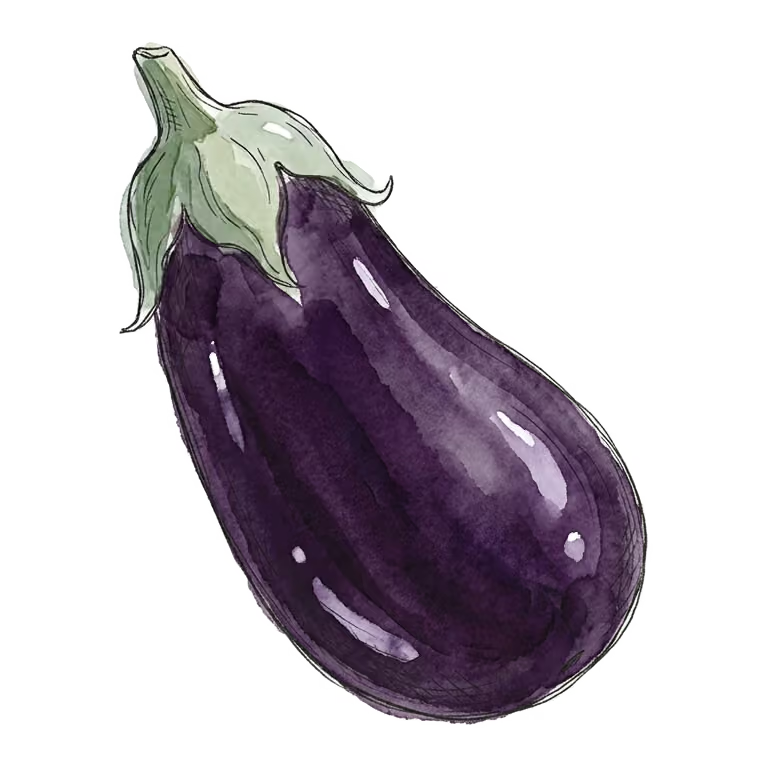
Eggplant / Aubergine (Solanum melongena)
Solanum melongena · also known as aubergine, brinjal, nasunin, anthocyanin
By Superfoods Advisor Editors·July 3, 2026
Is eggplant good for you? Eggplant nutrition per 100 g (35 kcal, 2.5 g fiber), nasunin in the skin, what studies show, nightshade concerns, side effects.
Eggplant (Solanum melongena), also called aubergine or brinjal, is a nightshade (Solanaceae) related to tomato, pepper and potato, cooked as a vegetable though botanically a berry. It is good for you as a low-calorie, fiber-containing food, with 35 kcal and 2.5 g of fiber per 100 g boiled. Claims for its skin antioxidant, nasunin, rest on lab studies.
Eggplant was domesticated in tropical Asia from the wild progenitor Solanum insanum, which still grows across South and Southeast Asia (Aubriot et al., 2018); the Indian subcontinent and China have both been proposed as centers of domestication. Cultivation spread westward to Persia and the Arab world during the medieval period — the word “aubergine” traces through Arabic al-bāḏinjān — then to Europe and Africa. “Brinjal” is the prevailing name across South Asia and southern Africa.
Eggplant is consumed as a vegetable across Mediterranean, Middle Eastern, South Asian, and East Asian cuisines. Its spongy flesh readily absorbs cooking fats and flavors, making preparation method central to both culinary quality and nutritional outcome. Bioactive interest centers on nasunin, the predominant anthocyanin in the purple skin, and chlorogenic acid, a phenolic antioxidant concentrated in the flesh.
Evidence at a glance
Active Compounds
Nasunin: A water-soluble anthocyanin pigment (delphinidin-3-(p-coumaroylrutinoside)-5-glucoside) concentrated in the purple skin of eggplant. Nasunin demonstrates potent antioxidant activity in vitro (superoxide and hydroxyl-radical scavenging) and has shown inhibition of lipid peroxidation and iron-chelating activity (Noda et al., 2000). It has also been studied for anti-angiogenic properties in rat-tissue and cell models (Matsubara et al., 2005). Nasunin is largely absent in peeled eggplant; the skin is the primary source. Bioavailability from whole eggplant in humans has not been rigorously quantified.
Chlorogenic acid: The predominant phenolic acid in eggplant flesh (Whitaker & Stommel, 2003); also the compound responsible for enzymatic browning when cut surfaces are exposed to air. In laboratory assays chlorogenic acid inhibits hepatic glucose-6-phosphatase, an enzyme of liver glucose output, in rat liver microsomes (Arion et al., 1997) and the carbohydrate-digesting enzyme alpha-glucosidase (Wang et al., 2022). A meta-analysis of five small trials of chlorogenic acid supplements, all in Asian populations and funded by manufacturers, reported modest blood pressure reductions (Onakpoya et al., 2015). Those trials used concentrated extracts, mostly from green coffee, not eggplant.
Fiber: Eggplant provides meaningful dietary fiber (about 2.5 g per 100 g boiled), contributing to satiety and colonic fermentation.
Glycoalkaloids (solasonine, solamargine): Eggplant’s steroidal glycoalkaloids are α-solasonine and α-solamargine, which share the aglycone solasodine. They differ from potato’s α-solanine and α-chaconine and tomato’s α-tomatine (Friedman, 2015). Measured levels in eggplant fruit are about 14% of the concentration considered toxic (Sánchez-Mata et al., 2010).
Nutritional Profile (per 100 g cooked, boiled)
| Nutrient | Amount | % DV (approx.) |
|---|---|---|
| Energy | 35 kcal | — |
| Carbohydrate | 8.7 g | 3% |
| Dietary fiber | 2.5 g | 9% |
| Protein | 0.8 g | 2% |
| Fat | 0.2 g | — |
| Vitamin C | 1.3 mg | 1% |
| Folate (B9) | 14 µg | 4% |
| Potassium | 123 mg | 3% |
| Manganese | 0.11 mg | 5% |
| Copper | 0.06 mg | 7% |
Source: USDA FoodData Central (FDC ID 169229, “Eggplant, cooked, boiled, drained, without salt”).
Eggplant’s energy density is low, making it a useful calorie-diluting ingredient in mixed dishes. Pan-cooking with oil substantially increases caloric content; baking, roasting, grilling, or steaming are preferable for calorie-controlled preparations.
Evidence for Purported Benefits
Antioxidant Activity
Evidence:Lab & animal only Nasunin and chlorogenic acid act as antioxidants in vitro; human studies of eggplant are few and weak.
Nasunin is a potent antioxidant in vitro. Its superoxide scavenging and iron-chelating capacity (which suppresses hydroxyl-radical generation) were characterized in vitro (Noda et al., 2000). Chlorogenic acid also shows antioxidant activity in laboratory assays. However, in vivo human studies specifically examining eggplant consumption and systemic antioxidant status are limited in number and methodological rigor. Anthocyanin bioavailability from plant foods is highly variable and context-dependent.
Lipid-Lowering Effects
Evidence:Limited Animal studies show lower lipids; the one small human trial (38 people) found no difference from placebo.
In cholesterol-fed rabbits, eggplant juice lowered plasma cholesterol, LDL, and triglycerides (Jorge et al., 1998), and a flavonoid extract lowered lipids in rats (Sudheesh et al., 1997). Results are not uniform: diets with 1% eggplant powder did not lower the serum and liver cholesterol pool in rats, though they reduced absorption of a test dose of dietary cholesterol (Kritchevsky et al., 1975). A small placebo-controlled Brazilian study by Guimarães et al. (2000; n = 38 hypercholesterolemic volunteers, 5 weeks) found no difference in blood lipids between eggplant infusion and placebo; total and LDL cholesterol fell only in within-person comparisons, and the authors described the effect as modest, transitory, and no different from standard diet and exercise advice. The clinical evidence is insufficient to support eggplant as a cholesterol-lowering intervention.
Blood Glucose Modulation
Evidence:Lab & animal only Chlorogenic acid inhibits glucose enzymes in assays; no human trials have tested eggplant.
Chlorogenic acid, the dominant phenolic in eggplant, inhibits glucose-6-phosphatase (in rat liver microsomes) and alpha-glucosidase in enzyme assays. Supplements of green coffee extract, which is rich in chlorogenic acid, were associated with a small reduction in fasting glucose in a meta-analysis of clinical trials (Asbaghi et al., 2020). Eggplant-specific trials examining blood glucose endpoints in humans are limited.
Anti-angiogenic Activity
Evidence:Lab & animal only Nasunin slowed vessel growth in rat-tissue and cell studies; no human trials.
Matsubara et al. (2005) found that nasunin suppressed microvessel outgrowth from rat aortic rings and slowed the proliferation of human umbilical vein endothelial cells, but it had no significant effect on endothelial cell migration or tube formation. No human clinical trials have examined anti-angiogenic effects of dietary eggplant.
Typical Use and Preparation
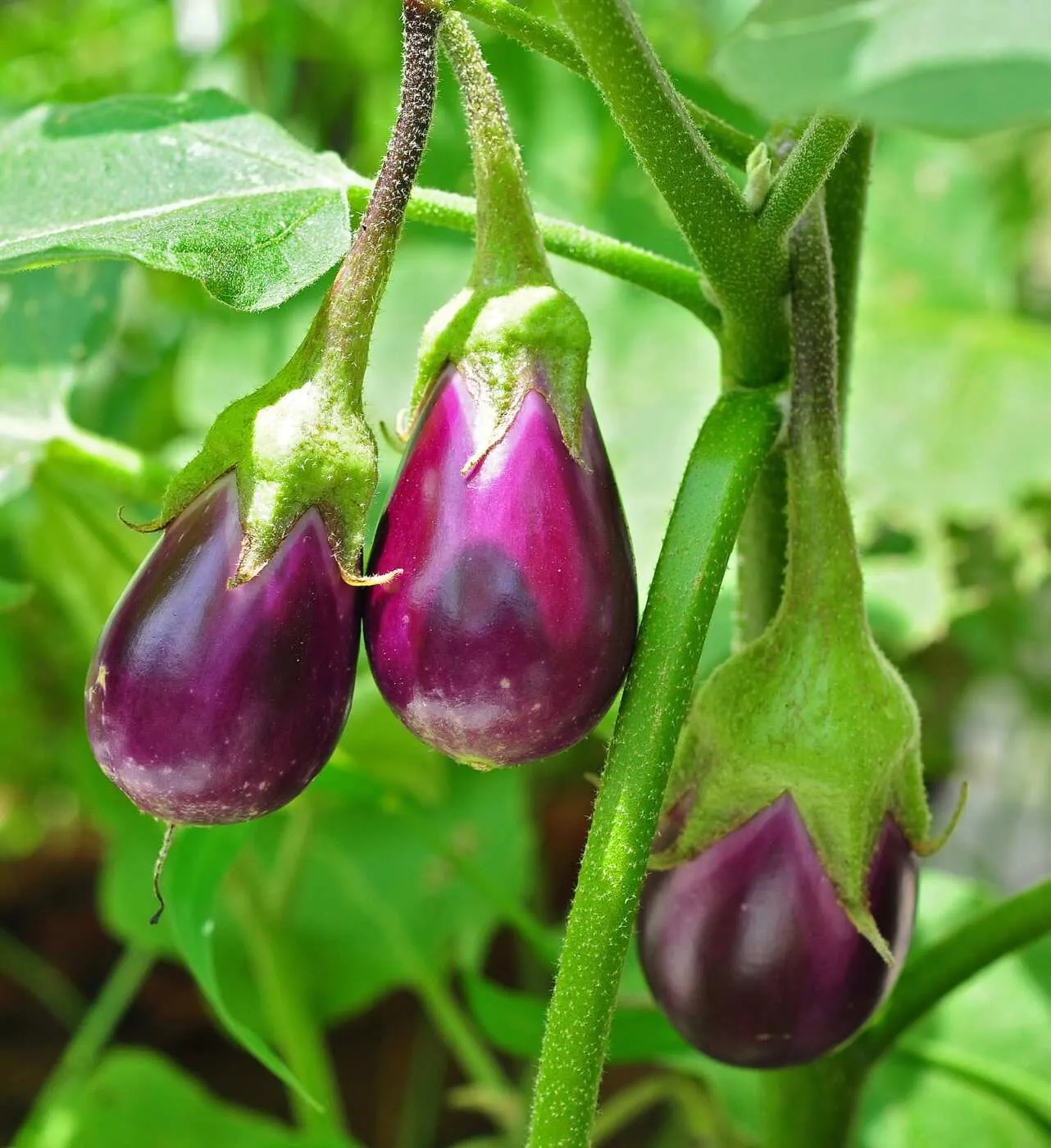 Photo: Joydeep, CC BY-SA 3.0, via Wikimedia Commons
Eggplant is rarely consumed raw (it has an astringent, slightly bitter flavor when uncooked). Most preparations involve heat, which softens the flesh and mellows the bitterness:
- Roasting or grilling: Produces characteristic smoky flavor through Maillard reactions and caramelization; suitable for baba ganoush, caponata, and stuffed preparations.
- Baking or braising: Used in moussaka, ratatouille (with zucchini and tomato), and casseroles; retains moisture and absorbs surrounding flavors.
- Pan-frying and stir-frying: High surface area absorbs significant oil due to the spongy tissue structure; salting and pressing before cooking reduces oil absorption and removes bitter compounds (though modern cultivars have reduced bitterness).
- Steaming: Preserves nutrients with minimal added fat; texture becomes very soft.
- Preparation note: Because nasunin is concentrated in the skin, peeled eggplant substantially reduces anthocyanin content. Retaining the skin during cooking preserves this phytochemical fraction.
The eggplant’s high water content and low caloric density make it useful as a calorie-sparing ingredient in mixed dishes — substituting eggplant for starchier ingredients reduces the overall caloric density of a meal.
Nasunin and chlorogenic acid belong to the broad polyphenol family reviewed in our overview of polyphenols and aging research.
Safety, Interactions, and Contraindications
Glycoalkaloids: Eggplant’s glycoalkaloids are the solasodine-based solasonine and solamargine. Potato’s are solanine and chaconine, and tomato’s is tomatine (Friedman, 2015). Glycoalkaloid levels measured in common eggplant fruit were about 14% of the level considered toxic (Sánchez-Mata et al., 2010).
Nightshade sensitivity: Some individuals following the Autoimmune Protocol (AIP) or self-reporting nightshade sensitivity avoid eggplant alongside tomato, pepper, and potato, attributing inflammatory effects to nightshade glycoalkaloids. Peer-reviewed clinical evidence supporting this association in the general population is limited. Individuals managing conditions such as inflammatory arthritis who notice symptom correlation with nightshade foods may benefit from supervised elimination trials.
Oxalates: Eggplant contains some oxalate. Individuals with calcium oxalate kidney stones or prescribed low-oxalate diets should check eggplant against the oxalate list their clinician or dietitian uses.
Nickel content: The nickel content of vegetables varies with soil and growing conditions. Individuals with diagnosed nickel allergy or systemic nickel sensitivity on a low-nickel diet should check eggplant against the food list their clinician provides.
Allergy: Eggplant allergy is uncommon but documented, with reactions ranging from oral and gastrointestinal symptoms to anaphylaxis. Lipid transfer protein, profilin, and polyphenol oxidase have been identified as allergens, and cross-reactivity with pollens and other plant foods occurs (Berghi et al., 2021).
Interactions with medications: Interactions between dietary eggplant and medications have not been studied systematically. Anyone with concerns about a specific medication should ask a pharmacist or physician.
This entry is for informational purposes only and does not constitute medical advice. Consult a qualified healthcare provider for medical guidance.
Frequently Asked Questions
Is eggplant a fruit or a vegetable?
Botanically, eggplant is a fruit, specifically a berry that develops from the flower and holds the seeds, like its relative the tomato. In the kitchen it is cooked and served as a vegetable. Eggplant, aubergine and brinjal are the same plant, Solanum melongena; “brinjal” is the usual name in South Asia and southern Africa, and “aubergine” in British English.
Is eggplant healthy?
Eggplant is a low-calorie, high-water vegetable that adds fiber and bulk to meals, and its purple skin supplies the anthocyanin nasunin. It is not a concentrated source of vitamins or minerals. Proposed effects on cholesterol, blood sugar and blood vessel growth come from animal and cell studies, and the one small human cholesterol trial found no benefit over placebo (Guimarães et al., 2000).
Does eggplant have protein?
Very little. Boiled eggplant provides about 0.8 g of protein per 100 g, alongside 8.7 g of carbohydrate and 0.2 g of fat (USDA FoodData Central). Its meaty texture makes it a popular plant-based main ingredient, but dishes that rely on it for protein need legumes, tofu, cheese or another protein source alongside.
What are the side effects of eggplant?
Most people eat eggplant without problems. Documented issues are uncommon allergy, which can range from mouth itching to anaphylaxis (Berghi et al., 2021), and its oxalate content for people prone to calcium oxalate kidney stones. Some people report sensitivity to nightshades, though clinical evidence for that in the general population is limited.
How much eggplant is too much?
There is no established upper limit for eggplant as a food, and the glycoalkaloids measured in common eggplant are well below the level considered toxic. The bigger practical factor is cooking method: fried eggplant absorbs a large amount of oil, which raises calories substantially. People on low-oxalate or low-nickel diets should check eggplant against the food list their clinician uses.
References
Show all 16 referencesShow fewer
- Noda, Y., et al. (2000). Antioxidant activity of nasunin, an anthocyanin in eggplant peels. Toxicology, 148(2–3), 119–123.
- Guimarães, P. R., et al. (2000). Eggplant (Solanum melongena) infusion has a modest and transitory effect on hypercholesterolemic subjects. Brazilian Journal of Medical and Biological Research, 33(9), 1027–1036.
- Onakpoya, I. J., et al. (2015). The effect of chlorogenic acid on blood pressure: a systematic review and meta-analysis of randomized clinical trials. Journal of Human Hypertension, 29(2), 77–81.
- Matsubara, K., et al. (2005). Anti-angiogenic activity of nasunin, an antioxidant anthocyanin, in eggplant peels. Journal of Agricultural and Food Chemistry, 53(16), 6272–6275.
- Whitaker, B. D., & Stommel, J. R. (2003). Distribution of hydroxycinnamic acid conjugates in fruit of commercial eggplant (Solanum melongena L.) cultivars. Journal of Agricultural and Food Chemistry, 51(11), 3448–3454.
- USDA FoodData Central. Eggplant, cooked, boiled, drained, without salt. FDC ID 169229. Retrieved 2026.
- Friedman, M. (2015). Chemistry and anticarcinogenic mechanisms of glycoalkaloids produced by eggplants, potatoes, and tomatoes. Journal of Agricultural and Food Chemistry, 63(13), 3323–3337.
- Aubriot, X., et al. (2018). Shedding new light on the origin and spread of the brinjal eggplant (Solanum melongena L.) and its wild relatives. American Journal of Botany, 105(7), 1175–1187.
- Arion, W. J., et al. (1997). Chlorogenic acid and hydroxynitrobenzaldehyde: new inhibitors of hepatic glucose 6-phosphatase. Archives of Biochemistry and Biophysics, 339(2), 315–322.
- Wang, S., et al. (2022). The inhibitory mechanism of chlorogenic acid and its acylated derivatives on α-amylase and α-glucosidase. Food Chemistry, 372, 131334.
- Sánchez-Mata, M. C., et al. (2010). Alpha-solasonine and alpha-solamargine contents of gboma (Solanum macrocarpon L.) and scarlet (Solanum aethiopicum L.) eggplants. Journal of Agricultural and Food Chemistry, 58(9), 5502–5508.
- Jorge, P. A., et al. (1998). Effect of eggplant on plasma lipid levels, lipidic peroxidation and reversion of endothelial dysfunction in experimental hypercholesterolemia. Arquivos Brasileiros de Cardiologia, 70(2), 87–91.
- Sudheesh, S., et al. (1997). Hypolipidemic effect of flavonoids from Solanum melongena. Plant Foods for Human Nutrition, 51(4), 321–330.
- Kritchevsky, D., Tepper, S. A., & Story, J. A. (1975). Influence of an eggplant (Solanum melongena) preparation on cholesterol metabolism in rats. Experimental Pathology, 10(3–4), 180–183.
- Asbaghi, O., et al. (2020). The effects of green coffee extract supplementation on glycemic indices and lipid profile in adults: a systematic review and dose-response meta-analysis of clinical trials. Nutrition Journal, 19(1), 71.
- Berghi, O. N., et al. (2021). Solanum melongena allergy (a comprehensive review). Experimental and Therapeutic Medicine, 22(4), 1061.
More in Vegetables
- Artichoke (Cynara cardunculus var. scolymus)
Artichokes benefits explained: prebiotic inulin, cynarin, nutrition per 100 g, and what leaf-extract trials show for cholesterol, digestion and the liver.
- Asparagus (Asparagus officinalis)
Is asparagus good for you? Nutrition per 100 g, including 37% DV folate and 42% vitamin K, its prebiotic fiber, what studies show, and safety notes.
- Beets / Beetroot (Beta vulgaris)
Beet juice benefits explained: how beetroot nitrates lowered systolic blood pressure and aided endurance in trials, beets nutrition per 100 g, and safety.
- Broccoli (Brassica oleracea var. italica)
Is broccoli good for you? Broccoli nutrition per 100 g, including 118% DV vitamin K, how sulforaphane forms, what human studies show, and safety notes.
- Brussels Sprouts (Brassica oleracea var. gemmifera)
Brussels sprouts benefits and nutrition per 100 g (148% DV vitamin K, 94% vitamin C), their glucosinolates, what studies show, gas, and warfarin safety.
- Cabbage (Brassica oleracea var. capitata)
Is cabbage good for you? Cabbage nutrition per 100 g (63% DV vitamin K, 41% vitamin C), red vs green, sauerkraut, what studies show, and thyroid safety.

Curated by Superfoods Advisor Editors·Last updated