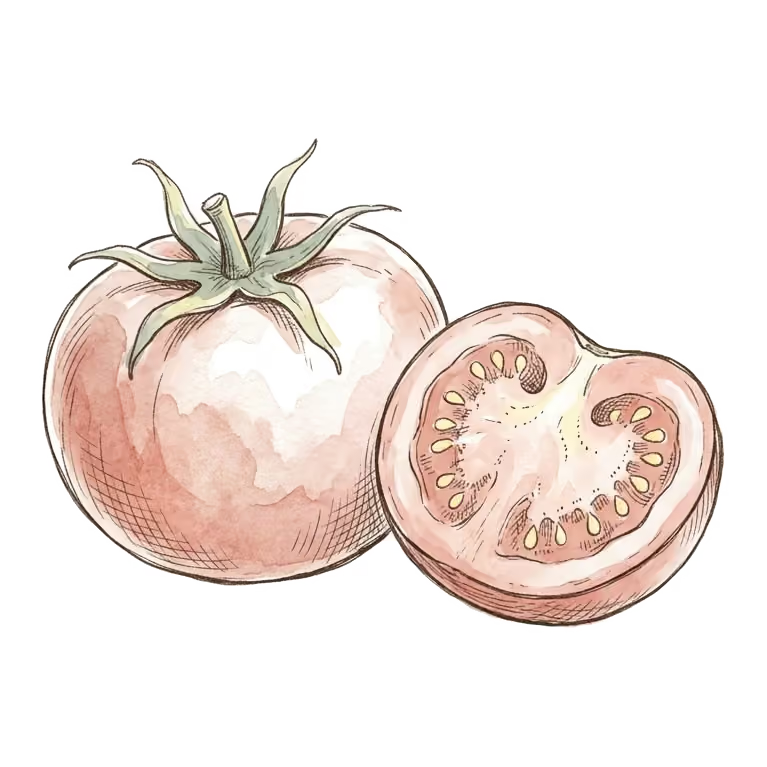
Tomato (Solanum lycopersicum)
Solanum lycopersicum · also known as garden tomato, tomate, pomodoro, pomme d'amour, Tomatoes
By Superfoods Advisor Editors·July 3, 2026
What are tomatoes good for? Lycopene and why cooking boosts it, tomato nutrition per 100 g, what studies show for prostate, heart and skin, and safety.
The tomato (Solanum lycopersicum) is a nightshade (Solanaceae) whose fruit, botanically a berry, is eaten as a vegetable. Tomatoes are good for supplying lycopene, vitamin C and potassium for 18 kcal per 100 g raw. Cooked tomato products deliver far more absorbable lycopene, and links to lower prostate and cardiovascular risk come mostly from observational studies.
The fruit-or-vegetable question famously reached the United States Supreme Court in Nix v. Hedden (1893), which ruled the tomato a vegetable for tariff purposes. The plant originated in western South America, specifically in the Andean region encompassing Peru, Ecuador, and Bolivia, where wild and semi-cultivated forms (Solanum lycopersicum var. cerasiforme) were used by indigenous peoples long before European contact. Genomic evidence suggests a protracted, two-stage domestication: many traits of the cultivated tomato first arose in semi-domesticated South American forms, and full domestication is thought to have been completed in Mesoamerica (Razifard et al., 2020), where Aztec and other civilizations cultivated tomatoes extensively by the time Spanish conquistadors encountered them in the 16th century.
Spanish colonizers introduced the tomato to Europe around 1520–1540, where it was initially met with suspicion — its membership in the Solanaceae family, which includes deadly nightshade (Atropa belladonna), led to concerns about toxicity, and it was grown primarily as an ornamental plant for decades before being accepted as food. Italy and Spain adopted it most rapidly, and by the 18th century tomato was central to Mediterranean cuisine. Today, the tomato is the most produced vegetable in FAO statistics, at about 192 million tonnes in 2023 (potatoes, which FAO classes as a root crop, are produced in roughly double that volume) (FAOSTAT Analytical Brief 96), with China, India, and the United States among the leading producers.
Nutritionally and scientifically, tomato is distinguished above all by its lycopene content — a carotenoid whose bioavailability is enhanced rather than reduced by heat processing, making cooked and processed tomato products among the richest and most bioavailable sources of any dietary carotenoid.
Evidence at a glance
Active Compounds
Tomato contains a distinctive and well-characterized array of phytochemicals:
- Lycopene: The dominant carotenoid in red tomatoes, present at several times the level of beta-carotene (USDA FoodData Central). Unlike most dietary nutrients, lycopene’s bioavailability from cooked or processed tomato is dramatically higher than from raw fruit. Heat disrupts cell walls, releasing lycopene from protein complexes, and converts it from the all-trans to cis isomers, which are more readily absorbed. Tomato paste, sauce, and canned whole tomatoes provide substantially more bioavailable lycopene than raw tomato. Lycopene is the most potent singlet oxygen quencher among the carotenoids, with a singlet oxygen quenching rate roughly twice that of beta-carotene in vitro (Di Mascio et al., 1989). Unlike beta-carotene, lycopene has no provitamin A activity.
- Beta-carotene and other carotenoids: Present in smaller quantities in red tomatoes; orange and yellow tomato varieties contain higher beta-carotene relative to lycopene. As with all fat-soluble carotenoids, a small amount of dietary fat consumed alongside tomato significantly enhances absorption — the traditional pairing of tomato with olive oil in Mediterranean cuisine has genuine nutritional rationale.
- Vitamin C (ascorbic acid): A meaningful source; vitamin C is partially degraded by heat, meaning raw tomato provides more vitamin C per gram than cooked preparations, while cooked tomato provides more bioavailable lycopene.
- Chlorogenic acid and caffeic acid: Principal phenolic antioxidants in tomato flesh; studied mainly in laboratory models for effects on LDL oxidation and inflammatory signaling.
- Rutin (quercetin-3-rutinoside): A prominent flavonoid in tomato skin; has demonstrated anti-inflammatory and vasoprotective activity in preclinical studies.
- Potassium: A significant mineral contributor; one medium raw tomato (123 g) provides approximately 290 mg (USDA FoodData Central).
- Tomatine (alpha-tomatine): A steroidal glycoalkaloid concentrated in leaves, stems, and immature green fruit — the same class of compound that confers toxicity to nightshade leaves. During ripening most α-tomatine is converted to esculeoside A, regarded as nontoxic, so ripe red fruit contains little (Akiyama et al., 2021). Green tomatoes contain considerably more (Friedman, 2002); human toxicity data are limited, so large amounts of unripe fruit are best avoided.
- Glutamic acid: Tomato is naturally high in free glutamic acid, the basis of its characteristic umami flavor intensity, particularly when cooked and concentrated.
Nutritional Profile
The following values represent raw, red tomato per 100 g edible portion (USDA FoodData Central, SR Legacy 170457):
| Nutrient | Amount | % DV |
|---|---|---|
| Energy | 18 kcal | — |
| Water | 94.5 g | — |
| Carbohydrates | 3.9 g | — |
| Dietary fiber | 1.2 g | — |
| Sugars | 2.6 g | — |
| Protein | 0.9 g | — |
| Total fat | 0.2 g | — |
| Vitamin C | 13.7 mg | 15% |
| Vitamin K1 | 7.9 mcg | 7% |
| Potassium | 237 mg | 5% |
| Folate | 15 mcg DFE | 4% |
| Lycopene | 2,570 mcg | — |
| Beta-carotene | 449 mcg | — |
For comparison, unsalted canned tomato paste contains approximately 28,800 mcg lycopene per 100 g (USDA FoodData Central) and canned tomato sauce about 13,900 mcg per 100 g (USDA FoodData Central) — roughly 5- to 11-fold more than raw tomato, with greater bioavailability due to heat processing, further aided when the sauce is prepared with oil.
Evidence for Purported Benefits
Prostate Cancer Risk Reduction
Evidence:Limited Large cohorts link tomato products to lower risk; lycopene supplement trials are inconsistent and have not tested whole tomato.
The relationship between lycopene, tomato product consumption, and prostate cancer risk is among the most extensively studied associations in nutritional epidemiology. A landmark prospective study by Giovannucci et al. (1995, Journal of the National Cancer Institute) in the Health Professionals Follow-up Study found that lycopene was the only carotenoid associated with lower prostate cancer risk, and that tomato sauce, tomatoes, and pizza were among four of 46 fruits and vegetables significantly associated with lower risk. Combined intake of tomato-based foods was associated with a 35% lower risk of prostate cancer (relative risk 0.65 for more than 10 vs. fewer than 1.5 servings per week) and a 53% lower risk of advanced prostate cancer. A 2004 meta-analysis of observational studies reported a slightly stronger inverse association for high intake of cooked tomato products (RR 0.81) than for raw tomato (RR 0.89) (Etminan et al., 2004) — consistent with the hypothesis that heat-processed forms deliver more bioavailable lycopene.
Mechanistic research in prostate cancer cell lines has identified multiple lycopene pathways, including induction of gap junction communication, downregulation of IGF-1 signaling, and inhibition of androgen-responsive gene expression. However, randomized controlled trials using lycopene supplements have produced inconsistent results, and a 2012 systematic review of eight RCTs by Ilic et al. found no significant reduction in prostate cancer diagnosis with lycopene and concluded that the limited, variable-quality evidence could neither support nor refute its use. These findings underscore that the whole-food tomato matrix — rather than isolated lycopene — may be the relevant intervention.
Cardiovascular Health
Evidence:Limited Short tomato trials show modest LDL and vascular changes; observational links are clearer for lycopene than tomato.
Lycopene’s potent singlet oxygen quenching activity translates to in vitro inhibition of LDL oxidation, which is a key step in atherogenic plaque development. A meta-analysis of observational studies by Cheng et al. (2019, Critical Reviews in Food Science and Nutrition) found that the highest dietary intake or serum concentration of lycopene was associated with 26% lower stroke risk and 14% lower cardiovascular disease risk, and the highest serum lycopene with 37% lower mortality; lycopene was not associated with myocardial infarction, and tomato intake itself showed only non-significant associations. In a meta-analysis of 21 short-term intervention trials, tomato supplementation was associated with modest reductions in LDL cholesterol and IL-6 and improved flow-mediated dilation, but not with a significant change in oxidized LDL (Cheng et al., 2017). The Mediterranean dietary pattern — in which tomato products are a central component, typically prepared with olive oil — is supported by RCT evidence for cardiovascular risk reduction (PREDIMED trial; the original 2013 report was withdrawn and republished with corrected analyses in 2018; Estruch et al., 2018).
Antioxidant Activity and Cancer Prevention (General)
Evidence:Preliminary Case-control and cohort studies, less consistent than for prostate cancer, plus cell-line work.
Beyond prostate cancer, a 1999 review of 72 case-control and prospective studies found the strongest inverse associations for lung and stomach cancer, with weaker, suggestive data for several other sites including breast (Giovannucci, 1999); the evidence is less consistent than for prostate cancer. Lycopene’s anti-proliferative and pro-apoptotic effects have been documented in cancer cell lines representing multiple tissues. Population studies face inherent confounding limitations; tomato consumption is a proxy for broader Mediterranean or high-vegetable dietary patterns.
Skin Photoprotection
Evidence:Preliminary One small controlled trial (19 people) found less UV redness after 10 weeks of tomato paste.
Lycopene accumulates in skin tissue and has been studied for UV photoprotection. A small controlled intervention trial by Stahl et al. (2001) (Journal of Nutrition; 9 volunteers vs. 10 controls) found that subjects consuming tomato paste (40 g daily with olive oil, providing approximately 16 mg lycopene) for 10 weeks had 40% less UV-induced skin erythema than controls receiving olive oil alone; no difference was seen at 4 weeks. The protection is partial and does not substitute for conventional sunscreen use. The proposed mechanism involves lycopene’s quenching of reactive oxygen species generated by UV radiation in skin cells.
Blood Pressure
Evidence:Preliminary One small, non-randomized pilot (31 completers) of a tomato extract found lower systolic pressure.
A standardized tomato extract (Lyc-O-Mato, 250 mg) was examined in a small single-blind, placebo-controlled pilot study by Engelhard et al. (2006, American Heart Journal) (31 completers, non-randomized sequential design), in which systolic blood pressure in grade 1 hypertensive subjects fell from 144 to 134 mmHg over 8 weeks of treatment, with no change during placebo periods. The authors attributed the effect to the extract’s antioxidants; the mechanism has not been established. Larger confirmatory trials are lacking.
The skin nutrition guide discusses the tomato paste trials in more detail.
Typical Use and Preparation
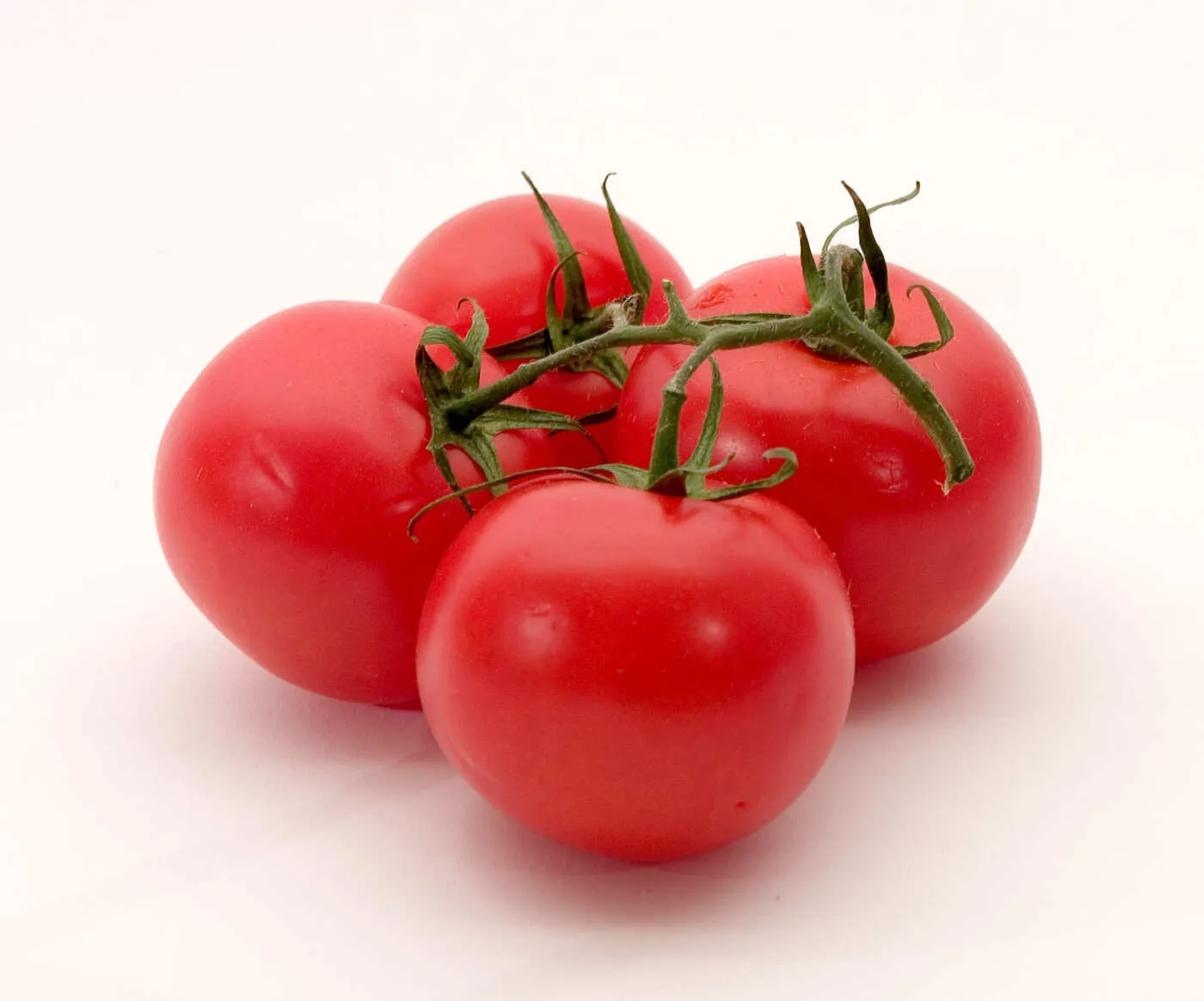 Photo: Softeis, CC BY-SA 3.0, via Wikimedia Commons
The preparation method profoundly affects tomato’s nutritional benefit, particularly lycopene bioavailability:
- Raw tomato: Maximal vitamin C; lower lycopene bioavailability. Best consumed with olive oil or other fat-containing accompaniments to maximize absorption of fat-soluble carotenoids.
- Tomato sauce and paste: The gold standard for lycopene bioavailability — heat processing (simmering) disrupts cell walls and isomerizes lycopene to more absorbable cis forms; preparation with olive oil further amplifies carotenoid uptake.
- Canned whole tomatoes and diced tomatoes: Comparable lycopene bioavailability to fresh-cooked preparations; canned products often contain added sodium (check labels if sodium is a concern) but deliver consistent lycopene content year-round.
- Cherry and grape tomatoes: Typically sweeter than large beefsteak varieties; lycopene content varies widely by cultivar and ripeness.
- Roasting: Halved tomatoes roasted at 180–200 degrees C concentrate flavor and lycopene while naturally caramelizing sugars; suitable for sauces, spreads, and soups.
- Sun-dried tomatoes: Extremely concentrated in lycopene, carotenoids, and potassium; also very high in sodium in commercially preserved forms. A valuable culinary ingredient and nutrient-dense condiment.
Safety, Interactions, and Contraindications
Tomato is safe for the vast majority of people at normal dietary intake. Specific considerations:
Nightshade sensitivity and autoimmune conditions: Tomato is a member of the Solanaceae (nightshade) family. Some individuals — particularly those following the Autoimmune Protocol (AIP) elimination diet or those self-reporting nightshade sensitivity — avoid tomato (along with eggplant, peppers and potatoes), citing potential inflammatory effects attributable to alkaloids (tomatine) or lectins. However, the scientific evidence linking dietary nightshades to inflammation or autoimmune exacerbation in the general population is limited and largely anecdotal. Individuals with specific conditions (such as inflammatory bowel disease or rheumatoid arthritis) who notice symptom correlation with nightshade consumption should discuss dietary modification with their gastroenterologist or rheumatologist.
Acid reflux and GERD: Tomato and tomato-based products are acidic (fresh tomatoes roughly pH 4.3–4.9, paste and canned products as low as 3.5; Clemson Cooperative Extension) and are among the most commonly cited dietary triggers for gastroesophageal reflux disease symptoms. This is a mechanical and chemical irritation effect rather than a toxicity concern; individuals with GERD may benefit from reducing tomato product intake and should consult a physician for management guidance.
Lycopene supplementation: As with beta-carotene, isolated lycopene supplements are not equivalent to whole-food tomato consumption and have shown inconsistent results in RCTs. High-dose lycopene supplements are not recommended in the absence of clinical guidance.
Allergic reactions: True IgE-mediated tomato allergy exists but is uncommon; it may manifest as oral allergy syndrome (linked to grass pollen allergy, and tomato allergy is also associated with latex allergy; Włodarczyk et al., 2022), contact dermatitis, or, rarely, systemic reactions. In oral allergy syndrome, reactions typically occur with the raw food and not the cooked one (Muluk et al., 2018), but people sensitized to heat-stable tomato allergens may react to cooked products too and should follow an allergist’s advice.
Vitamin K and anticoagulants: Raw tomato is a low source of vitamin K1 (about 7.9 mcg per 100 g, roughly 7% of the Daily Value; USDA FoodData Central), so normal intake is unlikely to affect warfarin therapy; as with any food, individuals on warfarin should keep intake consistent and report major dietary changes to their prescribing clinician.
Oxalates: Fresh tomatoes are low in oxalate (about 7 mg in a whole medium tomato), but concentrated products such as tomato sauce are considerably higher (University of Chicago Kidney Stone Program). Individuals with a history of calcium oxalate kidney stones and those on a low-oxalate diet prescribed by a clinician should account for tomato sauce and paste in their dietary planning.
This entry is for informational purposes only and does not constitute medical advice. Consult a qualified healthcare provider for medical guidance.
Frequently Asked Questions
Are tomatoes good for you?
Tomatoes are a low-calorie source of vitamin C, potassium and lycopene: 100 g raw has 18 kcal and is about 94% water. Lycopene is the main reason tomatoes are studied; observational research links tomato-rich diets with lower prostate cancer and stroke risk (Giovannucci et al., 1995; Cheng et al., 2019), though trials have not confirmed that tomatoes prevent disease.
Are tomatoes a fruit or a vegetable?
Botanically, the tomato is a fruit, specifically a berry, because it develops from the flower and contains the seeds. In cooking, nutrition and law it is treated as a vegetable: in Nix v. Hedden (1893) the US Supreme Court classed it as a vegetable for tariff purposes, reflecting how it is eaten in savory dishes rather than as dessert.
Is cooked tomato healthier than raw?
Each has an advantage. Heat breaks down cell walls and converts lycopene to forms the body absorbs more readily, so sauce, paste and canned tomatoes deliver much more usable lycopene, especially when cooked with oil. Raw tomato keeps more vitamin C, which heat partly destroys. Eating both forms covers both nutrients.
Do tomatoes cause inflammation?
There is little evidence that they do in the general population. Some people following elimination diets avoid nightshades, attributing symptoms to tomatine or lectins, but the support for this is limited and largely anecdotal. Ripe red tomatoes contain little tomatine, because most of it is converted during ripening (Akiyama et al., 2021). Anyone who notices a pattern can discuss a supervised elimination trial with their doctor.
Are tomatoes good for people with diabetes?
Fresh tomatoes are low in carbohydrate, about 3.9 g per 100 g raw with 2.6 g of sugars, so they have little effect on blood sugar in normal servings and fit most diabetes meal plans. Processed products differ: some sauces and ketchups contain added sugar and salt, so it is worth checking labels. Tomatoes have not been tested on their own for blood-sugar control.
References
Show all 21 referencesShow fewer
- Giovannucci, E., et al. (1995). Intake of carotenoids and retinol in relation to risk of prostate cancer. Journal of the National Cancer Institute, 87(23), 1767–1776.
- Ilic, D., et al. (2012). Lycopene for the prevention and treatment of benign prostatic hyperplasia and prostate cancer: a systematic review. Maturitas, 72(4), 269–276.
- Cheng, H. M., et al. (2019). Lycopene and tomato and risk of cardiovascular diseases: a systematic review and meta-analysis of epidemiological evidence. Critical Reviews in Food Science and Nutrition, 59(1), 141–158.
- Stahl, W., et al. (2001). Dietary tomato paste protects against ultraviolet light-induced erythema in humans. Journal of Nutrition, 131(5), 1449–1451.
- Engelhard, Y. N., et al. (2006). Natural antioxidants from tomato extract reduce blood pressure in patients with grade-1 hypertension: a double-blind, placebo-controlled pilot study. American Heart Journal, 151(1), 100.
- USDA FoodData Central. Tomatoes, red, ripe, raw, year round average. SR Legacy, FDC ID 170457.
- USDA FoodData Central. Tomato products, canned, paste, without salt added. SR Legacy, FDC ID 170459.
- USDA FoodData Central. Tomato products, canned, sauce. SR Legacy, FDC ID 170054.
- Di Mascio, P., Kaiser, S., & Sies, H. (1989). Lycopene as the most efficient biological carotenoid singlet oxygen quencher. Archives of Biochemistry and Biophysics, 274(2), 532–538.
- Estruch, R., et al. (2018). Primary prevention of cardiovascular disease with a Mediterranean diet supplemented with extra-virgin olive oil or nuts. New England Journal of Medicine, 378(25), e34.
- Clemson Cooperative Extension. pH values of common foods and ingredients.
- Razifard, H., et al. (2020). Genomic evidence for complex domestication history of the cultivated tomato in Latin America. Molecular Biology and Evolution, 37(4), 1118–1132.
- FAO. Agricultural production statistics 2010–2023. FAOSTAT Analytical Brief 96.
- University of Chicago Kidney Stone Program. (2015). How to eat a low oxalate diet.
- Etminan, M., Takkouche, B., & Caamaño-Isorna, F. (2004). The role of tomato products and lycopene in the prevention of prostate cancer: a meta-analysis of observational studies. Cancer Epidemiology, Biomarkers & Prevention, 13(3), 340–345.
- Cheng, H. M., et al. (2017). Tomato and lycopene supplementation and cardiovascular risk factors: a systematic review and meta-analysis. Atherosclerosis, 257, 100–108.
- Giovannucci, E. (1999). Tomatoes, tomato-based products, lycopene, and cancer: review of the epidemiologic literature. Journal of the National Cancer Institute, 91(4), 317–331.
- Friedman, M. (2002). Tomato glycoalkaloids: role in the plant and in the diet. Journal of Agricultural and Food Chemistry, 50(21), 5751–5780.
- Akiyama, R., et al. (2021). Tomato E8 encodes a C-27 hydroxylase in metabolic detoxification of α-tomatine during fruit ripening. Plant and Cell Physiology, 62(5), 775–783.
- Muluk, N. B., & Cingi, C. (2018). Oral allergy syndrome. American Journal of Rhinology & Allergy, 32(1), 27–30.
- Włodarczyk, K., et al. (2022). Tomato allergy: the characterization of the selected allergens and antioxidants of tomato (Solanum lycopersicum)—a review. Antioxidants, 11(4), 644.
Related content
More in Vegetables
- Artichoke (Cynara cardunculus var. scolymus)
Artichokes benefits explained: prebiotic inulin, cynarin, nutrition per 100 g, and what leaf-extract trials show for cholesterol, digestion and the liver.
- Asparagus (Asparagus officinalis)
Is asparagus good for you? Nutrition per 100 g, including 37% DV folate and 42% vitamin K, its prebiotic fiber, what studies show, and safety notes.
- Beets / Beetroot (Beta vulgaris)
Beet juice benefits explained: how beetroot nitrates lowered systolic blood pressure and aided endurance in trials, beets nutrition per 100 g, and safety.
- Broccoli (Brassica oleracea var. italica)
Is broccoli good for you? Broccoli nutrition per 100 g, including 118% DV vitamin K, how sulforaphane forms, what human studies show, and safety notes.
- Brussels Sprouts (Brassica oleracea var. gemmifera)
Brussels sprouts benefits and nutrition per 100 g (148% DV vitamin K, 94% vitamin C), their glucosinolates, what studies show, gas, and warfarin safety.
- Cabbage (Brassica oleracea var. capitata)
Is cabbage good for you? Cabbage nutrition per 100 g (63% DV vitamin K, 41% vitamin C), red vs green, sauerkraut, what studies show, and thyroid safety.

Curated by Superfoods Advisor Editors·Last updated