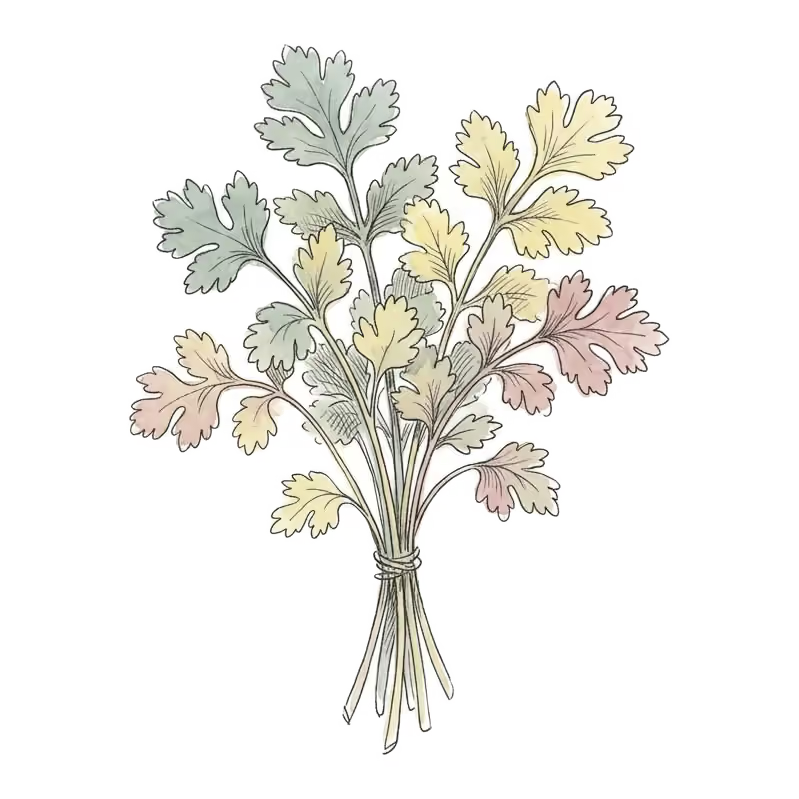
Cilantro / Coriander (Coriandrum sativum)
Coriandrum sativum · also known as cilantro, coriander, Chinese parsley, dhania, kothimbir, fresh coriander
By Superfoods Advisor Editors·July 3, 2026
Cilantro vs parsley: how the two herbs differ in flavor, vitamin K and vitamin C, plus what the evidence says about cilantro benefits and safety.
Cilantro is the fresh leaf of Coriandrum sativum, the plant whose dried seed is sold as coriander. It resembles flat-leaf parsley, a fellow member of the carrot family (Apiaceae), but cilantro has a citrusy, aldehyde-driven aroma that some people taste as soap, while parsley is milder and, per USDA data, carries about five times as much vitamin K per 100 g.
Coriandrum sativum is an annual herb whose two most commonly used parts — the fresh leaf (called cilantro in the Americas; fresh coriander or Chinese parsley in Europe, South Asia, and East Asia) and the dried, rounded seed (universally called coriander) — are so distinct in flavor chemistry that many people are unaware they come from the same plant. Cilantro leaves are among the most-consumed fresh herbs globally, foundational to Mexican, Indian, Thai, Vietnamese, and Middle Eastern cuisines. The seeds, once dried, develop a warm, citrusy, slightly nutty flavor profile with entirely different aromatic compounds and are ground into spice blends or used whole.
The most socially polarizing aspect of cilantro is the “soap” flavor perception experienced by a minority of people, with reported prevalence varying by ancestry. Genetic studies, including a genome-wide association study by Eriksson et al. (2012, Flavour), linked a component of cilantro aversion to a genetic variant near a cluster of olfactory receptor genes on chromosome 11. One gene in that cluster, OR6A2, encodes a receptor with high binding specificity for several of the aldehydes that characterize the leaf’s aroma. Similar aldehydes occur in soap and certain insect secretions, which may explain the described similarity.
Evidence at a glance
Active Compounds
The phytochemical profiles of cilantro leaf and coriander seed diverge substantially, warranting separate treatment.
Cilantro leaf aldehydes — the (E)-2-alkenal series and related unsaturated aldehydes — comprise the dominant volatile fraction and are responsible for the characteristic aroma, including the soapiness some individuals perceive. These aldehydes also demonstrate modest antimicrobial activity against foodborne pathogens such as Salmonella (Kubo et al., 2004) and Listeria monocytogenes (Delaquis et al., 2002) in laboratory settings.
Linalool is a terpene alcohol present in both the leaf and seed (where it makes up roughly 70% of the essential oil; Burdock & Carabin, 2009) and is shared with lavender and basil. In cilantro leaf, linalool is present alongside the alkenals; in coriander seed essential oil, linalool is the predominant compound. Linalool has demonstrated sedative, anxiolytic, and anti-inflammatory properties in animal models, primarily in the context of aromatherapy and essential oil research; oral doses achievable through culinary use are much lower than doses used in animal experiments.
Quercetin and other flavonoids (kaempferol, luteolin, rhamnetin) are present in cilantro leaves and contribute to total antioxidant capacity. Quercetin is one of the most studied dietary flavonoids; its anti-inflammatory and antioxidant properties are well-characterized in vitro and in animal models. Dietary concentrations from fresh cilantro are modest relative to concentrated supplement forms studied in clinical trials.
Terpineol and terpinene are additional monoterpenes in cilantro’s volatile oil, contributing to the herb’s flavor complexity and demonstrating antifungal properties in vitro.
Coriander seed essential oil is distinct: predominantly linalool (approximately 70%; Burdock & Carabin, 2009), with smaller proportions of γ-terpinene, α-pinene, camphor, and geraniol. Coriander seed also contains fatty acids (petroselinic acid as a major component; Sahib et al., 2013), dietary fiber, and modest amounts of protein and minerals.
Dodecenal: (E)-2-dodecenal, one of the more abundant leaf aldehydes, was the most potent of the leaf aldehydes tested against Salmonella choleraesuis in one laboratory study, killing the bacterium at a minimum bactericidal concentration of 6.25 µg/mL (Kubo et al., 2004, Journal of Agricultural and Food Chemistry). This is an in vitro finding not validated in human infection models.
Nutritional Profile
Per 100 g fresh cilantro leaves (approximately a very large bunch); values from USDA FoodData Central, “Coriander (cilantro) leaves, raw”:
| Component | Amount |
|---|---|
| Calories | 23 kcal |
| Water | 92.2 g |
| Protein | 2.1 g |
| Total fat | 0.5 g |
| Carbohydrate | 3.7 g |
| Dietary fiber | 2.8 g |
| Vitamin K | 310 µg (258% DV) |
| Vitamin A (as β-carotene) | 337 µg RAE (37% DV) |
| Vitamin C | 27 mg (30% DV) |
| Folate | 62 µg (16% DV) |
| Potassium | 521 mg (11% DV) |
| Manganese | 0.43 mg (19% DV) |
Note: Typical culinary use involves 5–20 g of fresh cilantro per serving (a small garnish to a generous handful), so actual micronutrient contributions per serving are modest.
Cilantro vs Parsley
Cilantro and parsley are close relatives in the Apiaceae family, and flat-leaf parsley is easy to mistake for cilantro at the market. They are not interchangeable in flavor, and parsley is the denser source of most micronutrients, gram for gram.
Per 100 g fresh leaves, from USDA FoodData Central (cilantro; parsley):
| Component | Cilantro | Parsley |
|---|---|---|
| Calories | 23 kcal | 36 kcal |
| Protein | 2.1 g | 3.0 g |
| Dietary fiber | 2.8 g | 3.3 g |
| Vitamin K | 310 µg | 1,640 µg |
| Vitamin C | 27 mg | 133 mg |
| Vitamin A (RAE) | 337 µg | 421 µg |
| Folate | 62 µg | 152 µg |
| Potassium | 521 mg | 554 mg |
Flavor: Cilantro’s aroma comes from (E)-2-alkenal aldehydes and linalool, and a genetic variant near the OR6A2 receptor gene is linked to tasting it as soapy. Parsley has a fresh, slightly peppery-bitter character, with myristicin as a notable constituent of its volatile oil.
Plant and use: Cilantro is an annual whose leaves lose their aroma to heat, so it is usually added raw at the end of cooking. Parsley is a biennial, sold as curly or flat-leaf, and is used in larger amounts in dishes such as tabbouleh. The parsley entry covers its apigenin content and its stronger warfarin caution.
Evidence for Purported Benefits
Heavy Metal Chelation (“Detoxification”)
Evidence:Insufficient Rodent lead studies and one uncontrolled report; no controlled human trial of cilantro for heavy metals.
The claim that cilantro chelates or removes heavy metals (lead, mercury, cadmium, arsenic) from the body in humans is widely circulated in alternative health media, often attributed to work by Omura and Beckman (1995, Acupuncture & Electro-Therapeutics Research). That report was not a controlled study: it described uncontrolled clinical observations, beginning with the first author’s own experience, in which mercury deposits were assessed largely with the Bi-Digital O-Ring Test, a technique that has not been validated as a diagnostic method, and in which cilantro was given together with antibiotics or other treatments. Its claim that cilantro accelerated urinary excretion of mercury, lead, and aluminum therefore cannot be attributed to cilantro alone.
Subsequent animal studies have reported that cilantro preparations can reduce tissue lead deposition when given to rodents at high doses during heavy metal exposure. A 2001 study by Aga et al. (Journal of Ethnopharmacology) found that cilantro given by gastric tube for 25 days reduced lead deposition in the femur and lead-induced kidney injury in mice exposed to lead in their drinking water. However, rodent gavage models involving concentrated extracts do not reliably predict effects achievable through human culinary consumption, and no adequately designed human clinical trial has demonstrated that cilantro consumption reduces blood or tissue heavy metal burden in people. Individuals exposed to heavy metals should seek evidence-based medical evaluation rather than relying on dietary herbs for chelation.
Antimicrobial Activity
Evidence:Lab & animal only Lab activity against foodborne bacteria; relevant to food preservation, not tested in infected people.
Cilantro leaf extracts and essential oils inhibit several foodborne bacterial pathogens in laboratory settings. The aldehydes — (E)-2-dodecenal in particular — demonstrate bactericidal activity against Salmonella enterica (Kubo et al., 2004) at concentrations that may be relevant to food preservation contexts. The clinical relevance as an oral antimicrobial in infected humans has not been investigated.
Anti-inflammatory and Antioxidant Effects
Evidence:Lab & animal only Cell and animal models; no human biomarker trials of culinary cilantro.
Cilantro leaf extracts have reduced inflammatory markers (TNF-α, IL-6, COX-2 expression) and oxidative stress parameters in cell culture and animal models, possibly via quercetin, linalool, and related compounds. These are consistent with findings for most polyphenol-rich herbs. Human trials of culinary-dose cilantro measuring inflammatory biomarkers are absent from the peer-reviewed literature as of 2026.
Anxiolytic and Anticonvulsant Properties (Seed Extract)
Evidence:Lab & animal only Rodent studies of seed extract and oil; human clinical data are scarce.
Coriander seed preparations have shown anxiolytic and anticonvulsant effects in rodent models (Laribi et al., 2015): an injected aqueous seed extract increased open-arm time in mice on the elevated plus-maze (Emamghoreishi et al., 2005), and linalool-rich seed essential oil delayed chemically induced seizures in mice (Rojas-Armas et al., 2025). The mechanism is not established, and clinical evaluations of coriander extracts remain scarce (Santibáñez et al., 2023). These findings do not establish efficacy or safety in humans and should not be taken as a basis for self-treatment.
Typical Use and Preparation
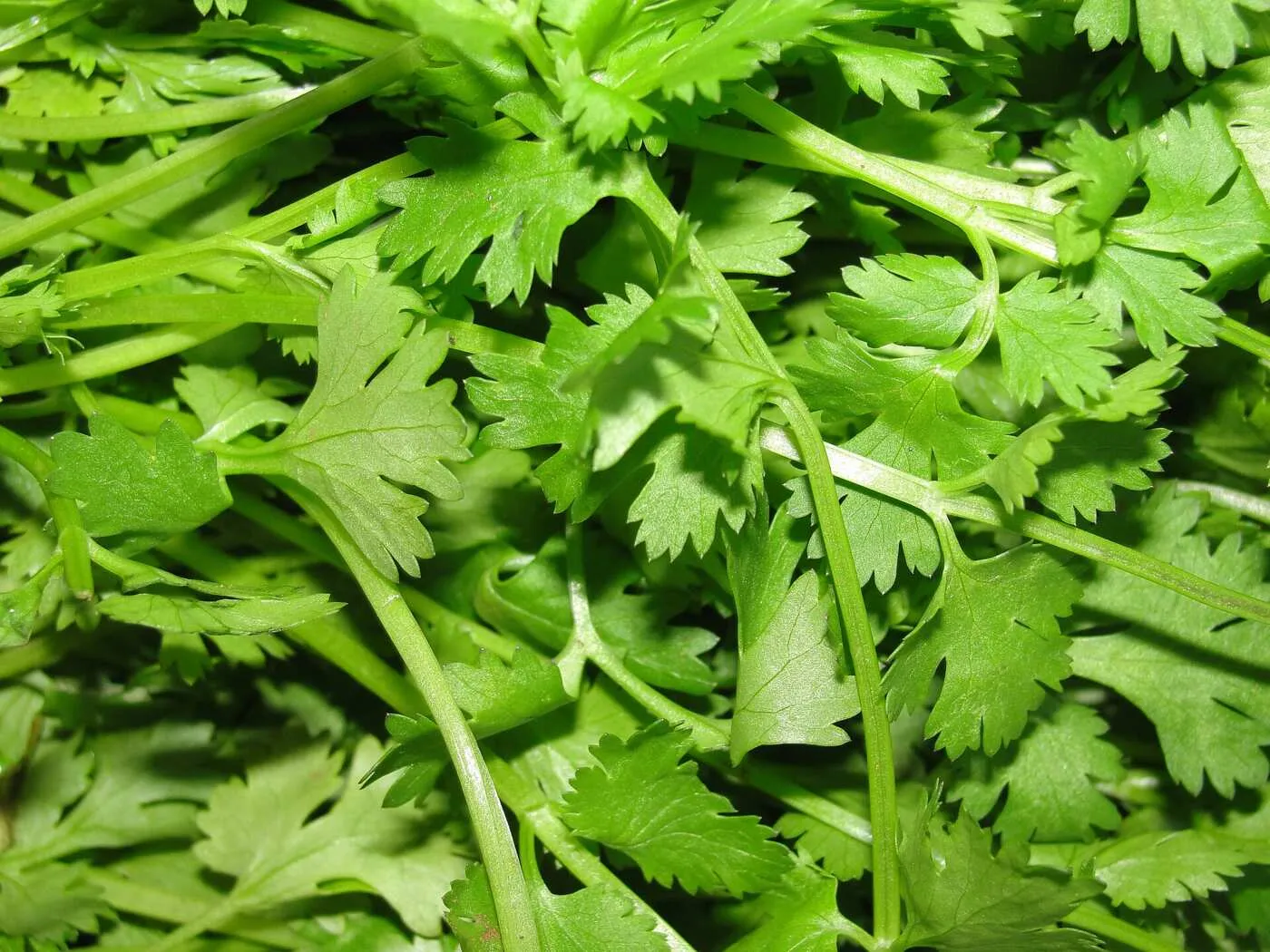 Photo: Thamizhpparithi Maari, CC BY-SA 3.0, via Wikimedia Commons
Fresh leaves: Used raw as a garnish or finishing herb in Mexican salsas, guacamole, curries, pho, tabbouleh, and countless other dishes. High heat destroys the delicate volatile aldehydes responsible for cilantro’s characteristic aroma; for maximum flavor, add fresh leaves after cooking or immediately before serving.
Stems: Cilantro stems contain similar aromatic compounds to the leaves and are edible and flavorful. They are commonly used in Thai cooking (blended into curry pastes with roots) and in stocks and stews where the slightly tougher texture is not a concern.
Dried cilantro: Largely loses its characteristic fresh flavor upon drying; dried cilantro has a muted, hay-like quality substantially different from fresh. Coriander seed is not a substitute for fresh cilantro in recipes requiring the characteristic leaf flavor.
Coriander seed: Toasted whole and added to curries, stews, and braises; or ground into powder for spice rubs, chili blends (garam masala, ras el hanout, baharat). Toasting releases linalool and enhances citrusy notes while reducing some green volatiles.
Detox claims for cilantro often travel with chlorella, and our look at whether chlorella binds heavy metals shows how thin the human evidence for those combinations is.
Safety, Side Effects, and Interactions
Cilantro is a common food and is safe to eat for most people in culinary amounts; the cautions below concern allergy, heavy handling, vitamin K and concentrated extracts.
Apiaceae allergy: Cilantro is a member of the Apiaceae family (carrot family), which includes parsley, celery, dill, caraway, anise, and fennel. Individuals with known allergy to Apiaceae plants may cross-react to cilantro. Coriander is among the spices most often implicated in spice allergy; symptoms range from mild oral reactions to anaphylaxis, and cross-reactivity with birch and mugwort pollen is common (Berghea et al., 2025).
Skin reactions: Coriander contains coriandrin, a furoisocoumarin that is a strong photosensitizer in bacterial and cell-culture tests but showed very weak skin photosensitizing activity compared with psoralen (Ashwood-Smith et al., 1989). Occupational contact dermatitis from handling coriander has been reported in a case report (Kanerva & Soini, 2001). These are occupational rather than typical culinary concerns, relevant mainly to people who handle large quantities of the fresh herb.
Vitamin K content: At 310 µg/100 g, fresh cilantro is a significant vitamin K source. At typical garnish quantities (5–10 g), this is not clinically significant. However, individuals taking warfarin who consume unusually large amounts of cilantro (e.g., in juice preparations) should maintain dietary consistency or monitor INR.
Pregnancy: Cilantro and coriander are common culinary ingredients, but the safety of concentrated extracts or essential oil during pregnancy has not been established. In rats, an oral aqueous extract of coriander seed at 250–500 mg/kg had a dose-dependent anti-implantation effect and lowered progesterone in early pregnancy, though it was not abortifacient (Al-Said et al., 1987). Such doses far exceed culinary intake; people who are pregnant or trying to conceive should talk to their doctor before using coriander supplements.
Frequently Asked Questions
Is cilantro the same as coriander?
They are the same plant, Coriandrum sativum. In the United States “cilantro” means the fresh leaves and stems, and “coriander” means the dried seed. In the UK, India and much of Asia the leaves are called fresh coriander. The leaf and seed taste different because the seed oil is about 70% linalool while the leaf is dominated by aldehydes.
Is cilantro good for you?
Cilantro is low in calories and adds vitamin K, vitamin A and some vitamin C, though a typical 5 to 20 g serving supplies modest amounts. Claims about antioxidant, antimicrobial or anti-inflammatory benefits come from lab and animal research; no trial has shown a health outcome from eating culinary amounts of cilantro.
Can you substitute parsley for cilantro?
Flat-leaf parsley can stand in for cilantro’s color and freshness, and it is the usual swap for people who find cilantro soapy, but it will not reproduce the citrusy aroma. The two are related herbs in the same family. Parsley adds far more vitamin K per serving, which matters for people on warfarin who eat it in large amounts.
Why does cilantro taste like soap to some people?
A genome-wide study linked cilantro aversion to a variant near a cluster of smell-receptor genes on chromosome 11, including OR6A2, which binds several of the leaf’s aldehydes. Similar aldehydes occur in soap. The variant explains only part of the trait, and how common the soapy perception is varies by ancestry.
Does cilantro detox heavy metals?
There is no good evidence that it does in people. The claim traces to a 1995 report that was uncontrolled and gave cilantro alongside other treatments. Rodent studies found less lead deposition with high-dose cilantro, but no controlled human trial has shown lower blood or tissue metal levels. Anyone exposed to heavy metals needs medical testing, not dietary herbs.
Is cilantro safe to eat?
For most people, yes. Coriander is among the spices most often involved in spice allergy, with possible cross-reactions to birch or mugwort pollen and other Apiaceae plants such as celery and fennel. People on warfarin should keep cilantro intake steady rather than suddenly juicing large amounts. Concentrated seed extracts have not been shown safe in pregnancy.
References
Show all 15 referencesShow fewer
- Eriksson, N., et al. (2012). A genetic variant near olfactory receptor genes influences cilantro preference. Flavour, 1(1), 22.
- Kubo, I., et al. (2004). Antibacterial activity of coriander volatile compounds against Salmonella choleraesuis. Journal of Agricultural and Food Chemistry, 52(11), 3329–3332.
- Aga, M., et al. (2001). Preventive effect of Coriandrum sativum (Chinese parsley) on localized lead deposition in ICR mice. Journal of Ethnopharmacology, 77(2–3), 203–208.
- Sahib, N. G., et al. (2013). Coriander (Coriandrum sativum L.): A potential source of high-value components for functional foods and nutraceuticals — A review. Phytotherapy Research, 27(10), 1439–1456.
- Laribi, B., et al. (2015). Coriander (Coriandrum sativum L.) and its bioactive constituents. Fitoterapia, 103, 9–26.
- Omura, Y., & Beckman, S. L. (1995). Role of mercury (Hg) in resistant infections & effective treatment of Chlamydia trachomatis and Herpes family viral infections (and potential treatment for cancer) by removing localized Hg deposits with Chinese parsley and delivering effective antibiotics using various drug uptake enhancement methods. Acupuncture & Electro-Therapeutics Research, 20(3–4), 195–229.
- Burdock, G. A., & Carabin, I. G. (2009). Safety assessment of coriander (Coriandrum sativum L.) essential oil as a food ingredient. Food and Chemical Toxicology, 47(1), 22–34.
- Ashwood-Smith, M. J., et al. (1989). Photobiological properties of a novel, naturally occurring furoisocoumarin, coriandrin. Photochemistry and Photobiology, 50(6), 745–751.
- Kanerva, L., & Soini, M. (2001). Occupational protein contact dermatitis from coriander. Contact Dermatitis, 45(6), 354–355.
- Delaquis, P. J., et al. (2002). Antimicrobial activity of individual and mixed fractions of dill, cilantro, coriander and eucalyptus essential oils. International Journal of Food Microbiology, 74(1–2), 101–109.
- Emamghoreishi, M., et al. (2005). Coriandrum sativum: Evaluation of its anxiolytic effect in the elevated plus-maze. Journal of Ethnopharmacology, 96(3), 365–370.
- Rojas-Armas, J. P., et al. (2025). Pharmacological and molecular insights into linalool-rich Coriandrum sativum essential oil: Anticonvulsant, analgesic, anti-inflammatory, and antioxidant potential in rodent models. Veterinary World.
- Santibáñez, A., et al. (2023). Coriandrum sativum and its utility in psychiatric disorders. Molecules, 28(14), 5314.
- Berghea, E. C., et al. (2025). Spices, herbs and allergic reactions in children: Myth or reality — a narrative review with scoping elements. Frontiers in Allergy, 6, 1698559.
- Al-Said, M. S., et al. (1987). Post-coital antifertility activity of the seeds of Coriandrum sativum in rats. Journal of Ethnopharmacology, 21(2), 165–173.
More in Roots & Herbs
- Ashwagandha (Withania somnifera)
Ashwagandha side effects, who should avoid it, and drug interactions, plus what trials show for stress, sleep and strength at clinical doses.
- Basil (Ocimum basilicum)
Basil benefits: what lab and human studies show, vitamin K per serving, sweet basil vs holy basil, and the estragole and warfarin cautions.
- Black Pepper (Piper nigrum)
Black pepper benefits: how piperine raises absorption of curcumin and some drugs, what human studies show, side effects, and drug interactions.
- Cinnamon (Cinnamomum verum / C. cassia)
Ceylon cinnamon vs cassia: coumarin levels and liver risk, how much is safe per day, and what trials show for blood sugar and cholesterol.
- Garlic (Allium sativum)
Garlic benefits for blood pressure, cholesterol and colds: what trials show, how much raw garlic or supplement they used, and bleeding risks.
- Ginger (Zingiber officinale)
Ginger for nausea: what trials show for morning sickness, chemotherapy, surgery and motion sickness, the doses studied, and ginger's side effects.

Curated by Superfoods Advisor Editors·Last updated