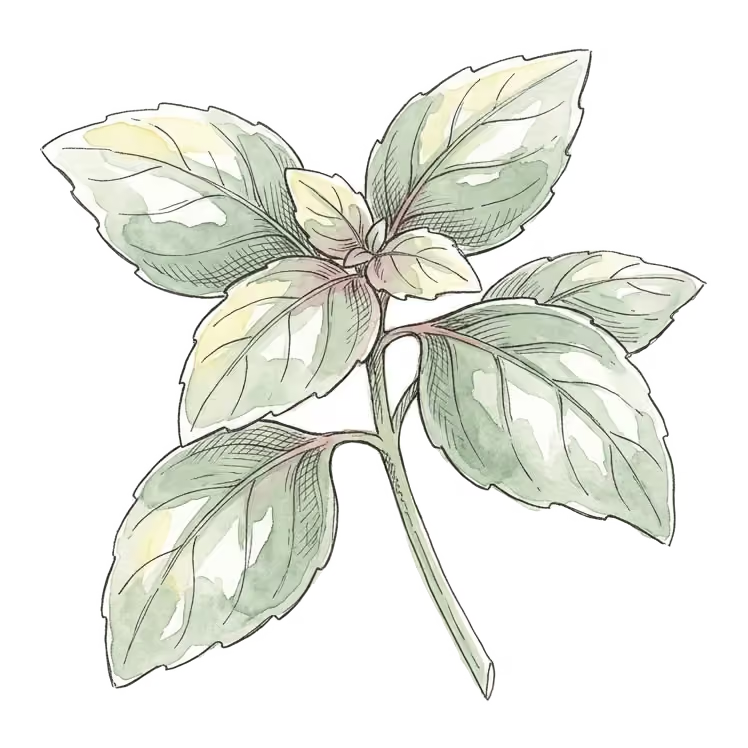
Basil (Ocimum basilicum)
Ocimum basilicum · also known as Sweet basil, Common basil, Saint Joseph's Wort
By Superfoods Advisor Editors·July 3, 2026
Basil benefits: what lab and human studies show, vitamin K per serving, sweet basil vs holy basil, and the estragole and warfarin cautions.
Basil (Ocimum basilicum), also called sweet basil, is an annual culinary herb in the mint family (Lamiaceae). Its claimed benefits rest mostly on lab and animal studies of its volatile oils and rosmarinic acid, which show antioxidant, antimicrobial and anti-inflammatory activity. Human trials of sweet basil are largely absent. In the diet it is a notable source of vitamin K.
The plant is native to tropical regions of South Asia and Central Africa and has been cultivated since antiquity in Mediterranean, Southeast Asian and South American cooking and traditional medicine. In Ayurveda, a related species, Ocimum tenuiflorum (holy basil, or tulsi), is used as a therapeutic herb. The two are botanically distinct, though they share several bioactive compound classes.
Evidence at a glance
Active Compounds
The pharmacological properties of basil are attributed to two primary compound categories: volatile (essential) oils and phenolic compounds.
Essential oil constituents vary considerably by chemotype — the genetic variant of the plant — and by growing conditions and harvest timing. The four principal chemotypes are:
- Linalool type — characterized by a floral, sweet aroma; dominant in many European sweet basils.
- Methyl chavicol (estragole) type — anise-like aroma; common in Southeast Asian and some Mediterranean cultivars.
- Eugenol type — clove-like aroma; more prevalent in African and some Indian varieties.
- Methyl cinnamate type — sweet, fruity; found in certain tropical varieties.
In most commercially grown European sweet basil, linalool and eugenol are the dominant volatile compounds, with lesser amounts of methyl chavicol, 1,8-cineole, and camphor. Linalool has demonstrated sedative and analgesic properties in rodent models. Eugenol inhibits the cyclooxygenase (COX) activity of the purified enzyme at higher concentrations in vitro (Thompson & Eling, 1989).
Phenolic compounds present in meaningful concentrations include:
- Rosmarinic acid — a hydroxycinnamic acid ester with documented antioxidant and anti-inflammatory activity in cell culture and animal models.
- Orientin and vicenin — flavone C-glycosides; the radioprotection research on them used compounds isolated from holy basil (O. sanctum) and injected into mice (Uma Devi et al., 1999), and their levels in sweet basil are less well characterized.
- Flavonoids — including luteolin and apigenin, both COX-2 inhibitors in vitro.
Essential oil makes up only a small fraction of leaf weight, and the amount varies widely by cultivar, growing conditions and harvest stage (Mulugeta et al., 2023); dried basil concentrates these compounds but may lose linalool due to volatilization. Basil seed husks are rich in mucilaginous polysaccharides and soluble fiber, increasingly marketed as a dietary supplement distinct from the leaf.
Evidence for Purported Benefits
The evidence base for basil’s health effects is heavily weighted toward in vitro and animal studies. The following summary distinguishes the quality of available data.
Antioxidant Activity
Evidence:Lab & animal only Free-radical and lipid-peroxidation assays in the lab; no human outcome data.
Laboratory studies report that basil extracts and essential oil scavenge free radicals and inhibit lipid peroxidation in cell-free assays (Bozin et al., 2006). In a methanolic leaf extract, the most active fraction in DPPH and liposome-oxidation assays was dominated by rosmarinic acid (Jayasinghe et al., 2003, Journal of Agricultural and Food Chemistry). No human clinical trials have evaluated whether consuming culinary amounts of basil produces measurable changes in circulating antioxidant markers.
Antimicrobial Activity
Evidence:Lab & animal only Lab assays against foodborne bacteria; not tested as a treatment in people.
Essential oil fractions from basil, particularly those rich in linalool and eugenol, inhibit growth of common foodborne pathogens — including Staphylococcus aureus, Escherichia coli, and Listeria monocytogenes — in agar diffusion assays. One study of a methyl chavicol-rich Bangladeshi basil oil reported minimum inhibitory concentrations of 62.5–500 µg/mL against foodborne bacteria (Hossain et al., 2010), concentrations that are unlikely to be achieved systemically through culinary consumption. These findings have practical implications for food preservation research but do not translate directly to clinical antimicrobial use.
Anti-inflammatory Effects
Evidence:Lab & animal only Cell studies of eugenol and rosmarinic acid, plus mouse paw-edema models.
Eugenol (Gojani et al., 2023) and rosmarinic acid (Wei et al., 2018) both reduced nuclear factor-kappa B (NF-κB) activation and COX-2 expression in cell studies. In mice, an estragole-rich basil essential oil given systemically reduced carrageenan-induced paw edema (Rodrigues et al., 2016). No randomized controlled trials in humans have evaluated oral basil extracts for inflammatory outcomes.
Blood Glucose Modulation
Evidence:Preliminary One small single-blind crossover trial, in holy basil rather than sweet basil.
A small randomized, placebo-controlled, single-blind crossover trial by Agrawal and colleagues (1996, International Journal of Clinical Pharmacology and Therapeutics) reported reductions of about 18% in fasting and 7% in postprandial blood glucose in non-insulin-dependent diabetic patients taking holy basil leaf (O. tenuiflorum) compared with placebo leaves. Extrapolating these findings to sweet basil (O. basilicum) is not supported, as the two species differ significantly in compound composition. The trial was small and single-blind, limiting interpretability.
Typical Use and Dosing
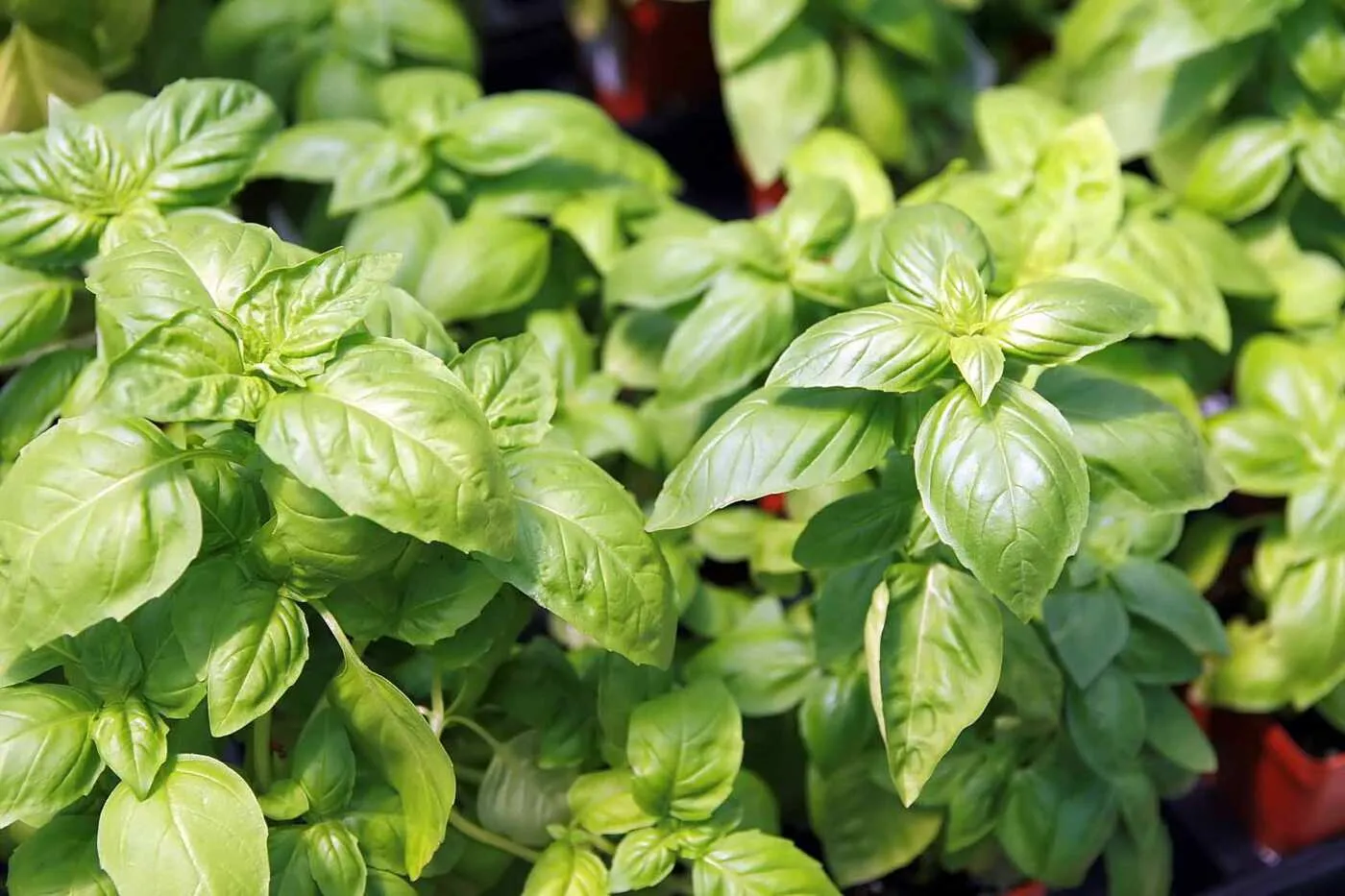 Photo: Photo by David J. Stang, CC BY-SA 4.0, via Wikimedia Commons
Culinary use: Basil is consumed widely as a fresh or dried culinary herb, most commonly in Mediterranean and Southeast Asian cuisines. A typical serving of fresh basil (10–15 g in a dish) provides clinically insignificant quantities of any individual bioactive compound relative to doses used in preclinical research, but contributes to overall dietary polyphenol intake.
Supplement forms: Basil is available in capsule form as dried leaf powder, standardized extracts (some standardized to rosmarinic acid), and as encapsulated essential oil. No standardized clinical dosing regimen has been established for sweet basil supplements; label doses on commercial products lack robust clinical justification.
Basil seed (Sabja): In South Asian and Southeast Asian traditions, the seeds (takmaria) are soaked in water and consumed as a mucilaginous drink. Mucilage makes up roughly 17–20% of the seed by weight (Calderón Bravo et al., 2021), so 5–10 g of dry seed (before soaking) supplies about 1–2 g of this soluble fiber, which may have modest effects on postprandial glycemia through viscosity-mediated mechanisms, consistent with other soluble fiber sources.
Essential oil: Basil essential oil is used topically in aromatherapy and food flavoring. It is not intended for internal use as a supplement in concentrated form.
Safety, Side Effects, and Interactions
Culinary amounts of basil are considered safe for most people; the cautions concern concentrated oils, vitamin K with warfarin, and allergy. Sweet basil is listed by the US Food and Drug Administration among spices and natural seasonings Generally Recognized as Safe (GRAS) for their intended use (21 CFR 182.10).
Estragole (methyl chavicol) content: Certain basil chemotypes contain meaningful concentrations of estragole, a phenylpropanoid whose metabolite is genotoxic and has caused liver tumors in rodent studies at high doses. A safety assessment by the Flavor and Extract Manufacturers Association expert panel (Smith et al., 2002) noted that metabolic activation of estragole is dose-dependent and minimal at doses roughly 100–1,000 times above anticipated human exposure, and concluded that current exposure from food, mainly spices, does not pose a significant cancer risk. The European Medicines Agency’s herbal committee takes a more cautious line, treating estragole as a genotoxic carcinogen and recommending that exposure be kept as low as practically achievable (EMA HMPC). Concentrated essential oils of estragole-dominant chemotypes should not be consumed internally.
Pregnancy: Basil is a common culinary ingredient, but its safety in pregnancy has not been studied directly. High-dose basil extracts or essential oils have not been evaluated in controlled studies in pregnant women; emmenagogue effects have been attributed to basil in traditional medicine, though clinical evidence is absent.
Drug interactions: Interactions between basil and medicines have not been studied in humans. Eugenol inhibits human platelet aggregation in vitro (Raghavendra & Naidu, 2009), so an interaction with anticoagulant or antiplatelet drugs is theoretically possible; people taking these should talk to their doctor before using concentrated basil products.
Vitamin K and warfarin: Basil is a vitamin K (phylloquinone) source, though less concentrated than parsley. USDA data list 415 µg per 100 g for fresh basil, or about 22 µg in 2 tablespoons chopped (5.3 g), and 1,710 µg per 100 g for dried basil, or about 12 µg per teaspoon of dried leaves (0.7 g). Gram for gram, dried basil has about four times as much, and leaf-heavy dishes such as pesto can add up to far more than a garnish. People taking warfarin or another vitamin K antagonist do not need to avoid basil; the usual advice is to keep vitamin K intake reasonably steady, because a sudden large increase can counteract the drug and lower the INR (Linus Pauling Institute; Violi et al., 2016).
Allergy: Allergic contact dermatitis to basil has been reported, including an occupational case (Kiec-Swierczynska et al., 2010). In a Polish skin-prick study, people with birch, mugwort or grass pollen allergy were more likely to react to basil and other culinary herbs (Wagner et al., 2022).
The anti-inflammatory pantry guide reviews how common foods and supplements interact with warfarin, including the case for keeping vitamin K intake steady.
Product Selection Criteria
For consumers seeking basil in supplement form:
- Standardized extract: Prefer products standardized to a stated percentage of rosmarinic acid, as this provides a more consistent dose of the best-characterized active compound.
- Chemotype transparency: Suppliers should specify the chemotype or at minimum the region of cultivation, as this correlates with dominant volatile compound profiles and estragole content.
- Organic certification: USDA Organic or equivalent certification limits synthetic pesticide use in cultivation and is a reasonable quality indicator.
- Essential oil purity: If purchasing basil essential oil for culinary flavoring (not supplementation), look for GC/MS testing confirmation of purity and chemotype identification.
- Third-party testing: For any supplement form, look for verification from NSF International, USP, or an equivalent independent laboratory confirming identity, potency, and absence of contaminants.
Frequently Asked Questions
Is basil good for you?
Basil is a low-calorie way to add flavor, polyphenols such as rosmarinic acid, and vitamin K to food. Claims beyond that rest on limited evidence: its antioxidant, antimicrobial and anti-inflammatory effects come from lab and animal studies, and no controlled trial has shown that eating sweet basil improves a health outcome in people.
What is the difference between sweet basil and holy basil?
Sweet basil (Ocimum basilicum) is the culinary herb used in pesto and Italian cooking. Holy basil or tulsi (Ocimum tenuiflorum) is a separate species used in Ayurveda, with a different compound profile. The small 1996 trial that reported lower blood glucose used holy basil leaves, so its result cannot be applied to sweet basil.
How much basil is too much?
No upper limit has been set for culinary basil, and the FDA lists it as Generally Recognized as Safe for its intended use. The concerns start with concentrated products: essential oils from estragole-rich chemotypes should not be swallowed, and large, sudden increases in basil-heavy dishes such as pesto can shift vitamin K intake for people taking warfarin.
Can you eat basil if you take warfarin?
Yes, in most cases. People on warfarin or another vitamin K antagonist do not need to avoid basil; the usual advice is to keep vitamin K intake reasonably steady. Two tablespoons of chopped fresh basil supply about 22 µg, but a large serving of pesto can supply much more. Anyone changing their diet significantly should tell the clinician managing their INR.
How much basil seed is typically eaten?
Traditional sabja drinks use about 5 to 10 g of dry seed soaked in water, which supplies roughly 1 to 2 g of soluble mucilage fiber. That fiber may modestly slow the rise in blood sugar after a meal, as other soluble fibers do, but basil seed has not been tested in large trials.
References
Show all 21 referencesShow fewer
- Jayasinghe, C., Gotoh, N., Aoki, T., & Wada, S. (2003). Phenolics composition and antioxidant activity of sweet basil (Ocimum basilicum L.). Journal of Agricultural and Food Chemistry, 51(15), 4442–4449.
- Bozin, B., Mimica-Dukic, N., Simin, N., & Anackov, G. (2006). Characterization of the volatile composition of essential oils of some Lamiaceae spices and the antimicrobial and antioxidant activities of the entire oils. Journal of Agricultural and Food Chemistry, 54(5), 1822–1828.
- Agrawal, P., Rai, V., & Singh, R. B. (1996). Randomized placebo-controlled, single blind trial of holy basil leaves in patients with noninsulin-dependent diabetes mellitus. International Journal of Clinical Pharmacology and Therapeutics, 34(9), 406–409.
- Smith, R. L., Adams, T. B., Doull, J., et al. (2002). Safety assessment of allylalkoxybenzene derivatives used as flavouring substances — methyl eugenol and estragole. Food and Chemical Toxicology, 40(7), 851–870.
- Hossain, M. A., Kabir, M. J., Salehuddin, S. M., et al. (2010). Antibacterial properties of essential oils and methanol extracts of sweet basil Ocimum basilicum occurring in Bangladesh. Pharmaceutical Biology, 48(5), 504–511.
- Mulugeta, S. M., et al. (2023). Phenotypic variations and bioactive constituents among selected Ocimum species. Plants (Basel), 13(1), 64.
- Calderón Bravo, H., Vera Céspedes, N., Zura-Bravo, L., & Muñoz, L. A. (2021). Basil seeds as a novel food, source of nutrients and functional ingredients with beneficial properties: A review. Foods, 10(7), 1467.
- Thompson, D., & Eling, T. (1989). Mechanism of inhibition of prostaglandin H synthase by eugenol and other phenolic peroxidase substrates. Molecular Pharmacology, 36(5), 809–817.
- Uma Devi, P., Ganasoundari, A., Rao, B. S., & Srinivasan, K. K. (1999). In vivo radioprotection by ocimum flavonoids: survival of mice. Radiation Research, 151(1), 74–78.
- Gojani, E. G., et al. (2023). Anti-inflammatory properties of eugenol in lipopolysaccharide-induced macrophages and its role in preventing β-cell dedifferentiation and loss induced by high glucose-high lipid conditions. Molecules, 28(22), 7619.
- Wei, Y., et al. (2018). Rosmarinic acid mitigates lipopolysaccharide-induced neuroinflammatory responses through the inhibition of TLR4 and CD14 expression and NF-κB and NLRP3 inflammasome activation. Inflammation, 41(2), 732–740.
- Rodrigues, L. B., et al. (2016). Anti-inflammatory and antiedematogenic activity of the Ocimum basilicum essential oil and its main compound estragole: In vivo mouse models. Chemico-Biological Interactions, 257, 14–25.
- Raghavendra, R. H., & Naidu, K. A. (2009). Spice active principles as the inhibitors of human platelet aggregation and thromboxane biosynthesis. Prostaglandins, Leukotrienes and Essential Fatty Acids, 81(1), 73–78.
- Kiec-Swierczynska, M., et al. (2010). Occupational allergic contact dermatitis caused by basil (Ocimum basilicum). Contact Dermatitis, 63(6), 365–367.
- Wagner, W., et al. (2022). Higher risk for sensitization to commonly consumed herbs among adults and youngsters suffering from birch, mugwort or grass pollinosis. International Journal of Environmental Research and Public Health, 20(1), 33.
- US Food and Drug Administration. 21 CFR 182.10 — Spices and other natural seasonings and flavorings.
- European Medicines Agency, HMPC. Public statement on the use of herbal medicinal products containing estragole (EMA/HMPC/137212/2005 Rev. 1).
- US Department of Agriculture, FoodData Central. Basil, fresh (FDC ID 172232).
- US Department of Agriculture, FoodData Central. Spices, basil, dried (FDC ID 171317).
- Linus Pauling Institute, Micronutrient Information Center. Vitamin K.
- Violi, F., Lip, G. Y., Pignatelli, P., & Pastori, D. (2016). Interaction between dietary vitamin K intake and anticoagulation by vitamin K antagonists: Is it really true? A systematic review. Medicine (Baltimore), 95(10), e2895.
More in Roots & Herbs
- Ashwagandha (Withania somnifera)
Ashwagandha side effects, who should avoid it, and drug interactions, plus what trials show for stress, sleep and strength at clinical doses.
- Black Pepper (Piper nigrum)
Black pepper benefits: how piperine raises absorption of curcumin and some drugs, what human studies show, side effects, and drug interactions.
- Cilantro / Coriander (Coriandrum sativum)
Cilantro vs parsley: how the two herbs differ in flavor, vitamin K and vitamin C, plus what the evidence says about cilantro benefits and safety.
- Cinnamon (Cinnamomum verum / C. cassia)
Ceylon cinnamon vs cassia: coumarin levels and liver risk, how much is safe per day, and what trials show for blood sugar and cholesterol.
- Garlic (Allium sativum)
Garlic benefits for blood pressure, cholesterol and colds: what trials show, how much raw garlic or supplement they used, and bleeding risks.
- Ginger (Zingiber officinale)
Ginger for nausea: what trials show for morning sickness, chemotherapy, surgery and motion sickness, the doses studied, and ginger's side effects.

Curated by Superfoods Advisor Editors·Last updated