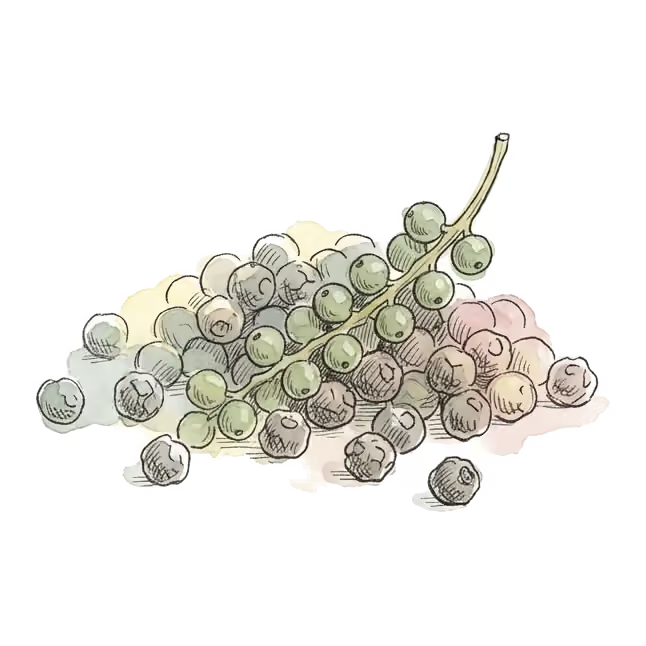
Black Pepper (Piper nigrum)
Piper nigrum · also known as Peppercorn, Common pepper, True pepper
By Superfoods Advisor Editors·July 3, 2026
Black pepper benefits: how piperine raises absorption of curcumin and some drugs, what human studies show, side effects, and drug interactions.
Black pepper (Piper nigrum) is a spice made from the dried unripe fruit of a tropical vine. Its best-documented effect comes from piperine, its main alkaloid, which raised the absorption of curcumin and several drugs in small human studies. Antioxidant, digestive and metabolic benefits have so far been shown mainly in lab and animal research.
The vine belongs to the family Piperaceae and is native to the Malabar Coast of present-day Kerala, India. It is one of the most widely traded spices in the world and has moved along long-distance trade routes since antiquity: it was a costly import in imperial Rome, and the spice trade it anchored was a major motive for European voyages to Asia in the fifteenth and sixteenth centuries. The fruit of the vine (technically a drupe) is harvested at various stages of ripeness: black pepper is made from unripe green fruit dried in the sun; white pepper from fully ripened fruit with the outer pericarp removed; green pepper from the unripe fruit preserved by brining or freeze-drying.
In Ayurvedic medicine, black pepper has been used for millennia under the name maricha, primarily for digestive complaints and respiratory conditions. It is also a core ingredient in trikatu, a traditional three-spice formulation combined with long pepper (Piper longum) and ginger. Contemporary scientific interest in black pepper centers primarily on piperine, its principal alkaloid, and piperine’s ability to alter the bioavailability of co-administered drugs and nutraceuticals.
Evidence at a glance
Active Compounds
The pharmacologically relevant constituents of black pepper include:
Piperine (1-piperoyl piperidine) is the primary alkaloid responsible for black pepper’s characteristic pungency. Piperine content varies with cultivar and processing; an HPLC survey of retail black pepper found a mean of about 4.4% by weight (4,418 mg/100 g; Lee et al., 2021). Commercial piperine extracts (e.g., BioPerine) are standardized to a minimum of 95% piperine (Sabinsa). Piperine acts as a potent inhibitor of several phase-I and phase-II drug-metabolizing enzymes:
- In human liver microsomes it inhibits cytochrome P450 3A4 (CYP3A4), and in intestinal cell monolayers it inhibits the drug transporter P-glycoprotein (Bhardwaj et al., 2002); both contribute to first-pass elimination of many drugs in the gut wall and liver. Rodent studies also report inhibition of aryl hydrocarbon hydroxylase, a CYP1A activity (Srinivasan, 2007).
- It inhibits glucuronidation by UDP-glucuronosyltransferase (UGT) enzymes, the main conjugation pathway in phase-II metabolism, in rat and guinea-pig liver and intestine in vitro, with stronger effects in intestinal tissue (Reen et al., 1993). This is the mechanism usually invoked for curcumin: curcumin undergoes rapid glucuronidation in the intestinal wall and liver, drastically limiting its systemic availability. Co-administration of 20 mg piperine with 2 g curcumin was shown by Shoba and colleagues (1998, Planta Medica) to increase curcumin bioavailability by about 2,000% in humans, an effect the authors attributed to inhibition of glucuronidation.
- In animal intestinal tissue it increased brush-border membrane fluidity and microvilli length, which the authors proposed as a route to faster absorption across the gut epithelium (Khajuria et al., 2002).
Chavicine, an isomer of piperine, is present in lesser amounts and contributes to pungency but is less studied.
Volatile oil fraction includes beta-caryophyllene, limonene, sabinene, and pinene, responsible for the herb’s aromatic profile. Beta-caryophyllene is a CB2 cannabinoid receptor agonist that reduced induced inflammation in mice when given orally (Gertsch et al., 2008); whether culinary amounts of pepper deliver a meaningful dose has not been established.
Phenolic amides and antioxidant compounds: Black pepper extract demonstrates antioxidant activity in in-vitro assays such as DPPH and FRAP; these test-tube results do not establish an antioxidant effect in the body.
Evidence for Purported Benefits
Bioavailability Enhancement
Evidence:Limited Small pharmacokinetic studies, some manufacturer-linked; results conflict by compound, and two resveratrol trials found no effect.
The best-documented pharmacological action of piperine is its enhancement of co-administered compound absorption. Proposed mechanisms, characterized mainly in animal tissue and cell models, are inhibition of glucuronidation and CYP450 enzymes in the intestinal wall and liver and direct effects on epithelial transport. Effects have been reported for:
- Curcumin: As noted above, a 20 mg dose of piperine given with 2 g of curcumin increased curcumin bioavailability in healthy volunteers by approximately 2,000% in a pharmacokinetic study (Shoba et al., 1998). The study was small, and later work found that even with piperine, free (unconjugated) curcumin in plasma stayed below assay detection limits (Volak et al., 2013).
- Coenzyme Q10 and beta-carotene: Small human trials by authors affiliated with the BioPerine manufacturer reported higher plasma levels of each when taken with piperine. A 14-day beta-carotene trial reported a larger serum response with piperine (Badmaev et al., 1999). In one double-blind trial, 5 mg piperine with 120 mg coenzyme Q10 for 21 days gave about a 30% larger plasma AUC than coenzyme Q10 alone (Badmaev et al., 2000).
- Resveratrol: Piperine raised resveratrol exposure in mice (Johnson et al., 2011), but two human trials found no significant change in plasma resveratrol with 5–25 mg piperine (Wightman et al., 2014; Bailey et al., 2021).
- Pharmaceutical drugs: Higher blood levels of phenytoin (Pattanaik et al., 2006), propranolol and theophylline (Bano et al., 1991), rifampicin (Zutshi et al., 1985), and carbamazepine (Bedada et al., 2017) have been reported in small human studies. This constitutes a potential interaction risk (see Safety section).
Antioxidant Activity
Evidence:Lab & animal only Cell culture and mostly rodent studies; clinical significance unknown.
Piperine and black pepper polyphenols scavenge reactive oxygen species and inhibit lipid peroxidation in cell culture models. A review by Srinivasan (2007, Critical Reviews in Food Science and Nutrition) summarized evidence, largely from rodent models, that dietary piperine reduced markers of oxidative stress. The clinical significance of these findings for humans consuming culinary or supplemental quantities is not established.
Digestive and Gastric Effects
Evidence:Insufficient Traditional use; enzyme and transit effects seen in animals, with scarce human data.
Dietary piperine stimulates pancreatic digestive enzymes in animal models (Srinivasan, 2007); in rats and mice, single oral doses extrapolated from human intake slowed gastric emptying of solids and gastrointestinal transit (Bajad et al., 2001, Planta Medica). It is classified in Ayurveda as a deepana (digestive stimulant). Human clinical data on dyspeptic complaints are scarce, and no large randomized controlled trials have been conducted.
Thermogenic and Metabolic Effects
Evidence:Lab & animal only A cell-line study; the one human trial tested a multi-ingredient blend, so piperine’s share is unknown.
In a mouse preadipocyte cell line, piperine inhibited fat-cell differentiation by suppressing PPARγ activity (Park et al., 2012). No human trial has isolated piperine’s effect on energy expenditure. Piperine has been tested only as one component of multi-ingredient blends; for example, an 8-week randomized placebo-controlled trial by Rondanelli et al. (2013, Journal of the American College of Nutrition) (n=37 overweight adults) of a combination of capsaicinoids, epigallocatechin gallate, piperine, and L-carnitine reported greater post-meal satiety than placebo, but piperine’s contribution cannot be separated. Current evidence is insufficient to support supplementation for metabolic outcomes.
Typical Use and Dosing
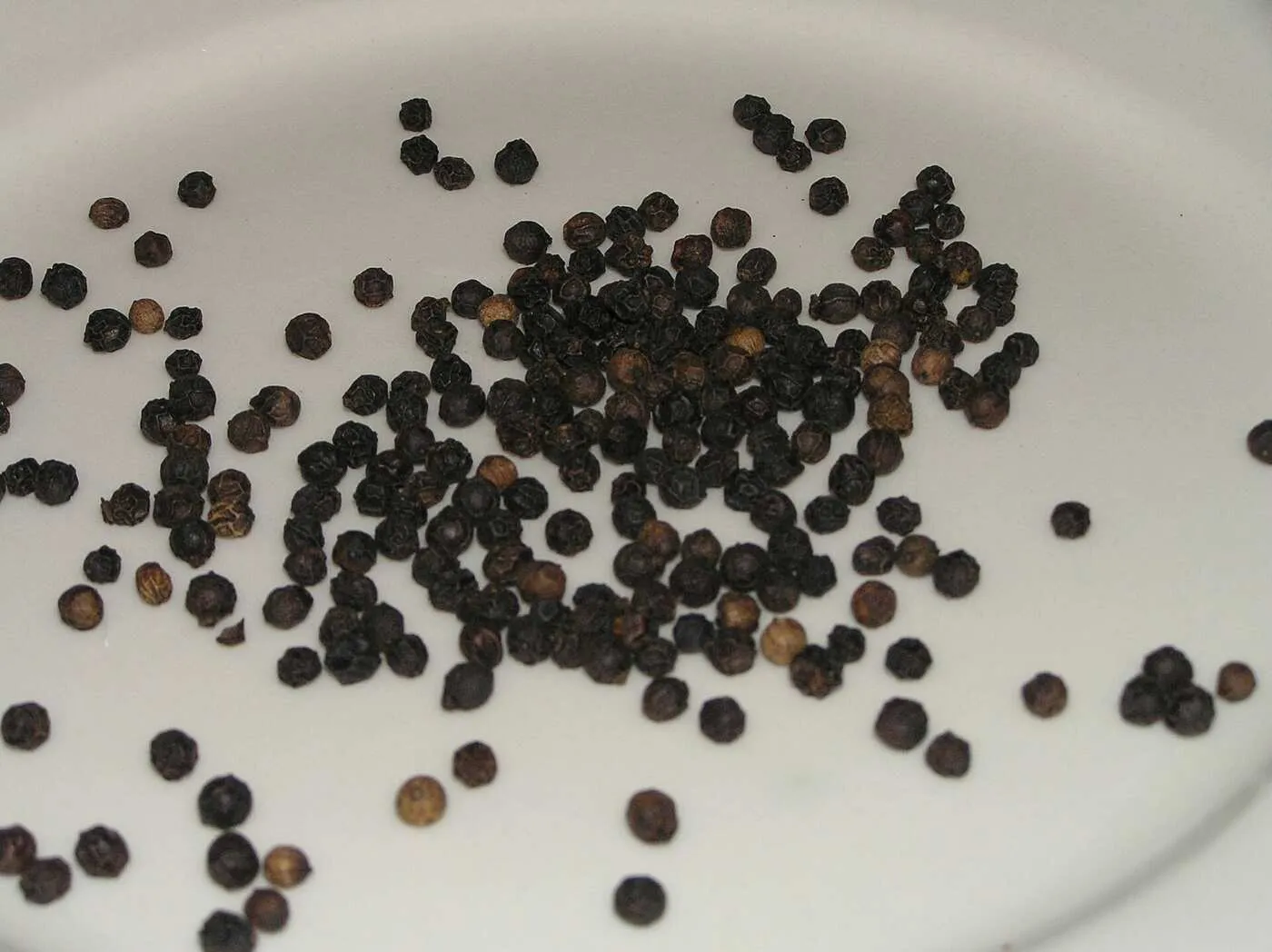 Photo: Ryan Snyder, CC BY 2.0, via Wikimedia Commons
Culinary use: Black pepper is used universally as a table spice and cooking ingredient. At the ~4.4% average piperine content reported by Lee et al. (2021), 0.5–1 g of ground pepper would contain roughly 20–45 mg of piperine. Habitual intake is usually much lower: the same study estimated average dietary exposure in Korea at about 124 µg/kg body weight per day (under 10 mg/day for a 70 kg adult). Whether piperine eaten in food alters drug metabolism has not been studied directly; the human interaction studies used purified piperine.
Bioavailability enhancement: Clinical studies demonstrating curcumin bioavailability enhancement used 20 mg of purified piperine per dose, co-administered simultaneously with the target compound. At ~4.4% piperine, this corresponds to roughly 0.5 g of ground black pepper.
Standalone antioxidant supplementation: No standardized dose has been established in clinical trials. Commercial piperine extracts (e.g., BioPerine) are typically sold in low-milligram doses intended for co-administration with other supplements, not as standalone antioxidant products.
Black pepper is a standard addition in the golden milk recipes, where it is paired with turmeric. The turmeric entry covers how much pepper to take with turmeric and what the pairing does and does not achieve.
Safety, Side Effects, and Interactions
Black pepper used as a spice is considered safe for most people; the main risks come from concentrated piperine supplements, which can change how some drugs are absorbed.
Drug interactions — potentially significant: Piperine inhibits CYP3A4 and UGT enzymes in laboratory studies and has raised blood levels of several drugs in small human studies, though not every drug tested has been affected. Documented examples include:
- Phenytoin: A single 20 mg dose of piperine increased plasma phenytoin levels (AUC and Cmax) in 20 patients with epilepsy (Pattanaik et al., 2006, Phytotherapy Research). This could raise the risk of phenytoin toxicity (ataxia, nystagmus, sedation).
- Carbamazepine: In 12 healthy volunteers, 20 mg piperine daily for 10 days raised carbamazepine Cmax by about 69%, AUC by 48%, and half-life by 43% (Bedada et al., 2017). Carbamazepine has a narrow therapeutic window.
- Rifampicin: Piperine raised rifampicin blood levels in patients with pulmonary tuberculosis (Zutshi et al., 1985); the interaction has been studied as a way to raise rifampicin levels, but it is not appropriate for self-supplementation without physician involvement.
- Cyclosporine: No human data; piperine inhibited P-glycoprotein transport of cyclosporine in intestinal cell monolayers and inhibits CYP3A4 in vitro (Bhardwaj et al., 2002), so an interaction is plausible; patients on immunosuppressants should not supplement piperine without medical supervision.
- Anticoagulants (warfarin): No direct human data with warfarin. In one crossover study, a curcumin extract with 24 mg piperine did not change levels of the CYP2C9 probe flurbiprofen, the CYP3A probe midazolam, or paracetamol (Volak et al., 2013), but caution is still reasonable for drugs with a narrow therapeutic window.
Individuals taking prescription medications with narrow therapeutic windows should consult a pharmacist or physician before using piperine supplements, even at doses encountered in fortified multi-ingredient products.
Gastrointestinal effects: In healthy volunteers, 1.5 g of black pepper delivered into the stomach increased acid and pepsin secretion and caused gastric cell shedding and mucosal microbleeding, changes comparable to a 655 mg aspirin dose (Myers et al., 1987). The long-term significance is unknown, but pepper and concentrated piperine may aggravate gastroesophageal reflux disease (GERD) or peptic ulcer disease.
Pregnancy: Black pepper is listed by the FDA as generally recognized as safe (GRAS) for use as a spice (21 CFR 182.10). Concentrated piperine supplements have no human pregnancy safety data, and in mice oral piperine prolonged the diestrous phase, lowered fertility, and showed anti-implantation activity (Daware et al., 2000); they are best avoided during pregnancy or when trying to conceive.
Culinary use safety: A Korean risk assessment estimated a margin of exposure of 162 for dietary piperine and concluded that piperine from food does not cause adverse health effects at typical intakes (Lee et al., 2021).
Product Selection Criteria
For consumers using piperine supplements as a bioavailability enhancer:
- Standardized extract (BioPerine or equivalent): Look for piperine standardized to ≥95% purity. Researchers affiliated with BioPerine’s manufacturer co-authored several of the human pharmacokinetic studies on piperine (Shoba et al., 1998; Badmaev et al., 2000).
- Dose clarity: Human bioavailability studies have used 5–20 mg piperine (Badmaev et al., 2000; Shoba et al., 1998), not the weight of the whole pepper extract. Confirm label values refer to actual piperine content, not total pepper extract weight.
- Third-party testing: Verify label accuracy via NSF or USP certification (Informed Sport screens only for banned substances).
- Identify co-administration intent: Piperine is frequently added to curcumin products; verify whether the curcumin formulation already includes an adequate piperine dose before stacking additional standalone piperine. The roundup of organic turmeric and curcumin supplements notes which products already include it.
Frequently Asked Questions
Is black pepper good for you?
In everyday amounts black pepper is a safe seasoning, and a Korean risk assessment found no adverse effects from dietary piperine at typical intakes. Its health claims rest on limited evidence: piperine’s absorption effect is documented in small human studies, while antioxidant and digestive benefits come mostly from rodent and cell research.
What is black pepper made from?
Black pepper is the unripe green fruit of the Piper nigrum vine, dried in the sun until the outer layer darkens. White pepper comes from fully ripe fruit with the outer pericarp removed, and green pepper is unripe fruit preserved by brining or freeze-drying. The pungency comes from the alkaloid piperine.
Does black pepper contain capsaicin?
No. Capsaicin is the pungent compound in chili peppers (Capsicum species), which are unrelated to black pepper. Black pepper’s heat comes from piperine and its isomer chavicine. Both act on heat-sensing receptors, which is why the two spices can feel similar despite being different chemicals from different plant families.
How much black pepper per day is safe?
No daily limit has been set for culinary pepper, which the FDA lists as Generally Recognized as Safe. Typical intake is small: a Korean study estimated average exposure at under 10 mg of piperine a day for a 70 kg adult. Concentrated piperine supplements are a different matter for anyone on prescription drugs, and should be discussed with a pharmacist first.
Can black pepper cause acid reflux?
It may make it worse. In a study of healthy volunteers, 1.5 g of black pepper placed in the stomach increased acid and pepsin secretion and caused minor bleeding of the stomach lining, comparable to an aspirin dose. People with GERD or peptic ulcers may find that pepper and piperine supplements aggravate symptoms.
References
Show all 23 referencesShow fewer
- Shoba, G., Joy, D., Joseph, T., Majeed, M., Rajendran, R., & Srinivas, P. S. (1998). Influence of piperine on the pharmacokinetics of curcumin in animals and human volunteers. Planta Medica, 64(4), 353–356.
- Bano, G., Raina, R. K., Zutshi, U., Bedi, K. L., Johri, R. K., & Sharma, S. C. (1991). Effect of piperine on bioavailability and pharmacokinetics of propranolol and theophylline in healthy volunteers. European Journal of Clinical Pharmacology, 41(6), 615–617.
- Srinivasan, K. (2007). Black pepper and its pungent principle — piperine: A review of diverse physiological effects. Critical Reviews in Food Science and Nutrition, 47(8), 735–748.
- Bajad, S., Bedi, K. L., Singla, A. K., & Johri, R. K. (2001). Piperine inhibits gastric emptying and gastrointestinal transit in rats and mice. Planta Medica, 67(2), 176–179.
- Pattanaik, S., Hota, D., Prabhakar, S., Kharbanda, P., & Pandhi, P. (2006). Effect of piperine on the steady-state pharmacokinetics of phenytoin in patients with epilepsy. Phytotherapy Research, 20(8), 683–686.
- Rondanelli, M., Opizzi, A., Perna, S., et al. (2013). Acute effect on satiety, resting energy expenditure, respiratory quotient, glucagon-like peptide-1, free fatty acids, and glycerol following consumption of a combination of bioactive food ingredients in overweight subjects. Journal of the American College of Nutrition, 32(1), 41–49.
- Lee, J. G., Kim, A. Y., Kim, D. W., & Kim, Y. J. (2021). Determination and risk characterisation of bio-active piperine in black pepper and selected food containing black pepper consumed in Korea. Food Science and Biotechnology, 30(2), 209–215.
- Bedada, S. K., Appani, R., & Boga, P. K. (2017). Effect of piperine on the metabolism and pharmacokinetics of carbamazepine in healthy volunteers. Drug Research, 67(1), 46–51.
- Volak, L. P., Hanley, M. J., Masse, G., et al. (2013). Effect of a herbal extract containing curcumin and piperine on midazolam, flurbiprofen and paracetamol (acetaminophen) pharmacokinetics in healthy volunteers. British Journal of Clinical Pharmacology, 75(2), 450–462.
- Zutshi, R. K., Singh, R., Zutshi, U., Johri, R. K., & Atal, C. K. (1985). Influence of piperine on rifampicin blood levels in patients of pulmonary tuberculosis. Journal of the Association of Physicians of India, 33(3), 223–224.
- Badmaev, V., Majeed, M., & Prakash, L. (2000). Piperine derived from black pepper increases the plasma levels of coenzyme Q10 following oral supplementation. Journal of Nutritional Biochemistry, 11(2), 109–113.
- Bhardwaj, R. K., Glaeser, H., Becquemont, L., Klotz, U., Gupta, S. K., & Fromm, M. F. (2002). Piperine, a major constituent of black pepper, inhibits human P-glycoprotein and CYP3A4. Journal of Pharmacology and Experimental Therapeutics, 302(2), 645–650.
- Reen, R. K., Jamwal, D. S., Taneja, S. C., et al. (1993). Impairment of UDP-glucose dehydrogenase and glucuronidation activities in liver and small intestine of rat and guinea pig in vitro by piperine. Biochemical Pharmacology, 46(2), 229–238.
- Khajuria, A., Thusu, N., & Zutshi, U. (2002). Piperine modulates permeability characteristics of intestine by inducing alterations in membrane dynamics: Influence on brush border membrane fluidity, ultrastructure and enzyme kinetics. Phytomedicine, 9(3), 224–231.
- Gertsch, J., Leonti, M., Raduner, S., et al. (2008). Beta-caryophyllene is a dietary cannabinoid. Proceedings of the National Academy of Sciences, 105(26), 9099–9104.
- Badmaev, V., Majeed, M., & Norkus, E. P. (1999). Piperine, an alkaloid derived from black pepper increases serum response of beta-carotene during 14-days of oral beta-carotene supplementation. Nutrition Research, 19(3), 381–388.
- Johnson, J. J., Nihal, M., Siddiqui, I. A., et al. (2011). Enhancing the bioavailability of resveratrol by combining it with piperine. Molecular Nutrition & Food Research, 55(8), 1169–1176.
- Wightman, E. L., Reay, J. L., Haskell, C. F., Williamson, G., Dew, T. P., & Kennedy, D. O. (2014). Effects of resveratrol alone or in combination with piperine on cerebral blood flow parameters and cognitive performance in human subjects. British Journal of Nutrition, 112(2), 203–213.
- Bailey, H. H., Johnson, J. J., Lozar, T., et al. (2021). A randomized, double-blind, dose-ranging, pilot trial of piperine with resveratrol on the effects on serum levels of resveratrol. European Journal of Cancer Prevention, 30(3), 285–290.
- Park, U. H., Jeong, H. S., Jo, E. Y., et al. (2012). Piperine, a component of black pepper, inhibits adipogenesis by antagonizing PPARγ activity in 3T3-L1 cells. Journal of Agricultural and Food Chemistry, 60(15), 3853–3860.
- Myers, B. M., Smith, J. L., & Graham, D. Y. (1987). Effect of red pepper and black pepper on the stomach. American Journal of Gastroenterology, 82(3), 211–214.
- Daware, M. B., Mujumdar, A. M., & Ghaskadbi, S. (2000). Reproductive toxicity of piperine in Swiss albino mice. Planta Medica, 66(3), 231–236.
- U.S. Food and Drug Administration. 21 CFR 182.10: Spices and other natural seasonings and flavorings.
Related content



More in Roots & Herbs
- Ashwagandha (Withania somnifera)
Ashwagandha side effects, who should avoid it, and drug interactions, plus what trials show for stress, sleep and strength at clinical doses.
- Basil (Ocimum basilicum)
Basil benefits: what lab and human studies show, vitamin K per serving, sweet basil vs holy basil, and the estragole and warfarin cautions.
- Cilantro / Coriander (Coriandrum sativum)
Cilantro vs parsley: how the two herbs differ in flavor, vitamin K and vitamin C, plus what the evidence says about cilantro benefits and safety.
- Cinnamon (Cinnamomum verum / C. cassia)
Ceylon cinnamon vs cassia: coumarin levels and liver risk, how much is safe per day, and what trials show for blood sugar and cholesterol.
- Garlic (Allium sativum)
Garlic benefits for blood pressure, cholesterol and colds: what trials show, how much raw garlic or supplement they used, and bleeding risks.
- Ginger (Zingiber officinale)
Ginger for nausea: what trials show for morning sickness, chemotherapy, surgery and motion sickness, the doses studied, and ginger's side effects.

Curated by Superfoods Advisor Editors·Last updated