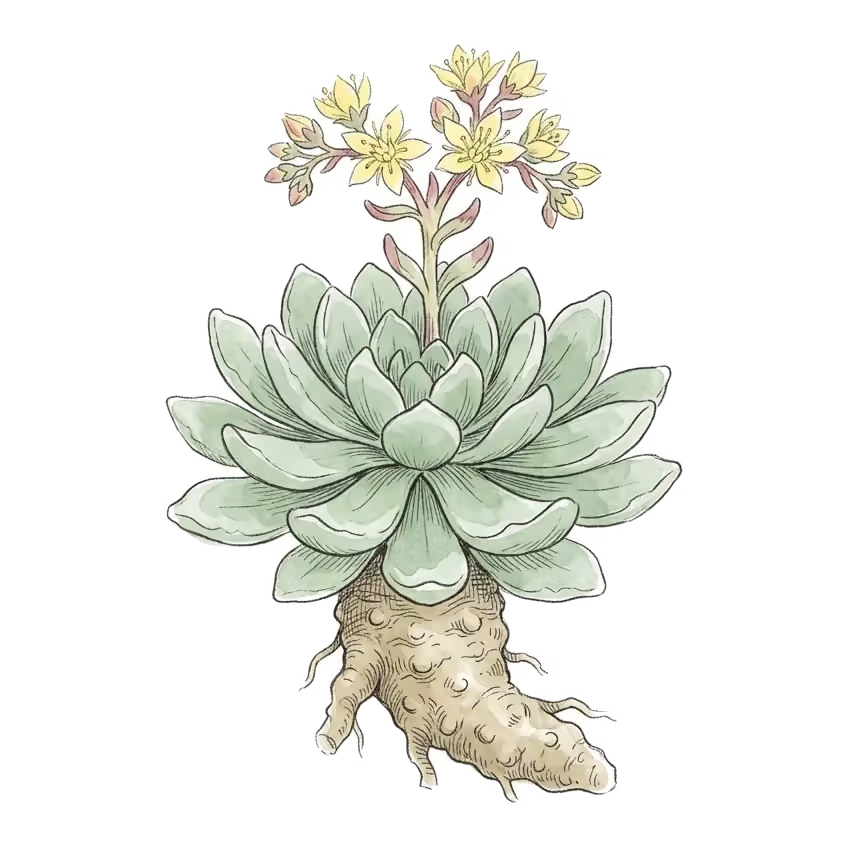
Rhodiola Rosea (Rhodiola rosea)
Rhodiola rosea · also known as golden root, rose root, arctic root, king's crown, Aaron's rod
By Superfoods Advisor Editors·July 3, 2026
Rhodiola rosea benefits for fatigue, stress and exercise: what the trials show, doses of 200 to 680 mg, side effects, and drug interactions.
Rhodiola rosea, also called golden root, rose root or arctic root, is an adaptogenic herb whose rhizome is taken as a standardized extract. Its most-studied benefit is less fatigue and better mental performance under stress, reported in a few placebo-controlled trials that have not been independently replicated. Trial doses ranged from 200 to 680 mg of extract a day.
The plant is a perennial in the Crassulaceae family, native to the cold, mountainous regions of Europe, Asia, and North America — including Siberia, Scandinavia, the Alps, and the Appalachians. Its thick, rose-scented rhizome has been used in traditional medicine across these regions for centuries. Norse Vikings reportedly used it to enhance physical endurance; Siberian and Mongolian peoples employed it to combat fatigue and harsh climate; Chinese traditional medicine relies mainly on related species such as R. crenulata (Booker et al., 2016).
In the 20th century, Soviet-era research — largely unpublished in Western literature until after 1991 — reportedly investigated R. rosea extensively as a potential “adaptogen” for military personnel, cosmonauts, and athletes. The Swedish Herbal Institute later sponsored many of the early Western clinical trials of its SHR-5 extract, and in 2012 the European Medicines Agency’s herbal committee (HMPC) adopted a monograph registering it as a traditional herbal medicinal product for the relief of symptoms of stress, such as fatigue, a status based on long-standing use rather than proven efficacy (EMA, revised 2024). R. rosea has a body of placebo-controlled human trials, as do Panax ginseng and Withania somnifera (ashwagandha), though a systematic review noted that most of its trials lack independent replication (Hung et al., 2011).
Evidence at a glance
Active Compounds
Rhodiola rosea’s pharmacological effects are attributed to several compound classes, with two groups serving as the accepted quality markers for standardized commercial extracts:
Rosavins (rosavin, rosin, rosarin): Phenylpropanoid glycosides characteristic of Rhodiola rosea. They serve as the primary authentication marker distinguishing R. rosea from related species such as R. crenulata and R. imbricata, which are sometimes substituted in commercial products (Booker et al., 2016). Rosavin content in genuine R. rosea rhizome varies widely between plants: across 95 Norwegian clones it ranged from about 0.3% to 8.6% of dry weight (Elameen et al., 2010). Their precise mechanisms of action remain incompletely characterized. In vitro, R. rosea root extracts inhibited monoamine oxidase (MAO) A and B, though the most active isolated compound was rosiridin rather than a rosavin (van Diermen et al., 2009).
Salidroside (rhodioloside): A phenylethanoid glycoside of tyrosol, present in numerous Rhodiola species. Its level in R. rosea is even more variable than rosavin’s, from about 0.003% to 1.3% of dry rhizome weight in the same Norwegian clone collection (Elameen et al., 2010). Salidroside has demonstrated neuroprotective, antioxidant, and anti-apoptotic effects in preclinical models. In those models it has been reported to upregulate heat shock proteins and activate AMPK pathways; whether this happens at supplement doses in humans is unknown.
Tyrosol: The aglycone form of salidroside, with antioxidant properties. Present in smaller amounts.
Flavonoids: Mainly herbacetin glycosides; rhodiosin is the principal flavonoid in the rhizome and root, accompanied by smaller amounts of herbacetin (Péter Zomborszki et al., 2019).
Monoterpenes and essential oil: Including geraniol and 1-octanol, which contribute the characteristic rose fragrance.
The common commercial specification for R. rosea extracts, used in several exercise trials, is about 3% rosavins and 1% salidroside (Tinsley et al., 2024). Products that lack rosavins, or use only salidroside as a marker, may be derived from substitute species rather than genuine R. rosea. In a UK analysis of about 40 commercial products, roughly one fifth of those labeled R. rosea contained no rosavin (Booker et al., 2016).
Evidence for Purported Benefits
Fatigue Reduction and Mental Performance Under Stress
Evidence:Limited Two RCTs, a small pilot and a 161-person single-dose trial, both positive; independent replication is lacking.
The most-studied human evidence for R. rosea concerns stress-related fatigue and cognitive performance, though independent replication is lacking (Hung et al., 2011).
Spasov et al. (Phytomedicine, 2000) conducted a randomized, double-blind, placebo-controlled pilot study in foreign students during a stressful examination period. Those taking a low repeated dose of R. rosea extract (SHR-5) for 20 days showed significant improvements in physical fitness, mental fatigue, neuro-motoric tests, and self-rated well-being compared to placebo, though text-correction and tapping tests did not change.
Shevtsov et al. (Phytomedicine, 2003) published a randomized, double-blind, placebo-controlled parallel-group study in 161 cadets aged 19–21, tested against a background of fatigue and stress. A single dose of R. rosea extract (SHR-5, two or three capsules) produced a significantly higher score than placebo on a composite anti-fatigue index, with no significant difference between the two doses. This remains one of the better-powered single studies.
A 2011 systematic review by Hung et al. (Phytomedicine) identified 11 placebo-controlled RCTs of R. rosea covering physical performance, mental performance, and mental health conditions, with only a few mild adverse events reported. The authors concluded that R. rosea may have beneficial effects but noted a lack of independent replication and called for more research.
Comparison with Other Adaptogens
R. rosea is often compared to ashwagandha (Withania somnifera) and Panax ginseng. The key distinctions are:
- Mechanism: Proposed mechanisms, drawn largely from preclinical work, differ: HPA axis and monoaminergic effects for R. rosea, cortisol and GABAergic pathways for ashwagandha, and ginsenoside-mediated effects for ginseng. None is established in humans.
- Evidence focus: R. rosea trials have mostly tested fatigue and mental performance, often after single doses or a few weeks of use; ashwagandha trials have focused more on chronic stress, cortisol, and sleep.
- Profile: R. rosea is traditionally described as activating and ashwagandha as calming, a distinction based on use rather than head-to-head trials.
Exercise Performance
Evidence:Limited A few small trials in young volunteers; one found a small acute gain, while four weeks of use changed nothing.
Several trials have assessed R. rosea for physical endurance and recovery. De Bock et al. (International Journal of Sport Nutrition and Exercise Metabolism, 2004) found that a single 200 mg dose of R. rosea taken one hour before testing modestly increased time to exhaustion (from 16.8 to 17.2 minutes) in 24 healthy young volunteers compared to placebo, whereas 4 weeks of daily intake did not change any measured variable. Effect sizes were small.
Mood and Anxiety
Evidence:Preliminary One 80-person trial without a placebo, using self-reported outcomes.
Cropley et al. (Phytotherapy Research, 2015) conducted a 14-day randomized trial in 80 mildly anxious participants. Compared with an untreated control group, those taking R. rosea extract (200 mg twice daily) reported significantly less anxiety, stress, anger, confusion, and depression at 14 days, with no difference in cognitive performance.
An uncontrolled pilot study by Bystritsky et al. (Journal of Alternative and Complementary Medicine, 2008) in 10 adults with generalized anxiety disorder reported lower Hamilton Anxiety Rating Scale scores after 10 weeks of R. rosea extract (340 mg/day), but the absence of a control group precludes conclusions. Not adequate evidence for clinical use in anxiety disorders.
Typical Use and Dosing
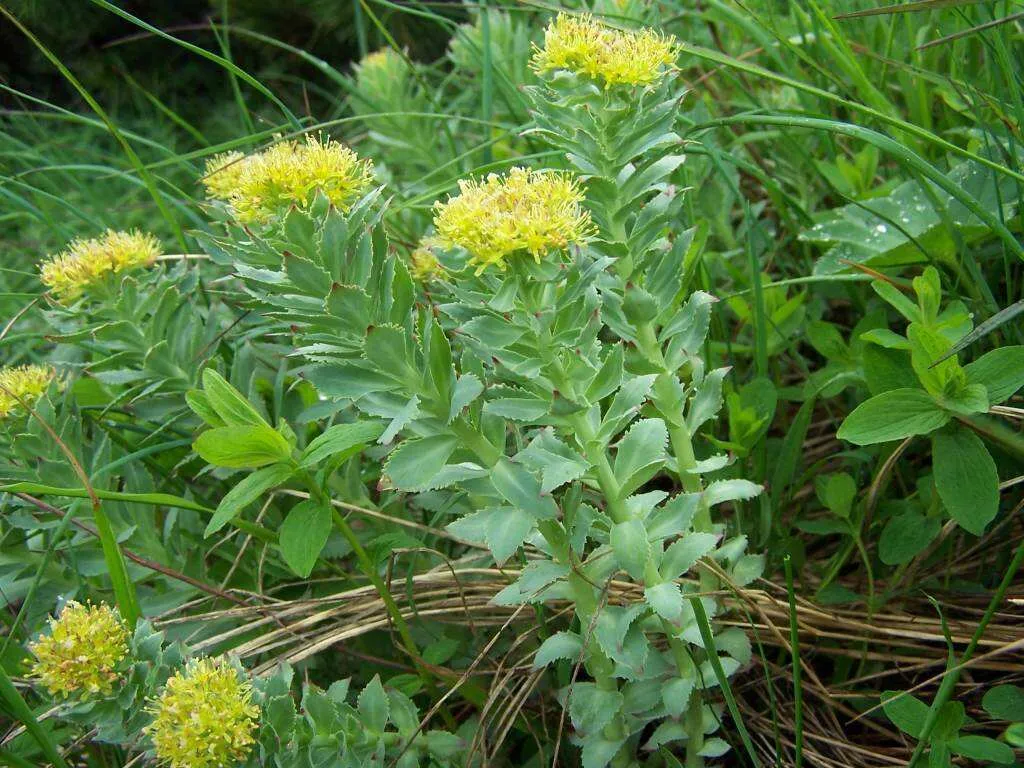 Photo: Opioła Jerzy, CC BY 2.5, via Wikimedia Commons
Standardized extract (most studied form):
- Acute fatigue/performance: single doses in trials have ranged from 200 mg taken an hour before exercise (De Bock et al., 2004) to two or three SHR-5 capsules before mental work (Shevtsov et al., 2003)
- Chronic supplementation: trials have used 340–680 mg/day of SHR-5 for 6 weeks (Darbinyan et al., 2007) and 400 mg/day for 14 days (Cropley et al., 2015). The EMA traditional-use monograph gives 144–400 mg/day of a defined ethanolic dry extract, in one or two doses, for adults only, and advises seeing a doctor if symptoms persist beyond 2 weeks (EMA, 2024). Doses are usually taken in the morning and early afternoon to avoid potential interference with sleep
- Duration: published trials have run from a single dose to 12 weeks (Mao et al., 2015)
Timing considerations: Due to its mildly activating profile, R. rosea is best taken early in the day. Evening dosing may interfere with sleep onset in some individuals — a practical distinction from calming adaptogens like ashwagandha, which are often recommended at night.
Cycling: Some practitioner protocols suggest cycling R. rosea (e.g., 5 days on, 2 days off, or 3 weeks on, 1 week off) to prevent tolerance, though no human trial has directly tested this. Evidence for tolerance development is lacking.
Rhodiola is one of the herbs assessed in the adaptogens evidence review.
Safety, Side Effects, and Interactions
R. rosea has been well tolerated in published clinical trials, with mostly mild adverse events in RCTs lasting up to 12 weeks. In the longest, a 12-week depression trial, 30% of participants on R. rosea reported adverse events versus 16.7% on placebo and 63.2% on sertraline (Mao et al., 2015).
Common adverse effects: Dizziness and dry mouth were the most common in a small anxiety study (Bystritsky et al., 2008); the EMA monograph lists headache, nausea, abdominal pain, diarrhoea, rash, and itching, frequency unknown. Some individuals report increased activation or agitation.
Sleep: Because R. rosea is considered activating, late-day dosing may disturb sleep in some people, though insomnia was not a prominent adverse event in the trials cited here.
Monoamine oxidase interactions: Given in vitro evidence for MAO inhibition by R. rosea root extracts (van Diermen et al., 2009), concomitant use with MAO inhibitor medications (phenelzine, tranylcypromine, selegiline) should be avoided without medical supervision. Evidence for clinically significant interaction at supplement doses is limited but the theoretical risk warrants caution.
Antidepressants: Possible serotonergic activity raises concern about combinations with SSRIs and SNRIs. A published case report described restlessness, trembling, and autonomic symptoms interpreted as a serotonergic syndrome in a 68-year-old woman who added R. rosea to paroxetine (Maniscalco et al., 2015). Discuss any combination with the prescriber.
Bipolar disorder: Because R. rosea has shown antidepressant-like effects, a case of mania associated with its use has been reported (Whig & Leo, 2022); people with bipolar disorder should not use it without psychiatric supervision.
Drug metabolism: In 13 healthy volunteers, 14 days of a commercial R. rosea product reduced CYP2C9 activity by about 21%, with no significant effect on CYP1A2, 2C19, 2D6, or 3A4 (Thu et al., 2016). The effect is modest but may matter with narrow-margin CYP2C9 drugs such as warfarin and phenytoin.
Pregnancy and breastfeeding: Safety has not been established, and the EMA monograph does not recommend use during pregnancy or lactation.
Autoimmune conditions: Human data are lacking; people on immunosuppressive therapy (e.g., post-transplant) or with autoimmune disease should discuss use with their doctor before starting.
Authenticity concern: Misidentification and adulteration are documented issues in the Rhodiola supplement market (Booker et al., 2016). Products using R. crenulata or R. imbricata instead of R. rosea will have different (and less studied) phytochemical profiles, with potentially different effects and unknowns.
Product Selection Criteria
- Species authentication: Insist on products specifying Rhodiola rosea (not just “rhodiola” or “rhodiola crenulata”). Published authenticity studies have relied on chemical profiling (HPTLC, HPLC, NMR) for rosavins and species-specific markers (Marchev et al., 2020); ask the manufacturer what identity test it uses.
- Standardization: Select extracts standardized to at least 3% rosavins and 1% salidroside, the common commercial specification.
- Rosavin content: Measurable rosavins help distinguish authentic material from R. crenulata substitutes (which have high salidroside but negligible rosavins); a salidroside-only standardization is a warning sign.
- Third-party certification: NSF Certified for Sport or Informed Sport certification is important for athletes subject to drug testing; these programs screen for banned substances and do not test which Rhodiola species is in the product.
- Root and rhizome source: Verify the product uses root/rhizome material, not aerial parts, which are not the traditional or clinically studied plant part.
- Country of origin: Siberian, Scandinavian, or Alpine origin is traditional; cultivated sources with documented quality controls are acceptable if standardization is verified.
Frequently Asked Questions
What is rhodiola rosea good for?
Small trials report less fatigue and better mental performance during stressful periods, such as exams or military training, and a 14-day trial reported less self-rated anxiety and stress than an untreated group. These findings rest on limited evidence, mostly from studies of one extract, SHR-5. Rhodiola is registered in the EU only as a traditional remedy for stress symptoms such as fatigue.
Is rhodiola a stimulant?
It is not a caffeine-like stimulant, but it is traditionally described as activating rather than calming. That reputation comes from use rather than head-to-head trials. Because of it, doses are usually taken in the morning or early afternoon, as some people find late-day doses disturb sleep. Some users also report agitation.
How much rhodiola per day?
Long-term trials used 340 to 680 mg a day of SHR-5 extract for six weeks, or 200 mg twice daily for 14 days, while single doses of 200 mg were tested before exercise. The EMA monograph gives 144 to 400 mg a day of a defined extract for adults and advises seeing a doctor if symptoms last beyond two weeks.
Is rhodiola rosea safe?
In trials lasting up to 12 weeks it was generally well tolerated; dizziness, dry mouth, headache and stomach upset are reported. It should not be combined with MAO inhibitors, and a serotonergic reaction was reported with paroxetine. People with bipolar disorder, those on warfarin or phenytoin, and anyone pregnant or breastfeeding should avoid it or talk to a clinician first.
Does rhodiola help with weight loss?
No human trial cited here measured weight loss. The idea draws on preclinical work in which salidroside activated AMPK, an energy-sensing pathway, but whether that happens at supplement doses in people is unknown. There is no evidence that rhodiola causes meaningful weight loss.
Is rhodiola better than ashwagandha?
They have been studied for different things and never compared directly. Rhodiola trials mostly test fatigue and mental performance after single doses or a few weeks, while ashwagandha trials focus on chronic stress, cortisol and sleep. Rhodiola is used in the morning; for ashwagandha timing, see the guide on how to take ashwagandha for sleep and anxiety.
References
Show all 18 referencesShow fewer
- Spasov, A. A., Wikman, G. K., Mandrikov, V. B., Mironova, I. A., & Neumoin, V. V. (2000). A double-blind, placebo-controlled pilot study of the stimulating and adaptogenic effect of Rhodiola rosea SHR-5 extract on the fatigue of students caused by stress during an examination period with a repeated low-dose regimen. Phytomedicine, 7(2), 85–89.
- Shevtsov, V. A., Zholus, B. I., Shervarly, V. I., Vol’skij, V. B., Korovin, Y. P., Khristich, M. P., & Wikman, G. (2003). A randomized trial of two different doses of a SHR-5 Rhodiola rosea extract versus placebo and control of capacity for mental work. Phytomedicine, 10(2–3), 95–105.
- Hung, S. K., Perry, R., & Ernst, E. (2011). The effectiveness and efficacy of Rhodiola rosea L.: A systematic review of randomized clinical trials. Phytomedicine, 18(4), 235–244.
- De Bock, K., Eijnde, B. O., Ramaekers, M., & Hespel, P. (2004). Acute Rhodiola rosea intake can improve endurance exercise performance. International Journal of Sport Nutrition and Exercise Metabolism, 14(3), 298–307.
- Cropley, M., Banks, A. P., & Boyle, J. (2015). The effects of Rhodiola rosea L. extract on anxiety, stress, cognition and other mood symptoms. Phytotherapy Research, 29(12), 1934–1939.
- European Medicines Agency, HMPC. (2012; revision 1 adopted 2024). European Union herbal monograph on Rhodiola rosea L., rhizoma et radix. EMA/HMPC/24177/2023.
- Bystritsky, A., Kerwin, L., & Feusner, J. D. (2008). A pilot study of Rhodiola rosea (Rhodax) for generalized anxiety disorder (GAD). Journal of Alternative and Complementary Medicine, 14(2), 175–180.
- Darbinyan, V., Aslanyan, G., Amroyan, E., Gabrielyan, E., Malmström, C., & Panossian, A. (2007). Clinical trial of Rhodiola rosea L. extract SHR-5 in the treatment of mild to moderate depression. Nordic Journal of Psychiatry, 61(5), 343–348.
- Mao, J. J., et al. (2015). Rhodiola rosea versus sertraline for major depressive disorder: A randomized placebo-controlled trial. Phytomedicine, 22(3), 394–399.
- Elameen, A., Dragland, S., & Klemsdal, S. S. (2010). Bioactive compounds produced by clones of Rhodiola rosea maintained in the Norwegian germplasm collection. Pharmazie, 65(8), 618–623.
- van Diermen, D., et al. (2009). Monoamine oxidase inhibition by Rhodiola rosea L. roots. Journal of Ethnopharmacology, 122(2), 397–401.
- Booker, A., et al. (2016). The authenticity and quality of Rhodiola rosea products. Phytomedicine, 23(7), 754–762.
- Tinsley, G. M., et al. (2024). Rhodiola rosea as an adaptogen to enhance exercise performance: a review of the literature. British Journal of Nutrition, 131(3), 461–473.
- Thu, O. K., Spigset, O., Nilsen, O. G., & Hellum, B. (2016). Effect of commercial Rhodiola rosea on CYP enzyme activity in humans. European Journal of Clinical Pharmacology, 72(3), 295–300.
- Maniscalco, I., Toffol, E., Giupponi, G., & Conca, A. (2015). The interaction of Rhodiola rosea and antidepressants. A case report. Neuropsychiatrie, 29(1), 36–38.
- Whig, R., & Leo, R. J. (2022). Mania associated with Rhodiola rosea: an adaptogen with antidepressant effects. Primary Care Companion for CNS Disorders, 24(2), 21cr02980.
- Péter Zomborszki, Z., et al. (2019). Rhodiosin and herbacetin in Rhodiola rosea preparations: additional markers for quality control? Pharmaceutical Biology, 57(1), 295–305.
- Marchev, A. S., et al. (2020). Authenticity and quality evaluation of different Rhodiola species and commercial products based on NMR-spectroscopy and HPLC. Phytochemical Analysis, 31(6), 756–769.
Related content
More in Roots & Herbs
- Ashwagandha (Withania somnifera)
Ashwagandha side effects, who should avoid it, and drug interactions, plus what trials show for stress, sleep and strength at clinical doses.
- Basil (Ocimum basilicum)
Basil benefits: what lab and human studies show, vitamin K per serving, sweet basil vs holy basil, and the estragole and warfarin cautions.
- Black Pepper (Piper nigrum)
Black pepper benefits: how piperine raises absorption of curcumin and some drugs, what human studies show, side effects, and drug interactions.
- Cilantro / Coriander (Coriandrum sativum)
Cilantro vs parsley: how the two herbs differ in flavor, vitamin K and vitamin C, plus what the evidence says about cilantro benefits and safety.
- Cinnamon (Cinnamomum verum / C. cassia)
Ceylon cinnamon vs cassia: coumarin levels and liver risk, how much is safe per day, and what trials show for blood sugar and cholesterol.
- Garlic (Allium sativum)
Garlic benefits for blood pressure, cholesterol and colds: what trials show, how much raw garlic or supplement they used, and bleeding risks.

Curated by Superfoods Advisor Editors·Last updated