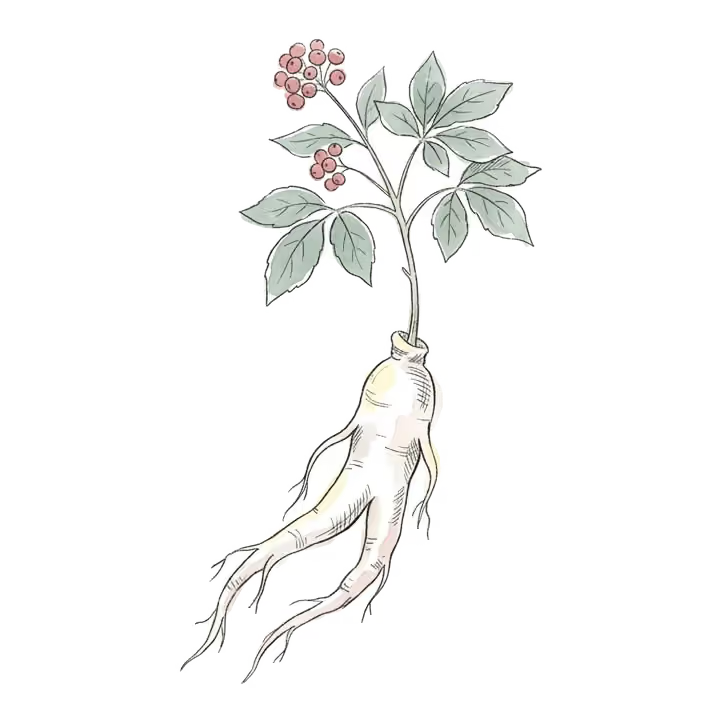
Ginseng (Panax ginseng / Panax quinquefolius)
Panax ginseng · also known as Asian ginseng, Korean ginseng, American ginseng, Ren shen, Panax
By Superfoods Advisor Editors·July 3, 2026
What is ginseng good for? Trial evidence for memory, fatigue, colds, blood sugar and erectile function, Asian vs American ginseng, and side effects.
Ginseng is the root of Panax plants, chiefly Asian or Korean ginseng (Panax ginseng) and American ginseng (P. quinquefolius), taken as an adaptogen. Small trials report benefits for memory, cancer-related fatigue, colds and erectile function, but each of these rests on limited evidence. Its main active compounds are triterpenoid saponins called ginsenosides.
The name “ginseng” commonly refers to two species within the genus Panax (family Araliaceae): Asian ginseng (Panax ginseng C.A. Mey.), native to Manchuria and the Korean peninsula, and American ginseng (Panax quinquefolius L.), native to eastern North America. A third species, Siberian ginseng (Eleutherococcus senticosus), is sometimes marketed under the ginseng name but is not a true Panax species and has a distinct phytochemical profile (eleutherosides, not ginsenosides); it is not covered in detail here.
The genus name Panax derives from the Greek panakos (panacea, all-heal), reflecting the breadth of traditional medicinal applications attributed to this root. Asian ginseng has been used in Traditional Chinese Medicine for at least two thousand years and is documented in the earliest Chinese pharmacopoeia (Shennong Bencao Jing), where it is classified as a superior-grade tonic promoting longevity, enhancing mental capacity, and invigorating the qi (vital energy). American ginseng was used by several indigenous North American nations for fevers, digestion, and as a general tonic before its export to China beginning in the 1700s.
Ginseng is among the most widely used herbal products in the world (Coon & Ernst, 2002). It is classified as an adaptogen — a compound proposed to improve non-specific resistance to biological, chemical, and physical stressors — a category it shares with ashwagandha and rhodiola.
Evidence at a glance
Active Compounds
Ginsenosides: The Primary Bioactive Class
The signature bioactive compounds of true ginseng are ginsenosides (also called panaxosides), a class of triterpenoid saponins found in the root and, to a lesser extent, the leaves, stems, and berries. More than 150 individual ginsenosides have been isolated from Panax plants (Yang et al., 2020). They are classified structurally into three main groups based on their aglycone skeleton:
- Protopanaxadiol (PPD) type: includes ginsenosides Rb1, Rb2, Rc, Rd. These are the most abundant ginsenosides in most Panax species and are the group most commonly studied for sedative, anxiolytic, anti-inflammatory, and neuroprotective effects. Rb1 is the most extensively studied individual ginsenoside. In rodent studies, oral Rb1 increased the survival of newly formed cells in the hippocampus (Liu et al., 2011) and altered gamma-aminobutyric acid (GABA) signalling in the prefrontal cortex (Liu et al., 2019).
- Protopanaxatriol (PPT) type: includes ginsenosides Rg1, Re, Rf. Rg1 is the most extensively studied in this group and is associated with stimulant and memory-enhancing effects in animal models. In cell studies it binds and activates the glucocorticoid receptor (Lee et al., 1997), triggers estrogen receptor alpha signalling without acting as a classic ligand (Gao et al., 2019), and promotes BDNF (brain-derived neurotrophic factor) expression in hippocampal cells in preclinical studies.
- Oleanolic acid type: includes ginsenoside Ro; less pharmacologically characterized.
Species-level differences in ginsenoside profiles: The two species differ in which ginsenosides dominate:
- Panax ginseng (Asian): a higher proportion of Rg1 (PPT-type) relative to Rb1 than American ginseng, contributing to its traditional characterization as more “stimulating” or “warming.”
- Panax quinquefolius (American): Rb1-dominant (PPD-type), with relatively little Rg1, contributing to its characterization in TCM as more “cooling” and less stimulating — more appropriate in TCM theory for individuals with yin-deficiency patterns. In a comparison of commercial samples, ginsenosides Rb1 and Rd and pseudoginsenoside F11 were more characteristic of American ginseng, while Rf, Rb2 and Rc were more characteristic of Asian ginseng (Chen et al., 2015).
Ginsenoside content varies considerably with root age (older roots are more potent by convention and by analysis), growing region, and processing. Red ginseng — produced by steaming and drying white (unprocessed) ginseng — has a modified ginsenoside profile, with some glycoside bonds cleaved by heat, producing less polar ginsenosides such as Rg3, Rg5 and Rk1. Further metabolites such as compound K and Rh1 are formed mainly by intestinal bacteria and are more readily absorbed (Kim, 2012).
HPA Axis Modulation
Ginseng’s adaptogenic properties are proposed to operate partly through the hypothalamic-pituitary-adrenal (HPA) axis. In rodent models of stress, ginsenosides modulate corticotropin-releasing hormone (CRH) release from the hypothalamus, reduce ACTH secretion from the pituitary, and attenuate downstream cortisol release. These findings parallel those observed with ashwagandha (withanolides) and rhodiola (rosavins), though the mechanistic details differ.
Other Constituents
- Polyacetylenes (panaxynol, falcarinol): minor compounds with antifungal and cytotoxic activity in vitro.
- Polysaccharides: root glycans named panaxans showed hypoglycemic activity in early laboratory studies (Konno et al., 1984); other ginseng polysaccharides have shown immune-modulating activity in vitro.
- Peptides and amino acids: arginine is present in meaningful concentrations; proposed to contribute to nitric oxide synthesis-mediated effects on vascular tone.
Evidence for Purported Benefits
Cognitive Function and Mental Performance
Evidence:Limited Many small RCTs; a 2024 meta-analysis found a small memory gain but no effect on overall cognition.
Acute cognitive effects: Several randomized, double-blind crossover trials have evaluated cognitive function following single doses of Panax ginseng extract. A trial by Kennedy and colleagues (2001, Nutritional Neuroscience) in 20 healthy young adults found that 400 mg of standardized P. ginseng extract (G115) improved quality of memory performance at every test point from 1 to 6 hours post-dose compared to placebo. A 2010 Cochrane systematic review of 9 randomized trials by Geng and colleagues (Cochrane Database of Systematic Reviews) found suggestions of improvement in some aspects of cognitive function, but heterogeneity prevented pooling the data and the authors concluded there was a lack of convincing evidence of a cognitive-enhancing effect in healthy participants.
Pooled trials: A 2024 meta-analysis of 15 randomized trials in mixed populations, from healthy adults to people with Alzheimer’s disease, found a small improvement in memory but no effect on overall cognition, attention, or executive function, and called for higher-quality studies (Zeng et al., 2024).
American ginseng and working memory: In a randomized, double-blind, placebo-controlled crossover trial, Scholey and colleagues (2010, Psychopharmacology) found that single doses of 100, 200, or 400 mg of a standardized American ginseng (P. quinquefolius) extract improved working memory performance in healthy young adults over the six hours after dosing. The authors described the study as preliminary.
Fatigue and Physical Performance
Evidence:Limited Results conflict: trials in healthy young adults found no effect, while one large trial helped cancer-related fatigue.
Multiple trials have evaluated P. ginseng for fatigue reduction and physical endurance. Results are generally modest:
- A narrative review by Bucci (2000, American Journal of Clinical Nutrition) concluded that controlled studies of Asian ginseng tended to report performance improvements mainly when trials used standardized root extracts, lasted more than 8 weeks, gave more than 1 g of dried root (or equivalent) daily, and enrolled larger numbers of older participants.
- Double-blind, placebo-controlled trials in healthy young adults have generally found no ergogenic effect: Allen and colleagues (1998, Journal of the American College of Nutrition) saw no change in peak oxygen uptake or exercise time after 3 weeks of 200 mg/day P. ginseng extract, and Engels and Wirth (1997, Journal of the American Dietetic Association) found no effect of 200 or 400 mg/day G115 for 8 weeks on submaximal or maximal aerobic responses.
- The better-supported application may be for fatigue in clinical populations: a randomized trial by Barton and colleagues (2013, Journal of the National Cancer Institute, n=364) found that 2,000 mg/day of American ginseng improved cancer-related fatigue compared to placebo at 8 weeks (though not at the 4-week primary endpoint), with greater benefit in patients receiving active cancer treatment.
Immune Function
Evidence:Limited One 227-person RCT reported fewer colds and flu cases; it has not been replicated in larger trials.
Panax ginseng polysaccharides and ginsenosides stimulate natural killer (NK) cell activity, macrophage activation, and dendritic cell maturation in vitro and in some human immune studies. In a randomized, double-blind, placebo-controlled trial in 227 volunteers (Scaglione et al., 1996, Drugs Under Experimental and Clinical Research), 100 mg/day of G115 extract for 12 weeks, with influenza vaccination at week 4, was associated with fewer cases of influenza or common cold (15 vs. 42) and higher antibody titres compared to placebo. These findings have practical implications but require replication in larger trials.
Blood Glucose Modulation
Evidence:Preliminary One small trial of American ginseng taken before a glucose challenge.
A small randomized trial by Vuksan and colleagues (2000, Archives of Internal Medicine) found that 3 g of American ginseng (P. quinquefolius) taken 40 minutes before a glucose challenge significantly reduced postprandial blood glucose in both individuals with type 2 diabetes and healthy controls. Taken together with the glucose load, it still lowered glucose in the participants with diabetes but had no effect in those without. The mechanism may involve ginsenoside-mediated enhancement of insulin secretion and peripheral glucose uptake.
Erectile Dysfunction
Evidence:Limited A seven-trial meta-analysis of Korean red ginseng found benefit, but the trials are small and low quality.
Several small randomized trials have evaluated Korean red ginseng (P. ginseng processed by steaming) for erectile dysfunction. A meta-analysis by Jang and colleagues (2008, British Journal of Clinical Pharmacology) of seven trials found red ginseng more effective than placebo for erectile function, at daily doses of about 1,800–3,000 mg; the authors rated the trials’ methodological quality as low. Proposed mechanisms include ginsenoside-mediated enhancement of nitric oxide synthesis in vascular smooth muscle. The evidence is directionally consistent but the trials are small.
Typical Use and Dosing
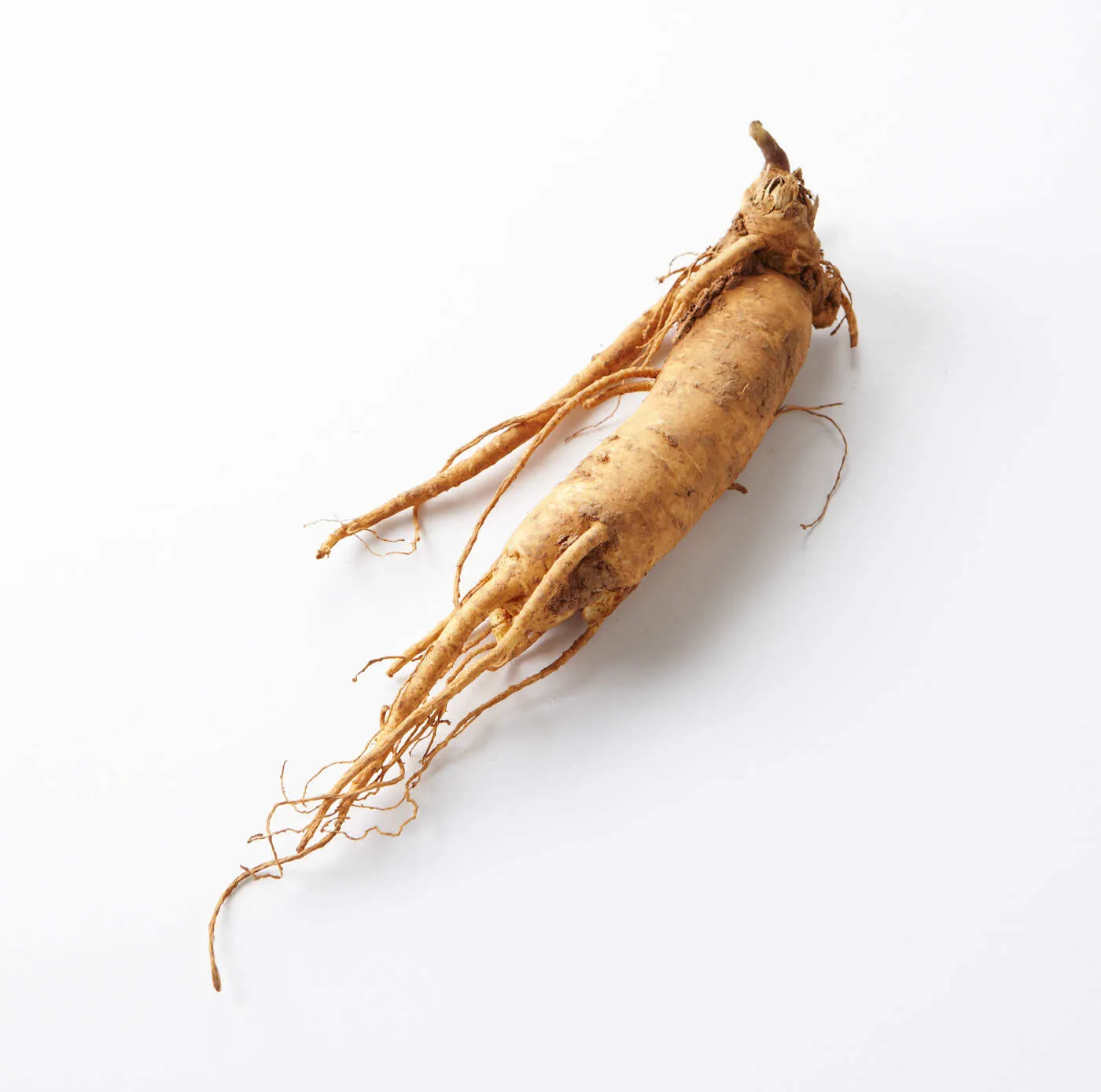 Photo: 국립국어원, CC BY-SA 2.0 kr, via Wikimedia Commons
Culinary and tonic use: In Korean and Chinese tradition, ginseng root is prepared as a decoction (tea), added to soups, or consumed as sliced root. A tonic preparation typically simmers a few grams of dried root in water.
Standardized extract supplementation:
- Panax ginseng: Most clinical trials have used G115 extract (Ginsana, Pharmaton), standardized to 4% total ginsenosides, at doses of 100–400 mg/day. The most common trial regimen is 200 mg/day, taken as 100 mg twice daily (Bilia & Bergonzi, 2020).
- Panax quinquefolius (American ginseng): Studies have used 100–3,000 mg/day of root powder or standardized extract. In the blood glucose trial, 3 g root powder taken 40 minutes before the glucose load worked in both groups; the authors suggested that people without diabetes take it with the meal to avoid unintended hypoglycemia.
- Korean red ginseng: about 1,800–3,000 mg/day, often in divided doses, studied most in sexual health trials (Jang et al., 2008).
Ginseng has traditionally been cycled — used for several weeks, followed by a rest period — a practice that lacks definitive clinical justification but is commonly recommended.
The adaptogens evidence review compares the ginseng research with that for ashwagandha, rhodiola, and maca.
Safety, Side Effects, and Interactions
In clinical trials, single-ingredient ginseng produced adverse events at rates similar to placebo; the cautions below concern stimulants, diabetes drugs, warfarin, hormones and pregnancy.
Stimulant interactions: Insomnia is the most commonly reported side effect of Asian ginseng (NCCIH). Co-administration with CNS stimulants (including caffeine) may produce additive stimulant effects: insomnia, agitation, palpitations, and elevated blood pressure. Individuals with cardiovascular conditions or hypertension should use ginseng with caution.
Hypoglycemic medications: Given evidence for blood glucose lowering, concurrent use with insulin, metformin, sulfonylureas, or GLP-1 agonists may increase hypoglycemia risk (MSK About Herbs). Blood glucose monitoring is advisable when adding ginseng supplements to antidiabetic regimens.
Anticoagulants: A randomized, placebo-controlled trial by Yuan and colleagues (2004, Annals of Internal Medicine) found that 2 weeks of American ginseng (P. quinquefolius) significantly reduced peak INR, plasma warfarin levels, and warfarin AUC in 20 healthy volunteers, decreasing anticoagulant effect — the opposite direction from most herbal interactions with warfarin. A smaller open-label crossover study of P. ginseng by Jiang and colleagues (2004, British Journal of Clinical Pharmacology) found no effect on warfarin pharmacokinetics or INR, so the interaction may differ by species; a reduced anticoagulant effect could in principle raise thrombosis risk. Patients on warfarin should not add ginseng supplements without INR monitoring.
Hormonal effects: Rb1 and Rg1 activate estrogen receptor signalling in cell studies without binding the receptor directly (Cho et al., 2004; Gao et al., 2019). Case reports have described vaginal bleeding in postmenopausal women after oral or topical ginseng (Greenspan, 1983; Hopkins et al., 1988). A widely cited 1990 case of neonatal androgenization attributed to maternal ginseng use was later traced to an adulterant rather than Panax ginseng (Seely et al., 2008). A ginseng constituent has caused birth defects in animal studies, and NCCIH advises consulting a health care provider before use in pregnancy (NCCIH). Ginseng should be avoided during pregnancy and in patients with hormone-sensitive conditions (estrogen receptor-positive breast cancer, uterine fibroids) until larger safety datasets are available.
“Ginseng abuse syndrome”: A term coined in a 1979 observational report describing hypertension, diarrhea, nervousness, and insomnia with high-dose long-term use (Siegel, 1979). A later systematic review found that in clinical trials the rate of adverse events with single-ingredient ginseng products was similar to placebo, most often headache, sleep problems, and digestive upset (Coon & Ernst, 2002).
Hepatotoxicity: Liver damage is listed by NCCIH as an uncommon reported side effect (NCCIH), and one case report described liver injury in a man taking ginseng with the cancer drug imatinib (MSK About Herbs). Causality in such reports is often difficult to establish (Coon & Ernst, 2002). People with liver disease or taking drugs that affect the liver should discuss ginseng with their doctor.
Product Selection Criteria
- Species identification: Confirm whether the product contains Panax ginseng (Asian/Korean) or Panax quinquefolius (American), as these have distinct compound profiles, different clinical evidence bases, and different safety considerations. “Ginseng” without species designation is insufficient.
- Standardization: For P. ginseng, prefer extracts standardized to ≥4% ginsenosides (e.g., G115 or equivalent). For American ginseng, standardization to total ginsenoside content provides more consistent dosing than raw root powder.
- Root age and form: Wild-crafted roots command premium prices but are not consistently supported as superior in bioactive content. The best-controlled clinical evidence derives from standardized root extract, not whole-root preparations.
- Red vs. white ginseng: Red ginseng (steamed) has been used in most erectile dysfunction trials, while the cognitive, fatigue, and immune trials described above mostly used the G115 extract or American ginseng. Select based on the intended application.
- Third-party verification: NSF, USP, or ConsumerLab testing confirms ginsenoside content as labeled and absence of heavy metals and pesticide residues. In a survey of commercial Asian and American ginseng extracts, 43% of samples tested for pesticides exceeded maximum residue limits (mainly quintozene and related organochlorines), and lead and arsenic levels varied widely (Durgnat et al., 2005).
Frequently Asked Questions
What is ginseng good for?
Small randomized trials suggest a few specific uses: a slight memory gain, less cancer-related fatigue with American ginseng, fewer colds in one 227-person trial, and better erectile function with Korean red ginseng. Each rests on limited evidence, and trials in healthy young adults found no effect on exercise performance. Ginseng is not established as a treatment for any condition.
What is the difference between Asian and American ginseng?
Asian ginseng (Panax ginseng) has a higher share of the ginsenoside Rg1 and is traditionally described as more stimulating. American ginseng (P. quinquefolius) is dominated by Rb1 and is considered milder. They have separate trial evidence: memory and immune trials mostly used Asian G115 extract, while the fatigue and blood glucose trials used American ginseng.
Does ginseng have caffeine?
Ginseng root is not a source of caffeine; its stimulating reputation is attributed to ginsenosides such as Rg1. Many energy drinks and blends combine ginseng with added caffeine, and taking the two together may add up to insomnia, agitation, palpitations or higher blood pressure. Check the label of any combination product for its caffeine content.
Can ginseng raise blood pressure?
It can in some people, mainly when combined with other stimulants or taken at high doses for long periods. A 1979 report linked heavy long-term use to hypertension, nervousness and insomnia, although later trial reviews found side effects similar to placebo. People with hypertension or heart conditions should use ginseng with caution and discuss it with their clinician.
Is ginseng the same as ginger?
No. Ginseng is a Panax root in the family Araliaceae, while ginger is a rhizome in the family Zingiberaceae. They share a reputation as warming roots in traditional medicine, but their compounds differ: ginseng contains ginsenosides, and ginger contains gingerols and shogaols. Siberian ginseng is a third, unrelated plant.
How much ginseng per day did studies use?
Most Panax ginseng trials used 100 to 400 mg a day of the G115 extract, commonly 200 mg split into two doses. American ginseng studies used 100 to 3,000 mg a day, and Korean red ginseng trials about 1,800 to 3,000 mg. Anyone on diabetes medication or warfarin should talk to a clinician first.
References
Show all 31 referencesShow fewer
- Kennedy, D. O., Scholey, A. B., & Wesnes, K. A. (2001). Dose dependent changes in cognitive performance and mood following acute administration of Panax ginseng to healthy young volunteers. Nutritional Neuroscience, 4(4), 295–310.
- Vuksan, V., Sievenpiper, J. L., Koo, V. Y., Francis, T., Beljan-Zdravkovic, U., Xu, Z., & Vidgen, E. (2000). American ginseng (Panax quinquefolius L.) reduces postprandial glycemia in nondiabetic subjects and subjects with type 2 diabetes mellitus. Archives of Internal Medicine, 160(7), 1009–1013.
- Barton, D. L., Liu, H., Dakhil, S. R., Linquist, B., Sloan, J. A., Nichols, C. R., McGinn, T. W., Stella, P. J., Seeger, G. R., Sood, A., & Loprinzi, C. L. (2013). Wisconsin Ginseng (Panax quinquefolius) to improve cancer-related fatigue: A randomized, double-blind trial. Journal of the National Cancer Institute, 105(16), 1230–1238.
- Jang, D. J., Lee, M. S., Shin, B. C., Lee, Y. C., & Ernst, E. (2008). Red ginseng for treating erectile dysfunction: A systematic review. British Journal of Clinical Pharmacology, 66(4), 444–450.
- Scaglione, F., Cattaneo, G., Alessandria, M., & Cogo, R. (1996). Efficacy and safety of the standardised ginseng extract G115 for potentiating vaccination against the influenza syndrome and protection against the common cold. Drugs Under Experimental and Clinical Research, 22(2), 65–72.
- Yuan, C. S., Wei, G., Dey, L., Karrison, T., Nahlik, L., Maleckar, S., Kasza, K., Ang-Lee, M., & Moss, J. (2004). Brief communication: American ginseng reduces warfarin’s effect in healthy patients: A randomized, controlled trial. Annals of Internal Medicine, 141(1), 23–27.
- Geng, J., Dong, J., Ni, H., Lee, M. S., Wu, T., Jiang, K., Wang, G., Zhou, A. L., & Malouf, R. (2010). Ginseng for cognition. Cochrane Database of Systematic Reviews, (12), CD007769.
- Jiang, X., Williams, K. M., Liauw, W. S., Ammit, A. J., Roufogalis, B. D., Duke, C. C., Day, R. O., & McLachlan, A. J. (2004). Effect of St John’s wort and ginseng on the pharmacokinetics and pharmacodynamics of warfarin in healthy subjects. British Journal of Clinical Pharmacology, 57(5), 592–599.
- Scholey, A., Ossoukhova, A., Owen, L., Ibarra, A., Pipingas, A., He, K., Roller, M., & Stough, C. (2010). Effects of American ginseng (Panax quinquefolius) on neurocognitive function: An acute, randomised, double-blind, placebo-controlled, crossover study. Psychopharmacology, 212(3), 345–356.
- Bucci, L. R. (2000). Selected herbals and human exercise performance. American Journal of Clinical Nutrition, 72(2 Suppl), 624S–636S.
- Allen, J. D., McLung, J., Nelson, A. G., & Welsch, M. (1998). Ginseng supplementation does not enhance healthy young adults’ peak aerobic exercise performance. Journal of the American College of Nutrition, 17(5), 462–466.
- Engels, H. J., & Wirth, J. C. (1997). No ergogenic effects of ginseng (Panax ginseng C.A. Meyer) during graded maximal aerobic exercise. Journal of the American Dietetic Association, 97(10), 1110–1115.
- Yang, C., Li, C., Wei, W., Wei, Y., Liu, Q., Zhao, G., Yue, J., Yan, X., Wang, P., & Zhou, Z. (2020). The unprecedented diversity of UGT94-family UDP-glycosyltransferases in Panax plants and their contribution to ginsenoside biosynthesis. Scientific Reports, 10, 15394.
- Chen, Y., Zhao, Z., Chen, H., Yi, T., Qin, M., & Liang, Z. (2015). Chemical differentiation and quality evaluation of commercial Asian and American ginsengs based on a UHPLC-QTOF/MS/MS metabolomics approach. Phytochemical Analysis, 26(2), 145–160.
- Kim, D. H. (2012). Chemical diversity of Panax ginseng, Panax quinquifolium, and Panax notoginseng. Journal of Ginseng Research, 36(1), 1–15.
- Bilia, A. R., & Bergonzi, M. C. (2020). The G115 standardized ginseng extract: An example for safety, efficacy, and quality of an herbal medicine. Journal of Ginseng Research, 44(2), 179–193.
- Lee, Y. J., Chung, E., Lee, K. Y., Lee, Y. H., Huh, B., & Lee, S. K. (1997). Ginsenoside-Rg1, one of the major active molecules from Panax ginseng, is a functional ligand of glucocorticoid receptor. Molecular and Cellular Endocrinology, 133(2), 135–140.
- Gao, Q. G., Zhou, L. P., Lee, V. H., Chan, H. Y., Man, C. W., & Wong, M. S. (2019). Ginsenoside Rg1 activates ligand-independent estrogenic effects via rapid estrogen receptor signaling pathway. Journal of Ginseng Research, 43(4), 527–538.
- Cho, J., Park, W., Lee, S., Ahn, W., & Lee, Y. (2004). Ginsenoside-Rb1 from Panax ginseng C.A. Meyer activates estrogen receptor-alpha and -beta, independent of ligand binding. Journal of Clinical Endocrinology & Metabolism, 89(7), 3510–3515.
- Liu, L., Hoang-Gia, T., Wu, H., et al. (2011). Ginsenoside Rb1 improves spatial learning and memory by regulation of cell genesis in the hippocampal subregions of rats. Brain Research, 1382, 147–154.
- Liu, Y., Zong, X., Huang, J., et al. (2019). Ginsenoside Rb1 regulates prefrontal cortical GABAergic transmission in MPTP-treated mice. Aging, 11(14), 5008–5034.
- Zeng, M., Zhang, K., Yang, J., Zhang, Y., You, P., Yan, L., & Weng, Y. (2024). Effects of ginseng on cognitive function: A systematic review and meta-analysis. Phytotherapy Research, 38(12), 6023–6034.
- Konno, C., Sugiyama, K., Kano, M., Takahashi, M., & Hikino, H. (1984). Isolation and hypoglycaemic activity of panaxans A, B, C, D and E, glycans of Panax ginseng roots. Planta Medica, 50(5), 434–436.
- Coon, J. T., & Ernst, E. (2002). Panax ginseng: A systematic review of adverse effects and drug interactions. Drug Safety, 25(5), 323–344.
- Siegel, R. K. (1979). Ginseng abuse syndrome: Problems with the panacea. JAMA, 241(15), 1614–1615.
- Greenspan, E. M. (1983). Ginseng and vaginal bleeding. JAMA, 249(15), 2018.
- Hopkins, M. P., Androff, L., & Benninghoff, A. S. (1988). Ginseng face cream and unexplained vaginal bleeding. American Journal of Obstetrics and Gynecology, 159(5), 1121–1122.
- Seely, D., Dugoua, J. J., Perri, D., Mills, E., & Koren, G. (2008). Safety and efficacy of Panax ginseng during pregnancy and lactation. Canadian Journal of Clinical Pharmacology, 15(1), e87–e94.
- Durgnat, J. M., Heuser, J., Andrey, D., & Perrin, C. (2005). Quality and safety assessment of ginseng extracts by determination of the contents of pesticides and metals. Food Additives and Contaminants, 22(12), 1224–1230.
- National Center for Complementary and Integrative Health. Asian ginseng.
- Memorial Sloan Kettering Cancer Center. About Herbs: Ginseng (Asian).
Related content
More in Roots & Herbs
- Ashwagandha (Withania somnifera)
Ashwagandha side effects, who should avoid it, and drug interactions, plus what trials show for stress, sleep and strength at clinical doses.
- Basil (Ocimum basilicum)
Basil benefits: what lab and human studies show, vitamin K per serving, sweet basil vs holy basil, and the estragole and warfarin cautions.
- Black Pepper (Piper nigrum)
Black pepper benefits: how piperine raises absorption of curcumin and some drugs, what human studies show, side effects, and drug interactions.
- Cilantro / Coriander (Coriandrum sativum)
Cilantro vs parsley: how the two herbs differ in flavor, vitamin K and vitamin C, plus what the evidence says about cilantro benefits and safety.
- Cinnamon (Cinnamomum verum / C. cassia)
Ceylon cinnamon vs cassia: coumarin levels and liver risk, how much is safe per day, and what trials show for blood sugar and cholesterol.
- Garlic (Allium sativum)
Garlic benefits for blood pressure, cholesterol and colds: what trials show, how much raw garlic or supplement they used, and bleeding risks.

Curated by Superfoods Advisor Editors·Last updated